Pacific Press Publishing Company · New York · Jun 3, 1897
Under the Sod and Dew
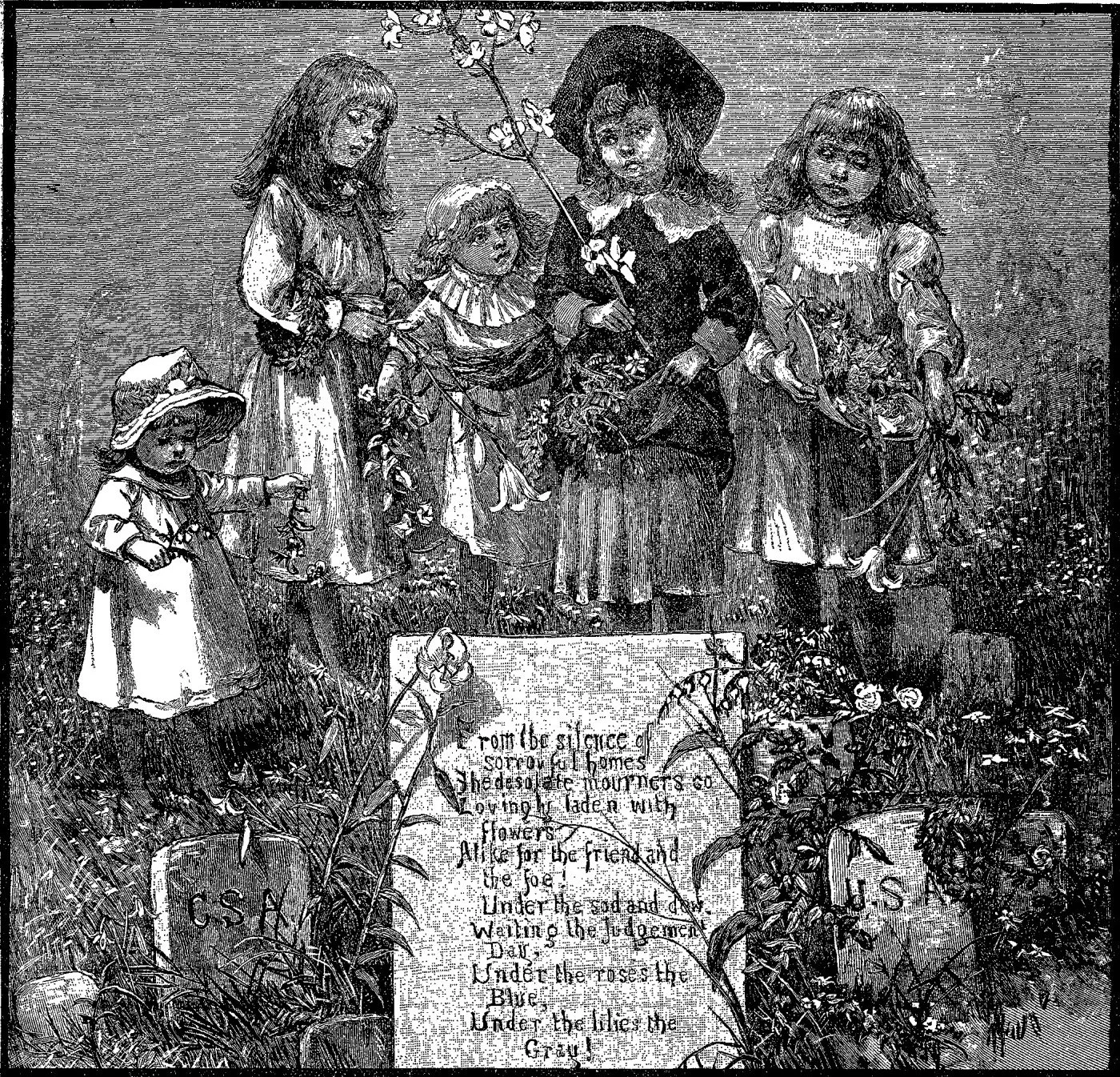
From the silence of sorrowful homes The desolate mourners go, Lovingly laden with flowers, Alike for the friend and foe!
Under the sod and dew Waiting the judgment Day, Under the roses the Blue, Under the lilies the Gray!
Separation of Church and State.
In the beginnings of Egypt the same course was followed, as in the beginnings of Babylon and Assyria.
At first they knew the one true God; and he was their only King, their only Ruler.
But they did not like to retain God in their knowledge; and therefore they went into idolatry, and from idolatry into monarchy.
The Egyptian records state that the first rulers of Egypt were the gods; after them the demigods; and after these the kings.
In Egypt, however, the king was not content, as in Assyria, to call himself the viceroy of his god: he claimed to be the very embodiment of the god itself—the god was personified in the king; from him, it was declared, the people “received the breath of their nostrils;” he was “the giver of life.”
And thus, though Nimrod was the first man to establish the authority and assume the kingly title and crown, yet in Egypt his example was followed to the greatest lengths: as Egypt was undoubtedly the most idolatrous nation that ever was on the earth. There apostasy of every kind culminated: so that throughout the Bible the one word “Egypt” symbolizes everything that is contrary to God.
When the power of monarchy had filled the Mesopotamian plain God called Abram out of that country into the land of Canaan where he could be free, and thus made a separation of Church and State, and preached the same to all people.
But in process of time, and by Egypt, the power of monarchy was spread over all countries from Ethiopia to Ararat and Central Asia. Then as his people were obliged to live under the power of monarchy anyhow, the Lord put them where they could do the most possible good—he placed them at the very seat of the world’s empire in Egypt itself.
And there, through all the time of the supremacy of Egyptian empire, with Joseph and Moses beside the throne, and Israel amongst the people, of Egypt, God held before all nations the knowledge of himself. And as soon as the time came when the Egyptian empire must fail, God would place his people once more in Canaan the pivot of the highways of the nations.
To this end there must be again the separation of religion and the State, separation of Church and State. God’s people must be called out of Egypt, in order that they and all the nations might be instructed in the great principles of the gospel, of supreme allegiance to God, of the separation of religion and the State, of church and country.
Moses understood this, and therefore “he refused to be called the son of Pharaoh’s daughter.” Moses was the adopted son of Pharaoh’s daughter. Pharaoh’s daughter was Pharaoh’s chief wife, and queen. Moses, therefore, by the most complete claim, was heir apparent to the throne of Egypt. The throne of Egypt was at that time the throne of the world; for the power of Egypt then ruled the world. It was the supreme State, the governing empire over all.
For Moses to refuse to be called the son of Pharaoh’s daughter, was therefore to renounce the throne of Egypt. To renounce the throne of Egypt was to renounce the power of empire. It was definitely to disconnect from the power of the State.
At that time Moses was called to have charge over “the house of God which is the Church of the living God.” It was in obedience to this call that he renounced the throne of Egypt and the power of empire. It was because of this that he definitely disconnected himself from the power of the State. And in recording it God designed to teach all people that conformity to his will means the separation of Church and State; that it means the renunciation of the throne and the power of earthly empire—the total separation of religion and the State.
And it was through the faith of Christ that Moses did all this. It was “through faith” that “Moses when he was come to years refused to be called the son of Pharaoh’s daughter; choosing rather to suffer affliction with the people of God than to enjoy the pleasures of sin for a season; esteeming the reproach of Christ greater riches than all the treasures in Egypt.”
Therefore, from that day to this it has been made plain to all people, that faith in God, the faith of Jesus Christ, the original principle of the gospel and of the Church, means the absolute separation of Church and State, the renunciation of the throne and power of earthly dominion, the total separation of religion and the State.
And this is what faith in God, the faith of Jesus Christ, the fundamental principle of the gospel and of the Church, means to all people in the world to-day.
Religion and Democracy.
At a banquet of the Chamber of Commerce, of Cleveland, Ohio, given May 13, the chief oratorical feature was a speech by Archbishop Ireland, on the subject of “The Sure Foundation of a True Citizenship.” Among his utterances339on this occasion worthy of note as showing the drift of papal teaching upon this important topic, are the following: “Patriotism is never so potent as when it is identified with religion.” “The crisis for democracy will come when comes the crisis for religion.” “The enemies of religion are the enemies of country and democracy.”
What religion? it might be well to query in reply. “There be lords many and gods many,” and there are religions many, and the archbishop’s religion is one of them. But there is only one gospel—one revelation of God to mankind through Jesus Christ. And this cannot be identified with “patriotism;” but mere religion can be so identified, and we may not uncharitably infer that Archbishop Ireland hopes to see his own religion so identified. But what a state of things will exist in this erstwhile “land of the free,” when to be irreligious, or to fail to conform to the prevailing religion, will be counted unpatriotic, and subject the nonconformist to the charge of being an enemy “of country and of democracy”!
The “Trust” Evil Illustrated.
The spectacle of the thousands of employés of garment manufacturers on strike in New York City, while their wives and children starve in their cheerless homes, affords, among other things, an illustration of the workings of the “labor trust.” There is truth in the remark made by ex-Senator Edmunds: “They may talk about our honest men with wives and families to support who are willing to work for one and two dollars a day, but they can’t get it,—why? Because their union, or their trust, won’t allow them. The standard is set for them, and if they don’t wait and starve their families until they reach that standard they can’t get work anywhere.”
Sad, indeed, is the condition to which industry has been reduced by the selfishness of man toward his fellows. The “labor trust” represents a desperate effort by the workingmen to interpose an effectual resistance to the relentless power which from some higher stratum of society is steadily forcing them and those dependent on their earnings, beneath the surface of a respectable existence. In reply to ex-Senator Edmunds a New York journal says:—
“If he will go over to the East Side of New York, look into Walhalla Hall, or make a trip through the teeming tenements, he will gain some idea of a standard of wages and the standard of living which has resulted from free competition in labor. He will find tailors, to the number of tens of thousands, reinforcing their labor unions and saying to each other. ‘We will starve if need be, we and our wives and our babies, but we will not return again to the practice of bidding against each other for work at starvation wages.’ If he will look into the conditions which have caused the tailors’ strike, he will find them bred of exactly the procedure which he would substitute for that of organized labor. One family, either out of the union or indifferent to its rules, agrees to work for a certain contractor for less than the union rates. Presently that contractor underbids his fellows. They investigate, discover the cause, and meet the unfair competition by cutting down the pay of their workers. The process is repeated until the wages become barely sufficient to support the workers, nor does it always stop there, for there are not infrequently some who will work for less than a living wage, supplementing it by vicious or dishonest practices. In every badly organized trade this process goes on.”
Nevertheless the “labor trust,” at its best, is an evil, however necessary it may seem to be. Man was not designed by his Creator to maintain his existence by means of the trust. To do this is to destroy his own individuality. God would have men learn the great truth that “man shall not live by bread alone, but by every word that proceedeth out of the mouth of God.” He would have men learn to put their dependence upon Him as the author and preserver of life, rather than upon a human organization.
Many remedies are proposed for this deplorable condition of affairs, but the Christian student knows that the only effective remedy is righteousness. And therefore the counsel of God’s word to those who experience the evils of this situation is, “Be patient therefore, brethren, unto the coming of the Lord.” See Jas. 5:1–7. Christ is coming the second time, in “power and great glory,” to set up righteousness in the earth, by destroying sin and sinners out of it. This is the true hope for the toiling, groaning myriads of old earth to-day.
“Not by Might Nor by Power.”
THE Lord does not carry on his work in the earth by might or by power. That is, he does not work by those agencies which appear most mighty and powerful in the eyes of men. “Not by might nor by power, but by my Spirit, saith the Lord of hosts.” Zech. 4:6.
In this day we see religious organizations grasping for power. We see the church associations—the Society of Christian Endeavor, the Epworth League, etc., holding conventions and discussing, among other things, what they can do to control elections and put good men into public office. Their hopes in this regard are based upon the millions enrolled in their membership. But what will all this might and power avail in the work of the Lord? Suppose they should get complete control of the Government—what good would it do them or the cause which they profess to represent? What is the use of might and power when the Lord does not work by that means?
Have they forgotten the record of the experience of the prophet Elijah at Mount Horeb? 1 Kings 19:9-13. The prophet was told to “Go forth, and stand upon the mount before the Lord. And behold, the Lord passed by, and a great and strong wind rent the mountains and brake in pieces the rocks before the Lord; but the Lord was not in the wind. And after the wind was an earthquake; but the Lord was not in the earthquake. And340after the earthquake a fire; but the Lord was not in the fire. And after the fire a still small voice.” And the Lord was in that voice, and that voice set in motion again the work of the Lord which had been suspended by the prophet’s flight from Jezreel. “Not by might, nor by power, but by my Spirit, saith the Lord of hosts.”
Do these religious organizations aim to produce a cyclone or an earthquake in the Government? Evidently, they hope to do something of the sort. But what good would it accomplish if they should? The Lord would not be in it. He would not be in it even were they able to duplicate all the awesome exhibitions of might and power displayed at Horeb before Elijah. The Lord is yet in the “still small voice,” which is the voice of His Spirit.
“O that they were wise, that they understood this, that they would consider their latter end! How should one chase a thousand, and two put ten thousand to flight!” “By faith the walls of Jericho fell down,” and not by the assault of battering rams and the arms of the encompassing host. By faith the servants of God in old time “turned to flight the armies of the aliens.” Heb. 11:30-34. By faith the work of God moves forward in the earth to-day. The world will be deceived by exhibitions of might and power; but by the Word of the Lord his people know that his work is not by might nor by power, but by the “still small voice” of his Spirit.
The Lord’s Day and Liberty.
A COMMON view of the question of securing Sabbath observance is expressed in the following from the Outlook of April 24:—
“The question of Sunday observance is by no means a simple one. There are elements in the problem which make it difficult of solution. It is, perhaps, more difficult in this country than in any other because the population is so heterogeneous. In the old New England days Puritan ideals could be realized because the people were all of one class. The same may be said of Scotland. But our population is composed of representatives of many nationalities and of various phases of faith. Simple justice seems to make it imperative that the preferences of differing people should be recognized. How liberty may be granted and yet the Lord’s Day preserved is a question not easy to answer.”
All this applies to Sunday observance; but none of the facts set forth in this quotation interfere with the securing of Sabbath observance, for the simple reason that Sabbath observance is a part of the Christian life, which is secured through faith in Christ; and it makes no difference how heterogeneous the population is, they are all alike susceptible to the grace of God. Nor do the “preferences” of the people affect the question; for when a person is a Christian, he will prefer to keep the Sabbath in just the way that God has commanded.
From the gospel standpoint, there can be no possible antagonism between liberty and the keeping of the Sabbath; for the Sabbath commandment is a part of the “perfect law of liberty” itself. See Jas. 2:11, 12. “How liberty may be granted and the Lord’s day preserved” is therefore a question which can never arise under the provisions of the gospel. God is the author of both liberty and the Lord’s day, and he has fixed their relation to each other; and the only thing that his creatures here need to do is to leave the matter just as he has arranged it.
If men would only do this, it would save them a world of trouble.
What is Compulsion?
By W. A. Colcord
BY W. A. COLCORD.
THE Christian Endeavorer says:—
“It is estimated that there are to-day over 3,000,000 laboring men in the United States who are compelled to labor every Sabbath [Sunday], or at least to labor on the Sabbath the same as upon other days.”
Whoever made this estimate made a miscalculation. There is not a man in the United States who is compelled to work on the Sabbath; no, not in all the world. To work on the Sabbath the same as on other days is a sin, and no man in all the world is compelled to sin. If he were, then sin would not be sin. There is no law in the United States requiring any man to work on Sunday, the sabbath the Christian Endeavorer refers to, and even though there were, no one would absolutely have to work on that day. All could refuse.
“But,” says one, “they would lose their jobs, and that means starvation.” But what if they did lose their jobs, could not God in His infinite providence provide others? Would He see men starve in refusing to do wrong and daring to do right? Has He not promised never to forsake the righteous? Does He suffer their seed to beg bread? Does He not know their needs, and does He not care for them? Is not their bread and water sure? Where is men’s faith in God? In what or in whom are men trusting when they talk of being compelled to do wrong in order to make a living? How can professed Christians expect others to do otherwise than wrong, when they do not possess sufficient stamina to do what they believe to be right? And how much value are they setting upon truth, when they show themselves unwilling to make any sacrifice in order to live it?
Saturday is by far a busier business day in the United States than Sunday. More jobs a hundred times are to be lost by refusing to work on that day than on Sunday, and yet no one hears of observers of the seventh day being compelled to work on the Sabbath. They are not compelled to do anything of the kind. They do not work on the Sabbath, and they live too. They have the courage to live up to their convictions, and trust God for the consequences. What is a man’s moral worth who will341not do this? Instead of yielding and catering and cringing to the world and worldly customs, and looking to the world for life and sustenance, let men be taught “that man doth not live by bread only, but by every word that proceedeth out of the mouth of the Lord doth man live.” Let them be taught the faith, the manly independence, and the Christian courage expressed in the following stanza:—
“Dare to be right! dare to be true!
Foes may be many, and friends may be few.
Truth and her champions oft stand alone,
What’s a man good for without a backbone?”
If the present blessing in keeping the Sabbath and the final reward for obedience are not sufficient to compensate for whatever sacrifice or inconvenience they may entail in this life, then the Sabbath is not worth keeping at all. But we hold a very different view.
Love Does Not Rule by Force.
By H. F. Phelps
BY H. F. PHELPS.
Christianity, pure and simple, is founded in love; therefore true Christianity does not rule by force; for true love does not rule by force. Love governs by its own inherent power. There is a power in true love, when once recognized and allowed access to the soul, that will subdue the most stubborn heart. And love thus recognized will be obeyed through its own influence, from the very love begotten of love. A resort to force would be a denial of love’s own existence, and a proof that love was not love. And so when that which may be called Christianity resorts to force for the maintenance and observance of its institutions, it is a positive proof that such is not Christianity at all, but only a perversion of Christianity.
“God is love,” and being such, cannot govern by force. He cannot—absolutely cannot—coerce His creatures into obedience. He cannot, because such force, such compulsion, is not God, is not in God, is not of God. And if any being claiming to be God, should use force in securing obedience to his mandates, that very act would prove his claim to the Godhead to be false. And if the mighty God should compel his subjects to obedience, the act would be the most positive proof that God is not love, and that love was not the motive power of His government. It would prove that tyranny was the power behind the throne, and that God is a tyrant. All of which is the most positive proof that in any age of the world, whether during the Dark Ages, or in the closing decade of century nineteen, those who seek to enforce the institutions of religion, are not actuated by the spirit of love, the true spirit of Christianity. They may think that they are, but they are most terribly mistaken.
Christ says of himself, “I have finished the work thou gavest me to do. . . . I have declared thy name unto them thou gavest me.” And “God is love.” And his name is declared to be “The Lord God, merciful, gracious, longsuffering, and abundant in goodness and truth, keeping mercy for thousands, forgiving iniquity and transgression and sin, and that will by no means clear the guilty.” This is God. Such is the name of God. And Christ declared that name in all his teachings, and by every act in life and in his death. It was for this purpose that the name of the Father might be declared before men, that Christ came into the world.
Again Christ says: “As thou hast sent me into the world, even so have I sent them into the world.” Therefore as it was the work of Christ to declare that name of love, so it is the work of the believer to declare that same name. As Christ did declare that name by his life and by his death, even so the believer will declare that name of love by his life. This will be so, for it will be Christ in them, dwelling in their hearts by faith, Christ in them declaring that same name of love. And as surely as this is so, so surely will they voice the invitation of Christ, even the voice of entreaty, “Come unto me;” and “Whosoever will, let him come.” As the voice of entreaty was heard in the Master, so will the true believer entreat and persuade men to be reconciled to God. As the Master did not appeal to force, they will not do so.
As surely as Christ did declare that name of love, so surely he did not appeal to the civil courts to enforce his teachings, which were but a representation of that name. This he could not do and be true to the name itself. This being so—and that it is so no one can dispute—it will be equally true that the true disciple, the true believer in Christ and in the work of Christ, being actuated by the Spirit of the Master, can no more appeal to the power of the civil law to enforce the teachings of Christ than did the Master himself. All this because it is not in love to do such a thing. It is not in God the Father to do it, it is not in Christ to do it, and it is not in the children of God even to attempt it, for the very reason that all these are actuated by the same spirit of love. And in this is seen the fulfillment of the prayer of Christ, “That they may be one in us.”
The Pope’s Army.
“Present Truth,” London, Eng.
THE pope’s kingdom, unlike Christ’s, is altogether of this world, and hence do his servants fight. An Italian paper says that he has just reorganized his personal forces. The worst of it is that his influence is able sometimes to set greater armies in motion than this little one which guards the Vatican and keeps up the semblance of his temporal sovereignty. This alone, however, ought to teach his followers that the papacy is an antichristian power. An evening paper, quoting from the Italian Catholic journal, thus describes the army:—
“It is divided into five separate bodies, which are known as the Noble Guard, the Swiss Guard, the Palatine Guard, the Gendarmes, and the Fire Brigade. The first342of these, that is, the Noble Guard, is commanded by Prince Altieri, and is composed of fifty young members of the Roman nobility. Each member of the corps receives from three to four hundred lire a month, and a special club is maintaintained for their use and amusement. The Swiss Guard numbers one hundred strong, and the men are specifically selected for their youth and strength. Their duty is to guard the doors and entrances to the Vatican, and they are armed with the Remington rifle. As under the old regulations they will still carry the halberd while on parade. The Palatine Guard is divided into two companies, commanded by General Erostarosa, who has under him a staff of two majors and four captains. This corps raised from among the citizens of Rome, is called out only on special occasions. The gendarmes number one hundred, under the command of Colonel Taglifietri, and are recruited from ex-soldiers of the Italian army, specially recommended by Italian bishops for their religious fidelity and fervor. The firemen, or pompiers, number thirty, and are always in the Vatican.”
Christian Petitions.
By M. E. Kellogg
BY M. E. KELLOGG.
IT will, we think, be conceded by everyone that when any church or religious order believes that it is being treated unjustly or discriminated against in any way by the government under which it exists, it has a right, as a church, to protest and appeal from such action of the government. But that a church, as a church, should in its organized, authoritative capacity petition the government in regard to the relations of the government to other nations is quite another affair, and its right and propriety in doing so are very questionable. But the church known as The United Brethren in Christ has, in a late general conference held at Toledo, Ohio, passed the following resolution, which is addressed to President McKinley:—
“Based on our latest advice as to the situation, we, the members of the twenty-second general conference of the Church of the United Brethren in Christ, representing 250,000 communicants, do hereby earnestly express the hope that, in behalf of liberty and humanity, you in your wisdom may see your way clear to declare in favor of the recognition of the belligerent rights of the Cuban people.”
This is not the first time that a church has endeavored to influence the Government of the United States in a certain direction; but heretofore, as far as our knowledge extends, efforts of this character have been confined to an attempt to influence the Government’s action in regard to some affair which concerned no other nation than our own. But here is a change. The United Brethren in Christ, as a church, are trying to influence the Government in regard to a measure of foreign policy, involving its relations with another nation. Not only so, but they are advising an action which many think would embroil this nation in a war with Spain! This is hardly consonant with the true idea of the nature and duty of the Church of Jesus Christ.
The fact is the churchmen of our day have gotten so far away from the true, scriptural idea of what the church exists for, that they are liable to thrust the church into almost anything. Had the first Christian council which assembled in Jerusalem in the year A. D. 51 passed a resolution calling upon the Emperor of Rome to grant belligerent rights to Radimister, who at that time was engaged in a war against Vonones II., King of Persia, it would have been no more incongruous and out of place than this late action of the Church of the United Brethren in Christ.
If this church, or any other church, has a mission or any excuse or reason for a denominational existence, it is for the purpose of saving souls. Neither it, nor any other church, has any mission to advise or suggest to the Government what its foreign policy shall be. If war is troubling any land, there is always a proper thing for Christians to do, and whether they call themselves “United Brethren” or not they can be “united” in this: To humbly petition the King of heaven, through Jesus Christ, that human passions and ambitions may be stayed, war restrained; that kings and rulers may so conduct the civil affairs entrusted to them “that we may lead a quiet and peaceable life in all godliness and honesty” (1 Tim. 2:2), and that the peculiar and sole work of the church, to save souls, may not be restrained or hindered by war or other evil things. Such petitions may be presented every day, and we may be sure that they will not be made in vain.
Love and the Sabbath.
By C. H. Keslake
C. H. KESLAKE.
To know God is to know love, for “God is love.” No one can know God, and not love, for we read, “He that loveth not knoweth not God, for God is love.” 1 John 4:8. It must therefore be true that he who knows God loves God. And the fact that he loves God is proof positive that he knows God, for again it is written:—
“Every one that loveth is born of God, and knoweth God.” 1 John 4:7. Because this is true it is further said, “Beloved, let us love one another, for love is of God.” “If any man say, I love God, and hateth his brother, he is a liar, for he that loveth not his brother whom he hath seen, how can he love God whom he hath not seen?” 1 John 4:20.
Thus will it be seen that it is perfectly natural for him who knows and loves God to love his fellowman. It is utterly impossible for it to be otherwise. And so when we read, “This commandment have we from him, that he who loveth God love his brother also,” we may learn that God’s commandments are not arbitrary, but that they find their source in, and are the expression of the love that God has for his creatures.
Hence we find the Saviour, in reply to the question, “Which is the greatest commandment in the law?” saying, “Thou shalt love the Lord thy God with all thy343heart, and with all thy soul, and with all thy mind. This is the first great commandment; and the second is like unto it, Thou shalt love thy neighbor as thyself. On these two commandments hang all the law and the prophets.”
As therefore the law and the prophets hang, or depend, upon these two great commandments for their existence, and as the second commandment grows out of the first, and, further, as to love God is really to know him, it is perfectly plain that before a person can obey one single precept of Jehovah he must know him.
By this too we may learn that all God’s commandments, finding their source in the love of God, are themselves love, are given in love, and therefore constitute the “law of love” because “God is love.”
Now, as certainly as he who knows God loves God, so certainly will he keep the commandments of God. “For this is the love of God that we keep his commandments, and his commandments are not grievous.” 1 John 5:3. The same truth is expressed in Romans 13:10, “Love is the fulfilling of the law.”
Let it be clearly understood that love is not a substitute for obedience to the law of God as many people imagine, but love is itself obedience to the law. There can be no obedience where there is no love; consequently when one disobeys any of God’s commandments it is evidence that he does not love God. Now it is true that “we love because he first loved us.” 1 John 4:19, R. V. Through what means was it possible for man to learn that God loved him, so that man could love back?
Mankind, through sin, lost the knowledge of God. Not that he ceased to know that a Supreme Being existed, but he ceased to know God as he really is. Sin has so distorted the mind of man that he cannot think straight, so far as the true knowledge of God is concerned, and so instead of having a correct conception as to the character of God, he has quite the reverse. Nor is this all. Sin is so deceitful that not only does it prevent one having a just conception of God, but it deceives the sinner in regard to its own nature, so that instead of his seeing that sin is “exceeding sinful” he regards it as being quite the reverse; he does not realize that sin is death. Rom. 6:23.
How, then, under these circumstances, can God give the sinner the truth so that he will know that God is love? Evidently by revealing himself as he really is. In no other way, than as he really is, could God reveal himself. God is truth, and he could not appear to be anything different from what he is. In thus revealing himself, God would also show what sin really is—simply death. But if that is all that would be accomplished by God’s revelation of himself, it would not amount to anything so far as the sinner is concerned, excepting that it would show him how hopeless his condition is, and God himself would derive no particular benefit. There would be no love in that.
But God is love; therefore, in revealing himself to the sinner, and showing him the true nature of sin, God would show him that there is a remedy for sin—for death. It will be obvious that the only remedy for death is life. But no created being has life in himself; God only has that. Therefore, the only remedy for sin and death is the life of God—in other words, God himself, for you cannot separate the life of God from God. He, then, would reveal himself to the sinner to the extent that he would give his life—himself—that he would die for the sinner, and so death—mortality—would be swallowed up by his life. 2 Cor. 5:4; 1 Cor. 15:54. That is love.
“Hereby perceive we the love of God, because he laid down his life for us.” This he did in Jesus Christ, and in this way he commends his love to us; for thus it is written, “God commendeth his love towards us, in that while we were yet sinners, Christ died for us.” Rom. 5:8. “In this was manifested the love of God toward us, because that God sent his only begotten Son into the world that we might live through him.” “Herein is love, not that we loved God, but that he loved us, and sent his Son to be the propitiation for our sins.” And thus “we have known and believed the love that God hath to us.” “And we know that the Son of God is come, and hath given us an understanding that we may know him that is true, and we are in him that is true, even in his Son Jesus Christ. This is the true God and eternal life.”
Thus through Christ only can we know God; through him only can we know love; therefore through him only can we love God and our fellow-man. And as love is the fulfilling of the law,—as “This is the love of God, that we keep his commandments,” so it is the truth, a truth beyond the possibility of successful contradiction, that only through Jesus Christ can a soul obey a single commandment of God; and further it is the truth, also beyond the possibility of contradiction, that he who accepts Jesus Christ, not only can, but will keep all the commandments of God. He will keep the fourth as willingly as he will the other commandments.
Would the society of Christian Endeavorers, the American Sabbath Union, the W. T. C. U., and all other organizations who have the same object in view, have the people of this country keep the Sabbath? Then let them preach Christ and him crucified, and their efforts will be successful. Let them preach the love of God, and it will be found that this is not only the strongest power, but the only power by which to secure obedience to the law of the Sabbath, or any other divine command.
Sabbath-Keeping Russian Exiles Arrested in Roumania
Among a band of exiled Russian Protestants whose escape from the Caucasus was reported recently in the London papers, was an observer of the seventh-day Sabbath. For such, bonds await in other lands than Russia; and so, when they had escaped to Roumania, writes a friend from that district, “they had hardly set foot in a free land, and mentioned the ‘glad tidings’ in a Russian settlement there, when a Russian priest had our brother arrested on the charge of being a Russian spy.”
There is as much opposition to the keeping of God’s commandments to-day as there ever was in the past.