Signs of the Times, Vol. 37, No. 29.

Our Lord's Teaching
Earlier text: Assuredly Gathering

The World Missionary Conference

From Our Own Correspondent
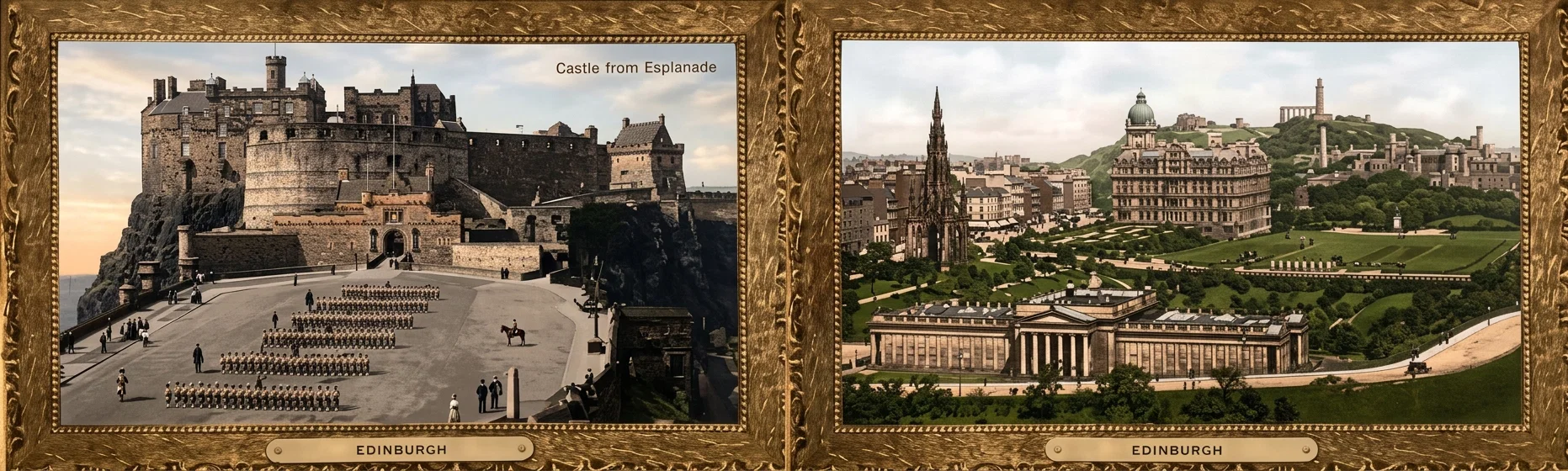
The World Missionary Conference held in Edinburgh, Scotland, June 14 to 21, was a remarkable and important occasion.
First, it was notable for its magnitude. Some twelve hundred delegates were gathered from all parts of Europe and America, and, in smaller proportion, from all the great mission fields of Asia and Africa. Besides these official delegates meeting in the Assembly Hall, there also gathered daily some two thousand missionaries, ministers, and Christian workers in the capacious Synod Hall, for the purpose of studying the great problems that confront the missionary cause to-day. Every night during the conference a further large audience gathered in a third hall to listen to addresses from the more prominent delegates. For ten days some three thousand five hundred people gathered together from the ends of the earth to engage morning, afternoon, and evening in considering the demands of missions at the present time.
Secondly, the Missionary Conference was noteworthy for the attention it received from people of prominence. The archbishops of Canterbury and York were present, and took an active part in the proceedings; and other leading men of many nations were present in large numbers. The king of England and Ex-President Roosevelt both sent lengthy expressions of their deep interest in the conference. Mr. W. J. Bryan was a frequent speaker, and a message was also received by the gathering from the prime minister of Japan.
Thirdly, the conference was entitled to respect because of the very thorough preparations that had been made for the purpose of laying exact and well-digested information before the delegates. The subject of missionary effort among non-Christian peoples had been divided into eight departments, each of which was placed in the hands of a large commission of influential and expert men and women. These commissions have been at work for nearly two years, and each commission has compiled a report dealing with its branch of the subject which represents a vast amount of investigation and analysis and carefully worked out conclusions. So complete and exhaustive were these reports that the twelve hundred delegates assembled were able to find but little room for criticism in their discussions.

A Sign of the Times

Fourthly, the conference was one of supreme interest in view of the fact that it represented the world-wide church of Christ, meeting together after nineteen centuries of its existence, to consider how far it had obeyed its Lord's commission to preach His Gospel to every creature; and to consider further what could be done to hasten and finish the evangelization of the world. Viewed in this aspect, the conference assumes a tenfold interest for those who realize that the end of all things is at hand, and that the time has fully come for the fulfilment of the words uttered by our Saviour when He said that His Gospel should be preached in all the world for a witness unto all nations, and that then the end would come. Even the multitudes of those who share the greatly increased interest in foreign missions, do not realize that they are helping to fulfil this Word, the divine plan is being carried out, and the World Missionary Conference at Edinburgh takes its place as a great and striking sign of the times.
It would be impossible, in the limits of a brief article, to convey an adequate impression of the conference—of the many good words spoken, of the attractive personalities revealed, of the reverent and enthusiastic spirit that marked the occasion. Much emphasis was laid upon the importance of prayer, and every day there was a special period of intercession. One of the principal devotional features of the conference was the frequent resort to silent prayer. The conference, indeed, may be said to have been marked in a large degree by the spirit of prayer.
Throughout the meetings one could not help realizing that the speakers grouped themselves into two divisions. There were those who saw the work of foreign missions in its simplicity, who held up Christ as the unique and unapproachable Redeemer of sinful men, His Gospel as the one outstanding remedy for the ills of the human race, and the power of the Holy Spirit as the one equipment which could prepare the church for the task of carrying the Gospel to every land.
On the other hand, there were some who dwelt rather on the necessity for what they called "wise statesmanship" in the conduct of foreign missions; who, while they acknowledged the Lord Jesus Christ, thought also that there was much to be learned by the church of Christ from other faiths, and that it would derive from other religions almost as much as it imparted. This latter class seemed rather to discredit the idea of seeking to save individuals, and laid special emphasis upon the need for making the heathen NATIONS Christian. They seemed to suggest that no great success could be looked for in the work until the nations in the home lands became more truly Christian and ceased to send out to heathen countries unworthy representatives of their commerce and the degrading products of their manufacture.

The Crisis of Our Time

The thorough investigation carried on before the conference met made it clear that the work of evangelizing the world was still very largely unaccomplished; hundreds of millions had still been untouched by the Gospel, and vast multitudes had never yet heard the name of Christ. Seen in something like its exact proportions, and contrasted with the work already accomplished, the task before the missionary forces appeared stupendous. Present conditions in the world, too, were not entirely promising. True, there were at the present time wide-open doors everywhere, but conditions were arising in Asia and Africa which indicated that the doors now wide open would erelong begin to close to missionary effort so far as white missionaries are concerned. It was vividly impressed upon the conference that the present time is one of wonderful opportunity, but also of grave crisis, and that vast issues would depend upon the course taken now by the church of Christ. Mr. John Mott, who presided at the meetings of the conference, declared his fervent conviction that the church was now entering upon the grandest opportunity that had ever been given her. Appealing to the young men to arise and throw themselves into the opportunity, he said that if he could have his choice, he would rather live during the next ten or fifteen years than at any similar period in all the past history of the world, not even excepting the years in which our Saviour exercised His ministry upon this earth.

Interdenominational Union

One of the causes that at present hinder the work of missions is the division existing between the workers. This leads to duplication of effort, to waste, and to unchristian rivalry. It was said by more than one speaker that if only the churches could be united in their missionary work it would have the effect of immediately doubling the efficiency of the existing forces. One of the eight commissions had been entrusted with the subject of cooperation and unity. From the beginning of the World Conference every reference to unity was received with applause. On the day appointed for the consideration of that subject the Assembly Hall was crowded to its utmost capacity. Officials and delegates had felt from the beginning that here was the central point of the whole conference, and that unless something definite was accomplished in the direction of securing a greater unity, the conference would have proved a failure. As a part of its report, the commission on cooperation presented a resolution to the conference calling for the appointment of a central advisory board which should be in effect a continuation of the Missionary Conference. The resolution ran as follows:
"That a continuation committee of the World Missionary Conference be appointed, international and representative in character, to carry out, on the lines of the conference itself [which are interdenominational and do not involve the idea of organic and ecclesiastical union], the following duties:
"1. To maintain in prominence the idea of the World Missionary Conference as a means of coordinating missionary work, of laying sound lines for future development, and of generating and claiming by corporate action fresh stores of spiritual force for the evangelization of the world.
"2. To finish any further investigations, or any formulation of the results of investigations, which may remain after the World Missionary Conference is over, and may be referred to it.
"3. To consider when a further World Missionary Conference is desirable, and to make the initial preparations.
"4. To devise plans for maintaining the intercourse which the World Missionary Conference has stimulated between different bodies of workers; for example, by literature or by a system of correspondence and mutual report, or the like.
"5. To place its services at the disposal of the home boards in any steps which they may be led to take (in accordance with the recommendation of more than one commission) toward closer mutual counsel and practical cooperation.
"6. To confer with the societies and boards as to the best method of working toward the formation of such a permanent international missionary committee as is suggested by the commissions of the conference and by various missionary bodies apart from the conference.
"7. And to take such steps as may seem desirable to carry out, by the formation of special committees or otherwise, any practical suggestions made in the reports of the commissions."
The continuation committee was to consist of thirty-five members distributed as follows: ten from North America; ten from the continent of Europe; ten from the United Kingdom; and one each from Australasia, China, Japan, and Africa.
Some of the most interesting speeches delivered at the conference were devoted to elucidating the idea of cooperation and unity. Some saw in it the necessity of approaching the Church of Rome with a view to union of effort, and expressed the hope that the next World Conference would see her taking her proper place in the proceedings. One bishop of the Anglican Church thought that the position of the body to which he belonged, midway between the Church of Rome and the Nonconformist sections, rendered it peculiarly suited to the task of bringing the two extremes together. Other suggestions were to the effect that the churches in a district should come together with a view to cooperation, providing for the proper pastoral care of all in the community, and then setting free such of their pastors as were not needed under the new arrangement, for work in the mission field, supporting them there.
The resolution regarding cooperation was adopted without a dissentient vote, and the conference joined in singing the Doxology.

A Possibility of More Bible Study

The division already noted seemed to be apparent also in the different views taken by the speakers as to the probable effects of an attempt at cooperation. Some saw in it a chance to bring greater pressure upon governments for the purpose of advancing the work of missions. Others saw in it a call to more thoro Bible study in order to determine how many of their present convictions were actually founded upon the requirements of the divine Word, and how many were merely the creation of human traditions; in order that all that was not absolutely essential to the Gospel should be sacrificed in behalf of closer and deeper unity.
The decision of the conference in behalf of cooperation will accomplish good or evil according to the spirit in which it is carried out. Some, if the speeches made at the conference furnish any indication, will earnestly seek to compare their own beliefs with those of sundered brethren, in order to arrive at a common understanding of what is essential truth; while others will see in the combining of forces a possible increase of political power and a chance to exercise compulsion where they think it will be in the interests of Christian civilization. One speaker suggested that in the future those who were asked to contribute to foreign missions should ascertain first whether the mission appealing for help was acting with the others on lines of cooperation, and if the answer was in the affirmative the subscription should be increased by fifty per cent. This was, of course, the least offensive form in which to make the suggestion, but in effect it means to refuse all assistance to missionary efforts that decline to enter into the cooperative scheme. Cooperation will put a powerful weapon in the hands of those who secure control of it, to drive out all missionary effort that for any reason finds itself unable to agree with more powerful bodies.
Doubtless both these influences will develop in the mission field and in the church. Those who desire the unity for which Christ prayed, will seek it more earnestly than before on the basis where He placed it, namely, in the sanctifying and unifying power of divine truth (John 17: 8, 14, 17); while those who desire power for its own sake will increasingly seek to use it in an unchristian spirit and for unscriptural ends. W. T. BARTLETT.

Sugar Trust Frauds

Sugar Trust Frauds.—While criminal prosecutions have demonstrated again and again great fraudulent transactions in connection with the sugar trust, it is remarked that no matter how many minor officers and employees may have been implicated in the conspiracy, these gigantic stealings could hardly have been continued year after year unless there was a working alliance between political corruption and sugar trust corruption, but that how far this alliance went and who were the parties on the congressional side has never been revealed.
According to a bulletin of the department of commerce and labor, meat prices will continue to advance. In May, 1910, canned beef was 12.1 cents a pound, 11.1 cents in January, and 10.7 cents in May, 1909. Nearly all meats have likewise increased during the last year. Experts look forward toward a further increase. This is certainly an argument ad hominem against meat-eating. On the other hand, the prices of grains have decreased, the bulletin affirms.
How Catholics Regard It.—The Western Watchman has this note: "Two prominent Catholics in different parts of the country married Protestants before heretical ministers. Of course there was no marriage. We soon shall have more mistresses in the United States than they have in France." We wonder if these two prominent Catholics so regard their wives. If they are loyal, and the Western Watchman editor, who is said to be the dean of Catholic editors in the United States, is correct, they certainly so regard their wives. If he is correct and they do not so regard their wives, but do hold them as their own lawful wedded wives, then they ought to break away from the communion that would so pervert the marriage bond.
A despatch from Colorado Springs, July 5, states that P. J. Carrigan, a seaman and former Alaska miner who was at the place above named searching for a former mining comrade, said that he had ascended Mount McKinley in Alaska and had there found the records which Dr. Cook left on the summit of the mountain. He found a copper tube containing records and an American flag sticking out of a crevice in a boulder in such a way that he declares it would attract the attention of any one within a hundred feet of it; and he also says that he did not learn until his return from Alaska that Dr. Cook's story of his ascent of Mount McKinley was doubted.
A number of Catholic societies of the United States have sent congratulations to King George V for his attitude on the coronation oath. All true Protestants will agree that a religious declaration has no part in the oath of a king; yet why did not the same Catholics likewise protest against the oath Queen Edna of Spain took? They are about parallel—the oath of the English king declared Catholicism untrue, the oath of Edna declared Protestantism anathema.
Dr. John Henry Haynes, who contested with Professor Hilprecht the discovery of the Temple Library at Nippur, is dead. He was born Jan. 27, 1849, and has devoted much of his long life to Semitic archeology, having held positions on the Wolfe expedition to Babylonia, as well as on those of the University of Pennsylvania.
Mosquito swarms have invaded Port Arthur, Texas. As a result of bites, 700 are ill, five seriously so. One woman had to have a foot amputated. The oil companies of the neighborhood are trying to stamp out the pest by covering near-by ponds and streams with oil. Ten thousand barrels have so far been donated.
A news item from England tells us that now no wedding in London is complete without the gift of a cigarette-holder, and continues, "Exceptions to this rule are distinctly rare." There have been reports before that English women smoke, and it is sad indeed to see that the custom is becoming established in this manner.
This is a report of the federal treasury department for the fiscal year ending June 30, 1909, in four words: A deficit of $126,375,438. This year, according to experts, there will be a surplus of $500,000.
An ancient manuscript of religious poetry has been discovered. One scholar regards it as written by a Christian in the apostolic age, another as written by a Jew of that time and later revised by a Christian.
The railroad from Konakry, French Guinea, to Kurussa, Uasulo, will soon be completed. The difficulties of its construction were exceedingly numerous. It is a part of the French system of colonial railways.
Two deaths have recently occurred in the Senate of the United States,—John W. Daniel, senior senator from Virginia, June 29, of paralysis, and Samuel D. McEnery of Louisiana.
"Germany is appeased. . . . The pope says he did not wish to wound the sensibilities of the Germans. . . . But the pope did not take anything back."—Western Watchman (Catholic).
The appropriations of the present Congress have been $39,000,000 more than ever before.

Shiloh: the Man of Sorrows

Chapter XXI.—The Water Made Wine
THE next morning, Chuza, the bridegroom, related a strange tale to a belated guest, whom all at once recognized as Jazer the scribe, of Jerusalem. The sallow countenance and the deep sunken eyes were always the same. But as he greeted his invalid sister, Huldah, gently and lovingly, the deep eyes grew soft and tender, and a light entered into them.
"Thou comest late, Jazer," began Chuza, greeting his guest.
"I have tarried, Chuza, that I might attend a council of the scribes and Pharisees at Jerusalem; for they be much perplexed concerning one Jesus of Nazareth, whom John the Baptizer preacheth to be the Messiah. But now we know," declared Jazer, elaborately waving his hands, "we do know that signs and miracles shall be performed by Shiloh when He cometh; and verily this Man hath done no miracle;" and with a self-satisfied nod, Jazer seated himself and waited complacently for Chuza to commend his superior wisdom. But he was surprised and chagrined to observe that his words were ignored, or at least passed over in silence, as Chuza seated himself by the side of his guest and replied:
"I have somewhat to say unto thee, Jazer; and when thou hast heard me, then thou shalt judge concerning the wisdom of my words.
"This Jesus of Nazareth hath been one of my guests—nay, thou needst not be affrighted," he continued, observing an expression of embarrassment and alarm in the small sunken eyes, "thou needst fear nothing. He hath departed; and tho His mother still remaineth, she heareth not our words. Yesterday when the table was spread, about the sixth hour, and my guests had seated themselves, it was discovered that the wine had failed—tho I knew it not. This had indeed happened through some strange and unaccountable mistake. But it was not made known unto me until many hours thereafter. I knew it not," again repeated the bridegroom, gazing fixedly at his guest, who exclaimed in astonishment:
"Thou knewest it not! How canst thou say that thou knewest not that thy guests had no wine? Hast thou no care for thy guests, Chuza? Then indeed hast thou been humbled in the eyes of these thy friends."
"Call me Caleb, the butler," commanded the bridegroom, addressing one of his servants.
"What wouldst thou? Behold, I am here."
"I would that thou shouldst relate before this man, Jazer, my guest, concerning the miracle of the wine; for verily I knew not of the failure, neither knew I of the supply, until many hours thereafter. But thou, O Caleb, thou sawest the miracle."
"Thou sawest no miracle!" exclaimed the scribe, scornfully regarding the butler; "thou speakest foolishly."
"Hear thou me, and then thou shalt judge, O Jazer. Yesterday, at the sixth hour, the wine failed. The guests were at table, and I went to draw, to supply their need. When I saw that there was none remaining, I was much perplexed. Mary of Nazareth, she of the hair of gold and the eyes of blue, stood near me, while I made this known unto the servants; and I saw that a look of astonishment and dismay overspread her face. But it was only for a moment. At once she turned and spake to a Man who stood near her. He turned as the woman spake unto Him, and His eyes looked full into mine own." Here Caleb paused for an instant, and slowly passed his hand over his brow, as if to gain a moment's time in which to frame his words more forcefully. Then he repeated:
"The eyes of the Man looked into mine own. I can not describe the Man—much less His wonderful eyes. Were I a Roman or a Greek, I should declare that the gods had come down to us in the likeness of flesh.
"Only for an instant His eyes rested upon mine, with a look of vast love in their clear depth. I wondered why He should so regard me, a stranger, and a servant. But in that instant my heart was melted within me, and I loved the Man—and verily I love Him still. Then I heard the voice of the woman as she spake unto Him. I have since understood that He was her Son, whom men call Jesus of Nazareth. And the woman—"
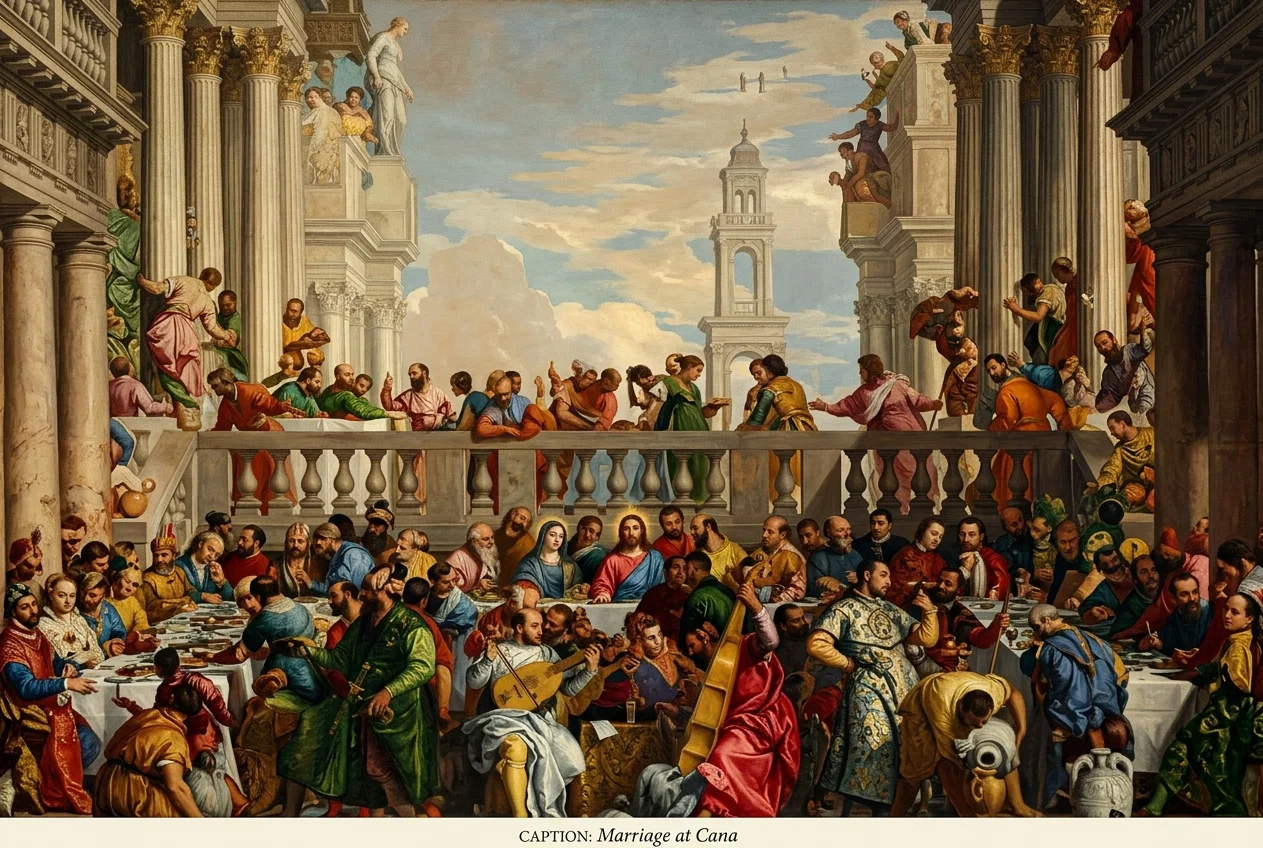
Marriage at Cana
Marriage at Cana
"I care not to hear this man further. He is thy servant. Bid him pass on, O Chuza. Behold, in these days every man's servant doth magnify himself; and verily this fellow hath a glib tongue," interrupted Jazer, while his small eyes blazed fiercely, and he would have turned hurriedly away, had not Chuza, the bridegroom, detained him almost forcibly.
"What aileth thee, O Jazer? Verily, I thought to do thee an honor, and now, behold, thou art wroth—and thou one of the scribes of the holy temple!"
At these words an expression of dogged helplessness came over the face of the scribe, like that of a caged animal, and he exclaimed morosely as he again seated himself:
"The Man! the Man! Jesus of Nazareth! Everywhere I find Him. The world is already going after Him. Even when a mere Lad, the lawyers in the temple preferred listening to His words rather than mine. But proceed with thy foolish tale, Caleb. Why should I interrupt thee further? What said the woman unto Him?"
"What said she? There was a look of tender love and perfect confidence upon her face as she said quietly, turning toward Him: 'Behold, the wine faileth. Verily, they have no wine.' And I heard the voice of the Man as He replied: 'Woman, what have I to do with thee? The hour in which I must receive the honor which thou desireth for Me, is not yet come.' These words spake He in a voice of tenderness, and He regarded the woman lovingly. Then turned she toward me, and said, 'Whatsoever He saith unto you, that do.'
"We stood near the door which led into the court. At the side of the door stood the accustomed large water-pots of stone. The Man led the way, beckoning me to follow Him; and I indicated to several of the servants to follow also, for from the appearance of the Man, I felt that there was some strange thing about to come to pass.
"At once He pointed to the water-pots, and I wondered greatly when He commanded:
" 'Fill ye the water-pots with water!'"
"Strange as was the command, to obey which necessitated considerable labor, we felt that the Man must be obeyed. In a few moments, the vessels were all filled to the brim, with the clear water of the fountain just outside the court. Then, O Chuza, my heart stood still, when the Man commanded—and verily His voice was like unto the voice of a god:
" 'Draw out now and bear to the governor of the feast.'"
"I saw the servants glance the one at the other, at these strange words, and hesitate; and one said unto his fellow: 'What! shall we obey the voice of a madman? Behold, why should we bring water unto the guests of my lord?' But another turned unto me, saying, 'The Man is a great prophet, and I wot not but He be the Messiah; for even thus saith the Baptizer!"
"Then," continued Caleb, the while Jazer sat in his seat uneasily, "then we each drew, every man for his vessel,—and behold! even as we drew, we saw that it was no longer water, but good wine, sweet and pure, which, when we had quickly tasted, we bare to the steward, who as yet knew not that the wine had failed. Then said the steward unto the bridegroom: 'Wherefore hast thou kept the good wine until now?'"
"But no man said aught of the miracle, until after the Man had departed; and when we would have found Him, behold, He had gone His way."
When the butler had finished his story, there was one face among the guests who had been listening to the conversation—one face—pale, careworn, pain-drawn, which grew radiant with hope, and bright with eager anticipation and desire. It was the face of the gentle invalid, Huldah, the sister of Jazer the scribe.
Let us mark her face well; for it will be some time before we meet her again.
But the countenance of the scribe was a study. Envy and hatred, bitter and deep, had written their ugly lines upon his face, as he rose and went out into the court.
"Thy miracle worker is a sorcerer!" he muttered.
(To be continued)

A Happy Soul Despite Blindness

If you were poor, if you had lost your father when a child, if you had lost your eyesight when six days old, and if you had often felt the blight of bad circumstances, would you still say with Fanny Crosby?—
"O, what a happy soul am I! Altho I can not see, I am resolved that in this world, right happy will I be. How many blessings I enjoy that other people don't! To weep and sigh because I'm blind, I can not and I won't."

OUT OF DOORS

"OUT-OF-DOORS, under the blue dome of heaven, where the sun shines and the fresh breezes blow, where the grass springs up under foot, and the silent stars look down by night—here amid life's great 'primal sanities,' with energy, gladsomeness, and health teeming on every side, man had his ancient home. Here he toiled, and here he also enjoyed the fruits of his labors, his wants being few and easily satisfied, his pleasures natural and wholesome." So reads the first paragraph of this beautiful little volume by M. Ellsworth Olsen. Its chapters are as follows:
*A Sedentary Race The Problem of the Children The Young Man's Needs Beauty Culture Out-of-Doors More Fresh Air and Less Furniture 'Too Much House' The Higher Ministry of Field and Wood Around the Camp-Fire 'The Long Brown Path' Back to Nature and the Soil*
¶ Get a copy of this health-provoking booklet, read it, and then give it to some one else to enjoy. Cloth bound, 60 cents, post-paid. In Canada, 75c.
Pacific Press Publishing Assn.
Mountain View, Cal.
61 Park St., N., Portland, Ore.; 1109 E. 12th St., Kansas City, Mo.; Box 1599, Calgary, Alberta

Little Studies on the Prophecies

One each of the following publications with catalog, 20c, post-paid
"The Coming of Our Lord." A. G. L. 40. One of the most comforting presentations of the prophecies connected with our Saviour's soon coming we have ever read. Especially good for general circulation. Price, 50 cents a hundred.
"The Return of the Jews." A. G. L. 62. Does prophecy teach that Israel as a nation shall be restored to the land of Palestine before the second coming of Christ? This and kindred questions are satisfactorily discussed in this pamphlet. Thirty-two pages illustrated. Price, $2.00 a hundred.
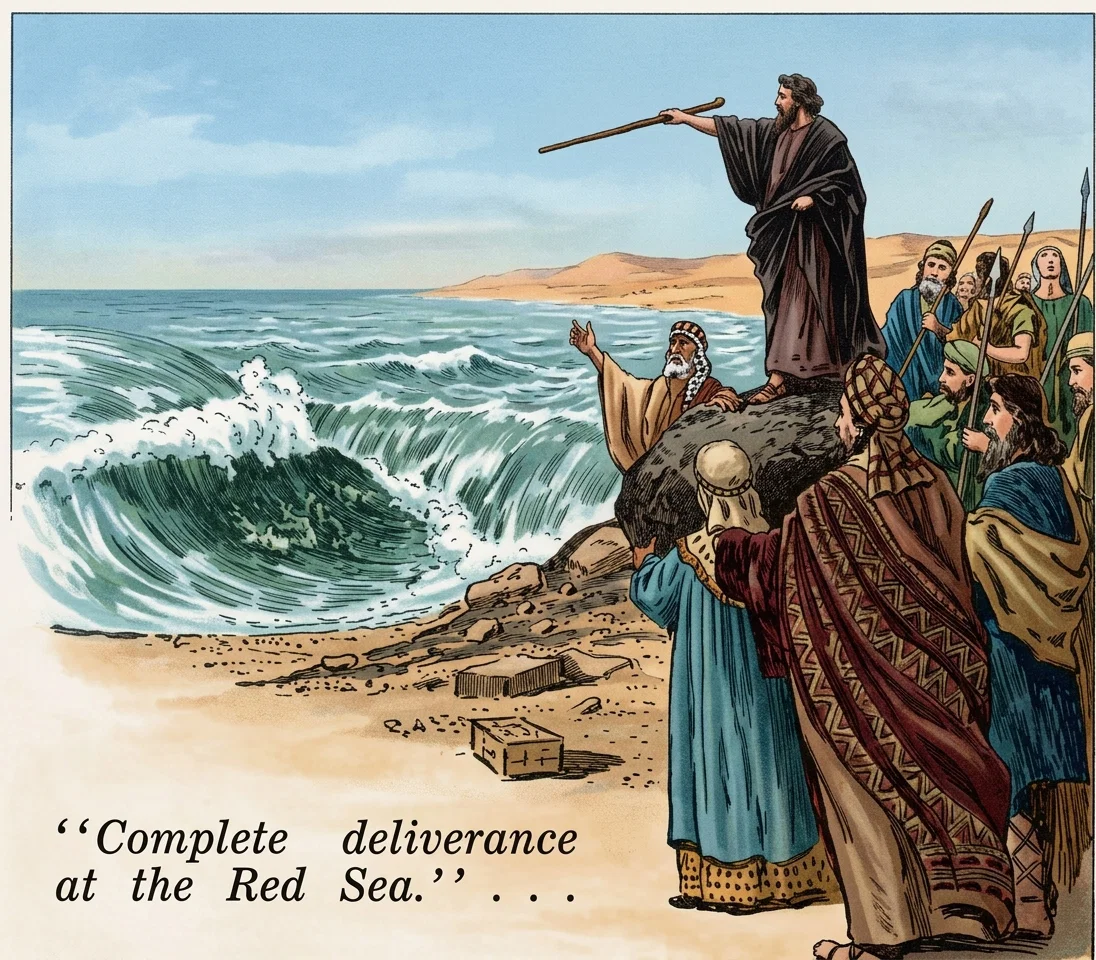
“Complete deliverance at the Red Sea.” . . .
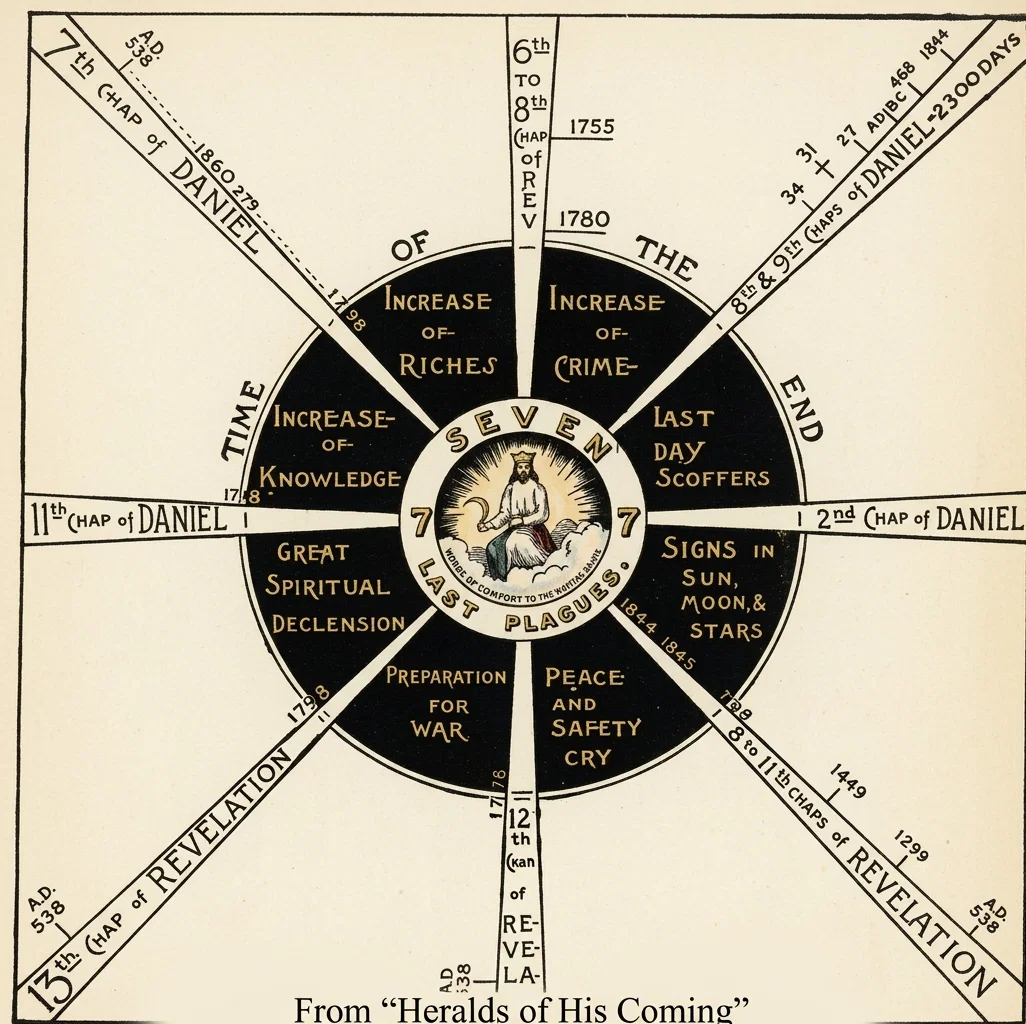
"Heralds of His Coming." A. G. L. 85. The following partial list of the headings in this important study give an idea of its scope:
A Literal, Substantial Saviour, May We Know the Time? Is the End Near? When Will He Come? Special Signs of His Coming, Increase of Knowledge, Last-Day Scoffers, Signs in the Sun, Moon, and Stars, The "Peace and Safety" Cry, Preparing for a World War, Accumulation of Wealth, Increase of Crime, Great Spiritual Declension.
Nearly 20,000 copies circulated last year. Price, $1.50 a hundred.
"Without Excuse." B. S. L. 46. Says the opening paragraph: "The day of the Lord is not an uncertain object in the dim and distant future; but it is, to him who reads aright the page of prophecy and history, a vivid reality, even now throwing the beams of its approaching glory and the light of its consuming fires upon a slumbering world. It comes not without a numerous array of precursors and heralds; yet it will come to many suddenly and unexpectedly." Will those to whom it comes "unexpectedly" be without excuse because of the shining of the sure word of prophecy? is the theme of this leaflet. 50 cents a hundred.
"Manner of Christ's Coming." B. S. L. 124. Because of the many theories as to what the coming of Christ really is, this study will be found particularly helpful. It is an excellent tract for circulation among the educated, and those who look upon Christ's coming as conversion or death. Price, $1.00 a hundred.
From “Heralds of His Coming”
"Signs of the End." B. S. L. 194. "'Watchman, what of the night?' This is the question in many anxious hearts. Intelligent people everywhere are alarmed at the outlook of the world to-day. Thoughtful men are becoming convinced that we stand at the threshold of some great change." This opening paragraph indicates the nature of the pamphlet, in which the most notable signs of the end are portrayed. 52,000 copies sold the past two years. Price, $1.00 a hundred.
Order through your tract society, or

Pacific Press Publishing Association

Mountain View, Cal.
61 N. Park St., Portland, Ore. 1109 E. 12th St., Kansas City, Mo. Calgary, Alberta, Canada

Life and Health

A PRACTICAL health journal, published with a view of meeting hygienic needs in every home; teaching how to care for the health and how to preserve life; prescribing simple home treatments to assist nature in throwing off diseases rather than adding more poison by using drugs or unnatural stimulants as remedies; teaching how to avoid disease as far as possible, how to manage in the home when sickness does come, and how to combat the disease by simple remedies which nature provides.
Send for sample copy and special rates to agents. Price 10 cents per copy or $1.00 per year.
Address, LIFE & HEALTH, Takoma Park, D.C.

Our Little Friend

An Illustrated Paper for the Smaller Men and Women, for the Children and Little Ones
Instructive and entertaining, clean, wholesome, sensible. It is a character builder, a helper to father and mother. Our Little Friend would plant seed in the joyous life of the children in the Present, that it may bear blessed fruitage in the Harvest of the Future. Respect your child's individuality. Take the paper for him or her. Only 60 cents a year.
Address, OUR LITTLE FRIEND Mountain View, Cal.
Continue reading: I’m Sorry I Spoke Cross