The Youth's Instructor, Vol. LI, No. 3

Some Missionary Experiences
Earlier text: Some Missionary Experiences

The Weekly Study

Lessons from the Life of Paul
(February 1-7)
There are many experiences in the life of Paul from which we may draw lessons for our life-work in the closing scenes of earth’s history. His work, that of the first great missionary enterprise, presented to the world the very same gospel that must now be presented as the closing message. He reasoned of righteousness, temperance, and a judgment to come; and so must we. That which made him a power in the hands of God will do the same for us.
Preliminary Training.—Learned a trade in his youth. Acts 18:3. Educated at the feet of Gamaliel. Acts 22:3. Intensely in earnest. Acts 22:4, 5; 7:58; 8:1-3; 9:1, 2; Gal. 1:13; Phil. 3:6. Training in Arabia. Gal. 1:17. See “Life of Paul,” pages 33, 34.
His Purpose.—I Cor. 2:2; Phil. 3:7-9; Gal. 6:14.
His Methods.—Acts 13:5-12, 16, 43, 44; 14:1, 7, 8-10; 16:12, 13, 32; 17:17, 19-23, etc. All through the book of Acts, Paul’s zeal for souls, laboring publicly and from house to house, among Jews or Gentiles, is manifested. As before his conversion, so now, he labored for men one at a time. Personal service was the secret of his success.
His Motives.—II Cor. 5:14. He was proud of his work, not ashamed of it. Rom. 1:15, 16.
The Secret of His Success.—Acts 22:15; 26:16. Paul knew Jesus.
The first glimpse we have of Paul is a young man intensely in earnest, but in the wrong. We see him consenting to the death of Stephen, the first martyr to the Christian faith, even caring for the garments of the murderers. Then we find his zeal rising even to the point that he persecuted the saints beyond measure, thinking thus to do God’s pleasure. But when he recognized the call of God to a higher service, immediately he conferred not with flesh and blood. “Lord, what wilt thou have me to do?” marked his course. To preach the gospel of Christ was the absorbing passion of his life. All things else were counted but loss.
In the case of Paul, God used a man who had not been trained in a Christian home from early childhood. He picked out a man who had had all the strong powers of his manhood turned in the wrong channel, and turned those forces into a better and higher channel. All through the Scriptures we see that God uses men and women like Paul,—men and women with indomitable energy and enthusiasm of purpose. He does not destroy these characteristics. Consecrated energy and enthusiasm of purpose are needed to-day.
A precious lesson may be drawn from Paul’s stay in Arabia. There, alone with God, he gained the heart preparation that fitted him to be used to the glory of his Master. Even the trade taught him in his youth, as it was the custom among the Jews to teach their boys a trade, was brought into service in his great missionary career. No task or training, however humble, should be looked upon as commonplace; for all these things may be a preparation for greater service.
Paul had had a vision of the Son of God, and the one ambition of his life was to lead other men to see him. Have you seen Jesus? This is the secret of success in laboring for souls. We may become acquainted with him by prayer, and by the study of his word. As he reveals himself to us in the little details of life, giving precious experiences of trust and restfulness, about our commonplace duties, we should give him glory by telling of these to those who do not thus know him. “Unto you therefore which believe he is precious.” No greater work can be undertaken than to deepen the spiritual life of those with whom you are associated. Those who carry this message to its close will be Spirit-filled men,—men with one absorbing passion,—a passion for souls.
Souls must be saved singly. If we expect God to use us sometime in saving souls, let him use us now. We can not work for men en masse, but the needy soul right at our hand is the one to whom God has called us to minister. The greatest service we can render our Saviour consists not in accomplishing some vast work, in some large field, at some future time, but in doing to-day, with our might, what our hands find to do. He who would labor for souls after he receives a preparation, must work for souls while he is being prepared. As young people, we are apt to put off this service until we are prepared for it. Begin at once to work for those around you who need help, whom you know do not enjoy that sweetness of communion with the Master that comes from a life wholly consecrated to him. This service will bring sweetness into your own life; and the work thus begun will widen until you see it triumph, when, the last message having reached earth’s remotest bounds, the joyous throng of the redeemed are gathered around the throne of God.
This hour could very profitably be closed with an earnest prayer and social service. E. H.

Young People's Society Lessons Lost in Fire

We were sorry that in the confusion and hurry incident to the fire, it was impossible to provide the lessons for the meetings of the Young People's Societies during the two weeks when no paper was printed. Two lessons in the series prepared on the work of Paul had been handed in to the printers, and were lost in the fire. Brother Spicer, who had written these lessons, was on his way to the West Indies, so they could not be replaced at once. However, we are sure that our young people would not allow the loss of the lessons to hinder their meetings; perhaps some of them worked out suitable lessons themselves, and thereby gained an experience that will be of value.
We hope that the series of lessons lately begun may be continued without further interruption.

Williamsport, Pennsylvania

Mrs. W. M. Lee, writing of the Young People's work at Williamsport, Pennsylvania, says:—
“There are about twenty members; about half of the number are between the ages of fourteen and twenty, two or three are a few years older, and several are under twelve years of age. The younger ones could not be excluded, and some of them have proved to be among our best workers.
“Two of the young women have sold every week from thirty to sixty copies of the Signs, and the children have sold some. In the past six months there must have been eight hundred copies of the Life Boat sold, and two or three hundred given away. One member took our papers each week to the depots, and some to the jail. Two of our members have been going for several years to the jail on Sunday mornings to play and sing for Y. M. C. A. services. Two young women have visited the hospital, taking flowers, papers, and tracts. Another has visited as often as possible the home for aged colored women, reading and praying with them. All this has been done willingly, and has brought blessings to the doers, as well as to the receivers.
“A series of Bible readings was held by a young man at the home of a stranger, and we have reason to expect fruit from it. There have been little things done in various ways that the Lord recognizes as loving missionary work. Some of the younger ones have been very persistent in the effort to sell the Signs and the Life Boat, meeting with the best success with the latter. I have recommended that all engage in the package distribution of tracts.
“For six weeks they have held their meetings on Sunday evenings in place of other services. Thus they are acquiring ability to lead or give a lesson, not just before their own class, but before all the church.”
“When you lose a minute, you lose all that that minute could have accomplished by its prolongation forever.”

What the Southwind Did for Fuzzy Fluff
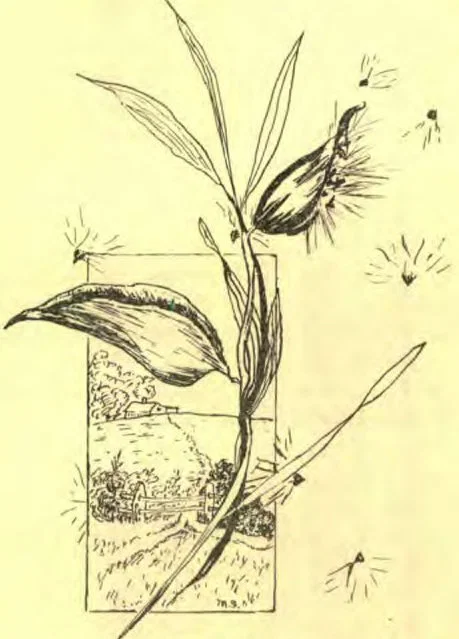
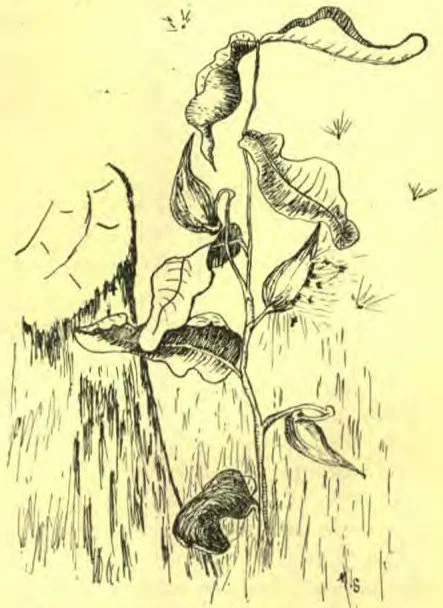
Poor Fuzzy Fluff was a prisoner, and that was not the worst of it; she had been a prisoner ever since she was a “teenty weenty” baby. She had not minded it then, being quite content with Mother Milkweed and her cozy home, but now, when she was nearly grown, she began to long for fresh air, sunshine, and a chance to try her wings on the passing breezes.
Mother Milkweed had always been kind to Fuzzy Fluff, rocking and tossing, sheltering and feeding her, quite after the usual mother fashion. Fresh, rich milk was never lacking, and so much did she drink of it, and so well did she thrive upon it, that Fuzzy Fluff’s little, brown body grew round and plump, while her silvery wings increased in size, until now they were ready to sail off into the summer air at the very first opportunity.
Such wonderful wings they were—too lovely to describe. They were fragile, yet bright, reminding one of a bit of morning mist, or a gleam from minnow scales, or a scrap of thin, light cloud, high in the zenith at sunset. They were pure-white, and so transparent that the smiles on the faces of the field flowers could be seen through them as they fluttered past. They were delicate and flimsy, yet strong enough to bear Fuzzy Fluff safely wherever the wind might carry her.
But of what use were her beautiful wings to Fuzzy Fluff, as long as she remained a prisoner in that little, narrow room? True, its walls were smooth as satin, and were warm when winds blew cold, and cool when winds blew hot. But Fuzzy Fluff cared not a spider-web for her snug home; she wanted to be free, and would be satisfied with nothing else, however pleasant.
At last there came a time when the cool showers, which had fallen so frequently those summer days, ceased, and day after day there was no rain. Each morning the air seemed hotter, and each evening the ground dryer, than the day before. The sun shone down on Fuzzy Fluff’s prison, till it seemed too close to endure, and the wind, blowing hot from the highway, brought no relief.
“A TREMBLE TO BE GONE”
Still Mother Milkweed kept the door fast locked upon poor Fuzzy Fluff, who became more and more restless as the heat and drought increased.
One day, which seemed the warmest of all, the Southwind was idly wandering over the fields and meadows. He chanced to pass the little, narrow room where Fuzzy Fluff was a prisoner, and turning that way, he sauntered by to pay Mother Milkweed a visit. Gently he swayed her green garments to and fro; then, rocking the walls of the little, narrow room, he blew his warm breath against its sides, and pried at the door with his delicate fingers until the day was nearly over. But at sunset his breath failed, and he disappeared down the highway.
But the Southwind’s visit had been a happy one for Fuzzy Fluff. His gentle efforts had broken the lock of the prison. That night, as she slept, there was a sudden snapping, cracking sound at the door of her house, and a quick spring to its walls. Fuzzy Fluff gave a startled leap, and then, O joy! there was a breath of cool night air, and stars were shining overhead. But the door had opened only a little way, not far enough to let Fuzzy Fluff through, so in spite of her impatience at the delay, she was obliged to await a time when the door should open wider.
The next morning, almost before the red and gold had faded out of the sky, the Southwind once more passed Mother Milkweed’s. There was the door of the narrow room slightly ajar, and beautiful Fuzzy Fluff pressed closely to the opening, waiting anxiously to be set free.
“Ah, Fuzzy Fluff!” said the Southwind, “I will open the door for you, and we will fly away together where the air is sweet.”
“O, yes,” answered Fuzzy Fluff; “let me out, O, let me out!” and she danced up and down with delight at the Southwind’s voice.
So the Southwind set to work at once, prying at the door as he had done before. Presently some sunbeams came to help him, and together they opened the crack wider and wider, while Fuzzy Fluff leaned farther and farther toward the sunshine she so longed to enjoy.
A yellow butterfly alighted on a leaf near by, and moved its wings; then the Southwind touched Fuzzy Fluff’s wings, and they, too, moved to and fro, as daintily as those of any butterfly. A grasshopper stopped close at hand, and sang “We-e-e! we-e-e! we-e-e!” but Fuzzy Fluff did not listen; what were grasshopper songs to her, when she wanted nothing but to float away into the sweet, warm air above her?
At last the door of the narrow room was open wide.
Fuzzy Fluff was on the threshold, all of a tremble to be gone. The Southwind blew out her beautiful, flimsy wings, whispering, “Come, come, come!” and soon Fuzzy Fluff passed through the little door, and waving a farewell to Mother Milkweed, floated away with the Southwind, up, up, up, almost out of sight. But her silvery wings were safe, and bore her safely as the Southwind led her over pastures and fields and green meadows, a long, long way.
“THE LITTLE EMPTY HOUSE”
But toward evening Fuzzy Fluff grew weary of traveling so high, and sank a little. Then she began to feel like resting, so the Southwind let her softly down upon a cushion of green moss, near an old stump in the edge of the forest; it was a pleasant spot, and Fuzzy lay quite contentedly while the red sunlight faded in the west. Then the Southwind brought a yellow leaf to cover her, and soon Fuzzy Fluff fell asleep.
When she awoke, she no longer cared for flying about the fields. She dropped her white wings, and put on a green dress, in which she soon grew tall and graceful, by the old mossy stumps. By and by she went to work, and built a little, narrow room, in which she shut up some fuzzy babies, tossing and feeding them just as she had been tossed and fed. In fact, she was Fuzzy Fluff no longer, but a new Mother Milkweed, who, in late summer, waved a farewell to other Fuzzy Fluffs, floating away on silvery wings through the pleasant summer air.
Minnie Rosilia Stevens.

Marjory Confesses

I suspected my brother Bobbie of a perfectly dreadful thing the other day, and I've been sorry ever since. It wasn't true at all, and I'm not going to suspect people any more until I'm sure it's true. This is the way it happened.
Mama gave Bobbie and me a panful of hickory nuts. She never divides them up for us, for Bobbie is just as generous as he can be, and I hope I'm not a greedy girl myself. So we sat down, and were picking them out and eating them. I like hickory-nuts a great deal, and so does Bobbie; in fact, we just love them.
When we had just begun, mama called, “Marjory, come here, and let me comb your hair.”
Of course, I had to go right away. It takes a long time to brush and curl my hair, and I thought Bobbie would set the hickory-nuts aside, and wait till I came back; but he didn't. I was just in the next room, and I could see through the door. There he sat, picking them out as fast as he could, and he seemed to be looking through the pan for the best ones. I couldn't hardly believe it, even if I did see it myself. I felt bad because I wasn't going to have any nuts, but I felt ten times worse to think that my brother Bobbie would be so mean.
When mother had my hair all curled, I walked in very slow. I wasn't going to say a word to him about it; I was going to leave it to his own conscience. Mother does that way, sometimes.
Then Bobbie said: “Look here, Marjie. I picked these all out for you.” And there he had them laid on a paper,—a whole lot of nice meats!
I felt so glad and so ashamed that I pretty nearly cried; but I didn't. I said, “Let's have a little tea-party with them.”
Bobbie said, “All right.” So I got out my tea set, and arranged the table. I managed to give Bobbie more than half, and he's so young he never noticed. I didn't feel as if I deserved any at all. We had a nice time.
Of course I told mother all about it that night before I went to bed. She said it must be a warning to me not to think evil. Then she read me that chapter in the Bible about “love thinketh no evil.” She said I needn't tell Bobbie about it as long as I hadn't said anything rude to him, for the naughty feeling was in my own heart, where no one knew about it but God and me. So when I said my prayers, I said I was sorry, and I don't believe I'll do it again.—S. S. Times.

The Little Missionary

A little girl of eight or ten Knocked lightly at my door, And came inside with smiling face, And with a quiet, gentle grace, Showed me her simple store.
“The money that I get for these Is for the mission, ma’am; The pincushions are just a dime; Three balls of popcorn at a time I just sold to a man.
“There’s now a dollar in my purse,— I’m sure I’ve counted true,— I mean to get all that I can, You see, this is our mission plan: How does it seem to you?”
I kissed the little face aglow With missionary zeal, And said, “It’s fine, for children too Can find some work to bravely do, And for the heathen feel.
How dark their lot, with none to tell About the home above,— How Jesus came to bless them here, And now a home he will prepare, Where they may share his love.
Mrs. P. Alderman.

First Lessons in Geography

Lesson XXIV — Questions on the Map of Europe

1. In what hemisphere is Europe? What country east of Europe? What country south of Europe? What mountains between Europe and Asia?
2. What water between Europe and Africa? What ocean west of Europe? What ocean north of Europe? What sea east of Europe?
3. What mountains are in southern Europe? What other mountains in Europe?
4. What peninsula is situated in southern Europe? What important city in Italy? Why is Rome important?—It was once the capital of a great nation, which ruled the world, and is spoken of often in the Bible. Rome is now the capital of what church?—The Roman Catholic Church.
5. What peninsula is in the northern part of Europe? What peninsula in the southeastern part of Europe?
6. Why is Greece important?—Because it was once one of the nations that ruled the whole world, and is mentioned in the book of Daniel.
7. What other cities are there in Europe? What islands are northwest of Europe? What large city is on these islands? Why is it an important city?—Because it is the largest in the world. What rivers in Europe flow north?
8. What sea is northwest of Europe? What sea is east of Italy?

Lesson XXV — Questions on the Map of Asia

1. In what direction is Asia from Europe? What three great rivers are in the northern part of Asia? In what direction do they flow? Into what water?
2. What circle crosses northern Asia? What three rivers in the eastern part of Asia? In what direction do they flow? Into what waters?
3. What mountain range in northeastern Asia? What three rivers in the southern part of Asia? In what direction do they flow? Into what water?
4. What mountains north of Hindustan? These mountains are the highest in the world. The whole of Central Asia is a high desert plateau, known as the plateau of Gobi.
5. What sea between Arabia and Africa? What great event happened at this sea? Where does the Bible tell us about it?
6. What mountains in Arabia? For what is Mount Sinai noted? Arabia is largely a desert wilderness. It was in this wilderness that the children of Israel wandered for forty years. How did they get water while in this desert?
7. What sea northwest of Arabia? What two seas between Europe and Asia? What mountain about half-way between the Black Sea and the Caspian Sea? Why is this mountain noted?
8. Where is the Persian Gulf? What large river flows into the Persian Gulf? This river is mentioned in the prophecies of the last days. Ask your teacher where. Abraham used to live near this river when he was a boy. It was from near Mt. Ararat that the people were scattered abroad over the whole earth.
9. What city in Asia on the Mediterranean Sea? For what is Jerusalem noted?
10. What three peninsulas on the southern coast of Asia? Name two peninsulas on the eastern coast of Asia.
11. Where is China? Name three seas that border on China. What islands east of China? Where is Hongkong? Peking? Shanghai? Canton?
12. Name two cities in India.
13. What large islands are southeast of Asia? What zone comprises most of Asia? What circle crosses southern Asia? What great circle crosses the Indian Ocean?

Lesson XXVI — Questions on the Map of Africa

1. What isthmus connects Africa and Asia? What sea between Africa and Europe? What large river of Africa flows north? Into what water? This is the river that was once turned into blood. Tell how it all came about. Through what country does this river flow?
2. Why is Egypt important? Why did the Lord take the children of Israel out of Egypt?
3. What ocean east of Africa? What large island east of Africa? This island is the largest in the world. It is inhabited by the Malay race.
4. What large river in Africa flows east? Into what water?
5. What cape on the east point of Africa? What circle crosses northern Africa? What great circle crosses central Africa? What circle crosses southern Africa? In what zone is the most of Africa?
6. What cape on the south point of Africa? What large river in Africa flows southwest? Into what water?
7. What gulf west of Africa? What cape at the west point of Africa? What cape at the north point of Africa? What mountains in Africa? What great lakes in central Africa?
8. What race of people inhabit Africa?—The negro race. There are millions of them who can neither read nor write, and who have never seen a white man or heard of the Saviour.
9. What great desert in the northern part of Africa? This is the largest desert in the world.

Lesson XXVII — Questions on the Map of Australia

1. Australia is the smallest continent. It belongs to Great Britain. What large island north of Australia? What islands northwest of Australia?
2. What ocean northeast of Australia? What ocean southwest? What islands southeast of Australia? What island just south of Australia?
3. What gulf on the north coast of Australia? What sea on the northeast coast of Australia? What river in Australia? What mountains?
4. Where is Melbourne? Sydney? Brisbane?
5. Are there any large lakes in Australia? In what part of Australia are the mountains? (Australia consists of a high plateau, with a rim of low mountains around the coast. There is only one large river in the continent. There is but very little rainfall in the interior, and it is so dry that parts of it have never been explored. Along the coast, and where there is enough rain, the country is very fertile.)
6. What circle crosses about the middle of Australia? In what two zones does the continent lie? (Nearly all the people of Australia speak the English language, and profess Christianity.)
Note to Teachers.—See that the children have maps for these lessons, and teach them how to use such maps in study. Floyd Bralliar.

INTERMEDIATE LESSON

VI — The Pillar of Cloud and Fire

(February 7)
Lesson Scripture: Ex. 12: 40-51 and 13: 17-22.
Memory Verse: “Who maketh the clouds his chariot.” Ps. 104: 3.
God had told Abraham just how long his seed should be afflicted in Egypt; and although, as the time drew near, there seemed less and less hope that Pharaoh would let them go, yet on the very day that the time was fulfilled, God brought them out with great riches.
God himself led them forth, and guided them in the way that they should go. At this time the Israelites did not know much about the Lord. They had begun to worship the false gods of Egypt, and we can see by what they said to Aaron a little while after, “Make us gods, which shall go before us,” that they expected to be led by something that they could see.
The word of God tells us that “the invisible things of him from the creation of the world are clearly seen, being understood by the things that are made.” “His eternal power and Godhead” are the “invisible things” that can be clearly seen in his works. Rom. 1: 19-21.
God wanted first of all to teach his people to know him, so that they might trust him fully, and follow wherever he led them. So he gave them object-lessons to teach them. He did special works among them, to teach them to see him doing the same works everywhere, and all the time. Thus they would know that he was always present, to do for them whatever they needed.
The pillar of cloud and fire was not only to lead them and show them the right way. It was to open their eyes to see that “the heavens declare the glory of God; and the firmament showeth his handiwork,” to teach them to lift up their eyes on high, “and behold who hath created these.”
He who “stretcheth out the heavens as a curtain, and spreadeth them out as a tent to dwell in,” now “spread a cloud for a covering” over his people. In the hot, dry, sandy desert, the cool shade and moisture of the overshadowing cloud, must have been very refreshing to the weary travelers. And at night, when the sun had set, and the air grew chilly, “the glory of the Lord appeared in the cloud,” and lightened their darkness, warmed, cheered, and protected them from the dangers that were around them on every hand.
We are told that the pillar of cloud to the Egyptians “was a cloud and darkness,” but “it gave light by night to the children of Israel.” He who commanded the light to shine out of darkness made the dark cloud a light to his people. Do you not see that he was teaching them just the lessons that we learned in the beginning from the first chapter of Genesis?
God was in the cloud that led the Israelites, and so his glory shone forth from it. But he “maketh the clouds his chariot,” and his glory appears in every one of them. Would you not like to see “the glory of the Lord” appearing in the cloud? Then lift up your eyes on high when the setting sun paints the clouds with rose and amber, and gilds them with glory. Or again when the drops of water that form the mist break up the sun’s rays into the seven-hued rainbow. There you may see the same glory that the Israelites saw; for remember that “the heavens declare the glory of God,” because he has put his glory upon them, that, in reflecting it, they may give light and warmth and beauty and fruitfulness to this world.
When God is speaking of some who say, “My way is hid from the Lord,” as though they thought he had forgotten and was not leading them, he says, “Lift up your eyes on high, and behold who hath created these things.” So long as we can look up and see the firmament over our heads, and the glory of the Lord that it shows forth, we may be quite sure that God has not forgotten us, and that he will be our Guide and Saviour.

Questions

  1. How long were the Israelites in Egypt? Ex. 12: 40. What had God told Abraham about this?
  2. What did they take with them when they left? Tell why Joseph’s bones had been preserved, and why they took them out of Egypt.
  3. Which way did God lead the people? Why did he not take them the shortest way?
  4. How did they know the way they were to go? Verse 21. Was the pillar of cloud and fire only to show them the way? Tell what else it did for them. Ps. 105: 39, first part.
  5. What sort of country were they traveling through? What, then, would be the effect of their cloudy covering?
  6. What did the pillar of fire do for them? Ps. 105: 39, last part. What was it in the cloud that gave light?
  7. What does God make of the clouds? Ps. 104: 3. What may be seen in every one of them?
  8. What has God told us to do so that we may know he is leading us? Isa. 40: 26, 27.

Mother's Apron Strings

When I was but a verdant youth, I thought the truly great Were those who had attained, in truth, To man's mature estate. And none my soul so sadly tried, Or spoke such bitter things, As he who said that I was tied To mother's apron strings.
I loved my mother, yet it seemed That I must break away, And find the broader world I dreamed Beyond her presence lay; But I have sighed, and I have cried, O'er all the cruel stings I would have missed had I been tied To mother's apron strings.
O happy, trustful girls and boys! The mother's way is best; She leads you 'mid the fairest joys, Through paths of peace and rest. If you would have the safest guide, And drink from sweetest springs, O keep your hearts forever tied To mother's apron strings.
— Nixon Waterman.

A Great Engineering Feat

With the recent laying of the last coping stone of the great dam across the River Nile at Assuan, the ancient land of the Pharaohs sees the completion of a national work which is not only the greatest of its kind in existence, but in its beneficent results will probably outrank any scheme carried out in Egypt, either in ancient or in modern times. The completion of this dam and a similar structure at Assiut will provide in the Nile Valley a vast reservoir capable of supplying over a billion cubic yards of water every year. The surplus waters of the river will be stored during the flood season, and then drawn upon for the irrigation of wide tracts of land which for many centuries have lain waste for lack of water. As a large result of the new system of irrigation, there are extensive tracts of land which henceforth will bear two crops a year where formerly they bore but one; while the area devoted to sugar cultivation will be greatly increased.
The Assuan dam itself is one of the greatest engineering works in existence. It is no less than one and one-fourth miles in length, and is pierced by one hundred and eighty sluice-gates twenty-five feet in height and seven feet in width, by means of which the regulation of the waters will be secured. The total cost of the two dams will be about $25,000,000.—The Scientific American.

VI—God’s Power Manifested in Deliverance

(February 7)
Lesson Scripture: Ps. 105: 26-38.
Memory Verse: Ps. 91: 2, 3.
He sent Moses his servant, And Aaron whom he had chosen. They set among them his signs, And wonders in the land of Ham. He sent darkness, and made it dark; And they rebelled not against his words. He turned their waters into blood, And slew their fish. Their land swarmed with frogs In the chambers of their kings. He spake, and there came swarms of flies, And lice in all their borders. He gave them hail for rain, And flaming fire in their land. He smote their vines also and their fig trees, And brake the trees of their borders. He spake, and the locust came, And the grasshopper, and that without number, And did eat up every herb in their land, And did eat up the fruit of their ground. He smote also all the first-born in their land, The chief of all their strength. And he brought them forth with silver and gold; And there was not one feeble person among his tribes. Egypt was glad when they departed; For the fear of them had fallen upon them.

Questions

  1. What event is described in the scripture of our lesson to-day?
  2. Where is this experience recorded? What led to it?
  3. Against what people was it directed?
  4. Who was sent to deliver Israel? Why did Aaron accompany him?
  5. To whom did they first show signs and wonders? How were they received?
  6. How did the king receive their message?
  7. What was the first sign wrought by the Lord?
  8. What effect did this have?
  9. What did he then send? What was the significance of this plague?
  10. What two plagues now came upon the land? How generally were these effective?
  11. By what power were they sent?
  12. Describe the storm which followed. Ex. 9: 18-25.
  13. Was any part of Egypt exempt from the storm? Ex. 9: 26.
  14. How was every green thing that the storm had left destroyed?
  15. What was the last plague? What was thus cut off?
  16. How were the children of Israel now brought forth?
  17. What was their physical condition?
  18. How did Egypt feel when they departed?
  19. What had wrought this change?

Notes

Read also Ps. 78: 43-52.
Moses’ preparation for service deserves more than casual study. That decree which brought sadness and gloom into the homes of the Hebrews was used by the Lord to fit the man whom he had chosen to lead his people out of Egypt when the fulness of the time should come.
The circumstances which would not permit Moses’ parents to rear him in their own home led to his being placed where he could receive the training and education that would fit him to be Israel’s future leader.
Note Moses’ fidelity to God when the crisis came in his life (Heb. 11: 23-26); read also Ps. 84: 11; and the hope which buoyed him up in these trying hours. Heb. 11: 26, 39, 40.
But Moses’ preparation was not complete when he had served in the Egyptian court. Forty years were spent in the solitude of the mountains, where he could become acquainted with God. Read “Patriarchs and Prophets,” page 251.
Do not fail to observe the practical lessons in the life of Moses.
A study of the plagues reveals the fact that they seemed to be designed to destroy the confidence of the Egyptians in the power and protection of their idols. Note 5 in the Appendix to “Patriarchs and Prophets” will throw some light on this subject. By reference to the history itself (Exodus 7 to 13), we find that some of the Egyptians did have their faith shaken in their idols, and saw in these things the finger of God. See also “Patriarchs and Prophets,” page 270.
“The plagues upon Egypt were similar in character to those more terrible and extensive judgments which are to fall upon the world just before the final deliverance of God’s people.” Ps. 91: 1, 10. Now, while Jesus still intercedes for us, the preparation must be made that will enable us to stand in the trying times before us.”—Lesson Pamphlet.

A Mother's Prayer in a Heathen Temple

A Christian heard a heathen woman praying passionately in a heathen temple. She had in her arms a pitifully misshapen baby, and she was praying that it might grow beautiful like other babies. As she turned to go away, the Christian asked her, “Friend, to whom have you prayed?” “I do not know,” she answered, “but surely there must be some one somewhere to keep a mother’s heart from breaking!” The message of missions is that there is this Some One.—Selected.

Sent on THREE DAYS' TRIAL FREE

THE CO-RO-NA MEDICATOR CURES CATARRH

Head-Colds, Pains and Roaring in the Head, Partial Deafness, Sore Throat, HEADACHE, La Grippe and All Diseases of the Air Passages by Inhalation. The Most Perfect Appliance ever offered.

SPECIAL OFFER:

For a short time I will mail to any reader naming this paper one of my new improved CO-RO-NA MEDICATORS, with medicines for a quick home cure, or three days' trial FREE. If it gives perfect satisfaction, send me $1.00 (half price); if not, return it at the expired time, which will cost you only three cents postage. Could any proposition be fairer? Address
E. J. WORST, 16 Elmore Block, ASHLAND, OHIO
AGENTS WANTED
EDITORIAL NOTE—If you have the slightest symptoms of Catarrh, or are easy to take cold, you should send for a CO-RO-NA on the easy terms offered. In writing be sure to name this paper.
Continue reading: Staying Power