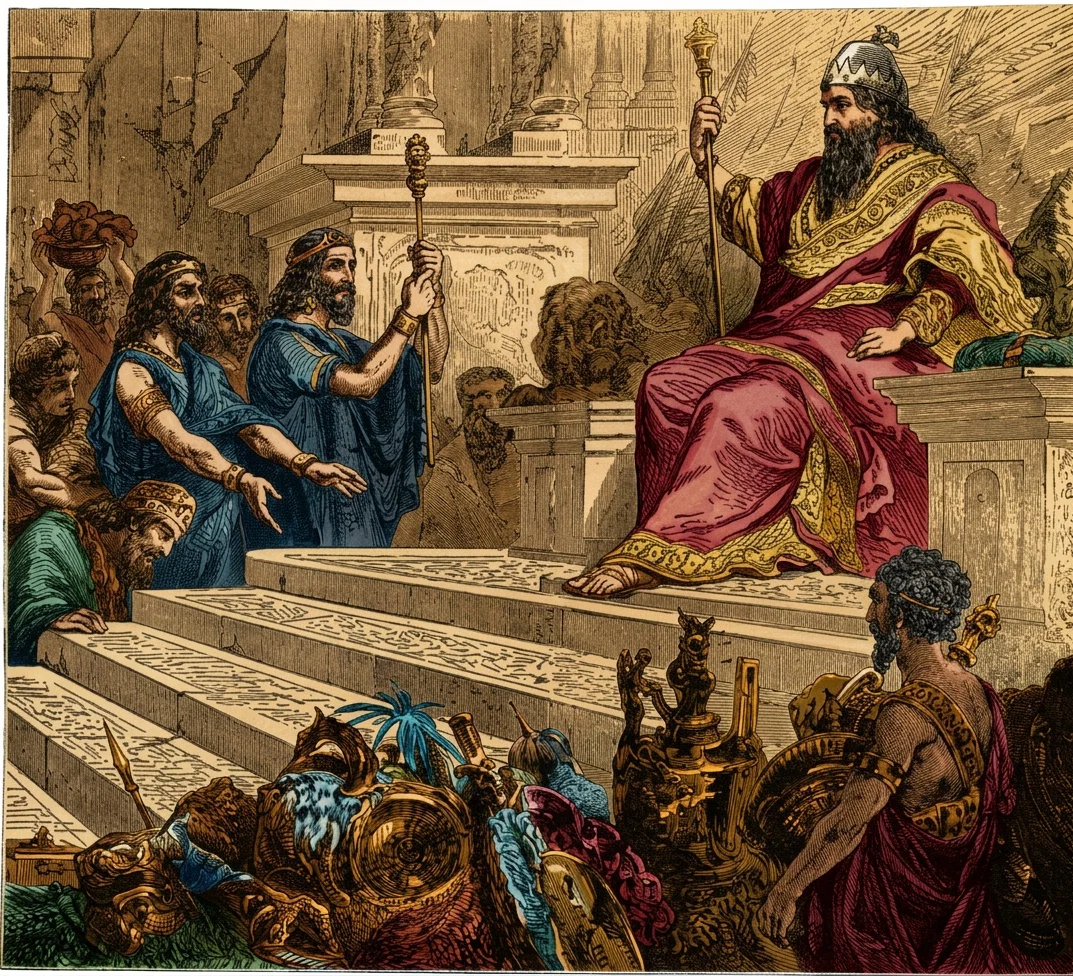
PERU is a natural center, from the state capital of which our Gospel work will radiate outward in many different directions. As a proper place for missionary headquarters, Lima has the following advantages over all other cities on the entire coast:—
1. The climate is almost perfect, being neither too cold nor too hot during any time of the year for comfort and activity.
2. Public health is exceptional. Outside of smallpox (which with the present system of enforced vaccination, will soon disappear) epidemics are almost entirely unknown. When contrasted with other coast towns, such as Panama and Guayaquil, where yellow fever and other malignant diseases are very destructive to human life, Lima appears as the most favorable and most desirable center for all of our missionary labors, health alone being considered.
3. It is the largest city, and with Callao only seven miles away, has the largest, best, and most important seaport between San Francisco and Valparaiso.
4. It is in touch with nearly, or perhaps fully, two millions of Indians living on the transandine table-lands of Peru, Bolivia, and the upper Amazon.
These Indians are, in a large measure, the industrious, peace-loving descendants of a former unique, and in many respects wonderful, civilization, and are deserving of the sympathy and missionary effort of all Christendom. They can be easily evangelized. And when once freed from the priests, who do nothing more for their material and spiritual welfare than to rob them by an unlawful and iniquitous system of forced tithing, and fill them with superstitions regarding the miraculous powers of the Virgin Mary and of wooden images—when once freed from these conditions, and placed under those enabling them to unfold to the fullest possibilities of their manhood, these redskins will make as good agriculturalists, artisans, teachers, preachers, philosophers, and scientists as the Anglo-Saxons themselves. They can be reached better through missionary effort directed from Lima than in any other way.
5. Lima is in touch, by means of rail, water, and telegraphic communications, with all other coast towns far and near, thus making it, in connection with the other advantages just named, the most desirable missionary center in all the west coast of South America.—Gospel in All Lands.
PEOPLE OF SANTA FE, NEW MEXICO.
This city of Santa Fé is a queer place, with its lowly homes and high cathedral, with its narrow streets and its broad outlook, with its swarming saloons and sparse schoolhouses, with its hot suns and cool shades, with its dust and donkeys and ditches, with its palace and plaza and pueblos. No city can surpass it either for situation or for apparent lack of progress, for objects of interest that do not grow upon the visitor, or possibilities that excite wonder because they do not develop more rapidly.
The oldest city in the country, it can boast of curious ancient buildings and records, and of many specimens of rude art; but of modern life it can show but little. In some respects it is an oriental city. Costumes patterned after those worn in Palestine can be seen on its streets. Pottery that might have been made in Arabia is sold in its stores. Beasts of burden, apparently imported from Barbary, laden with wood, bound like barrels about them, thread its alleys. Complexions swarthy enough to belong to the Bedouins confront you frequently, and women, closely veiled and clothed in black, flit across your path at every corner.
The apparent sadness of the native population arrests your attention. Faces more careworn and depressed than those you will see every Sunday thronging the cathedral can hardly be found on earth. The very religion of the people seems to be fearfully pathetic. A stamp of anxiety, such as the Inquisition must have left on the features of the men and women living under its shadow, is a Mexican heritage. The hard conditions of life to which the people are subject may seem to some to account for this strange fact.
Yet the more one studies the problem the clearer he will see that their religion does not relieve, but rather intensifies, their apparent misery. It is evidently a kind of religion that does not touch their better natures. It appeals to their fears, enshrouds them in superstitions, stimulates feelings of dread and awe, and offers nothing to their spirit of inquiry. No wonder the pall of hopelessness rests upon their lives. Nor is it strange that under such unnatural conditions vices thrive, ignorance perpetuates itself, the spirit of progress is unattainable, and the people stand in the way of their own prosperity. It will only be when the teacher and the school shall share with the priest and the church the care of the young in New Mexico that better conditions will prevail, a truer life be attained, and the people become a worthy and helpful portion of American society.—The Gleaner.
BAZAAR MISSIONARY WORK.
A MISSIONARY in Multan, North India, writes, says the Gospel in All Lands: "We have a little book shop, where we keep Bibles and tracts, and in front of it is a little wooden platform, from which we preach. It is quite in the middle of the bazaar, with its narrow, paved streets, the crowds of people passing up and down, the shopmen sitting in their small shops on each side, all advertising their wares. Just close to our shop a butcher plies his trade (a Mohammedan, of course), and unsavory-looking pieces of meat hang outside; occasionally a purchaser comes and buys a piece, and if there are any scraps left over, they are thrown into the road, where they are instantly pounced on either by some hungry pie-dog, or by the crows, or the huge kites that are continually circling in the air overhead. Usually the kites get it, the dogs and the crows being too slow! Then opposite there will be a sweetmeat shop piled with sweets, and farther along a grain seller, and so on, and in the air the ever-pervading smell of the bazaar, quite peculiar from the smell of a London slum, because there is a sickly sort of spicy odor about it!
"It is here that the catechists preach. Standing outside the shop, one of them begins reading aloud, and very soon a crowd gathers round, leaving him hardly room to12breathe. He reads on until a good many have collected, and then begins to preach, and preaches for about twenty minutes or so. When he has done, perhaps some will ask questions, which he answers if they are sensible, or passes off with a joke if they are utterly foolish, as they often are. Then the other catechist takes his turn, the first crowd turns away, and a fresh audience assembles. When he has finished, the first one goes on again, and so on, for sometimes an hour or more."
SOWING TIME.
By Christian Times
"In due season ye shall reap, if ye faint not."
I SEEK not the harvest here
From the seeds of truth I sow;
I willingly wait to bind the sheaves
In the world to which we go.
Too busy am I in the field
To track them as they fly;
But I know there's a germ of life in each,
And they can not, can not, die.
The breath of the Lord will waft
Each one wherever he will;
And there it shall spring and bear its fruit,
His purpose to fulfil.
'Tis a joy to bear the seed,
To go with the store of grain,
To scatter it here and scatter it there,
And sow and sow again—
In the morning's dewy hour,
'Mid noontide's sultry heat,
At evening time when the shadows fall,
To drop the Gospel wheat.
I know not which will thrive,
But the promise of God I take;
His eye will follow the smallest grain
I sow for his dear sake.
"Blessed are ye that sow!"
Yes, Lord, the work is sweet;
The hardest toil is the dearest joy,
The soul's most dainty meat.
Thank God for the sowing time!
But who can the bliss foresee
When the work is done, and the workers throng
To the harvest jubilee?
—Christian Times.
THE BIBLE IN POLYNESIA.
REV. DR. W. W. GILL, who spent thirteen years in mission work in the islands of the South Pacific Ocean, speaks in his recent work, "From Darkness to Light in Polynesia," of the Raratongan Bible, a version printed in 1852, for use in that region, as follows:—
"Having used the Raratongan Bible for forty-two years, I may be pardoned for saying that I regard it as an admirable rendering of the original. Many of the improvements found in the English Revised Version have been anticipated. As in all other Pacific and New Guinea versions, the sacred name of 'Jehovah' is transliterated, never translated, thus adding immeasurably to the force of the contrast between the ever-living God and the objects worshiped by the heathen.
"The original translators of the Raratongan Bible caught the real genius of the language, and gave it a permanent embodiment while it was as yet utterly untouched by outside influences. The rendering of the patriarchal portions is simply perfect, the language of the islanders being so well adapted for the purpose. Indeed, Polynesian life, at its best, is strictly patriarchal. The Gospels lend themselves very readily to translation; but in the Epistles a difficulty was evidently felt by the translators in obtaining exact equivalents for the key-notes of the Christian system. Too much praise can not be given to the Rev. H. Nott, of Tahiti, and his co-adjutors, who, in making the Tahitian translation, unconsciously fixed the theological terms for several other groups.
"In a literary point of view, it is remarkable that it should be possible with an alphabet of only thirteen letters to render faithfully the word of God into the languages of savages. In transliterating proper names a few other letters are used; but in the language proper, as above stated, only thirteen. No book speaks to the heart of man—whatever be his race, home or speech—as the Bible. Its voice is sure of an echo from the human heart. The islanders in reality possess but (this) one book; hence the anxiety of the brethren to make it a perfect image of what its divine Author intended."—Methodist Times.
41 "THE Jews therefore murmured concerning him, because he said, I am the bread which came down out of heaven. 42 And they said, Is not this Jesus, the son of Joseph, whose father and mother we know? how doth he now say, I am 43 come down out of heaven? Jesus answered and said unto 44 them, Murmur not among yourselves. No man can come to me, except the Father which sent me draw him; and I 45 will raise him up in the last day. It is written in the prophets, And they shall all be taught of God. Every one that hath heard from the Father, and hath learned, cometh 46 unto me. Not that any man hath seen the Father, save he 47 which is from God, he hath seen the Father. Verily, verily, 48 I say unto you, He that believeth hath eternal life. I am 49 the bread of life. Your fathers did eat the manna in the 50 wilderness, and they died. This is the bread which cometh down out of heaven, that a man may eat thereof, and not 51 die. I am the living bread which came down out of heaven; if any man eat of this bread, he shall live forever, yea and the bread which I will give is my flesh, for the life of the world."
52 "The Jews therefore strove one with another, saying, 53 How can this man give us his flesh to eat? Jesus therefore said unto them, Verily, verily, I say unto you, except ye eat the flesh of the Son of man and drink his blood, ye 54 have not life in yourselves. He that eateth my flesh and drinketh my blood hath eternal life; and I will raise him 55 up in the last day. For my flesh is meat indeed, and my 56 blood is drink indeed. He that eateth my flesh and drinketh 57 my blood abideth in me, and I in him. As the living Father sent me, and I live because of the Father; so he 58 that eateth me, he also shall live because of me. This is the bread which came down out of heaven; not as the fathers did eat, and died; he that eateth this bread shall 59 live forever. These things said he in the synagogue, as he taught in Capernaum."
QUESTIONS.
How did the Jews receive the teaching of Jesus?
At what statement did they stumble?
By what reasoning did they try to show his statement to be untrue?
What injunction did Jesus give to them?
In what way only did he say men could come to him? What promise was made to every one who comes?
What scripture did Jesus then quote to them?
What comment did he make upon it?
Who is the only one who has seen the Father's person?
What is received through faith in Christ?
What did Jesus again declare himself to be?
What happened to those who ate the literal bread from heaven?
What different experience is for those who partake of the spiritual bread?
In what words is this same teaching repeated? What did Jesus declare the living bread to be?
What effect did this teaching have upon his hearers? With what inquiry did they reveal their unbelief?
In what way did Jesus teach that life must be obtained?
What assurance did he then give them? What promise did he make?
What did he declare to be true food? True drink?
What experience belongs to those who partake of this true food?
What comparison did Christ draw between his own life and the life of such followers?
How did he again compare the spiritual and the literal bread?
Where did Christ teach these things?
NOTES.
1. The plain declarations of Jesus concerning himself and his work greatly stirred the Jews. "Their jealousy was aroused, that this man of humble13birth was able to work wonders that they could not explain away, and teach truths that could not be contradicted. So they endeavored to awaken the prejudice and unbelief of the people by referring scornfully to the lowly origin of Jesus. . . .
They contemptuously referred to his life as a Galilean laborer, and to his family as being poor and lowly. They declared that the lofty claims of this uneducated carpenter should at once be repudiated. But Jesus . . . again, in more forcible language, declared his connection with the Father, and the necessity for the heart to be enlightened by the Spirit of God before it can feel the need of a Saviour.
2. Jesus "declared unto them that the temporal food then given them from heaven was but a meager gift compared with the blessing of eternal life which he now offered them. The food eaten then sustained the strength, but did not prevent the approach of death, nor insure immortal life. The bread that the Son of God offered to man was death-destroying, giving in the end immortal life to the body. . . . He declared that as temporal bread imparts health and strength to the body, so will faith in Christ and obedience to his teachings give spiritual vigor to the soul, and life everlasting." In his statement concerning giving his flesh for the life of the world, Christ "points forward to his approaching death, the only true propitiation for the sins of humanity."
3. "The connection between Christ and us must be of the closest possible kind, so close that the assimilation of the food we eat is not too strong a figure to express it. . . . We eat his flesh when we use in our own behalf the death of Christ, and take the blessings it has made possible to us; when we accept the forgiveness of sins, enter into the love of God, and adopt as our own the spirit of the cross. . . . The figure of eating reminds us that receptance of Christ is an act which each man must do for himself. No other man can eat for me. It also reminds us that as the food we eat is distributed, without our will or supervision, to every part of the body, giving light to the eye and strength to the arm, making bone or skin in one place, nerve or blood-vessel in another, so, if only we make Christ our own, the life that is in him suffices for all the requirements of human nature and human duty.
4. Christ in his humanity lived a life of dependence upon the Father. This he did, not of necessity, but of choice, that he might be a perfect example to us. He did not exchange his divinity for humanity, but, clothing his divinity with humanity, he emptied himself, and did not avail himself of his divine attributes in his contest with evil. As Son of man, through a life of complete dependence upon the Father, he won back the glory and exaltation which belonged to him as the Son of God. And not only this, but he won for us in our human nature a life of victory over evil, and made it possible for us to live the life which he lived. This involved his death; for "the life which he had before his death was fair, but not communicable; that which he won in death and its defeat is fairer still, and capable of being given to all who hear and obey his invitation to come." Christ's life of voluntary dependence demonstrated that it is possible for humanity, through the provisions of God's grace, to render perfect obedience to the law of God, and forever silenced the charge that God required more of his creatures than it was possible for them to render. Christ in his humanity, subject to all the conditions and limitations of humanity, obeyed perfectly that law which he in his divinity had proclaimed with his own voice from Sinai, and thus won for us a life of obedience, which, as our High Priest, he ministers to all who yield themselves to him. "Great is the mystery of godliness."
Suggestions for Further Study.
How many are drawn to Christ? Who will be responsible if any do not come?
Emphasize the difference between the present possession of "everlasting life" and being made immortal.
Study the force of the word "living" in verse 51. Compare Rev. 1: 18, etc.
The marginal reading of the Revised Version of verse 55 is, "For My flesh is true meat, and My blood is true drink." Apply the previous study of the word "true."
Is there any connection between the showbread of the tabernacle and the "living bread"?
Compare "the bread which cometh," of verse 50, with "every word that proceedeth," of Matt. 4:4.
OUR WORK AND WORKERS.
By Editor
A CAMP-MEETING is to be held at Adelaide, South Australia, from the 8th to the 18th of the present month.
PROF. W. W. PRESCOTT is now holding a Bible institute at Claremont, South Africa. The work was commenced August 14, to continue twelve weeks.
AUGUST 23 a church of eighteen members was organized at Binghamton, N. Y., by Elders S. M. Cobb and D. A. Ball. This addition was the result of tent meetings.
A BROTHER who attempted to go on a bicycle from Montana to the college at College Place, Wash., met snow eighteen inches deep the first day out, and was obliged to return home.
ELDER J. R. PALMER, who is laboring at Boulder, Mont., says: "We are having an exceptionally large attendance, and there is much talk during the day about our meetings. The people are very friendly. The Methodist and Baptist ministers have taken up their appointments Sunday evenings, and, so far, are regular attendants at our meetings, and assist in the opening exercises."
PROF. E. A. SUTHERLAND, president of Walla Walla College, writes concerning the opening of the fall term: "We have nearly one hundred and fifty students at this time. We have twelve tables in the Home, which will seat ninety. This includes some of the teachers. Last year we opened up with one hundred and thirteen, and sixty in the Home. You see we have been greatly blessed."
IN a recent issue we announced that Rev. C. F. Hawkins, a Wesleyan minister of Melbourne, had become a Seventh-day Adventist. He has issued "An Explanation" of his views in a supplement to the Bible Echo, addressed to his former brethren, the Wesleyan Methodists. It is a very candid document, a conscientious and lucid statement. Following is the closing paragraph:—
"Tho I am now a Seventh-day Adventist minister, and am very happy in the blessed work committed to my charge by God, I cherish no unkindly feeling toward the church of my youth. My only regret is that the love of God's truth should separate us. From my brethren in the ministry I have always had the most kindly consideration, and the most brotherly treatment. My best wish for them and for all my Wesleyan friends is, that soon they may see the truth as I am now able to see it, and be as happy as I am in the enjoyment of it. To all such may it some day be said, 'Blessed are they that do His commandments, that they may have right to the tree of life, and may enter in through the gates into the city.'"
THE PITCAIRN AND PACIFIC MISSIONARIES.
A LETTER from Capt. J. E. Graham, dated Nukalofa, Tongatabu, September 2, gives the following information relative to movements of the Pitcairn and missionaries in the Pacific Islands:
The Pitcairn reached Nukalofa August 29, and was ready to sail at date of writing, for Fiji. No illness is reported among missionaries or crew, and no accident or mishap to the vessel.
Sisters Rosa Young and Hattie Andre take the New Zealand mail steamer, Mariposa, and proceed to Honolulu, where they stop off two weeks with Elder E. H. Gates, thence to California, when, after a short stay, they go east. They will arrive in Oakland about October 10. Brother and Sister Butz and Sister Maria Young remain at Tongatabu, and Sister Sarah Young at Tonga, with Brother E. Hilliard. Brother and Sister R. A. Prickett return with the Pitcairn.
The work in Samoa and Tonga is reported as prosperous. Dr. M. G. Kellogg and wife remain in Samoa, the doctor, being a practical builder, to superintend the building of a sanitarium there. When that is finished the doctor and his wife expect to go to Tonga.
CAMP-MEETINGS IN CALIFORNIA.
By Editor
THE camp-meeting at Sacramento will be held at the corner of 28th and Y Streets, October 1-11. Take J Street cars from station to ground.
The camp-meeting at Los Angeles will be held October 29 to November 8.
The prices for tents at these meetings are as follows: Tents 10x12, $2.50; fly, 50 cents; carpet, 50 cents. Tents 12x16, $3.50; fly, 75 cents; carpet, 75 cents. Tents 14x19, $4.50; fly, 75 cents; carpet, 75 cents.
Those wishing tents for Sacramento meeting should address Elder A. J. Osborne, O Street, between 18th and 19th Streets, Sacramento, Cal.
Those desiring tents for the Los Angeles meeting should order from Elder W. T. Knox, 1427 Temple Street, Los Angeles, Cal. Orders should be sent in at once.
One and one-third rates for the round trip have been secured for the Los Angeles meeting, over the Southern Pacific and Santa Fé railways, from all points in Southern California, on the certificate plan. Certificates, which may be obtained at all stations, should be called for when tickets are purchased. Pay full fare for the ticket to the meeting and obtain certificate. The certificate, and nothing else, will entitle you to one-third regular fare on return. For further information address Elder W. T. Knox as above.
THE CHILDREN'S BOOK.
By Editor
Useful as well as ornamental. Volume 6 of Our Little Friend is full of good stories, just such as children like. They can spend many an hour reading, with no danger of their minds being poisoned with such matter as many do read in other books and papers.
The bound volumes of Our Little Friend are just the books to place in the hands of our children. If we get books for our children, let us get good books for them. There are none better than the bound volumes of Our Little Friend, of which volume 6 is the latest. 416 pp., cloth; profusely illustrated.
It will be sent to any address for $1.00 postpaid.
Address, OUR LITTLE FRIEND,
Box 548, Oakland, Cal.
A NEW TRACT CATALOG
By Editor
"Descriptive Catalog of the Bible Students', Apples of Gold, and Religious Liberty Libraries" is the title of this 36 Page Catalog.
It gives a pithy description of each tract and pamphlet in the above Libraries, together with their size and price. It will greatly assist the reader to select such numbers as he may desire to read and circulate; and may be obtained free of charge by addressing your State Tract Society; the Pacific Press Publishing Company, Oakland, California; 39 Bond St., New York City, N. Y.; 18 W. 5th St., Kansas City, Mo.; or Review and Herald, Battle Creek, Michigan; Atlanta, Ga.
LIFE OF WILLIAM MILLER,
WITH PORTRAIT.
THIS book contains sketches of the Christian experience and public labors of this remarkable man. No other man in this century has been more widely spoken of, and more generally misunderstood. These sketches were prepared by those who were his co-laborers, and are a true presentation of the leading events of his life and labors. In addition to the life and character of the man, the character of the Great Advent Movement, in which he acted so prominent a part, is clearly set forth. It is shown that Mr. Miller was no mere enthusiast, but a man of calm judgment, and his interpretation of the prophecies was mainly correct, his only mistake being in regard to the nature of the event to take place at the close of the 2300 days, in 1844. No one can consider himself well versed in the history of the advent movement in this country who has not read this book.
Contains 408 pp. Price, $1.00.
Address, PACIFIC PRESS, Oakland, Cal.
St. Helena Sanitarium.
(Formerly RURAL HEALTH RETREAT.)
A Health Retreat under regular management, where all natural methods of treatment are used, including pure water, fresh air, beautiful scenery, healthful foods, gymnastics, Swedish movements, electricity in various forms, baths of all kinds, massage, and the rest cure, as may be deemed best suited. Besides, our surgical wards are in the hands of skilled surgeons and trained nurses where the best care can be given.
Send for a circular. Address,
St. Helena Sanitarium,St. Helena, Napa Co., California.
25. AND Judah and Israel dwelt safely, every man under his vine and under his fig tree, from Dan even to Beer-sheba, all the days of Solomon.
26. And Solomon had forty thousand stalls of horses for his chariots, and twelve thousand horsemen.
27. And those officers provided victuals for king Solomon, and for all that came unto king Solomon's table, every man in his month; they lacked nothing.
28. Barley also and straw for the horses and dromedaries brought they unto the place where the officers were, every man according to his charge.
29. And God gave Solomon wisdom and understanding exceeding much, and largeness of heart, even as the sand that is on the seashore.
30. And Solomon's wisdom excelled the wisdom of all the children of the east country, and all the wisdom of Egypt.
31. For he was wiser than all men; than Ethan the Ezrahite, and Heman, and Chalcol, and Darda, the sons of Mahol; and his fame was in all nations round about.
32. And he spake three thousand proverbs; and his songs were a thousand and five.
33. And he spake of trees, from the cedar tree that is in Lebanon even unto the hyssop that springeth out of the wall; he spake also of beasts, and of fowl, and of creeping things, and of fishes.
34. And there came of all people to hear the wisdom of Solomon, from all kings of the earth, which had heard of his wisdom.
Golden Text: "Them that honor Me I will honor, and they that despise Me shall be lightly esteemed." 1 Sam. 2:30.
(1) What was the condition of Judah and Israel? Verse 25.
Note 1. (2) What is said of Solomon's horses and horsemen? Verse 26. Note 2. (3) What duty was assigned certain officers? Verses 27, 28. Note 3. (4) What else did God give Solomon? Verse 29. Note 4. (5) How did his wisdom compare with that of other men? Verses 30, 31. Note 5. (6) How far did his fame extend? Verse 31. (7) How many proverbs did he speak? How many songs did he compose? Verse 32. (8) Of what else did he speak understandingly? Verse 33. (9) Who came to hear and see him? Verse 34.
NOTES.
1. Dwelt safely.—David was a man of war, and during his reign, and previous to that time also, the land was subject to invasion by its enemies. Now all was different, and fear was a stranger. The "vine" clustered about the court of the house, while the "fig tree" grew in the garden.
2. Horses.—"Smith's Bible Dictionary" renders verse twenty-six, forty thousand chariot horses and twelve thousand cavalry horses. The Lord in Deut. 17:16 enjoined that the king should "not multiply horses to himself, nor cause the people to return to Egypt," etc. This evidently means more than a physical return; it forbids Egyptian idolatry. The prohibition of horses was doubtless for a twofold purpose: (1) Horses were chiefly used for war, and the Lord did not wish his people to cherish that spirit; (2) the horse seems to have been dedicated to the sun, and was connected with sun-worship, the chief idolatrous worship, and this was expressly forbidden of God. Solomon's disobedience in this respect was one of the means of introducing sun-worship into the temple, which Josiah put away. See 2 Kings 23:11.
3. Those officers.—"Solomon had twelve officers over all Israel, which provided victuals for the king and his household, each man his month in a year made provision." Verse 7. These officers, with their men, were stationed in different parts of the country, having charge of certain regions and cities.
4. Wisdom and understanding.—The account so far has depicted Solomon's riches, his magnificence, the greatness of the kingdom, the number and condition of the people, etc., all of which is worldly and appealing to the physical senses. Many a monarch might have similar greatness. But the jewel in the crown is the wisdom from above, the understanding which comes from a fear of the Lord. Solomon was wise as a judge, as an architect, as a statesman, in literature, in science. His largeness of heart is likened to the sand on the seashore, denoting limitless field of operation.
5. Excelled.—The children of the east were the Chaldeans and Arabians, who were from early times noted for their astrological investigations, and for their wisdom. Job was of the east (Job 1:3), and so doubtless were his friends. The wise men who came to Bethlehem were from the same quarter. This may also have included the dwellers in India, who were also noted for their profound learning. Egypt was renowned as the seat of learning and the sciences; and magic, geometry, medicine, astronomy and architecture were there highly developed. The names mentioned in verse 31 referred to those skilled in music, specialists in their line. Not only was Solomon more skilled than all these and more learned, but he was a master of botany and zoology. Verse 33. This all came from a knowledge of the true God. It is sometimes asserted by the worldly wise that Christianity makes a man narrow-minded. The statement is wholly unfounded; for the true follower of Christ has for his teacher him who is wisdom itself (1 Cor. 1:30), "in whom are hid all the treasures of wisdom and knowledge" (Col. 2:3), the great Master in all branches of art and science, the Creator and Fashioner of all things, from the tiniest atom or protoplasm to the worlds on high. And this Teacher delights to instruct his students in all things of his. Here is the true wisdom, your privilege to have, even as it was Sol-