The Youth’s Instructor, Vol. 67, No. 19.

Pope Opposes Restoration of Palestine to Jews

The Youth’s Instructor

May 13, 1919

Review and Herald Publishing Assn. · Takoma Park Station, Washington, D. C. · May 13, 1919

Pope Opposes Restoration of Palestine to Jews

The Pope, on March 10, issued an allocution in opposition to the restoration of Palestine to the Jews.
The shipping agents of Buenos Aires estimate their losses for January and February, resulting from the strike of workers, at $10,000,000.
Homer E. Rodeheaver, Sunday’s famous song leader, has been brightening the corners of camps, trenches, and hospitals in France with songs, smiles, and trombone.
Mountain streams in the Great Smoky Mountains of Tennessee are so full of bends and curves that sometimes they have to be crossed a dozen times in the course of a mile.
The world’s available stocks of crude rubber at the beginning of 1919 were the largest on record. The total visible supply of crude rubber, Jan. 1, 1919, is estimated at approximately 87,000 tons.
Troops have been required to quell disorder growing in Egypt. The Turkish flag is reported floating over several villages of Boherra Province. No military casualties have been reported, but several prominent citizens have been killed.
The fifth Liberty Loan drive, known as the Victory Liberty Loan, opened Monday April 21, and closed three weeks later, Saturday, May 10. The maximum amount, as prescribed in the loan bill which passed Congress during its closing days, is $7,000,000,000.
The population of Moscow, Russia, has been reduced from 3,000,000 to 1,000,000, caused by starvation and plague. When a horse dies in the street, men, women, and dogs fight for its flesh and eat it on the spot. Human flesh is reported to have been sold as food.
In China great mills are supplanting the hand loom. Seventy flour mills grind one fourth of China’s wheat harvest of 200,000,000 bushels. Shanghai, the Manchester of the Far East, has been building ocean-going vessels for the United States. Her foreign trade in 1917 reached more than $1,000,000,000 gold.
The coal mined during the week ending March 8 was but 8,058,000 net tons of bituminous, a decrease of 30,000 tons over the previous week, which had shown the first improvement in six weeks. It was 3,550,000 tons below the output for the week ending March 9, 1918. Anthracite production was 989,000 net tons as compared with 1,102,000 for the previous week and 2,099,000 for the corresponding week last year.
Loan first, then church drive. The Victory Loan comes first, the Methodist centenary second, was the decision of the Methodist centenary headquarters. Methodist centenary North and South seek to raise $140,000,000. The executive secretary announced to Secretary of the Treasury Glass, that the church drive would be postponed until after May 25, and also that no conventions would be held between April 21 and May 10, the period of the loan drive.
Former King Louis, of Bavaria, in withdrawing from the world to spend the remainder of his days in a monastery, has followed the example of King Charles Albert, of Sardinia, who after his disastrous defeat at the battle of Novara, in 1849, abdicated in favor of his son, King Victor Emmanuel II, of Italy, and withdrew to a monastery at Oporto, where he died several months later, almost entirely forgotten but at peace with the world. Then there was Emperor Charles V, who after abdicating his many crowns, including those of Germany, Spain, Sicily, Burgundy, and the Netherlands, withdrew in 1557 to the historic monastery of Yuste, where he spent the remaining two years of his stormy life in relative tranquillity.
More than half the deaths among the American soldiers in Great Britain were due to influenza. The total number of cases of the disease in the three months of the epidemic among the Americans here reached 7,512. In that period deaths from pneumonia, developing in most cases from influenza, numbered 1,717. Of 6,000 troops brought on one trip by the steamer “Olympic,” 2,000 contracted the disease; and, as about one third of these cases developed pneumonia, the proportion of fatalities was very large.
Production of a high-grade white paper from cotton linters, after many months of experiment by the bureau of standards, was announced recently by Secretary Redfield. It is believed the process can be commercially profitable, opening an important new source for the production of paper, and saving many thousands of pounds of material for which there has been small use hitherto except in the making of explosives. The Government is said to have on hand several million pounds of linters.
The caterpillar tractor will start soon for its “farthest North” adventure. Secretary Redfield has announced that four tractors will be shipped to the Pribyloff Islands for use over the sands, where an automobile cannot go, in hauling fossil seal bones to the coast, to be shipped to the United States and made into fertilizer. A deposit of bones covering an area of one and a half miles by one-half mile has been discovered, and a grinder installed to prepare the bones for market.
Thousands of rude, two-wheeled oxcarts are in use in Mexico today. The entire contraption is made of wood and thongs; there is not a metal bolt, a nail, or a screw in one of them.

Golden Cords

ALMON J. BALKINS
O Golden Cords! those cords in love's fond memory. Securely tied, they ne'er shall break though stretched beyond the sea. In bonny, buoyant school days they were formed with friendship's art; Each passing year they stronger grew, and twined about the heart.
O Golden Cords! those cords in love's fond memory. They find us close to those who've gone to tell salvation free. In darkened lands, Old Union's sons two hundred now and more Have lengthened out those golden cords that stretch from shore to shore.
O Golden Cords! those cords in love's fond memory! They wend their way to continents and islands o'er the sea. They meet the mornings of the East through mists at ocean shores, They pass beyond the crimson West and on from Union's doors.
O Golden Cords! those cords in love's fond memory! We trace them each to loving smiles of friends we long to see. They reach to lands we ne'er may tour, to those we ne'er may greet Until we meet in realms above and tread the golden street.
Golden Cords
Golden Cords

Our Boys at Fort Leavenworth
W. W. RUBLE
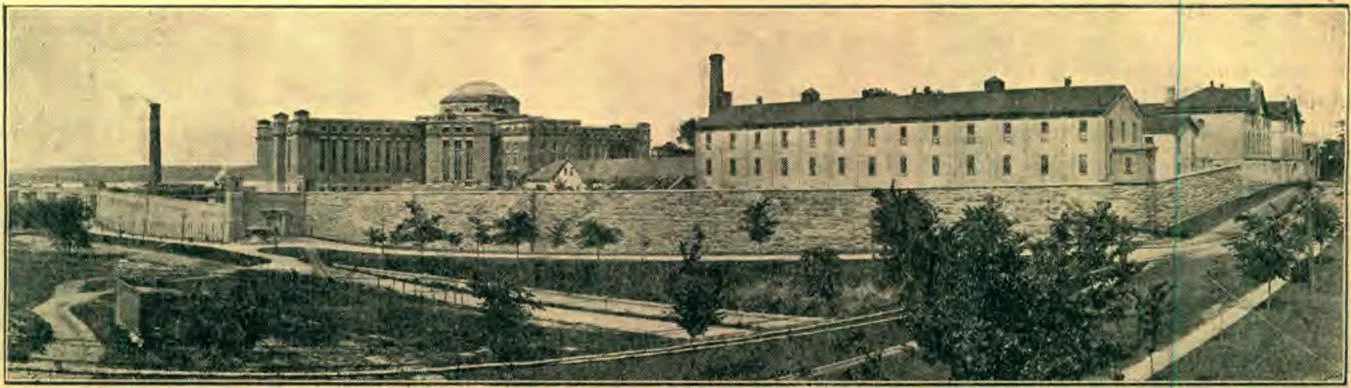
The great iron-barred door closed with a clang. The tumblers in the large padlock slid smoothly into place with a positive click, click, and we were surrounded by high stone walls and were facing the mammoth eight-winged building, the Federal prison, Leavenworth, Kansas. A guard escorted us to the adjutant’s office, where we asked permission to see some Seventh-day Adventist soldiers who were confined in the prison.
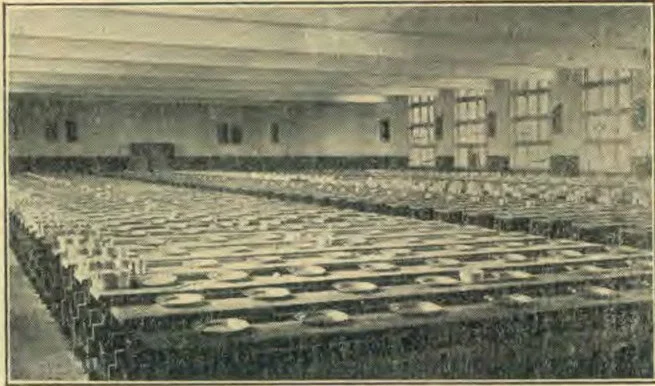
The officers in charge were courteous, and seemed pleased to do anything possible to make our visit pleasant and profitable. One of the officers in charge personally conducted us about the grounds and through the buildings. He showed us through the modern, sanitary kitchen, the bakery, and the great dining hall with a seating capacity of fifteen hundred. He took us to the assembly hall, where meetings are held every Sunday and where amusements are provided for the men during the week. We visited the printing office, where the excellent monthly magazine, Stray Shots, written and edited by men confined there, is printed. After passing through the different wings where are rows of cells, tier upon tier, six stories high, he showed us through the wing where the solitary confinement cells are located.
Though these cells are in what is known as the sub-basement, two floors below the main floor, the corridors extending around the outside of the cells are well lighted and are heated by steam. The sun can shine into the corridors on either side of the wing, making even this part of the prison sanitary and as comfortable as consistent with its purpose.
The dark cells are small, and each has two doors; one a barred door, the other a solid door with a small grating at the top and bottom which, when closed, admits some light and air into the so-called dark cell where men are placed in solitary confinement. While here they are provided with plenty of good bread and water. In these dark cells, with blankets on the cement floor for a bed, and on rations of bread and water, some Seventh-day Adventists were confined for fourteen days. Ten days, for ten hours each day, they were handcuffed to the barred doors of the cells, unable to sit down or to move to any extent.
These men, twelve in number, were sent here on the charge of disobeying military orders. While it is true the order was to do regular service on the Sabbath, the officers at Leavenworth did not know this, and could not know that these men were different from others, so they dealt with them on the basis of the charge until they became acquainted with their characters by personal contact.
The officer said that if he and his fellow officers had known these men when they came and had been acquainted with their belief, this would not have happened. He said, “Every one of these men is a Christian and never makes any trouble. We permit them to rest on Saturday and work other days to make up time, and everything is moving smoothly. Seventh-day Adventist boys who come to us now from the army do not have to go through this ordeal. We find them all exemplary young men.”
The officer then took us to a large room where we were permitted to visit with our boys for several hours. Let one of them tell the story of his experience as he related it to us.
THE FEDERAL PRISON AT FORT LEAVENWORTH, KANSAS
“I became a Christian while serving in the regular army at Vancouver, Washington, under the preaching of Elder P. C. Hayward, of Portland, Oregon. Soon after accepting the truth, our troops moved to the Mexico border, and I was not baptized until the following year. I was allowed to keep the Sabbath, and was shown every consideration by my officers until I was transferred to the field artillery. The colonel of this regiment refused to allow me the Sabbath, and I applied for a transfer to the medical department. Before the transfer came, I was placed under arrest for refusing to obey military orders, which were to do regular work on the Sabbath.
“I was arraigned and tried in Camp Upton, New York, while on my way to France, and was given a sentence of five years’ hard labor, to be served in the station of my company. Up to this time I had never been even placed under arrest. ‘If ye be reproached for the name of Christ, happy are ye; on their part he is evil spoken of, but on your part he is glorified.’
“At Camp Upton I was placed in the guardhouse, but here I found many precious souls hungry for truth, and improved my opportunity to help them.
“I was taken to England on an old English passenger boat in company with thirteen others, and made the trip in sixteen days. We went immediately to Winchester, where I was given my freedom for three days to see the old relics. I was then placed in confinement on short rations and slept on a stone floor. All England seemed to be on short rations. The children were constantly begging us for food.
“We soon entrained for South Hampton, and from there were placed on an old side-wheeler, the ‘Margarette,’ where we were packed in with scarcely standing room, and to add to our discomfort we were soaked with rain and spray. In the morning we landed at the old historic port of Havre, France. Here we were given hard-tack and coffee. As I do not drink coffee I ate my hard bread, and was thankful for that after thirty-six hours of fasting. I was allowed two days’ freedom before being again placed in confinement. Here again I found two men who were seeking the way of life, and who gladly accepted the truth for this time. After three weeks’ stay in Valdohon we were sent to the front, and I received word that I was transferred to the medical department. I was soon placed in charge of the medical work with Battery B, where many opportunities were offered me to testify to the love of Jesus.
“Very soon after this I was called back to Leavenworth, by whom I do not know. On the return trip I was taken to Brest, France, where I was placed in solitary confinement in an old Napoleon prison. The cells were about fifty feet long and about four and one-half feet wide. One window, six by twenty-four inches, at the end furnished all the light. The bed was of solid iron, and the springs heavy oak planks. After ten days of this, I was placed in a similar cell with nine other prisoners; but this was better, for we could sing and pray together.
“Soon we were taken to Leavenworth, and were kindly received by the guards and those in authority. We have received good treatment here. In fact, we have received the best treatment here that we ever received at any place where I have been confined. The officers are men, and recognize that they are dealing with men, and are very considerate. Every Sabbath morning we are permitted to meet at 9:30 for Sabbath school and meeting. We greatly enjoy this, and are grateful to our officers for this privilege. My courage in the Lord is good, and I am learning better each day that ‘all things work together for good to them that love God.’”
When we think of the thousands of Seventh-day Adventist boys who have been connected with the army during this past war, it is remarkable that so few have had serious difficulty in living up to their faith. It certainly speaks well for the men of authority in the Government, and the officers of our army, and shows them to be broad-minded, just, and honorable men; men whose hearts throb with the principles of liberty and justice; men who believe that every man has a right in this great country of ours to worship God according to the dictates of his own conscience. Truly, we are living in the “land of the free and the home of the brave,” and our hearts should respond to the spirit of patriotism and liberty that has been born into this land with a new and fuller meaning.
The Dining-room at the Prison

Study Music

ORISON SWETT MARDEN has said: “If one loves beauty and looks for it, he will see it everywhere. If there is music in his soul, he will hear it everywhere; every object in nature will sing to him. Life will be neither a drudgery nor a dream, but will become full of God’s life and love.” The value of music to the life cannot be emphasized too much. It is important to be able to contribute to the joy of life, through a well-trained voice or skilled hands.
Music finds a response in every life, whether it be young or old. One experiences greater appreciation of song as the ear becomes trained to follow the amalgamation of words and music, and interpret the thoughts and feelings there expressed. Many neglect their earlier opportunities of acquiring the ability to produce music. They thus forfeit one of the blessings that should enter their lives. Yet how easily may this art be learned! A little instruction and encouragement now and then to the child that is bubbling over with activity and does not know what to do, will develop in him musical possibilities that will find expression later in life.
Think of the great blessing a young man or young woman with musical ability may be to the great mass of people whose lives scarcely ever rise above the monotonous round of daily responsibilities. Through music one may enter the secret chambers of the inner life, and awaken a response for higher and holier living. Music has its expression for every feeling or mood of life, and pours out its healing balm into the soul, or urges it on to renewed activities and greater accomplishments.
While watching his father’s flocks, David spent many long hours in practicing the best ways of combining harmonious strains of music and giving expression to his musical moods, until he became “a cunning player on a harp.” Because of his skill he was called to stand before King Saul to play when the evil spirit came upon the king. His playing drove the evil spirit away, and Saul was made well. Thus the young shepherd boy was able, through his knowledge of music, to influence the leader of the nation.
There are thousands of individuals who on account of physical conditions spend their lives within four walls, scarcely ever hearing songs of praise and gladness. Music never falls upon their ears only as it chances to come from some street organ. Music means more to them than it does to you and me. Here is an opportunity, then, for young people to use their talent for music, and by so doing bless humanity. Can we not carry music to such, whether they be in a public hospital or in a private home? It has been said that “a song at the bedside, with an audience of one, is as valuable as a song in a great opera house, with an audience of thousands.” It will bring new life, new hopes, and new being to those whose afflictions are almost unbearable, and we may safely say, that joy and gladness will fill the lives of the singers.
Edward Baxter Perry has said: “Music is a language, primarily the language of thought, of fancy. If you would use it well, you must not only study its elements, its grammar, so to speak, and become familiar with the way others have used it in the past, but above all, you must use it yourself for the purpose for which it was intended; namely, the expression of the thoughts and moods in your heart.”
H. H. HOWARD.

Light to the Blind

FAYE FELTER
AMONG the many publishing houses of our denomination is one which stands alone in the unique, but important work which it is doing. This is the Christian Record Publishing Company, which is sending out tons of embossed literature each month to bear messages of hope and courage to those to whom it is—
“Dark, dark, dark, amid the blaze of noon, Irrecoverably dark.”
The history of the Christian Record is the story of resolute determination to win in spite of great difficulties. It was in January, 1900, that there appeared the first issue of the Record, the seventy-five copies having been printed on a common clothes wringer and stitched on a small pin machine. The promoters of this enterprise, Mr. A. O. Wilson and his wife, both of whom are blind, were joined in the autumn of that year by Mr. L. N. Muck, also blind, who with his wife, is still connected with this work.
As the work grew, it became necessary to increase facilities. Consequently in 1903 a cylinder press was added, which was run by hand at first, but by electricity later.
In the spring of 1904, the Christian Record plant was moved from Battle Creek, Michigan, where it originated, to College View, Nebraska. It now occupies a neat, white building on the south side of the street across from the Union College campus.
A visit to the plant is both interesting and instructive. As we enter the office, we notice a woman using a strange typewriter which has only seven keys. She kindly explains that the machine is used in writing the two-dot system, and is easy for a blind person to operate. We are shown into the next room where stereotype plates of zinc or brass are being made, from which to print the next number of the Record. We do not find a linotype machine, but a simple frame in which is held suspended a plate. By touching certain keys the various combinations for different letters are formed, and these are punched in raised points on the plates by pressing the foot lever. Thus, in one operation the type and plate are made. After it is finished, a proof is taken, and the corrections are made by laying the plate on a smooth steel block and, with a punch and hammer, taking out the incorrect letters by making the plate smooth. The correct letters are then punched in their places by the stereotype machine.
We are taken to the pressroom next, and there we see the stereotype plates being used on the cylinder press. The plates extend only halfway around each cylinder; the remaining half being covered with a rubber blanket. In this way the plate on one cylinder always comes in contact with the rubber blanket on the other, thus making the raised dots. The press prints from two thousand to three thousand pages an hour, and it is fed as skilfully by the blind operator as if he were a pressman with sight.
The completed magazine is about the size of the Ladies’ Home Journal, and is very bulky, though it has only thirty-eight pages. This is because the paper can be printed on but one side, and the stock must be heavy that the dots shall not easily be affected by the pressure of the fingers in reading.
There are two common dot systems in use, the Braille and the New York point, the first using two lines of dots, and the latter three. As many of the blind read only one system, the magazine is printed in both, in order to reach all with its message of cheer and hope.
As the cost of production of embossed literature is high, and many of the blind are unable to afford it for themselves, the magazine is sent free to all who desire it. The circulation is now about 4,200. Among its readers is Helen Keller, who expresses her appreciation of the “cheery, stimulating spirit of the magazine.” The Government also assists, in that it carries literature for the blind through the mails free. The Christian Record has taken advantage of this, and established a free circulating library containing copies of the Bible and some of our denominational books.
(Concluded on page fourteen)
Thus those who sit in darkness are receiving light, and among the blind are many who are anxiously awaiting the time when their eyes shall be opened to behold Christ in his glory.

East Hall and Union College Dormitory Life
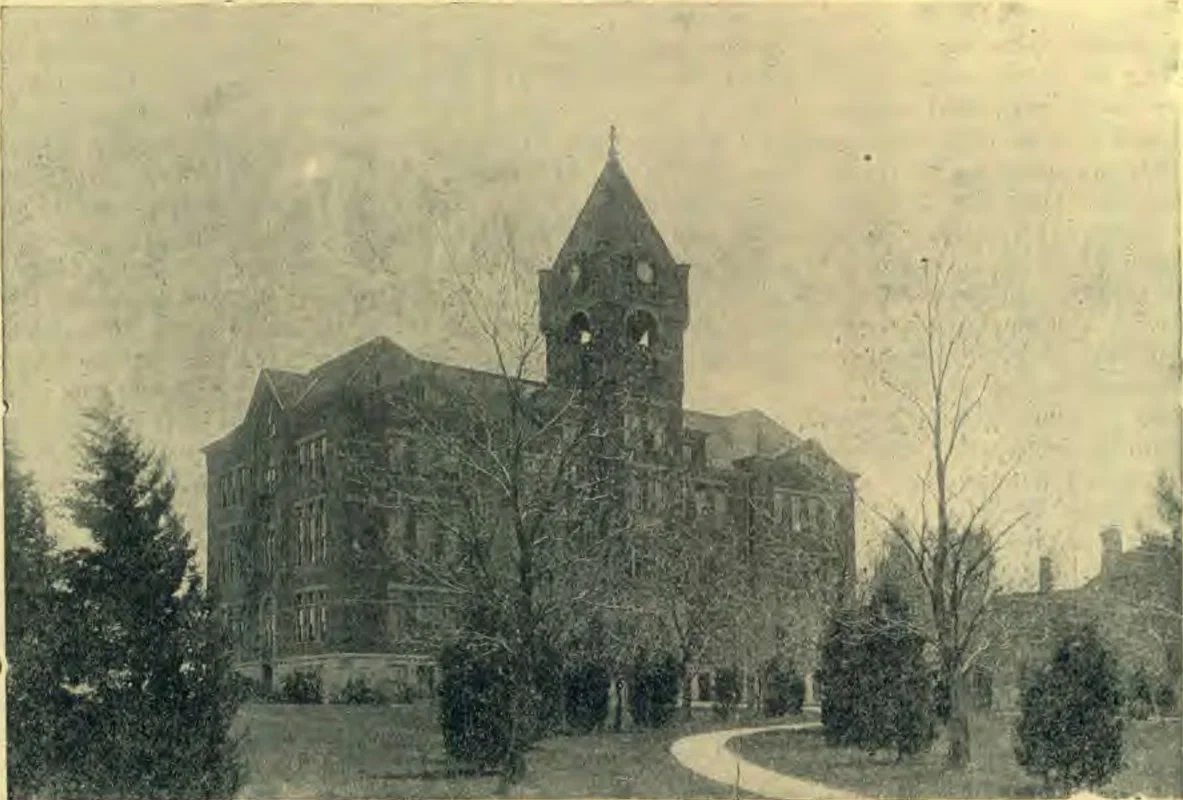
Union College, College View, Nebraska
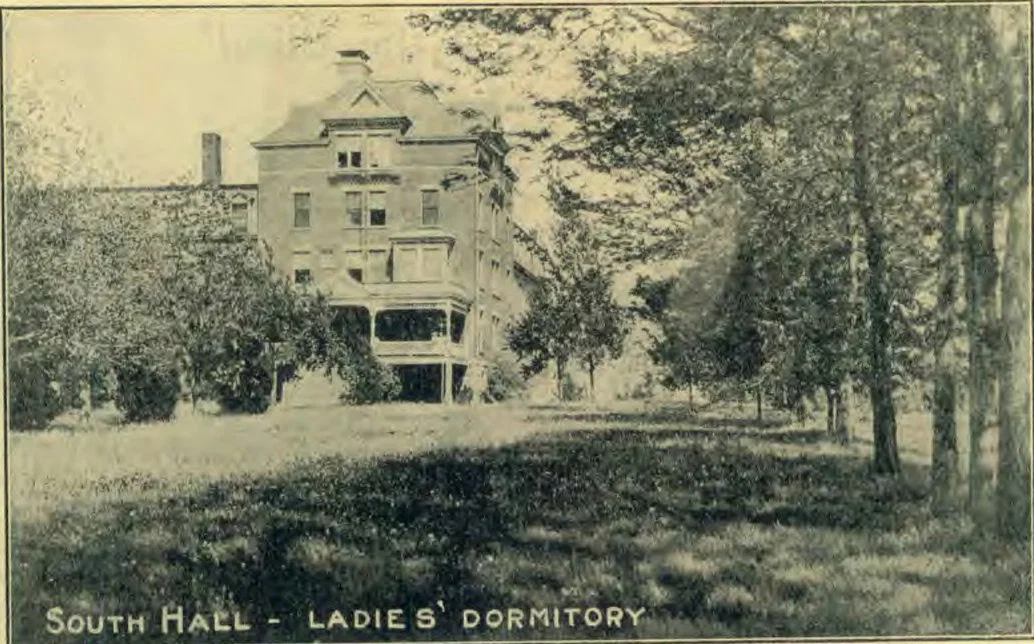
This red brick building located just south of the College, has been the school home of thousands of young people who through the years have received a Christian training for service at “Old Union.”
SOUTH HALL - LADIES' DORMITORY
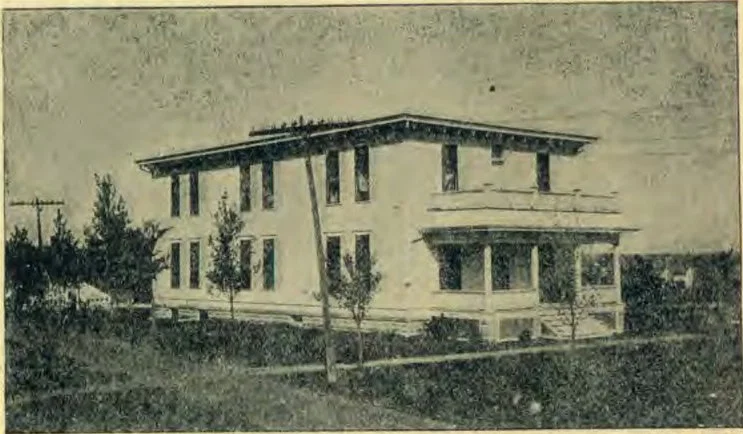
“East Hall” is one of the buildings at present used as dormitory for the young men. This building will be remodeled for the normal department, when the new dormitory is built.
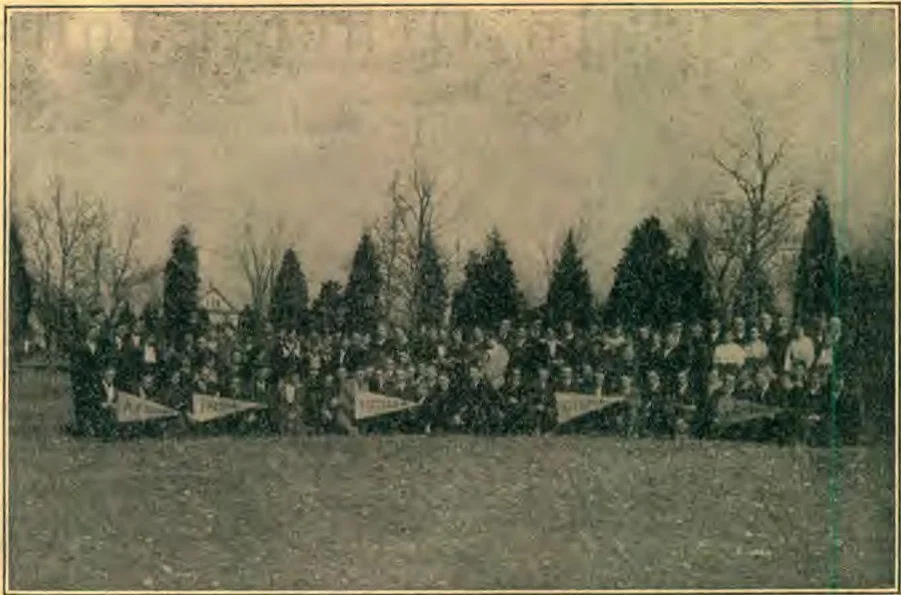
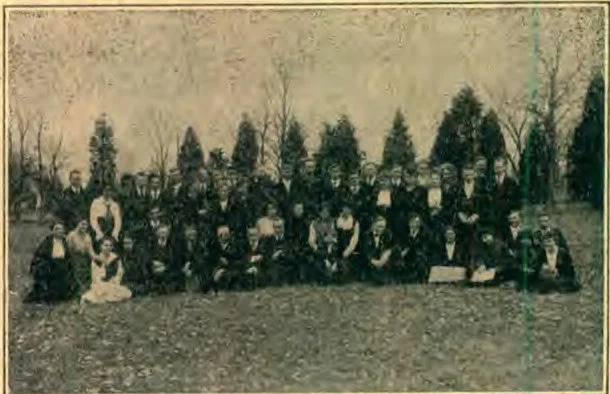
THE Foreign Mission Band is under the supervision of Prof. J. N. Anderson, who was the pioneer missionary in China. The total membership is one hundred seventy-five. The band is divided into groups, to take up the study of the different countries as indicated in the picture.
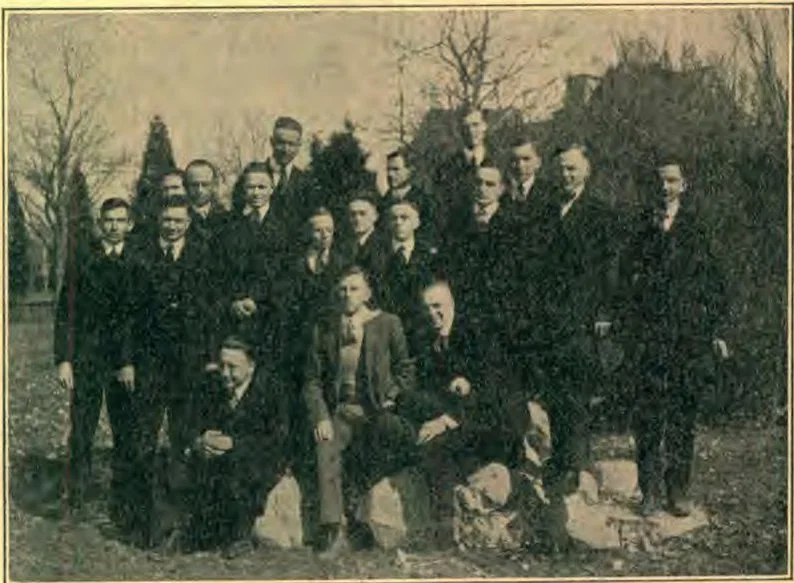
THE Seminar is a group of young men who are preparing for the ministry. One chapel period each week is devoted to the seminar exercises. Besides this, practical experience is gained in conducting church services and prayer meetings in the city of Lincoln and the neighboring town and country churches. During the summer, opportunities are given to assist in tent efforts with experienced ministers. This work is also under the direction of Prof. J. N. Anderson.
THIS Union College Colporteur Band of eighty-five members has been organized for class work. Twenty-five earned scholarships last summer.
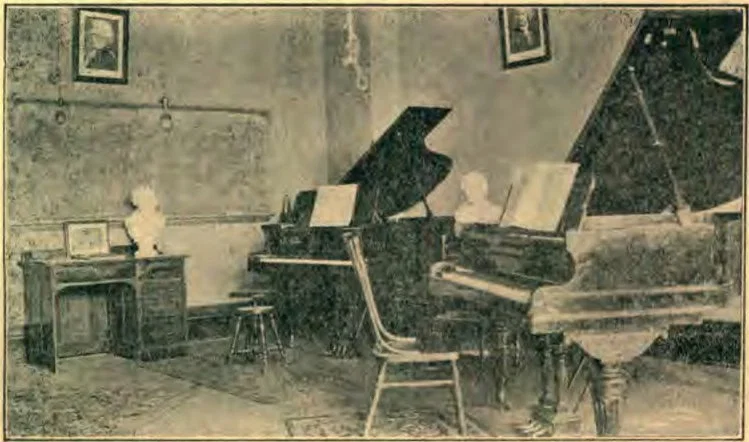
STUDIO of the music director. In this room is held the weekly rehearsals of the college chorus of sixty members and the choir of twenty members; also a class of thirty in hymnology, in which the leading of congregational singing is also taught.
Continue reading: Prayer of the Moslem Mission Band