The Literary Digest of September 6 says: “The Turkish and Greek papers, both adversaries of Bulgaria, have at length come out with a defense of the Turkish occupation of Adrianople. That Turkey is justified in snatching the city from Bulgaria is maintained on several grounds.” Summarized, these are as follows:
(1) It helps to preserve the balance of power in the Balkans, giving the Turk a right position as a ruling race with the other four Balkan States; (2) The city and province of Adrianople are inhabited by Mussulmans, not by Slavs. (3) If Turkey were to evacuate Adrianople, the whole Moslem world would rise up in revolution.
The keeping of the Treaty of London is counted absurd. We are told that “the powers should recollect that treaty breaking is ‘the badge of all their tribe.’” A prominent Turkish paper appeals to the people of the Adrianople region, and declares that Turkey is willing to abide their decision as to whether she shall rule or not. It declares that Bulgaria would not get five per cent of the vote. This same journal, the Sabah, warns the Christian peoples: “There is peril in the awakening of the Moslem world,” if roused by injustice to fury, “the Moslem subjects of England, Italy, and France, and Moslem friends of Germany become exasperated into revolution and armed resistance.”
It is directly charged, according to the Literary Digest of September 15, that Germany is secretly supporting Turkey, and one German paper, the editor of which, Prof. Schiemann, is near to the kaiser, declares that European opinion is in favor of the Moslems’ holding Adrianople, and even in a wise way pushing beyond the Maritza River into Thrace. Even the London Spectator admits that “it is pretty clear that the continued occupation of Adrianople will not in itself lead to armed coercion by Russia,” if the Turk does not push farther.
Later: A despatch from Constantinople, of September 15, says:
“It is officially announced that an agreement on the principal points of the frontier question was reached to-day by the Turkish and Bulgarian peace delegates.
“By the new treaty Bulgaria will lose the greater part of Thrace, guaranteed her by the Treaty of London. Turkey will take Adrianople, and, it is believed, will have Kirk-Kilisseh, east of the Maritza River, and a considerable tract west of that river.”
The world is becoming more and more divided over the new dances that have taken a large number of the people by storm, and there have been some very severe and just criticisms. Others contend that they are in reality the “unconscious expression of suppressed religious emotion;” and in a way that is true, if you go back to nature religion, and the worship of nature. Francis Toye, writing in the English Review, declares that the characteristics of ragtime are absolutely identical with those of the hymns formerly “sung by the Negroes in the white heat of religious fervor during some protracted church or camp-meeting,” in which the whole person is yielded to bodily emotions. He calls it hysteria—“a particular semi-religious hysteria, nearer to madness than any other.” He goes on to say that he had personally taken the trouble to learn the effects of the ragtime, and sought some of his more intelligent and disreputable friends who frequent the haunts where nothing but ragtime is played, and all except one, he says, “are emphatically of the opinion that since the introduction of ragtime, people are much more given both to excitement and drink.” It has about the same effect as the drinking of intoxicants. The Paris Petite Journal declares that the origin of the “tango” is in what is called the “frog quarter” of Buenos Aires, and in this section “brothels, dance halls, and drinking resorts are constructed of flattened oil cans and preserved meat tins. The quarter is devoted to the lowest forms of vice, and the ‘tango’ is only the dance development of the cautious, tiger-like, pliant, and treacherous steps of the disreputable frequenters of the barrio.”
George Gibb Turner, of McClure’s, carries the “turkey trot” back to the old Negro dances. He calls it “a curious recrudescence” originating from the same source as the gambling game “craps,” and found its main origin in the crude and heathen sexual customs of Middle Africa, afterward passing through the centers of prostitutes in large cities, where the contributions of city savages from Paris to San Francisco have been added to it. It is easy and exciting, and therefore thousands of people who never learned the older dances have picked this up. In fact, there seems to be a regular mania which has obsessed thousands with these low, immoral dances. Never before, says Mr. Turner, has dancing been such a provocation to immorality.
Christ Saves the Individual Through His Word
Jesus Christ stands for the individual. He respects the man. His commandments come home to the heart of the individual man. His promises are conditioned on the living faith of the individual soul. He saves mankind by saving the individual. He does it through the church, but after all, above the church — by the Word. More than creed, more than church, more than pope or council or conference or presbytery, is the Word of His truth.
The Perturbed Earth.
The cartoonist Reynolds, of the Portland Oregonian, represents the earth as “slightly overheated,” surrounded by clouds or explosions of fads, discontent, luxury, anarchy, and war. The face of the whirling earth is a picture of misery. This present portrayal of conditions in cartoon is one of a thousand ways in which Christ’s words are verified:
Signs in the Sun, Moon, and Stars
“And there shall be signs in the sun, and in the moon, and in the stars; and upon the earth distress of nations, with perplexity; the sea and the waves roaring; men's hearts failing them for fear, and for looking after those things which are coming on the earth: for the powers of heaven shall be shaken. And then shall they see the Son of Man coming in a cloud with power and great glory.” Luke 21:25-27.
Secretary Lane Recovering From Heart Failure
Secretary-of-Interior Franklin K. Lane was affected by heart failure recently in Oakland. He has been doing altogether too much. He is one of the most inveterate workers and ablest members of President Wilson's cabinet. The one thing that he demands of all who apply to him for political jobs is efficiency. Certainly the whole country will hope that he will soon recover.
Incendiary Fires in New York Blamed on Insurance Fraud
Fire Chief Kenlon of New York declared before the recent meeting of visiting firemen in that city that one fourth of New York’s fires are incendiary, set generally to collect insurance.
Beautiful Books that Sell
Cloth 75c
English only
Cloth $1.00
English only
Gilt $1.00
Cloth 75c
English, German,
Danish, Swedish,
Spanish, etc.
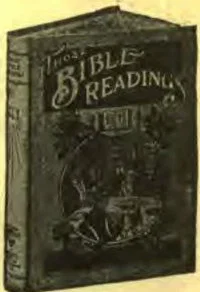
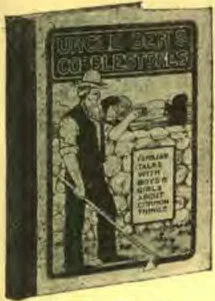
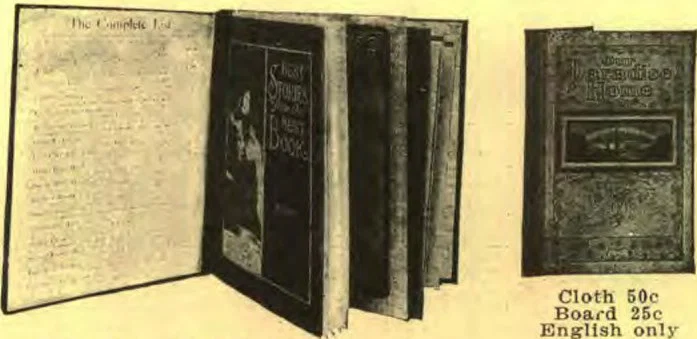
THERE is no class of books obtainable that so beautifully opens the word of God to children and young people as some here shown. Others touch upon health, kindness to animals, and special phases of Bible study. Christian people everywhere are pleased with them. The demand for them is growing. Hundreds without previous book-selling experience have with the handy prospectus here described, gone out and done most successful work with these books. They have brought real help to homes, and have received rich blessings in so doing. Hundreds more could do excellent work during the favorable fall months. A new booklet which explains clearly every feature of this work has just been issued. It gives canvasses, special selling points, and tells exactly how to take hold of it. The illustrations and description here given are taken from this new “Home Workers’ Booklet.” Ask for a copy of your Tract Society, or of the Pacific Press Publishing Association, if you do not know where your depository is located.
Cloth $1.00
English only
Cloth 75c
Board 50c
English, German,
Danish, and Swedish
Cloth 75c
English only
For the Older Children
Cloth $1.00
English only
For the Youth and Older Members of Family
Cloth $1.00
English only
For the Small Children
Cloth 50c
Board 25c
English, German,
Danish, Swedish,
and Spanish
Cloth 50c
Board 25c
In English only
The Home Workers’ Prospectus
Into two clasp rings inside a stiff cloth-covered binder are slipped the samples of all the books. The sample shows the cover and sixteen selected pages from the book. Samples of books in foreign languages contain also the corresponding foreign pages. A brief description of the complete book that may be used as a canvass accompanies each sample.
With this “loose-leaf” plan, as many or as few of the samples as desired may be carried. Some do their best work with from four to six books at a time. Others desire more. When full, the prospectus weighs 40 ounces. It is 8¾ inches long by 7¼ inches wide, and one inch thick. For $1.00 you get the prospectus complete with all the samples. This price is post-paid.
Cloth 75c
Board 50c
English, German,
Danish, Swedish,
and Spanish
The Home Workers’ Prospectus
Cloth 50c
English, German,
Danish, Swedish,
Japanese, and Spanish
Cloth 75c
English only
Cloth $1.50
English only
For the Youth and Older Members of Family
Cloth 50c
English only
Peter, the Karen
By Robert Bruce Thurber
By Prof. Robert Bruce Thurber
YOU have heard of the Karens, that remarkable people who live chiefly in the hill tracts of Lower Burma; who so bravely fought to help the British restore order during the terrorism of the robber bands after the occupation; who believe that God gave them His word centuries ago, and when they neglected it, took it from them, saying He would send it again in the hands of white men from the West; who are anxiously waiting for this visitation, and give, as a reason for idol-worship, that they must appease the devil till God comes to save them; who, tho fewer in number, and having much less labor bestowed upon them, have accepted Christianity in ten times the number of Burmese accepting it. For seven years urgent calls were sent to America for a man to carry to them the third angel's message. At last he has come, and a work is begun. But it really began long before he arrived, as God's messages so many times precede the human representative.
Thousands of these attractive people have become Christians with the idea that Sunday is the seventh day of the week. The missionaries have so taught them, they say. For some years, they have been traveling and sending long distances to inquire about this matter. No other call for help could be stronger than their need and desire. Three Karens have been baptized into this truth, but I can tell you about only one of them.
Since we started the school at Meiktila, it has been our aim to make it cosmopolitan, especially to get as students a few representatives at least of each nationality in Burma, in order to sow seeds of truth in their hearts, that they might carry it back home. With this in mind, while we were away up among the Karen hills getting a change from the heat of the lowlands, we encouraged several boys to leave their homes and come to the school, two hundred miles away. We had to offer strong inducements, for the hill-born love their hills. The three who finally decided to come are nominal Christians—at least they have Christian names and sing Christian songs, and that means more of Christianity to them than it would be to us.
John, Tom, and Peter, strong, hardy fellows in their teens, walked to the railway,—which wonder they had never seen before,—and arrived the following day at the school. Friends in America to whom we wrote, promised to help them through school. They were good workers, all three, John starting to learn shoemaking, Tom cane-work, and Peter carpentry. A Karen boy has work “in his bones.” He couldn't coax a crop out of the thin soil of his narrow valleys if he hadn't. But besides being industrious and steady, they were fast becoming skilful.
However, those same home hills are in sight from the school. Their blue retreats looked cool on the hot days. O, the lure of them! It is so hard for even the plain-dweller to resist.
Peter was the only one who didn't peter. He went home with the others for a short vacation, and returned alone. Altogether misnamed, he is a plodder, and says little. Something stronger than the beauty of his childhood haunts drew him to us. I can't explain it. If I could, it wouldn't seem so strong.
Up there they asked him if he worked on Sunday. “Yes,” he answered. “Why shouldn't I?” “We don't know why you shouldn't,” came the reply. “It is surely the first working-day according to the words of the Great Book.”
Peter was one of the elect. He was baptized, for there was no other or better way, now that he knew. Again he went home for a few weeks, and returned, bringing three other Karen boys, one of them a quite well-educated boy, older than Peter, and with some skill in carpentry and turning.
This is the first chapter in a bit of current missionary history, and the completed record promises most triumphant and interesting developments. At present we can but say, “Thus far—”