The Youth's Instructor, Vol. LIII, No. 40

A Missionary’s Experience

The Youth's Instructor

October 3, 1905

Review and Herald Publishing Assn. · Washington, D. C. · October 3, 1905

A Missionary’s Experience
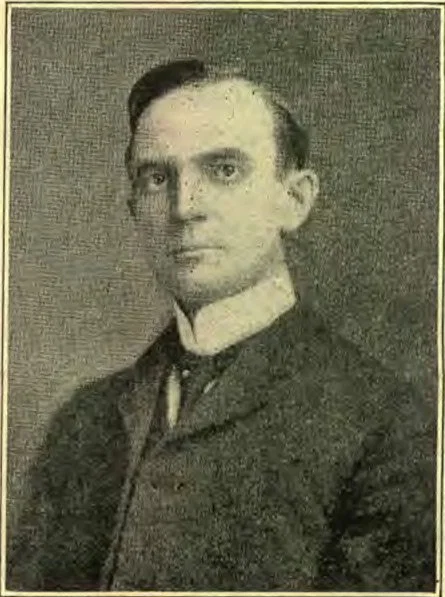
A lad was making mud pies by the roadside, and a lady coming along said to him, “My little man, wouldn’t you like to be an angel in heaven?” “No,” he answered, “I want to be an angel here in the mud.” There is a great deal of philosophy in what the little fellow said as related to the great work of world evangelization. What the world, this great sinning, suffering world wants is not angels up in heaven, but men and women with the angelic spirit here upon earth. Your business and mine, then, is to bring the forces and power and influence of the divine life to bear upon the darkness and the ignorance, the squalor and the wretchedness, and the dirt and the sin of this earth. And God knows the mud is deep, and the darkness is dense, and the sin is appalling; but there is a fountain for the world’s foulness, there is light for the world’s darkness, there is a Saviour for the world’s sin. And it is for us, for you and me, to bring the divine provision to meet the human need; we must become the channels by which the divine provision meets the human need.
In these words of the apostle we have three facts brought before us very clearly; the fact of the great need, the fact of a divine provision ample to meet that need, and the fact of a great trust committed to those who recognize the need, and have themselves experienced the provision. No word of mine is needed to tell you that the world is desperately in need. We see it on every hand in life’s pathway, and I quite agree with the man who says there is plenty to do at home. There is plenty to do at home, ah, yes! Human need crowds us in the mart and in the social circle; everywhere it stares us in the face, and the question with us is simply, Are we the channels by which the divine provision can meet the need of this great sinning, suffering world?
This need is manifested in various ways. First, on the subjunctive side. We behold the strenuous efforts of men the world over to meet the need of their hearts; for go where you will, whether amid the palaces of splendor in our home land, or in the meanest jungle hut in Central Africa, you will find that men are conscious of God; they are conscious also that there is something wrong within themselves, and the inevitable sequence of it is that men strive in some way to find a meeting place with God. So we have the explanation of the myriad forms of religion in heathen lands; for every heathen religion, every superstitious rite and ceremony of heathendom, every idol before which millions are bowing down in abject slavery of spirit, every horrid orgy that racks the world with pain and deluges it with blood, is but a testimony to the universal God-consciousness, the universal need, the universal utterance of that great question, What must I do to be saved? I have seen the African women dance hour after hour, day after day, until one after another fell in convulsions at my feet. Why?—Simply the blind, deluded effort of these denizens of the Dark Continent to find an answer to that imperious question which will not down in spite of some men’s efforts in that direction.
I wish I could give you a glimpse of the real conditions that prevail in that land without the knowledge of Jesus Christ. Go with me into Central Africa. You find a people absolutely naked in body. Go with me into one of their huts, circular in form, in shape like a beehive, the only opening into which is a little hole two and one-half feet high by a foot and a half wide, into which you crawl on your hands and knees. When you have gotten in, and your eyes have become accustomed to the semi-darkness, and your nostrils to the almost overpowering stench, if they can become accustomed to it, a scene of filthiness indescribable greets you. You will understand when I say I have counted at night, upon being called to attend their sick, as many as eleven persons and seventeen goats in a hut fifteen feet in diameter. Is it any marvel to you that, living thus with their beasts, they become beastly,—beastly in thought,—beastly in conversation,—beastly in appearance? For the same law works in Africa as in America,—the man becomes what his associates are. Is it any wonder that amid the putrefying atmosphere of such moral conditions love is throttled to death? Is it any wonder that in some tribes when any one is sick, they take him to the bush, and build a fire beside him, and leave him? In others, where we are, they take the sick into the bush near the village, and fasten a rope about the neck of the man or the woman, as the case may be; the other end of the rope is fastened somewhere in the village enclosure. Each morning some one deputed for the purpose shakes that rope. If there is an answering shake from the poor fellow in the bush yonder, they conclude he is alive, and carry him a little food. Morning after morning this goes on until there is no answering shake. Then they go forth, tie a rope about his ankles, and drag him farther into the bush. At night there is a horrid carnival of wild beasts; in the morning a few scattered bones tell the tale of what has become of a human being. And, my friends, if that Book is true, Jesus Christ died for that soul as truly as he died for your soul and mine. Jesus Christ did not die for the African, he did not die for the Indian, nor for the Chinaman, nor for the American, as such; there are no national boundaries to the love of God. He did not die for the black man, nor for the white man, nor the yellow man, as such; there are no color lines in heaven. Jesus Christ died for men, and wherever there is a man, there is one for whom the Son of God gave his life.
WILLIS R. HOTCHKISS
WILLIS R. HOTCHKISS
It was a wonderful thing when Abraham Lincoln signed his Emancipation Proclamation, and four million slaves in our country went free. But it was a vastly more wonderful thing when a greater Man than Abraham Lincoln signed the World’s Emancipation Proclamation with his own blood, and that proclamation he placed in your hands and mine with the injunction: “Go now, go and tell the world’s captives I have set them free; go and tell the world’s slaves I have stricken the shackles from them.” But, God pity us, nineteen centuries have passed, and if we laid our ears to the ground to-night, we could hear the clank of the chains and the crack of the whip that tells of the bondage of eight hundred millions of our fellows who have never heard that God signed their emancipation.
These people did not want me there any more than the world wanted its first great missionary, Christ. They tried their best to get rid of me, held councils of war to decide what to do with me. I might say that I was absolutely alone. I went out with five companions. Three of them I buried; the other had to return home, so I was left for the greater portion of four years absolutely alone. Finally several of the natives came to me with the information that they had decided to kill me if I remained more than three days among them. I felt that I was in the place God wanted me to be, and that is the safest place in all the world, as it is also the sweetest. I would to God we could get rid of the notion of saying, “Thy will be done,” with a groan, as though it was necessarily a hard thing God asks of us. God’s will is in the sunshine as well as in the shadow. God’s will is in the laughter, and the joyousness, and the gladsomeness of life as much as in the sorrow and the afflictions of life. I sent word back to them, “I am here to tell you about God. I expect to stay.” They threatened all manner of things. But at the end of the time they came to the conclusion that it was of no use, so they issued an order that any one found bringing any food to the white man was to be killed, and for nearly two months that order was rigidly enforced. It would have fared very ill with me if it had not been for a divine provision. An old woman used to pass my hut to and fro from her work in the fields. Every time she passed, she managed secretly to drop a root of cassava, the root from which our tapioca comes, before my door. I roasted that root, and it enabled me to eke out my slender supply of provisions throughout those months. God’s ravens are not dead yet.
The people then came to me. If I was determined to stay, I might do so if I would remove across the river. I went across the river, and built my hut on the very spot where, two months before, they had sentenced me to death. I might say I had to make brick with my own hands, and I laid every brick myself. They still kept up a petty persecution. One day I was attending to some patients. My native servant came up, and standing beside me, said, “Master, I have hit a native.” I looked up, and a great ragged gash in his head was pouring a stream of blood over his face.
I said to him: “Boy, it looks very much as though you were the one that got hit. What is the matter?”
“I went to the river to get a bucket of water, and the river bed is full of natives. They are going to kill us all. A man sprang on me and tried to kill me. I hit him. He broke his club over my head and got away.”
I said, “Will you go with me?” “Yes,” he answered, “I will go anywhere you will go.”
I went into the house, got a sponge with which to bathe the wound, came out in my shirt sleeves and started off. He looked at me, hesitated a moment, and then said, “Master, you haven’t taken your rifle with you.”
I said, “No, we are here on God’s business, and we shall be safer without the rifle.”
We went to the river, and sure enough the river bed was full of natives, twenty-five or thirty of them. There was no running water in the river at that season of the year, and they were bound upon mischief. I saw at once that either they or I must be master of the situation very quickly, so I did the first thing that presented itself to my mind,—leaped from the bank into the midst of them, began pushing them apart and talking to them as well as I could, asking them why they wanted to kill me. I asked them if I had cheated them in any way, if I had not paid them well for everything I had gotten from them. I asked them if I had not treated their sick and healed many of them and asked nothing for it. Gradually one after another who had his spear raised lowered it, and planted it in the river bed; another who had his arrow in his bow would withdraw it, and place the arrow in his quiver, and one by one they were subdued. Meanwhile I made my way to a water hole dug in the sand of the river bed, bathed the boy’s wound, and sent him out of the way. Then I caught the ringleader of the band, whose head the boy had cut open in their struggle, pulled him over to the water, though he struggled and protested, thinking I was going to take my revenge upon him, but they were so awed and so held in check by their superstitious notion that I must be in league with the spirits, that they did not attempt to stop me. I pulled the man to the water hole, and then to their amazement I began to bathe his wound. In an instant I could see the effect it had upon them. It was a new principle to them. They could understand why I should do such an act to my own servant, but why I should do a like act to my bitterest enemy, the man who had raised the mob to kill me, they could not understand. After having finished bathing his wounds, I said to him, “If you will go to the house, I will bind up the wound.” They all followed me, thoroughly subdued. I sewed up the wound, and from that time on had little difficulty with them.
The greatest difficulty of all in connection with the work of Christ in Africa is that which comes from the multiplicity of languages there. I had no word of their language, and no means of getting it except through actual contact with the people, as it had never been written. The first word I got was the word “nachow,” which means, “What is it?” And I flung that word at them, pestered them with it on every possible occasion, as I pointed to tangible things about me, and, listening carefully for their reply, would jot it down phonetically. In that way in the course of the years, I obtained a vocabulary and grammar of the language. But there was one word that after two years and a half, two years and a half of persistent effort, I yet had not been able to get,—one little word,—but as the days passed, and the weeks and the months, and the months lengthened into years, that word grew and grew and grew into mountain-like proportions to me,—Saviour. I never knew its meaning until I saw it in the face of the great need that encompassed me,—a need which I was powerless to meet until I discovered that key. I shall never forget the thrill of joy that came to me when finally the long search was rewarded. Sitting with my men about the camp-fire night after night, I listened to their stories, hoping against hope the word would come. One evening my head man began telling a story from which I hoped much. It happened that another missionary, a friend of mine, had been attacked by a lion some time before this, and had been badly wounded. Kikuvi was with him at the time, and was the means of his rescue. As he began relating this story, I said to myself: “Certainly he must drop that word now; I don’t see how he can get through it without.” I listened with two years and a half of disappointment in the eager concentration of my attention. But he went through the whole story without dropping any word I could construe to be the one I had sought. Sick at heart and disappointed for the thousandth time, I was about to turn away when he remarked casually, “Bwana nukuth-aniwa na Kikuvi.” “The master was saved by Kikuvi.” I could have shouted for joy. But in order to prove the precious possession I had gained, I turned upon him and began questioning him, and finally assured, I said to him, “Kikuvi, this is the word I have been wanting you to give me all these many months, because I wanted to tell you that Jesus, the Son of God, died for you.” The black face lighted up as he interrupted me in the midst of my sentence, and I can see that face still as in the lurid light of the camp-fire he turned to me, exclaiming, “Master, I see it now. I understand. This is what you have been trying to tell us all these moons, that Jesus died to save us from the power of sin.” Never did sweeter word fall from the lips of that black savage in Central Africa. I spent four years alone, burying three of my companions; I had fever between thirty and forty times; have several times been ambushed by the natives; three times attacked by lions, several times by rhinoceroses; for fourteen months I never saw a piece of bread, for two months I had nothing to eat but native beans and some milk; I had to eat everything from ants to rhinoceroses. Do not misunderstand me, now; I am not posing as a martyr; I enjoyed it. But let me say this, my friends. I would gladly go through the whole thing again with my eyes wide open to it if I could have the joy I had that night of bringing that word “Saviour” out of the darkness of oblivion, and flashing it into another tribe of Central Africa. And do you know, there are two hundred, possibly, such tribes in the Dark Continent to-day without a written language, much less a messenger of the cross? During the past year it has been my privilege to reduce yet another one of these languages to written form. I have in my room a little roll which contains all there is in existence in a tangible form of the language of a million people.
Here is the need. How about the supply? I went to explore a mountain one time. Up on the top of the mountain it was delightful, exhilarating, bracing to us, but to our native men it was torture. One of the men became ill during the time that we spent there, and finally word reached me which necessitated my return to the station. It was a twenty-mile walk, and the man could not possibly make the journey without help; so I left three men with him, carefully instructing them how to help him along the way, gave them food sufficient to last until they could get into the station, and charged them under no circumstances to leave him, because the bush swarmed with wild beasts of every description. They assumed the trust. I went on my way. The next day at noon I was sitting in my house when the three men came in, but without the sick man. I said to them: “Where is the sick man? Is he dead?”
“No.”
“Why haven’t you brought him in?”
“Oh, we ate up the food and then got hungry. We didn’t want to stay there and run the risk of being eaten by lions.”
“But don’t you know the sick man will be devoured? He can not help himself.”
“Well, it doesn’t matter, he is going to die anyway.”
I said: “That isn’t the way of the white man. I am going back immediately to see if we can not find him.”
I started back. All the afternoon we marched. I did not expect to find the man; I knew the bush too well for that; nor did I. But what I did find was the outline of a human form in the soft earth beside a little stream whither he had pulled himself, and in horrid suggestiveness around that imprinted form numerous tracks of lions and hyenas. And as that night I lay in my little open tent, and heard the roaring of lions all night, and as the next morning, five minutes’ walk from the tent, I came upon the fresh remains of a zebra that had been pulled down in the night and devoured by the lions, it did not require any stretch of the imagination to tell what had been the fate of the poor sick man.
You shudder at such an exhibition of man’s inhumanity to man, but let me say this, dear friends: in the face of the world’s great need, and in the face of the divine provision to meet that need, in the face of the ever-multiplying facilities, in the face of your knowledge and mine, I bring home to you the charge, “Thou art the man, thou art the man;” for by so much as heaven is higher than the earth, by just so much is it worse to withhold from men the bread of life than it is to deny them bread for their starving physical bodies. What is wanted, then?—Simply that we catch the spirit of Jesus Christ and translate it into life. What we want is not a gilded, jeweled cross as an ornament about our necks, but the spirit of the cross in our hearts, manifesting itself in a life of self-abnegation for the sake of others. What is wanted is not the story of Calvary and of the crucifixion in a book, but that crucifixion made real in your life and mine.
I said that for fourteen months I had no bread. At the end of this time I raised a little crop of
  • (Concluded on page 6)

Life's Highest Field

Abide upon the highest field, The lofty table-land of life, Above the earth-born mists and clouds, Above the cumb'ring care and strife.
Abide upon the highest field, Where falls the sunshine's brightest ray; The first to glimpse the day new-born, The last to see it pass away.
Abide upon the highest field, And view the gleaming stars on high; Though falls the night, the darksome night, They're shining brightly from the sky.
Abide upon the highest field, And be it morning, noon, or night, Thy life shall be illumined from The circling realms of endless light.
FRED SANTEE.

E. H. MORTON

Courage

No use to sit down by the willows, To sigh over woe and wrong; For sighing will never give victory, Will never inspire a song.
No use to join hands with the mournful, No use o’er a blow to weep, ’Tis better to hope and be cheerful, To smile though the wound be deep.
Arise and be filled with the Spirit, A love may be ever thine That will cover mistakes and weakness, And give thee a power divine.
Go forth to the work with courage, With never a thought of fear; The Strength of all strength is for thee, The King of all kings is near.
Right here may the heavens be opened, And angels of light descend; ’Tis after the showers the rainbows To earth in their beauty bend.

E. H. MORTON

A Vacation for Mother

Hope had been at home two weeks, and the guilty, disloyal feeling which had burrowed its way into her heart that first day still troubled her.
She had striven against it, and had thought she had been able to hide it, but only this morning had overheard a scrap of conversation between her parents which told her that love’s clear eyes had read her.
“Mother,” Mr. Abbott had said, “do you reckon we have saved and scrimped all this time, to give opportunities to Hopie”—why would he say Hopie in that silly way, when Hope was complete and so much more dignified?—“just to make her restless and discontented?”
“Oh, I hope not, dear,” came mother’s gentle voice; “she is so young yet. We must not judge her hastily.”
Hope was too well reared to sit still and listen to what was not intended for her, so she slipped softly out of the hammock, which father had slung between the big oaks for her, and stole away in the thickness of the althea and syringa, and spiraea bushes in the homely garden, to think her uncomfortable thoughts, over and over again.
The house seemed so awfully shabby after the pretty chambers at the seminary, and the broad, palm-decorated halls, and in the two years which she had been away from them father and mother seemed to have changed most unaccountably. She had always thought of them so gratefully and lovingly, for she knew what a strain they were under to put her in the seminary, and it had been a perfect delight to write them long, affectionate letters every week; but now that she was at home again, it was hard for her to be her own sunshiny self, and she was as much disappointed in her own emotions as she was in home affairs.
Mr. and Mrs. Abbott had lived so long in the country village of Kellyville that they had not kept up with all the little niceties of life, to which Hope had so readily taken. It jarred upon the girl to see her father’s roughness in dress and manner, and, in spite of herself, she could not repress a disrespectful thought that he ought to have been more successful in life, or else a perverse fate ought not to have endowed his daughter with such fastidious tastes.
As for mother, that was the very hardest part, for it was impossible for Hope for a moment to forget the great unselfishness which not only had made possible those precious months at the seminary, but which was in evidence in every dainty garment Hope wore, and in a thousand small, unobtrusive ways. Even now, mother could make excuses for her, but the girl could not overlook the little, incorrect forms of speech mother used, nor the essential lack of daintiness in her housekeeping, the plain meals and homely habits of the old home. She tried to prick herself into a better state of mind by dwelling on mother’s paleness, but the only conclusion she arrived at was that if mother had different things to eat—if she had studied the chemistry of foods to practical account, and lived more hygienically in other ways—there would be no need for her to look so worn.
“Hello, Hope!” came a hearty voice from the gate; “want to go with me for a little drive?”
“Yes, indeed, Uncle Rob,” she cried, for Dr. Mallory, more older brother than uncle, was very dear to her, and his failing to conform to her ideals was carried off with such a high hand that her attention did not linger on it.
She tied her pretty hat down as she leaned comfortably back in the buggy, and old Tom started off in that monotonous jog trot peculiar to the horses of country doctors.
“Well, my girl,” said Uncle Rob, kindly, after a smiling look down into the pretty face which Hope lifted to his, “you look more like my little niece in this rig than you did Sunday in all those frills and flounces; I was afraid you had changed to correspond with your fine feathers.”
“Mother made all those frills and flounces right here in Kellyville,” said Hope; “they were not imported.”
“Ah! Then it was just Miss Abbott that gave them such an air? Well, anyway, I like you best this way. So you have not changed much?”
O, dear! Uncle Robert seemed to be playing upon a harp of a single string, too, and in exactly the key to which her own and her father’s and mother’s were tuned! Hope’s eyes clouded, and the smile faded from her face. She looked off into the woods with unseeing eyes for a moment before she replied. There was something disturbing in her uncle’s glance, but it was a kindly one, and, as she thought of that, she turned suddenly back to him, and said, impulsively:—
“Yes. Uncle Rob, I am afraid I have changed a great deal, and I guess you will hate and despise me after I tell you; but I am going to ease my mind of it, and maybe you can help me.”
“Proceed,” said Dr. Mallory; “my specialty is for bodily ailments, but I am a general practitioner, after all, and I will prescribe for your ailment if I can.”
As Hope talked on, she realized with a pang that he showed no surprise at the sorry tale she told, and divined that he had already half guessed it.
“Now, what must I do?” she concluded. “I have only two more weeks at home, for we all feel that I must not miss the opportunities I will have as Professor Loring’s guest at Chautauqua; but I would love to make those two weeks all that they could wish them.”
“How have you been spending your days at home?” Uncle Rob’s tone was the same as if he was inquiring into the state of her appetite, before prescribing a tonic.
“Oh, quite monotonously. I get up rather late, as mother insists that I must have the morning sleep while I can get it—you know we have to get up so early at the seminary. There does not seem to be any work left for me after breakfast, so I read a good deal in the mornings. At noon, when father comes in, he always wants me to play—and oh, Uncle Rob, what a trial it is, to be obliged to play those old-timey pieces over and over again! Why, I believe I could play The Battle of Manassas in my sleep, and as for The Maiden’s Prayer, it’s quite unspeakable! Father says he can not make out any music in Chopin—that there’s no tune to such music—fancy it!”
“I’m rather of that opinion myself,” said Uncle Rob.
“Later, mother wants me to go out visiting with her, unless some company comes in, and in either case I am either bored or mortified to death. They talk about such commonplace things that I can not feel the least interest in, or else mother gets to telling of my marks at school and my record in music, until I feel small enough to crawl through the keyhole.”
“Was your record so bad as all that?” Dr. Mallory asked, innocently; but Hope did not deign to answer such a question, so he asked:—
“How about your evenings?”
“Sir, I haven’t any,” she flashed. “Mother and father go to bed with the chickens”—
“They also rise with them,” interpolated her uncle.
“And I just sit round and read, or write letters to the girls, until I have to go to bed in self-defense from pure loneliness. Now, that is all; I have tried to make a clean breast, so please temper your justice with mercy, and prescribe for me.”
“Your case is not hopeless,” said Dr. Mallory, after they had driven on in silence for a while. “There is always hope for a sinner who has the grace to feel ashamed of himself; but you, my dear, need spectacles.”
“Spectacles?” Hope’s hazel eyes opened clear and wide.
“Yes; for your spiritual and mental vision. Can you bear a little plain speaking—a bitter tonic, so to speak?”
“Yes, if it is warranted to cure.”
“You spoke just now of the opportunities you would have at the Chautauqua as Professor Loring’s guest. If I remember correctly, your going to the seminary, and all this planning of your parents, your teachers, and yourself, is to go toward the making of such a fine teacher as never was! Well, it seems to me that just now you are looking across two precious weeks of time, and two hundred miles of space, to see opportunities at the Chautauqua not one whit better nor more necessary to your development than those within your grasp—even if we take no nearer and more personal view of the situation. Intellectual culture does not so much signify in a teacher, unless she has self-denial—the sweet, gracious kind, not the martyr variety—and adaptability, and both of these are waiting for you to learn right there at your own home. As to making Mary and your father happy, these last two weeks—you can never do it, unless you are happy yourself.”
“How can I be happy? Haven’t I just told you how everything sets my teeth on edge, and how I despise myself for it? I have better sense than to attempt to make any changes in their way of living.”
“I should hope so—under present conditions. Still, according to your own account, you seem to be—er—rather idle!”
“Isn’t it my vacation? You know how hard I have worked at school.” Hope was not angry, but there was something in her uncle’s tone which nettled her.
“Speaking of vacations, do you know that Mary has never had one in all her life that I know of?” Uncle Rob turned old Tom’s head homeward, and without waiting for a reply from Hope, whose flushed face betrayed an irritation she would not have put into words, he went on to speak of Mrs. Abbott, that dear older sister, who had been the only mother he had ever known. Hope looked out through the dreamy summer woods, and her mood passed from irritation to pity and infinite weariness, as he reviewed things she had always known, or else vaguely remembered, of the simple life so desolate of outer beauty, yet brimming over with fond effort for those she loved. He said very little of the mother’s ambition for this bright only child of hers, but dwelt chiefly on what she had done for himself, and how loyal and devoted she had been to Mr. Abbott all through his struggles with a world which had not gone very smoothly with him. “Poor John!” he concluded; “if his judgment had been as sound as his sense of honor, and as unfailing as his energy, he would now be able to give his little daughter as dainty a setting as even Miss Hope Abbott could desire.”
“O Uncle Robert, do hush!” she cried; “you only make me feel so much the worse. I have thought of all this, but, in spite of it, I am just as I have told you.”
“Makes you feel worse, does it?” said Uncle Robert, quizzically, as he turned the wheels for her to get out at her own gate. “Well, my dear, I often hear old ladies out here in the country telling my patients that ‘they will have to be worse before they are better.’ I am inclined to think the expression fits your case. He drove away, and Hope, looking after him, thought, with a sigh, that he had not even sympathized with her, much less offered her a helpful suggestion.
After the first excitement had passed away, Hope thought, peevishly: “It is just my luck, for mother to get her ankle sprained at this particular time. I really had made up my mind to go right along with her and take a hand in all her work, and get as close to her and father as I could, these last two weeks, and I believe I could have made them feel all right, but now—mother is sure to know that I will be bored to death with nothing to do except read aloud and play those old tunes, world without end. Father might be deceived, but mother is too quick!”
She was doing all this thinking as she sat fanning her mother and listening to the discussion whether Mr. Abbott should go at once to bring Jane Bell to do up the work, or wait until later in the day. Dr. Mallory was sitting at the window, absently looking out into the garden, but at this point he turned and looked at Hope so seriously and steadily that her eyes were compelled to meet his. They looked at each other a moment, and a wave of color crept up into Hope’s brow.
“Well, Mary,” said the doctor, rising, “I was just telling Hope only yesterday that you had never taken a vacation since I have known you, but here is an opportunity. After a little while, your ankle will not pain you so much, but you must not think of trying to bear your weight upon it until I tell you, so you must plan to spend the time as pleasantly as possible.” Hope then knew that Uncle Rob had prescribed for her to step in and try to fill her mother’s place for a while.—Susie Bouchelle Wight, in the Well-spring.
(To be concluded)

October Study of the Field

OPENING EXERCISES:—

Singing.
Responsive Scripture reading: Isaiah 62.
Prayer.
Singing.

REMARKS BY THE LEADER:—

“Ripening the World’s Harvest.” See Review and Herald, September 14.

FIELD STUDY:—

“Three Years in India,” Review and Herald, September 7.
“An Inland Trip in South China,” Review and Herald, August 31.
“Native Education in South Africa,” Review and Herald, August 24.
Two-minute reports from Plumstead, South Africa; Canal Zone, Panama; Orange River Colony; Burma; Costa Rica; Mexico; Italy; Chile; Brazil; Amoy, China.

CLOSING EXERCISES.

Note

Ten minutes at the close might be spent in testimonies from the field, the leader appointing several young people, before the hour, to bring in some word of testimony from a certain worker in a certain field, designating the field and worker. To illustrate: “We are sowing the seed, watering it with our prayers. We are of good courage.”—Philip Giddings, Roseau, Dominica, Review and Herald of August 31. “I am glad that there is a sound of agoing in the mulberry-trees. The Lord has gone before us, and soon the work will be finished.”—F. H. Westphal, Negreiros, Chile, in Review and Herald, August 31. Although most every report in The Field Work Department would afford material for such a social meeting. All the reports upon which this program is based will be found in the issues of the Review of August 24 and 31 and September 7 and 14.

Prepare Us, Lord, for Thy Great Work

“PREPARE us, Lord, for this great work of thine, By thine own process; we know not the way To fit ourselves; we only grope, the day Is thine; its light, a ray from thee, divine, Illumes the path where thou wouldst have it shine.”

Convention in Chicago

The young people in and around Chicago held a union meeting in the hall used by the West Side church, on Sabbath afternoon, April 15. There are four Young People's Societies in Chicago, with a total membership of about ninety, but there were fully three hundred present at this meeting.
The object of the meeting was stated to be fourfold: to learn more fully the work of the young people for this time; to discover, each for himself, his relation to that work, and his individual responsibility in doing it; to get fresh courage and new strength and zeal for ourselves; and to learn practical methods of service for others.
We were privileged to have Elder Luther Warren with us, and in his opening address on “The Place of the Young People in the Third Angel’s Message,” he especially emphasized the necessity of personal work.
Dr. Paulson gave a talk on “The Influence of the Young People in the Church,” based on Paul’s injunction, “Let no one despise thy youth; but be thou an example of the believers, in word, in conversation, in charity, in spirit, in faith, in purity.”
Pointed paragraphs on “The Benefits of Bible Study” were read from the “Testimonies,” and Elder Warren discussed “The Importance of Bible Study,” in a way to convince all that we must study the Word of God daily, and that we shall have sufficient time when we discard the ordinary newspaper, and light literature, which is worse than nothing.
After a short recess, papers were read or talks given on the following topics: “Relative Importance of Work and Meetings,” “Model Programs for Young People’s Meetings,” and “Lines of Work.” The whole was interspersed with music and recitations, and closed with a consecration service.
Much interest and close attention were evident throughout the entire program, which lasted three hours. So much helpful instruction was given that there must have been some “meat in due season” to every soul present, and we have every reason to believe that the aims of the meeting were realized. Laura C. Foster.

Young People at Work

THE Florida Conference reports the organization of two new Societies. Although the aggregate membership is only fifteen, considerable work has been done. The young people seem to have mastered the secret of successful paper selling, for their report shows the sale of one hundred the first month and two hundred each succeeding month in the quarter, while sixty-one subscriptions were secured. Thirty-eight hundred pages of tracts were given away. The sum of thirty-five dollars was contributed for supplies. At the bottom of the report blank the State secretary writes: “One conversion is reported.”
Newfoundland, with its one church and Sabbath-school, also reports one Young People’s Society of thirty members, mostly children. They hold regular meetings under the direction of a suitable leader, and once a month meet to fold, wrap, and address papers to persons in different parts of the island.
The Society at Grand Rapids, Michigan, is made up of active members. A recent report covering a period of four months is very encouraging. Fifty-nine Bible readings were held, seven hundred papers distributed, over five thousand pages of literature sold, and almost sixteen hundred pages given away. Thirty missionary visits were made, and fifty missionary letters written. The Society has given to missionary work forty dollars in cash and pledges.
Miss Edith E. Bruce writes of the interest thus: “We are glad to report that our young people are manifesting a greater interest in spreading the third angel’s message, and are gaining a deeper spiritual experience. Plans are being made and funds raised to send some worthy young person to school next year to prepare for the work. There are so many ways in which our youth may help. The distribution of literature, the missionary letter, the lifting hand to some poor, struggling soul, will all be blessed of God if performed in the name of the One who has done so much for us.”
The Cedar Lake, Michigan, Society has twenty-five members, and reports the sale of three copies of the “Story of Joseph,” for the benefit of the work in the South. Three hundred Signs have been distributed, and quite a number of tracts. Twenty-five missionary visits have been made, and twenty-three letters written.
The Society at Palisade, Colorado, is doing excellent work with The Family Bible Teacher. A division of their town into districts shows that the members are doing systematic work. The people who are receiving the reading-matter seem to be interested in it, and much hope is entertained that the results may strengthen the cause there. MRS. L. FLORA PLUMMER.
(To be concluded)
Continue reading: Praying and Doing