Your ShelfYour Projects

The American Sentinel, Vol. 7, No. 14.

Religious Legislation and the Union of Church and State
Earlier text: Religious Legislation and the Union of Church and State

Iowa Hearing on Sunday-Closing.

IN harmony with the concerted effort put forth in every State Legislature in session this season, the friends of Sunday-closing began almost on the opening day to influence the Iowa Legislature to place itself on record, in some way, as in sympathy with the effort to secure the closing of the World’s Fair on Sunday.
As a result the following was offered by Representative Wilson:—
WHEREAS, It has been proposed to open the doors of the Columbian Exposition, in 1893, upon the Sabbath day, contrary to the honorable custom of our Nation and in direct violation of the statutes of the State of Illinois, within the borders of which it is held, and also in violation of the laws of almost every other State in the Union, and
WHEREAS, The preservation of the Sabbath, as a day of rest, is necessary, not only for the well-being of the church, which gives us our prized name of a Christian Nation; but also for the stability of the State, for the physical welfare of the people, and for the preservation of the rights and interests of the workingmen, and
WHEREAS, The proposed action would be a long step toward permanent disregard of the Sabbath as a day of rest, therefore,
Be it resolved by the General Assembly of the State of Iowa.
SECTION 1, That we respectfully petition the Commissioners of the Exposition to keep the doors closed upon the first day of the week, commonly called the Sabbath.
SEC. 2, That a copy of these resolutions be sent to the commissioners.
These resolutions and accompanying petitions were referred to a committee of nine members of the Legislature, appointed to consider them.
A hearing was appointed for March 22. The committee were all present. Quite a little time was taken up in transacting routine work before the hearing was reached. A half hour was allotted to A. T. Jones, representing the National Religious Liberty Association, in which time he showed conclusively that the proposed action was wholly beyond the jurisdiction of the Legislature; as according to the first article of the State Constitution, the Iowa Legislature had no right to pass any laws or take any steps that would favor, or in any way interfere with religion; that this same reason applied with equal force to similar action by any State Legislature, for every State Constitution had a like clause, all of which were derived from that clause in the National Constitution, prohibiting Congress from making any law respecting the establishment of religion or prohibiting the free exercise thereof. Then to make the statements more clear the speaker reviewed the history of that clause, showed how it happened to be placed in the National Constitution and what was the real intent of its framers.
The hearing was cut short before the full development of the points which the speaker designed to get before the committee, but the speech was listened to with apparently much interest and elicited frequent questions, so much so that at one time the chairman rapped on the table and said, “Here, gentlemen, we gave this man a half hour, but we are taking all the time,” whereupon one of the members immediately spoke up, “We’ll give him more time, then,—we want to know about this matter.”
One member asked the question whether he did not think that the interests of the Church demanded legislative action in closing the gates of the Exposition on Sunday? “No, said the speaker, Christ says the gates of hell shall not prevail against the Church, how then can the gates of the Columbian Exposition effect it?” The question was asked whether the commissioners had any right to shut away those who want to go to the Fair on Sunday in response to a petition from those who did not want to go, and the answer was, “Assuredly not.” That those who did not care to go could stay away, and those who wanted to go might do so without any interference with those who didn’t want to go, for the going or remaining away was wholly an individual matter. Then it was suggested, by one of the committee, that in view of the fact that the Exposition was an international affair not a State or even a national thing, it would certainly be unjust to foreign exhibitors, who do not regard the day as they would thus be required to do, as long as they were in part, at least, contributory to its success.
Another query was raised as to whether or not the seventh-day people were petitioning for the opening of the gates and was replied to that they were not; but that their opposition was to the gates being closed by legislative action, which was wholly on religious grounds; that that was wholly outside the jurisdiction of civil law, as it was contrary to the Constitution of the United States and of every State in the Union. The idea was also developed that to close the gates on Sunday and compel the people to remain away, would not advance the interests of Sabbath-keeping, for if the day was not regarded to the Lord, it was not regarded at all.
A friend of the bill soberly enquired whether it was not right to have laws to compel people to keep the Sabbath, and the answer was that it was not right in any sense; that it was simply to compel religious observance, and the State has no right to enact laws with respect to religion and the enforcement of religious observances. Upon this it was observed by certain of the committee that if the State could not legislate upon religion, then we might as well abolish all our moral laws. Quite a number of other interesting points were brought out, but these are sufficient to show the drift of the minds of the committee.
After the hearing was over several of the members remained to talk further concerning the question. One of them purchased a copy of “Two Republics,” and promised to bring it to the notice of other members. Another one said, as we were leaving the room, “That committee has something to think over now that they have never had before.” Another one said, “I don’t believe that this question of Sunday-closing of the World’s Fair will be called up at all at this session now.” And in further conversation he said: “The facts are, we have been besieged by the religious element of our constituency to close the capitol building on Sunday, to shut off the Sunday pay of the employees, and to take action against Sunday newspapers, until life is pretty near a burden.”
The question of the State appropriation to the World’s Fair was called up the following Friday, and passed, but the Sunday clause was left entirely out, and we are also told that the Sunday-rest resolutions and petitions are forever killed; so take it all in all the friends of the National Religious Liberty Association feel that the hearing had its effect and are glad for the effort.
W. E. CORNELL.

Presbyterian Elders Who Break Sunday.

J. M. FOSTER, Secretary of the National Reform Association, writing from Richmond, Indiana, draws a dark picture of the disregard of Christians for Sunday, and of “Presbyterian Elders” who travel with “Masonic excursions” on that day. To correct these evils and make these Christians better, Mr. Foster declares that there is need of a strict Sunday law, the aim of which shall be—to protect the employer against himself. He is often so covetous that he will sin against his own conscience to gain the time of the Sabbath. The superintendent of a leading house in Cincinnati, in order to have his goods arranged for their opening day in a new house, said to those under his direction: “I am a member of the church. I respect any one’s scruples. But those who have no conscientious objection to working on the Sabbath will come and help me to-morrow. The rest must work Saturday night.” That man needs a Sabbath law to protect himself. He has not conscience enough to do it.
What a proposition; create religious conscience for Presbyterian elders, and other church members, by civil law! Think of this scene at the Judgment Seat of Christ: DIALOGUE. Judge,—Why did you disregard Sunday while on earth? Culprit.—Because the civil law of Indiana did not compel me, and create in me a heart clean enough to keep the “Lord’s-day holy.”—What a travesty!—Sabbath Outlook.

Sunday Laws Are Antichristian

Sunday laws are antichristian.

Lexington Grand Jury Enforces Missouri Sunday Laws

THE St. Louis Globe-Democrat, of March 21, contains the following special dispatch from Lexington, Missouri:—
In the report of the Grand Jury it was stated that the jurors had agreed individually, and as a body, to notify violators of the Sunday law in their respective towns and neighborhoods, that if they did not desist it would be the duty of the jurors to report them to the next Grand Jury. To-day, for the first Sunday in years, business was almost entirely suspended; drug stores were opened, but the sales were confined to medicines. The restaurants refused to sell cigars, and the lobby of the post-office, which is occupied as a news stand, was not opened until the regular hour for opening the delivery window. Heretofore, clothing and tobacco stores have been opened, but to-day closing was the rule. Speaking of the violation of the Sunday and liquor laws, the Grand Jury says:
“In an official capacity we have been shocked at the corruption of the morality of youth, and heard of the want and misery of the home circles, caused by the use of intoxicating liquors. This crime is appalling, and points with anxious finger to the responsibility of citizenship. In only two instances out of a very large number were we satisfied in indicting. We concluded such crime can only be abated by the citizens combining with the officers of the law to obtain positive evidence to present to grand jurors.”
The enforcement of Sunday laws is coming to be the supposed panacea for all social and political ills. But is it true that the cause and cure of these troubles lie no deeper than a mere failure to enforce a religious holiday once a week by civil law?

Canadian Sunday Bill Before Parliament Again

A Sunday bill has again been submitted to the Canadian Parliament. The present bill differs from that of last year in that there are not more than half as many provisions as in the previous bill. Although the word “Sabbath” is carefully omitted the preamble distinctly declares the measure to be in the “interests of religion.” It will be noticed that where penalties are affixed one half goes to the informant, also that the exemption clause extends only to “the people called Indians.”
The following is the text of the bill:—

AN ACT

TO SECURE THE BETTER OBSERVANCE OF THE LORD’S DAY, COMMONLY CALLED SUNDAY.
WHEREAS it is desirable, in the interests of religion, morality, and the public welfare, that better provision be made for securing the observance of the first day of the week, hereinafter called the Lord’s day, as a day of rest; Therefore, Her Majesty, by and with the advice and consent of the Senate and House of Commons of Canada, enacts as follows:
1. Whoever shall on the Lord’s day, either as proprietor, publisher, or manager, engage in the printing, publication, or delivery of a newspaper, journal, or periodical, and whoever shall on the Lord’s day engage in the sale, distribution, or circulation of any newspaper, journal, or periodical printing published on that day, shall be deemed to be guilty of a misdemeanor; provided, however, that necessary office work may be performed after nine o’clock in the evening of the Lord’s day, for the purpose of facilitating the publication of the Monday morning issue of any daily newspaper.
2. No canal belonging to Canada shall be open for traffic or business on the Lord’s day, between the hours of six in the morning and ten in the evening; but this provision may be set aside by Order in Council after the fifteenth day of October in each year.
3. Any railway superintendent, traffic manager, or person, by virtue of whose authority and command railway cars or trains are on the Lord’s day loaded at any railway station in Canada, or despatched from such station when loaded, or permitted to continue a journey (except in the case of live stock and perishable goods) with Canadian local freight,—or any person, as aforesaid, who directs local passenger trains to be run on the Lord’s day (except one milk train on each road, and such special trains as are necessary for the purpose of conveying medical aid and means of relief in cases of accident, or to persons injured or afflicted with sickness, or of conveying persons to visit dying relations, or for the purpose of conveying the means for extinguishing fire to places requiring such assistance, or for other acts of necessity and mercy), or directs empty cars to be moved from station to station within the territory of Canada,—shall be deemed to be guilty of a misdemeanor; but through passenger trains each way, with their necessary connections, shall be permitted on any trunk line of Canada.
At such time as the laws of the United States shall make corresponding provision, no through freight in transit from one point on the frontier of the United States to some other point on the said frontier, shall be allowed to pass over Canadian roads on the Lord’s day, except live stock and perishable goods.
4. Excursions on the Lord’s day by steamboats plying for hire, or by railway, or in part by steamboat and in part by railway, and having for their only or principal object the carriage of passengers for amusement or pleasure, and to go and return the same day by the same steamboat or railway or any other owned by the same person or company, shall not be deemed a lawful conveying of passengers within the meaning of this Act; and the owner, superintendent, or person, by virtue of whose authority and direction such excursion is permitted or ordered on the Lord’s day, shall be deemed to be guilty of a misdemeanor; Providing that nothing in this section shall be deemed to prohibit the ordinary carriage of passengers authorized by provincial statute.
5. Any person guilty of any offense declared in section one of this Act to be a misdemeanor, shall, on summary conviction, be liable to a fine not exceeding fifty dollars for the first offense, and not exceeding one hundred dollars for each subsequent offense, together with the costs,—and in default of immediate payment of such fine and costs, to imprisonment for a term not exceeding—months.
6. Any person guilty of any offense declared in sections three and four of this Act to be a misdemeanor, shall, on summary conviction, be liable to a fine not exceeding one hundred dollars for the first offense, and not exceeding two hundred dollars for each subsequent offense, together with the costs,—and in default of immediate payment of such fine and costs, to imprisonment for a term not exceeding—months.
7. All sums of money awarded or imposed as fines or penalties by virtue of this Act shall be paid as follows, that is to say: one moiety thereof shall be paid to the party charging and prosecuting the offense, and the other moiety to the treasurer of the county or city wherein the offense was committed, to be by him accounted for in the same manner as other moneys deposited with, or paid over to him.
8. No prosecution under this Act shall be commenced unless within one month after the commission of the offense charged.
9. This Act shall not extend to the people called Indians, when it conflicts with their tribal customs or rights.

New York Senate Bars Sunday Opening of World's Fair Exhibit

On March 22, in the New York Legislature, the Senate passed the bill appropriating three hundred thousand dollars for the World's Fair, with a clause prohibiting the opening of the State exhibit on Sunday, just as it came from the Assembly. The text of this clause of the bill reads: “The exhibit of the State of New York at such exhibition shall not be opened to the public on Sunday, and the general managers herein provided for shall take such steps as may be necessary to carry this provision into effect.”

Should Christians Use Force to Stop Sunday Fair Opening

A CORRESPONDENT says that a leading lawyer of Cincinnati recently stated to him that, if the World's Fair is opened on Sunday, the church to which he belonged would go armed and prevent the opening by force. If this is the proper thing for Christians to do, why did not Christ tell Peter to fight away, rather than to put up his sword, with the statement that they who take the sword must perish with the sword? Christians must persuade, but where is the authority from the great Author of Christianity for them to take up arms to fight for their principles?

Syracuse Ministers Decline Sunday Times Church Statistics Survey

THE Syracuse Sunday Times not long ago conceived the idea of publishing an article which should present complete statistics of the growth and progress of all the churches of different denominations in the city of Syracuse. To assist in this a circular letter, with blanks to be filled out and returned, was mailed to every minister having a charge in the city. About two thirds of the ministers refused to fill out the blank, and give the information requested, on the ground that they would not contribute to an article to be published in a Sunday newspaper. If it had been a Monday morning newspaper, which made the request, no doubt they would have been ready to furnish any amount of copy, for the editor to spend his Sunday afternoon over, and the compositors to set up on Sunday night.

World's Fair Department of Religion Proposed for 1893

The World's Fair is to have a “Department of Religion” as a portion of The World's Congress Auxiliary of the World's Exposition of 1893. C. C. Bonney, who is President of the International Law and Order League, is President also of this World's Congress Auxiliary. Mr. Bonney has sent out a circular in reference to this Department of Religion at the World's Fair, which says that its purpose is “To unite all religion against all irreligion; to make the Golden Rule the basis of union; to present to the world in the religious congresses to be held in connection with the Columbian Exposition of 1893, the substantial unity of many religions in the good deeds of the religious life; to provide for a World's Parliament of Religions, in which their common aims and common ground of unity may be set forth, and the marvelous religious progress of the nineteenth century be reviewed; and to facilitate separate and independent congresses of different religious denominations and organizations, under their own officers, in which their business may be transacted, their achievements presented, and their work for the future presented.” To plan the work for this Department of Religion a committee has been appointed representing sixteen different religious denominations among which is the Roman Catholic, the Jewish, and the Unitarian. The Congress is to be held from August 25 to September 28, 1893. If this movement towards the unification of popular religion is in any measure successful it will be a long stride towards making, not “the Golden Rule the basis of this union,” but the tenets of the Law and Order League and the American Sabbath Union the basis of a union for the enforcement of religious law throughout the world. The possible outcome of this may be a world-wide propagation of the gospel of legal force.

NATIONAL Religious Liberty Association
DECLARATION OF PRINCIPLES.

We believe in the religion taught by Jesus Christ.
We believe in temperance, and regard the liquor traffic as a curse to society.
We believe in supporting the civil government, and submitting to its authority.
We deny the right of any civil government to legislate on religious questions.
We believe it is the right, and should be the privilege, of every man to worship according to the dictates of his own conscience.
We also believe it to be our duty to use every lawful and honorable means to prevent religious legislation by the civil government; that we and our fellow-citizens may enjoy the inestimable blessings of both religious and civil liberty.

OFFICES:

43 BOND ST., NEW YORK CITY. 1325 T ST., N. W., WASHINGTON, D. C. 28 COLLEGE PLACE, CHICAGO, ILL. 12TH AND CASTRO STS., OAKLAND, CAL. 267 WEST MAIN ST., BATTLE CREEK, MICH.
R. C. PORTER . . . . . PRESIDENT. A. F. BALLENGER . . . . . SECRETARY.

Bishop Newman Arranges Sabbath Union Mass Meeting

REV. BISHOP NEWMAN, vice-president of the American Sabbath Union, has made arrangements for a grand mass meeting under the auspices of the Union, on May 15, at Omaha, Nebraska, during the session of the annual conference of the Methodist Episcopal Church in that city.

CIVIL laws to enforce religion can not be just.

DO YOU USE A FOUNTAIN PEN?

THEN YOU NEED THE
COMBINED INK-BOTTLE AND PEN FILLER,
Consisting of a bottle holding ink sufficient to fill a pen eight or ten times, with a patent rubber cork and filler, all inclosed in a neat wooden case with a screw top, making the safest, most complete, compact, and convenient article for the use of traveling men and others now extant. When filled with ink it weighs less than three ounces.
Imitation Rosewood case, 25 cents; real Box wood case, 50 cents. Sent post-paid on receipt of price.
Address, PACIFIC PRESS PUB. CO., 43 Bond street, New York, or Oakland, Cal.

SAFETY PENCIL POCKET.

NEAT, CHEAP, SERVICEABLE.
It perfectly secures pen or pencil in the pocket, so that it can not fall out when stooping. Can be easily and safely attached to any part of the clothing. A small investment will prevent the loss of a valuable pen or pencil.

PRICES.

No. 1. Russia leather, for 2 pens 10c. No. 2. " " 3 " 15c. No. 3. Sealskin, 2 " 15c. No. 4. " 3 " 25c. No. 5. Russia leather, for 4 " 25c. No. 6. Sealskin, 4 " 40c.
Sent by mail on receipt of price. We guarantee these pockets superior in every particular to similar styles formerly sold and still offered at much higher prices.
Address, PACIFIC PRESS PUB. CO., 43 Bond St., New York. Or Oakland, Cal.

THE “MEDICAL MISSIONARY.”

This little monthly ought to be in the hands of every person interested in missionary work at home or abroad. The Medical Missionary is the organ of the International Health and Temperance Association, and every month contains articles of live interest which do not appear in any other publication. Each number is illustrated.
The subscription price is 25 cents a year; the sum barely covers cost of paper and printing. The subscription price may be sent in postage stamps, postal note, or postal order, as is most convenient.
Address, GOOD HEALTH PUB. CO., BATTLE CREEK, MICH.

New Historical Atlas and General History

NEW HISTORICAL ATLAS AND GENERAL HISTORY—By Robert H. Labberton. This is the only atlas that has a map for every period. A map for any particular date can instantly be found by any one. It contains, now made for the first time, maps of the Chaldean, Elamitic, Egyptian, Kossæan, Armenian, Hittite, and Assyrian Empires. It contains 198 maps, printed in colors, 30 genealogical charts, and is complete in one volume. 4to, 312 pages. Sent by mail or express, post-paid. Half law sheep, $2.75; half morocco, $3.00.
MEMOIRS OF EDWIN BAINBRIDGE. The subject of this memoir is the young English tourist who met his death at the dreadful volcanic eruption of Tarawera, New Zealand, on the 10th of June, 1886. 12mo, 160 pages, fully illustrated, cloth extra, 75c.
THOMAS J. COMBER, Missionary Pioneer to the Congo—By Rev. J. B. Myers, Association Secretary Baptist Missionary Society. 12mo, 160 pages, fully illustrated, cloth extra, price, 75 cents.
JAMES CHALMERS, Missionary and Explorer of Raratonga and New Guinea—By Wm. Robson, of the London Missionary Society. 12mo, 160 pages, fully illustrated, cloth extra, 75 cents.
SAMUEL CROWTHER, the Slave Boy who became Bishop of the Niger—By Jesse Page, author of “Bishop Patterson.” 12mo, 160 pages, fully illustrated, cloth extra, 75 cents.
GINN’S CLASSICAL ATLAS—4to, cloth, $2.50. This work contains 23 colored maps, which were projected and executed by the late A. Keith Johnson, with a complete index.
BISHOP PATTERSON, the Martyr of Melanesia—By Jesse Page. 12mo, 160 pages, fully illustrated, cloth extra, 75 cents.
MISSIONARY LADIES IN FOREIGN LANDS—By Mrs. E. R. Pitman, author of “Heroines of the Mission fields,” etc. 12mo, 160 pages, fully illustrated, cloth extra, 75c.
ROBERT MORRISON, the Pioneer of Chinese Missions—By Wm. J. Townsend, Sec. Methodist New Connexion Missionary Society. 12mo, 160 pages, fully illustrated, cloth extra, 75 cents.
THE POCKET ATLAS OF THE WORLD—A comprehensive and popular series of maps, illustrating physical and political geography, with geographical statistical notes, 54 double maps, cloth, $1.00.
WILLIAM CAREY, the Shoemaker who became a Missionary—By Rev. J. B. Myers, Association Secretary Baptist Missionary Society. 12mo, 160 pages, fully illustrated, cloth extra, 75 cents.
FAVORITE BIBLE STORIES FOR THE YOUNG—With numerous illustrations. 16mo, handsomely illuminated board covers, 50 cents.; cloth extra, 75 cents.
JOHN BRIGHT, the Man of the People—By Jesse Page, author of “Bishop Patterson,” “Samuel Crowther,” etc. 12mo, 160 pages, fully illustrated, cloth extra, 75 cents.
ROBERT MOFFAT, the Missionary Hero of Kuruman—By David J. Deane, author of “Martin Luther, the Reformer,” etc. 12mo, 160 pages, fully illustrated, cloth extra, 75 cents.
The above named books will be sent post-paid on receipt of price.
PACIFIC PRESS PUBLISHING CO.
Or Oakland, Cal. 43 Bond St., New York City.

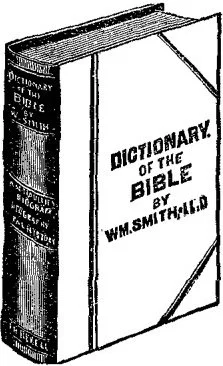
SMITH'S DICTIONARY of the BIBLE.

“Worker's Edition.”
EDITED BY WM. SMITH, L.L.D.
COMPRISING ITS ANTIQUITIES, BIOGRAPHY, GEOGRAPHY, AND NATURAL HISTORY.
Price, $2.00.
This work contains every name in the Bible respecting which anything can be said; over 500 engravings, and is a complete guide to the pronunciation and signification of scriptural names; the solution of difficulties of interpretation, authority and harmony; also a history and description of Biblical customs, manners, events, places, persons, animals, plants, minerals, etc., and comprises a most complete encyclopedia of Biblical information.
Address, PACIFIC PRESS PUB. CO., 43 Bond St., New York City. Or, Oakland, Cal.

Christian Statesman Calls Sabbath Outlook Notice a Fraud

THE Christian Statesman has discovered what it is pleased to term “a pious fraud, indeed.” The following “ad” which has appeared in several of the leading religious papers is that which has excited its ire:—
The Sabbath Outlook; a 16-page monthly, devoted to Sabbath Reform. Price fifty cents a year. Send for specimen copy, and examine valuable list of premiums. Free to all Reading Rooms. Room 100, Bible House, New York City.
“This notice,” says the Statesman, “is a clear case of getting money, and space, and readers through false pretenses.”
The trouble is that the Outlook is a Seventh-day Baptist publication, devoted to the advocacy of the Bible Sabbath, the seventh day of the week, the day, which even the Statesman must admit, is in the Scriptures called “the Sabbath.”
THE editor of the Statesman knows that Sunday is in the Bible never called “the Sabbath;” and that it was not by the early Church called by that name; but that for centuries of the Christian era, the term, “the Sabbath” was always and everywhere understood to mean the seventh day, the day now commonly called Saturday. Then how is it that it is a fraud for Seventh-day Baptists, who are laboring to bring all men, or at least all Christians, to again observe the seventh day, to call their work, “Sabbath reform”?
THERE can be but one answer to the question raised in the preceding paragraph, namely, that the editor of the Statesman has dubbed his efforts to force all men to keep Sunday, “Sabbath reform,” and that for a purpose; and he wants a monopoly of the name. Wonderful transformation, that while the Bible always and everywhere calls the seventh day “the Sabbath,” it is now a fraud to so use the term! There is no possible reason why Seventh-day Baptists should abandon the use of the name Sabbath when speaking of the seventh day, or qualify it in any way whatever. The “fraud, indeed,” is all in applying that name to the first day of the week.
FURTHERMORE, the “ad” referred to says, “Send for specimen copy.” It seeks to gain subscribers only on its merits, and its premiums. Certainly this is legitimate; and only an evil mind would discover evil in it.
It is neither necessary nor right for one believing that he has truth to present to do it in a manner that will close people’s hearts and ears against it before they even know what it is. The Saviour exhorted his disciples to be wise as serpents and as harmless as doves; and the apostle wrote to certain of his converts that he had caught them with guile. That is he used wisdom in dealing with them; he gave them truth as they were able to bear it; and the principle is recognized and acted upon by Christians in Christian work everywhere.
WHEN Nathan came to David to rebuke him for his sin against Uriah, he did it by means of a parable which secured the king’s attention and brought home to his mind the full force of the principle involved. Had he at once said, “David, I am come to rebuke you for a very grave sin, and I warn you not to commit yourself by any expression of opinion until you fully understand all that I am going to say,” he would have taken the course which the Statesman seems to think Seventh-day observers should pursue; and the course which Mr. Crafts, the editor of the Statesman, does not pursue.
As one who is constantly endeavoring to influence men, Mr. Crafts necessarily prepares the way for his conclusions by preparing the minds of his hearers for those conclusions. His “arguments” for Sunday laws are adapted to his audience. Before a congregation of church people, he urges religious “reasons” for Sunday legislation; while before a convention of laboring men, who are probably largely non-professors, he urges his “civil” “reasons.”
THE method indicated in the preceding paragraph would be legitimate, were all the “arguments” legitimate and consistent; but unfortunately they are not. For instance when Mr. Crafts exhibits his oriental saw, saying, as he has many times said, that it “was such a saw that Christ used to lay down at the close of his week’s work on Saturday evening,” he is perpetrating upon his audience not a “pious,” but an impious fraud, and he knows it. Therefore the present editor of the Christian Statesman is the last man that should talk about pious frauds. The Sabbath Outlook is not guilty of such frauds, while its accuser is.

Sentinel Declines Statesman's Invitation to Personal Controversy

THE SENTINEL cheerfully awards to the Christian Statesman, under its new management, the palm for scurrility. Calling people liars, and swindlers, does not make them so; but it does show an evil mind and an unchristian spirit in the one who does it. THE SENTINEL declines to enter the field to which the Statesman invites it.

Pope Reportedly to Honor Archbishop Ireland with Cardinal's Hat

THE Pope is said to be about to make Archbishop Ireland a Cardinal, in token of approval of the scheme “whereby parochial schools in Minnesota are turned into public schools for certain hours of the day.” That which commends this plan to the Catholic heart especially, is, that by means of it the Church school is supported by State funds. The scheme is also in operation to some extent in this State.

Western Pennsylvania Sabbath Association Holds Second Annual Session

The Western Pennsylvania Sabbath Association, so-called, held its second annual session in Pittsburg, on the 29 ult. The attendance was not large, being confined chiefly to delegates; but the spirit of determination to conquer which pervaded the convention was ominous of results far beyond, and of a very different character from, the seeming possibilities of only the recent past. One of the editors of this paper was present at the meeting, and will make some report of it, and give some of his impressions concerning it, next week.

Religious Legislation Gaining Ground in Maine

A SENTINEL reader, in Maine, writes:—
I enjoy reading THE SENTINEL very much, and think the arguments in it are good enough to convince almost everybody. Nevertheless it must be confessed that this movement to secure religious legislation is gaining ground rapidly in all parts of the world. The Woman’s Christian Temperance Union is doing as much in this direction as any other association in the United States. Recently they tried to organize at Shawmut, Maine. They are making their influence felt even in the backwood villages of this State. A “boss” of a crew of men in the woods, at Dead River, wrote to his employer recently that one of his “tote” teams had been arrested (at the instigation of the Woman’s Christian Temperance Union), for getting supplies on Sunday; and he wanted to know what to do about it. His employer’s reply was: “Go ahead on Sunday just the same as you have always done.” Only think of it, tampering with the lumbermen up in the backwoods of Maine!
The movement is indeed widespread and comprehensive. The warning against it should be just as widely disseminated.

Steamship Sailing Lists.

THE undersigned, being a regularly appointed transportation agent, will take pleasure in giving information concerning ships and arranging for a voyage for any one desiring such services. Berths on steamers should be secured as far in advance of date of sailing as possible in order to get the best available position. Write for list of proposed sailings, rates of passage, etc.
T. A. KILGORE. 43 Bond st., NEW YORK.

You have reached the end of this edition.

The American Sentinel · Apr 7, 1892