The Youth’s Instructor, Vol. 65, No. 8.

Shackleton's Endurance Threatened by Weddell Sea Ice

The Youth’s Instructor

Feb 20, 1917

Review and Herald Publishing Assn. · Takoma Park Station, Washington, D. C. · Feb 20, 1917

Shackleton's Endurance Threatened by Weddell Sea Ice
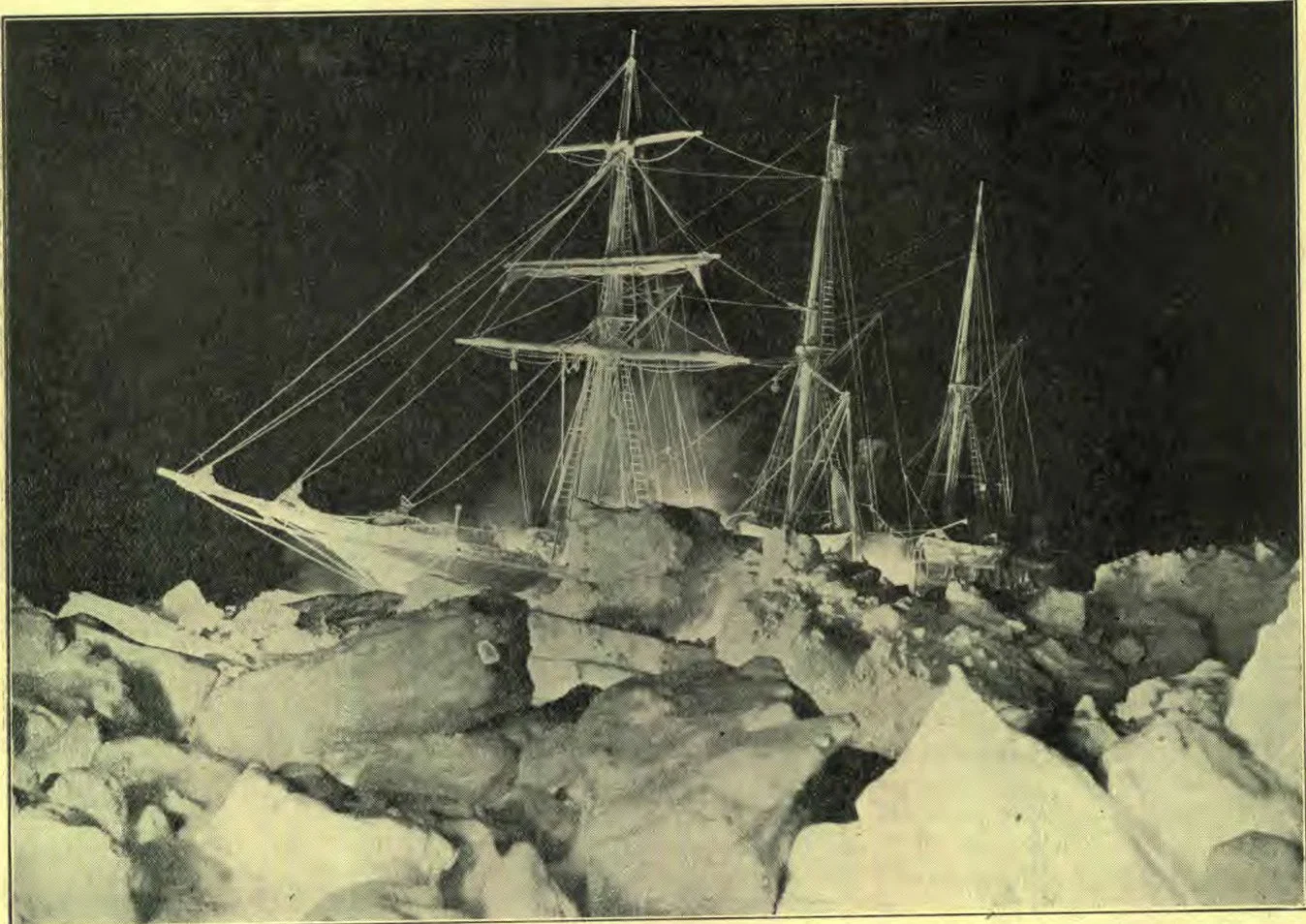
THE “ENDURANCE” ENGULFED IN THE ICE
A winter flashlight in the Weddell Sea, showing an upheaval of more than ordinary intensity. The ice was thrown about in huge blocks, threatening to crush at any moment the "Endurance," Sir Ernest Shackleton's south polar ship. The flood came within two feet of the vessel, and then, as if by a miracle, stopped. The boat, however, underwent a tremendous strain, the decks and planking groaning under the stress. For twelve months the ship and the camp on the drifting floes were threatened by an immense iceberg, named by the expedition the "Rampart Berg," which drifted north with it, and seemed often on the point of plowing through the pack ice onto the "Endurance." (See page 4.)

Miscellaneous News Items of Interest

The income tax reveals that there are 120 Americans who have an annual income of more than one million dollars.
There are 6,000 students in America from fifty different nations of the world. Of this number, 600 are from China.
Lord Beresford said recently that since the war began 1,470 allied and neutral ships had been sunk by enemy vessels.
Australia produces well-nigh one quarter of the gold output of the world. Some of the mines reach four thousand feet into the earth.
A young woman earned fifty dollars in one year by saving clover lawn clippings, drying them, and selling to city buyers for winter chicken feed.
The Chinese, it is claimed, successfully preserve watermelon for winter use, by coating it with whitewash and indigo, then keeping it in a cool, dark place. Varnish may be used.
The lowest death rate in the country's history was recorded in the year 1915. The rate was 13.5, and was based on reports from twenty-five States and forty-one cities with a total population of about 67,000,000.
“That the Turk shall be driven from Europe,” is the demand of the Allies. Any peace terms meriting their attention must offer this provision, for Russia expects Constantinople as remuneration for her service.
When Dr. David Jordan Higgins was ninety-five, his family missed him one morning. When they found him, they discovered that he had slipped over to the University of Southern California, and registered in the department of Philosophy.
The tabernacle to be erected this spring in New York City for Billy Sunday's services will accommodate 20,000 persons—larger than any other structure in the city. The estimated cost is $50,000. It is to be located at Broadway and 168th Street.
The government has appropriated ten thousand dollars for the erection of signposts in the Mohave Desert, California. The posts will indicate the way to water holes. The automobile traffic has increased to such a degree that these signposts are imperative.
It is reported that 2,734,000 acres more than last year at this time are planted in the United States to winter wheat. The average condition on December 1, however, was not so high as could be wished. The whole wheat belt now needs a heavy fall of snow as a protective covering during the cold months.
The remarkable vitality of the humming bird is well known, and is evident in the “almost incredible speed of its wings and its endurance in flight without rest or soaring.” These capabilities are said to be due to the fact that the heart of the bird is three times the size of its stomach when full. Great changes would be noted in the religious and social world if man were built after the plan of the humming bird,—with more heart than stomach.
On Dec. 14, 1916, the people of Denmark voted by referendum on the proposal to sell the Danish West Indies to the United States. They favored it by a majority of nearly two to one. On December 20 the Danish Folketing passed the bill that ratifies the sale.
A new bullet, capable of piercing armor as thick as that which covers the famous British “tanks,” has been invented and tested by the ordinance corps of the United States Army. The bullet will penetrate a three-quarter-inch steel plate and other objects beyond, and it is said that it will be able to pierce from twenty to thirty men in a row.
Mr. Carnegie began life in the business world by working as a bobbin boy in a factory for $1.20 a week. He has been successful enough in his subsequent career to be able to give away $325,000,000. His only daughter, a young woman of nineteen, will receive at his death only about thirty millions, as Mr. Carnegie’s studied plan has been to die relatively poor.
A railway extending from New York City to Buenos Aires, the capital of the Argentine Republic in South America, is strongly urged in the report of the International High Commission, which points out that this would not be difficult of accomplishment because many existing stretches of railway in both North and South America could be connected to make a continuous intercontinental line.
Cotton recently sold in New York for twenty cents a pound, or $100 a bale, the highest price it has brought in any market since the Civil War. Conservative estimates predict that the South will this year receive one and one-fourth billions of dollars, making a per capita cotton income for that section of $37.88. On Sept. 1, 1916, $39.59 was said to be the per capita money in circulation in the United States.
A Baptist church in Philadelphia employs a cobbler two evenings a week to teach boys cobbling. Ten cents is charged for the supplies for the season, and there are no other expenses. These boys not only learn a trade, but they are able to repair shoes for the family which would otherwise be thrown away. Many a boy has become expert, and has passed on his information to other members of his family. The members of the cobbling club keep their own shoes in repair, and they half-sole and patch the shoes of the boys who come to the other clubs of this social center. Classes in many trades are conducted, such as carpentry, wood carving, plastering, and molding.
“RISE early, work late, play hard, be merry, don’t worry, and be good,” is the business maxim of Joseph Dixon Lewis, controller of concerns with a capitalization of $150,000,000.

Two Dreams and a Vision

MRS. E. G. WHITE was converted at the age of eleven, and when twelve was baptized and joined the Methodist Church. At the age of thirteen she heard William Miller preach on the second coming of Jesus. She became deeply interested, and finally accepted the doctrine of the near coming of Jesus. After this she cast in her lot with the Advent people, and sought earnestly to have a heart free from sin, ready to meet her Saviour at his appearing. God richly blessed her, and gave her two impressive dreams and a vision. The two dreams follow, and the vision will be given in next week’s number:—
“I dreamed of seeing a temple, to which many people were flocking. Only those who took refuge in that temple would be saved when time should close. All who remained outside would be forever lost. The multitudes without, who were going their various ways, were deriding and ridiculing those who were entering the temple, and told them that this plan of safety was a cunning deception, that, in fact, there was no danger whatever to avoid. They even laid hold of some to prevent them from hastening within the walls.
“Fearing to be laughed at and ridiculed, I thought best to wait until the multitude were dispersed, or until I could enter unobserved by them. But the numbers increased instead of diminishing, and fearful of being too late, I hastily left my home and pressed through the crowd. In my anxiety to reach the temple, I did not notice or care for the throng that surrounded me. On entering the building, I saw that the vast temple was supported by one immense pillar, and to this was tied a Lamb all mangled and bleeding. We who were present seemed to know that this Lamb had been torn and bruised on our account. All who entered the temple must come before it and confess their sins.
“Just before the Lamb were elevated seats, upon which sat a company of people looking very happy. The light of heaven seemed to shine upon their faces, and they praised God and sang songs of glad thanksgiving that seemed to be like the music of angels. These were they who had come before the Lamb, confessed their sins, been pardoned, and were now waiting in glad expectation of some joyful event.
“Even after having entered the building a fear came over me, and a sense of shame that I must humiliate myself before these people. But I seemed compelled to move forward, and was slowly making my way around the pillar in order to face the Lamb, when a trumpet sounded, the temple shook, shouts of triumph arose from the assembled saints, an awful brightness illuminated the building, then all was intense darkness. The happy people had all disappeared with the brightness, and I was left alone in the silent horror of night.
“I awoke in agony of mind, and could hardly convince myself that I had been dreaming. It seemed to me that my doom was fixed, that the Spirit of the Lord had left me, never to return. My despondency deepened, if that were possible.
“Soon after this I had another dream. I seemed to be sitting in abject despair, with my face in my hands, reflecting like this: If Jesus were upon earth, I would go to him, throw myself at his feet, and tell him all my sufferings. He would not turn away from me, he would have mercy upon me, and I should love and serve him always. Just then the door opened, and a person of beautiful form and countenance entered. He looked upon me pityingly, and said: ‘Do you wish to see Jesus? He is here, and you can see him if you desire to do so. Take everything you possess and follow me.’
“I heard this with unspeakable joy, and gladly gathered up all my little possessions, every treasured trinket, and followed my guide. He led me to a steep and apparently frail stairway. As I commenced to ascend the steps, he cautioned me to keep my eyes fixed upward, lest I should grow dizzy and fall. Many others who were climbing up the steep ascent fell before gaining the top.
“Finally we reached the last step and stood before the door. Here my guide directed me to leave all the things that I had brought with me. I cheerfully laid them down; he then opened the door and bade me enter. In a moment I stood before Jesus. There was no mistaking that beautiful countenance. Such a radiant expression of benevolence and majesty could belong to no other. As his gaze rested upon me, I knew at once that he was acquainted with every circumstance of my life. . . .
“I tried to shield myself from his gaze, feeling unable to endure his searching eyes; but he drew near with a smile, and, laying his hand upon my head, said: ‘Fear not.’ The sound of his sweet voice thrilled my heart with a happiness it had never before experienced. I was too joyful to utter a word, but, overcome with ineffable happiness, sank prostrate at his feet. While I was lying helpless there, scenes of beauty and glory passed before me, and I seemed to have reached the safety and peace of heaven. At length my strength returned, and I arose. The loving eyes of Jesus were still upon me, and his smile filled my soul with gladness. His presence filled me with holy reverence and an inexpressible love.
“My guide now opened the door, and we both passed out. He bade me take up again all the things I had left without. This done, he handed me a green cord coiled up closely. This he directed me to place next my heart, and when I wished to see Jesus, take from my bosom and stretch it to the utmost. He cautioned me not to let it remain coiled for any length of time, lest it should become knotted and difficult to straighten. I placed the cord near my heart, and joyfully descended the narrow stairs, praising the Lord and joyfully telling all whom I met where they could find Jesus. This dream gave me hope. The green cord represented faith to my mind, and the beauty and simplicity of trusting in God began to dawn upon my benighted soul.”

The Antarctic Explorations

An incomprehensible fascination seems to hover about polar waters and polar lands, for though explorers have suffered untold hardships, and even death, in the effort to explore these ice fields, yet every few years other intrepid men are found who are both willing and anxious to make an effort to chart polar regions.
As early as 325 B. C., explorers reached the arctic circle, but not until the eighteenth century was the antarctic reached. The regions of the arctic had, therefore, been for centuries a resort of adventurers in search of a route to the East when the antarctic was found.
After interest was really awakened in the antarctic continent, all of the leading civilized nations — England America, Russia, Germany, Belgium, France, and Norway — have had a part in the exploring of its lands and waters, and as a result of the work accomplished by these expeditions we have mountains, seas, rivers, bays, peninsulas, islands, and capes bearing the names of the leaders of the various expeditions.
THE TERRORS OF THE WEDDELL SEA
Among these, Sir Ernest Shackleton, who has made three expeditions to the south polar lands, has established the latest record. He accompanied Captain Scott in his dash for the pole in 1901, but broke down on the way back to the coast. In 1908 he returned with an expedition of his own, and got within ninety-seven miles of the pole, when he was obliged to turn back on account of shortage of provisions. On this second expedition, Mr. Shackleton, who was accompanied by Prof. T. W. Edgeworth David, of Sydney University, Australia, accomplished several important feats. “The discovery of a considerable fresh-water fauna and of a poor, but characteristic flora was one of the most unexpected results. Apart from many minor excursions and surveys, the expedition performed three journeys of the first importance, each of them surpassing any previous land work in the antarctic regions. Before winter set in, Professor David, with five companions, made the ascent of Mt. Erebus, starting from the winter quarters on the fifth of March, and gaining the summit at an altitude of 13,300 feet on the tenth. This was found to be the edge of an active crater, the abyss within being 900 feet deep, though rarely visible on account of the steam and vapors which rose in a huge cloud 1,000 feet above the summit.
“The second achievement was the attainment of the south magnetic pole by Professor David, with Mr. Douglas Mawson and Dr. Mackay. The third and greatest achievement of this remarkable expedition was Mr. Shackleton’s great southern journey,” when he came within ninety-seven miles of the south pole.
On Sept. 18, 1914, this successful explorer started on his third expedition. He with his main party, numbering fifteen, left England to join their exploring vessel, the “Endurance,” which was to await them at Buenos Aires. They sailed from that port on October 27, for South Georgia. Their plan was here to coal, then enter Weddell Sea, south of the Atlantic, and make their winter camp on the coast of Prince Luitpold Land, thence to cross the continent from Weddell Sea to Ross Sea, on the route reaching the south pole. Thence he was to go to Beardmore Glacier, where he was to meet the second part of his expedition, which was expected to start on the ship “Aurora,” from some Australian port, December 1, for McMurdo Sound, for the purpose of forming a supply depot at the foot of Beardmore Glacier for the transcontinental party when it reached this point on its way to McMurdo Sound.
(Concluded on the last page)

The Antarctic Explorations

(Concluded from page four)
But if there is any place on the earth where the plans of men miscarry, it is in polar regions. Instead of crossing the antarctic continent, the expedition, although the best equipped of all, returned without having reached the continent. The relief expedition which was sent out to meet him on the other side of the pole likewise had to return unsuccessful. Both expeditions had to leave parties behind.
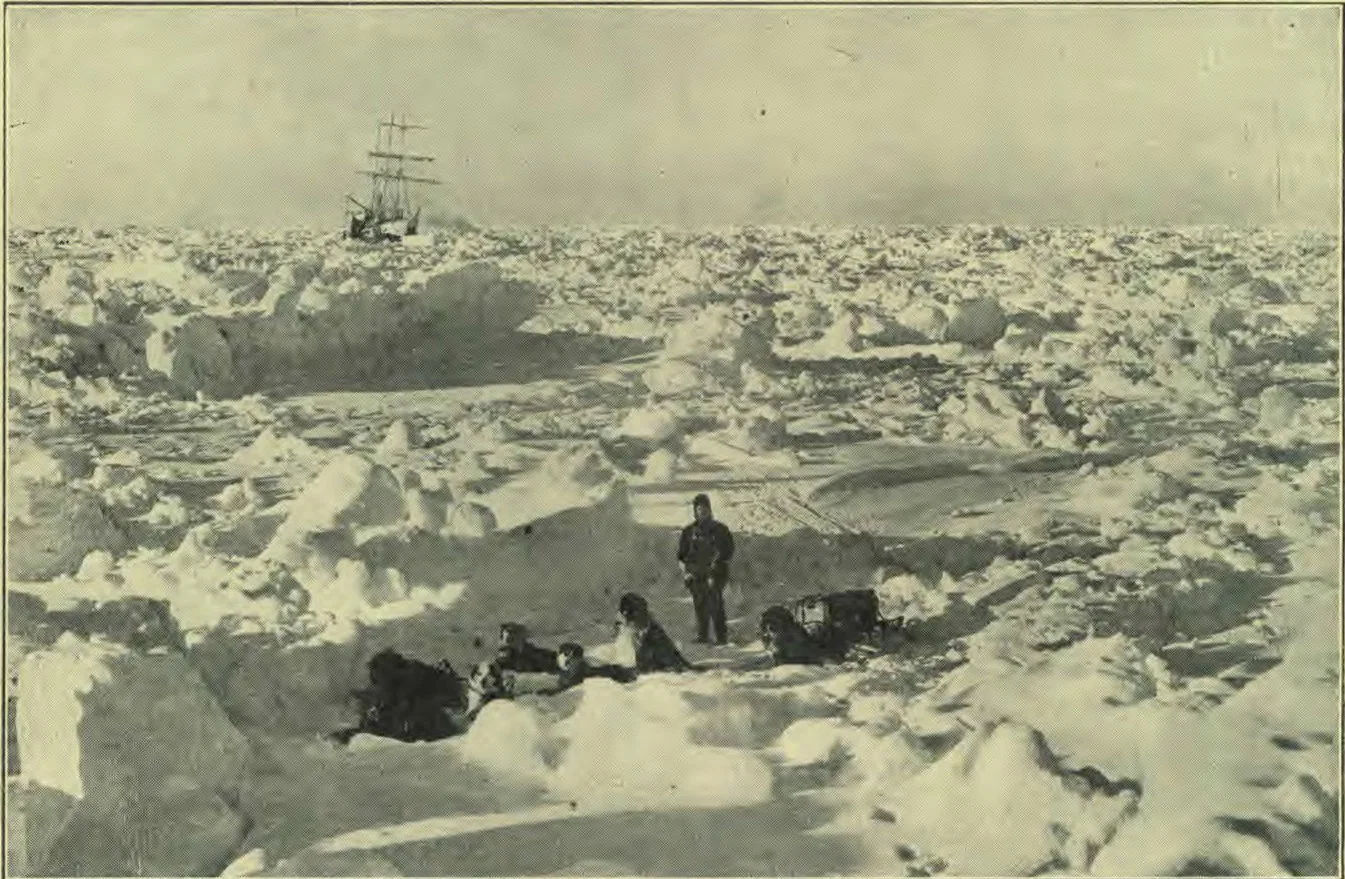
“The ‘Endurance’ left the island of South Georgia in December, 1914, but as it approached the antarctic coast it was caught among the ice floes, from which it never escaped. In July the ice had piled about the ship in ridges forty feet high. By fall the pressure had become so terrific as to throw the ship up upon the ice. When the ice broke up, the ‘Endurance’ was so strained and leaky that she was abandoned on October 27, and sank a month later.
“The party rescued such supplies as they could, and camped all winter on the ice, which was drifting toward the north. In April they came within reach of Elephant Island, one of the South Shetland group. Here Mr. Shackleton left most of his party, and with five men set out in a small boat for South Georgia Island. This he reached two weeks later, and walked across the island over glaciers to Stromness, where there is a Norwegian whaling station. South Georgia Island had been visited by German scientists, but no one had ever ventured to cross it before. With a boat and crew provided by the Norwegians, Mr. Shackleton tried to rescue the party left on Elephant Island, but could not reach it, so he went to the Falkland Islands for help.”
The Hudson Bay Company gratuitously placed a vessel at the disposal of the British government to be used in rescuing the members of the expedition marooned on Elephant Island; but Mr. Shackleton, fearing to wait for the Hudson Bay Company’s ship, made his fourth attempt to rescue the men who had been waiting since April 24, by means of a steamship lent him by the Chilean admiralty. He was successful in this effort, and reached Punta Arenas, Chile, on Sept. 3, 1916, with all of the twenty-two men whom he found well, but somewhat hungry.

Concentrating in 1917

ERNEST LLOYD
To make our religion a business is the only way to succeed. “Now, lad, make religion the everyday business of your life, and not a thing of fits and starts; for if you do, temptation and other things will get the better of you.” This advice, given David Livingstone by one of the village patriarchs, he followed throughout his wonderful career.

Why Should We Concentrate?

“The general reason for concentrating is that we have in effect only the power that we exert upon any one thing. Our maximum ability is not what we possess, but what we are able to bring to bear upon any one task. A nation at war may have a great army scattered over a vast territory, but her fighting force in a battle is the number of men she can concentrate. Scattering uses up our energies, but accomplishes nothing; concentrating magnifies our energies. By concentration we realize ourselves. The measure of what one can do is given by his power of bringing his energy to bear upon a given work. Many persons are self-distrustful, afraid to undertake large and difficult works, because they have never really tested the abilities that God has given them. By concentration we redeem the time. Time is our most important asset. By concentration we get most out of our time.”
“Every reason that urges the expediency of concentration in anything, is equally valid in religion. He who succeeds in any field of endeavor, concentrates; religion is not an exception.” “This one thing,” says Paul. He who succeeds in religion, concentrates upon religion.
“One can focalize the rays of the sun by means of a lens, and thus kindle a fire; one can strike blow after blow upon the same place and break a rock. The diffused rays and the scattered blows are types of the ineffective attempts at Christian living; the focalized rays and the concentrated blows, of the efficient life.”

What Is It to Concentrate in Religion?

It is, first, to break with the sinful and the mistaken past. The figure of Lot’s wife looking back at the doomed city from which she had just fled, is one of warning to the would-be Christian. “It is fatal to look back; it is success to look forward. Looking back is paralyzing; looking forward is invigorating. Until sin has been confessed and forgiven, one cannot concentrate; until one’s point of view has been rectified, he cannot concentrate; until one escapes the discouragement of his past failures, he cannot concentrate.” Forget the things which are behind.
To concentrate, one must have vigor of purpose, the forward look, and outreaching faith. “One must begin a new life in confidence that the future holds all opportunity for the correction of the past. Discouragement will yield to earnest purpose and faith. The pilgrim band of the household of Abraham, setting out from idolatrous Mesopotamia, is a type of the Christian’s reaching forth unto the things which are before.”
To concentrate, one must recognise the fact that he is to contend for a prize. “The racer panting to reach the goal, the wrestler straining to throw his antagonist, are types of the Christian as he contends against the world, the flesh, and the devil to win the prize. It is sometimes deemed appropriate to sneer at the religion that offers a reward, as an appeal to selfishness. The sneer is a shallow one; to be truly a Christian is to deny self. But the motive of gaining the prize is one that we need if we are to succeed. The weariness of the way will overcome one who does not fix his eye upon the prize.”

A Method of Concentrating

The right point of view is essential to concentration. But how shall we attain that point of view? “The study of the Bible is indispensable if we would know God’s will for men. He alone who made men can reveal to them the truth concerning themselves and their relations to him. But the study of the Bible must be accompanied by prayer, else we shall fail to obtain its message, which is meant for the heart as well as for the head. We cannot know the message of the Book unless we also know the Author.” “Your interpretation of that poem of Browning cannot be right,” said one to a lady. “I know, for I am personally acquainted with the author.” The same critic was afterward frivolously rejecting some teachings of the Bible. But said the same lady: “I cannot permit you to judge of that, for I personally know the Author.”
“Communion with God and meditating upon the truths of the Bible are the means of gaining the moral strength that makes purpose effective. New Year’s resolutions are proverbially unstable. Conceived in our own strength, they must necessarily be so. Prayer hardens good purpose into holy deeds. The consciousness of the presence of Christ gives one both courage amidst all dangers and perseverance against all obstacles.” Gaunt and wasted by sixteen years of African fever, one arm disabled and hanging limp at his side as the result of a lion’s attack, Livingstone said, on the occasion of receiving his honorary doctor’s degree from the University of Edinburgh: “Shall I tell you what supported me through all those years of exile among a people whose language I could not understand, and whose attitude toward me was always uncertain, often hostile? It was the promise, ‘Lo, I am with you alway.’”
The prayer life and the Bible-reading habit must be maintained by daily practice. This is the true doctrine of the perseverance of the saints. They who do not continue in prayer and the Word of God cease to be saints. This is the way to concentrate and to continue in the Christian life. Let us determine to cultivate this gift of continuance during 1917, and concentrate more and more upon the great essentials of life, for our own sake and the sake of our associates.

Spiritualism Versus Christianity

Signs of Christ’s Coming — No. 5

Spiritualism Versus Christianity

In Paul’s missionary tours he came in contact with many cases of spirit possession. Mediums were all about him. The evil spirits which controlled these persons, sought in every way to hinder Paul in his gospel labors. It has ever been the purpose of Satan and his angels to interfere with God’s plans.
By the pen of Paul, God gave special warning to his church, that in the last days it would meet the same spiritistic influences that Paul had to contend with. The message is: “Now the Spirit speaketh expressly, that in the latter times some shall depart from the faith, giving heed to seducing spirits, and doctrines of devils.” 1 Tim. 4: 1.
There is no harmony between the teaching of spirits and that of the “faith.” One tears down; the other builds up. For the sake of making it more acceptable, satanic error may be tinctured with more or less truth, but the very source of the doctrine is sufficient to discredit it in the minds of those who believe the Word.
The “faith” of the Bible makes no provision for receiving communications from the supposed spirits of the dead. “The living know that they shall die: but the dead know not anything,” is the declaration of the wise man. Eccl. 9: 5. This text closes and bars the gate of the grave to the living.
Centuries before Paul’s day, a prophet drew a definite line between the teaching of God and that of the spirits. In fact, it is a prophecy which had the beginning of its fulfilment when Christ appeared upon earth, and will continue in force as long as men need instruction from above.
Just before the Israelites entered the land of Canaan, God, through his servant Moses, gave them a plain warning. The heathen nations with whom they would come in contact had religions of their own, and did not recognize the God of heaven. From the statement of Moses, it is evident that their religious worship was made up largely of intercourse with the supposed spirits of the dead. Moses said:—
“There shall not be found among you any one that maketh his son or his daughter to pass through the fire, or that useth divination, or an observer of times, or an enchanter, or a witch, or a charmer, or a consulter with familiar spirits, or a wizard, or a necromancer. For all that do these things are an abomination unto the Lord.”
The Lord then points the people to a Prophet whom he would raise up. He should be among the living, and teach them the precepts of heaven.
“The Lord thy God will raise up unto thee a Prophet from the midst of thee, of thy brethren, like unto me; unto him ye shall harken.” Deut. 18: 10-15.
This Man is no other than Christ himself. Peter, in one of his sermons, applies this prophecy specifically to Christ:—
“He shall send Jesus Christ, which before was preached unto you. . . . For Moses truly said unto the fathers, A Prophet shall the Lord your God raise up unto me; him shall ye hear in all things whatsoever he shall say unto you.” Acts 3: 20-22.
This counsel to leave the abominations of Spiritualism alone, and seek the precepts of Christ, becomes a part of the Christian’s duty. The struggle between these two powers in this dispensation is the direct fulfilment of a great prophecy. We see the battle going on all around us.
Those who from unbelief or neglect fail to obey this instruction, certainly dishonor their Creator. So long as God is alive, the Bible in existence, and the Holy Spirit ready to teach us, there is no reason for going elsewhere to secure supernatural wisdom. To turn from them is to place oneself in the grasp of the enemy.
Men little know what they are dabbling with when they enter the ranks of Spiritualists. The terrible influence of the powers of darkness is not at first realized. Many no doubt enter upon it innocently; possibly some from curiosity. They have not studied the Scriptures to learn how God views such a course and what the sure results will be. God in ancient times pronounced the death sentence upon all who consulted mediums.
The association with evil spirits is itself debasing and degrading; for the spirits have no regard for morality. The high standard set by the Word of God is largely repudiated or ignored.
Some time ago an experience with Spiritualism was published in Truth (September-October, 1915). It was a letter to the editor, and was not intended for publication, but it frankly and honestly describes the tendency of this “ism.” At the suggestion of friends the writer of the letter became a medium. After communing with the supposed spirits of the dead, he says:—
“I discovered the fact that these former dear friends of earth, in whom I placed the most implicit confidence, had degenerated into just common, ordinary, low-down liars, and were capable of falsifying to me concerning the things of the most vital and sacred nature to me.
“The spiritual intelligences, my controls, knew nothing whatever about Jesus, other than their mere belief that he was a medium; and some of them professed to act as a medium for him, and transmitted alleged communications from him that were so at variance with his life and teachings when he walked and talked with men, that it would turn a man away in disgust.”
The medium then tells of his struggle with the spirits. They would force him, against his will, to speak words dictated by them:—
“I had to make an address of welcome in the interests of a fraternal organization. I had but just risen and faced my audience when some spiritual intelligence—whose identity I do not know even yet—took absolute trance control of me (by right of conquest), and very generously proceeded to make the address of welcome of which the audience still believes me to be the author, and for which I still receive the credit, because I could not tell them that a disembodied intelligence, some spirit in fact, had taken possession of my will and voluntary powers, and actually delivered the address without my knowledge or power to prevent it.
“A few days later a powerful spiritual influence attacked me, and I had to exert every ounce of my energy to resist that awful, blighting influence which it was able to project upon my consciousness and which I could not throw off for days afterward.”
The advice of this medium to others who might be tempted to investigate this deception, is valuable. But he could have been saved his terrible experience had he followed God’s Word. He says:—
“My advice to all mediums, based upon the definite knowledge gained through absolute personal experience, is to ‘right-about-face,’ and do everything in their power to regain what they have sacrificed through self-surrender.
“I know enough of mediumship to say that as far as I went it was a downward course. I deliberately and of my own free will and accord went into its mystic realms, and I paid the price of my folly—to the uttermost; and so will you, for ‘God is no respecter of persons.’ The most exalted monarch that ever lived and the most obscure peasant can meet on that level and both receive their lawful due. I know that I got just what I deserved.”
Just before Christ returns, the world is to witness wonderful manifestations of Satan’s power. The revelator says that the great battle of Armageddon will be brought about through the influence of spirits: “I saw three unclean spirits like frogs come out of the mouth of the dragon, and out of the mouth of the beast, and out of the mouth of the false prophet. For they are the spirits of devils, working miracles, which go forth unto the kings of the earth and of the whole world, to gather them to the battle of that great day of God Almighty. . . . And he gathered them together in a place called in the Hebrew tongue Armageddon.” Rev. 16: 13-16.
  • (Concluded on page fifteen) *
  • (Concluded from page six) *
A careful examination of the following points should convince any one of the folly of seeking wisdom from the so-called spirits of the dead:—
The dead are devoid of knowledge —
“The living know that they shall die: but the dead know not anything.” Eccl. 9: 5.
The dead know nothing about the social or financial conditions of living relatives —
“His sons come to honor, and he knoweth it not; and they are brought low, but he perceiveth it not of them.” Job 14: 21.
Their thoughts perish the day they die —
“His breath goeth forth, he returneth to his earth; in that very day his thoughts perish.” Ps. 146: 4.
They do not remember God —
“For in death there is no remembrance of thee: in the grave who shall give thee thanks?” Ps. 6: 5.
When man dies, he disappears —
“Man dieth, and wasteth away: yea, man giveth up the ghost, and where is he?” Job 14: 10.
They become dust, and not spirits —
“All go unto one place; all are of the dust, and all turn to dust again.” Eccl. 3: 20.
They cannot be raised up by mediums —
“Man lieth down, and riseth not: till the heavens be no more, they shall not awake, nor be raised out of their sleep.” Job 14: 12.
No necessity of seeking to the dead —
“If they hear not Moses and the prophets, neither will they be persuaded, though one rose from the dead.” Luke 16: 31.
CLAUDE E. HOLMES.

What to Do

Miss California Teaches Manners to Her School Children — No. 2

What to Do

1. COME to school on time, wearing as clean clothing as possible, with face and hands and neck and ears washed, teeth brushed, nails cleaned, shoes polished, and hair neatly brushed and combed. If you come barefooted, see that your feet are as clean as possible.
2. Be cheerful. Say “Good morning” and “Good night” to your teacher and to your schoolmates.
3. Treat the school buildings and the school furniture with respect. They are for use, but not for abuse. Talk and move quietly in the schoolhouse whether school is in session or not. If you are a boy, take off your hat when you enter the door of the school building.
4. Use all books carefully, keeping them as clean and in as good shape as possible.
5. Treat the school grounds with respect. Throw all pieces of paper, scraps of food, etc., into the garbage can. Help sometimes to put the school yard in specially good order. Take pride in the way it looks.
6. Be kind to the younger and weaker boys and girls, to those who are crippled, to strangers and foreigners, and to all others who need your help.
7. If you are a boy, be respectful to ladies and to girls. Raise your hat when you greet them. Stand aside to let them pass out of a doorway first. Carry heavy bundles for them.
8. If you are a girl, receive the attention of boys courteously. Always say, “Thank you” distinctly, so they can hear you, whenever boys have done favors for you, such as opening doors, carrying parcels, or handing you something you have dropped.
9. Stand and walk with head erect and shoulders thrown back.
10. Lift your feet in walking; have a spring in your step.
11. Look people straight in the eyes.
12. Always say, “Excuse me,” or “Pardon me,” when you cannot avoid passing in front of a person.
13. Repeat to your friends the pleasant things you hear said of them, and try to forget the unpleasant ones.
14. Remember to offer your services from time to time. Do not wait till your teacher asks a favor of you, but before she makes the request ask her if you can be of help.
15. Be thoughtful of schoolmates who are ill and out of school. Write to them. If possible, send them flowers or other little gifts. Perhaps, unless ill with a contagious disease, visit them sometimes; at least ask how they are.

What Not to Do

1. Do not pout when asked to do something which seems unpleasant.
2. Do not tease those who are deformed or crippled or any who are weaker than yourself.
3. Do not laugh at the mistakes or failures of others.
4. Do not boast when you win in a contest.
5. Do not whine when you are beaten in a contest.
6. Do not crowd and push through doorways.
7. Do not look over another’s shoulder to see what he is reading or writing.
8. Do not interrupt a person speaking.
9. Do not flatly contradict any one.
10. Do not listen at doors or windows to conversations which you are not expected to overhear.
11. Do not rudely stare at strangers, or question them curiously about their private affairs.
12. Do not talk or laugh noisily or play roughly in the school building.
13. Do not spit on the floor or on any part of the school building or buildings.
14. Do not forget to have a clean handkerchief, nor to use it when necessary.
15. Do not handle books carelessly or with dirty hands.
16. Do not forget to say “Good morning” and “Good night” to your teacher, nor to say it pleasantly and heartily. If you are a boy, and are outside the building, wearing your hat, do not forget to lift it when you greet your teacher.
17. Do not be late to school nor absent from school unless it is necessary. When you come late or are absent, you give other people trouble; and giving other people trouble when it is not necessary to do so is bad manners.
18. Do not be in a hurry to tell tales about the misdoings of other people, but be in a great hurry to tell when you yourself have made a mistake or have done something wrong. You are probably sorry. Do not be afraid or ashamed to say so.
Continue reading: Ancient Laws