The following is a description of the great cathedral of Cologne, Germany, written by Bishop Warren, and published in The Christian Advocate of Sept. 1, 1881. Descriptions of such monuments of human skill to plan, and of patience and labor to carry out, are interesting considered merely in themselves; but this is more, as marking an achievement never before accomplished by human hands, and as showing the increased impulse and energy imparted to the world in these modern times, without which the plan would probably never have been followed to its completion. If such works can be accomplished by men in this present state, what can they not do when crowned with immortality?
It may seem strange that I speak of a building as modern whose foundations were laid 632 years ago, and the very name of whose original architect is so irrecoverably lost that there are legends attributing the plan to God, and others attributing it to Satan in exchange for the soul of the reputed architect. Yet the building is so essentially modern that, fifty years ago, only the choir at the east end stood in its beauty, and one of the western towers had reached one-third of its height, with all the transept and nave a long blank between the two attempted parts. And it is only forty years since the idea of its being finished began to assume an air of probability.
This proudest ecclesiastical monument of Germany has been a kind of measure of the nation itself. In the Middle Ages the people's strength and religious feeling blossomed into structures strong as the mountains, and delicate as the leaves and flowers with which they are covered. But when their national unity weakened from rock into sand, this unfinished monument, so grand in design, falling into ruin, became a significant emblem of that power and feeling that were necessary for its completion. When the centuries of disintegration had gone by, and the hearts of the fatherland began to grow together; when they had outgrown petty jealousies and had come to that largeness that could see and desire large things, see that an empire of united hearts and purposes was greater than any individual good, then the hour struck in which it was possible to complete a monument grand as a cathedral. In 1842 societies were organized all over Germany, under the patronage of the king, to finish the cathedral. The king gave nearly $40,000 a year himself, and thus by various other helps, sufficient funds were provided to carry on the work. Had the money thus raised been sunk in the sea, the spirit of unity and generosity that was produced in the nation would have been ample remuneration. We build railroads, and master the forces of earth and sky. If it be done for the mere purpose of gain, it is something; but when we learn to sacrifice for union, for pure benevolence and religion, that is the moment of our growing greatness.
This building was finished by the laying of its finials, 511 feet in air—the highest stones ever laid by the hand of man—in October last. Thus the work, the offering, the spirit, and the cathedral are modern. It is not the largest; four other cathedrals cover more ground; but that does not matter. The ability that abides in our race to build these grand structures evidences that man is a real child of the Creator of the universe. He also creates, and the grandeur of the race is not three hundred years behind us. I know we build steamships, telescopes, and spectroscopes, that are more difficult to make than a cathedral; but they do not indicate the same spirit. They may, possibly, be the offspring of a desire for gain; but a cathedral is the “frozen music” of the grandest psalm, to the lofty notes of which man ever aspires to lift his voice. Think of its significance. Its ground plan is a cross, the symbol of Heaven's help for earth's redemption; its two spires are emblems of man's two hands uplifted in prayer—the story Aaron and Hur of buttress and spire do not weary through the ages; the thousands of statues are of heroes, saints, apostles, and of Christ; the bass-reliefs are pictures of heroic deeds, possible only because God helped to do them; the windows show the richness of God's world by taking mere sunlight and unbraiding it into most glorious color for the portrayal of the words and thoughts of God, as embodied in human and divine sacrifice; the organ and chimes show the unsuspected richness by taking what we use for breath into such music that the angels must lean out of Heaven to listen; and when God himself comes to the longing human hearts made to be filled only by his love, what can be lacking to its highest signification?
Take a few facts. It has cost $10,000,000. Some of its foundations are 65 feet below the surface. It is 444 feet long across the transept, and 283 feet wide (thirty churches 30x40 would not cover as much space); the walls of the towers are 20 feet thick; the side windows are 48x20 feet, main doorway, 96x32; 22 bronze cannons captured from the French were cast into a bell weighing 27 tons in 1871, and this bell was lifted 180 feet from the ground and securely hung. Twenty-eight men are required to ring it—a man for each ton, and one for the rope. The finial of each spire weighed 50 tons when set in its place; 826 steps lead to the top; 64 columns support the ceiling, that rises 161 feet from the floor. Each column is beautifully cut. Its general form is square, with a three quarters round at each corner, 16 inches in diameter, and between these corners from one to three smaller rounds from 6 to 10 inches in diameter. You can walk behind a delicate colonnade in the wall 80 feet above the floor entirely around the building. Half-way up to this stands on each pillar, facing the central nave, a majestic statue of some saint or apostle. Through the windows of the clerestory above comes the bright light of the sun, often touching some face into rarest beauty. One recalled to-day the time, years ago, in Rome, when the Supreme Pontiff elevated the host in the vast Basilica of St. John Lateran, and a flood of sunlight burst upon chalice and garments of cloth of gold and costly jewels.
But why attempt to describe the indescribable? Its exterior of flying buttresses one above another, and of pinnacles almost without count, cannot even be attempted.
There is a strange interest attaching to two of the gargoyles on the south tower. They are said to be true portraits of the original architect and his faithful dog, the first snatched away by the evil one in order that the glorious design should not be finished.
But the stones are not the least glorious part of the great work. They are all made so typical that, like the pillar of cloud, they tell of God. Workmen come in at the doors and kneel in his presence. Burden-bearers lay their loads on the floor beside them and pray. Pilgrims come over distant seas and find that God is here. Faith conceived this forest of stone; these mighty boles were all seen before a hammer rang; these branchings of mighty arms covered thought before they roofed in multitudes; piety flowered under these interlacing arches ere yet there was one of them. It is just as easy to think of a higher roof that needs no pillars, of a brighter light that human eyes cannot endure, of a sweeter music where all is harmony, of a finer presence than this transcendent creation indicates, and in that finer presence is an ineffable sweetness of personal love. Thus every man may build his own modern cathedral; for wherever humble faith kneels, there God builds a canopy of his love above it.
Carrying Pistols.
By Robert Collyer
THIS is not a land of peace. It is a nation of armed men. The farmer has a revolver in his bedroom, and the merest boy, on the slightest provocation, pulls out his pistol. Two hundred years have proved that, in civil life at least, the Quaker is right. No Quaker ever shoots, and no Quaker is ever shot. There should be a general disarmament; and we should guard the sale of pistols, as we guard the sale of poisons. It is the brutality that comes from the possession of arms that does the harm.—Rev. Robert Collyer.
ROMISH INFLUENCE IN HIGH PLACES.
The following editorial from the Pittsburgh Commercial Gazette makes public certain facts which deserve to be pondered by the American people:—
“MRS. ‘SECRETARY’ SHERMAN.
“The American public will be surprised to learn that the War Department is now and has been for some years in the entire control of a woman; that her word is law; that she is virtually Secretary of War, and upon her mere dicta all appointments, promotions, and other changes in that important branch of the public service, are brought about! This wonderful woman is Mrs. General Sherman, and her conduct is all the more extraordinary since she is actuated solely by religious zeal for her church—the Roman Catholic.
“The Washington correspondent of a morning contemporary makes this startling revelation, which came about by a casual remark which he heard Secretary Lincoln make to an office-seeker, to the effect that he had not the power to fill even a one-thousand-dollar clerkship; that the War Department was run by a religious ring, and that he was there simply to sign his name. The real head of this religious ring is Mrs. General Sherman, who has her subordinates in various positions of influence, and practically controls every appointment made through the War Department.
“The correspondent further represents that Mrs. Sherman, with true Jesuitical instincts, works through unseen influences, and hence it is that her machinations are so far-reaching and powerful. It is asserted that two-thirds of all the appointees in the War Department to-day are Catholics; that the Catholic junta control everything; that Secretary Lincoln confesses himself powerless to send a single man to the field or make a single change in opposition to the influence of the representatives of the Catholic Church! Not only does the Secretary of War make this humiliating confession, but the Adjutant General of the Army and every officer in executive authority declares himself powerless before the edicts of the Catholic Church!
“This is a very grave matter, if the facts be as stated. Not that there is any danger to the country in the fact that a religious zealot is able to find places for scores of her own faith in the army, but because the weakness and imbecility which permit such a wanton violation of every principle of free government are deserving of prompt and stern rebuke. Mrs. Sherman, as a devout and aggressive propagandist of the Romish faith, has received special honors at the hands of his holiness, the pope, and in return for these papal favors she feels it incumbent upon herself to use all her influence as the wife of the General of the Army to see that none but Catholics be placed on guard. What she may do for her church is a matter that does not concern the public, but if she has undertaken to thwart the will, usurp the authority, and exercise the functions of the War Department, it is about time she had a ring put in her nose. Secretary Lincoln might distinguish himself by filing a quo warranto against this feminine usurper.”
No one who has an open eye for current events needs to be told that it is just like the Romish Church to use the influence of one of her accomplished daughters in the direction indicated. Nor is there any hope that any reasonable share of public offices and emoluments will ultimately satisfy her greed. What she is working for is the control of the American government in all its departments and to the farthest limit of its influence. To this end she crowds her servants into every open door in our school system, as teachers or school directors, and at the same time demands the division of the school fund and a share of it for her separate control. For this end she establishes seminaries and high schools, and entices the children of the wealthy with the promise (usually false) of a finer education than can elsewhere be obtained. With the same purpose in view, she obtains from municipal governments such official recognition of her ecclesiastical dignitaries and ceremonies as no other church ever asks or expects. She is playing a deep and bold game for the control of the young Republic of the West. But she will never succeed. There are moral and spiritual forces at work which preclude the fear. In America, as in the Old World, the Papal power is nearing its predicted end.—Christian Statesman.
Notes of News.
—General Grant has his life insured for $100,000.
—One of the Mormon apostles, Orson Pratt, died recently.
—The coronation of the Czar of Russia is to take place next April.
—A college has been established in Africa for the training of Roman Catholic priests.
—In Milwaukee, Wis., 1500 cigar-makers have determined to strike for higher wages.
—Proceedings in the star-route conspiracy case commenced in Washington, Nov. 3.
—Ex-Secretary Windom is to serve out his own unexpired term in the United States Senate.
—The Gospel of St. Luke has been translated into the language used by the natives of Patagonia.
—In the last decade, the church-membership of Madagascar has nearly doubled, and is now 71,585.
—Reports from Vienna state that floods have caused immense damage in Austria and Servia.
—It is estimated that the star-route conspirators have defrauded the government to the amount of $9,000,000.
—Monday morning, Oct. 31, New Hampshire was visited by an earthquake, which was quite severe at Henniker.
—The Czar of Russia has ordered seventeen of his palaces to be converted into educational institutions for the poor.
—A Japanese gentleman who is visiting America believes that within five years Japan will be a Christian nation.
—In the second week in October, the centenary of the Presbyterian church of Huss and Jerome was celebrated at Prague.
—The rise in the Western rivers has resulted in very great damage. At latest accounts the flood was subsiding in some localities.
—Kairwan, the holy city of Tunis, is now in the possession of the French, who have arrested several of the leading inhabitants.
—In Lewistown, Me., the Catholic priests have ordered over 300 girls to leave the public schools, and go to a parochial school.
—The French Chamber have voted 50,000,000 francs to be expended in the purchase of land in Algeria, and in colonizing that country.
—The police of Frankfort-on-the-Main recently seized all posters in restaurants giving information to those intending to emigrate to the United States.
—Some of the native churches of the Sandwich Islands give $4.00 per member yearly, for the support of the gospel beyond their territories.
—The proposed Garfield monument in Lake View Cemetery, Cleveland, will cost $200,000. It is believed the whole sum will be raised in three weeks.
—During the last 60 years, no fewer than 16,000,000 people have left the Old World for America and Australia; and of these the United States received 10,370,000.
—During the month of October the national debt was decreased $1,000,000. This makes the reduction for the first four months of the fiscal year, $57,000,000.
—Albania is again in an unquiet state. Anarchy prevails in Prizrend. Dervisch Pasha is blockaded by mountaineers in a fort in the midst of the Lijuma Mountains.
—There is an ingenious clock set up at Brussels that needs no winding, and attains the maximum of regularity by a simple mechanism. It is kept in motion by a current of air.
—A recent religious census taken in Prussia shows that that country contains 17,645,462 Protestants, 9,205,136 Catholics, 363,790 Jews, 42,518 Dissenters, and 22,006 persons professing no religion.
—Previous to President Garfield’s assassination, Secretary Windom had proposed to him a system of civil-service reform, which was to have been perfected, and presented to Congress for consideration.
—Mrs. Garfield cordially sympathizes with the proposition to erect a National Garfield Hospital at Washington. She regards the enterprise as a grand tribute to the memory of her deceased husband.
—It is asserted on good authority that more timber has been destroyed in Canada by forest fires than has been exported, and one of its largest lumber operators says there will be no pine left in Canada at the end of 20 years.
—As soon as President Garfield’s death was known in the coast cities of South America, there were solemn demonstrations of sorrow and sympathy there. In Buenos Ayres there was a funeral procession in which 10,000 people participated.
—Peru is now practically without any government, that of Garcia Calderon having been suppressed by the commander of the Italian fleet. A frightful condition of affairs is reported as existing in that unhappy country. Crime is rampant, and the Peruvians give dire accounts of Chilean atrocities.
—The liquor-dealers of New York City paid about $550,000 into the city treasury for licenses to carry on the rum traffic in 1880, and the city comptroller paid out of the city treasury about $7,000,000 to pay the expenses of the courts, police, and prisons, as the cost of keeping the liquor-business going on in the city.
—In the case of George Q. Cannon, who was elected member of Congress from Utah, but was refused a certificate of election on the ground that he was not a citizen of the United States, Chief Justice Hunter, of Utah, has decided that no naturalization papers had been issued to him, and that therefore he was not a citizen of this country.
—In Ireland the Land League seems to have nearly or quite lost its prestige. Some arrests continue to be made. Several prominent Catholic ecclesiastics have denounced the no-rent manifesto. The first decision of the Land Court, made Nov. 1, is in favor of a reduction of rents for the next fifteen years. The reductions are large, and the tenant-farmers are delighted.
—O. L. Baldwin, cashier of the Mechanic’s Bank of Newark, N. J., has proved a defaulter to an enormous amount, considerably over $2,000,000. The news has fallen on the people of that city like a thunder-clap, the criminal being a prominent citizen and highly esteemed. His crime will ruin the bank, and probably also a large number of business houses. Baldwin alleges that Nugent & Co., leather manufacturers, are largely responsible for his defalcation.
—The whisky manufacturing season in Kentucky (says the Cynthiana Democrat) is opening with a prospect for about half the run of last season. There are now over 10,000,000 gallons in bond in this district, and nearly 43,000,000 in the State. The three-year-old bond enactment of Congress went into effect from 1879. All the whisky, therefore, that was placed in bond at that time must now be taken out and the tax paid.
—According to the figures of the census, the vast estates which existed at the South before the war are being broken up at a rate that in the course of ten years will give the South almost as large a number of landed proprietors as any other portion of the country. In Georgia, for instance, there were at the beginning of the war only 62,000 landed proprietors. To-day there are more than twice that number. The same is true of Alabama, Arkansas, Florida, and Virginia.
—A Winfield (Kansas) brewer writes: “I have invested over $10,000 in my brewery; and I do not believe I could get $500 for it now, on account of the prohibition law. I have $10,000 worth of beer in my vaults, and am not allowed to sell a drop. My barley and malt cost me ninety-five cents a bushel; but I cannot get fifty cents for it now. You have no idea how our people are upset by the new law.” Yet we are continually being told that in Kansas, as in Maine, the law is a failure, and that “prohibition does not prohibit.”
—About midnight on Monday, Oct. 31, three men boarded a Ft. Wayne train at Bucyrus, Ohio, and attempted to force their way into a Pullman coach. One of them fired several shots. The conductor shouted to the passengers, and the robbers rushed through the coach and fled. The next day a Northwestern freight train took on five passengers at Sterling, Ill. A few miles beyond that place, they drew a revolver on the conductor, and demanded his watch and valuables. He produced a weapon, and the ruffians were disarmed by a brakeman. Three of the party were jailed; the others escaped.
Obituary Notices.
“Blessed are the dead which die in the Lord from henceforth.” Rev. 14:13
VOORHEES.—Died at Bethlehem, Md., our little son, aged 1 year, 8 months, and 18 days. LEWIS W. AND EDITH J. VOORHEES.
BRYANT.—Died of bilious colic, at Woodstock, Me., June 23, 1881, after an illness of thirty-six hours, Bro. John M. Bryant, aged 64 years, 9 months, and 4 days. Bro. B. embraced the truth about seven years ago by reading. He left a wife and three little boys to mourn his loss. Words of comfort by the writer, from Rom. 1:16. S. J. HERSUM.
HOFFMAN.—Died near Mill Grove, Erie Co., New York, Oct. 23, 1881, Myron, infant son of Augustus and Roxie Boyers Hoffman, aged 13 months. The night of death brought heart-ache and mourning to these young parents; but they are cheered by the blessed hope. Joy cometh with the morning. Baby will wake when Jesus comes. Words of consolation by the writer from Ps. 127:2. CHAS. B. REYNOLDS.
CLARK.—Died of disease of the heart and liver, at Melbourne, P. Q., August 4, 1881, Rachel M. Clark, in the forty-eighth year of her age. She, with her husband and three sons, was a full believer in the present truth, and a member of the church at Stukely, and will be missed by a large circle of friends. She gave evidence of her full acceptance with God. Remarks by the writer from Ps. 17:15. A. C. BOURDEAU.
REGAN.—Died of typhoid fever, at Newport Center, Vt., Sept. 30, 1881, Mrs. Mary Ann Regan, aged 56 years. She went to that place from Waterloo, P. Q., to take the place of mother to the children of her son, T. J. Regan, his wife having died about one year ago. Sister Regan and her husband publicly embraced the truth four years ago during the tent-meetings we held at Fulford, P. Q., and soon after united with the church at Stukely. Her loss is deeply felt, and we feel to extend our sympathy to the bereaved companion in his advanced years. A. C. BOURDEAU.
CHAFFEE.—Died at Gilbert Mills, N. Y., Aug. 21, 1881, of typhoid fever, Laura D. Chaffee, aged 40 years, 4 months, and 5 days. Sister Chaffee was an esteemed member of the Roosevelt church, and a firm believer in all the truths of the “third angel’s message.” Her amiable disposition and truly Christian life gained for her the love and respect of all who knew her. An aged mother, brother, and other relatives greatly mourn their loss, but are comforted with the hope that she will be rewarded at the resurrection of the just. The funeral services were held in the Baptist church. Discourse by the writer from 1 Thess. 4:18, before a large and sympathizing audience. F. WHEELER.
CLEMONS.—Died of typhoid malaria, at Tuscola, Tuscola Co., Mich., Oct. 24, 1881, Julia E. Clemons, aged 29 years, 3 months, and 26 days. Her funeral was held in Redfield, Oswego Co., N. Y., near her former home, and there she sweetly sleeps. She embraced the truth about three years ago, and her life since that time has been marked by devotion, sacrifice, and earnest labor for the Master. She had a deep Christian experience, and rejoiced greatly in the blessed hope. Her illness was very brief,—only one week,—and she died in the triumphs of faith, respected and loved by all who knew her. Funeral discourse by the writer to a crowded house, from 1 Thess. 4:13–18. M. H. BROWN.
MAPES.—It becomes our sad duty to chronicle the death of sister C. F. Mapes. She died at her home near Fish Creek, Door Co., Wis., on July 13, 1881. Sister Mapes was born in the State of Maine, in 1854. Her parents moved to Wisconsin when she was a child, and located at Fort Howard. She was early converted, and joined the Methodist church at the age of sixteen. At eighteen she was married to Calvin F. Mapes. They both accepted the views of S. D. Adventists under the labors of Eld. Decker in the winter of 1876. Since this time she has been a devoted follower of the Lord. She leaves a husband to mourn her loss, and four children, all of whom are too small to comprehend their irreparable loss. We mourn, but not as those without hope. May the Lord sustain Bro. Mapes in his affliction. Funeral service by the writer. A. JOHNSON.
CRAW.—Died, Aug. 14, 1881, after a lingering sickness of spinal affection and general debility, Esther P. Craw, at her residence on the Hess Road, Niagara Co., N. Y. Sister Craw was 44 years of age at the time of her death. She leaves a husband and six children to mourn their loss. She was an early believer in the near coming of the Lord, and in the winter of 1873, under the preaching of C. B. Reynolds, she obtained new light, and commenced a life of obedience to all the commands of God. She possessed an unstained Christian character. The funeral took place on the 16th. The services were conducted by Eld. Marvin (Presbyterian), of Lockport, who is a prominent believer in the soon coming of Christ. His instructive and comforting remarks had for their foundation 1 Thess. 4:13–18. The resurrection was the all-important theme. D. W. RICE.
SMITH.—Died at Oriole, Smith Co., Kansas, Oct. 15, 1881, Harvey Elmer, son of H. H. and L. M. Smith, aged 17 years, 10 months, and 27 days. He gave his heart to God about five years ago, while at Loyal, Clark Co., Wis. He joined the S. D. A. church at that place by baptism, and was an acceptable member at the time of his death, having but recently left that State. His steady, manly, and Christian habits won for him the respect and love of those who knew him. He was the only son of his aged parents, who keenly feel their loss. His disease was typhoid pneumonia, with inflammation of the bowels. His sufferings were great, and he was delirious at times. Apparently to comfort himself, he would sing hymns, or parts of them, and quote Scripture; and he was comforted. In broken accents, as his breath was failing, he repeated 1 Cor. 2:9: “Eye hath not seen, nor ear heard, neither have entered into the heart of man, the things which God hath prepared for them that love him.” This text was the foundation of remarks at the funeral. He now sleeps beside his sister Mary, who died Oct. 20, 1880. On the day of his funeral her remains were taken up, and both were buried in one grave. H. H. SMITH.
SOMETIME, SOMEWHERE.
By Robert Browning
Unanswered yet, the prayer your lips have pleaded
In agony of heart these many years?
Does faith begin to fail? Is hope departing?
And think you all in vain those falling tears?
Say not, The Father hath not heard my prayer;
You shall have your desire, sometime, somewhere.
Unanswered yet, though when you first presented
This one petition at the Father's throne,
It seemed you could not wait the time of asking,
So urgent was your heart to make it known.
Though years have passed since then, do not despair;
The Lord will answer you, sometime, somewhere.
Unanswered yet? Nay, do not say ungranted;
Perhaps your part is not yet wholly done,
The work began when first your prayer was uttered,
And God will finish what he has begun;
If you will keep the incense burning there,
His glory you shall see, sometime, somewhere.
Unanswered yet? Faith cannot be unanswered,
Her feet were firmly planted on the Rock;
Amid the wildest storms she stands undaunted,
Nor quails before the loudest thunder shock.
She knows Omnipotence has heard her prayer,
And cries, It shall be done sometime, somewhere.
—Robert Browning.
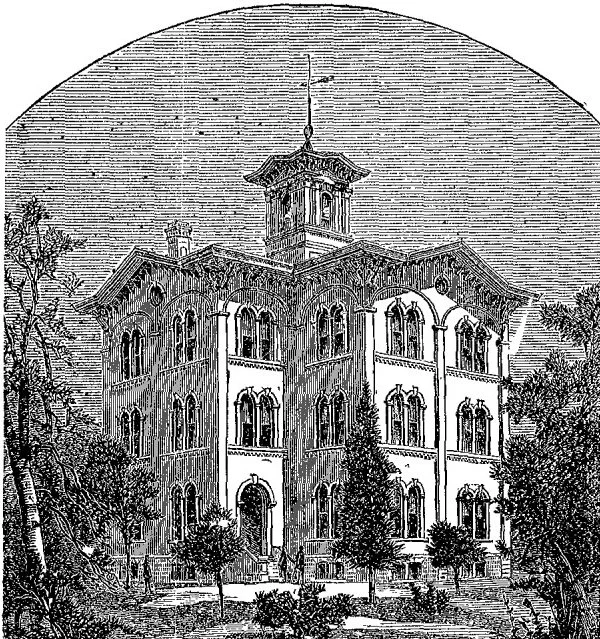
BATTLE CREEK COLLEGE.
This institution, since its establishment in 1874, has gained an enviable reputation, and in many respects its success has been unparalleled in the history of colleges during the first years of their existence.
NEARLY FIVE HUNDRED STUDENTS ENROLLED EACH YEAR.
It is Thoroughly Practical in Its Methods of Instruction and Discipline.
In the various departments young men and women are receiving just what they need as a preparation for the positions in life which they intend to occupy.
THE COLLEGE BUILDING IS NEW, SPACIOUS, AND BEAUTIFUL.
Five Departments of Instruction are open to receive students:— 1. Department of the Arts and Sciences. 2. Normal Department, with its Model School, and Course of Four Years. This includes all the Common Branches. 3. Biblical Department. 4. Commercial Department. 5. Department of Hygiene, with a Course of One Year.
For full Descriptive Catalogue, address,
BATTLE CREEK COLLEGE, Battle Creek, Mich.
REVIEW AND HERALD PUBLISHING HOUSE.
BOOK AND JOB PRINTING, BOOK BINDING,
Electrotyping, Stereotyping, Paper Ruling, Blank Book Manufacturing, Etc.
The largest and best equipped printing office in the State. Orders by mail promptly attended to.
Address REVIEW AND HERALD. Battle Creek, Mich.
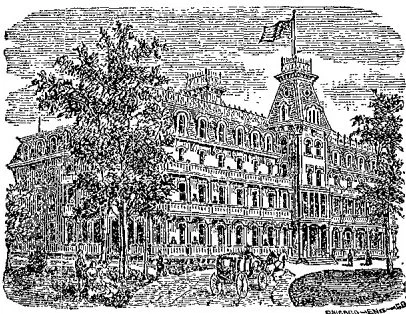
MEDICAL AND SURGICAL SANITARIUM, BATTLE CREEK, Michigan.
By John Harvey Kellogg
Battle Creek, Michigan.
This institution, beautifully located in one of the most healthful cities of Michigan, is everywhere recognized as the
GREAT SANITARIUM OF THE WEST.
More than 4,000 patients successfully treated. The erection of new buildings and the addition of all the most approved remedial appliances known to the profession, have made it The Most Complete Institution of the Kind in America. All modern hotel conveniences furnished. Terms very reasonable.
J. H. KELLOGG, M. D., Medical Superintendent.
Address, SANITARIUM, Battle Creek, Mich.
THE YOUTH'S INSTRUCTOR.
By Editor
AN ILLUSTRATED WEEKLY PAPER FOR YOUTH AND CHILDREN, DEVOTED TO MORAL, MENTAL, AND RELIGIOUS CULTURE.
This paper is not devoted to insipid stories and religious fiction, but is filled with a great variety of that kind of reading which tends to the healthful development of the youthful mind. Its pages are made bright by the choicest illustrative pictures, and its columns are always full of useful information.
As a Sabbath-school and Lesson paper, it is suited to the wants of scholars and teachers, and is calculated to increase the interest of all who read it, in thorough Bible study.
The Sabbath-school Department contains two series of lessons, one for children and one for youth.
SUBSCRIPTION PRICE, 75 CENTS A YEAR.
All new subscribers paying the above price will receive the “Child's Poems” as a premium without extra charge.
TERMS TO CLUBS, PAID IN ADVANCE.
Price per Copy, Post-paid.
5 to 10 copies........................60 cents a year.
10 copies and upward................50 cents a year.
Subscription for 5 to 10 copies will be taken for six months. Larger clubs may be paid for quarterly.
Address YOUTH'S INSTRUCTOR, Battle Creek, Mich.
ADVENT TIDENDE.
TWELVE PAGES.
A DANISH-NORWEGIAN RELIGIOUS SEMI-MONTHLY.
Devoted to the dissemination of the great truths applicable to this time, among the Danes and Norwegians. Each number contains a beautiful illustration of some interesting Bible theme, besides a large amount of varied reading on different points of our faith. The subjects of health and temperance and the leading events of the day, are given due attention, thus making it, with its other features, an invaluable household magazine.
TERMS.
To American subscribers, $1.00 a year. Five or more copies to one address, 75 cents per copy. New subscribers receive the magazine one year, and the beautiful picture, The Way of Life, for $1.00.
To European subscribers the paper is sent at $1.10 a year.
The premium picture, The Way of Life, is sent to new subscribers.
Address ADVENT TIDENDE, Battle Creek, Mich.
ADVENT HAROLDEN.
SIXTEEN PAGES.
A SWEDISH RELIGIOUS MONTHLY,—PUBLISHED AT BATTLE CREEK, MICHIGAN.
ADVENT HAROLDEN is devoted to the proclamation of the second coming of Christ, the explanation of Prophecy and Bible doctrines in general, and the defense of the commandments of God and the faith of Jesus. Its family department is filled with instructive reading, accompanied with beautiful illustrations, and also gives valuable hints with reference to the preservation of health and the treatment of disease.
TERMS, INVARIABLY IN ADVANCE.
TO AMERICAN AND EUROPEAN SUBSCRIBERS.
1 copy, one year . . . 75 cents.
To new subscribers, with Way of Life as premium . . . 75 cents.
CLUBS TO BE USED FOR MISSIONARY PURPOSES.
5 to 10 copies . . . 50 cents per copy.
10 or more . . . 40 cents per copy.
Address REVIEW AND HERALD, or ADVENT HAROLDEN, Battle Creek, Mich.
STIMME DER WAHRHEIT.
A GERMAN MONTHLY ILLUSTRATED FAMILY JOURNAL.
Devoted to the maintenance of practical Christianity and Bible religion. It is bold and outspoken in its explanation of the prophecies and defense of the doctrines of the near coming of our Saviour, and the binding obligation of the Law of God.
Its neat appearance secures general favor, while the low price at which it is offered places it within the reach of all.