The fourteenth annual session of the Chile Conference was held in connection with a general meeting in the city of Santiago, May 19-26, 1920. There were present about forty delegates, representing twenty churches. The meetings were held in the “Teatro Argentino,” the building used by the Santiago church for their regular services. On account of the unfavorable weather at this season of the year, the attendance from outside the Santiago church was quite small.
There were present all the conference workers—Elder R. T. Baer, union conference president; Elder O. Montgomery, vice-president; W. H. Williams, subtreasurer; Prof. H. U. Stevens, educational and young people’s secretary for the South American Division; and Elder J. L. Shaw, Prof. W. E. Howell, and the writer from the United States.
Two hours each day and the evenings were spent in Bible study, general instruction, and preaching. The business of the conference was transacted harmoniously, and the reports given by the workers and departmental secretaries were quite encouraging. The conference has a present membership of 783, seventy-four of whom were baptized last year. The tithe paid during the year amounted to 26,139.03 pesos (36.95 pesos per capita), which shows a small gain over that of the preceding year. Their mission offerings were 11,099.97 pesos (averaging twenty-seven centavos per capita), which is also a marked gain over the mission offerings of the previous year, though short of the goal set by the conference.
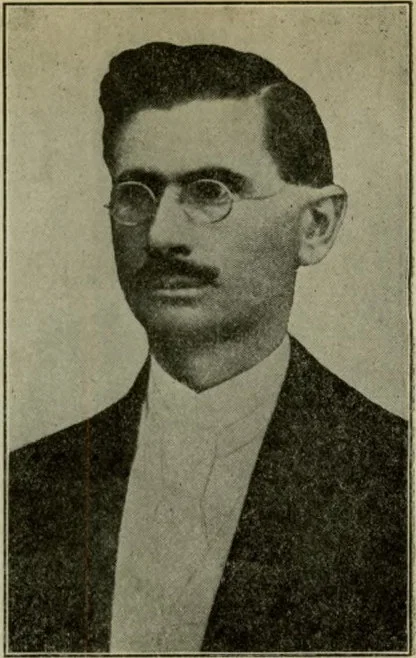
H. MEYER
Superintendent North Brazil Union Mission
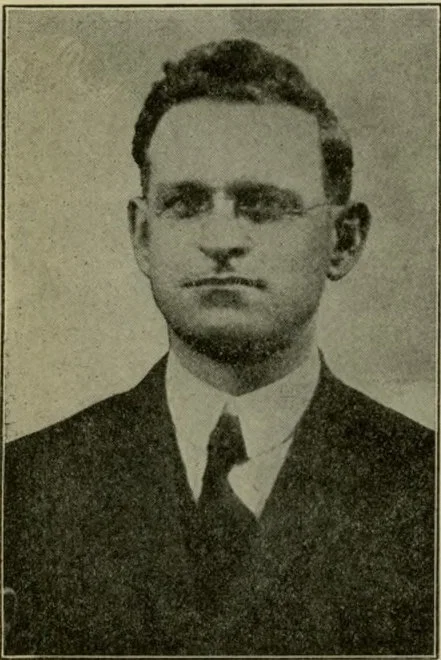
R. T. BAER
President Austral Union Conference
A very encouraging factor in reaching their future financial goal will be found in their Harvest Ingathering work. This campaign was launched in earnest at the session of the union conference held in February. The goal set for Chile at that time was 3,150 pesos. At the time of this conference they had raised 5,000 pesos, and fully expected to double the amount of the goal set. The secretary of the home missionary department, Brother Walter Schubert, was enthusiastic in advocating that their goal for 1921 be 12,000 pesos. It was certainly an agreeable surprise to all to see the favorable way in which our solicitors for the Harvest Ingathering were received, and the liberal response made by the people. This was true throughout the entire field of South America.
The Sabbath school department is under the direction of Sister Gertrude Davis, who is to give her full time to this work in the future. Her report for the last year showed a record of forty-five schools, with a membership of 859, and sixty-eight reporting in the home department. The offerings for the year amounted to 7,280 pesos, which was 1,300 pesos in excess of the goal set.
The secretary of the home missionary department gave a most encouraging report. While the department is quite young in its organized capacity, yet there were 300 members reporting at the time of this meeting, and the record showed that seventy-four persons had been won to the truth, or one for every four members reporting. He also reported one church that had reached the goal of “doubling its membership during the year.”
The book sales for the year amounted to 74,385.50 pesos, which was some 30,000 pesos less than the sales of the year before. While this falling off was to be regretted, it was almost unavoidable, owing to the blocking of the “Transandino” Railroad with snow in the mountain cuts for six months, thus cutting the colporteurs off from their source of supplies,—the publishing house in Florida, Argentina. The leaders of this department, however, are not discouraged; for their sales in the aggregate for the last five years showed an increase of about 300 per cent over those of the previous five-year period, 1910-14. They have laid definite plans, and are working to make 1920 the banner year in the colporteur history of Chile.
During the conference, daily meetings were held with the young people. These meetings were conducted by Prof. H. U. Stevens and Elder C. P. Crager. The reported results were very favorable. There are about 300 young people among the believers in Chile, many of whom are not receiving the benefits of a Christian education. Two causes said to be responsible for this are the unfavorable location9of their training school and its limited quarters.
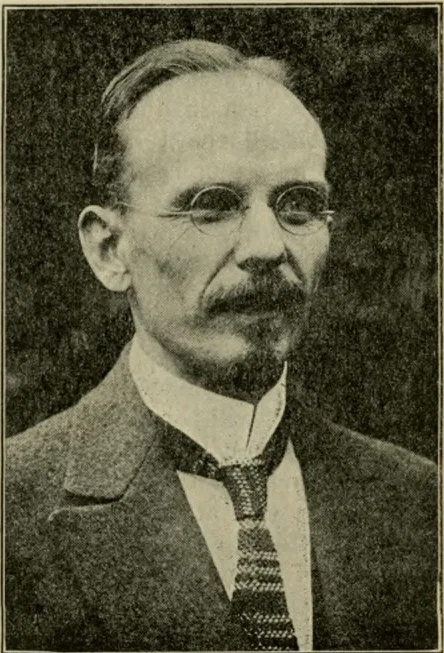
H. U. STEVENS
Secretary Educational and Young People's
Departments for South America
In the president’s report he stated that 1919 was the banner year in the history of their school, when fifty-five students were enrolled, filling both dormitories to their utmost capacity. The school is some two miles distant from the village of Pua. Pua, geographically, is in the extreme south of Chile, too far south to be central for the majority of our churches; and as the seasons are extremely dry during crop cultivation and exceedingly wet during school months, the location is quite unsatisfactory; consequently the conference committee are taking definite steps to move the plant to some place where these conditions will be avoided. They are endeavoring to increase the capacity of the school to at least one hundred students, and plan to add to their facilities as the necessity demands.
Chile, like all other conferences, needs more workers. This need can and should be supplied from the ranks of their noble and consecrated young people. In order to accomplish this, they must be trained. Therefore we hope that their training school will receive the co-operation and loyal support of all the Chilean constituency. Altogether, the work in the Chile Conference is progressing, endeavoring to keep step with the movement of the message.
Elder R. T. Baer, who had served but one year as president, was called to the presidency of the Austral Union at the union session held in February, Elder J. W. Westphal being recommended at that time to connect with the work of the division in the capacity of field secretary. Therefore it was necessary to elect another president for Chile. Elder C. P. Crager, who was carrying responsible departmental work in the Austral Union, was chosen by the Chile delegates to fill this place. While the union was loath to release him, yet in the interest of the work in Chile they consented, and Elder Crager was unanimously elected, as were all the other officers.
Before the meeting closed, the interests of our world-wide work were considered, and an offering was taken for foreign missions, to the amount of 4,600 pesos in cash and pledges.
It was a privilege much esteemed by the writer to attend this annual convocation of God’s people. It is inspiring to see how the truth of the third angel’s message has found its way to Chile and taken root in so many hearts, and brought forth fruit in earnest and consecrated believers. As we left in company with others to meet our appointments in the Inca Union, we earnestly prayed God to bless and prosper the work and workers of the Chile Conference.
General Meeting at La Paz
By Warren E. Howell
WARREN E. HOWELL
AFTER completing our work east of the Andes and in Chile, six of us set out for the Lake Titicaca Mission field; viz., Elders J. L. Shaw, Charles Thompson, O. Montgomery, and H. U. Stevens, Subtreasurer W. H. Williams, and the writer. We went by sea from Valparaiso to Antofagasta, Chile, where we had to wait two days on the triweekly railway service into the interior. There is now through service from Antofagasta by way of the nitrate and mining region of northern Chile to La Paz, Bolivia. The train is fitted out with sleeping-car and dining-car service of good quality.
The first half of the line is a narrow gauge of only two and one-half feet, so that our berths in the sleeping car were placed singly end to end in the middle of the car, with the car proportionately small in other respects. The rest of the line was a gauge of one meter, carrying us over a remarkable tableland on top of the Andes for nearly 400 miles at an average elevation of about 12,000 feet.
This was our first introduction to the high altitudes of Bolivia and Peru, of which our people in North America and the world have heard not a little. Like every new traveler in these parts, we had our apprehensions about how the elevation would affect us, and did not have to wait long to find out. Among the first symptoms are headache, a nervous tension at the base of the brain, and shortness of breath on exertion. Then followed, with some, nausea and dry sore throat. In two or three days these symptoms largely left us, with the exception of short breath and sore throat, which remained with some of us the entire three weeks we were in these high altitudes; shortness of sleep, too, was a common and continuous element in our experience. Usually we slept quite well about five hours a night, then were left to our cogitations till daylight came. None of these difficulties were serious, hardly more than inconveniences for the visitor, though of course the nervous strain wears on the worker in time.
Well toward the eastern border of the extensive plateau on top of the world, described above, lies the city of La Paz. On the eastern edge of the plateau, as also on the western, lies the cordillera of the Andes, in the form of rugged broken peaks and deeply serrated ranges and groups of rocky, sky-piercing spires, perpendicular precipices, and well-nigh bottomless ravines. La Paz lies in a large basin in the very edge of10the eastern mountain range, some 500 or more feet below the general level of the plateau on which it is approached from the west, and from which our first view of the city was virtually that of the condor or the aviator. It was thus placed by its founders for protection from both enemies and the natural elements.
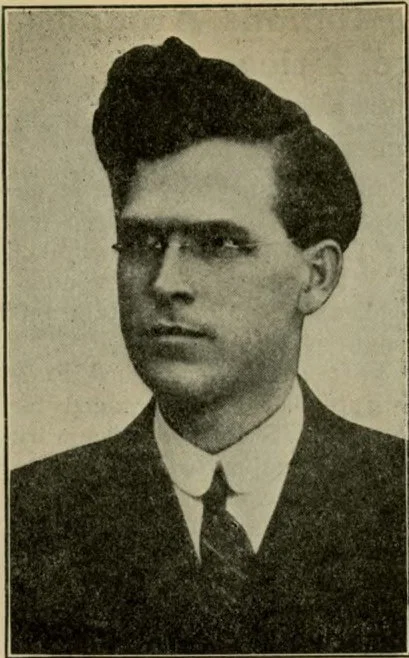
JOHN LIPKE
President Rio Grande do Sul Conference
Here is our faithful worker and director of the Bolivia Mission, Elder W. R. Pohle, who, with his wife and four boys, has been living and laboring here for the last six years, making in all eleven years’ work in South America without furlough. We found them of good courage, and received a very cordial welcome and entertainment in their own home. We were joined here by E. F. Peterson, superintendent of the Inca Union Mission; E. H. Wilcox, field missionary secretary; and Brother and Sister Reid Shepard, and held a three days’ meeting.
La Paz is a city of 70,000 inhabitants, of whom about 50,000 are Indians, largely Aymaras. The entire Bolivia Mission field contains some 130,000 people, of whom it is said that not more than from 5 to 15 per cent in any city can read and write. This limits the sale of literature to a considerable extent, but the book sales for the first five months of 1920 exceed any previous record. Brother Pohle’s son is at present working the cities of Potosi and Sucre, of some 25,000 people each. Cochabamba, 40,000, and Oruro, 30,000, are the other two cities of some size.
The membership of the La Paz church is twenty-five, with a few isolated members elsewhere. The Bolivia Mission goal for Harvest Ingathering this year was 1,000 bolivianos, with 500 bolivianos for the local church. At the time of our visit, 1,663 bolivianos had already been gathered—about $416, gold.
Work for the Indians in Bolivia is beginning to open up with promise. Brother Reid Shepard is at present living at Viachi, a railway junction town between La Paz and Zuaqui on Lake Titicaca, and will work out from there as the interests may indicate. It may prove best in due time to set off to the Bolivia Mission all the Indian work around the east end of the lake that is on Bolivian soil.
Bolivia is the third largest republic in South America, extending east of the Andes into rich forest and agricultural districts in the tropics, which, together with possibly the greatest variety and quantity of mineral wealth on the continent, it is said, will make her the most independent in resources needful for her economic life. Proper transportation facilities will open up these resources, and some projects for the purpose are under way.
Our meetings for the study of God’s word and for counsel were well attended, and plans were laid for aggressive effort to extend the message to the waiting thousands of Bolivia.