The Youth’s Instructor, Vol. L, No. 31

Found Wanting

The Youth’s Instructor

Jul 31, 1902

Review and Herald Publishing Company · Battle Creek, Mich. · Jul 31, 1902

Found Wanting
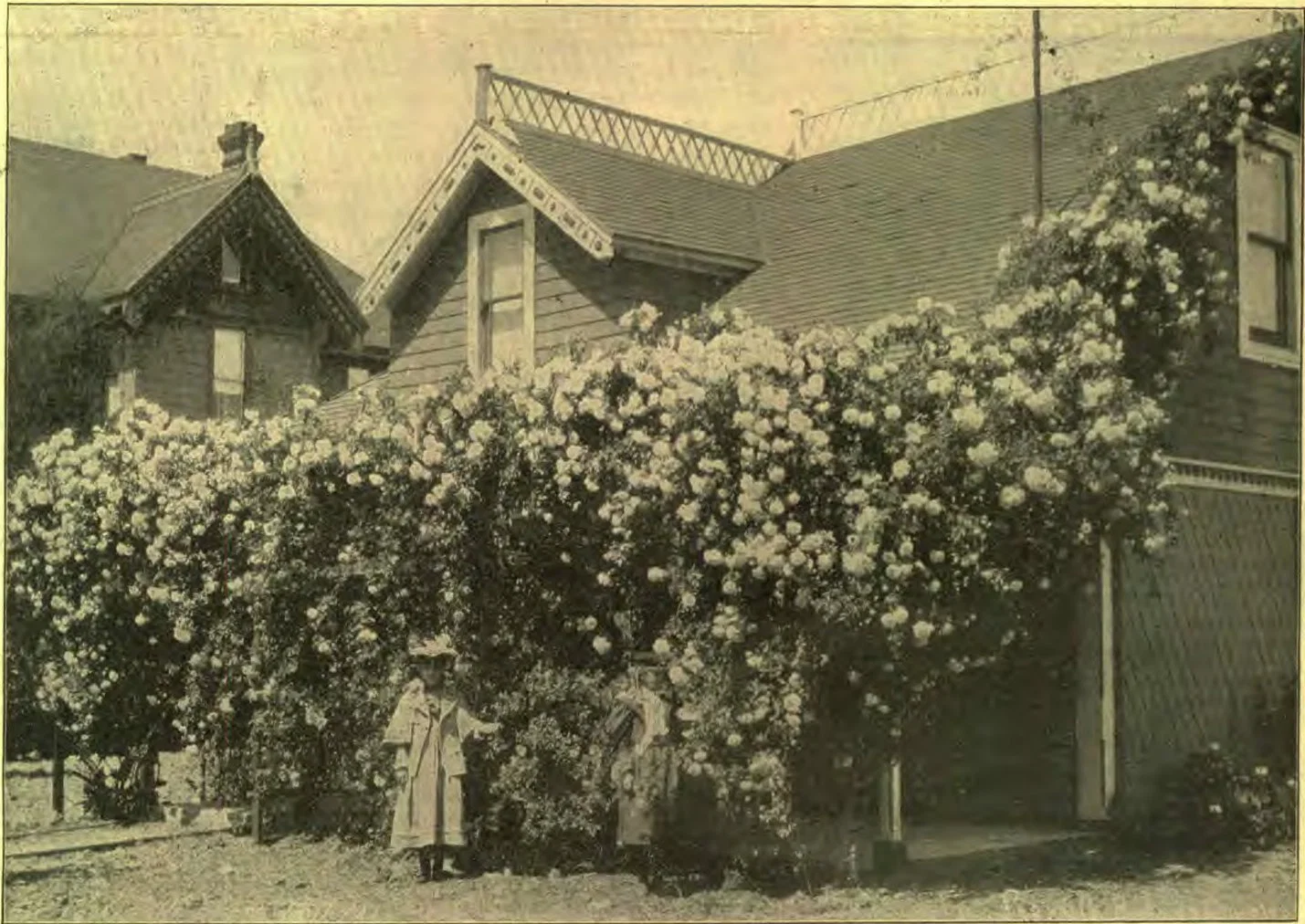
ROSES — “THOUGHTS OF GOD” — ABOUT A SOUTHERN CALIFORNIA COTTAGE
THE Saviour’s denunciation of the fruitless fig tree is a warning to all who claim to be Christians, and yet remain in blind unbelief. Thus from age to age the Lord would teach the danger of rejecting light. Christ has worked for and invited all. He will enlighten all who will search the Scriptures candidly. To-day he is knocking at the door of the heart. Shall he have to say of us, In vain do ye worship me, teaching for doctrine the commandments of men?
The words spoken to the fig tree are applicable to all whose lives, though pretentious, are fruitless. The tree may have every indication of prosperity, but the Lord takes not its luxuriant foliage as an evidence of fruitfulness. His search for the fruit which alone makes the tree of value is close and critical. How is it with us? Can we bear the search made by him who never makes a mistake, or do we bear only the leaves of profession? Profession is nothing if it is only a mask to spiritual barrenness.
When the Saviour appears in the clouds of heaven, no one will be given another opportunity to gain salvation. All will have made their decision. Before the close of this world’s history those who are willing to accept evidence will have the dark veil removed from their minds. Hearts will be cleansed through accepting Christ during the time that the whole world is lighted with the glory of the angel who comes down from heaven.
The time is right upon us when every kind of deception will be practised. Christ says, “Beware of false prophets, which come to you in sheep’s clothing.” They speak fair words, but all the time they are watching to see how they can get gain for themselves. They are full of selfishness, and work at cross purposes with God. “Ye shall know them by their fruits,” the Saviour declares. “A good tree can not bring forth evil fruit, neither can a corrupt tree bring forth good fruit.” Nothing but repentance and faith can make an impure heart pure.
God weighs every man in the balances of the sanctuary. In one scale is placed his perfect, unchangeable law, demanding perfect obedience. If in the other there are years of forgetfulness, of rebellion, of self-pleasing, with no repentance, no confession, no effort to do right, God says, “Thou art weighed in the balances, and art found wanting.”
Thus the deciding line is drawn. Claiming to be righteous without manifesting the fruits of true conversion, is utterly worthless. External forms, even though they be such as God has commanded, are of no value unless accompanied by an inward work of cleansing. Outward works alone will never make a man perfect before God. Nothing but repentance and faith can make an impure heart pure.
In the great day of judgment how will transgressors appear in their own sight as they are permitted to see the record of their life as they have chosen to make it, regardless of the law which through eternity will govern the universe? During their lifetime they utterly refused to be made better. The efforts put forth in their behalf were in vain. They knew the claims of God, but they refused to comply with the conditions laid down in his word. By their own choice they united with the enemy. The powers given them to use in God’s service they used in the service of self. They made self their god, refusing to submit to any other control. They arrayed themselves on the side of the power of darkness, and encouraged others to do the same.
As they stand before the bar of God, this opens before them. A flash of light will come to all lost souls. Scene after scene will rise before them. They will see the power of the mystery of godliness, which in this life they despised and hated. They will see what they might have become through the power of Christ. They will understand the robbery they have practised toward God. They will see the good they might have done but did not do.
The picture can not be changed. Their cases are forever decided. They realized that they must perish with the one whose ways and works they have chosen, and in terror they cry to the rocks and mountains, “Fall on us, and hide us from the face of him that sitteth on the throne, and from the face of the Lamb: for the great day of his wrath is come, and who shall be able to stand?”
MRS. E. G. WHITE,

— MRS. M. A. LOPER

Roses

THOUGHTS of God, so sweet, so true, so dear,— Bright smiles in this sad world to comfort, cheer; Love messages inscribed with morning dew,— “Cast all your care on Him;” “he cares for you.”
Thoughts of God—the Master Artist’s skill Shapes every one according to his will; Tints every petal with a touch divine: He’ll gladly shape and tint your life and mine.
Thoughts of God, so exquisitely fair, Each in his place about us everywhere; So we have each a mission to fulfill— Let us be thoughts of God to do his will.

— MRS. M. A. LOPER

The Italy of Chicago

We entered a little alley-way, walked down it for fifty yards, and turning to the left, wound our way, by this passage and that, to the hovel for which we were looking. It was an Italian settlement. Hemmed in on four sides by the business houses and saloons which face the main streets of the city, it is a veritable little world of its own. Scores of dirty children, from two to ten or twelve years of age, were playing about on the door-steps, stairways, and in the dirt piles. Some of them clutched at our shirts as we passed, and called out a “How d’ye do!” to us. They knew us, if not by our faces, by the bonnets we wore.
The woman we had come to see greeted us at the door of her home,—yes, it is home to her,—with a nod and a smile, and a muttering unintelligible to us. She could speak no English. Having met her on previous occasions, both socially and professionally, the young woman with me, herself a nurse, was able by questions and signs to ascertain that the woman was now much better in health, and quite enjoying herself. Her little seven-year-old daughter, in a very soiled dress, and hair that looked as if it had not been combed for a month, bounced into the room, smiling and greeting us as best she could with no knowledge of our language. The child’s face showed symptoms of “prickly heat” and other evidences that she was suffering from the temperature; yet the “fit” of her dress indicated that she had underneath it a superfluity of “stuffing,” no doubt in the form of numerous pretentions of waists and skirts, and of rags.
No wonder she was suffering from the heat! A fire was raging in the stove; the supper was cooking. No breeze, no cooling wind, can at this season waft through those low rooms. And hemmed in as they are by tenement houses on every side, no ray of sunlight ever enters them.
The two rooms in which this family live are low and stuffy. The kitchen is dark as night when outside it is noonday. A pile of rags on a low bench in one corner, indicates the place where some one sleeps. In another corner stands a big, old-fashioned bed, neatly made. Such a combination—the big bed and the pile of rags; the sunny-faced child and the dark, low hovel; the heat of the stove in this summer month, and the flannel dresses upon the inmates—is strange to the beholder.
Yet they seem happy, these children of the tenement. To a certain extent, they are contented; for they know no other life. Many and many of them have, for their only playground, the street. There, bareheaded and barefooted, uncombed, unwashed, they while the hours away, playing games, singing, running errands, winding their way in and out among the teams and cars and traffic of the crowded streets as only children of the streets can.
The older folks are busy in shops, or away at the factories. The women are occupied with their household cares, or are carrying or wheeling their wee ones about the streets and into the stores. What is one woman’s baby is everybody’s baby. The people crowd about it, take it up, comment upon it, and feed it, much to the satisfaction of the fond mother.
This is the Italy of Chicago. Here is a whole Italian settlement, just as truly as if it were in Italy. The people have little knowledge of a Saviour. They are ignorant of the laws of health. They are sick, both soul and body; and who is to help them? LAURA L. FISK.

“I Know; for I Have Tried It”

“Yes,” said the young clerk in the dry-goods store, “I know this cloth is fast color, because I have tried it; here is the sample I washed.” So she sold the whole piece to her customer on the positive proof that she had tried it, and it did not fade.
At a picnic the other day, some children came to a creek they wanted to cross. It proved a little too wide, however, for their small steps, and one of the older boys threw in rocks to make a stepping-stone. “Now,” he said, when it was finished, “you can cross on the rock.”
“But you try it first,” they replied; and when he had shown that it was solid, they followed him across.
Nineteen hundred years ago a Child came to earth to do a great work. He tried it for thirty years; then he said to all the people, You can live a perfect life if you will put your trust in God: I know, because I have tried it.
“I know, because I have tried it.” How full those words are of assurance. I know this message is true, because I have tried it; the results are in my life. That sermon will win. Away with any other kind of teaching; for there can be nothing so sweet and convincing and complete as that. What the world needs, and what God is calling for, is a band of young men and women who will stand up and say, “We know this message is the greatest thing in the world, because we have tried it.”
EDISON DRIVER.

Manners

It is the fashion nowadays to talk of manners as hollow and insincere, and to affect a “natural” manner, which means an untrained method of behavior that sets the beholder’s teeth on edge. Now, a girl might just as well assume that because she is born in an English-speaking country, spelling, writing, and grammar will be “natural” to her, as that manners will come without an effort. Bad manners are as inexcusable as bad grammar or spelling; and whether we recognize it or not, we are judged by our manners, and justly, too; for,—
“Manners are not idle, but the fruit Of noble nature and of loyal mind.”
The awkward gesture, the brusque speech, the self-conscious giggle, are things that stamp their possessor as careless of grace, of sympathy, of charm. Why should we be anxious to have a pretty dress, and take no pains to have a delightful manner? A lovely nature, showing itself through lovely manners, is pure gold, and will always in any society, in any age, be prized as it deserves.
Self-consciousness is the worst foe, perhaps, of most girls. But the girl who goes out among people, be they washerwomen or dukes, with the least possible thought about herself, and the greatest possible interest in each one she meets, will make friends and be at ease anywhere. She will notice what etiquette is observed round her, and she will follow it intelligently, but not slavishly; for really well-bred people use etiquette, and shape it continually, but are never mastered by it. She will show constant deference to older people, and gentle consideration to all who serve her. She will look for the best in every person she meets, and so will get every one’s best without fail. She will not talk loudly, nor contradict flatly, nor dress carelessly or overmuch, nor make personal remarks, nor look bored, nor interrupt, because, in thinking it out, she can see a real reason—not one of etiquette only—for avoiding such mistakes in manner. She will say pleasant, appreciative things, yet never go an inch beyond truth into flattery; and if she has no skill in conversation, she can “listen charmingly,” at any rate.
“Tact,” perhaps, expresses it all,—a word so misused as to mean insincerity to many minds. But that truest definition of tact, “intuitive sense of what is true, right, or proper; fineness of discernment as to action or conduct,” is a good thing for the girl to remember who desires to make the best possible friendships for her life. A girl with tact will not overstay the limits of an invitation; nor make an indiscreet confidence to a mere acquaintance; nor resent a slight where none is meant; nor put herself forward unduly; nor lose her temper in public,—or in private, either; nor forget the pleasant thing to say or do; nor delay to apologize when she is clearly in the wrong; nor accept a favor ungraciously; nor fail to return one whenever she can. Fine tact is the root of which fine manners are the fruit; and tact can be cultivated until it becomes almost a sixth sense.
None of these qualities that have been mentioned are outside the power of any girl to possess, you will notice. Beauty is not needed, nor brilliant mind, nor wealth, nor wide opportunity. There is no village that does not need, and would not prize, a girl of graceful, lovely manners. There is no school, private or public, where she would not win the love of her schoolmates, and no circle in society where she would not be welcomed. A diamond, clear, pure, of the first water, is always and anywhere admired and valued. A bit of glass glittering one moment, but showing its true material the next, is justly neglected, whether it lies in the road or on the palace step. Which will you make yourselves, girls?—Selected.

His Glory

“All the people see his glory” When they stand amid the dews, Drinking in the matin music Which the jealous hills refuse E'en to echo; to such sweetness, Echoes can not justice do, As no words express the splendors Where the sunrise tints the blue.
“All the people see his glory” When noon’s limpid lights agree With the depths of high-hung ether, With the shimmer of the sea; When the winds moan in the forest; Where the rocks frown on the sand;— Wondrous marvels, plainly pictured On the face of sea and land.
“All the people see his glory” When a hard heart, warmed to tears, Bends to aid a halting footstep, Stoops to mingle hope with fears; Love and sympathy unspoken Pass from heart to aching heart,— Easing some too heavy burden, Acting love’s divinest part.
“All the people see his glory,” But alas! all know it not. Some are blind in sun or shadow, Fixed their gaze on one poor spot; While, unseen, they pass the beauties Of unentered fields of bliss Where, unnoticed, scorned, and slighted, Lies the glory that they miss.
MINNIE ROSILLA STEVENS.

The Leaf-cutting Bee

THE hot sun of India and the dusty country road had driven me under a shady tree for a moment. Looking up, I noticed a peculiar marking of many of the leaves. It was as if they had been pierced again and again with a punch. Most of the holes were perfectly round. At once it occurred to me that this was the work of the leaf-cutting bee, of which I had often read.
Where his home was, I could not discover. It must have been in some sand heap, where he had burrowed out a dwelling. He uses the circular cuttings from the leaves as partitions and linings and doors for his underground cells. Here, among the tender spring foliage, was his workshop, and he had brought his tools — a clipper and a compass — with him.
He cuts with his jaws, working rapidly, and turning about upon his feet in a well-nigh perfect circle. Sometimes this circle becomes slightly elongated, perhaps intentionally, the better to meet the special requirement in some corner of his home. What a busy world this is! And it is interesting to note how, even to the smallest insects, divine wisdom has given to each the knowledge necessary to existence and usefulness after its own manner of life.
W. A. SPICER.

Just a Little Longer

“A LITTLE while” in doubt and fear We tread life's rugged path; A little longer shed the tear, And bear the aching heart.
“A little while” we bear the cross, And bend beneath its load; A little longer suffer loss, E'er comes the crown of gold.
“A little while,” we know not why Our Father hides his face: “A little while,”—then by and by Reveals his wondrous grace.
So just a little longer still We'll trust his blessed word, And yield submission to his will, And rest in his great love.
AGNES H. BROWN.

The Story of Our Matabele Mission

Another Week on the Trek
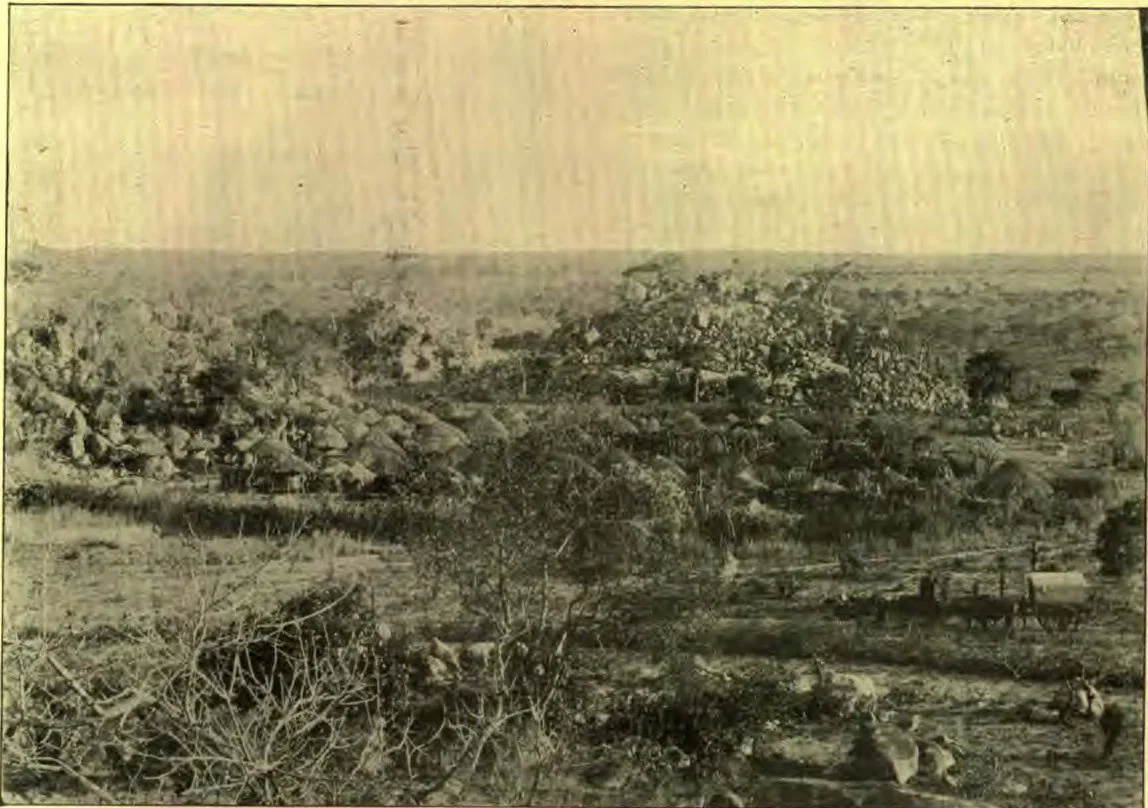
In less than an hour and a half after the oxen had reached camp, the journey was again begun. But at nine o’clock the party outspanned, went to bed, and slept soundly until one in the morning, when they again started. During this day they passed through some beautiful country, with splendid roads, fine grass, and plenty of good, cold water. They crossed two streams—the Reedfountain and the Malapo. The former is a lovely stream, clear and swift, like the mountain streams of the West; but the Malapo was muddy, yet it was good compared with some water they had been compelled to use on the trip.
Here they came in contact with plenty of natives who needed help—apparently lazy and shiftless, yet susceptible to good if kindly taught. This seemed a good opening for the missionary farmer who would come and live among these people, teaching them how to till the soil and provide for themselves, and at the same time pointing them to the way to heaven.
At five o’clock Wednesday morning, on the bank of the Mafeking River, one mile from the city, the company outspanned for breakfast. What did they eat?—Usually porridge and bread for breakfast. If they were in camp long enough, they might have beans, or some fowl or partridge or other game, if they were fortunate enough to find any. Often the food was smoked and burned, and almost invariably seasoned with plenty of ashes and dust. But vigorous exercise sharpened the appetite, and the food was usually taken with a relish.
But little time was devoted to breakfast this morning. Only one mile lay between them and letters from loved ones left behind, whose prayers, of which they had many evidences, were following them daily. Indeed, in every Seventh-day Adventist home throughout the colony, morning and night at worship, this company was remembered in prayer; and whenever the people met in their Sabbath worship, their prayers were united in seeking God’s blessing upon the little band now in the wilderness, that he would lead them and open the way for them to establish a mission among those who knew not God.
ON THE WAY TO MATABELELAND
Mafeking was at that time a clean, neat little Kafir city of about four thousand inhabitants. The houses were all built in circular form, and each had a veranda around it. There were both churches and schools. The Church of England was the most prominent denomination engaged in missionary work. The chief residing here, whose name was Kgamane, was more than ninety-three years of age.
Here the members of the mission company received the first word from home since leaving the railroad at Vryburg. Letters from friends, and a number of papers for each one, were highly prized. They made a number of purchases, and were surprised to find in this Kafir city many things just as reasonable as they purchased at Kimberly. In returning to the wagons, instead of going by the bridge as they had come over, they went by the ford, where they could wade across; and one of the brethren was left to care for the purchases until they should come back with the wagon. He was soon surrounded with scores of natives; but as only one of them understood English, and as he did not understand their language, he could talk but little with them.
While he waited, he witnessed an amusing scene. Two Kafirs came across the river riding on bullocks. Each had a bag, or bottle, of milk. The bottles were made from the skin of a goat. The skin had been taken off without cutting, only a hole being made where the head was cut off, so it retained the shape of the animal. One of the bullocks stopped to drink, and in an instant his boy rider had fallen off, bottle of milk and all, into the river. Quick as a flash he was out of the water, his bottle of milk fished up, and, mounted on the back of his ox, he was soon across, amid the shouts and cheers of the crowd.
Soon the wagons arrived, and the missionaries passed through the city on their journey. To their surprise, they had learned in the morning that since they had started from the Cape, the telegraph had been carried to this point, and they could send a message to their friends, telling them where they were. A message of good cheer also awaited them, announcing all well at home, and that mail awaited them at certain points on ahead.
They had traveled scarcely twelve miles when it began to rain, and they were compelled to outspan. There was no water, except what they caught by making a dam across the road. This added a new experience; for the drinking-water and that used for cooking must come from this pool.
ESTELLA HOUSER.
(To be continued)

Coronation Chair at Westminster

The famous Coronation Chair at Westminster Abbey was brought to England by the first King Edward in 1296, after John Baliol, the Scottish king, had been defeated at Dunbar. Known as the Chair of St. Edward, it has always been kept in the Abbey, and on it every monarch of England has been crowned there since. In ancient times is was used for the coronation of the kings of Scotland. It is made of hard wood, gaily painted, and a board under the seat is supported by four lions. On this rests the mysterious Jacob's stone, on which Jacob's head is said to have rested when he dreamed of the ladder that reached to heaven.
Originally the stone, it appears, was the Royal Chair of Ireland. It was called “Fiafel,” or the Stone of Fate. There is a tradition that a descendant of the Scottish kings will always reign in the country possessing this treasure. Tradition also says that the stone was taken to Spain by Cathel, king of the Scots, but was brought again from Spanish soil to Ireland by Simon Brech, leader of a band of Scots, about 700 B. C.
According to Sir Walter Scott's graphic pen, the history of the stone forms a very ancient romance. Fergus, son of Eric, probably a descendant of Simon Brech, was driven out of Ireland, and landed, 503 B. C., on the coast of Argyleshire, bringing the stone with him. Later, it was brought by King Kenneth of Scotland to Scone Castle, and all the Scottish kings were crowned on it from that time till Edward destroyed the royal residence of Scone, and took the stone to London, where it has remained from that day to this.
The Scot formerly believed that it gave forth melodious sounds when the rightful ruler seated himself upon it, but remained mute when a usurper was crowned. The conveyance of this stone to England was regarded by the Scots as a national humiliation, and in the treaty concluded between England and Scotland in 1328, one of the conditions was the return of the ancient royal treasure. In reply, Edward the Third gave orders that it should be sent back; but for some unknown reason, he was not obeyed.
Undoubtedly the stone is of remote antiquity. It is not, however, of meteoric origin, as many have asserted, but a block of red sandstone, containing an unusual proportion of iron. It was carved, gilded, and painted, though these decorations have entirely disappeared. In modern coronations it is covered with a cloth of gold.—Selected.

EZRA PENNINGTON

From Oklahoma City

OUR Society is made up of about fifteen really sincere workers; besides, we have an attendance of several others who are interested in our work. Our meeting is open to all classes and ages. The older members of our church attend as regularly as do the younger ones. We have quite a little band of children who also meet with us. We follow the outline of work in the INSTRUCTOR, and make the lessons as simple as possible, so the little ones may enjoy them.
We visit the sick, fill paper racks, and have a missionary box, in which we put our self-denial fund. We mean to hold high our aim, and strive by God's help to be a worthy factor in hastening the coming of our dear Saviour. Personally I feel that the Young People's Society is a great means of giving the young an experience, such as we early need to be successful workers in the truth. Pray for us that we may continually be seeking for and walking upon a higher plane.
I am anxious to prepare for work in the cause of God, so I am taking subscriptions to the Signs of the Times to pay my expenses at Berrien Springs next year. I already have forty, and expect to get one hundred.

EZRA PENNINGTON

Suggestions for Map-Making

“A picture photographed on the brain is remembered much longer than words falling on the ears.” Especially is this true in the missionary problem, where the field, the opportunities, the resources, the obligations, and the possibilities are so vast as to be almost incomprehensible.
A map will always add to the interest of the missionary meeting, and particularly so when a number of fields are referred to, as in the study this week. A large map of the world is not always accessible, but any of our young people can easily make an outline map that will answer very well for use in the missionary meetings if just a little time and thought are devoted to it.
We append a few suggestions on map-making that have been culled from an old number of the Missionary Review of the World:—
1. SUGGESTED SUBJECTS.—Comparative Statistics: (a) Population; (b) areas; (c) progress; (d) workers.
2. MATERIALS.—(a) White glazed blind holland (cheap and easy to work on). Calico. Linen. (b) A long straight-edge or ruler. (c) If an accurate map is desired, a pantograph is needed for enlarging. (d) Paint. Make as follows: two ounces gum arabic dissolved in one-fourth pint of water (cold is best). Then one-half ounce vermilion, Chinese red, French ultramarine, or drop black (according to color), mixed with gum-water on a tile or slab with a “putty knife.” Thin with cold water. If used fairly thick, any of the materials named, and even paper, can be employed, and the edges will not run. For painting a large surface, use a camel’s hair “gilder’s dab.” (e) Where one has access to a magic lantern, a large map may be drawn by having a slide made, throwing the enlarged map on a sheet, and then tracing the outline.
3. OTHER SUGGESTIONS.—Do not make your maps too small; the lettering should be clearly visible from a distance. If different colors are used to represent different facts, use colors easily distinguishable.
Make the map proportionate. Use the best figures obtainable if statistics are noted. It is well to have in one corner a map of your own State, drawn to scale, as this gives a better idea of the extent of the field you wish to represent. In making a large map, any school-boy or girl can render valuable assistance, as it is difficult for one individual to manage a large map alone.
E. H.

Over and Over: God's Constant Work in Nature

OVER and over God paints the skies, Over and over he makes the sun rise, Over and over he tints the flowers, Over and over he sends the showers, Over and over he guides the stars, Over and over the dawn unbars. If over and over God deigns to work, Why should we faint—one duty shirk? — Juliet Sill.

A Novel Teachers' School

WHO ever heard of a teacher having the opportunity of attending school all summer, and still enjoying the quiet of the woods and the novelty of camp life? Such is the case in the little white tent town on the new college farm nearly two miles from Berrien Springs, Michigan, where a company of nearly two hundred students are gathered. Their tents are pitched in a clearing surrounded on the east and north by a forest composed of many varieties of trees, artistically draped with the vines of the wild grape and ivy. Many a shady path leads through the forest by trickling brooks and down the steep bank, where the St. Joseph River, noted throughout the State for its beauty, skirts the camp in a broad curve.
West and south are extensive gardens of peas, beans, and other vegetables, also large orchards of peach and pear trees. Beyond these are small fruits and the vineyards. Through these gardens runs the road leading to the main highway to the village.
The students are literally surrounded on all sides by the great schoolroom of nature. The science classes are conducted in the open air. There is no need of long tramps for specimens: they are all about the students.
As one of the principles of the school is to develop the physical as well as the mental powers, every student is required to work two hours each week day. The time is spent in improving the grounds, picking berries, etc., etc. Under the direction of a skillful cook, a company of the teachers prepare the food for the camp, gaining a valuable experience in hygienic cookery thereby.
Not a few of the teachers find recreation in improving their talent for music, as the almost constant use of the several musical instruments in camp proves.
A deeply moral tone pervades the camp. It is believed that each student not only makes a daily study of the word, but is endeavoring to guide his life by the principles therein contained.
It is the heartfelt wish of all who are enjoying the benefits and blessings of the school, that at least every prospective church-school teacher could be here. VINA M. SHERWOOD.

August Study of the Field

Suggestive Program for Young People’s Meeting
(August 9)
1. OPENING EXERCISES.—Singing, and prayer season. Twenty minutes.
2. Scripture reading.—Isa. 52: 1–10.
3. Field Study:—
(a) Map exercise. Monthly review of the fields, noting especially encouraging reports and appeals for help, and our personal relation, as young people, to these appeals. Let the vital question in all the study be, “Lord, what wilt thou have me to do?” (If possible, different individuals might give the messages from the different fields, the leader locating these on the map. This will add variety to the program.)
(b) Geographical study of Chili.
(c) The work in Turkey.
(d) Our mission to the Basutos.
4. Closing Exercises:—
Prayer; singing (No. 1055 of “Hymns and Tunes”); benediction.
NOTE.—Our papers this month are so full of good, encouraging reports from the field, that a program scarcely seems necessary. Why not have an entirely different meeting from your regular program? Begin where you usually end. Have a little prayer service, first or last, as you please. Have several short talks or papers on the different phases of work reported during the month, not failing to emphasize our personal relation, and that as individuals, to the great work which these reports represent. Have good singing. Select missionary hymns that will inspire to missionary service. Let the Bible reading be along the same line. Abundant material for the meeting will be found in the Review of July 1, 8, and 15, and in recent issues of the INSTRUCTOR.
E. H.

Selling the Life Boat in Chicago

SEVERAL young women are supporting themselves nicely by spending half of each day in selling the Life Boat in the residence districts of Chicago. They find it an easy matter to sell a copy of the Life Boat at almost every home at which they call.
This is a good way to find opportunities to follow up by cottage meetings and personal work, and it also affords an opportunity to secure many of the advantages of missionary work in other departments of our Chicago work.
This city is so large that there would be room for as many earnest, consecrated young women to take up this work as would care to come. No one except those who know that they have a genuine Christian experience need apply.
Address David Paulson, 28 Thirty-Third Place, Chicago.

Among Our German Young People

Mrs. Nettie Gaede, of Lehigh, Kan., writes:— “We have the Membership Card translated and printed in German for our young people here. We have a leader for our Society now, and have a regular program for each meeting, endeavoring to have each one take some part. Some read, others sing, others conduct a Bible reading. We study the lesson in the INSTRUCTOR, and also mission fields, health reform, and different subjects of our faith. We have also created a self-denial fund, and collect the money at each meeting. We want to get acquainted with our work, and keep step with the message in the first place. We hope then to go a little further, and help in other needy places, especially in the German work.”

Cooper Church Society Meetings and Missionary Work

From Cooper, O. T.

OUR Society here numbers about fifty, and we always have a large attendance of visitors. We hold our meetings twice a month, on Sabbath evenings. A program consisting of a Bible reading, short talks on different subjects, music, etc., forms the basis of our Sabbath evening meetings. Aside from this we hold missionary meetings, when we send out papers and tracts. We are all of good courage. MARY WALL.

Beauty as God's Handwriting

BEAUTY is God's handwriting — welcome it in every fair face, every fair sky, every fair flower, and thank for it, Him, the fountain of all loveliness.—Charles Kingsley.
Continue reading: A Queer Lake