Your ShelfYour Projects

Review and Herald, Vol. 82, No. 21.

Publishers' Page
Earlier text: Publishers' Page

Australasian Union Conference

This conference includes Australia, New Zealand, Tasmania, the islands of Polynesia, Melanesia, and Micronesia; the East Indies, and the Philippine Archipelago.
From east to west, this field reaches over one third of the distance around the world, and within its borders are found over fifty million people.
There are seven organized local conferences in the Australasian Union—one in each of the five States of Australia, and one each in New Zealand and Tasmania.
The conference has ten missions under its care, and dependent on it for support; namely, North Queensland, Fiji, Pitcairn, Norfolk Island, Rarotonga, Samoa, Tonga, Tahiti, Sumatra, and Singapore. The last two have but recently been established, but give promise of soon developing into prosperous missions.
The first camp-meeting ever held in the southern hemisphere was held in Napier, New Zealand, in the year 1893. Since that time, forty-seven camp-meetings have been held in Australia, but no two on the same ground.
A fair degree of prosperity has attended the work of this conference for the past two years. In Sabbath-keepers there has been a gain of 577, making a total number of 3,435, 407 of whom belong to the island missions. Eighteen new churches have been organized, and fourteen new church buildings erected.
Our present working force consists of twenty-eight ministers, fourteen licensed preachers, forty-three mission and Bible workers, and eighty-eight canvassers. The total tithe received during the biennial period amounts to $77,477.55, an increase of $5,487.38 in the two years. The total Sabbath-school donations amount to $9,444.50, and of this amount $7,390.29 was devoted to foreign missions. Total tithe and offerings devoted to evangelistic and mission work, $86,922.05.

Book Sales

More books have been sold during this biennial period than in the preceding one, but the proportion of expensive books has been less, which makes the total amount received in dollars and cents a few thousand less, the total amount received being $128,705.04. Since the first subscription books were sold in Australia in the year 1885, there have been 1887,243 books sold, the retail value being about $752,840.
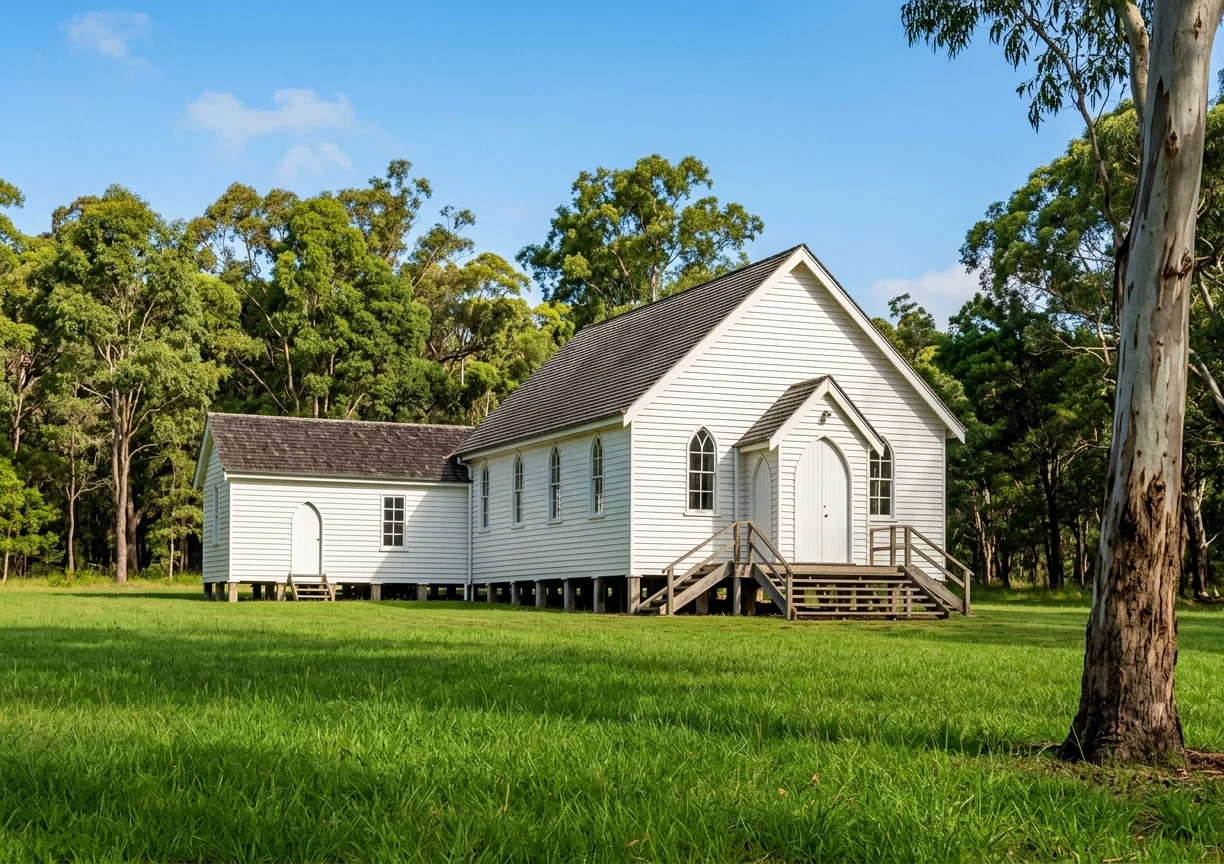
AVONDALE CHURCH
AVONDALE CHURCH

Publishing Work

At the time of our last report, the Echo Publishing Company was operating a branch office in Durban, Natal, South Africa. This branch, with most of its stock, has since been sold, and turned over to the South African Conference. During the past two years a constant effort has been put forth upon the part of the managers of the Echo Company to sell their plant in the city of Melbourne and buy a piece of land in some quiet place in the country, and build a new plant just large enough to handle our own denominational work. While we have not as yet succeeded in selling the old plant, we have succeeded in finding and purchasing a beautiful site for the new office and buildings. The location is in the mountains, near the village of Warburton, which is located on the headwaters of the Yarra River, forty-eight miles from the city of Melbourne. In addition to healthful climate, fertile soil, and beautiful scenery, there is a never-failing water privilege of sufficient power to operate the plant. Feeling assured that this location met the specifications named in the Testimonies, and that the Lord would be pleased to have us secure this property and make this the headquarters of our publishing work, we started a subscription among our brethren, at the beginning of this year, and have already secured nearly two thirds of the amount to purchase the land and put up the necessary buildings, work upon which will be begun as soon as the manager returns from this conference.
A new company has been formed, by which the property will be held and operated, and the denomination in general will be represented by the executive committee of the union conference and the local conferences, composing the union. Those holding stock in the old company have agreed to donate to the new, so that when the old plant is sold, the proceeds can all be used to liquidate the debt, and leave the new plant free from encumbrance.
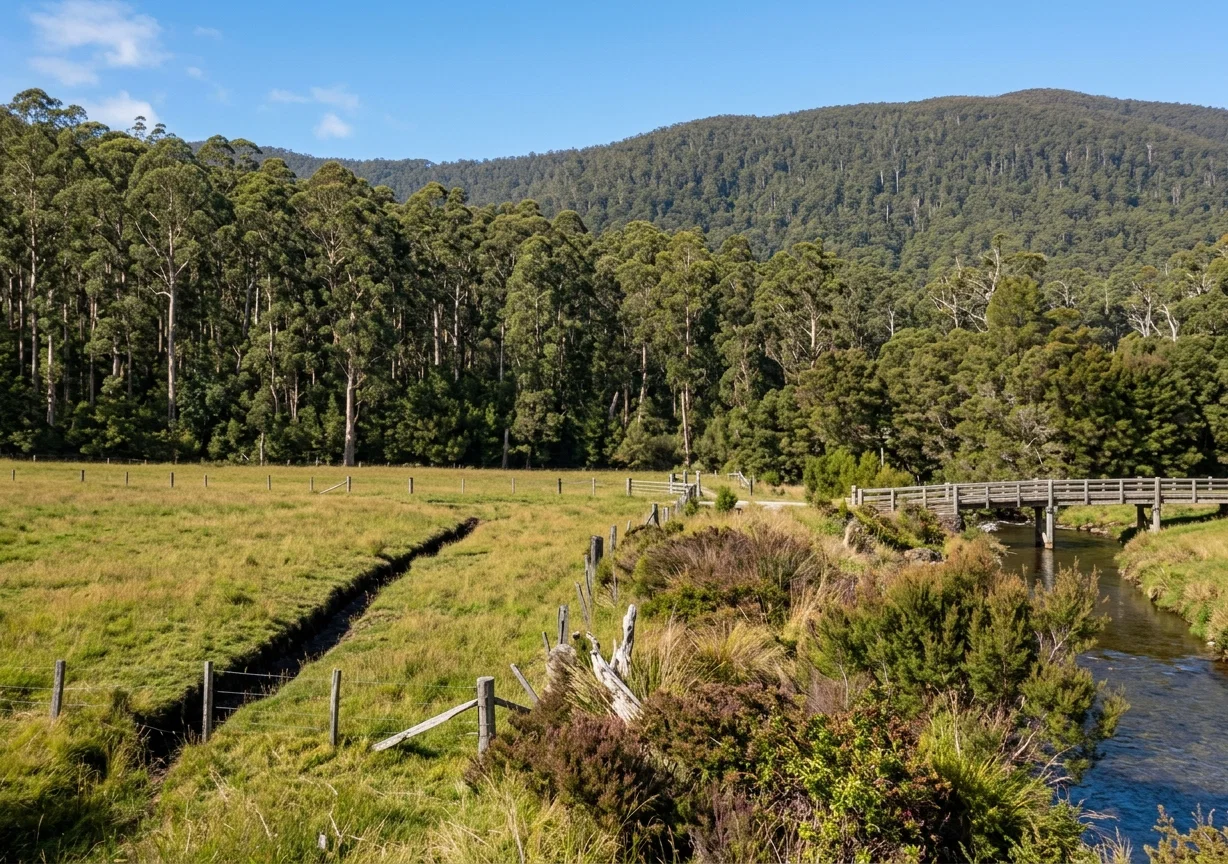
BUILDING SITE FOR THE NEW PRINTING PLANT
While business of all kinds has been dull in the city of Melbourne, and several printing firms have been compelled either to shut down or to reduce their employees to one-half their usual number, our office has been fairly busy. The balance sheets showed a gain of $1,810 over and above all expenses. Owing to the long delays so frequently met in shipping bound books from the States or Great Britain, and the consequent loss and discouragement to canvassers, the company has increased its facilities for binding, and, in general, producing books on short notice.
The Signs of the Times, our general missionary paper, is published by the Echo Company, and was carried by it for several years at a considerable loss each year. But for the past two years the paper has been a little more than self-sustaining. Its latest reported circulation is 9,883. The indebtedness of the Echo Company has been reduced $1,180.43, and its property increased $664.35, leaving its present worth $26,583.52, a gain of $1,844.77 in the past two years.

Educational Work

The prospering hand of the Lord is still over the Avondale School for Christian Workers, our principal educational institution. Largely through the sale of "Christ’s Object Lessons," the debt has been reduced in three years from $25,000 to $6,494.65. In its regular work the school has in the past two years come out with a credit balance of $5,823.93, after paying all accrued interest, taxes, and keeping the buildings and grounds in good repair. The present enrolment (one hundred and ninety-one) is the largest in the history of the school. All the rooms in the dormitories are occupied, some having three students, while one of the cottages contains sixteen girls. More rooming facilities will have to be provided before another school year opens. Our brethren in Australia are becoming alive to the importance of Christian education, when they see what it is doing for their children and the work of the Lord. A large per cent of the young people now engaged in the work in Australia and the islands of the sea have received some part, if not all, of their training at the Avondale School.
A good spirit prevails in the school and in the field toward it.
Through the farm and the various industries connected with the estate, a large number of young people are enabled to attend the school who otherwise would be deprived of the privilege. Since our last General Conference, by action of the Australasian Union Conference Committee, the health food factory and business, and the Avondale press, have been connected with the school, and are now a part of its industries. The business of the food factory is steadily increasing, so that for some time the interest on the debt has been promptly met, and since Nov. 1, 1904, $3,896 has been paid on the principal.
The one thing needful to make this a paying and prosperous business is the proper appliances, and a man competent to manufacture the different lines of nut foods now imported from America at great expense.
The Avondale press occupies an important place in connection with the school and mission work. It publishes the Australasian Good Health—our health journal—and the Union Conference Record—our church paper—besides health and educational leaflets, and books and tracts in different island languages. By means of this agency, a number of students each year receive employment and training.
With the management of so many industrial students, and the care of so large an estate with its varied industries, the principal and faculty of the Avondale School are heavily loaded, especially since being compelled to divide the Bible work among themselves, because no one could be spared from our small number of field laborers to fill the position of Bible teacher. I hear no complaints either from students or from teachers, but, in behalf of both faculty and school, I ask that this conference supply at least a Bible teacher for their next school year.

Medical Work

Our medical work at present consists of three institutions: the Sydney Sanitarium, located at Wahroonga, New South Wales; the Christchurch Sanitarium, located at Papanui, Christchurch, New Zealand; and the Hydropathic Institute, located in Adelaide, South Australia. While the two last named are filling important places and exerting a good influence in their respective fields, the Sydney Sanitarium is the central, and by far the most important of all, since it is there that nurses are trained for the other institutions, as well as for other branches of the work. Of the ten thousand dollars raised in the United States by the July offering of 1903, nearly seven thousand dollars was appropriated to that sanitarium, and applied in finishing some portions of the building, and in paying some of the most pressing obligations. Since the formal opening of the institution for patients, Jan. 1, 1903, up to June 30, 1904, the institution has made a net gain, over and above all expenses, of $2,045.40. Since that time the gains have been larger, so that within the past year over two thousand dollars has been applied on the indebtedness from the earnings, besides making some necessary improvements, chief among which was the erection of a gymnasium for exercise and meeting purposes, at a cost of one thousand dollars.
No special effort has been made to advertise the sanitarium, but patrons who have returned to their homes benefited are sending others, so that the institution is rapidly being filled to its full capacity. At the last report there were sixty patients. An excellent Christian spirit prevails in the institution. A number of people of moral worth have accepted the truth, and are using their means and influence to help advance the message. As at present managed, the sanitarium is an important factor in advancing our evangelistic work in Australasia. The greatest need of the institution at the present time is another competent gentleman and lady physician. This would give sufficient help, so that more time could be devoted to educational work along health lines in the field, by means of public lectures, health schools, etc.
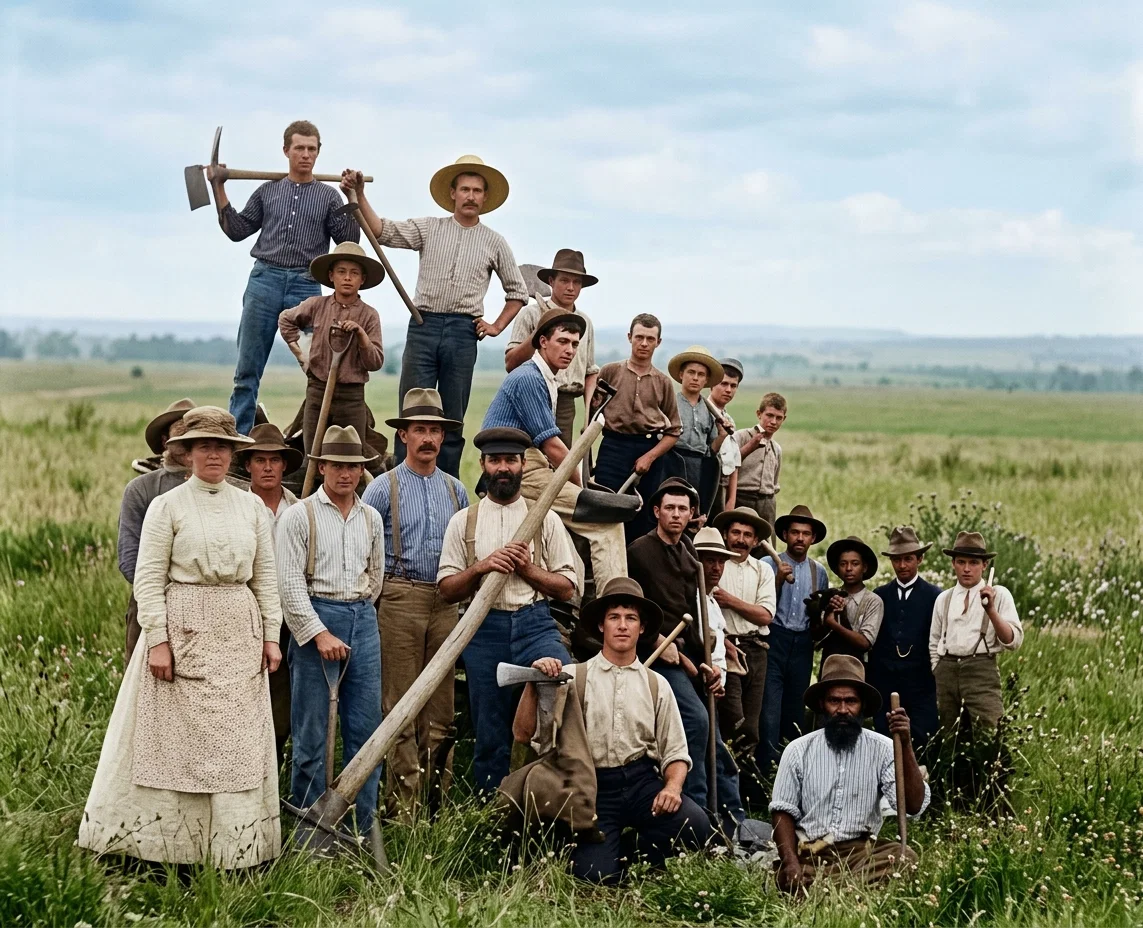
READY FOR WORK AT THE AVONDALE SCHOOL

General Summary

The Australasian Good Health, a journal devoted to the exposition of health principles, is edited by the physicians of the Sydney Sanitarium. It now has a circulation of ten thousand, and is exerting an influence for good throughout Australia, and even reaching as far as the islands of the sea.
Since a general statement of statistics of each conference has already been published in the REVIEW, it will not be necessary for me to enter into details. But before closing, I would like to call attention to the fact that in summing up the obligations of our various institutions, conferences, and societies, I find there has been a decrease in our indebtedness of $15,915.17, an increase in our property of $26,490.52, and an increase in our net worth of $36,387.52, thus increasing our total net worth, above all indebtedness and deficit to $126,546.77. This reduction in our indebtedness, in view of the hard times through which Australia has been passing, is very gratifying to us, especially when we know that it has not been accomplished by a falling off of our missionary offerings, or by a neglect of aggressive field work, but by careful management upon the part of those in charge of our institutions and conferences. June 30, 1904—the end of our conference year—there was a credit balance in our conference treasury of $2,225.66. Whatever of success has attended the work in this conference is all due to the prospering hand of our Heavenly Father, to whom all glory belongs.

Island Work

Our island work is no longer a small part of the work of this conference, since fifteen of the seventy-seven laborers on the conference pay-roll are in this field. The Lord is blessing the efforts of the faithful men and women who are laboring among the ignorant peoples of the South Sea and East India Islands. Four hundred and seven persons are now keeping the Sabbath in this field, the greatest number in any one place—133—being in the Fiji group. Church-schools have been established, and are being maintained in most of the island missions.
Owing to the difficulties encountered in attempting to bring students from these islands to our school in Australia, ground has recently been secured, and preliminary arrangements made to establish a training-school for natives in the Fiji group. Teachers and assistance in other ways will be supplied by the Avondale School. A similar school is already in operation in Raiatea, to accommodate the students in the Eastern Polynesian Mission field. Our hope is to educate these young men and women to be missionaries among their own people.
Of our work in the East Indies, and especially in Singapore, I would be pleased to speak at length. But this report has even now gone beyond the limit, hence I will close, with the hope that time will be given me to present the needs of this field in open conference. In closing, I would remind this body once more of the needs of this field, and the scarcity of laborers and means with which to prosecute the work, in the hope that some hearts may be touched by the need, and respond not only in the language, but in the spirit of the motto on this platform: “Here am I, send me.”
G. A. IRWIN, President.

Pacific Island Missions

WHILE not the most populous, the mission fields of the Pacific between the Americas and Asia are the most widely extended of any mission field in the world. Reaching from Easter Island, one hundred and ten degrees west longitude, to the northwest point of Sumatra, in ninety-five east longitude, are thousands of islands, great and small, inhabited by many diverse races, numbering approximately fifty million souls.
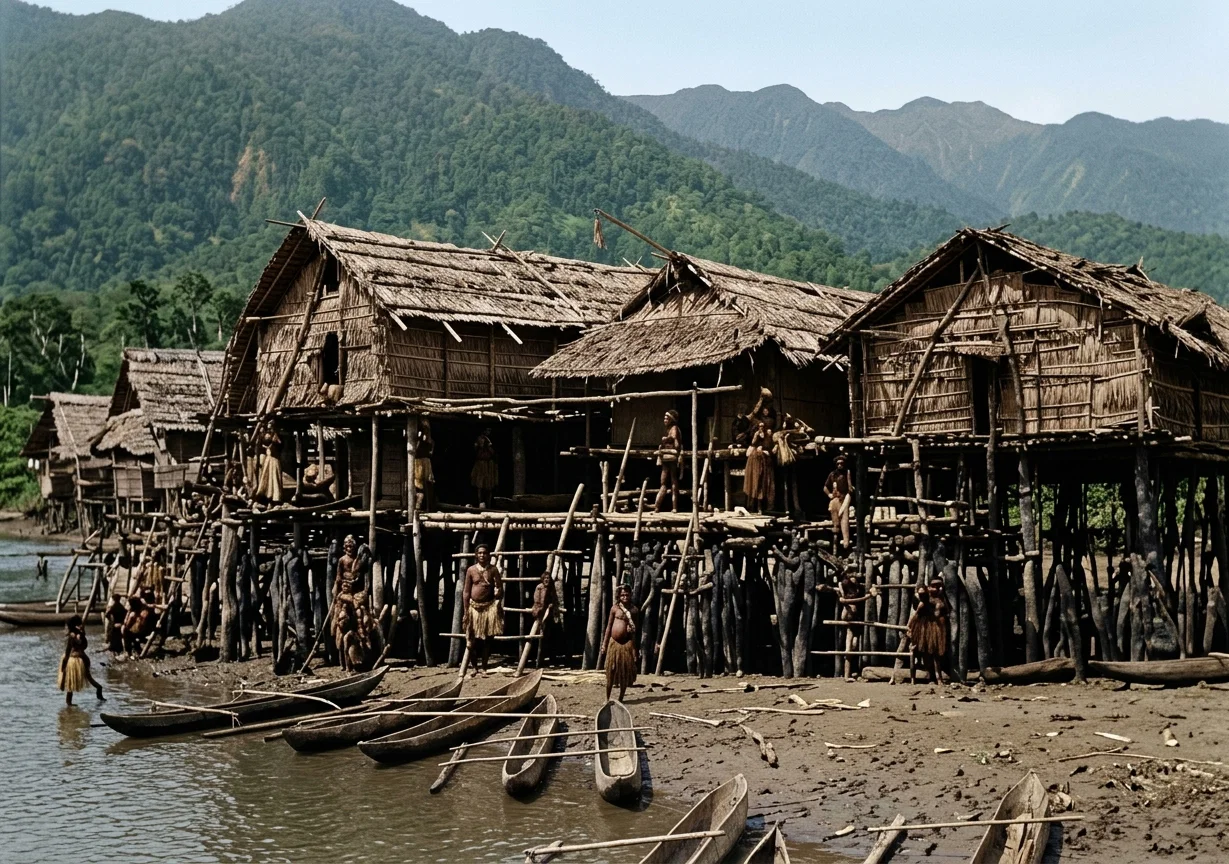
A NEW GUINEA VILLAGE
Of this great multitude of human creatures, many millions are Mohammedans, large numbers are pagans, savages, and cannibals, while interspersed among them are white men representing many of the European nations.
For the sake of convenience, this great oceanic field is divided into Polynesia, Melanesia, Micronesia, and Malaysia. Polynesia includes the island groups east of the one hundred and eightieth meridian. The term Melanesia refers to the savage islands north and northeast of Australia. Micronesia, meaning “small islands,” includes the islands between the Philippines and the one hundred and eightieth meridian, while Malaysia comprehends the thousands of large and small islands between Australia and Asia—Sumatra, Java, the Philippines, etc.
In most of the islands as far west as Fiji, Christianity was introduced many years ago; but, in the general apostasy, the native races have suffered as much as any other people, and are in the same pressing need of the gospel as when they were first discovered.
The opening work of the third angel’s message in the islands was done by one of our brethren from California, who held a series of meetings in Honolulu, about 1885. The next year Brother Tay went to Pitcairn Island, and gave the message. In 1890 the missionary ship “Pitcairn” was built, and sent out to the South Seas, since which missions have been established in the principal groups of Polynesia. Previous to 1901, the work in the islands was directed from America, but since that date has been under the Australasian Union Conference. At the last General Conference, the East Indian field, or Malaysia, was placed under the direction of the Australasian Union Conference, so that now all Oceanica, except the Hawaiian Islands, is subject to the above-named conference.
In a communication given two years ago through the spirit of prophecy, the statement was made that “upon the Australasian Union Conference rests the burden of giving the third angel’s message in the islands of the Pacific.” Australasia has accepted the burden, and is trying to make the work in the islands self-supporting as far as its limited resources permit.

Eastern Polynesia

Since the last General Conference, we have organized the islands in the eastern Pacific—Society Islands, Cook Islands, Pitcairn, the Marquesas group, the Austral Islands, Gambier, and the Paumotus—into the Eastern Polynesian Mission, and have held two conferences with delegates from the different groups. This arrangement has proved a blessing to the work in various ways.
In the Society Islands our membership does not show a great increase, as quite a number of the older brethren have died. The work of getting the truth before the natives is onward, and the plan of the workers is to push the work constantly into new fields. Since the last General Conference a new church building has been dedicated in Tahiti. The book, “Christ Our Saviour,” has been translated, and is ready for the press. The work will be done on our press at the Avondale School in Australia. The superintendent of the mission hopes soon to open up the work in the Marquesas Islands, a group as yet scarcely rescued from paganism. He expects soon to visit Pitcairn, where a new church building is ready for dedication. One or two new workers are being developed among the believers in the Society group.
The school in Raiatea in this group is doing good work. At the close of our council at that place last year, five of the students were baptized. The location of this school is an ideal one, being situated in a beautiful valley, five miles from the wicked town. This school is recognized as the central school of the Eastern Polynesian Mission field, and has students from three different groups. This school is helping to solve the problem of saving the youth and children to the cause.
In Rarotonga, Cook Islands, we have about fifty Sabbath-keepers. The native brethren have been sorely persecuted for their adherence to the Sabbath, but most of them have continued faithful, and some new ones are accepting the message. A very neat church building, twenty feet by forty feet, was dedicated one year ago. A church-school, having twenty-three scholars, is doing excellent work for the children. An abridged translation of the book of Daniel is going through the Avondale press, and will soon be ready for the market.

Cook Islands

In Mangareva, Gambier group, a leading white man and one or two others have accepted the truth. This, being one of the dark spots of Polynesia, demonstrates the power of the truth to save from the depths of sin.

Tongan Islands

This is one of the island groups first evangelized by the London Missionary Society, but has shared the general apostasy from the spirit of true Christianity. All the natives profess Christianity, but are more difficult to reach than almost any others I have met. However, we have here a small church, composed largely of white people, who are revealing the fruits of the Spirit. In the matter of tithes and offerings, they stand among the best. Last year a church-school was opened, which is doing good work for the children and youth. Several of our tracts have been translated into the Tongan language, and are doing their work of warning.

Samoa

In this group we have a well-equipped sanitarium. As the result of the work done by literature and the medical workers, a white man of worth accepted the truth last year, whom I had the privilege of baptizing a few weeks ago. At the time of my visit there in March last, a Samoan half-caste began the observance of the Sabbath. An edition of “Christ Our Saviour” has been printed for use here, and is being readily received by the natives.
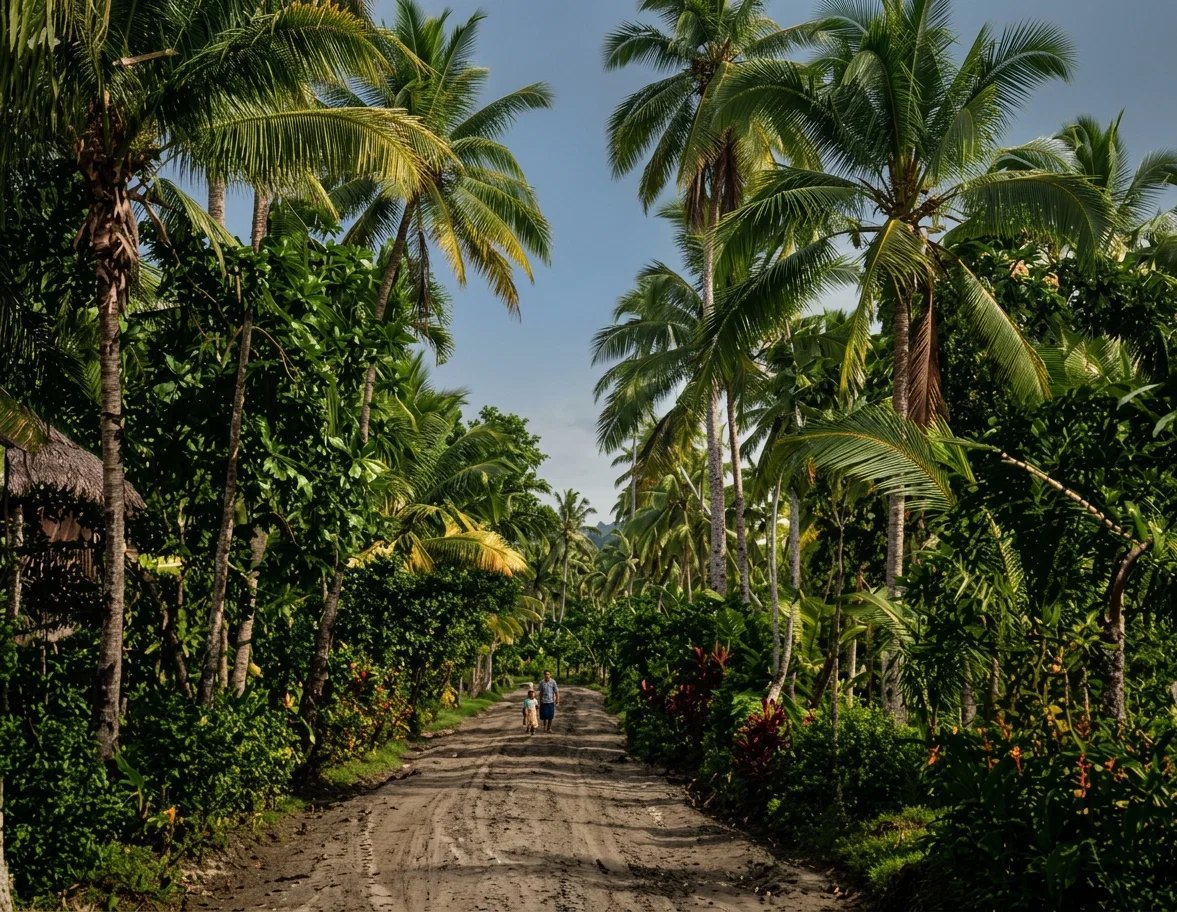
THE ROADWAY TO THE SAMOAN SANITARIUM

Fiji

The work done in this old cannibal archipelago, which was at one time the terror of the South Sea, is of a most interesting character. Including children and youth, there are now nearly two hundred Sabbath-keepers in this group, which has a population of about one hundred and twenty-five thousand. A monthly paper, the Rarama, printed in the native language, is doing excellent work for the natives. The work of printing this is done on a small press right in the field. Good-sized editions of tracts on the Sabbath, the second advent, and other subjects are also doing their work. An abridged edition of “Great Controversy,” also a book of Bible readings, has been translated into Fijian, and are meeting with ready sale. One native man, formerly a Wesleyan minister, is doing excellent work in giving the message. Two or three native young men assist as teachers. Two young natives from this group are being educated in our school in Australia, who expect to become missionaries in Melanesia.
One of the most interesting features of our work in Fiji is the proposed industrial school for native youth. A site, consisting of four or five hundred acres, was secured at a very reasonable rental. From here we hope to send out workers to New Guinea, Solomon Islands, New Britain, and other heathen islands.

East India

We have now come to the time when work must be vigorously entered upon in this great and populous field. Here in what appears on the map to be a small group of islands are thousands of islands, inhabited by millions of people, the majority of whom are either Mohammedans or pagans. Java alone has twenty-five million inhabitants. In these islands also are thousands of Dutch people, many of whom are educated and wealthy. The Philippines, with a population of from seven million to ten million, should immediately be entered by our workers. A doctor has already offered to go there as a self-supporting worker. Canvassers from Australia will soon be in the field. The Malay Peninsula properly belongs to our mission, and the General Conference will be asked to make it a part of our field.

Sumatra

In west Sumatra we have a church of twenty members, principally Chinese. Work was begun there about five years ago. It was an interesting sight to me to see here old men and women, once idolaters, who had cleared their houses of idols, and were worshiping Jehovah. This is a very difficult field to work, on account of the enervating climate, the low spiritual condition of the professed Christians, and the paganism and Mohammedanism of most of the inhabitants of this great island of three million people. But God is blessing the efforts of our missionaries. It was here that the young Chinaman received the truth who was instrumental in the conversion of the educated Chinese brother in Amoy, China, within the past year. Matter is being prepared by our Sumatra missionary to be translated into the Malay for circulation among the Mohammedans.
Our missionary in this field has been looking up a site for another mission, and writes as follows of a new field which should be opened:—
“I saw the resident this morning, and got a grand report from him. The people in question are just Malays that have not been contaminated by Islam or apostate Christianity. They inhabit the most beautiful country, at an altitude of from two thousand to three thousand feet above the sea. They are an agricultural people. They occupy forty villages, and number twenty million. The resident offered me much encouragement. He is going to visit them within the next three months, and will interest them in building a house for the missionary, and a schoolhouse, and will assure them that we will supply the teacher. He is confident that we will have success from the start. They are a quiet, peaceable people, of good temper and few evils. He assured me that by the end of the year the Kesan country will be accessible by carts from the point where we leave the river.”
The writer further says: “I am impressed that it is a great opportunity, which we must not neglect to improve at once.”

Singapore

This important mission field, being a city of nearly a quarter of a million souls, located in a very favorable position with reference to the Malay Peninsula, Siam, Netherlands East Indies, and the Philippines, has already been entered by one of our ministers and his wife and a canvasser, all from Australia. This canvasser is doing well in Singapore and the Malay Peninsula. A bitter spirit of opposition has been started against our work by the other missionaries; but still the work moves on.
The first fruit in this mission was the conversion of a Chinese woman. A letter just received from our missionaries in this field tells of an educated Cingalese Tamil, who has just begun the observance of the Sabbath, and who has refused a good position in order to do so. It also tells of finding a lady, formerly from Rumania, who, with her mother and grandmother, has always kept the Sabbath. Our laborers there are kept exceedingly busy, visiting, nursing, teaching, giving Bible readings, and holding meetings. There is probably no other city on earth having representatives from so many nations as has Singapore. Already our workers are calling for a doctor, nurses, and a printing-press, which we hope to supply soon. A letter received only last night tells of two nurses from the Wahroonga Sanitarium who are now on their way to that important field. The Lord is going before us to prepare the way, and with hope and courage we enter upon the great work of warning the large number of pagans and Mohammedans in that wicked city.
E. H. GATES, Superintendent.

Sixth Meeting

THE sixth meeting was called to order at 2:30 P. M., May 14, O. A. Olsen in the chair.
Prayer was offered by A. E. Place, and the minutes of the previous meeting were read and approved.
The executive committee recommended that the name of Smith Sharp be added to the committee on plans. By vote it was so ordered.
The Chairman called for the report of the Religious Liberty Department.

Religious Liberty Work

K. C. Russell, chairman of the department, presented a report, reviewing the stirring outlook, repeated victories gained, and wonderful providences revealed in meeting the influences making for intolerance and persecution. This report appeared in last week's issue.
Ere the report of the department was finished, a heavy shower caused the meeting to adjourn.
O. A. Olsen, Chairman, W. A. Spicer, Secretary.
Continue reading: South American Union Mission Report for 1903 and 1904