Signs of the Times, Vol. 6, No. 3.

THE GREAT CONTROVERSY
Earlier text: NORTHERN EUROPE

FAITH AND FEAR.

SAVING faith knows nothing of fear, excepting to fear God and keep his commandments. In Christ's sermon recorded in the twelfth chapter of Luke, faith is held forth in contrast with fear. We call attention to the following points of great interest in this remarkable chapter:—
1. This practical sermon was addressed to the disciples in the presence of a vast assembly. This fact should teach us that plain, practical religion should be preached as well as theology. The chapter opens with these words: "When there were gathered together an innumerable multitude of people, insomuch that they trod one upon another, he began to say unto his disciples." Verse 1.
2. However important this practical sermon may have been to Christians of each successive generation from the time it was delivered down to the present, the fact stands out very plain upon the sacred page, that the plain, cutting, practical lessons contained in it have a special application to those who are waiting for the return of the Lord at his second coming. He says, "Let your loins be girded about, and your lights burning; and ye yourselves like unto men that wait for their lord, when he will return from the wedding." Verses 35, 36.
3. He warns us against covetousness. "And he said unto them, Take heed and beware of covetousness; for a man's life consisteth not in the abundance of the things which he possesseth." Verse 15. The circumstance which called forth this warning is recorded in the immediate connection, in these words: "And one of the company said unto him, Master, speak to my brother, that he divide the inheritance with me. And he said unto him, Man, who made me a judge or a divider over you?" Then follows the warning against covetousness, which he illustrates by the following figure: "And he spake a parable unto them, saying, The ground of a certain rich man brought forth plentifully; and he thought within himself, saying, What shall I do, because I have no room where to bestow my fruits? And he said, This will I do: I will pull down my barns and build greater, and there will I bestow all my fruits and my goods. And I will say to my soul, Soul, thou hast much goods laid up for many years; take thine ease, eat, drink, and be merry. But God said unto him, Thou fool, this night thy soul shall be required of thee; then whose shall those things be, which thou hast provided? So is he that layeth up treasure for himself, and is not rich toward God." Verses 16–21.
The rich man in the parable had nothing only that which he had received of the Lord. And as a faithful steward of his Lord's goods he should have given of the abundance of the products of his lands to feed the poor and to support the cause of God. The folly of this foolish rich man consisted in coveting that which was the Lord's, in pulling down barns which were large enough, and in building those that would hold all the products of the soil with which God had blessed the labor of his hands. He had abundance for many years, while the Lord's poor were suffering for daily food. He consoled himself with his wealth. He lived to eat, drink, and take his ease. His case forcibly illustrates the conduct of those who devote their lives to laying up earthly treasures, and are not rich toward God.
4. In contrast with the life and end of the covetous rich man, our Lord exalts a life of faith, and points forward to the immortal kingdom as the reward of those who show their faith by good deeds. He points to the ravens, "which neither have store-house nor barn, and God feedeth them." If God feeds the birds that fly in the heavens without a care, will he not feed and clothe those who trust in him? "How much more are ye better than the fowls?"
He also cites the lilies of the field, or those reposing upon the bosom of the lake, clothed in garments of beauty, and states that "Solomon in all his glory was not arrayed like one of these," and adds: "If, then, God so clothe the grass, which is to-day in the field, and to-morrow is cast into the oven, how much more will he clothe you, O ye of little faith?" Verse 28. He continues, in making a practical application of the figures of the birds of the heavens and the lilies of the field, for which God cares, to give them food and their beautiful garments, in these words: "And seek not ye what ye shall eat, or what ye shall drink, neither be ye of doubtful mind; for all these things do the nations of the world seek after, and your Father knoweth that ye have need of these things. But rather seek ye the kingdom of God, and all these things shall be added unto you." Verses 29–31.
The men and women of the world live for this life only. They tax brain, bone, and muscle, to lay up treasures in this world. Their minds are burdened with care and anxiety concerning what they shall eat, what they shall drink, and wherewithal they shall be clothed. "All these things do the nations of the world seek after." But the trusting followers of Jesus Christ are to pursue a course directly opposite. "But rather seek ye the kingdom of God, and all these things shall be added unto you," is the utterance of faith from the lips of the divine Master.
But we seem to hear the voice of unbelief say, "I dare not risk it. I fear to venture my future welfare and that of my family, without laying up a liberal competency for age. What should I do in case of sickness or misfortune? I must 'provide against a rainy day.'"
Well, brother, the Lord knew that you would feel just so, that you would fear and tremble for want of saving faith, and he has, for your comfort and strength, added in this connection these words: "Fear not, little flock; for it is your Father's good pleasure to give you the kingdom." Verse 32.
Men may fear wars, pestilences, earthquakes, and famines; but these are not mentioned in this sermon of our Lord. He is here impressing upon those who are waiting for his second appearing the duty of making the things of the kingdom of God of first importance, and of trusting him for this life. And in the very next verse he sets before those who have possessions, a test which will turn many away, as it did the young man in the gospel. But few will receive, and act in obedience to, the injunction, "Sell that ye have, and give alms; provide yourselves bags which wax not old, a treasure in the heavens that faileth not, where no thief approacheth, neither moth corrupteth; for where your treasure is, there will your heart be also." Verses 33, 34.
Men of the world may lay up treasures here, and set their hearts upon them to the neglect of the kingdom of God, and these may be swept from them by fire or flood in an hour. The thief may steal their hoarded wealth, and their god perish from them in a single night, and they be left destitute and broken-hearted. Some in their insane madness commit suicide when their earthly treasures are taken from them.
But those who in faith send their treasures before them, and make deposits in the bank of Heaven, are doing a safe business. There are no losses there. And it is a comforting thought that such are laying up treasures for themselves. May God lead his dear waiting people, and give them of the spirit of the next life, that they may lay up their treasures for that immortal life which runs parallel with the life of God.

TRUST NOT IN RICHES, BUT IN THE LIVING GOD.

We have shown that Christ, in the sermon addressed to his disciples in the presence of a multitude of people, as recorded in the twelfth chapter of Luke, held up before his chosen ones in widest contrast the confidence of willing faith and the fear of unbelief. We now call attention to the words of the great apostle to his son Timothy, in which is a most solemn charge to the rich:—
"Charge them that are rich in this world, that they be not high-minded, nor trust in uncertain riches, but in the living God, who giveth us richly all things to enjoy; that they do good, that they be rich in good works, ready to distribute, willing to communicate; laying up in store for themselves a good foundation against the time to come, that they may lay hold on eternal life." 1 Tim. 6:17–19. In briefly commenting upon the foregoing words of the apostle, we notice the following points:
1. The rich are charged not to be high-minded. The apostle does not here by any means warn against that elevation of soul which raises the mind and heart above a life of sin to obedience, holiness, and Heaven. But he strikes at that shallow pride and cruel power of money which frequently exalt its possessors to an imaginary height they are not qualified to maintain in society. There is power in wealth. Money will give some men influence and position who are destitute of nearly every qualification that makes the real gentleman. Wealth leads some men to despise the poor. And while poverty tends to humbleness of mind, riches will satisfy the most shallow minds, and these unfortunate persons become puffed up by the devil. Hence the rich are charged first to guard against becoming high-minded.
2. They are also warned not to trust in riches. No rich man ever thought of trusting in his riches for eternal life, hence it is that to sustain them in this life the men of this world trust in their riches. They pile up wealth, and then lean upon it as their only support.
3. Earthly riches are uncertain. The apostle warns against trusting in uncertain riches. Here the uncertainty of this world's wealth is held in contrast with the certainty of immortal wealth. Those who trust in this are liable to be taken from it by death, or it may be swept away from them. But those who have their treasure laid up on high, have the double assurance that it will be secure for them, and that they will be secure to enjoy it in the life to come.
4. The rich are charged to trust in the living God for life, health, food, and clothing, as verily as the poor. The apostle would set before us the uncertainty of earthly supports, and that all, rich and poor, must trust in God for this life, as well as for the life to come. Men and things fail us here, but God fails the obedient, trusting soul, never.
5. He is willing that his children should enjoy the good things of even this life. And only he who makes a sanctified use of them really enjoys them. And our kind Father does not give us these earthly blessings grudgingly and stintedly, but in the language of the apostle, it is he "who giveth us richly all things to enjoy."
6. The true child of God and heir of eternal life will not covetously and selfishly hoard the good things of this life, but will, in the words of the apostle, "do good" with them. God makes his people his stewards of those things with which he blesses them; and it is their duty to faithfully use of their abundance to bless the needy and to advance his cause.
7. It is their privilege to be rich here, not in the uncertain wealth of this world, but in faith that works by love to the purification of the heart. The true Christian's works are the measure of his faith. And he who fills up his life with good works, has as the mainspring of his actions the riches of saving faith.
8. He is charged to be ready and to keep himself ready to distribute of that with which the Lord has blessed him. This readiness means more than willingness. The stewards of the Lord should not suffer their Lord's money to be invested where they cannot command it when his work and cause demand a portion of it. The several branches of our growing cause demand the investment of a large amount of means, and calls have been made to those who had means at their command to loan it without interest to our Publishing Houses, our College, or our Sanitarium. These institutions have been truly represented to be safer for the principal than the best banks on the continent. As proof of this statement, we cite the fact that for the period of a quarter of a century deposits have been received and the notes of these incorporations have been given, and no person has lost a single dollar.
Those who have had their means thus deposited have been "ready to distribute." All they had to do when duty was presented before them to give of their means for the support of some branch of the work was to order the appropriation made and the amount charged to their account where deposited. But others have thirsted for interest, or the profits that might arise from good investments, and have placed their means where changes in the times have made it impossible to collect a portion when wanted. Not only are these unready to distribute, but in consequence of having their money elsewhere many have lost by failures of banks and in business generally, so that they have brought perplexity upon themselves and have sustained losses of principal and interest, besides the loss of a blessing here and a reward hereafter.
9. The children of faith are charged to be willing to communicate. Paul is here speaking of the duty of communicating worldly treasures to feed the poor and to advance the cause of God. And this duty should not be done grudgingly nor with a stingy hand, but willingly and liberally.
10. The result of a life of faith sustained by good works is expressed in these important words: "Laying up in store for themselves a good foundation against the time to come, that they may lay hold on eternal life." In putting up a building, a good foundation is of the first importance. The foundation which the obedient, trusting soul lays up in store is for himself against the time to come. During the period of probation he is laying this foundation, upon which he may safely stand in the time of trouble, the pouring out of the last plagues, and in the Judgment of the great day. Upon this foundation, which raises him above the perishable things of this world, he may reach up and lay hold on the gift of eternal life.
But those who live for this life only, and neglect to build the sure foundation of faith and works for the trying scenes of the close of this world's history, will then sink in the mire of the unbelief they have been cherishing during the time of their probation. These have deprived themselves of many of those things which the Lord has given to be enjoyed. Their minds have been pressed with cares and anxieties in their eager graspings for the things of this life, and now they are left without the grace of God to comfort and sustain, while their physical strength has been exhausted, bringing them prematurely to the feebleness of age, without a foundation for the time to come. What a mistake, thus to lose both worlds!

THE YOUNG MAN, THE CAMEL, AND THE EYE OF A NEEDLE.

Jesus loved the young man who inquired, "What shall I do that I may inherit eternal life?" He was a moral man, having observed the letter of the commandments of God from his youth. Mark 10:17–20.
"One thing thou lackest," said the Master. "Go thy way, sell whatsoever thou hast, and give to the poor, and thou shalt have treasure in Heaven; and come, take up the cross, and follow me." Verse 21. This was indeed a severe test. The result of the interview is summed up in these words: "And he was sad at that saying, and went away grieved; for he had great possessions." Verse 22.
From these circumstances the Lord makes a most remarkable statement respecting the danger of riches. "And Jesus looked round about, and saith unto his disciples, How hardly shall they that have riches enter into the kingdom of God!" Verse 23. The astonishment of the disciples at this statement drew from our Lord words which more fully explained his meaning, as follows: "Children, how hard is it for them that trust in riches to enter into the kingdom of God!" Verse 24. The word trust deserves special attention. No one expects that his riches will give a title to life eternal. No one trusts to his riches to carry him to Heaven. The poor man who prays, "Give us this day our daily bread," trusts in God for the necessities of life. Not so with the rich. They trust in their wealth. Our Lord is here teaching a lesson of faith, that the wealthy as well as the poor should trust in God for the things of this life; and by the figure of the camel and the eye of a needle, he illustrates the impossibility of those who trust in their riches for this life entering the kingdom.
"It is easier for a camel to go through the eye of a needle, than for a rich man to enter into the kingdom of God." Verse 25. When we consider that no figure of the Bible is stronger than the fact illustrated, the reader will not marvel at the statement that the disciples were "astonished out of measure," and that the inquiry passed among them, "Who then can be saved?" Verse 26. No one will charge the Lord with giving an overdrawn figure and thus encouraging fanaticism. Then we invite those who cherish the hope of Heaven while trusting in their wealth to give this figure a practical test. If a camel is not at hand, a horse will do as well. Let them first take the largest needle they can find, a darning needle, or a large sail needle, if you please, and fasten the point in a plank; and if they can lead either of these brutes through the eye of this needle without scraping off the hair or tearing the skin, then the man who trusts in and clings to his riches can enter the kingdom.
We are not ignorant of the exposition of our Lord's words by which the popular ministry labor to get popular church-members into Heaven with all their riches. They say that our Lord refers to a certain gate of Jerusalem, called the needle's eye, which it was impossible for the loaded camel to enter. An entrance, however, was accomplished by removing the burdens from the beast, when he could press his way through this difficult gate upon his knees. But our Lord is not talking of Jerusalem or of its gates. The eye of a needle means the eye of a needle, no more and no less. But should we admit this view of the subject, what then? Why, it simply teaches that the only hope for that rich man is to cast off the burden of his riches, and humble himself before God, and trust in him for the things of this life, as the poor man prays and trusts in God for his daily bread.
"And Jesus looking upon them saith, With men it is impossible, but not with God; for with God all things are possible." Verse 27. It is possible for God to save men who will trust in him for a livelihood in this world, and for eternal life in the next. It is their privilege to be faithful stewards of their Lord's goods here, and lay up for themselves treasures in Heaven. In this way it is possible for God to save rich men.
—S[ELF]...

The Circus Clown’s Sermon

Down in Virginia, the other day, a circus clown took occasion to preach a sermon in behalf of the clergy, which had some unexpected results. At the same time with the visit of the menagerie and circus a religious convocation was in session. The jester in his painted face and mottled garments, arose in the tent and delivered the following speech:—
“We have taken in six hundred dollars today; more money, I venture to say, than any minister of the gospel in this community would receive for a whole year’s services. A large portion of this money was given by church-members, and a large portion of this audience is made up of members of the church. And yet, when your preacher asks you to aid him in supporting the gospel, you are too poor to give anything. But you come here and pay dollars to hear me talk nonsense. I am a fool because I am paid for it; I make my living by it. You profess to be wise, and yet you support me in my folly. But perhaps you say you did not come to see the circus, but the animals. If you came simply to see the animals, why did you not simply look at them and leave? Now, is not this a pretty place for Christians to be in? Do you not feel ashamed of yourselves? You ought to blush in such a place as this.”
This candid review of the situation startled the “congregation.” The local preachers took advantage of it, started a revival, and we trust will hereafter be better paid.—Detroit Post.

Selfishness Against All

—SELFISHNESS is a malignant passion, an Ishmaelite among the affections, whose hand is against every man and every man's hand against it.

SYNOPSIS OF THE PRESENT TRUTH. NUMBER THREE.

Thus fell Babylon, and with it the Babylonish empire, B. C. 538, having continued from the reign of Nabonassar who founded it, B. C. 747, two hundred and nine years.
"After thee," said the prophet to Nebuchadnezzar, "shall arise another kingdom inferior to thee;" and we have now reached it. Hereby we are brought down in the great image to the breast and arms of silver (Dan. 2:32, 39); and in the series of the four great beasts, by which the same governments of earth as were signified by the four divisions of the metallic image, were again shown to Daniel (chap. 7:5, 17,) we have reached the second, and have before us—the bear.
But as if the Lord would impress the truth upon the hearts of men with line upon line, precept upon precept, the great events of the world's history from this point onward, are by yet another series of symbols brought again before us.
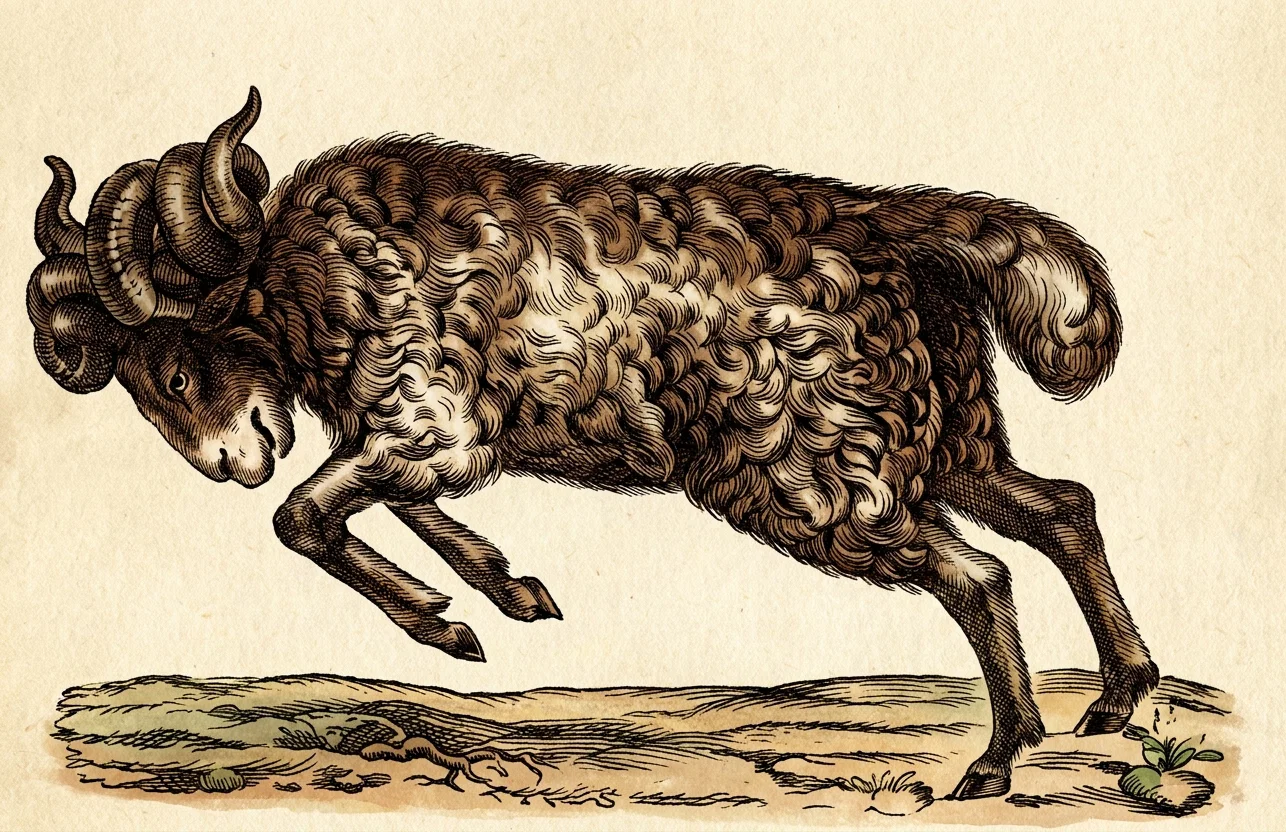
In the third year of the reign of Belshazzar, Daniel had another vision, in which he saw a Ram, He-goat, and Little Horn. Dan. 8.
This ram with his two horns was declared plainly by Gabriel to the prophet to be the kings of Media and Persia (verse 20); which kingdom being now under consideration, we will notice a few of his distinguishing features and the fitness of their application. His two horns were high, says the prophetic description, and the higher came up last. This has been already alluded to, and we need only to say further that the two horns denoted the two divisions of which the empire consisted, namely, the Medes and Persians; like the two arms of the image; that it was against the Medes that war was at first waged by Neriglissar, whereupon Darius, king of the Medes, called Cyrus to his assistance as an ally, who immediately responded by coming to his aid at the head of an army of thirty thousand Persians. And during the whole war, until the complete subversion of the Babylonish empire, the regal power was in reality vested solely in Darius, while Cyrus was only commander-in-chief of the combined armies. Accordingly, upon the taking of Babylon, he placed his uncle Darius upon the throne; and hence we read in Daniel that Darius the Median took the kingdom, although Cyrus had performed all the work of its subjugation. But shortly after this event he married the daughter of Darius, and with her received the kingdom of Media in reversion after her father's death. He died about two years after the taking of Babylon; and Cyrus, having succeeded his father a short time before in the kingdom of Persia, now added Media also to his other dominions, and became absolute monarch of the whole. "The higher came up last."
Daniel saw the ram pushing westward, northward, and southward. This may well refer to the operations of Cyrus from his first coming out of Persia to the taking of Babylon, while he lay abroad in the field pushing his conquest in all those directions, till he had at length subdued, says Prideaux, "all the East from the Egean sea to the river Indus, and thereby erected the greatest empire that had ever been in Asia to that time." The ram was not seen pushing eastward, for Persia lying to the east, its conquests were chiefly toward the west; as it is said of the bear: he raised himself up on one side, that is, extended his dominion chiefly in one direction. The three ribs which the bear had in its mouth, are interpreted to mean the three kingdoms of Babylon, Lydia, and Egypt, which the Persians conquered and grievously oppressed. The bear may well represent the nature of the Persian kingdom; for, says Paxton, "The Syrian bear in strength and ferocity scarcely yields to the lion; and ancient historians stigmatize the Medes and Persians as the greatest robbers and spoilers that ever oppressed the nations;" but the ram with two horns was its well-known national emblem. It was usual for the Persian kings to wear a diadem made like a ram's head, of gold. Cyrus, from the time that he took on him the whole government, on the death of Darius, B. C. 536, reigned seven years. In his first year he issued his royal decree for the rebuilding the temple at Jerusalem, and the return of the Jews to their own land. From the taking of Jerusalem by Nebuchadnezar, B. C. 606, to this year (536) had been just seventy years, the length of the captivity which God had threatened to his people; and as they terminated he remembered mercy in the midst of judgment, and put a period to their bondage by moving upon the heart of the king of Persia to grant them a restoration to their own land. Cyrus was succeeded by his son, Cambyses, who reigned seven years and five months. He is called in Scripture Ahasuerus.
After the death of Cambyses, one of the Magi, called Smerdis, usurped the kingdom, feigning himself to be Smerdis the brother of Cambyses, who had been slain. But the fraud was discovered and he was slain after a reign of only seven months. He is called Artaxerxes in Ezra 4:7.
Darius, a Persian noble, called Darius Hystaspes, then took the kingdom and reigned thirty-six years. From him the succession of Persian kings and the length of their reign is as follows:— 1. Xerxes, who reigned twenty-one years. He is mentioned in Dan. 9:2, as one who should stir up all against the realm of Grecia. He went against Greece with an army of five millions. 2. Artaxerxes Longimanus, who reigned forty-one years. His reign commenced B. C. 464. His seventh year would therefore be B. C. 457; and in this very year Ezra received his commission for the restoration of Jerusalem. Ezra 7. This is an important fact, as will appear hereafter in the examination of the seventy weeks and twenty-three hundred days. Dan. 8:9. 3. Darius Nothus, nineteen years, to B. C. 404. 4. Artaxerxes Mnemon, forty-six years, to B. C. 358. 5. Ochus, twenty-one years, to B. C. 335. 6. Arses, two years, to B. C. 337. 7. Darius Codomannus, who was the last of the Persian kings, and reigned four years, to the fatal battle of Arbela, B. C. 331. The character given of this prince, says Prideaux, is "that he was for his stature and make of his body the goodliest person in the whole Persian empire, and of the greatest personal valor of any in it, and of a disposition mild and generous; but having the good fortune of Alexander to encounter with, he could not stand against it. And he had been scarce warm on the throne before he found this enemy preparing to dismount him from it." This rough goat that now cometh from the west upon the face of the whole earth, will claim attention in our next. U. S.

PATIENT CONTINUANCE IN WELL-DOING.

THIS one sentence reveals the secret of the overcomer's success. Steady, constant, persistent effort in right-doing is sure to win. The acts we are able to perform may be humble; but if every one of them is right in the sight of God, they will tell wonderfully upon the final result. In fact, simple adherence to this one grand idea, "Patient continuance in well-doing," will certainly secure to us a place with Christ upon his throne.
When we can do an important work for the cause of God, let us be sure to do it at any sacrifice to ourselves. But let us never stand idle, waiting for such a kind of work as seems to us one of magnitude and importance. If we cannot do some great thing for the Lord, we can always find something of smaller consequence. Because the only act that we can perform is a very humble, lowly deed, so small that it seems of comparatively little importance, let us never stand idle, waiting for work of greater consequence.
Little do we know the results that may flow from our acts of obedience to God. Nor is this our business. "Go work in my vineyard," is the mandate of the great Master. The providence of God indicates our work. Our own nature would crave some great thing to do. But cheerful, active obedience to the humblest duties of the religion of Christ may be in the sight of God the most acceptable work that we can perform. Certain it is that when self-advancement and self-dignity are out of the account, and the honor of God and the well-being of men are sought by us, and that with singleness of heart, our acts are always acceptable to God.
Let us be active in the vineyard of the Lord.
Our time is passing with great velocity.
Soon it will be gone forever.
Let us not waste an hour waiting for some great thing to do for the honor of God.
The secret of all such conduct is the honor of self.
If Providence calls us to small and humble acts, and calls others to things of great consequence and importance, what is that to us? Our business is to do the work assigned us by the Lord.
Those whose lives are filled up with patient continuance in well-doing will certainly have it said to them at the last day, "Well done, good and faithful servant, enter thou into the joy of thy Lord." J. N. A.

BATTLE CREEK SANITARIUM.

INSTITUTION FOUNDED, . . . . . . 1866.
4000 Patients Successfully Treated.
THIS INSTITUTION, for completeness of appointment, and extent of facilities, is unrivalled in this country. Its splendid arrangements for HEATING AND VENTILATION, together with special appliances for regulating the humidity of the atmosphere, makes this Institution UNEQUALED AS A WINTER RESORT FOR CHRONIC INVALIDS.
Even persons suffering with pulmonary difficulties do much better here than in Florida.
All known useful remedies for disease are employed, including Turkish, Russian, Vapor, Electro-Thermal, Electro-Vapor, all kinds of Water Baths, Sun Baths, Swedish Movements, Electricity, etc., etc.
Terms very reasonable. J. H. KELLOGG, M. D., Medical Superintendent. Address for Circulars:—SANITARIUM, Battle Creek, Mich.

GOOD HEALTH.

For 1880.

THIS POPULAR JOURNAL enters upon its fifteenth volume with the most flattering prospects not only of a continuance of the prosperity which has attended it in the past, but also of a great increase of patronage, although it already enjoys

THE LARGEST CIRCULATION OF ANY HEALTH JOURNAL IN AMERICA.

The interest of the journal for 1880 will be greatly increased by a series of practical articles from the well-known pens of

ELDER AND MRS. WHITE.

Whose contributions in the past have done so much to increase the popularity and the usefulness of the journal.

A SPLENDID PREMIUM BOOK

Is offered to new subscribers. Address, for specimen copy:— GOOD HEALTH PUBLISHING CO., Battle Creek, Mich. Or:—SIGNS OF THE TIMES, Oakland, Cal.

BOOKS, PAMPHLETS AND TRACTS, ISSUED BY THE SEVENTH-DAY ADVENTIST PUBLISHING ASSOCIATION, AND FOR SALE AT THIS OFFICE.

The Sanctuary and the 2300 Days of Daniel 8:14. By Elder U. Smith. This question has developed the people known as Seventh-day Adventists, and is the pivotal doctrine upon which their applications of prophecy largely depend. 352 pp. $1.00
Thoughts on Daniel, critical and practical. By Elder U. Smith. An exposition of the book of Daniel, verse by verse. 384 pp. 1.00
Thoughts on Revelation. By Elder U. Smith. With notes or remarks on every verse in the book of Revelation. 352 pp. 1.00
Life of Wm. Miller, with portrait. Interesting sketches of the life and public labors of this pioneer in the Advent movement in this country. 416 pp. 1.00
The Biblical Institute. A synopsis of the lectures given at the Institute held at Oakland, Cal., April, 1877, covering the main points of our faith. 352 pp. 1.00
History of the Sabbath and First Day of the Week, for the period of 6,000 years. By Elder J. N. Andrews. This is a work of unusual interest, prepared with great care, and is full of historical and Scriptural facts. 528 pp. 1.00
The Nature and Destiny of Man. By Elder U. Smith. This work treats on the conditions of man in death, and his final destiny. 356 pp. 1.00
The Constitutional Amendment. A Discussion between Elder W. H. Littlejohn and the editor of the Christian Statesman, on the Sabbath. 1.00
The Spirit of Prophecy; or the great controversy between Christ and his angels and Satan and his angels, in four volumes. By Mrs. E. G. White. These volumes cover the time from the fall of Satan to the destruction of sin and sinners at the close of the one thousand years of Revelation 20. Each 400 pp.— Vol. I. Old Testament facts to Christ. Vol. II. Life and Ministry of Christ. Vol. III. The Death, Resurrection and Ascension of Christ, with the Lives of His Apostles. Vol. IV. (In preparation). Each, 1.00
Life of Elder Joseph Bates, with portrait. 352 pp. 1.00
The Bible from Heaven. By Elder D. M. Canright. An argument to show that the Bible is not the work of men, but is of God. 300 pp. 80 cts. Revised edition (in preparation). 1.00
Spiritual Songs. A choice collection of hymns and tunes. 416 pp. 1.00
The United States in the Light of Prophecy. An exposition of Revelation 13: 11-17. By Elder U. Smith. Applying to our own land and time, this prophecy possesses surpassing interest for every American reader. 200 pp. 40 cts. Paper covers, 20 cts

You have reached the end of this edition.

Signs of the Times · Jan 22, 1880