The Youth’s Instructor, Vol. 33, No. 42.

THE CASTLE OF KENILWORTH

The Youth’s Instructor

Nov 4, 1885

S. D. A. Publishing Association · Battle Creek, Mich. · Nov 4, 1885

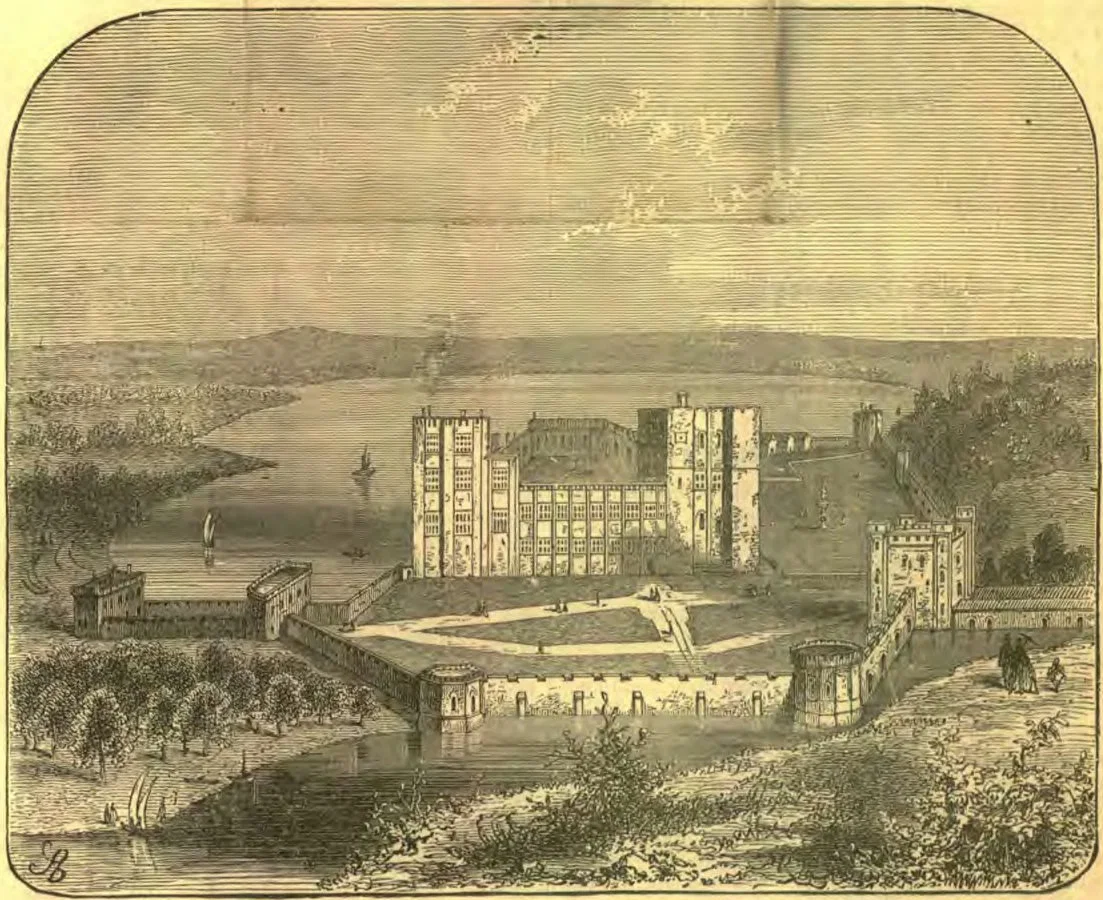
THE CASTLE OF KENILWORTH.

About five miles from the town and castle of Warwick, of which you have had a description in a former number of the INSTRUCTOR, lie the ruins of the famous castle of Kenilworth. From our picture you can get but a faint notion of how the castle looked two hundred years ago, in the days of England’s Maiden Queen.
This lordly castle, which had been the bone of contention among many high nobles and valiant warriors, and the cause of many sharp contests, Queen Elizabeth bestowed on her favorite, Robert Dudley, Earl of Leicester. Dudley spared no pains to improve and beautify his castle, and made many fine additions, which were called Leicester’s buildings.
Apart from the sieges to which the old fortress was subjected, and the revels and games of chivalry that at other times took place within its walls, perhaps the most memorable event in the history of Kenilworth is the royal entertainment given by Leicester to his Queen. Dudley spared no means to make the entertainment one of princely magnificence. On one side of the castle spread an artificial lake; and over this the Earl built a fine bridge, that the Queen might enter by a path hitherto untrodden.
The journey from London to Kenilworth was made on horseback, the Queen herself being an expert horsewoman. Hither she came with thirty-one barons, and four hundred servants, besides the ladies of the court, all of whom were lodged in the castle. She arrived at the gate toward the close of the day (July 9, 1575), where she was met, says an eye-witness of the magnificent spectacle, “by a person representing one of the ten Sibylls, comely clad in a pall of white silk, who pronounced a proper poesie in English rime and meter,” telling, in flattering terms, how happy they were to entertain her gracious Majesty.
“On her entering the tilt yard, a porter, tall of person, and stern of countenance, wrapt also in silk, with a club and keys in quantity according, in a rough speech, full of passions, in meter aptly made to the purpose,” demanded the cause of all this “din and noise, and riding about, within the charge of his office!” but when he saw the Queen, he fell down on his knees, and delivering up his club and keys, declared the castle free to all.
Then six trumpeters, “clad in long garments of silk, who stood upon the wall of the gate, with their silvery trumpets of five feet long, sounded a tune of welcome.” “Harmonious blasters, walking upon the walls, maintained their delectable music, while her Highness all along the tilt yard rode, into the inner gate.” At every step her thoughtful courtier and host had planned some new surprise. Slowly the Queen and her train made their way to the great hall of the castle, “gorgeously hung for her reception with the richest silken tapestry, misty with perfumes, and sounding to strains of delicious music.”
For days the entertainment was kept up, and every pastime that could be devised was carried out to while away the gay hours; yet I fancy that underneath the white velvet and satin and cloth of silver of the proud Earl, and the gay apparel of many of his fellows, beat hearts ill at ease with themselves and the world, and hiding dark secrets that gnawed like a canker. But the demon of unrest and mad ambition urged them on to trample down the manhood that was their birthright, and stoop to any means to attain the highest place in the favor of the court.
And the great queen, though the attentions and fine speeches of her courtiers flattered her vanity, no doubt grew very weary of the pomp and cares of state, and the pretended solicitude of her followers. She whose lightest wish was law to a million people, yet found herself the greatest slave of them all. And I fancy that in very weariness and disgust at the hollowness of the court and the treachery of false friends, she would oftentimes long to exchange places with the humblest in the realm.
“Of this lordly palace,” says a noted writer, “where princes feasted, and heroes fought, now in the bloody earnest of storm and siege, and now in the games of chivalry, where beauty dealt the prize which valor won, all is now desolate. The bed of the lake is but a rushy swamp; and the massive ruins of the castle only show what their splendor once was, and impress on the musing visitor the transitory value of human possessions, and the happiness of those who possess a humble lot in virtuous contentment.”
W. E. L.

“BUT THEN.”

It was a queer name for a little girl, and it was not her real name, that was Lizzie, but everybody called her “But Then.”
“My real name is prettier, but then, I like the other pretty well,” she said, nodding her soft brown curls. And that sentence shows just how she came by her name.
If Willie complained that it was a miserable, rainy day, and they couldn’t play out-of-doors, Lizzie assented brightly,—
“Yes; but then, it is a real nice day to fix our scrap-books.”
When Rob fretted because they had so far to walk to school since they had “moved to this horrid out West,” his little sister reminded him,—
“But then, it’s all the way through the woods, you know; and that’s ever so much nicer than walking on pavements.”
When even patient Aunt Barbara pined a little because the rooms in the new house were so few and small compared with the comfortable Eastern home, a rosy face was quickly lifted to hers with the suggestion:—
“But then, little rooms are the best to cuddle all up together in, don’t you think so, auntie?”
“Better call her ‘But Then,’ and have done with it!” declared Rob. “No matter how bad anything is, she is always ready with her ‘but then,’ and some kind of consolation hitched on to the end of it.”
And so, though no one really intended it, the new name began. There were a good many things that the children missed in their new and ruder home in the West. Money could have bought them even there; but if the money had not gone first, their father would scarcely have thought it necessary to leave his eastern home. They had done what was best under the circumstances, still the boys felt rather inclined to grumble about it one winter morning, when they were starting off to the village on an errand.
“Just look at all the snow going to waste, without our having a chance to enjoy it!” said Will; “and the ice, too,—all because we couldn’t bring our sleds with us when we moved.”
“But then, you might make one yourself, you know. It wouldn’t be quite so pretty, but it would be just as good,” suggested little But Then.
“Exactly what I mean to do as soon as I can get money enough to buy two or three boards; but I haven’t even that yet, and the winter is nearly half gone.”
“If we only had a sled to-day, Sis could ride, and we could go on the river,” said Rob. “It’s just as near that way, and we could go faster.”
“It is a pity,” admitted the little girl, with a momentary clouding of her bright face. “But I’ve thought of something—that old chair in the shed! If we turned it down, its back would be ’most like runners, and so—”
“That’s the very thing!” interrupted the boys, and the old chair was dragged out in a twinkling, and carried down to the river. Then away went the merry party, laughing and shouting, on the smooth road between the snowy hills, while Gyp followed, frisking and barking, and seeming to enjoy the fun as much as any of them.
“Now we’ll draw our ‘rig’ up here close under the bank, where nobody will see it, and leave it while we go up to the store,” said Rob, when they had reached the village.
Their errand was soon accomplished, and the children were ready to return; but as they set forth, Will pointed to a dark spot a little way out on the ice.
“What’s that? It looks like a great bundle of clothes.”
It was a bundle that moved and moaned as they drew near, and proved to be a girl a little larger than Lizzie. She looked up when they questioned her, though her face was white with pain.
“I slipped and fell on the ice,” she explained, “and I’m afraid I’ve broke my leg, for it is all twisted under me, and I can’t move it or get up. I live in the village. That’s my father’s carpenter shop where you see the sign. I could see it all the time, and yet I was afraid I’d freeze here before any one saw me. Oh, dear! It doesn’t seem as if I could lie here while you go for my father.”
“Why, you needn’t,” began Rob; but the girl shook her head.
“I can’t walk a step, and you two are not strong enough to carry me all the way. You’d let me fall, or you’d have to keep stopping to rest; and putting me down, and taking me up again would almost kill me.”
“Oh, but we’ll only lift you into this chair, just as carefully as we can, and then we can carry you easy enough,” said Will.
And in that way the poor girl was borne safely home and the children lingered long enough to bring the surgeon, and hear him say that “young bones don’t much mind being broken, and she will soon be about again as well as ever.”
“But then, wasn’t it good that it was only the old chair that we had to-day?” asked little But Then, as she told the story to Aunt Barbara at home. “O Aunty, I had the nicest kind of a time!”
“I believe you did,” answered Aunt Barbara, smiling, “for a brave, sunny spirit that never frets over what it has not, but always makes the best of what it has, where it is, is sure to have good times. It does not need to wait for them to come; it has a factory for making them.”—S. S. Gem.

THE STRENGTH OF THE HILLS.

My thoughts go home to that old brown house, With its low roof sloping down to the east, And its garden fragrant with roses and thyme, That blossom no longer except in rhyme, Where the honey-bees used to feast.
Afar in the west the great hills rose, Silent and steadfast, and gloomy and gray; I thought they were giants, and doomed to keep Their watch while the world should wake or sleep, Till the trumpet should sound on the Judgment day.
I used to wonder of what they dreamed As they brooded there in their silent might, While March winds smote them, or June rains fell, Or the snows of winter their ghostly spell Wrought in the long and lonesome night.
They remembered a younger world than ours, Before the trees on their top were born, When the old brown house was itself a tree, And waste were the fields where now you see The winds astir in the tasseled corn.
And I was as young as the hills were old, And the world was warm with the breath of spring, And the roses red and the lilies white Budded and bloomed for my heart’s delight, And the birds in my heart began to sing.
But calm in the distance the great hills rose, Deaf unto raptures, and dumb unto pain, Since they knew that Joy is the mother of Grief, And remembered a butterfly’s life is brief, And the sun sets only to rise again.
They will brood, and dream, and be silent, as now, When the youngest children alive to-day Have grown to be women and men, grown old, And gone from the world like a tale that is told, And even the echo forgets to stay. —Louise C. Moulton.

Loving Friends Despite Their Imperfections

WHOEVER looks for a friend without imperfections will never find what he seeks. We love ourselves with all our faults, and we ought to love our friends in like manner.

BELIEVING AND UNDERSTANDING.

“I WILL not believe anything but what I understand,” said a self-confident young man in a hotel one day.
“Nor will I,” said another.
“Neither will I,” chimed in a third.
“Gentlemen,” said one who sat close by, “do I understand you correctly, that you will not believe anything that you don’t understand?”
“I will not,” said one, and so said each one of the trio.
“Well,” said the stranger, “in my ride this morning I saw some geese in a field eating grass; do you believe that?”
“Certainly,” said the three unbelievers.
“I also saw the pigs eating grass; do you believe that?”
“Of course,” said the three.
“And I also saw sheep and cows eating grass; do you believe that?”
“Of course,” was again replied.
“Well, but the grass which they had formerly eaten had by digestion turned to feathers on the backs of the geese, to bristles on the backs of the swine, to wool on the sheep, and on the cows it had turned to hair; do you believe that, gentlemen?”
“Certainly,” they replied.
“Yes, you believe it,” he rejoined, “but do you understand it?”
They were confounded, silent, ashamed.—Sel.

NEW ZEALAND.

New Zealand was discovered by Tasman, a Dutch navigator, in the middle of the seventeenth century, and received from him its present name. It lies about as far south of the equator as Spain does to the north of it, and its shape is very much like that of Italy reversed. It is situated something more than a thousand miles east of Australia, and in extent is nearly equal to that of Great Britain and Ireland. It consists of two large islands, and several smaller ones. The two principal islands are separated from each other by Cook’s Straits, eighteen miles in width.
It is a country of varied scenery. The Southern Alps run through the entire length of the two larger islands, with only one interruption,—that of Cook’s Straits. On the South Island, especially, some of the peaks of this range attain to great heights, Mount Cook having an elevation of 13,200 feet above the level of the sea. A large number of boiling mud-pools, hissing cisterns, and intermittent geysers throw up their columns of spray to a great height, with an explosive report. Water of almost every degree of temperature, from boiling heat to extreme coldness, may be found in its lakes. These are of great advantage to the few natives living in their vicinity, who, it is said, cook their food by immersing it in the already heated waters.
The natives are of Malay origin. They call themselves Maori (pronounced in two syllables), which means indigenous, or native; but their own traditions state that their ancestors came, more than five hundred years ago, from an island called Hawaiki, somewhere in the North Pacific. Their laws, language, and legends are very nearly like those of the Hawaiian islanders, from which it is inferred that the two races had a common origin. When the country was first discovered, the natives were estimated to number about 100,000. There are now probably not more than 40,000 left. They formerly lived to a great age, if not killed in battle; but since white men settled on the islands, diseases of which they once knew nothing have become quite common, and many die at an early age.
The Maories are a well-formed race, and the shape of their heads indicates considerable mental power. Their features are regular, and they have an olive complexion. When first known to Europeans, they were savages and cannibals, and extremely fierce. Among other barbarous customs, the men tattooed their faces, and the women their chins and lips. This was a very tedious and painful process. The skin was punctured with a piece of sharp, pointed bone, and a vegetable paint or dye was then mingled with the blood. Only a little of this could be done at a time.
When the inflammation of the first wounds had passed away, another piece was added. In this way, several months were required to complete the design; but when once done, the lines are indelible. This custom, with others of like nature, is now nearly abandoned, and many of the natives are rising to fill positions of honor and trust in the Government. Already quite a number of them have been elected to seats in both houses of Parliament.
One custom prevailed among these natives that will no doubt appear singular to the reader. Instead of shaking hands when they met, as people do in our country, they would rub their noses together, and then express their feelings by laying their heads on each others’ shoulders, and uttering a mournful wail. The men cultivated the soil in a rude way, while the women cooked the food, and wove rough garments from the fiber of the flax. Their cooking process was very simple. A hole eight or ten inches in depth was made in the ground, in which large stones were heated very hot. These were covered with layers of flax and fern, and the article to be cooked was laid on them, and covered with more flax. Water was then poured over the heap, producing a steam, and thus cooking the food.
The Maories once lived in fortified villages, which were frequently built on high, open hills. The several tribes were at war so much with each other, that they were always prepared for an attack. It is altogether different now; the most of them are peaceable and quiet citizens, pursuing their avocations the same as the Europeans. Very few of them live in towns with the white people; but they have settlements of their own, and possess much land. The most of the natives are found on the North Island, they having sold nearly all the land owned by them in the South Island.
There are now only a few of them who cannot read and write their own language. While the advent of the white man among them has introduced some vices, which are to be much regretted, Christianity has done a great work for them; and many large and handsome churches stand as witnesses of their earnestness and devotion to the cause of Christ.
It was by much stratagem that Christianity was introduced into New Zealand seventy years ago. The natives allowed no one to land on their islands, and killed all who attempted to do so. An English missionary on his way to Australia, a few days after leaving England, saw, lying on the deck of the ship, a dark-skinned man who had a very sad look. Upon inquiry, he was found to be a young New Zealand chief, who had worked his way to England as a common sailor, in order to see the king. Disappointed, defrauded, and sick, he was returning to his native land after an absence of four years. Arriving at Sydney, New South Wales, the missionary took him to his own house, where he remained for some months. After recovering his health and spirits, the young chief returned to New Zealand, and was soon followed by the missionaries. But with all the influence wielded by the chief, who had been so well treated by the missionaries, their reception was anything but cordial; though they were permitted to remain, out of regard to the chief’s wishes.
For quite a number of years the missionaries were continually harassed by the treachery of the natives, who watched for opportunities to commit depredations, and even to take their lives. After a long time, however, they succeeded in learning the language of the people, and then opened schools for the children, and preached the gospel.
Eleven years after landing, the first convert was baptized. But dark times were seen after that; for even after fourteen years of hard labor, one of the mission stations was burned, and the family fled to the coast, and sailed for Sydney. The work was, however, soon afterward recommenced there, and a large harvest of souls was gathered. But their faith was destined to be more severely tried; as late as 1830, a violent tribal war broke out, in which two missionaries were murdered, and many of the natives renounced their Christianity. But this proved to be the turning point in the work; for since then, Christianity has taken deep root in the hearts of many, and a large number of the natives have themselves become preachers of the gospel. Truly the Word is like “a hammer that breaketh the rock in pieces.” J. O. CORLISS.

PUT THINGS IN THEIR PLACES.

Much of the time of busy people is spent in picking up and clearing up after persons who are careless, thoughtless, lazy, and disorderly. They derange, but never arrange. They meddle with other people's affairs, misplace their tools, throw things into disorder, upset and disarrange work that has cost others time and labor to arrange, and then away they go, leaving everything in chaos. If all persons would learn to pick up their own litter, clear up after themselves, put things back where they find them, and let alone what belongs to others; if they would see to it that no action of theirs increases the labor of oppressed and overburdened people, they would be much more useful than they now are, and would have the satisfaction of knowing that if they could not be helpers, they were not hinderers in the world. But, unfortunately, those who are the least useful, and have the most time to pick up after others, are sometimes the very persons who make the most litter and confusion, and so hinder far more than they are likely to help, unless they mend their ways. Such ways are not easy to mend. Only those who have self-control enough to halt in the midst of the greatest hurry, and restore order, can hope to succeed.
The whole universe is a wonderful example of this orderly arrangement. In creation, God put things in their places.—Little Christian.

“PAYING OFF MOTHER.”

“Mother,” said a little black-eyed boy of six years, “when you get old, and want some one to read to you, I will pay you off.”
Little Alexander’s mother had been in the habit of reading to him a good deal, and on this Sabbath day she read to him a long time out of the Bible and a Sabbath-school book. The child was just able to read, himself, and the progress he was making doubtless suggested to him how he might at some future time return all his mother’s care.
“I will pay you off, mother,” said he, looking up into her face with childish satisfaction, as if a new thought from heaven had been sent down to light up the little world of soul. His mother pressed him to her heart with a delight that seemed to say, “My son, I am more than paid off already.”
But, children, you can never pay off your mother. Her thoughts of love and acts of affection are more in number than the days of life. How often has she nourished you, dressed you, kissed you, rocked you on her knee and in the cradle, carried you in her tender arms, watched over you in sleep, guided your infant steps, corrected at times your misdemeanors, thought of you in absence, and guarded your life in the unvarying remembrance of a mother’s solicitude, and the free-will offerings of a mother’s devotion! Ah, dear children, you can never “pay off your mothers.”
Mother has taught you to read and pray. She has patiently sat by you and taught you the letters of the alphabet, and then she helped you to put them together and spell words of thought. She taught you to know God. Before you could read, she taught you to say, “Our Father which art in heaven.” Mother has trained you with lessons and hymns and prayers to come to Christ. She has prayed for you when none but God knew it, and has prayed with you when your wandering eyes understood not the meaning of her grave and imploring looks. She pointed you to heaven, and “led the way.” Dear children, you can never “pay off your mothers.”—Sel.

Religion Warms the Heart and Spreads Joy

It is a bad fireplace where all the heat goes up the chimney; true religion spreads joy over all around. Yet the fire warms first the chimney in which it burns, and grace comforts the heart in which it dwells. Nobody will be warmed by a cold hearth.

MOTHER'S OLD HYMN.

THROUGH the trembling folds of the twilight dim, I can hear the strains of that grand old hymn Which mother, whose heart is now still and cold, Sang midst her cares in the days of old.
* * * * * * * *
There was something about it, undefined, That charmed into quiet the troubled mind; O'er the bleak hearts then breathed with a spirit bland, Like a warm south wind o'er a frozen land;
And crowning it all with a strange, deep chord, Like the throb of the heart of the blessed Lord, That shed through the fainting soul abroad A sense of the pitying love of God.
The songs of the singers that fame has crowned In the flood of the years are lost and drowned; But mother's old hymn, every pause and tone, With the growth of time has the sweeter grown.
—Selected.

IMPORTANT BIBLE SUBJECTS.

LESSON 9.—THE FOURTH KINGDOM.

[NOTE TO THE STUDENT.—Do not consider the lesson learned until you can give at least the substance of every text, with the correct reference for each. The references in black letters indicate those texts that should be committed to memory. A little diligent application each day will enable you to learn them, although this need not be considered a test of scholarship.]
1. By what metal was the fourth kingdom represented? Dan. 2:33.
2. How is the iron rule of this kingdom described by the prophet? Verse 40.
3. Describe the fourth beast of chapter seven. Verse 7.
4. What did the angel tell Daniel this beast represented? First part of verse 23.
5. What work of destruction was this beast to perform? Verse 23, last part.
6. How much territory was to be devastated by this beast?
7. By what is the fourth universal empire represented in Dan. 8? Verse 9.
8. What did the angel say of the destructive power of this little horn? Verse 24.
9. How is the greatness of the three kingdoms of Dan. 8 compared? Verse 4, last clause; verse 8, first clause; verse 9, first part.
10. Then which of these kingdoms was the strongest?
11. In comparing the metals of Dan. 2, how is this superior strength of the fourth kingdom represented? Dan. 2:40.
12. Is the name of this fourth universal empire mentioned in any of the chapters of prophecy we have been considering?
13. Against whom did this power array itself? Dan. 8:11, first part.
14. Who is the Prince of princes? Rev. 1:5; Acts 3:15.
15. Before whom was our Saviour tried and condemned to death? Mark 15:15.
16. Who was this Pilate? (See note.)
17. What edict was issued by the head ruler of this Roman government more than thirty years before the crucifixion? Luke 2:1.
18. What can you say of the extent of a government that can command all the world to be taxed?

HOW OIL-CLOTH IS MADE.

Of the manufacture of oil-cloth, an exchange says:—
“This article is the product of many years of inventive toil and experiment; and the processes and machinery by which it is turned out are of the most elaborate character.
“The body of all floor oil cloth is burlap, which is first sized by treating it to a saturation of dissolved glue. It then passes through fifteen heated wire rollers, which dries it, and presses the glue water into the porous material, and removes all inequalities of surface. It then passes to the paint rooms to receive its first and many subsequent coats of paint, the principal ingredient of which is ocher. The paint is liberally put on, and the cloth, after passing under a roller to press out the superfluous paint, is run on long racks through a room in which are heated steam pipes. After remaining on the racks a prescribed number of hours, the cloth is run through a machine, where it is pumice-stoned down to a perfect smoothness. It then receives a second coat of paint, and is again pumice-stoned, and so on until the requisite number of coats are put on both sides.
“The well-prepared material now goes into the hands of the printer. This work is all done by hand, and it requires considerable experience on the part of the workmen to make a good job. Every color requires a separate impression, the blocks in the hands of the workmen being about eighteen inches square; and great care must be taken that the block is placed in the proper place, as a hair’s breadth displacement would show; also that the proper blocks are taken up in their order. After being well dried in steam-heated chambers, the piece of goods goes to the varnish machine, where a number of arms, with brushes attached, and worked in almost exact imitation of a painter’s, are passed over it, giving it a complete and evenly distributed coat. These processes having been completed, after drying and trimming, the article is ready for market.”

CHARCOAL AND ITS KINSMEN.

How many of our readers have ever seen a coal-pit, where charcoal is made? Of the nature and use of charcoal, L. C. Cooley, Doctor of Philosophy, in Alden’s Book of Knowledge, says:—
“The charcoal-burner piles his sticks of wood in the shape of a mound, and covers the whole with dirt and turf. He leaves several small holes at the bottom of the pile, for a little air to enter, and another at the top, for the smoke to escape. Then, lighting his fire, a half-smothered burning is kept up for a long time.
“Would you know what change takes place in the wood during this combustion? It is a very simple one. The particles of the wood are broken to atoms. Some of the minute pieces are like air in color and lightness, and are driven away by the heat; others are not, and stay behind, in the form of a solid, black substance, called carbon. This black solid is the charcoal. Not all of the carbon is left behind, to be sure; for some of it is seized by oxygen, and the two fly away together as carbonic gas. But the quantity lost in this way is very little, compared with the amount of carbon left.
“Did you ever notice how much the charcoal looks like the wood from which it was made? It is very black, to be sure, no matter what may have been the color of the wood; but aside from this change in color, there is little more to be seen; there is the bark with all its knotty roughness; there are the annual rings of wood inside the bark, to be counted still; and, if we may look through a microscope, there are the delicate cells which the same microscope could have shown us in the wood before it was burned. Let us lift the charcoal, and it is easy to see that the wood lost much of its weight in the fiery trial; but, really, it is not easy to see that it lost much of its size; the stick of charcoal is nearly as large as the stick of wood from which it was obtained.
“But why should the carbon so obstinately maintain the form of the wood? All this resistance to any apparent change, but that of color and weight, is due to the single fact that carbon cannot be melted. The most powerful heat of a furnace cannot even soften this substance. There is no heat known that is strong enough to melt it. Whatever else is present in the wood can be driven away by heat, but the carbon cannot be moved. It stays just where it was, in every part; and so the delicate cell walls of the wood do not run together, as they would need to do if they were made of a substance which could be melted. In spite of the fire, every part of the wood retains its shape.
“Carbon is as careless about the action of liquids as it is about that of fire. Let us plunge a piece of charcoal into water. Years afterward, should it be left so long, the coal will be found to be as perfect as ever. Let us put it into more corrosive liquids. Will it waste away? Not in the least degree. Liquids cannot attack it.
“Charcoal is very porous, and it has a curious power to fill all its little cells with gases. Let us notice an instance of this action. A piece of freshly-burned charcoal was sunk in a vessel filled with oxygen gas. It began at once to suck this air-like substance into every pore, and refused to stop until it had taken a quantity nine times as large as itself. A cubic inch of charcoal is able to absorb nine cubic inches of oxygen. Is this at all surprising? What, then, shall we say to the more wonderful fact that a cubic inch of charcoal is able to take into its own pores as much as ninety cubic inches of ammonia gas, and hold it bound, a prisoner in its cells!
“This remarkable power of charcoal makes it very useful in hospitals, and other places where offensive odors are to be found. It will absorb the bad gases, and thus purify the air. Even animal substances, when decaying, lose their power to offend us by their odor when covered with a layer of good charcoal. The decay will go on, but the porous charcoal will seize and imprison the offensive gases set free by the decomposition.
“Charcoal is only one of the many forms of the element of carbon. No other element wears so many faces. There is the hard coal, which is taken from the mines for fuel. There is coke, the black and porous solid left in the retorts of the gas-works. There is bone-black, obtained by heating bones in close vessels. These are a few of the different and useful members of the carbon family, to which charcoal belongs.”

Encouraging Children to Question Their Teachers

EVERY encouragement should be offered to the children to put questions to their teacher, and to give free expression to whatever doubts and difficulties may be in their minds. A good teacher will never think such questions irksome or out of place, but will welcome them, as so many proofs that the minds of his pupils are at work, and so many hopeful guarantees of future success.
For, indeed, the whole sum of what may be said about questioning is comprised in this: It ought to set the learners to thinking, to promote activity and energy on their part, and to arouse the whole mental faculty into action, instead of blindly cultivating the memory at the expense of the higher intellectual powers. That is the best questioning which best stimulates action on the part of the learner; which gives him a habit of thinking and inquiring for himself; which tends in a great measure to render him independent of his teacher; which makes him, in fact, rather a skillful finder than a patient receiver of the truth. All our questioning should aim at this; and the success of our teaching must ever be measured, not by the amount of information we have imparted, but by the degree in which we have strengthened the judgment and enlarged the capacity of our pupils, and imparted to them that searching and inquiring spirit which is a far surer basis for all future acquisitions than any amount of mere information whatever.—J. G. Fitch.

THE GREAT SEAL.

You may have seen a seal for making an impression in wax or some soft substance, the stamped material to be attached to a document to confirm it or make it reliable. A proper writing which bears the imprint of an Association’s seal, stands good in law. The following items of interest concerning the government of England’s seal, were published in the New York Observer:—
“The mere holding of the Great Seal of England entitles its fortunate custodian to some £60,000 a year, to immense patronage in Church and State, to be Speaker of the House of Lords, a Privy Councillor, and the head of all judicial authority in the kingdom, to be designated Lord High Chancellor of Great Britain, and Keeper of the Royal Conscience, and to rank (next to the royal family) as the second subject in the realm. It is very difficult, if not impossible, to say when England first had a Great Seal. Seals were not much used by our Anglo-Saxon ancestors, but came largely into fashion during the Norman reigns. The gilt crosses or marks of Edward the Confessor, and other Saxon kings, can scarcely be called seals, and partook more of the character of signatures of an illiterate age; but a grand and perfect seal of William the Conqueror exists, having the monarch crowned and throned on the one side, and mounted on horseback on the other, attitudes which have been invariably observed to the present day.
“One remarkable circumstance connected with the Great Seal, is its progressive growth in size as time advanced. Originally, eight hundred years since, not larger than the top of an ordinary modern tea-cup, it has been gradually enlarged from age to age, till it offers now the size and appearance of a muffin, and requires to be inclosed in a tin box for protection. Indeed, so cumbersome and unwieldy had the Great Seal become, that some three or four years since, an Act of Parliament passed—containing very extraordinary provisions, directing that all the minor, and many even of the more important documents passing under it, should for the future be authenticated by a paper wafer of moderate size, which should be gummed on the instrument, and be deemed and taken to be the Great Seal itself.
“The Great Seal has only three times been lost, twice temporarily, and once permanently. James II., on leaving the kingdom on his abdication, threw the seal into the Thames, whence, however, it was next morning fished up and brought to Whitehall. Lord Eldon buried it in his garden in Queen Square during one night when his house caught fire, and he thought in the confusion it might be stolen. ‘And,’ writes the Chancellor in his diary, ‘when the fire was extinguished, I quite forgot in the morning where I had buried it, and while the carriage waited to take me to Court, my lady and I and all the household, were dibbing with pieces of stick, till we luckily found it.’ Lord Thurlow, who always held it during the night in his bedroom, had it actually carried off by burglars, from whom it was never recovered. A Privy Council was called the next day, a new seal was rapidly made, and during the remaining of his continuance in office, Lord Thurlow invariably deposited it at night under his pillow.”
“Down to 1818 the Great Seal itself was made of copper; since then, silver has been the metal employed. It is in two halves, somewhat like two very thick, bright, tin saucepan lids, fitting closely together, their inner surfaces deeply sculptured with the royal devices intended to be formed on the wax when squeezed between them.”
“Instruments having a limited duration are sealed with yellow wax. Others supposed to exist in perpetuity, such as patents of peerage, etc., are exemplified under green wax; and in the case of some letters patent likely to be exposed to a good deal of knocking about, or journeying from place to place, such as were the Assize Commissions, the wax seal was stamped after being ingeniously enclosed in cream-colored leather.”
Continue reading: AN ESKIMO ILLUMINATION