The Youth’s Instructor, Vol. 33, No. 42.

THE CASTLE OF KENILWORTH
Earlier text: THE CASTLE OF KENILWORTH

AN ESKIMO ILLUMINATION.

One would hardly think of going to the Polar Regions to witness an illuminated city, but as described by Lieut. F. Schwatka, in St. Nicholas, such things are not rare at certain seasons of the year. He says:—
“The first snow of the winter does not make good strong snow-blocks for the igloos, however deep it may fall, and from the time there is enough of it, the Eskimos often have to wait three or four weeks before it is fit for building. As it gets too cold in their summer sealskin tents before this time comes, the natives generally build preliminary houses of ice, which, singular as it may seem, are much warmer than the tents, but not so comfortable as the houses of snow. When the ice has formed to about six inches in thickness on some lake close by, they cut out their big slabs of ice for the sides of the house. Imagine an ordinary-sized house-door to be a slab of ice about six inches thick: then take a half-dozen to a dozen of these doors, and place them in a circle, joining them edge to edge, but leaning in slightly, and you will have formed your curious house of ice. Over this circular pen of ice—which you can imitate on a small scale with a circular row of upright dominoes on their ends and joined edge to edge—the summer seal-skin tent is lashed across poles for a roof, and the ice-house is complete. By and by, this roof, sagging with snow, may be taken off and a dome of snow put on, which gives more height and consequently more comfort.
“Before these houses get covered inside with the black soot from the burning lamps, and before the snow outside has drifted up level with the roof, a night scene in a village of ice, and especially if the village be a large one and all the lamps be burning brilliantly, is one of the prettiest views a stranger can find in that desolate land. If you could behold a village of cabins suddenly transformed into houses of glass, and filled with burning lamps, it might represent an Eskimo ice village at night.”

WHO IS VICTORIA?

Most all of you know that Victoria is the present queen of England; but can you trace her pedigree eight hundred or more years? We clip the following from a late exchange:—
“Victoria is the daughter of the Duke of Kent, who was the son of George III., and was the grandson of George II., who was the son of George I.; who was the son of Princess Sophia; who was the cousin of Anna, who was the sister of William and Mary; who were the daughter and son-in-law of James II.; who was the son of Mary (Queen of Scots); who was the granddaughter of Margaret; who was daughter of Henry VIII.; who was the son of Henry VII.; who was the son of the Earl of Richmond; who was the son of Catherine; who was the widow of Henry V.; who was the son of Henry IV.; who was the grandson of Henry III.; who was the son of John; who was the son of Henry II.; who was the son of Matilda; who was the daughter of Henry I.; who was the brother of William the Conqueror.”

BORING ANIMALS.

Insects and other insignificant forms of life can do much mischief when they act in large numbers. The sea-urchin, which you have often found on the shore, can bore through granite by means of its teeth. Sponges can pierce limestone. The gribble-crab seriously injured the beams that supported the temporary beacon erected on the Bell Rock by Robert Stephenson. It attacks all kinds of timber; and cases are known in which the piles of piers have had to be renewed every four years, owing to the havoc played in them by this crab, which assaults even submarine cables. The ship-worm is met with in every sea, and bears the palm for destructiveness. It bores long tunnels in the wood, which is soon reduced to a state of worthlessness. The only good that these borers can be said to do is when they destroy the wrecks of sunken ships and the stray wood that floats about on the ocean wave.

Thousands of Homeless Children in New York City

We are credibly informed that there are 10,000 children in New York City who have no place to sleep nights, except in sheds and barrels.—The Well-Spring.

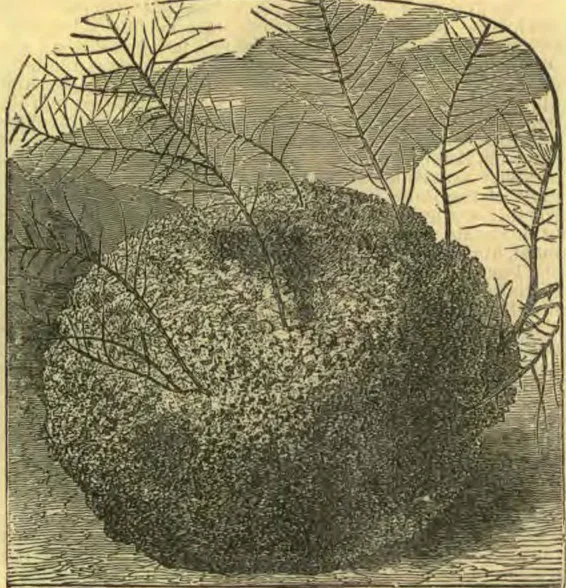
THE SPONGE.

For a long time people could not make up their minds whether the sponge was a plant or an animal. It has neither sense nor motion, so that there is not much about it to remind us of an animal. Still it has a kind of animal life, and naturalists have placed it in the lowest rank of the animal kingdom.
I will tell you what a sponge is like when it lives in the sea. It has a horny or stony net-work of a body, a skeleton, if you like to call it so. This net-work is full of passages, or holes, and is covered with a slimy matter, which is really the living sponge.
The way of life which the sponge practices is as simple as can be. It does not move. It remains, all the days, in the place to which it is attached under the water. All it does, is to draw water through its pores, or holes, and let it flow out again. This is the means of nourishing it, for the water is full of particles on which the sponge may be said to feed. You see what a feeble kind of life it has.
The passages, which branch about in the horny skeleton of the sponge, have often little points, or buds, sticking to the sides. These are the little sponges beginning to grow. As they get larger, they are clothed with hairs, or cilia, and at last break away from the parent sponge. They move about in the water a few days, their cilia helping them along.
At length the little sponge reaches a place where it can fix itself. Then it fastens one end of its body to the rock or stone where it means to live. Its cilia keep on moving very fast; but when the sponge has fairly settled itself, they become quiet. Indeed, they never move again.
The little sponge is a mere drop of jelly at present; but soon a change begins to take place. Little spots are seen on its body, which grow into fibers. These fibers are made of three materials—silex, or flint, lime, and horn. All these materials exist in the sea. The cilia have been sucking them up into the body of the sponge, to make the fibers of.
The fibers keep on growing, and become a kind of net-work, or skeleton. The jelly-like body keeps on growing too. It fills up all the holes and passages in the framework, and surrounds it as well. This animal part can never be taken hold of, though many people have tried to do so. It turns directly to a kind of oily substance, and dries up.
The sponge grows in all manner of different shapes and colors. It makes part of the beautiful gardens and shrubberies under the water. It will be like a vase, a trumpet, or a globe, or like the branch of a tree. There is one very curious sponge which is called “Neptune’s Glove.”
The sponge we use is not very handsome to look at when alive. It is dull black above, and a dirty white beneath. It grows to rocks deep in the sea, and has to be cut off with a knife. Men dive down to get it as they dive for coral.
There is a large, coarse sponge, which is much easier to obtain. It grows along the coast, and can be drawn out of the water by a kind of fork, or prong. The man who is fishing for it, sticks the fork into the sponge, and so carries it away. But this kind of sponge is not of much value.
The better and finer sponges would be spoiled by any such process. And these are by far the most valuable, and cost the most money.
When the sponge is brought out of the water, its living, jelly-like body drips away and is gone. The skeleton is dried, and becomes an article of commerce.
Sponges are found in the Red Sea, the Indian Ocean, the Mediterranean Sea, the Gulf of Mexico, and nearly all parts of the world. Fifty kinds of sponge grow on the British coast, but they are not used in commerce.—The Sea and its Wonders.

Little Things: Boys Learn Housework

LITTLE THINGS.—NO. 3.

“GEORGE,” said I to a little friend one day, “what does your mother teach you to do in the morning after you are up? Have you any regular chores, or not?”
“Oh,” said he, dropping down on a footstool by my side, “mamma has me wash, the first thing; then fill the wood-box, and get the water for the table and set the chairs around. When breakfast is ready, if she is in a hurry, I help her put the things on the table. Mamma says boys ought to learn to do housework; and I like to do it.”
“How old are you?” I asked.
“I am ten,” he replied.
“You are in the right way,” I said. “Is there anything else you learn to do about the house?”
“I go down cellar and get the potatoes, and I pick the beans over. I can sew carpet rags, and I can sew on a button. I dust the chairs and furniture for mother when she sweeps. I can set the dishes on the table, after they are washed, as good as mother can. She says I am ’most as good as a hired girl,” and George’s eyes danced with pleasure in telling what he could do.
There is a boy, I thought, whose mother has brought him up properly. That is the way every little boy ought to do. Sometime George may be where he will have to do his own work, and then he will be glad that he has learned how to do it. “Never be ashamed to work in the house, George,” I said at length. “Some foolish boys think they are above that; but about the noblest thing that a little boy can do is to help his mother. Well, what is it?” I asked, seeing that he had something he wanted to say.
“I think,” he replied, “that if we boys work in the house, it would be no more than fair for the girls to learn to work outdoors, too.”
“Well, how is that, Vieve?” I asked, turning to a little girl who had entered the room in time to hear George’s last remark. “What do you say to that?”
“I like it,” said Vieve. “I would as soon work outdoors when mamma will let me. I tended a patch of strawberries last year, and had them all for myself. I take care of the chickens, too. Pa gave me one brood for it. I have learned to take care of the horses, so that when papa goes away, I can feed and water them, and harness them too. I can ride horseback. I wish mamma would let me work outdoors more.”
“That is the way every girl ought to do,” I replied. “It puts the roses on their cheeks so they do not care to paint them there. It gives them good health, so that they do not need the doctor. You need never be ashamed of working outdoors, Vieve; for some of the best and greatest women in the world have done it.”
“I help papa plant his corn and potatoes,” she continued. “He says I am real good to help pick up potatoes, and he gave me a cent a bushel for it, and ten cents a day when I helped him about the corn.”
“Don’t let any one shame you out of it,” I replied. “When you are grown up, you may be placed where it will be very necessary to know how to do these things. Then the knowledge will be worth a great deal to you.”
I have told you this story about two of my little friends, so that you may know some of the things that it is well for children to do.
But I do not want you to get the idea that it is all work and no play. I do not believe that. I think it is just as much a part of children’s business to play as it is to work. The old saying is, that “All work and no play makes Jack a dull boy.” It will make Jane a dull girl, too.
The Lord did not make little folks to do very much work. They will have to work hard enough when they get older. They can and should do many little things, but they should have some time every day for good, hearty, wide-awake play.
I think that if there is anything the Lord likes it is to see the little folks be merry and run and play. That is what makes you grow, makes your lungs grow, and gives you good health; that is the way children earn their living. The little boys or girls who always sit round the house and do not like to go out and have a good hearty play-spell will not amount to much when they grow up. So at the proper time you should play, run, jump, slide down hill in the winter, and play ball in the summer, fly your kites, build play houses, dig in the sand, and hunt flowers; only you must not play all the time, and neglect your chores and little work. This world would be a very dreary place if we had no boys and girls to make it lively. Enjoy it now while you are young, for you will have plenty of burdens and sad things to bear when you are older.
D. M. CANRIGHT.

OUR HEROES.

Here's a hand to the boy who has courage To do what he knows to be right. When he falls in the way of temptation, He has a hard battle to fight. Who strives against self and his comrades Will find a most powerful foe; All honor to him if he conquers, A cheer for the boy who says, “No!”
There's many a battle fought daily The world knows nothing about; There's many a brave little soldier Whose strength puts a legion to rout. And he who fights single-handed Is more of a hero, I say, Than he who leads soldiers to battle, And conquers arms in the fray.
Be steadfast, my boy, when you're tempted To do what you know is not right; Stand firm by the colors of manhood, And you will o’ercome in the fight. “The right!” be your battle-cry ever In waging the warfare of life; And God, who knows who are the heroes, Will give you the strength for the strife.
—Eben E. Rexford.

Letter Budget

Tessa Van Buren, of Otsego Co., Mich., writes: “I have seen so many letters for the Budget that I am very much interested in them, and thought I would attempt to write one. I have taken the INSTRUCTOR two years, and love to read it. It is always a welcome visitor in our family circle. I live on a farm in the country, and attend day school every day that I can. The Sabbath-school is quite a distance from home, and it is impossible for me to attend every Sabbath, but I am trying to be a good girl, so that I may gather enough gems while on this earth to make me a crown when I reach my heavenly home. Pray for me, that I may be successful.”
Like Tessa, we hope all the dear readers of the INSTRUCTOR are gathering gems for a heavenly crown. Do you know how it is done?
Eveline Gundy writes from Deer Lodge Co., Montana. She says: “I am a little girl nine years old. As I had never written for the INSTRUCTOR, I thought I would write. I have been taking music lessons through our vacation. Three days ago, I was playing with our dog and accidentally fell over my brother’s wheelbarrow and dislocated my elbow. Papa and the doctor pulled it into place. To-day it is swollen, and is very painful. School will begin to-morrow, and I am very sorry that I cannot go. Neither can I go to Sabbath-school, because I cannot get on a dress. We attend Sabbath-school all the time. My sister Cornelia wrote last spring and told you all about our family. Our time for the INSTRUCTOR is out the 29th of this month. Mamma will send you the money in this letter to renew our subscription, as we children would not be without the YOUTH’S INSTRUCTOR for anything.”
When one member of the INSTRUCTOR family is afflicted, all the other members should sympathize with that one, in order to fulfill the love of Christ. You cannot go to school, as you say, dear Eveline, and yet you may now be learning lessons that you can never learn save in the school of experience. May you be a daily learner in this new school,—gathering gems, shall we call it?
Miles A. Connor, of Langlade Co., Wis., writes: “You said you were getting near the bottom of the letter box, so I thought I would write again. I have not written since last spring. We are trying to get a knowledge of the truth. We started a tract and missionary society the 18th of last July. There are ten members. Six persons were baptized in July. I want to lead a Christian life, and I desire the prayers of all the INSTRUCTOR family, that I may prove faithful. A canvasser who has been canvassing this vicinity for ‘Sunshine’ and Signs since July has had good success, for which we are thankful.”
Some others, like you, Miles, have thought to replenish the letter box, and we think they have all written with more than usual care. This is as it should be; and we hope the improved plan may be adopted by all.
Lucinda Rider, writing from Utica, N. Y., says: “I have been a reader of the INSTRUCTOR for the last nine months, and I think it is the best paper I ever read. I have a friend, Estella Rose, who canvassed in this city last fall for ‘Sunshine at Home;’ she sent me the paper, and now I never want to do without it. People of your denomination held tent meetings in the city this summer. Eld. Swift preached. I should have liked to attend, as I never have been to one of their meetings; but we lived so far away I could not. I attend school, and study grammar, arithmetic, spelling, reading, geography, and take writing and drawing lessons. I like all my studies. I am eleven years of age. My father and mother are dead, and my two younger sisters and myself live with our grandparents. My friend said she wished she could send my sister Dolly, who is ten years old, and myself, to So. Lancaster, Mass., this winter. I have often heard her speak of the school, and I would like to go very much, but we can’t both leave grandma. I had a pretty flower bed this summer. I used to love to make bouquets, but the frost has killed most of them now. I read the Letter Budget each week, and though I have never seen any of the INSTRUCTOR family, still it seems as if I love them dearly. I attend the Calvary Sunday-school, and have always had a perfect lesson. I want to ‘shine for Jesus,’ and so live that I may have a home in heaven.”
Kind thanks, Lucinda, for your interesting letter. All will welcome you gladly to the INSTRUCTOR family, and share their love with you.

You have reached the end of this edition.

The Youth’s Instructor · Nov 4, 1885