State Center.—There was a larger attendance of our brethren at the State quarterly meeting held here Jan. 24, 25, than at any similar meeting I ever attended in Iowa. Seven districts were represented on the Board of Directors. The President, Vice-president, and Secretary were present. The meeting-house was nearly filled with our brethren from the various churches within a reasonable distance. Among those in attendance were many of the old friends of the cause. The meeting was appointed for Sabbath and Sunday, but held over Monday; and nearly all stayed. Elds. Morrison and Farnsworth participated in the preaching, which was practical, and calculated to stir up a deeper interest in the tract and missionary work, and the special light the Lord is giving us as a people. The word spoken was well received, and affected the hearts of the people; and we trust the future will prove this to have been a very profitable meeting.
Among the business matters acted upon were the following items. The raising of a fund of five hundred dollars or more which is to be used to assist the worthy poor, widows, and orphans, to be appropriated as the Board of Directors may decide. This fund is designed to be used in cases of special distress, where no other help is obtainable, and in furnishing our periodicals to the worthy poor. It is not to be lavishly expended, but its appropriation is to be closely scrutinized by the Board of Directors, at the regular quarterly meetings. Over two hundred dollars was pledged on this fund at our meeting in State Center.
The matter of purchasing a large tent and having a general camp-meeting was also considered. Our brethren present were in favor of having a large camp-meeting again, a general rally of our people from all parts of the State, at some central point. A great majority of those present were in favor of returning to our old time, the first week in June, for this meeting, as being, on the whole, the best season for a general turnout in Iowa. For two years we have tried the fall, but have not had nearly as large an attendance as before. Our next general camp-meeting will probably be held in June, unless great objections should be made. If the way opens favorably, we may hold it at the capital of the State.
As our old tent is badly mildewed, we have concluded to get a larger one for our general meetings; perhaps one 60x90 feet will be sufficient. We request our brethren throughout the State to consider the wants of our tent and camp-meeting fund, and ask all our directors to make an effort in their districts to increase it. It is not large enough to purchase such a tent, to say nothing of defraying the expenses of a large camp-meeting. Let past pledges to this fund be paid at once, and let others who have not contributed do something besides.
Another step was taken at our meeting, which we hope will be of great benefit to our society. Nearly all of our ministers present offered to sell books for the profit of the tract society rather than for their own. The offer was accepted. The society will supply the books, pay all reasonable expenses, and receive all profits arising from sales. This is as it should be; and we hope every minister in the State will choose to follow the example set by those present, and thus labor to build up this noble society. Though none are required to do this unless they choose, yet we believe more books may be sold, a better example set, and more good accomplished, than by selling for individual profit.
On the whole, our meeting was very encouraging. The friends felt that it had been a profitable occasion to them. The report showed that the workings of the society the past year had not encroached upon the reserve fund raised to pay off our debt and supply a large depository of our publications; but that fund was still kept good, and when all pay who have pledged, we shall be in a good condition financially. GEO. I. BUTLER.
NEW YORK.
Mannsville and Roosevelt.—In connection with the director, Wm. H. Brown, I attended the quarterly meeting for Dist. No. 3, held at Mannsville, Jan. 10, 11. The attendance was small on account of bad roads, yet the interest was quite encouraging. The T. and M. work was discussed, also the Sabbath-school and temperance work. A club of Signs was raised, also one of Instructors for the Sabbath-school. The plan of family reading recommended by the General Conference was adopted by nearly all; and the teetotal pledge was signed by nearly every one who had not previously signed it. Three subscribers were obtained for Good Health, and Testimony No. 29 was taken by every family represented at the meeting. The book sales were about $10.
The quarterly meeting for Dist. No. 2 was held at Roosevelt a week later. The attendance was very good, and our meeting was an encouraging one. A local club was organized, over twenty signing the teetotal pledge. Every family took Testimony No. 29, and the plan of family reading was generally adopted. A good spirit pervaded the meeting, and a better feeling than formerly seems to exist in the Roosevelt church. When our brethren and sisters go to work to spread the light of the truth, they will find less time and have less occasion to criticise each other, and sow the seeds of discord and strife. Let us not be ignorant of Satan’s devices.
M. H. BROWN.
P. O. Sanford’s Corners, Jeff. Co., N. Y.
Aurora, Erie Co.—Mr. Bois, owner of the church of the Evangel, Willink, Erie Co., N. Y., finding a very great interest in regard to the Sabbath, alike among Christian professors and worldlings, in the villages of Aurora and Willink, determined to have the matter presented on both sides, and to this end secured the services of Eld. Geo. W. Ball, one of the most able ministers and experienced debaters of the Freewill Baptist church, for years editor of their paper in New York City, and now pastor of a church in the city of Buffalo.
We agreed to abide by such terms of debate as Mr. Bois should arrange. Eld. Ball drew up the questions; viz., 1. “Is it a Christian duty to observe the seventh day, as specified in the fourth commandment, for the Sabbath of the Lord?” 2. “Is it a Christian duty to observe the first day as the Sabbath of the Lord?” The debate commenced Thursday evening, Jan. 22, and was to be continued afternoons and evenings, but was abruptly terminated by Eld. Ball at the close of the first session of the second question, he declaring there was no written law, and no word in the New Testament, teaching or enjoining the observance of the first day as holy time, or a Sabbath. As the Buffalo Express had announced him as “the champion of Sunday sacredness,” this was a severe shock to Sunday-keepers. On the first question he took the old ground so oft refuted, that the ten commandments constituted the old covenant, etc.
What most expedited the sudden close of the debate was our insisting on the production of the new and better code in the gospel, and repeated demands for an answer to the question, “Why do all orthodox denominations, in their catechisms, creeds, disciplines, and reward cards given to their Sunday-school children, print the words, ‘The seventh day is the Sabbath of the Lord.’ Ex. 20: 10?” If this statement is false, why print and publish it? Why circulate error, and an old, abolished law among the children and the people? If it is true, why not obey it?
The discussion resulted in quite a list of new subscribers to the Review; and some who had always kept the first day came forward and declared their gratitude for the truth, and their intention henceforth to keep God’s own holy seventh-day Sabbath. To the Lord be all honor and glory.
CHAS. R. REYNOLDS.
ILLINOIS
By Daniel T. Bourdeau
Aroma, Papineau, and Pittwood.—I am now giving lectures in two school-houses about four miles apart, near the Iroquois River and not far from Sugar Island, where the spiritualists held a large grove meeting last summer, and where they propose holding regular Sunday meetings next summer. The roads are almost impassable with carriages, so that people travel either on foot or on horseback; yet the interest is fair, and we look for some good results.
Accompanied by Bro. Nickerson, I have just made a three-days’ effort at and near Pittwood. We held five excellent meetings with the brethren and sisters, and many were revived in the work. We helped the church in the matter of discipline, and on other important points. A very few are going back, but new converts are replacing them, and the brethren and sisters generally are trying to improve. It is the privilege of the church at Pittwood not to be behind her sister churches in the district; I shall be disappointed if she is.
Aroma, Jan. 26. D. T. BOURDEAU.
TENNESSEE
By C. Owens
Cross Plains.—Jan 10, 11, I met with the brethren and sisters at Cross Plains. They are all of good courage. We had a good meeting on the Sabbath. The Spirit of the Lord was with us while we celebrated the ordinances. I have never seen a greater degree of brotherly love shown than the members of this church manifest to one another and to strangers who may come among them.
The Sabbath-school now numbers ten members. They have all the appliances needed in carrying on a school. The penny contribution has been adopted. Many not of our faith speak well of this school.
Sunday a tract society of six members was organized, and a small supply of tracts was placed in the hands of the librarian. Every family in this church takes the Review and Instructor, but only one takes Good Health. I think if all the members of this society are faithful and active, much good will be accomplished. I spent one week here, and canvassed the place; and I found the interest good. I shall return before long, and canvass thoroughly. C. OWENS.
KENTUCKY
By S. Osborn
Elizabethtown.—Our general quarterly meeting at Bro. Barr’s, near Elizabethtown, Jan. 17, 18, was a success. Bro. R. G. Garrett preached one sermon, and I spoke three times. Considering the bad roads, there was a good representation of the brethren and sisters. As usual, the time was taken up in preaching, and social and business meetings. Our Sabbath-school was well attended. As the most of our canvassers have left the State, the T. and M. report shows some less labor performed than usual; but there is an increase considering the number of workers. Eleven copies of the Signs were taken, four subscribers were obtained for the Review, and thirteen for the weekly Instructor; and some money was collected on past dues. The tithes for the past quarter amounted to a fraction less than $100, so the tithe of that for the General Conference will be $10. Truly our Conference is coming up to their duty most nobly.
Our ordinance meeting was one of the best we ever had. Bro. G. W. Nevel, of Bear Wallow, Hart Co., was duly elected and ordained local elder of the Elizabethtown church.
To the Lord be all the glory. S. OSBORN.
NEW ORLEANS, LA.
By C. O. Taylor
ON my way to this city, I spent three weeks with the church in Bladon Springs, Ala. About thirty were keeping the Sabbath there. They were much like sheep without a shepherd. There was considerable outside interest, and it increased while I was with them, also the interest in the church. This has been the case in the past; and then because the work was not carried forward, the interest went down. Under the labors of Bro. and Sr. Burrill, the church did considerable work in getting the truth before the people. Reading matter that has been sent to different places for a hundred miles around has opened the way for preaching the truth. Had this people not stopped their efforts, but continued to work steadily, many more would have been obeying God and looking for Jesus.
I could make some allowance for their present condition, very sad in some respects, because of the newness of the way they were traveling. As a people, we have had much to learn. None of the churches of the different denominations have been called to the same path that we have walked in. I shall be much surprised, and disappointed too, if this people fail in the future as they have failed in the past. I trust they will learn Satan’s devices, and fully understand that “in union there is strength.” I shall visit them again, and try to carry forward the work. Bro. J. M. Ellett has done considerable to spread the truth. He might have done much more. He is well qualified and favorably situated. God has made his way easy, in many respects. I suppose he and Bro. Waite are out in some new field now. That was the arrangement when I left.
I spent one week in Jackson Co., Miss., with Bro. Peter H. Clark and family. He is alone in all that State, so far as I know, in keeping God’s holy Sabbath. He first heard the truth in Texas, two or three years ago. He was not idle, but was laboring with considerable success in getting the people to read. He has mental ability to preach the truth, and would find plenty of work in that direction, if he would fully consecrate himself to God and his cause. In both Alabama and Mississippi there are large fields for labor in the third angel’s message.
I took a steamer at East Pascagoula, and came to New Orleans last Friday. I regretted much that I had no reading matter to give to the passengers. I could use some here. Some German papers or tracts could be distributed. Some of that nationality are spoken very highly of as being humble and devoted. My address for four weeks from this date will be New Orleans, lock box 259.
C. O. TAYLOR.
Jan. 18.
Notes of News.
—The English crown diamonds are valued at $8,500,000.
—All but six of the members of the Utah Legislature are polygamists.
—The railway mileage of the United States almost equals that of the whole of Europe.
—Negotiations are in progress for a commercial treaty between Spain and the United States.
—The 27th anniversary of the Y. M. C. Association of New York City was celebrated Jan. 26, 1880.
—An aged couple in Norridgewock, Me., recently celebrated the 60th anniversary of their wedding.
—A late paper says that 1,700,000 bushels of coal are on the way from Pittsburg to New Orleans.
—The Leadville (Col.) camp has spent $4,000,000 in 15 months, and has dug out silver to the value of $20,000,000.
—Bismarck has so far recovered as to be able to go to Berlin. He had a two hours’ conference with the Emperor the 28th.
—Stanley, the African explorer, has begun to ascend the Congo River, well equipped with all kinds of provisions, and boats.
—The Christian World says that if India had as many Baptist missionaries in proportion to her population as Wales has ministers, it would have 96,000.
—There is a rumor that a Russian transport vessel, with 2,000 troops aboard, has been lost in the Caspian Sea, most, if not all, of the soldiers perishing.
—Chicago received 137,766,380 bushels of grain during the past year, and claims that no other city in the world could have taken care of such a vast amount.
—The newspaper printed in English at Constantinople has been suspended for criticising the honors bestowed on Hafiz Pasha, who is obnoxious to the British.
—President Hayes’ action in displacing Gov. Emery, of Utah, by Eli H. Murray, of Kentucky, is understood to be part of a more positive anti-polygamy policy.
—In New York City there are no less than 963 places where liquor is sold in violation of the law. The proprietors of some of these places have never had a license.
—Twelve French Catholics, heads of families, have joined the Congregational church at Center Falls, R. I., having been led to renounce Catholicism by reading the Bible.
—Two Americans have been arrested in Paris on charge of robbery committed in Brussels, and will be surrendered to Belgium as soon as the American government consents.
—Fournier, who has been for 25 years a high functionary of the French War Ministry, upon being summoned a few days ago to produce his accounts, blew out his brains.
—About 9,000 miles of railroad are now under contract in this country; and it is estimated that more miles of new road will be built during 1880 than during any previous year.
—Dispatches dated Jan. 30 state that 3 deaths from starvation occurred the past week in County Louth, Ireland. This fact shows how immediate and pressing is the demand for relief.
—It is reported that the European Jews are throwing off their attachment to Judaism in its Talmudic or Rabbinical forms, and in so doing are losing all faith in religion of any kind.
—Indian Commissioner Hayt has been dismissed from his office in disgrace, the charges of malfeasance and corruption in office, made against him by Gen. Fisk, having been fully sustained.
—Davitt and Brennan, the Irish Home-rule leaders under indictment for sedition, have been selected as candidates for Parliament by the Nationalists of County Mayo. So says a late dispatch.
—A bronze tablet set in black polished marble has been set in the wall of the Church of the Strangers, New York, as a memorial of gratitude to the late Commodore Vanderbilt, who gave the church to the society.
—A Constantinople dispatch asserts that terrible destitution prevails in Adrianople. In one day 15 persons were found dead from hunger. In some cases pieces of wood were found in the mouths of the corpses.
—Geo. C. Needham, a Chicago pastor, has been giving his hearers pictorial sermons, taking for his texts the mountains and rocks of the Bible. The pictures are of large size, and are executed expressly for pulpit purposes.
—The trouble in Maine is at last happily and peaceably adjusted. The Fusionist members have taken their seats in the legally organized Legislature, and Gov. Smith has gone home, declaring that he will no longer play Governor.
—The First Presbyterian church of Elizabeth, N. J., has just celebrated the centennial anniversary of the burning of its first edifice, January 25, 1780, by a tory, whose parents were honored members of the church and zealous patriots.
—The Czarowitz of Russia recently made the following significant speech to some magnates of Poland: “I shall be proud to wear your glorious crown. Communicate this to your countrymen, and assure them of the favor of their future king.”
—The Baptist church at Virginia, on the St. Paul’s River, in Liberia, has received over 70 native Africans within two years. It has had no pecuniary aid from any missionary society, and is preparing to establish a mission station in the interior.
—The Rev. H. H. Hayden, charged with the murder of Mary Stannard, has been practically acquitted of the crime, the jury failing to agree. The trial, which has lasted 3 months, has been so tedious that it is not probable that it will be re-opened.
—The Italians are now said to own the most powerful war vessel afloat. It is a double-turreted monster ironclad, and has a powerful ram and at the stern a torpedo boat. In a trial, the Duilio gave 14 miles an hour, working only six-sevenths of her full capacity.
—A family consisting of a gentleman and his wife and 7 children, living in Alpine, Kent Co., Mich., have suffered terribly from diphtheria; 5 of the 7 children have died within a week, and the others are not expected to live, and the father, mother, and grandmother are all sick.
—Two persons were recently killed and several injured by an explosion which occurred on a steamer of the National Line which was lying in her dock at Hoboken, N. J. It is thought that the explosion was caused by the spontaneous ignition of coal-gas when the hatches were opened.
—The railroads in India dispatch Zenana cars in which the native women ride, and where the lady missionaries have opportunity to talk with them. They have native women for conductors, and Christian women, who have charge of the ladies’ rooms at the stations, lock and unlock the cars.
—Last year the Metropolitan church in East Washington, D. C., adopted the free-pew system and resolved to depend on voluntary contributions for support. The experiment proved a success, the treasurer’s report showing that the receipts of the past year were $500 more than under the rental system of the previous year.
—The Lord Mayor of Dublin fears a recurrence of the disaster of 1847, when abundance of assistance was forthcoming, but too late to save life. He thinks the people of London do not realize the gravity of the crisis, nor that unless prompt assistance be given, thousands of the people of Ireland must die of starvation.
—A man and his son, a boy of 12 years, were recently found dead in bed at their residence in Summit, N. J.; and investigation showed that they had been smothered by coal-gas, one of the lids of the stove having evidently been left open to keep the fire burning slowly through the night. The doors and windows were closed, and the house was filled with the sickening odor of the gas.
—Parnell and Dillon, the Irish agitators in this country, are having considerable success. Crowds listen to their speeches, and they are raising money, part of which goes to swell the “agitation fund,” and part to relieve the immediate wants of their suffering countrymen. They do not tell what proportion of the money is used for each purpose.
—The number of applications for patents during the past year was 19,300, being 357 less than during the previous year. The number of patents granted, including reissues and designs, was 12,471, being 1,629 less than the previous year. This is the first time that the year’s work of the patent office has shown a falling off, and it is doubtless due to the attempt in Congress last winter to change the law to the injury of inventors.
—Pomare, the Queen of Tahiti and Moorea, died last September, in the seventieth year of her age. When she was born, missionaries had just come to the South Sea Islands, but not a single convert had been won to Christ. When Pomare died she had been many years a faithful Christian, more than 300 islands had become wholly Christianized, and on nearly all the rest Christian workers are making known the gospel.
—On the morning of Jan. 25, Havana and the western coast of Cuba were well shaken by an earthquake. San Cristobal, a town of about 1,000 inhabitants, is entirely shattered, and the people are homeless. In some places there are fissures in the earth from 3 to 10 inches wide, and from 40 to 100 feet long; some of them are of considerable depth. The inhabitants say that on the morning after the earthquake, these fissures emitted sulphurous vapors.
—Germany’s increased military force causes considerable excitement among the various European nations, and leads the London Times of Jan. 24, in an editorial article, to comment as follows: “What is disturbing in the matter is the vivid revelation it affords of the terrible condition of armed truce in which Europe exists from day to day. By wisdom and firmness, statesmen may avert a collision of these armed forces, but such an achievement will need incessant vigilance and patience. . . . Far greater issues to the world are now at stake in Europe than in any other quarter of the globe.”
—The German army, an increase of which is asked by the government, now numbers 418,886 men. This force, ready at all times to take the field, is practically declared to be insufficient, and it is not without significance at this juncture that the increased levy proposed is destined to reinforce the garrisons in Alsace-Lorraine. The additional field artillery and heavy ordnance which are included in the government programme are also intended for Alsace-Lorraine. The government cannon foundry have received such large orders, that fresh hands have been engaged, and all are working extra time.
—The errors of Ritualism are set in very clear light by the following letter, addressed to Bishop Copleston of Ceylon: “We beg to remind your Grace that we are inhabitants of a country still to a great extent heathen; that many of us were brought up as worshipers of idols; and that therefore the placing in churches of things which appear to be intended as objects of material worship is more offensive to us than it might be did we not see those around us bowing down to wood and stone. We would also inform your Grace that in heathen worship flowers and lights take a prominent place, and that their intimate connection with devil worship renders them, in our view, a most undesirable adjunct in the service of the church.”
Obituary Notices.
“Blessed are the dead which die in the Lord from henceforth.” Rev. 14:13.
McCutchan.—Died of quick consumption, at Clay Banks, Wis., Jan. 9, 1880, Fannie McCutchan, aged 18 years lacking one week. She with her parents and others embraced the truth at the time of the tent-meeting there in 1878, and from that time till her death she lived a very exemplary Christian life. She was a faithful worker in the Sabbath-school, where she will be greatly missed. She was beloved by all who knew her. Her parents, brothers, and sisters feel deeply their loss, but do not mourn without hope. Discourse by the writer, from Ps. 90:12, to a very large and sympathizing congregation. O. A. Olsen.
Burdick.—Died near Hanover, Mich., Dec. 31, 1879, Hannah Burdick, aged 84 years, 5 months, and 11 days. Sister Burdick was early taught to keep the Sabbath, her mother being a Seventh-day Baptist. At the age of thirty-eight, while living in Alden, Erie Co., N. Y., she publicly made profession of religion, was baptized, and united with the Seventh-day Baptist church. Three years ago she attended the tent-meetings held in Hanover by Elds. Frisbie and Daniels. She has since expressed her faith that the coming of the Lord is near. The last few weeks of her life she seemed to enjoy much of the presence of the Lord, and expressed a desire to close her work and be at rest. Funeral sermon by the writer, from 1 Thess. 4:13-18. W. W. Sharp.
(Sabbath Recorder please copy.)
AN ACKNOWLEDGMENT.
By D. T. Fero
I WOULD like space in the REVIEW to acknowledge the goodness of God in giving me a degree of health sufficient to labor in the cause again. I feel under renewed obligations to give myself wholly to his service, though very unworthy. I also desire to express my sincere thanks to my brethren and sisters for their expressions of sympathy and their prayers for me during my sickness. They will never be forgotten. I pray God to return their kindness a hundred-fold; and I feel like devoting myself to the cause in such a manner as to show my gratitude to both the Lord and his people. D. T. FERO.
Ellicottsville, N. Y. Jan. 21, 1880.
HOW SWEET IS THE SABBATH.
By H. B.
How sweet is the Sabbath to lighten my lot!
There is joy in my heart, there is peace in my cot;
Its moments are precious, and sweetly they glide,
As I read and I sing at my own fireside.
How sweet is the Sabbath, the laborers cry,
Rich gift unto man from his Maker on high;
'Tis the day we can gather, with children and wife,
Away from the world with its din and its strife.
How sweet is the Sabbath to all of our kind,
Bringing rest for the body and food for the mind;
It comes, like the sunshine, to scatter the gloom
We meet in our way ’tween the cradle and tomb.
How sweet is the Sabbath to young and to old,
More precious by far than treasures of gold;
It comes, like the morn, with its sweet rays of light,
Dispersing the darkness and dullness of night.
How sweet is the Sabbath, the Christian will sing,
While his heart swells with joy to his Saviour and King,
Sweet foretaste on earth of the Sabbath above,
Where all will be peace and ineffable love.
How sweet is the Sabbath, we know by the past,
Then, oh! let us prize it, and hold it more fast,
And may this be our theme, till we join with the blest,
“How sweet is the Sabbath—the Sabbath of rest.”
H. B.
LOVE HIS APPEARING.
To rejoice in a visit from a friend shows a former communion and intimacy which cannot be felt for a stranger; and to really rejoice in the coming of our Lord, we must every day hold intimate communion with him, and study his perfect character, as presented in the Bible; his love toward us that passeth knowledge, and finally, the presentation of himself to our mental vision in all his personal loveliness. If this close communion continues from day to day, from year to year, would it not be a delightful surprise to behold him with our natural eyes, and know he had come to take us to our beautiful home and our glorious crown, to be forever with him? —Guide to Holiness.
Sanctuary and 2300 Days. Condensed, 224 pp. 30 cts.
Thoughts on Baptism. 186 pp. 25 cts.
Facts for the Times. A collection of valuable extracts from eminent authors. 224 pp. 25 cts.
Eleven Sermons on the Sabbath and Law. By Elder J. N. Andrews. 226 pp. 25 cts.
History of the Immortality of the Soul. By Elder D. M. Canright. 200 pp. 25 cts.
United States in Prophecy. 200 pp. 20 cts.
The Nature and Tendency of Modern Spiritualism. By Elder J. H. Waggoner. 184 pp. 20 cts.
The Atonement. By Elder J. H. Waggoner. An examination of a remedial system in the light of Nature and Revelation. 168 pp. 20 cts.
The Ministration of Angels, and the Origin, History, and Destiny of Satan. By Elder D. M. Canright. 144 pp. 20 cts.
Our Faith and Hope. Sermons on the coming and kingdom of Christ. By Elder James White. 182 pp. 20 cts.
Refutation of the Age to Come. By Elder J. H. Waggoner. 168 pp. 20 cts.
The Spirit of God, its gifts and manifestations to the end of the Christian age. By Elder J. H. Waggoner. 144 pp. 15 cts.
The Three Messages of Rev. 14: 6–12. Particularly the third angel’s message and the two-horned beast. By J. N. Andrews. 144 pp. 15 cts.
The Two Laws, as set forth in the Scriptures of the Old and New Testaments. By Elder D. M. Canright. 104 pp. 15 cts.
The Morality of the Sabbath. By Elder D. M. Canright. 96 pp. 15 cts.
Miraculous Powers. The Scripture testimony on the perpetuity of Spiritual Gifts. 128 pp. 15 cts.
Resurrection of the Unjust. A vindication of the doctrine. By Elder J. H. Waggoner. 100 pp. 15 cts.
The Complete Testimony of the Fathers of the First Three Centuries Concerning the Sabbath and First Day of the Week. By Elder J. N. Andrews. 112 pp. 15 cts.
Matthew Twenty-Four. A clear and forcible exposition of our Lord’s discourse upon the Mount of Olives. By Elder James White. 64 pp. 10 cts.
The Sunday Seventh-Day Examined. A refutation of the teachings of Mede, Jennings, Akers, and Fuller. By Elder J. N. Andrews. 88 pp. 10 cts.
The Seven Trumpets. An exposition of the subject, as set forth in Revelation, Chaps. 8 and 9. 96 pp. 10 cts.
The Truth Found. The nature and obligation of the Sabbath. By Elder J. H. Waggoner. 64 pp. 10 cts.
Vindication of the True Sabbath. By Elder J. W. Morton, formerly Missionary of the Reformed Presbyterian church to Hayti. 68 pp. 10 cts.
Sermon on the Two Covenants. By Elder J. N. Andrews. 48 pp. 10 cts.
Hope of the Gospel. By Elder J. N. Loughborough. 80 pp. 10 cts.
Christ and the Sabbath; or, Christ in the Old Testament and the Sabbath in the New. By Elder James White. 56 pp. 10 cts.
Redeemer and Redeemed. By Elder James White. This work sets forth the plan of Redemption in its three stages. 40 pp. 10 cts.
Review of Gillilan; or, Thoughts Suggested by the Perusal of Gillilan and other Authors on the Sabbath. 64 pp. 10 cts.
Appeal to the Baptists for the Restitution of the Bible Sabbath. 46 pp. 10 cts.
Review of Baird. A review of two sermons against the Sabbath and Seventh-day Adventists. By Elder J. H. Waggoner. 64 pp. 10 cts.
The Ancient Sabbath. Forty-four objections considered. 88 pp. 10 cts.
Gems of Song. A vest-pocket song book containing hymns only. A choice collection. 96 pp., 119 hymns, bound in flexible cloth, 15 cts. In paper covers, 10 cts.
TRACTS.—32 pages, 4 cents each. Redemption—The Second Advent—The Sufferings of Christ—The Present Truth—Origin and Progress of S. D. Adventists—The Celestial Railroad—The Seventh Part of Time—Ten Commandments not Abolished—The Two Covenants—Address to the Baptists—The Two Thrones—Spiritualism a Satanic Delusion—Samuel and the Witch of Endor—The Third Message of Rev. 14.
TRACTS.—24 pages, 3 cents each. The Second Message of Rev. 14—Who Changed the Sabbath?—The Lost-Time Question—Scripture References—The End of the Wicked—Infidel Cavils Considered—The Pocasset Tragedy—Sabbaton.
TRACTS.—16 pages, 2 cents each. Christ in the Old Testament—The Sabbath in the New Testament—The Spirit of Prophecy—The Old Moral Code not Revised—The Sanctuary of the Bible—The Judgment—Much in Little—The Millennium—The Two Laws—Seven Reasons—The Definite Seventh Day—Departing and Being with Christ—The Rich Man and Lazarus—Elihu on the Sabbath—First Message of Rev. 14—The Law and Gospel.
TRACTS.—8 pages, 1 cent each. The Coming of the Lord—Perfection of the Ten Commandments—Without Excuse—Thoughts for the Candid—A Sign of the Day of God—Brief Thoughts on Immortality—Which Day?—Can We Know, or Can the Prophecies be Understood?—Is the End Near?—Is Man Immortal?—The Sleep of the Dead—The Sinner’s Fate—The Law of God—What the Gospel Abrogated—100 Bible Facts about the Sabbath—Sunday not the Sabbath—“The Christian Sabbath”—Why not Found out Before!
HEALTH PUBLICATIONS.
Plain Facts about Sexual Life. The most complete and important book for the general public yet published on the subject named in the title. The Boston Journal says of it, “A book so intelligently written should not lack for readers.” Handsomely bound in cloth, gilt edges, 416 pp. $2.00
The Household Manual. A book brim full of information on a hundred useful topics. 20,000 have been sold in two years. Bound, 172 pp. 75 cts.
Digestion and Dyspepsia. By J. H. Kellogg, M. D. This work embodies the results of the author's experience in dealing with all forms of the disease, in all of its stages, and is a thoroughly practical treatise on this prevalent malady. In cloth, 176 pp. 75 cts.
Uses of Water in Health and Disease. Giving careful and thorough instructions respecting the uses of water as a preventive of disease, and as a valuable remedy. In cloth, 166 pp., 60 cts. Paper covers, 136 pp., 25 cts.
Diphtheria. A concise account of the nature, causes, modes of prevention, and most successful mode of treatment of this now prevalent and fatal malady. Board covers, 64 pp. 25 cts.
Alcoholic Poison; or, the Physical, Moral, and Social Effects of Alcohol as a Beverage, and as a Medicine. This is the best compendium of the temperance question published. Its statements are brief, concise, and to the point. Paper covers, 128 pp. 25 cts.
Healthful Cookery. A Hand-book of Food and Diet; or, What to Eat, When to Eat, and How to Eat. It contains a large number of recipes for the preparation of wholesome and palatable food without condiments. Enamel paper covers, 128 pp. 25 cts.
Proper Diet for Man. A scientific discussion of the question of vegetable versus animal food. Ultra notions are avoided, and the subjects treated are handled with candor. Paper covers, 15 cts.
Evils of Fashionable Dress, and How to Dress Healthfully. This little work considers the subject of fashionable dress from a medical standpoint, and thoroughly exposes its evils. It does not stop here, but points out an easy and acceptable remedy. Enamel covers, 40 pp. 10 cts.
Bound Volumes of the Health Reformer. These valuable volumes contain more practical information of a vital character than any others of their size. Each volume contains 360 pages of reading matter, well bound. $1.50
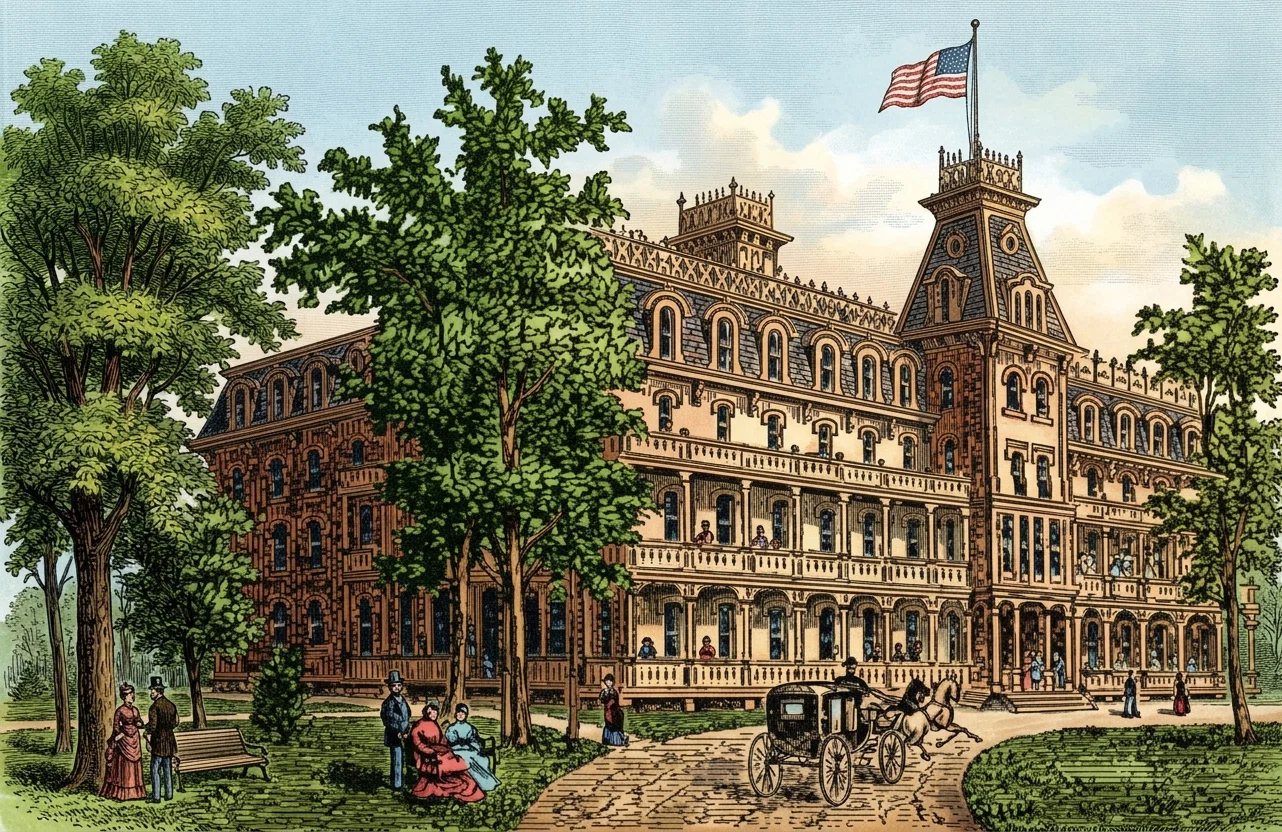
MEDICAL AND SURGICAL SANITARIUM,
Battle Creek. Michigan.
This institution, beautifully located in one of the most healthful cities of Michigan, is everywhere recognized as the
GREAT SANITARIUM OF THE WEST.
More than 4,000 patients successfully treated. The erection of new buildings and the addition of all the most approved remedial appliances known to the profession, have made it The Most Complete Institution of the Kind in America. All modern hotel conveniences furnished. Terms very reasonable.