As it is often the case that an illustration of some of the facilities provided for the prosecution of a specific enterprise, will convey to the mind a better idea of the advancement of that work than could be set forth by a long description in words, we present herewith some illustrations in the four lines of effort pursued by Seventh-day Adventists in the proclamation of the gospel. These are, the publishing work, educational work, health and temperance work, and missionary operations; all these, of course, being designed to be supplementary to the regular work of the ministry, with its auxiliary methods.
Springing from a conviction in the hearts of a few individuals that the word of God contained important truth for this time, which was being alarmingly overlooked in the religious world, this work began fifty-one years ago. With only a heart to believe, and a tongue to speak, without means, prestige, or popularity, the pioneers of this work took up their message without any idea of publishing houses, colleges, sanitariums, conferences, tract societies, religious-liberty organizations, Sabbath-schools, canvassing, city missions, and foreign stations. Feeling that they should at once make use of any means, however limited, and commence work with those nearest to them, they began to hold up before the people what they believed to be essential, practical duties, and prophetic truths important as to their bearing on the present, and thrilling as to their relation to the future, leaving to the Lord to open ways, provide facilities, and bring results, as to him should seem good. It soon became evident that there were those who were ready to bow to a “thus saith the Lord,” and believers began to appear; slowly at first, but more rapidly in recent years, till probably between fifty and sixty thousand are now adherents of the faith.
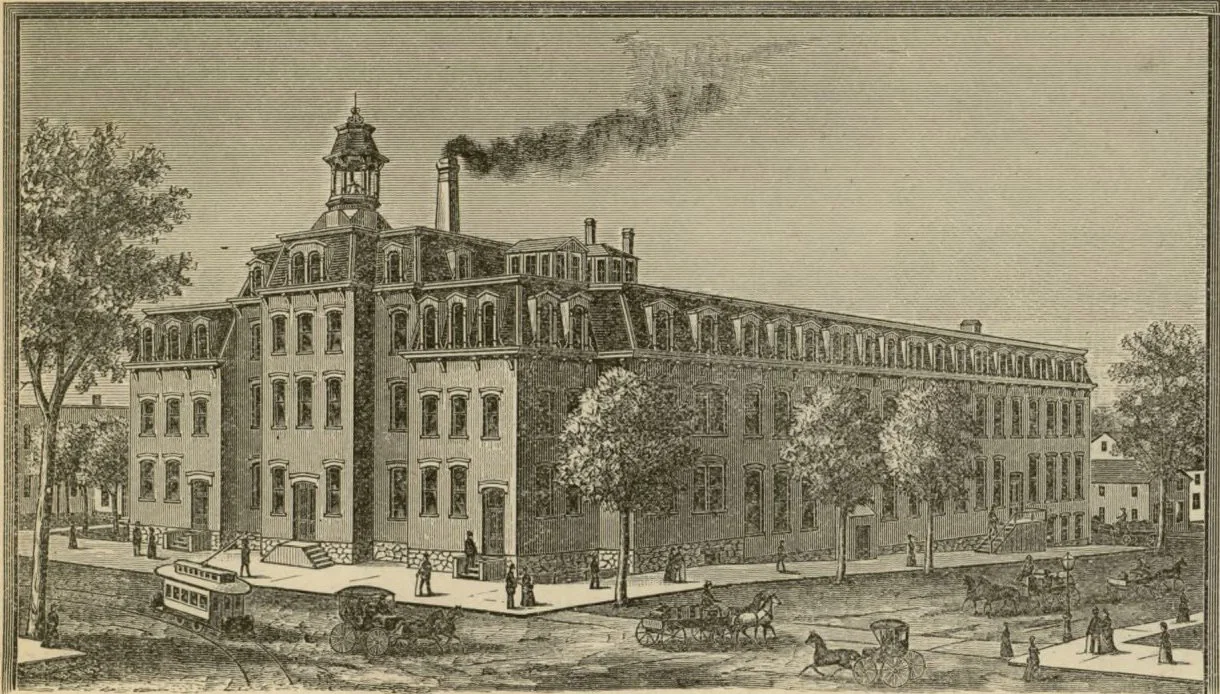
Front and Rear View of Main Buildings owned and occupied by the Pacific Press Publishing Co., Oakland, Cal.
The Publishing Enterprises.
Under this head we show only the two leading publishing houses connected with this work, the Central Publishing House, at Battle Creek, and the Pacific Press Publishing House, at Oakland, Cal. A few particulars concerning these may be in place.
The Seventh-day Adventist Publishing Association was incorporated May 3, 1861, and reincorporated, on essentially its original plan, in 1891. It controls three buildings in Battle Creek, the central one of which, completed in 1887, is shown in the illustration. It has a branch office in Atlanta, Ga. It contains sixty thousand square feet of floor space. Sixteen printing-presses are employed, with embossing-presses, elevators, book-binding, stereotyping, and electrotyping machinery, and an electric-light plant, all driven by a one-hundred-horse-power engine. The Office is fitted with the most modern and up-to-date variety of appliances for every branch of the publishing and book manufacturing business. When the writer first became connected with the Office, it was considered quite an event when a sixteen- or thirty-two-page tract could be issued; but to the present date, this Office alone has issued and circulated over six hundred million pages of books, tracts, and pamphlets. It has an unincumbered capital of two hundred and fifty thousand dollars.
The Pacific Seventh-day Adventist Publishing Association was incorporated April 1, 1875. The original building has been from time to time enlarged, till it now has a floor space of over fifty thousand square feet. The regular publications issued are a pioneer paper, weekly, the Signs of the Times, which it is hoped will soon reach a circulation of one hundred thousand copies; a youth's paper, Our Little Friend; and the Sabbath-School Quarterly. The office also does a large amount of book-work. It is the most complete printing and publishing establishment west of the Rocky Mountains. It has a branch office in New York City, from whence is issued the American Sentinel.
Besides these two incorporations, a publishing house has been established at 451 Holloway Road, London, for the English field, issuing a weekly paper, the Present Truth, which has a large and growing circulation.
Another large publishing house is established in Christiania, Norway, in a building of its own, Akersgaden 74, erected in 1886. It is fully equipped for issuing publications in all the Scandinavian languages, and is prospering in its business. Four periodicals and many books are sent forth from that office.
A printing and publishing house has been established in Australia, in which country missionary work was begun in 1884. A monthly journal called the Bible Echo and Signs of the Times was started in Melbourne in 1886. The office erected for the purpose is situated at 16 Best St., North Fitzroy, Melbourne, Victoria, Australia. In addition to the Echo, which is now a weekly, the Southern Sentinel is issued from that office.
The publication of a little paper in the Spanish language is commenced at Guadalajara, Mexico, under the auspices of the sanitarium and mission, opened in that city in 1894. This is designed to be the instrumentality through which to impart light and truth to the Spanish-speaking peoples in that and other countries.
A summary of this branch of the work shows six offices of publication and twenty-two periodicals in the leading languages of the world, with an aggregate monthly circulation of between three and four hundred thousand copies, bearing to the world the principles of the special message which we believe the time has come to proclaim with power.
The Educational Work.
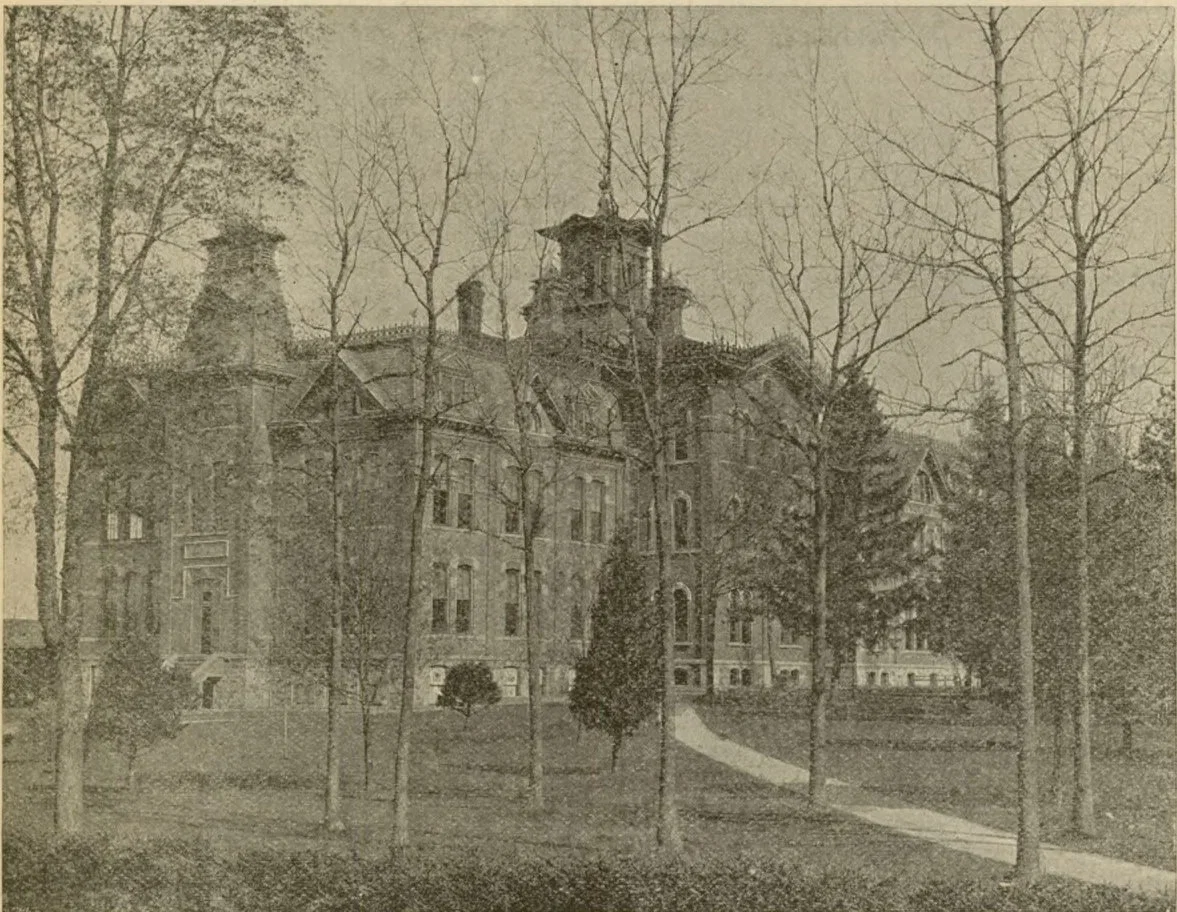
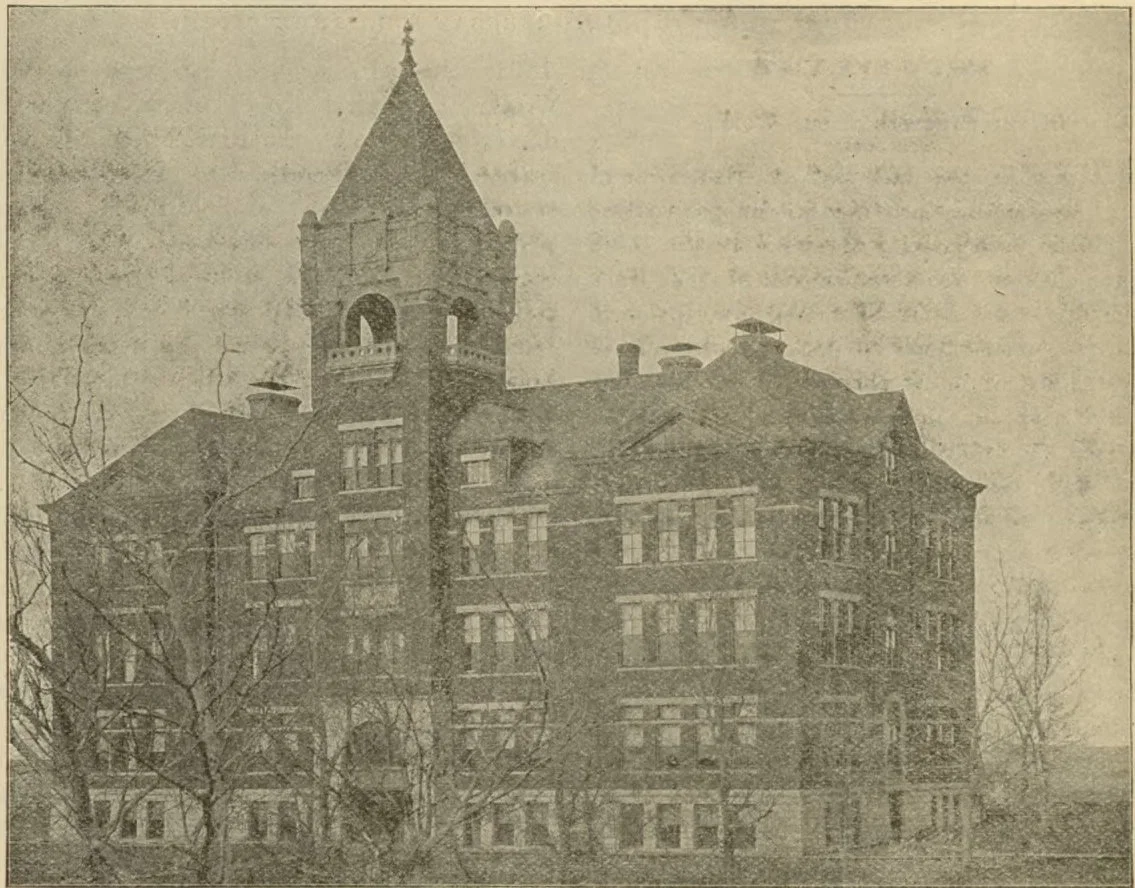
Under this head are presented the two leading educational institutions out of the fifteen colleges and academies already put in operation by Seventh-day Adventists, besides many smaller and local schools. The ones here shown are the Battle Creek College, and Union College, at College View, a suburb of Lincoln, Neb. The former was erected in 1874; the latter, in 1891.
Besides these, there are colleges at Healdsburg, Cal.; Walla Walla, Wash.; Claremont, near Cape Town, South Africa; Cooranbong, New524South Wales, Australia; academies at South Lancaster, Mass.; Mt. Vernon, O.; and Frederikshavn, Denmark; industrial schools at Keene, Tex.; and Huntsville, Ala. (called Oakwood), the latter for colored people; local schools at Beaconsfield, South Africa; Bonacca, Central America; Guadalajara, Mexico; Pitcairn Island; Minneapolis, Minn.; besides a number of church schools. The number of teachers employed averages about one hundred, and the number of students in attendance, some fifteen hundred.
BATTLE CREEK COLLEGE.
UNION COLLEGE, COLLEGE VIEW, NEB.
Health and Temperance Work.
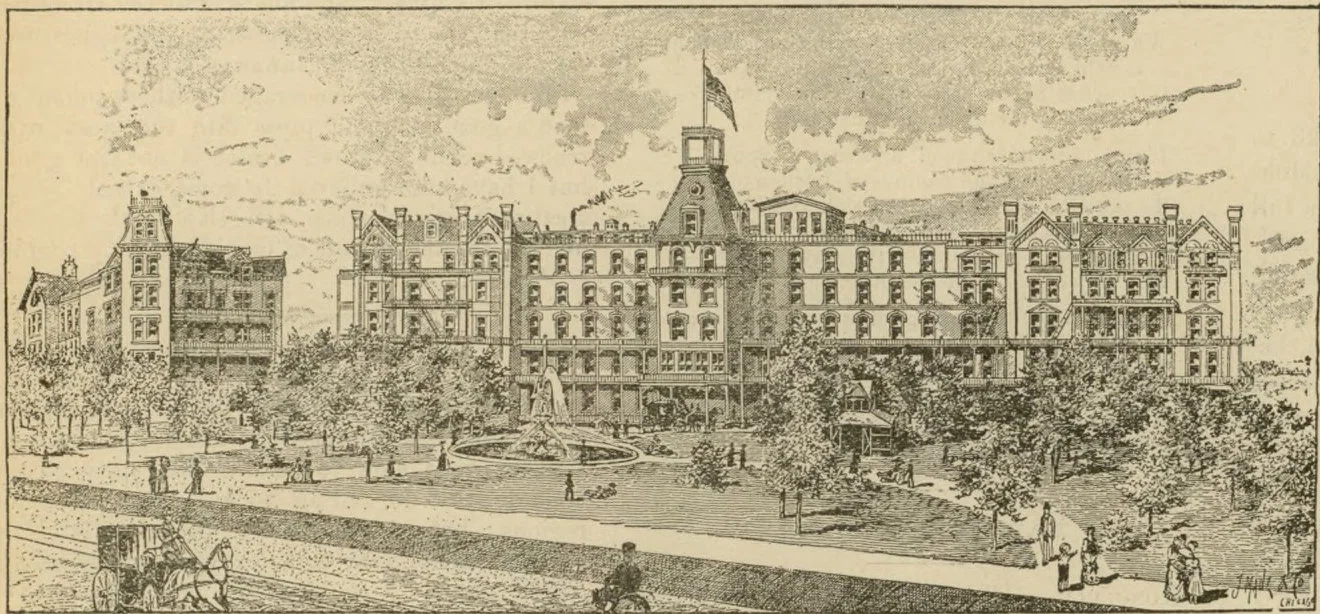
Interest in this branch of work was first aroused by the writings of Mrs. E. G. White, in an early stage of this cause. The first practical outcome of this interest was the purchase of a private dwelling in the western portion of the city of Battle Creek, and the opening of a Health Institute in 1866. In the same year a monthly periodical was started called the Health Reformer, and a company incorporated to manage the work. The publication is still continued under the name of Good Health, and the original institute, now known as the Battle Creek Sanitarium, by undergoing numerous enlargements, and being provided with new buildings, has grown to be the largest and best equipped sanitarium in the world. It stands at the head in employing the most scientific hygienic methods of treatment, is patronized by thousands yearly, and has gained a world-wide reputation as a place where there is to be found the most that can be done by human means for those who are laboring under the burden of infirmity and disease.
It is owing to the successful career of this institution that urgent calls have sprung up for the establishment of similar institutions in other places, resulting, up to the present date, in the establishment of sanitariums in St. Helena, Cal.; Lincoln, Neb.; Boulder, Colo.; Cape Town, South Africa; Guadalajara, Mexico; and Basel, Switzerland.
To give the work a broader scope, a “Medical Missionary and Benevolent Association” was organized in 1893, and a fully equipped Medical College was founded in Chicago, July 3, 1895. This association engages largely in undenominational charitable work among the needy, sick, and depraved in our large cities, endeavoring to follow the example of Him who went about doing good, and to put into practise the teaching of the New Testament, in its impartial philanthropic work. Other medical missions are already started in various cities and the islands of the Pacific Ocean; and a large number of people are in training to act as nurses and medical missionaries. Experience has shown that those who are qualified in this line find more ready access to the hearts of the people, and are better fitted for successful labor.
The Missionary Work.
As soon as Andrew and Philip had found the gospel, Andrew went first with the good news to his own brother Simon, and Philip to a friend called Nathanael, that he might enjoy the same. John 1:40, 41, 44, 45. So Seventh-day Adventists have ever been desirous to impart to others what they were persuaded was the important truth they had found in the Scriptures. But it at once appeared as a logical necessity that they could not confine themselves in this work to their own country. But more than this, the very prophecies which had called them out taught them that they had a message which was to go to “every nation, and kindred, and tongue, and people” (Rev. 14:6–12; 10:11), and which could not, therefore, be fulfilled till it was thus proclaimed in the most distant corners of the earth. They accordingly turned their attention to this subject, as soon as the work had obtained sufficient foothold in this country to provide, in a limited way, men and means for other fields.
Central Europe.—A beginning was made in Central Europe, where a small company, chiefly in Switzerland, between the years 1864 and 1869, adopted the views of Seventh-day Adventists, in quite a remarkable manner. An evangelist who was formerly connected with us, went into the employ of another denomination; and as he was a native of Europe, they sent him on an evangelical tour to that country. But he never renounced his Sabbath views, and wherever he taught the gospel, he taught, as a part of it, the Bible Sabbath. He made some converts in Switzerland, and these people having come to a knowledge and observance of the Sabbath, learned through this evangelist that there were Seventh-day Adventists in America. As he afterward proved unworthy, and gave up his work, these brethren then turned to America for help, and sent a delegate to the conference of 1874, to plead their cause. This appeal was responded to, and Elder J. N. Andrews was sent to that field. As soon as he obtained sufficient command of the French language, he commenced in Neuchâtel the publication of a small periodical called Les Signes des Temps, and also to issue tracts and leaflets in defense of the faith. The work soon assumed larger proportions, and was moved to the more favorable location of Basel, where a large building was erected for its further promotion. In this525building, work was carried on in greatly increased volume until 1895, when the Swiss authorities, becoming suddenly fired with the same spirit of Sunday bigotry which is rising all over the world, by an unjust application of a so-called factory law regarding Sunday work, closed the office. The quiet work inside could not be heard outside the building; and to know that it was going on, the police had to invade the premises to see for themselves. But right across the way is the public parade-ground, where military parades and target practise, with all their noise and confusion, are freely indulged in on Sunday. Nobody was at all troubled by this; but, as usual, the infinitesimal piety of the people was greatly “disturbed” by the quiet labor of the seventh-day people, inside their own building! “Great is [Sunday] Diana of the Ephesians!”
SANITARIUM, BATTLE CREEK, MICH.
Scandinavia.—Work was begun in the great Scandinavian field in 1877. A publishing association was formed, and a building for its use erected, as already noticed, in 1886. The first Seventh-day Adventist camp-meeting in Europe was held in Moss, Norway, in 1877. Conferences are now organized in Norway, Sweden, and Denmark. At Frederikshavn, Denmark, a large building has been erected, and an academy is in successful operation. This field embraces Finland, where the work is successfully going forward.
England.—The first church in this field was organized in Southampton in 1878. The periodical, Present Truth, published in London, has already been noticed. Health publications have been widely scattered, with marked effect, in that field. Ship missionary work is carried on with gratifying success in London, Liverpool, Southampton, and Cardiff. The work is expected to be soon self-supporting.
Australia.—The General Conference, in 1884, took steps to send laborers to this distant field. By the usual means of colporteur work, preaching, and the circulation of publications, fruit soon began to appear in the conversion of souls to Christ. The publishing office, soon established there, has already been mentioned, and also the school, which is expected to be a powerful auxiliary to the work. From this field the work naturally extended to Tasmania and New Zealand, in which latter country a flourishing conference has been established.
South Africa.—Some time previous to the year 1871, a Seventh-day Adventist went from America to the diamond fields of South Africa.
MISSIONARY SHIP. “PITCAIRN,” POLYNESIA.
“As his custom was,” he began to circulate literature teaching the views of this people. By the year named a number had accepted these views, and appealed to the General Conference of America for help. Laborers were sent to that country in 1887. The growth of the work there has demanded and secured the establishment of a college, an orphans’ home, and a sanitarium in Claremont, near Cape Town. In 1895 a paper called the South African Sentinel was started in both the English and Holland tongues. Far interior a mission has been started among the natives of Matabeleland; but it is just now interrupted by a war, not against the mission, but against all white men, on the part of contiguous tribes. It is hoped that this trouble will soon pass, and permit active missionary operations to be again resumed.
South America.—From the Protestant countries of the world, missionary operations have been spreading rapidly during the past few years into Roman Catholic states and heathen lands; and five of the South American states have been entered by our own workers. These countries are Brazil, Argentino, Chile, Colombia, and British Guiana. In all these fields the colporteur and canvasser have been the forerunners of the missionary workers. Medical missionaries are laboring in connection with the work in Georgetown, British Guiana.
West Indies.—In all the groups of these islands, work has been entered upon. Jamaica is the headquarters for the Greater Antilles. From this center other islands have been entered, believers brought to Christ, and churches established. In the Lesser Antilles, the centers of the work are Antigua, Barbadoes, and Trinidad. In the Bermudas and the Bahamas, laborers are actively engaged. In the Bay Islands churches have been established, church buildings erected, and a mission school, with an attendance of about one hundred bright pupils, has been for some time successfully carried on.
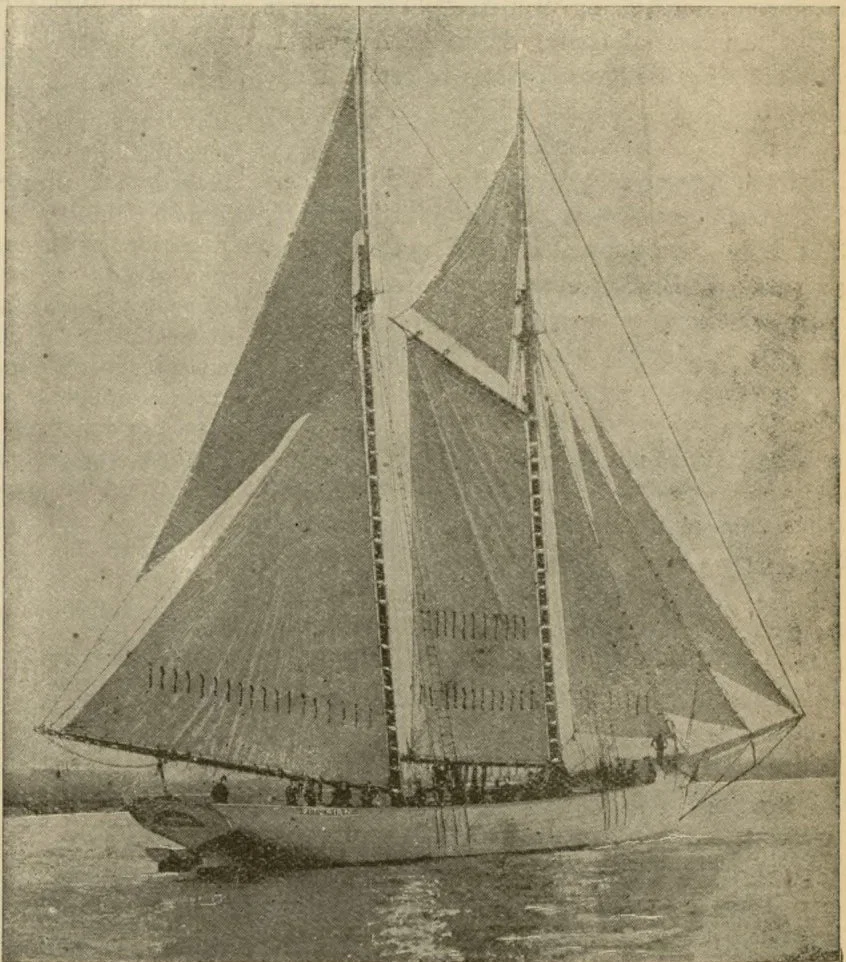
Polynesia.—Our work in the South Pacific Ocean began at the island of Pitcairn. J. I. Tay, from California, visited that island in 1886; and all its inhabitants, numbering over one hundred, embraced the faith. A missionary ship called the “Pitcairn,” a view of which is given, was subsequently built for labor among the islands. It has already made several successful voyages. Missionaries are now laboring in the Polynesian field, in the different islands and groups, as follows: Hawaiian Islands, Society Islands, Australian, Navigator's, Samoa, Norfolk, and Pitcairn. In Samoa and Raratonga, physicians are located as medical missionaries. On Pitcairn Island a training-school for native laborers is being conducted. Teachers are also occupied on other islands.
Mexico.—Work was commenced in this republic in 1894, with headquarters in Guadalajara, a city of over one hundred thousand inhabitants. Here a school and medical mission is in successful operation, provided with competent physicians and trained nurses. A sanitarium has also been erected. The work is extending into adjoining towns and villages.
The Far East.—Work similar to that carried on in Mexico is now being introduced in Calcutta, India. Physicians, nurses, and evangelists are already there, and a school is in operation. Indications promise that the work will be as successful there as in countries of the West. Ship missionary work has been carried on for several years at Hong Kong, China, with quite gratifying results. In Zambesia, interior Africa, a mission was established in 1895 for the benefit of the natives. Medical missionary work is also an important factor here. Akin to this mission is one established at Cape Coast Castle, for the people of the Gold Coast. While meeting many obstacles and526suffering many adversities, the missionaries there, by hygienic living have thus far escaped the deadly diseases which take off so large a proportion of the missionaries who go to that field. They are putting forth earnest and persistent effort, which promises to bear encouraging fruit in due time.
Thus it will be seen that the proclamation of the soon coming of the King is belting the world; and the sun never sets on the work of that closing message of mercy which is symbolized by the three angels of Revelation 14.
U. S.
HAWAIIAN ISLANDS.
By E. H. Gates
HONOLULU.—Though some time has elapsed since we have reported from this field, it has not been from a lack of interest, nor from a desire to withhold from the readers of our church paper any items of news.
Though the work goes very slowly in this field, we have had many things to encourage us in the last few months. We had some very interesting meetings on the fast-days, though we had not received the readings that were sent out to the different churches. Though no call was made for donations at the meetings, a pledge of ten dollars was given. A week or two later the readings came, and were read to the church. All seemed to realize the importance of the thrilling truths contained in them, and at the close of the meetings an opportunity was given for any who wished to make donations to the general cause, though no one was pressed to do anything. A little over twenty-four dollars was received in cash and pledges, which we considered good under the circumstances.
The Chinese school is prospering, and two of the Chinese boys have become Sabbath-keepers. A few others are interested in the Bible, and it is hoped that they will yet obey the Lord. Within a few weeks we have been made glad by the arrival of Dr. P. S. Kellogg and family, with Brother and Sister Lingel, who will act as nurses. The people of the place are generally favorable to the idea of having a sanitarium in their midst, and we believe they will give it their support. Some of the leading men of the town have offered to give us some good places a few miles in the country for sanitarium sites; but we have decided to start the work in the town, and thus have time to study the situation before launching out on too large a scale. Brother Covell also accompanied Dr. Kellogg, and will solicit orders for the health publications. Everything looks favorable for the prosperity of our medical work.
Lately the Lord has been encouraging us by adding to our numbers. A few weeks ago we met a half-Hawaiian lady who had, several years before, attended some of the meetings of our people in the city, but who had been living since then in one of the other islands of the group. At an excellent meeting held a few weeks ago, she gave herself to the Lord and requested baptism. One of the young Chinese, who has been observing the Sabbath for some time, also requested to be baptized and admitted to the church. During the following week, another of the Chinese decided to follow the Saviour in baptism, also the daughter of one of our sisters, and a son of one of the brethren. The baptism of these dear souls was an interesting and impressive occasion, especially so as these Chinese youth were the first-fruits of the work that Brother and Sister Brand have been doing in this field. They have taken up the cross under great difficulties and in the midst of much opposition, but I am certain they are stronger for the trials. One of these young men has a fairly good English education, and is assisting in the Chinese school. They both have a burden to do something for their own countrymen in the great empire of China. The husband of the Hawaiian lady referred to is a member of the legislature, and is an intelligent Hawaiian lawyer.
We feel greatly encouraged at these tokens of God’s goodness, and press into the work with renewed zeal. My own health is not yet good, but I have been relieved to some extent by the treatment given since Dr. Kellogg’s arrival. We ask for the prayers of God’s believing people.
June 21. E. H. GATES.
ARGENTINA
By Jean Vuilleumier
Early in March I took a trip up to the northern part of the province of Santa Fé to visit two or three families of Waldenses that have been keeping the Sabbath for several years. They wished to be fully instructed and baptized, but for several reasons, this had to be deferred until two or three months later. Meanwhile I have labored mainly in the colony of Esperanza, taking a trip now and then in some neighboring colony. One Swiss family was added to our number at Esperanza.
Drunkenness is quite general here. All kinds of alcoholic drinks are customary if not fashionable, and thus teetotalism is one of the hardest victories to gain by some of those who embrace the truth. I am glad that the third angel’s message is prepared to take a clear stand against the dread scourge of alcohol in this country. One man who has been in the habit of getting drunk when he goes to town, is struggling pitifully against this appetite. Since signing the pledge, at his own request, he has fallen several times when meeting with old friends. It was rather a new office for me to hunt him up in the saloons, and take him out by the arm, spilling the last glass of liquor on the street. Meeting the brandy demon face to face, shows him to527have an almost unlimited power on a man’s will.
There are quite a number of Protestants, especially Baptists, in and around this colony, who are interested in the truth. Their former pastor, now in Buenos Ayres, to whose church our first Sabbath-keeping families belonged ten years ago, is busy circulating a tract against the Sabbath. I thought it necessary to write a reply, which was kindly translated into Spanish by a young teacher interested in the truth.
I am now again on my way to the north of the province, the region of wildcats, leopards, ostriches, deer, serpents nine or ten feet long, crocodiles, spiders five to ten inches long, and Indian horse-robbers. Cattle raising is the main business. Some peanuts (for oil), sugarcane, tobacco, corn, cotton, and sweet potatoes are raised. The latter grow sometimes to weigh from ten to twenty pounds. Oranges and peaches grow nicely. Ironwood and other kinds of wood equally hard and heavy and of beautiful colors, are the common kinds in the forests.
On my journey on the cars, I obtained from a Swiss settler a clue to three Sabbath-keepers who have sprung up on the track of the canvasser in a neighboring colony. Recently one of our canvassers found two families keeping the Sabbath in Rosario, the second largest city in Argentina. One of these families had been keeping the Sabbath for several years.
May 15. JEAN VUILLEUMIER.
THE TEXAS CAMP-MEETING.
By Ole Andres Olsen
This meeting was held at Keene, July 23 to August 3. We did not reach the place till Monday, July 27, when we found the meeting in full progress, with a large attendance. The brethren stated that it was the largest camp-meeting ever held in Texas, and they estimated that there were a thousand people in attendance, besides those who lived in the place. The weather was very warm and dry, which made it somewhat oppressive during the middle of the day.
All the meetings were characterized by much earnestness, and the speakers enjoyed freedom in preaching the word, which was very practical, and well received. Many responded with hearty confessions. Many had robbed God in tithes, gifts, and offerings; others had encouraged a murmuring, criticizing spirit, which always brings leanness of soul. Sabbath, August 1, was a day of great blessings to the camp. The Spirit of God wrought mightily, and many found peace in repentance.
The laborers present, aside from the members of the conference, were Elders W. S. Hyatt, E. G. Olsen, and the writer. Elders O. Mc Reynolds and J. B. Beckner, and Professor C. C. Lewis, who have recently come to connect with the work in the conference, were also present. During the past year the work in this State has made some progress. Four new churches have been organized, and there are several companies ready for organization.
The academy building, which was under consideration last year, is now up, and so far finished that some parts have already been used. This is a matter of satisfaction to all.
The business of the conference, tract society, and Sabbath-school association passed off harmoniously. Several important questions relating to the work were very fully discussed, and we trust that some of the principles underlying the work of God will be better understood and more faithfully practised hereafter. Elder O. Mc Reynolds was elected president of the conference for the coming year.
The Texas Conference is an important field, and we are glad they can start out this year with a strong corps of laborers. May the blessing of God attend their efforts in a special manner, is our prayer.
The educational interests and the health and temperance work received attention during the meeting. Texas has a host of young people who are bright and intelligent. These should receive a training for work in the service and the work of God. May the parents, and also the church and conference officers be fully awake to the importance of this responsibility.
My son, A. B. Olsen, and myself left the place early Sunday morning, August 2, to fill our appointment at Vicksburg, Miss.
O. A. O.
THE OTHER SIDE.
We go our ways in life too much alone,
We hold ourselves too far from all our kind;
Too often we are dead to sigh and moan,
Too often to the weak and helpless, blind;
Too often where distress and want abide,
We turn and pass upon the other side.
The other side is trodden smooth and worn
By footsteps passing idly all the day;
Where lie the suffering ones that faint and mourn
Is seldom more than an untrodden way.
Our selfish hearts are for our feet the guide—
They lead us by upon the other side.
It should be ours the oil and wine to pour
Into the bleeding wounds of stricken ones;
To take the smitten and the sick and sore
And bear them where a stream of blessing runs.
Instead, we look about,— the way is wide,—
And so we pass upon the other side.
O friends and brothers gliding down the years;
Humanity is calling each and all
In tender accents, born of grief and tears!
I pray you, listen to the thrilling call!
You cannot, in your cold and selfish pride,
Pass guiltless by upon the other side.
— Selected.
Bahama Islands
By Charles F. Parmele
SINCE my report last November, the work in this colony has been moving along, but it has at times seemed slow to us. I have spent all the time I could in selling books in the pineapple regions; but as prices have been low, and returns of money very slow, canvassing has been a heavy drag. Now that the hurricane months have come, the people will stay at home and work their land, and so canvassing will be still less successful until about December, when settlements for pineapples will be made, and winter guests arrive, thus making times better.
We have found the most favorable opening for work at Rock Sound, Eleuthera. As the public school at that place is much crowded, and a private school desired, we felt that God was opening the way for us to get a foothold there. So last April we moved there, and Mrs. Parmele opened a private school, which she has now taught three months, with marked success. She has a vacation of three weeks just now, and has come to Nassau with me. Many of the scholars were sad when we departed, and expressed the fear that we would not return. But our plans for the future are to continue the school, and I shall for a few weeks hold meetings there. A good interest has already been awakened by open-air meetings. The one Sabbath-keeping family in Nassau is of good courage.