The Youth’s Instructor, Vol. 47, No. 24.

VOICE OF THE MOUNTAINS
Earlier text: VOICE OF THE MOUNTAINS

WEAVING

In this lesson we will learn something about cloth, a fabric woven from cotton, wool, linen, or silk. Cotton cloth is the cheapest, and silk is the most expensive. From cotton are made many qualities of bleached, half-bleached, and unbleached cloth, also calicoes, ginghams, muslins, nainsooks, cambric, etc. From wool are made flannels, cashmeres, and many other kinds of dress-goods. Linen cloth is made in all grades, from the finest lawn to heavy canvas. The threads of the cloth are called the warp and the woof. Warp is prepared on one machine, and woof on another. The warp is made stronger than the woof, as a greater strain comes on it. For this reason any part of a garment requiring strength should be cut lengthwise of the cloth. After the warp and woof are prepared, they are woven into cloth on a machine called a loom, great care being taken to keep every thread in its proper position. In weaving, the warp-threads are first passed from the “warp-beam,” at the back of the loom, to the “cloth-beam,” in front, on which the cloth is to be wound. Plain weaving is done by passing the woof in a shuttle alternately over and under each thread of the warp. This may readily be seen by unraveling a piece of cotton cloth.
The selvedge, or “self-edge,” of the goods is formed by small loops made of woof thread as it is turned to be woven back. It should never be torn, as it strains the goods to tear the warp-threads at the selvedge, where they are laid close together for strength.
Life is sometimes compared to a loom, and time is called the weaver. The character is the marvelous fabric woven in this loom, which goes on with its work day after day, never stopping a moment. Earnestness, helpfulness, sincerity, unselfishness, gentleness, purity, patience,—all these virtues shine like golden threads in the wonderful robe of character.
There is another robe that each of us may wear if we will,—the spotless white robe of righteousness. This is the gift of Jesus, and is, indeed, his own pure character, which he will give to all who believe on him. The finest cloth that men can make will become soiled and frayed, lose its freshness and beauty, and wear out or fall to pieces; but this shining robe will last forever.
Have all your material ready for our next lesson, so we can begin our sewing. The little sewing-bag will be our first work.
NELLIE V. DICE.

OUR LETTER FROM MEXICO.

GUADALAJARA, JALISCO, MEXICO, May 23, 1899.
Dear Children of the “Instructor.”
YOUR editor has asked me to write something about Mexico for you, and I thought you would enjoy a letter occasionally about the people of this land and their customs. There are many children in this city, and in other cities of this republic, who call me “Tia Anita,” so I shall sign this name, which means “Aunt Anita” to my letters to you. My little Mexican nieces and nephews are all dear to me; and I am sure you would love them if you knew them. Many of them come from homes that are very poor, and their lives contain but few of the joys known to American girls and boys.
One of their chief delights is to spend a day in the country. A few weeks ago we all went on burros to a cotton-mill eight miles from the city. The mill is situated on the banks of a small river, and is surrounded by a beautiful grove of zapote trees. A large waterfall turns the wheels of the mill. The children enjoyed every moment of the day; and I am sure you would have laughed to see the burros helping themselves to our dinner.
On our way home some of the burros wanted to rest; and when we least expected it, some of us would be rolling in the dust. The burro needs no bridle to guide him, but is driven along by a man whose business it is to drive burros. The country is threaded by narrow burro paths; and when once the contrary little animal is in this beaten path, it is almost impossible to turn him aside. The saddles used on burros look something like sawhorses, with straps to support the back. With plenty of pillows, they can be made fairly comfortable. The Mexican children prefer the pack to the saddle, but I always call for the saddle.
In my next I will tell you of a visit to a beautiful cañon not far from this city.
TIA ANITA.

IN A MINUTE.

ETHEL was out on the long plank wharf when the dinner-bell rang. She was feeding the cunning little baby ducks with cracker crumbs. “I’ll go in a minute,” she said to herself, as she broke another cracker into tiny pieces. But the baby ducks were hungry; and it was such fun to feed them that Ethel forgot all about her dinner and the big brass dinner-bell. She had only one cracker left when Bruno came running down the wharf to see her.
The old mother duck spied him as he came bouncing over the planks.
“Quack!” she called, loudly; and what do you think? Every one of those baby ducklings scrambled and scrambled, and went into the water with a splash!
“Quack!” said the mother duck again, and all the little duckies swam hurriedly after her, and disappeared among the rushes that grew by the edge of the pond.
“Why!” exclaimed Ethel, in astonishment, “they didn’t wait to gobble another piece. They minded their mother the very first minute she called them!”
Very still she stood for a second, thinking; and then she gave her basket to Bruno, and ran quickly into the house.
“Late, as usual,” said brother Hal, as Ethel came into the dining-room, and took her seat at the table.
“It’s twenty minutes, instead of one, that you waited this noon,” he continued, as he glanced up at the clock.
“But it’s the last time I’ll be late,” said Ethel, decidedly, “’cause—’cause—it is.”
And Ethel kept her word. She had learned her lesson, and learned it well, and nobody but the big white mother-duck knew who taught it to her.—Margaret Dane, in Youth’s Companion.

A MOTHER ELEPHANT AND HER BABY.

I WONDER if any of our little people have seen a mother elephant put her baby to bed?
I saw it once, and it was such a pretty sight that I should like to tell you about it. It was sunset time in summer, and the gentler animals of the Zoo in one of the great cities of the world were in yards and folds outside the buildings. When I reached the enclosure belonging to the mother elephant, many men, women, and children were standing along the fence. They were very quiet, as if they were afraid of disturbing some one. As I stopped by the fence, and looked into the yard, a small girl touched my skirt, pursed up her mouth, and, giving me a solemn look of warning, pointed to the elephants.
Mama Elephant had her trunk around her baby's neck, and seemed to be whispering to him, and encouraging him, as he rubbed his head against her knee. He stood a moment, then raised his head, flapped his big little ears, gave a flirt of his little cord of a tail, and trotted off by his mother's side to the center of the yard. There she left him, and went to a pile of hay that stood in a corner. She then took up the hay, bunch by bunch, with her trunk, and spread it around her child, who had not stirred from the spot where she had left him.
When the hay had been all spread around the baby, the mother stepped into the center, and began to tread the hay down with her feet, the little one following her motions exactly, till a perfectly even space had been trodden down. Then Mama Elephant stepped out again, went to the further side of the yard, and fumbled about the ground with her trunk. As she came back, her baby flourished his small trunk and flapped his ears, making at the same time a soft, grunting sound, as if he knew what was coming, and liked it.
This time the old elephant stood beside the baby's bed, and, beginning with the back of his ears, blew a small cloud of fine dust into the folds of skin behind them; then into those around his legs, and under him, till he was thoroughly powdered for the night. This done, she again put her trunk about his body, and the little fellow dropped to his knees on the carefully trodden bed. After a few soft pats and a few soft grunts from his mother, he lay down just as a well-trained child of the elephant family should lie.
The mother's work, however, was not yet done. She took the hay up delicately from the edge of the bed, and began tossing it lightly along his sides and up toward his back, till its ridge no longer showed.
When all was done, the small girl who had warned me not to disturb the proceedings heaved a great sigh, and turning to me, said: “I should just like to know what they do it for!” So I told her, explaining the habit which wild animals have of treading their beds to make sure there are no snakes in the grass; the necessity of dust-powdering the young, whose skin is so tender in the folds, and who are troubled by insects; the piling up of the dry grass around them to conceal them from the possible hunter. “My! don't they know a lot! More'n some folks, I fancy!” said the little girl. “And she never punched nor pushed him, neither, though he was n't very quick,” she added, speaking to a tired-looking woman who stood by, smiling. “No, dear,” said the woman; “the elephant has but one child at a time to put to bed.”—Louise Delisle Radzinski, in Outlook.

“JESS GOINGTO.”

“JESS GOINGTO!” I heard some one say. “Why, who is she? Do you know her? Tell us what she is like.”
Yes, I know her only too well. Her name is often on the lips of certain of my young friends; but I am sorry to say that my opinion of her is not very good.
“Have you washed your face yet, Kitty?”
“No, mother, but I’m Jess Goingto.”
Kitty’s features present an unmistakably soiled aspect for perhaps an hour afterward.
“Put some coal on the fire, Harry.”
“Yes, mother, I’m Jess Goingto.”
Ten minutes later the fire goes out.
“Water those cuttings for me, Tom, before you forget it. They are very dry.”
“Yes, father, I’m Jess Goingto.”
Two hours later father’s choice cuttings droop and die. Peculiar, is n’t it?
Another bad habit which results from association with Miss Jess Goingto is the making of idle excuses.
“Here’s a dreadful mess you have left from your fret-work; Herbert,” says his mother. “Why did n’t you clear it away?”
“I was Jess Goingto, mother, only Annie called me, and then I forgot.”
“I believe you have not given your bird any fresh water this morning, Nellie. How thoughtless of you!”
“No, mother; I was Jess Goingto when Lucy came for me, and I had n’t time.”
Never is the name of Jess Goingto associated with duties done, kindness performed, or requests obeyed; but always do we hear of her in connection with heedlessness, idleness, disobedience, and neglect. Many are the scrapes into which those fall who are much in her society; and many tears, late and unavailing, does she cause them to shed.—S. S. Call.

DAYS AND NIGHTS.

If days were only twice as long, ’T would be a splendid thing; ’Cause, don’t you know, ’fore you’re quite dressed, The breakfast bell will ring; And then ’tis time to go to school; And then run home at noon, And back to school; and four o’clock ’Most always comes real soon; And then you just begin to play, And then ’tis time for tea; And then, in such a little while, Your bedtime comes, you see.
If nights were only twice as long, ’T would be a splendid thing! ’Cause, don’t you know, when you’re tucked up, Sometimes your mother ’ll sing: And first you lie and watch the stars, Or maybe there’s a moon; And then you get all nice and warm And sleepy pretty soon; And then, perhaps, you shut your eyes; And then your mother ’ll say, “Have I a little boy that means To lie in bed all day?” — Elizabeth Lincoln Gould.
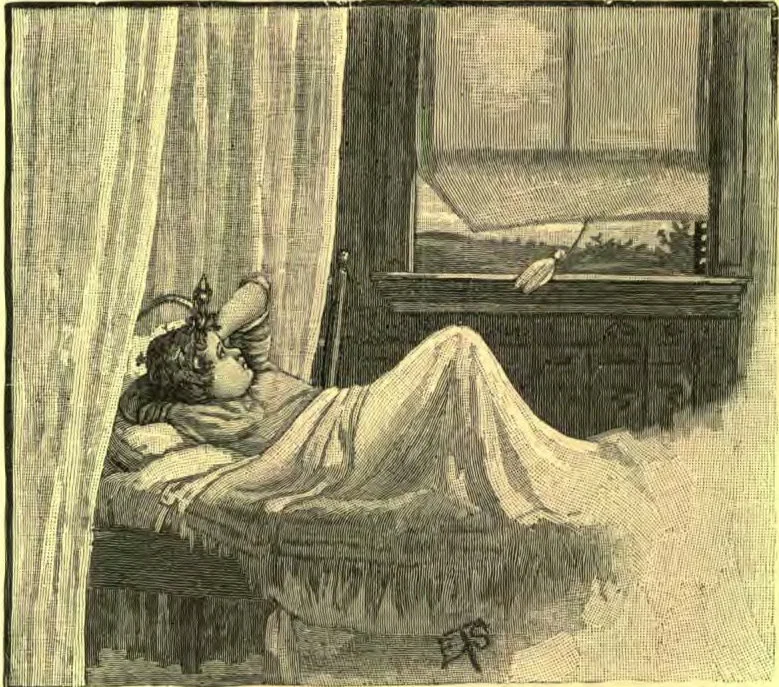
“IF NIGHTS WERE ONLY TWICE AS LONG”!

Notes and Comments

Increase of Riches.— J. D. Rockefeller is said to be worth over $250,000,000, and 70,000 people are dependent upon him for their labor and bread. This sum has all been amassed within forty years. In 1855 he was a poor man. Ten years later he was worth $5,000, and in 1898 this had increased to over $250,000,000. He controls 20,000 miles of oil-pipe lines; owns 200 steamers; and has 40,000 oil-tanks, 3,500 tank-cars, and 7,000 wagons for delivering the oil to customers. The heaping up of treasure is one of the signs of the last days. After warning the rich of what will come upon those who have increased their goods by fraud, the apostle adds this word for the comfort of the little flock: “Be patient therefore, brethren, unto the coming of the Lord; . . . for the coming of the Lord draweth nigh.”

Notes and Comments

Reformed Spelling.— Superintendent Andrews, of the Chicago public schools, has sent to the school principals of that city a list of eleven words, the orthography of which has been “reformed” for use in the schools. They are: Program (programme); tho (though); thoro (thorough); thorofare (throughfare); thruout (throughout); thru (through); catalog (catalogue); prolog (prologue); decalog (decalogue); demagog (demagogue); and pedagog (pedagogue). Many attempts have been made to secure uniformity and simplicity in spelling; but there seem to be as many minds in the matter as there are absurdities in the language. A Pennsylvania school journal terms the list “deformed spelling,” and says that “it is too much like hearing a familiar song with a false note here and there, or the time of some notes changed, or frequent discords instead of harmony.” It will doubtless be a long time before these spellings, with the exception of the first in the list, become general.
The Possibilities of Telegraphy.— In considering the wonderful results of the invention of the telephone and of wireless telegraphy, some may have lost sight of the surprising things that can be attained by means of the common Morse system. An incident that happened June 1 will doubtless surprise some at first thought. Elder G. A. Irwin, who recently left this city for Australia, arrived on that day at his destination, and at noon sent messages to his friends here. Being sent from our antipodes, the messages reached this country some time in the night, and were held till the offices were opened in the morning; but for all that they were received before eight o’clock on the morning of June 1, or more than four hours before they were sent, if the time of day is considered. The explanation is this: Noon of the day in question started at the day-line, and traveled west. It reached Australia in a few hours, but it took more than half a day for it to pass over Asia, Europe, and the Atlantic, and arrive in Battle Creek. A telegraphic message makes the circuit of the globe in a few minutes.

THE TWELVE SENT OUT: DEATH OF JOHN THE BAPTIST; CAPERNAUM

THE SABBATH-SCHOOL LESSON.—NO. 13.
(June 24, 1899.)

THE TWELVE SENT OUT: DEATH OF JOHN THE BAPTIST; CAPERNAUM.

Lesson Scriptures.—Matt. 10:1–39; Mark 6:7–29.
Memory Verse.—Matt. 10:32.

QUESTIONS.

After calling together his twelve disciples, what power did Christ give them? Matt. 10:1. To whom were they sent? Vs. 5, 6. What was their mission? Vs. 7, 8. In how large companies were they sent? Mark 6:7. What provision were they not to make for their journey? Luke 9:3. What further instruction was given with reference to their conduct? Vs. 4, 5. What was the burden of their message? V. 6; note 1. What position did Jesus say his disciples would occupy in the world? Matt. 10:16–18. When called to answer for their faith, what were they instructed to do? Vs. 19, 20. What when severely persecuted? Vs. 21, 22. What assurance did he give them of the Father's care? Vs. 28–31. After further exhortation, what did Jesus say with reference to the character of his work? Vs. 34–39. After receiving this instruction, what did the disciples do? Mark 6:12. What success did they have? V. 13. What king heard of the miracles of Christ and his disciples? V. 14. How did he feel, and why? Luke 9:7, 8. What did Herod desire to do? V. 9. At what decision did he finally arrive? Mark 6:16. What led Herod to imprison John the Baptist? Vs. 17–19. What prevented John's death for a time? Vs. 19, 20. Relate the circumstances under which the king was induced to consent to the death of this holy man. Vs. 21–28. What was done with the headless body of the prophet? V. 29; note 3.

NOTES.

1. They were to go preaching the gospel, and healing everywhere. This was the work of Christ himself. The disciples were his representatives, possessing, through faith, the same powers that he exercised. God's people to-day have principles that are alike effective in supplying the needs of soul and body. No man can fully follow in the footsteps of the Master without being something of a medical missionary.
2. On this first tour the disciples were to go only where Jesus had been before them, and had made friends. Their preparation for the journey was to be of the simplest kind. Nothing must be allowed to divert their minds from their great work, or in any way excite opposition and close the door for further labor. They were not to adopt the dress of the religious teachers, nor use any guise in apparel to distinguish them from the humble peasants. They were not to enter into the synagogues and call the people together for public service; their efforts were to be put forth in house-to-house labor. They were not to waste time in needless salutations, or in going from house to house for entertainment. But in every place they were to accept the hospitality of those who were worthy, those who would welcome them heartily, as if entertaining Christ himself.—“The Desire of Ages,” page 351.
3. Tradition says that Herodias ordered the body of the apostle to be thrown over the battlements of the palace for dogs and vultures to devour.
4. To many minds a deep mystery surrounds the fate of John the Baptist. They question why he should have been left to languish and die in prison. The mystery of this dark providence our human vision can not penetrate; but it can never shake our confidence in God when we remember that John was but a sharer in the sufferings of Christ. All who follow Christ will wear the crown of sacrifice. They will surely be misunderstood by selfish men, and will be made a mark for the fierce assaults of Satan. It is this principle of self-sacrifice that his kingdom is established to destroy, and he will war against it wherever manifested. . . . God never leads his children otherwise than they would choose to be led, if they could see the end from the beginning, and discern the glory of the purpose which they are fulfilling as co-workers with him. Not Enoch, who was translated to heaven, not Elijah, who ascended in a chariot of fire, was greater or more honored than John the Baptist, who perished alone in the dungeon. “Unto you it is given in the behalf of Christ, not only to believe on him, but also to suffer for his sake.” And of all the gifts that Heaven can bestow upon men, fellowship with Christ in his sufferings is the most weighty trust and the highest honor.—Id., pages 223–225.
INTERNATIONAL LESSON.—NO. 13.
(June 25, 1899.)

SECOND QUARTERLY REVIEW.

Topic.—Jesus our Saviour.
Lesson Scriptures.—John 11:32 to 20:20; Col. 3:1–15.
Golden Text.—1 Tim. 1:15.

REVIEW QUESTIONS.

Time.—How long a time is covered by the lessons of this quarter? How many days had Lazarus been dead when he was raised? How long before his crucifixion did Mary anoint Jesus? How many hours did Jesus hang on the cross? How long did he stay in the grave? How long did the body of the risen Christ remain on earth?
Places.—In what village did the family of Lazarus live? Where did Jesus and the twelve observe the Passover feast? Where was the discourse of John 14 to 16 given? Where was Jesus arrested? Where was he first tried? Where was his civil trial held? Where was he crucified?
Persons.—Name the members of the family of Bethany. Which disciple said that Jesus should not wash his feet? Which one said he knew not whether Christ was going? Who asked for a vision of the Heavenly Father? Which disciple betrayed Jesus? Which one denied him? Which one stood by him to the last? To whom did the risen Christ first appear? Which disciple first fully believed that Christ still lived? Who wrote the letter to the Colossians?
Customs.—How did Jews prepare the dead for burial? What tombs did they use? What use of ointments is common in the East? How did people of Jesus' day gather around a table for a meal? What custom of feet-washing prevailed in Jesus' time? What minor matter were Jews very punctilious about when they were working to have Pilate order the crucifixion of Jesus?
Teachings.—What is the quarter's topic? Why did Jesus come to this world? What did his coming evidence? Can they who love Jesus ever be truly separated from one another? Why is the story of Mary's love-gift to Jesus preserved for us? Of what is true humility an evidence? How is Jesus the way, the truth, and the life? Who carries on Jesus' work now? What is the work of the Holy Spirit? How closely does Jesus wish to unite us with himself? On what charge was Jesus condemned by the Jewish court? On what charge was he tried by the Romans? What was Pilate's verdict? Why did Jesus suffer crucifixion? What tears does the risen Jesus wipe away? Where do the hearts of those who love Jesus now have the privilege of living? What can they put off? What shall they put on?

NOTES.

1. The story of this quarter is indeed the story of love. We see how love can conquer death; that it counts no cost; stoops to help the lowest; opens the way to heaven, and the door of the heart to the Comforter. We find how terrible it is to pretend to love, and not love,—to promise to love, yet fail when hearts need love most. The power of true love—how plain it is made to us! How it crowns the cross with glory! How it will give to us the life that bears fruit, and the secret of the highest Christian experience! Let us sum up the lessons in words never to forget: To love not, is to live a hard, cruel life; to love the low and base is to sink to sin and perdition; to seem to love, yet not love, is the basest sin; to love others is to be like Jesus, who loved us so much that he died for us; to love him is to be linked with him, to share his power, usefulness, joy, life, comfort, and be forever with him in the “many mansions.” The lesson of lessons is that not money, nor place, nor creed, nor character is the measure of a man, but love.—Rev. Fisher.
2. The lessons of the quarter open with a manifestation of Christ's power over death, in raising Lazarus from the grave. The closing lessons demonstrate the same fact in his own resurrection, and in his power to give to believers a new spiritual existence.
3. The second lesson, the anointing by Mary, opens up the intuitions of love, or the revealing of God to a loving, fully consecrated soul. No one but Mary understood the sacred secret that Jesus had sought to reveal,—his death for men. The broken alabaster box, the ointment poured forth, the fragrance that betrayed its source and quality, and returned upon the head of Mary,—all these were symbolic of the divine love, and unfolded the plan of salvation, even to that last wondrous miracle,—the transformation of human character into the divine image, as exemplified in Mary, who gave her best, her all, to Jesus.
4. The third lesson is on the humility of divinity. God is love, and love vaunteth not itself, is not puffed up. Love serves others. The disciples had been quarrelling about their position in the kingdom. “If I then, your Lord and Master, have washed your feet; ye also ought to wash one another's feet.” The ordinance, as an ordinance, may dwindle down to the mere husk of the truth; but he who has the true spirit of love will love the ordinance and the character that it indicates.
5. The fourth lesson,—the Way, the Truth, the Life. “If men need not go to heaven by the cross, but by some other way, then the cross may become an old, worn, unused way. . . . We are lost men outside of God's kingdom. There is a way into it—Jesus Christ. There is a name, one name, given whereby we can be saved: that name is Jesus. There has come from the sweet heavens over us no other. It is enough. We need no other.”—Drummond.
6. The fifth lesson tells of the promised Comforter, who brings to remembrance all that Jesus has said, who glorifies Christ, who uses humanity as a channel for heavenly love, who comforts. “The work of the Spirit is to convince, convict, counsel, and comfort through the word of God.”
7. Lesson six,—the vine and the branches. How beautiful is the sequence of Christ's last instruction! On the way to the cross, where the rich cluster of the Heavenly Vine was to be crushed in the press for humanity's tasting, Christ gives the word-picture for the life lesson.
8. Lessons seven to eleven cover the ground from Gethsemane to Calvary, and represent the attitude of the world to Jesus. What are we doing with Jesus?
9. Lessons eleven and twelve cover the resurrection, physical and spiritual. Christ lived the resurrection-life from birth to death, and could not be holden in the tomb. “He showed himself alive after his passion.” Are we spiritually risen? Then we, too, will give signs of life. The final resurrection is sure; and he who is risen with Christ will live with him eternally.

MAKING HOME PEACEFUL.

XXVIII.

More than eight years have passed since the events recorded in the preceding chapters took place. Ellen Beardsley’s jetty hair is streaked with gray, and mourning for her wayward son has imparted a pathetic droop to her thin lips. Still through all these sorrowing years, the grace of God has been to her a mighty bulwark, a tower of strength. James Beardsley is happy in the thought that he is no longer alone, and in the sweet consciousness that the wife of his youth is walking with him the narrow path of peace; and although sharing with her the terrible grief of mourning for the wayward son, from whom they have heard nothing but the most meager reports in all these years, he can say from his heart: “Though he slay me, yet will I trust in him!”
Grandmother Sharpe appears actually younger than she did on the day when Reginald left home. The small black eyes are filled with a kindly light, and the shrill voice has somehow lost its harshness. Baby Bessie is a tall, sweet-mannered, helpful little maiden, thanks to the Christian training of the last eight years.
Flossie,—I can see an eager, expectant look shining in the eyes of my young readers at mention of this name,—Flossie, patient, tender little Flossie, is the same as of yore, only the passing years have given an added grace to her manner, and an added beauty to the almost classic features. She loves to hear stories of the angels, and believes with all her heart that some kind messenger of the gloryland is watching over her big brother, and will some day bring him back.
Janet still stays,—a faithful creature,—and poor Mrs. Mallory, cheerful and grateful, lives in a tiny, comfortable cottage,—the happy pensioner of James Beardsley.
Come with me now to a pleasant rural village in the sunny South. It is late in December; but the days are bright and warm, and the sweet scent of roses fills the air. Everywhere they toss their brilliant heads, vainly attempting, from their very profusion, to gain the admiration that they richly deserve.
It is evening, and from the few pedestrians who are seen upon the streets, we judge that the hour is late. The street-lamps give a bright light in the better and more central part of the village; but the outskirts are deserted and quite dark, save for the soft light from the moon, which is near its full. The old bridge, which spans a small tributary of the mighty Mississippi, and leads from the village toward the east, is quite in the shadow. The note of a “chuck-will’s-widow” is almost the only sound that breaks the stillness.
For some time the old bridge has been undergoing repairs, which have but recently been finished; and the temporary bridge for the workmen, consisting of only two or three narrow boards, laid at one side and extending to the middle pier, has not yet been taken down.
Look! along this slender platform a man is making his way slowly and with uncertain steps. It takes but a second glance at the swaying figure to decide that he is intoxicated. See! he has reached the extreme end of the slender walk now, though how he has accomplished the feat in his unbalanced mental condition is a miracle. He stands for a bewildered moment on the stone pier; for the walk extends no farther. Quickly, as if dimly comprehending the state of affairs, he turns to retrace his steps, his foot catches in the loose planks, there is a cry of horror, a splash, and the dark waters close over him. The cold water sobers him in an instant, and he makes a hard struggle to reach the opposite bank several yards away. But his right arm is broken, and hangs limp and helpless at his side. It is an unequal struggle. Visions of a pleasant home, of a kind but overindulgent mother and a Christian father, and of a little golden-haired sister, float before his eyes. Again he feels two tiny arms around his neck, and hears a soft, sobbing voice close to his ear: “I guess the pretty angel won’t ever leave you.” Then a white, aged face and a bent form pass before his eyes; and passages from the Book of God, repeated by the trembling lips, seem graven as with a pen of fire upon his brain. He thinks of that summer evening—oh, so long ago!—when his grandfather died, and the cruel words of a reckless lad, the last he ever spoke to the dear old man, ring mockingly in his ears. Then he thinks of the noble young man whom he so cruelly wronged, and wonders drearily where poor Tom is. A vivid panorama of his years of wandering and sin and shame, of the many times he had resisted the impulse to go home, like the poor prodigal, and beg forgiveness, passes before him. Oh, that he had heeded the voice of his good angel! Now it is too late! Is this to be the end? Oh, for one more opportunity to redeem the past! He seems to have lived a thousand years in one brief moment.
But help is at hand. A man is standing on the bridge. We have not seen him approach; but he must have heard that piercing cry of terror, and hastened to the rescue. In his hand he has a long rope, fortunately left by the workmen on the bridge. “Catch the rope! Hold on to the rope!” he cries; “steady!—look out for the rock! That’s good; we’ll have you out of there in no time,” he continues, cheerfully, as with a strong hand he draws the drowning man steadily to the bank. The poor fellow is more dead than alive, and at first is unable to stand.
“I have broken my arm, I think, sir,” he moans, in a voice strangely familiar to us, “and I have no friends in the village,—and—and,” he faltered, “I have no money.”
“Never mind that, never mind that; I’ll have to play the part of the good Samaritan; for I’ll not leave one of God’s creatures to perish. Why, that’s my work, the work of my life, to help save poor souls. There’s a friend of mine,—or at least I’ve known him for the few days I’ve been in the village, and he’s a noble Christian man, I believe, if ever one lived,—and I think he’ll take you in till you are able to go home—did you say you were going home?”
“Home!” how the very word thrills the wanderer’s heart! Going home! would they receive him? While these thoughts pass through his mind, his rescuer continues: “There’s my friend’s house, right over the bridge,—that quaint old mansion, with a light in the window. They are waiting for me. I’ve been lecturing on temperance in the village, and already a few poor souls have been rescued, thank God!”
They ascended the stone steps laboriously, for the bruised body and limp arm throbbed painfully, and rang the bell.
“Why, Mr. Blake! you are later than usual. I’ve been waiting for you; wife was tired, and has gone to bed. You must have found some personal work to do—why—has there been an accident? What is the trouble?”
At the sound of the familiar tone, the wanderer trembled, and shrank farther into the shadow.
“Well,” explained Mr. Blake, “I was providentially detained, and was just crossing the old bridge when I heard a cry. My friend here had fallen into the water; and as his arm seems to be seriously hurt, he will need care for some time. Was I right to bring him here?”
“Yes! God bless you, yes! What are we in this world for, if not to help one another? I’ll call Maggie,” and Mr. Willis stepped into another room. When he returned, the bright light was shining full into the young man’s pain-drawn face. With a cry of surprise, his kindly host sprang toward him with extended hands: “Reginald Beardsley! is it possible!”
“Yes, it’s possible, Tom Willis; and now that you know who I am, I suppose you will curse me for a drunken dog, and turn me out to die!” he exclaimed, bitterly.
“God forbid! who am I that I should curse one for whom Christ died?”
At the mention of the name “Beardsley,” Mr. Blake scrutinized the features of the stranger sharply.
“‘Beardsley’? Young man, what is your father’s name?”
“James Beardsley.”
Mr. Blake turned, with an eager smile, and laid his hand caressingly upon the dripping, ragged sleeve. “So you are little Jimmie Beardsley’s son. Praise the Lord! His ways are past finding out! Why, my boy, your uncle Paul and I used to be fast friends—are yet, for that matter. He wrote me from India, less than a month ago, that he was soon coming home to surprise his brother. I used to know the whole family—noble family, too. The last time I saw your father, he was about your age. Didn’t you ever hear him mention Sim Blake?”
“Yes, yes! O sir! did you know my father?”
“From the time he was a little chap. Oh, I’d like to see Jimmie!”
“Come, Reginald,” said Tom, “if you’re able to step into the bath-room, I will help you get on something dry and warm. I’ve sent a boy after the doctor, who’ll be here shortly; then we shall know the extent of your injuries. But whatever happens, remember you are to have a home here as long as you need one.”
Reginald Beardsley was too humiliated to reply. He rose silently, and attempted to follow his host. Strange memories and stranger emotions rushed over him. He grew weak and faint, a sudden dizziness came upon him, and he fell to the floor.
When he awoke, kind voices sounded in his ear, and tender faces bent over him.
“I remember you said, once,” he sobbed, brokenly, to his host, “something about ‘heaping coals of fire.’ I didn’t know what you meant then, but I do now. But how came you here? I thought you lived at Mile’s Creek.”
“Why, you see, uncle and aunt died some years ago; and then Maggie and I came a little farther South, where I found my good wife,—poor fellow! how white you look!”
I need not tell you of the weeks of suffering the poor wanderer spent at the home of Tom Willis, who proved to be a true friend, but will only say that, like the prodigal son, he at length decided to go back to his father. The infinite Love which has followed him these weary years triumphs, and the white-winged messengers about the throne of glory shout,—
“Rejoice! for the Lord brings back his own!”
One afternoon early in March the postman stopped at the old home in Harrisburg, and handed Mrs. Beardsley a letter, addressed in her son’s handwriting. At the sight her hand trembled so she could not open the envelope.
“Here, James, open it,—it’s from Regie,” she said, and, almost as white as the masses of drifting snow outside, sank into her chair.
In his letter, a long one, Reginald told of his years of wandering, and of his sin and shame and final repentance; confessed his dishonesty at his uncle’s, and told of his determination to repay the amount stolen from him; spoke of his injustice to Tom Willis, and told how Tom had taken him in, and cared for him like a brother; and mentioned his rescue from a terrible death, by his father’s old friend, Sim Blake, whom he had induced soon to accompany him home.
We will listen to the last paragraph of the letter:—
Mother, I must return to Harrisburg, and redeem the past; and as I have made the home of my parents a place of discord and unhappiness, I desire now, by God’s grace, to unite with them and my sisters in the beautiful work of MAKING HOME PEACEFUL.
James Beardsley smiled through his tears as he glanced at the wife of his youth, upon whose face the peace of God rested like a benediction,—a face stamped by a character made perfect through suffering,—and said, reverently: “And my people shall dwell in a peaceable habitation, and in sure dwellings, and in quiet resting-places.” “And the work of righteousness shall be peace.”
MRS. L. D. AVERY-STUTTLE.
THE END.
Continue reading: THE DISCONTENTED FARMER