Review and Herald, Vol. 92, No. 55 Extra No. 11

The Sanctuary
Earlier text: The Sanctuary
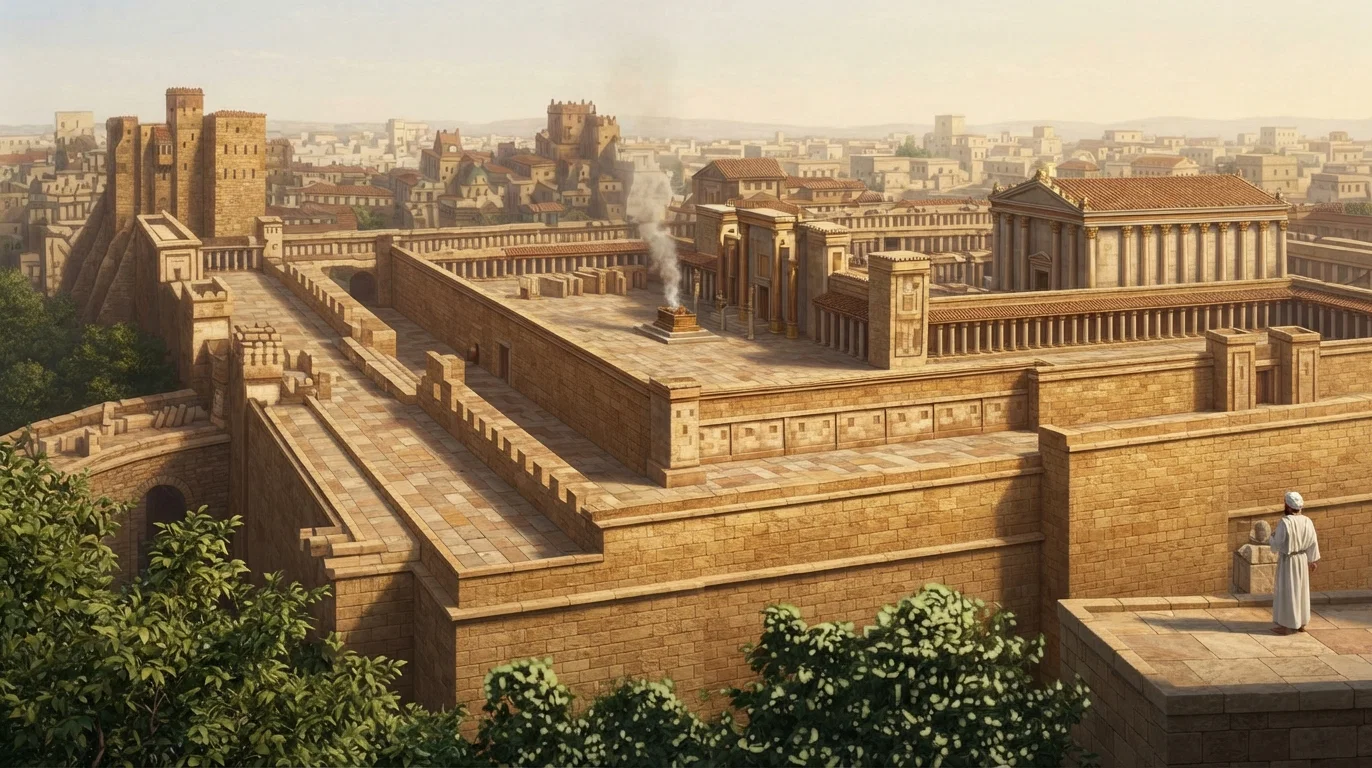
SOLOMON’S TEMPLE
SOLOMON’S TEMPLE

The Sanctuary

A Bible Study

The Earthly Sanctuary

1. What did God, through Moses, command Israel to make? “And let them make me a sanctuary; that I may dwell among them.” Ex. 25:8.
2. What was offered in this sanctuary? “In which were offered both gifts and sacrifices.” Heb. 9:9.
3. Besides the court, how many parts had this sanctuary? “And the veil shall divide unto you between the holy place and the most holy.” Ex. 26:33.
4. What was in the first apartment, or holy place? “For there was a tabernacle made; the first, wherein was the candlestick, and the table, and the showbread; which is called the sanctuary.” Heb. 9:2. “And he put the golden altar in the tent of the congregation before the veil.” Ex. 40:26. See also Ex. 30:1-6.
5. What was contained in the second apartment? “And after the second veil, the tabernacle which is called the holiest of all; which had the golden censer, and the ark of the covenant overlaid round about with gold, wherein was . . . the tables of the covenant.” Heb. 9:3, 4. See also Ex. 40:20, 21.
6. By what name was the cover of the ark known? “And thou shalt put the mercy seat above upon the ark; and in the ark thou shalt put the testimony that I shall give thee.” Ex. 25:21.
7. Where was God to meet with Israel? “And there I will meet with thee, and I will commune with thee from above the mercy seat, from between the two cherubim which are upon the ark of the testimony.” Verse 22.
8. What was in the ark, under the mercy seat? “And he wrote on the tables, according to the first writing, the ten commandments. . . . And I turned myself and came down from the mount, and put the tables in the ark which I had made.” Deut. 10:4, 5.
9. When did the priest minister in the first apartment of the sanctuary? “Now these things having been thus prepared, the priests go in continually into the first tabernacle, accomplishing the services.” Heb. 9:6, R. V.
10. Who alone went into the second apartment? how often? and for what purpose? “But into the second went the high priest alone once every year, not without blood, which he offered for himself, and for the errors of the people.” Verse 7.
11. What were sinners desiring pardon instructed to do? “And if any one of the common people sin through ignorance, while he doeth somewhat against any of the commandments of the Lord, . . . then he shall bring his offering, a kid of the goats, a female without blemish, for his sin which he hath sinned. And he shall lay his hand upon the head of the sin offering, and slay the sin offering on the place of the burnt offering.” Lev. 4:27-29. NOTE.—According to this, if a man sinned in Israel, he violated one of the ten commandments that were in the ark under the mercy seat. These commandments are the foundation of God’s government. To violate them is to commit sin, and so become subject to death. 1 John 3:4; Rom. 6:23. But there was a mercy seat reared above these holy and just commandments. In the dispensation of his mercy, God grants the sinner the privilege of confessing his sins and of bringing a substitute to meet the demands of the law, thus obtaining mercy.
12. What was done with the blood of the offering? “And the priest shall take of the blood thereof with his finger, and put it upon the horns of the altar of burnt offering, and shall pour out all the blood thereof at the bottom of the altar.” Verse 20. NOTE.—After a person discovered his sin by the law which demanded the death of the transgressor, he first brought his offering, then he confessed his sin while laying his hands on the head of the victim, thus, as a figure, transferring his sin to the victim; the victim was next slain in the court, or outer part of the sanctuary, and its blood put on the horns of the altar and poured at the foot of the altar. In some cases a portion of the offering was eaten by the priest. In this way sins were pardoned, and, in the typical service, transferred to the sanctuary.

The Day of Atonement

13. After the accumulation of the sins of the year in this way, what service took place on the tenth day of the seventh month of each year? “And this shall be a statute forever unto you; that in the seventh month, on the tenth day of the month, ye shall afflict your souls, . . . for on that day shall the priest make an atonement for you, to cleanse you, that ye may be clean from all your sins before the Lord.” Lev. 16:29, 30.
14. How was the sanctuary itself to be cleansed, and how were the sins of the people to be finally disposed of? “And he [the high priest] shall take of the congregation of the children of Israel two kids of the goats for a sin offering. . . . And he shall take the two goats, and present them before the Lord at the door of the tabernacle of the congregation. And Aaron shall cast lots upon the two goats; one lot for the Lord, and the other lot for the scapegoat.” Verses 5-8. NOTE.—The Hebrew word for scapegoat is Azazel. See margin of verse 8. It is used as a proper name, and according to the opinion of some of the most ancient Hebrews and Christians, refers to Satan, or the angel who revolted and persisted in rebellion and sin.
15. What was done with the blood of the goat upon which the Lord’s lot fell? “Then shall he kill the goat of the sin offering, that is for the people, and bring his blood within the veil, . . . and sprinkle it upon the mercy seat, and before the mercy seat.” Verse 15.
16. Why was it necessary to make this atonement? “And he shall make an atonement for the holy place, because of the uncleanness of the children of Israel, and because of their transgressions in all their sins; and so shall he do for the tabernacle of the congregation, that remaineth among them in the midst of their uncleanness.” Verse 16. NOTE.—Sins were conveyed into the sanctuary during the year by the blood of the personal sin offerings offered daily at the door of the tabernacle. Here they remained until the day of atonement, when the high priest went into the most holy place with the blood of the goat on which the Lord’s lot fell; and bearing the accumulated sins of the year in type, before the mercy seat, he there, in type, atoned for them, and so cleansed the sanctuary.
17. After having made atonement for the people in the most holy place, what did the high priest next do?
“And when he hath made an end of reconciling the holy place, and the tabernacle of the congregation, and the altar, he shall bring the live goat; and Aaron shall lay both his hands upon the head of the live goat, and confess over him all the iniquities of the children of Israel, and all their transgressions in all their sins, putting them upon the head of the goat, and shall send him away by the hand of a fit man into the wilderness.” Verses 20, 21. NOTE.—The offering of the Lord’s goat cleansed the sanctuary. By this offering the sins of the people, transferred there during the year, were, in type, atoned for; but they were not by this offering finally disposed of, or destroyed. The scapegoat, symbolizing Satan, the great tempter and originator of sin, was brought to the sanctuary, and upon his head were placed all these sins which Satan had tempted God’s people to commit.
18. What final disposition was made of the sins of the people? “And the goat shall bear upon him all their iniquities unto a land not inhabited; and he shall let go the goat in the wilderness.” Verse 22.

This Sanctuary Service a Type of the Work of Christ in the Heavenly Sanctuary

19. What was the earthly sanctuary and its round of service? “Which was a figure for the time then present.” Heb. 9:9. Compare Heb. 9:24.
20. Of what sanctuary, or tabernacle, is Christ the minister? “A minister of the sanctuary, and of the true tabernacle, which the Lord pitched, and not man.” Heb. 8:2.
21. Of what was the blood of all the sacrifices of the former dispensation only a type? “Neither by the blood of goats and calves, but by his own blood he entered in once into the holy place, having obtained eternal redemption for us.” Heb. 9:12. See Eph. 5:2. NOTE.—Through the sacrifices and offerings brought to the altar of the earthly sanctuary, the penitent believer was to lay hold of the merits of Christ, the Saviour to come. In this way, and in this way only, was there any virtue connected with them.

The Close of the Earthly Service

22. At the death of Christ, what miraculous occurrence signified that the priestly work and services of the earthly sanctuary were finished? “Jesus, when he had cried again with a loud voice, yielded up the ghost. And, behold, the veil of the temple was rent in twain from the top to the bottom.” Matt. 27:50, 51. NOTE.—Type had met antitype; the shadow had reached the substance. Christ, the great sacrifice, had been slain, and was about to enter upon his final work as our great high priest in the sanctuary in heaven. The priestly work in the earthly sanctuary was typical of the work of Christ in the heavenly sanctuary. In the earthly, the atonement was performed on the last day of the ceremonial year. All who did not then have their sins atoned for were “cut off,” and the camp was cleansed from sin. The atonement day was virtually a day of judgment for Israel, and the people whose sins had been atoned for were free from sin, and could enter upon the services of the new year clean in the sight of God. This work was kept up year-round. In the antitypical service the sacrifice is offered but once; and but one atonement, or cleansing, of the heavenly sanctuary can be made, which must take place at the time assigned of God for it. And when the great atonement, or cleansing, of the heavenly sanctuary has been made, God’s people will be forever free from sin, and the fate of all will be forever sealed. See Rev. 22:11. This, as in the type, will be a day of judgment.
The round of service in the earthly sanctuary was God’s service. It had to do with the sins of the people; not that the blood of the sacrifices offered there could in itself take away their sins, for it is expressly said that it could not. Heb. 10:4. It could, however, show their faith in the efficacy of Christ’s blood yet to be spilled, to which the sanctuary work was intended constantly to direct their minds. The work there was a type, or shadow, of Christ’s atoning work, and, as such, carries with it a significance that cannot be overestimated. Upon a correct understanding of the type depends a correct understanding of the antitype. The entire sanctuary service was an object lesson of most important and vital gospel truth—that of man’s salvation and the atonement of sin.

The Service of Christ in Heaven for Us
23. What relation does the earthly sanctuary sustain to the heavenly? “Who serve unto the example and shadow of heavenly things, as Moses was admonished of God when he was about to make the tabernacle; for, see, saith he, that thou make all things according to the pattern showed to thee in the mount.” Heb. 8:5.
24. By what comparison is it shown that the heavenly sanctuary will be cleansed? “It was therefore necessary that the patterns of things in the heavens should be purified with these; but the heavenly things themselves with better sacrifices than these.” Heb. 9:23.
25. When Christ has finished his priestly mediatorial work in the heavenly sanctuary, what decree will go forth? “He that is unjust, let him be unjust still; and he which is filthy, let him be filthy still; and he that is righteous, let him be righteous still; and he that is holy, let him be holy still.” Rev. 22:11.
26. What event is directly connected with the blotting out of sin and the final refreshing from God’s presence? “Repent ye therefore, and be converted, that your sins may be blotted out, when the times of refreshing shall come from the presence of the Lord; and he shall send Jesus Christ, which before was preached unto you: whom the heaven must receive until the times of restitution of all things, which God hath spoken by the mouth of all his holy prophets since the world began.” Acts 3:19-21.
27. According to the view of the judgment presented to Daniel, what is to be given to Christ while still before the Father? “I saw . . . and, behold, one like the Son of man came . . . to the Ancient of days, and they brought him near before him. And there was given him dominion, and glory, and a kingdom, that all people, nations, and languages, should serve him.” Dan. 7:13, 14.
28. What will occur when the Lord descends from heaven? “For the Lord himself shall descend from heaven with a shout, with the voice of the archangel, and with the trump of God: and the dead in Christ shall rise first: then we which are alive and remain shall be caught up together with them in the clouds, to meet the Lord in the air; and so shall we ever be with the Lord.” 1 Thess. 4:16, 17.
29. What statement immediately following the announcement mentioned in Rev. 22:11, indicates that a judgment work had been in progress before Christ comes?
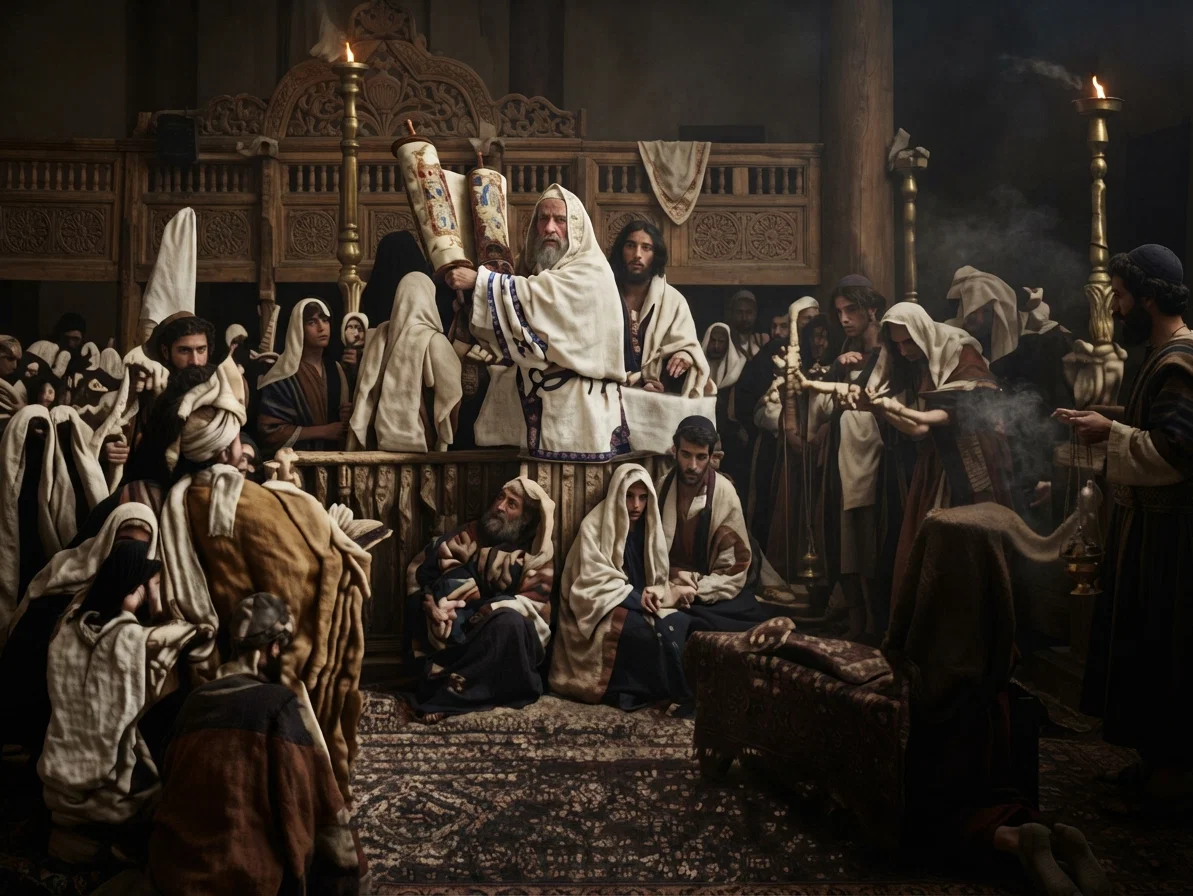
THE SERVICE IN THE TEMPLE
“And, behold, I come quickly; and my reward is with me, to give every man according as his work shall be.” Rev. 22:12. NOTE.—The typical sanctuary service is fully met in the work of Christ. As the atonement day of the former dispensation was really a day of judgment, so the atonement work of Christ will include the investigation of the cases of his people prior to his coming to receive them unto himself.
30. Is there a specified time for the cleansing of the heavenly sanctuary? “And he said unto me, Unto two thousand and three hundred days; then shall the sanctuary be cleansed.” Dan. 8:14.
31. How may one know that this does not refer to the earthly sanctuary? “He said unto me, Understand, O son of man: for at the time of the end shall be the vision.” Verse 17. NOTE.—The prophetic period of 2300 days (years) extends to A. D. 1844, while the divinely appointed services of the earthly sanctuary ceased at the cross (Dan. 9:27; Matt. 27:50, 51), and the sanctuary itself was destroyed in A. D. 70, when Titus captured Jerusalem.

The Subject Concluded

By Uriah Smith
We are now prepared to take a retrospective view of this important subject. The questions proposed in the beginning of this work, are now answered.
To the question, “The sanctuary—what is it?” the answer has been plainly found. It is not the earth, not the land of Palestine, not the church; but, as revealed to us in the Scriptures, it is, first, the dwelling which the Lord provided for himself here among men, in the tabernacle of Moses, and afterwards in the temple of Jerusalem; and, secondly, we behold it as the temple of God in heaven, his dwelling place on high.
To the question, “When is it?” the answer has come. In all its most important aspects, it is now. Beginning with Moses, fifteen hundred years before Christ, it becomes an object of ever-increasing interest; till, as we reach our own generation, and the work connected with it is about to close, the issues there to be decided make it an all-important center of consideration and study.
To the question, “Where is it?” the answer is equally plain. During the typical dispensation, it was here upon earth; in the present antitypical dispensation, it is in heaven.
“What are its uses?” It is the center around which all the worship of God revolves, and to which every act of devotion points. “And why?”—Because it is the habitation of God, and there in the most holy, he placed the transcript of his will, the ten commandments; and there on the mercy seat, the cover of the ark, is the focal point in the work of redemption, where mercy and truth meet together, and righteousness and peace kiss each other. There reposes the law which shows
transgression; and there is presented the righteous blood which satisfies the law, and, so far as the sinner’s record is concerned, blots out the sin.
“What are its relations, and how extensive?”—It relates to everything in the plan of salvation, and has to do with every individual who comes within the range of Christ’s redeeming work.
“What prominence is given to it on the inspired pages of the Book of God’s revelation to men?”—Great prominence. The word occurs one hundred and forty-four times, not merely as casual mentions, but often as the theme of the discourse itself.
“What bearing has it upon the interpretation of the prophecies?”—A bearing the most intimate. It shows that no prophetic period reaches to the coming of the Lord, but only to the short but indefinite work called the cleansing of the sanctuary, which just precedes that coming. It thus saves us from the folly of time setting. It clears up and explains the mystery of the disappointment in the past advent movement. Not taking the sanctuary to mean the earth, it was supposed that the cleansing of the sanctuary meant the purifying of the earth by fire; and as the Lord is to be revealed in flaming fire, it was argued that the Lord must then come. Hence the coming of the Lord was looked for at the end of the 2300 days, in 1844. But the prophecy only says, “Then shall the sanctuary be cleansed,” which we now see to be the closing work of our High Priest in the temple above. It explains the parable of the wedding garment (Matt. 22: 11-13), shows where that preliminary work of judgment comes in, which must precede the coming of Christ, and shows how and when that sentence which eternally fixes every man’s condition, whether he be filthy or righteous, unjust or holy, can go forth before the Lord appears. Rev. 22: 11.
“How is its past history calculated to interest, or its present work concern us?” Its past history interests us because it is the textbook from which we learn the nature of the work of our great High Priest above and the manner of his ministrations; and its present work concerns us, because, in connection with the declaration of the prophecies concerning it, we learn more definitely than from any other source our proximity to the end.
“In what way are our dearest interests connected with it?” Our dearest interests
are there because there is our only hope of life and salvation. There is to be found the only means that can cleanse our souls from guilt, and there the only Advocate who can plead our cause. If we accept his mediation on the free terms offered, our cases will go well; if we reject it, all is lost. The court is now sitting; its session soon will close, and its eternal decisions be rendered.
These are the claims it now has upon our attention, the strongest and most urgent that can ever be brought to bear upon men.

A Central Point of Interest

All through its history are epochs of interest. It was a point of great interest when the tabernacle was first erected in this world of ours, and an outward symbol of the work of salvation was given to men.
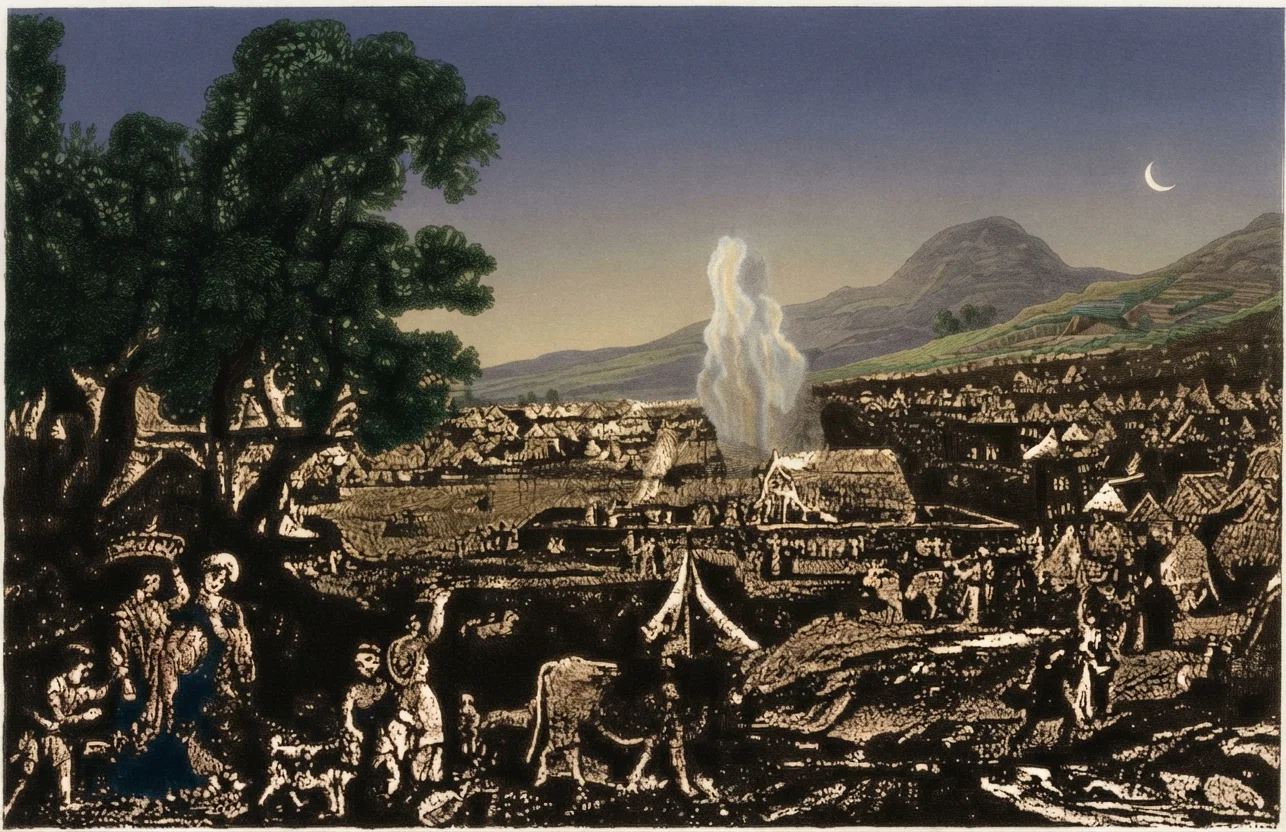
THE FEAST OF TABERNACLES
It was a point of interest when the tabernacle gave place to the larger and more glorious structure of the temple, and when in the dedication of that temple the most imposing religious ceremony was performed which the world has ever witnessed.
It was a point of still greater interest when the typical dispensation closed, and a transfer was made from the sanctuary below to the sanctuary on high. Henceforward we come directly to Jesus, the Mediator of the new covenant, and turn our attention to Jerusalem above.
A point of still deeper interest to us was reached when, at the end of the 2300 days in 1844, the time came for the cleansing of the sanctuary, and the ministrations was moved from the holy into the most holy place. Then the temple of God was opened in heaven. Then was discerned, by faith, the ark of God’s testament there. Then the position of the moral law was seen, enthroned in the very presence of Jehovah, immutable, eternal. Then was discovered the connection between this subject and the seal of the living God, the sealing work, the last message of mercy, and the closing up of the great advent movement of the present generation. Then the foretold judgment now began, and the church entered upon the great Sabbath reform. With this subject all portions of the message are connected; this is the grand center and citadel of the present truth.

The Close of Human Probation

Then it was seen that the time of probation could last but a little longer; for the final work in the sanctuary must be brief. Should it be otherwise, it would destroy the type, and show in the plan and work of God a want of consistency and harmony, which we know does not exist. And already for many years this work has been going forward. We understand that, beginning with the human race at the opening of the world’s history, the examination passes down through successive generations, in consecutive order, till at length the cases of the last generation, the living, are reached, who come latest into this investigative judgment, and the work closes. And what generation has the work now reached? Has it come down to the age of Noah? of Abraham? of Job? of Moses? of Daniel? Has it reached the age of the apostles and the early Christians? Are their cases now in review before the great tribunal above? Has it come down to the setting
up of the Papacy, to the Dark Ages, when the Waldenses and other few faithful witnesses in obscurity and concealment kept the light of God’s truth alive in the world? Has it come down to the great Reformation, to the times of Luther? of the Wesleys? We know not. We know only that it is passing down somewhere through these generations, and rapidly approaching the living, when our cases will come up for decision, and our destiny be decided forever. And here we now stand waiting; may we not also say preparing?

A Glorious Deliverance From Sin

But with considerations of such thrilling interest even as these, our view of this subject does not end. We go forward a little in the future, and behold the sins of all the righteous loaded upon the head of the antitypical scapegoat, to be put away forever. We see Satan bound, and the saints forever free from his power. This is a point of transcendent interest to all the righteous. Then we take our first draughts from the cup of immortality. Our sins are borne away. They come up to trouble us no more. We cannot recall them; and even God says that he will forget them. He who instigated them will then have received them back again. Here the serpent’s head is effectually bruised by the seed of the woman. Here the strong man armed (Satan), who has been shutting
up even the followers of Christ in his prison house, the grave, for six thousand years, will be bound by a stronger than he (Christ), and his house be spoiled of its precious treasures. Then will the tares have been bound in bundles for the burning, and the wheat have been gathered into the heavenly garner. Then our High Priest will have come forth from the sanctuary to pronounce the everlasting blessing upon his waiting people. Then we shall have come, not by faith merely, but in deed and in truth, unto Mt. Zion, and the city of the living God, the heavenly Jerusalem, and to an innumerable company of angels. Then will the redeemed, placing the foot of triumph upon the world, the flesh, and the devil, raise their glad voices in the song of Moses and the Lamb. Glorious and longed-for day! The Lord hasten it in his time.—Conclusion of “The Sanctuary.”

The Relation of the Ministry of Christ to the Law of God

The ministry of Christ, our High Priest, in the heavenly sanctuary, has special reference to the law of God enshrined within the ark of the covenant in the most holy place. The purpose of Christ’s atoning work and his ministry is to take away sin, and “sin is the transgression of the law.” Not only is sin forgiven by virtue of the sacrifice made on the cross and pleaded in the heavenly sanctuary, but according to the new covenant promise, the law of God is to be written in the heart, that it may be revealed in the life. Thus the final aim of the priestly mediation of Christ is the restoration of the supremacy of the moral law. That the Bible exhibits the restoration of such supremacy is clearly set forth in the following extract:—
“As central in the moral world, which is itself central in the material, the moral law holds the central place in the universal system. It is the law of laws. Characterized by the unbiased and unswerving uprightness, straightness, or equity of its dictates, it is known as the law of righteousness. Righteousness is simply rightness. In its ultimate analysis this law of rightness is love, the purest, highest, and most comprehensive of all principles. Its exclusions and inclusions embrace the entire realm of morality. Love worketh no ill. Love worketh all good. No more comprehensive moral principle can therefore exist. As applicable to all moral beings whatsoever, no higher or greater moral law than the law of love can be conceived. Universal justice and benevolence are included in its range, and eternal harmony in its results. Upon its fulfillment depends the union or unity of the moral universe. No sacrifice therefore of this principle can pass unchecked in a universe which deserves the name. Order and unity must prevail, or the system perish.
“Revelation exhibits the restoration and establishment of the supremacy of the moral law. “Herein it crowns the system of nature with perfection and completeness. The law of subordination leads up, step by step, to the supremacy of the moral law. But though in the world system the moral law is supreme by right, it is not supreme in fact. Its rule is disregarded and overthrown. The Bible unfolds the plan, and traces the story of the restoration of its supremacy. The order followed in securing this result includes:—
“1. The authoritative republication of the moral law.
“2. The historic demonstration of its inability to produce the holiness it commands.
“3. The shadowing and predicting of the mediatorial method by which God designed to accomplish the required restoration.
“4. The perfect fulfillment of the moral law, and satisfaction of its righteous claims, by the Son of God in human nature.
“5. The restoration of the supremacy of the moral law in the hearts and lives of his redeemed and renovated people, who ‘walk not after the flesh, but after the Spirit.’”
“The Bible is the story of a rebellion vanquished and subdued. It is the account of the victory of the divine goodness. In its conflict evil is overcome by good. The cross conquers. Love overcomes. The hand that holds the scepter was pierced on Calvary. The universe worships at the feet once fastened to the shameful tree. The anthem of its praise is, Worthy the Lamb! Through Jesus Christ all things are subjected to God. And when that subjection is complete, the Son himself shall give up the kingdom to the Father, ‘that God may be all in all.’”
“Thus the natural and the spiritual form one system. One law of subordination reigns throughout.
“1. Inorganic nature subserves the organized world.
“2. In the vegetable kingdom inferior forms of life subserve superior forms.
“3. The vegetable kingdom subserves the animal.
“4. Lower animal races subserve the interests of higher.
“5. The material world subserves the mental.
“6. The physical subserves the moral.
“7. In the realm of mind all is subordinated to moral law.
“8. Moral law, though supreme in the world by right, is not supreme in fact.
“9. Revelation exhibits the restoration and establishment of the supremacy of the moral law.
“10. Revelation further traces the progressive subjection of ‘all things’ to Christ, by whom the moral law is established, and through Christ to God, for ‘he must reign, till he hath put all enemies under his feet.’”
“The revealed system is thus in strict continuity with the natural, and rests on the immovable rock of man’s moral nature, and the indisputable facts of his history and condition. Conscience is indestructible. The moral law written in the human heart abides forever. The system which restores its supremacy is self-evidenced as divine.”—“Creation Centered in Christ,” H. Gratton Guinness, D. D., London, Hodder & Stoughton, 1896, pages 77, 82, 83.

THE BEREAN LIBRARY

All who desire to study further the important Bible subjects presented in this series of Extras should order from this list of valuable books put up in paper covers, postpaid, at the following very low prices:—
Steps to Christ, 144 pages........................$ .25 Thoughts on Daniel, 345 pages..........................25 Thoughts on Revelation, 430 pages......................35 Religious Liberty in America, 448 pages................35 His Glorious Appearing, 124 pages......................15 The Sabbath in the Scriptures, 216 pages..............25 The Sabbath in History, 600 pages......................50 Capital and Labor, 208 pages...........................25 Here and Hereafter, 360 pages........................25 Bible Footlights, 320 pages...........................35 Our Paradise Home, 128 pages..........................15 The Coming King, 320 pages............................50

Order from the Publishers

Order from the publishers, whose address is given below

You have reached the end of this edition.

Review and Herald · Nov 8, 1915