Our Constitution recognizes no other power than that of persuasion, for enforcing religious observances. Let the professors of Christianity recommend their religion by deeds of benevolence, by Christian meekness, by lives of temperance and holiness. Let them combine their efforts to instruct the ignorant, to relieve the widow and the orphan, to promulgate to the world the Gospel of their Saviour, recommending its precepts by their habitual example; government will find its legitimate object in protecting them. It can not oppose them, and they will not need its aid. THEIR MORAL INFLUENCE WILL THEN DO INFINITELY MORE TO ADVANCE THE TRUE INTERESTS OF RELIGION, THAN ANY MEASURE WHICH THEY MAY CALL ON CONGRESS TO ENACT.
California’s Unique Position Compared with Other States
By J. O. CORLISS.
UNTIL February 14, 1912, when Arizona was proclaimed a State of the American Union, California was the only State in the Federal combination of States without a Sunday law. It can not, however, be too often repeated that notwithstanding this unmatched condition, the citizens of this great State have, as a rule, paid as much honor to the Sunday institution as any other commonwealth of the great American federation.
The reason for this is easily assigned. No civil restraint having been imposed requiring a formal observance of the common day for church attendance, each individual has been left entirely free to attend to that day’s duties as his conscience and best judgment dictated. The result has been freedom from neighborhood animosity and religious wranglings such as have attended in other parts where strict Sunday laws have regulated the religious prejudices of the people.
It is not just to affirm that the last named conditions are exceptions, confined to narrow areas and to irresponsible peoples. True, such conditions have been specially marked in rural districts of some Southern States, such as Tennessee, Maryland, and Arkansas. But the course of some religionists in highly intellectual and eminently refined Massachusetts, together with other New England States, has seemed fully as vicious as that of Maryland, or any part of the South where Sunday laws have been enforced.
Intolerant Everywhere
If the request be made for definite statements regarding the bad effect of Sunday-rest laws in the States named, the history of the last thirty years might be cited to reveal the rancor which such religio-civil statutes engender, and the power they place in the hands of narrow-minded and intolerant people, with which malignantly to pursue those who differ with them in religious opinion.
Cases in Illustration
A few cases out of the many on record must suffice to illustrate the point in hand. In 1884 two seventh-day keeping ministers organized a church of their order in Springdale, Arkansas, as the result of a series of meetings there held. Mr. Scoles, one of the ministers, donated the work of painting their newly erected house of worship, and being pressed for time, thought to paint on Sunday a small unfinished strip at the rear of the building. The job was finished in two hours, and the man returned to his home, but was early indicted for his alleged offense.
Mr. J. A. Armstrong, of the same place and communion, was summoned before the Grand Jury. Upon being asked if he knew of any violations of the Sunday law, he said “Yes.” Asked to state the guilty parties, he mentioned the Sunday railroad-trains, the hotels, drug stores, barber shops, and livery-stables. But, said the questioner, “Do you know of any Seventh-day Adventists who ever work on Sunday?” The answer was in the affirmative, with the result that he and four others, including Mr. Scoles, were indicted. Conviction followed, as it was sure to do, and these, with many more, were heavily fined, or sent to languish in the county jail.
Of course the railroads, hotels, livery-stables, and barber shops were not troubled, but the seventh-day people were penalized to the fullest extent permissible. For instance, Mr. Armstrong was fined $26.50, Mr. F. N. Elmore was fined $28.95, William L. Gentry $28.80, and so on through seventeen other cases. In one case, that of Z. Swearingen and son, one of the farm horses was taken and sold at public auction, but not bringing enough quite to pay the legal demand, father and son were remanded to prison, and charged $21.25 in addition for jail board, for which the remaining horse, harness, wagon, a cow, and calf were levied on to meet the bill. All this for having done a little quiet Sunday work, and that, too, in the face of a former exemption clause in the law for those who observed the seventh day.
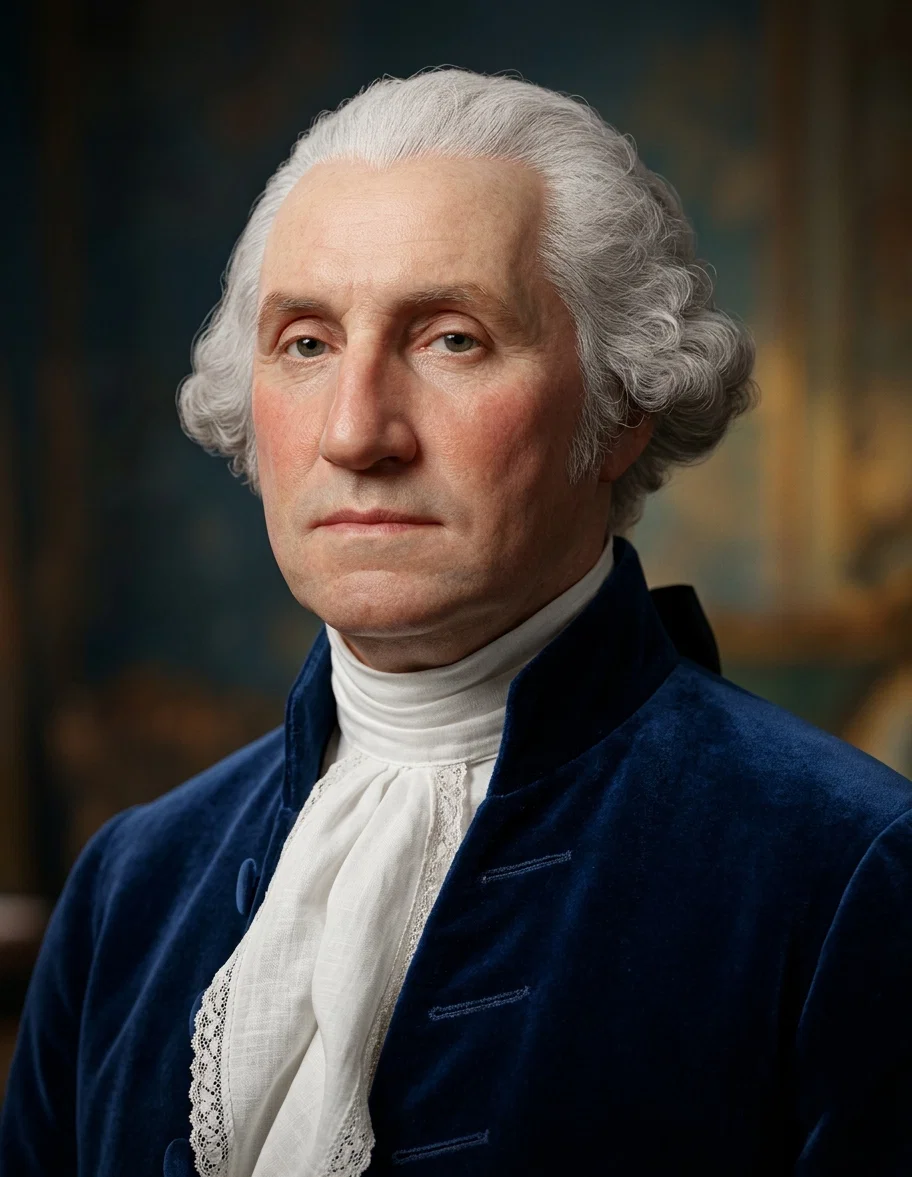
George Washington, who wrote to the Ephrata Community (seventh-day Christians) as follows: “Every man who conducts himself as a good citizen is accountable alone to God for his religious faith, and should be protected in worshiping God according to the dictates of his conscience.”
Such treatment of people because of mere prejudice, shows what a State Sunday law enables intolerant people to do in the way of persecution. Commenting on these cases, the St. Louis Globe-Democrat of November 30, 1885, said:
Of the Dark Ages
“They have been from the first apparently an industrious and God-fearing people, the chief difference between them and other Christian bodies being that they observe the seventh day as the Sabbath, according to the commandment. But it seems that sectionalism can not lay down its arms even when the sacred precincts of religion are entered. . . . It is a little singular that no one else has been troubled on account of the law, with perhaps one minor exception, while members of the above denomination are being arrested all over the State. It savors just a trifle of the religious persecution which characterized the Dark Ages.”
Ten cases of a similar nature soon followed in Tennessee, which resulted in the death of one victim, R. M. King, from undue exposure while in prison. In the case of the last named person, the case records show that the attorney-general, in prosecuting the prisoner, brought forward the assassin Guiteau as an example of villainy, and said he “took a pistol, and shot down the ruler of the nation, and they hung him; and that is what they ought to do with all these fellows” (referring to Mr. King and his fellow believers).
Continuing his foul and utterly mendacious utterances for the purpose of prejudicing the jury, the prosecuting attorney said, “Not satisfied with working on Sunday, and keeping a half dozen women, they come down here and want to save us.” This character stab, with others of like nature, seemed very amusing, it is said, to visitors in the court room, the jury, but especially to some of the leading witnesses for the prosecution, who were devout church-members.
These few cases are cited solely to show what opportunities are given to, and how such might be used by, viciously inclined persons. The same disreputable results naturally follow in the wake of all Sunday laws, but in most cases are prevented simply by mother pride, which recoils at the thought of undue neighborhood notoriety. But let such a law obtain in California, and the momentary passions of men, necessarily indifferently informed, become inflamed by fiery partisan address, and in a little time members of general society would be engaged in a mutually destructive war of religious foment.
Lessons of the Past
The certain workings of human nature over religious controversy have been well determined by past history. In Virginia Baptists were frequently arrested between the years 1768 and 1775 for advocating the tenets of their faith. In his “Life of Thomas Jefferson,” Mr. Parton refers to these, and describes the defense made by Patrick Henry in behalf of three of these unfortunate victims of religious bigotry. The crime charged against them was that of disturbing the public peace. Mr. Henry’s eloquence secured the discharge of his clients, but the historian said of that time, “It was not till the Revolutionary War absorbed all minds, that Baptists ceased to be imprisoned.”
When permitted by law to plead a disturbance of one’s peace in order to prosecute an opponent, it is a dangerous official deed to undertake. This may be the better appreciated by reviewing this comparatively recent bit of history:
In 1887 an ordinance of the city of San Francisco carried this form of prohibition: “No person shall in any place indulge in conduct having a tendency to annoy persons passing or being upon the public highway, or upon adjacent premises.”
Savors of Tyranny
The intention of this ordinance was well enough, had not some unprincipled person seen fit to take advantage of its provision. It seems that one Ferdinand Pape, for distributing circulars on the street, was arrested for “annoying” some one to whom he handed a circular. He applied to the Superior Court for a writ of habeas corpus, on the ground that the offense charged did not constitute a crime, and that the ordinance making such action as his an offense7was invalid and void, because it was unreasonable and uncertain.
In the report of the case the judge declared that the terms of the ordinance were too vague and uncertain to lay down a rule of conduct. Because of this, the ordinance was liable to be made tyrannical, simply because its enforcement depended solely upon the humor of the complaining party. “Any condition of the law,” said the judge, “which allows the test of criminality to depend on the whim or caprice of judge or juror, savors of tyranny.”
The danger must lurk in a Sunday law, if foisted on the fair State of California, because such a law would remain inoperative, as in other States, unless some creed-bound zealot should consider himself disturbed by the work done by another, and complain of the alleged offender, as one who should not be permitted at large until he submit to reform his ways.
Because They Think It Wrong
An incident of just this character came up some years ago at Lewiston, Maine, and the case was tried before Judge Walton of that city. The defendant was charged with drawing cord-wood through the streets on Sunday to the disturbance of the public peace. In his charge to the jury the judge said his impression was that the complaint could not be maintained, since the defendant had quietly and in an unobtrusive manner hauled the wood, without coming into the immediate neighborhood of a meeting. The prosecuting attorney suggested that it might have been where people were returning from church. But the judge decided that even then there could be but a bare mental operation, a matter of mind, of conscience, because they thought the act wrong, or that it did not look right to them. “For my part,” said he, “I do not see why any one driving quietly along with his load on one day of the week should cause any more disturbance than on any other day of the week. It only disturbs people merely because they think it wrong.”
This, too, is the basis of all Sunday legislation. People just think Sunday work to be wrong, and are therefore disturbed because everybody else does not believe just the same as they do in the matter. But if mental disturbance constitutes a civil offense, then the preaching and publishing of opinions diverse from those of the majority could also be made a civil offense, and thus become indictable in the courts of the State. Let California re-enact a Sunday law, and those now clamoring for it would soon demand another step to be taken to make all mental disturbance on Sunday a crime. Such a course would quickly deprive a minority of the people of every religious right in civil procedure.
The danger is in taking the first step. Let those who so desire, enjoy their Sunday rest, which is now their perfect right, without any civil enactment enforcing others to observe the day. The morals of California now average with those of States having Sunday-rest laws. It is better to let well enough alone; and if the churches desire larger attendance at Sunday services—which seems to be a motive for the present demand—let the clergy go forth and do more personal work in behalf of the fallen.
J. O. CORLISS.
Christ Came Not to Judge, but to Save
By H. W. Cottrell
By H. W. Cottrell, President of Western Oregon Conference
When Christ Jesus was on earth, He said, “If any man hear My words, and believe not, I judge him not: for I came not to judge the world, but to save the world.”
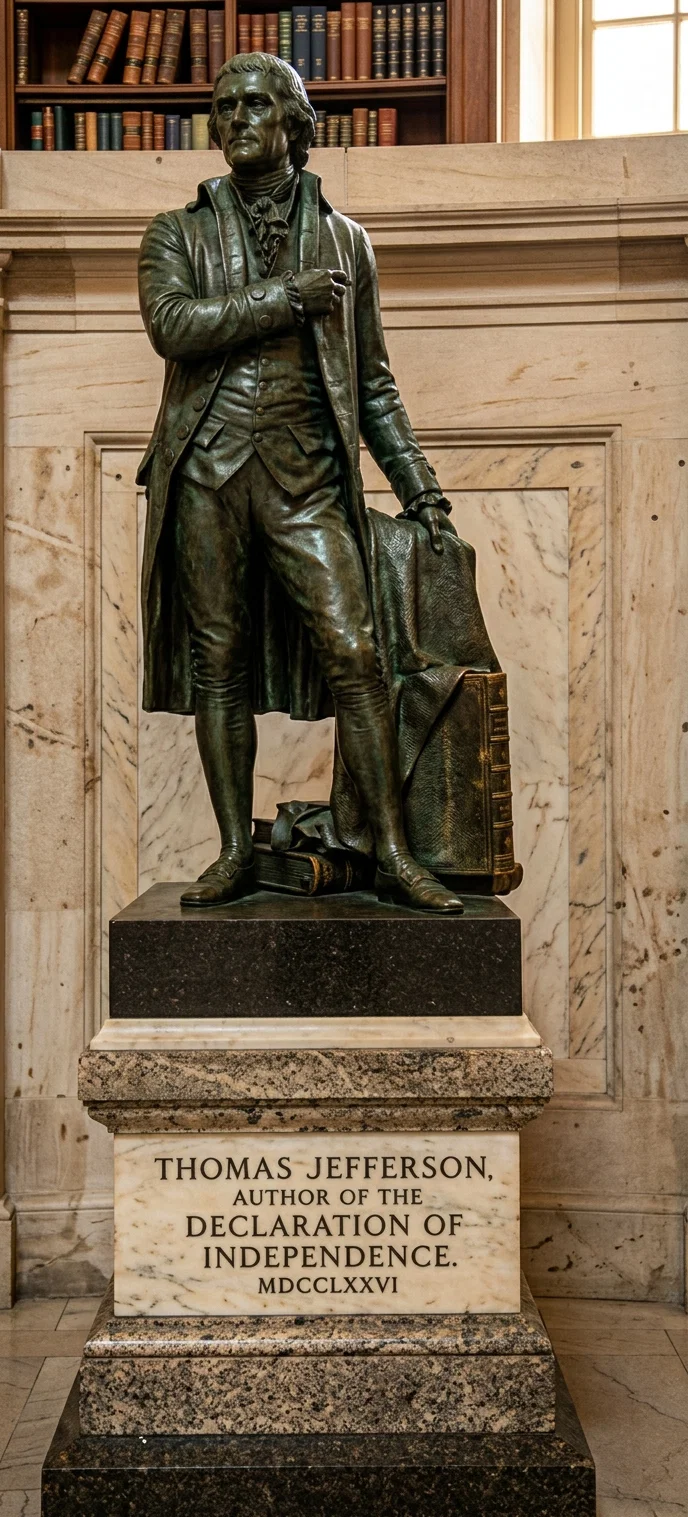
Statue of Thomas Jefferson, author of the Declaration of Independence. Jefferson stood for “equal and exact justice to all men, of whatever state or persuasion, religious or political.” Can we stand for less?
Christ’s mission here was to save men through the Gospel of love, by persuasion, but not to judge. The mission and work of His followers is to preach the saving grace of Christ, the powerful Gospel of His love. It was not His work when on earth to judge. It is not the work of His followers, or of any man, combination of men, or civil court to judge in religious matters; for religion is spiritual, prompted by heart motives, which realm civil government should not even seek to enter.
Man may judge and punish for crime, but God holds the exclusive right to judge and reward for sin. “For we must all appear before the judgment-seat of Christ; that every one may receive the things done in his body, according to that he hath done, whether it be good or bad.” His ambassadors therefore “persuade men.” 2 Cor. 5:10, 11. True ambassadors of Christ “persuade men” to accept the ordinances and rights of the church, such as the Sabbath, baptism, and the Lord’s Supper, but can not of divine right compel men by civil law, or other means of force, to observe them, or any one of them, the Sabbath day for instance. To do so would be for man to judge men in religious matters, a thing which the Master declined to do. “I judge him not.”
Christ’s purpose was to present to all people life, light, power, Sabbath rest, soul liberty, and multiplied grace and peace, in the gift of Himself. The eternal, spiritual, and religious features of these gifts, the individual must receive from Christ, for in Him only are they to be found. They can not be imparted to a nation, State, community, or individual by civil legislation, even tho that legislation were brought about by a union of the professed church and the State. The State is not spiritual, but civil, hence it can not decide spiritual questions.
No Power in the State to Save
Of the great Teacher it is said, “He came unto His own, and His own received Him not.” John 1:11. He judged them not. “But as many as received Him, to them gave He power to become the sons of God, even to them that believe on His name.” Verse 12.
The church and the State may form an unholy alliance, enter the realm of conscience, legislate on religious questions and other questions of conscience, and judge men in such matters—a thing which Jesus disdained to do; but it can not bring to a single individual in the mines, factories, or elsewhere, the power to become a child of God. Then why legislate, and judge religious men, in religious matters, or religion-less men in matters of religion, or conscience? Said the great apostle to the Gentiles, “We persuade men.” Paul knew the only way to save men was by the Gospel of love, through persuasion: that salvation could not be accomplished through civil legislation—for ce—but of individual choice.
It is contended by the Sunday-law advocates, that it has been scientifically demonstrated that men should have one consecutive twenty-four-hour day of rest in every week, for the lengthening of life and for his moral good. Their further contention is, of course, that the day must be Sunday. By what scientific rule this supposedly scientific conclusion has been reached, has not as yet been given out to the public. The Sunday-law advocates maintain that all citizens shall be under penalty to obey the proposed law, except such persons as sacredly observe another day of the week for rest and worship. From such deduction it is clearly evident that the proposed civil legislation for a civic sabbath, is civil legislation for a religious sabbath; and he who conscientiously violates such religious law because of his religion, or he who violates it because he is irreligious, must be judged and punished by man, either on account of his religion, or because he is religion-less. The example set His ministers by Jesus was, “If any man hear My words, and believe not, I judge him not.” “He that saith he abideth in Him ought himself also so to walk, even as He walked.” 1 John 2:6.
Christ’s mission on earth was to tender to all people grace to observe His Sabbath and all other Christian duties, without being forced so to do through civil legislation, and render them to God, and not to civil government, nor to God by the way of civil government, but by the individual direct to God, with conscience untrammeled.8
Christ came to His own people—the church; but not being in experimental touch with Him, “they received Him not.” He made no effort to force either Himself or His doctrine upon them, altho He knew there was “none other name under heaven given among men, whereby we must be saved.” Acts 4:12.
As time passed, conditions changed. The multitude followed Him. He was in the majority. They would declare Him king. Then, if He had chosen, He could have directed civil authority to enter the realm of conscience, and by force compel all men, religious or irreligious, to obey civil law in religious matters, under penalty of fine or imprisonment or both, and thus increase the membership of the church. But no! He rejected the humanly proffered kingship, recognized not the rights of the majority above the equal individual rights of the minority in matters of religion, but pressed His way onward, teaching the Gospel of love by persuasion.
Gifts of Goodness Divinely Imparted
The pretense of the supporters of the religio-civil sabbath law is that it will not only tend to lengthen the life of the laboring classes, but will enhance in them goodness—godliness. But Peter, speaking by inspiration, says that everything pertaining to life and godliness is a gift from the divine Christ, and can be obtained by the individual “through the knowledge of Him that hath called us to glory and virtue.” Seeing all these gifts are from God, any proposal to impart them to the individual through civil legislation can be but counterfeit. It rests, therefore, with the individual to choose whether he will receive the Sabbath and godliness from God’s divine power, whence only it can be obtained, or from civil government through religious legislation, which is but mockery.
If it be contended that the proposed Sunday law does not deal with a religious question, why exempt a class of religionists who “sacredly” observe another day?
Sunday legislation is religious legislation, and religious legislation must result in judging men in matters of religion, and still other men when perchance they are conscientiously unreligious. This the Master forbade. “I judge him not.” It is also the introduction of a religio-civil gospel, which is “another gospel,” which, even “tho we, or an angel from heaven, preach,” presents but a false hope. Gal. 1:6-8.
Paul, referring to religious matters, queries: “Who art thou that judgest another man’s servant? to his own master he standeth or falleth. Yea, he shall be holden up: for God is able to make him stand.” Rom. 14:4. “Who art thou that judgest” in matters of religion, when God is able to make him stand? is a question which every man who advocates religious legislation must answer before the heavenly tribunal. “Let us not therefore judge one another any more.” Rom. 14:13.
The fair State of California is not committed to the evil of religious legislation. It is the golden key to a golden condition—liberty of conscience. Every citizen in the State of California, and those in every State, who wield the ballot, should favor only such legislation as will assure liberty of conscience, not such legislation as will invade conscience. The ministers of the Lord should keep in mind that their work is like His,—to save men, not to judge them in religious matters. “I,” saith the Lord, “came not to judge, . . . but to save.”
H. W. COTTRELL.
Cheerfulness, the Bright Weather of the Heart
“CHEERFULNESS has been called the bright weather of the heart.”
Principles of Toleration
From Macaulay’s Essay on “Civil Disabilities of the Jews”
THERE is another argument which we would not willingly treat with levity, and which yet we scarcely know how to treat seriously. Scripture, it is said, is full of terrible denunciations against the Jews. It is foretold that they are to be wanderers. Is it then right to give them a home? It is foretold that they are to be oppressed. Can we with propriety suffer them to be rulers? To admit them to the rights of citizens is manifestly to insult the divine oracles.
We allow that to falsify a prophecy inspired by divine wisdom would be a most atrocious crime. It is therefore a happy circumstance for our frail species, that it is a crime which no man can possibly commit.
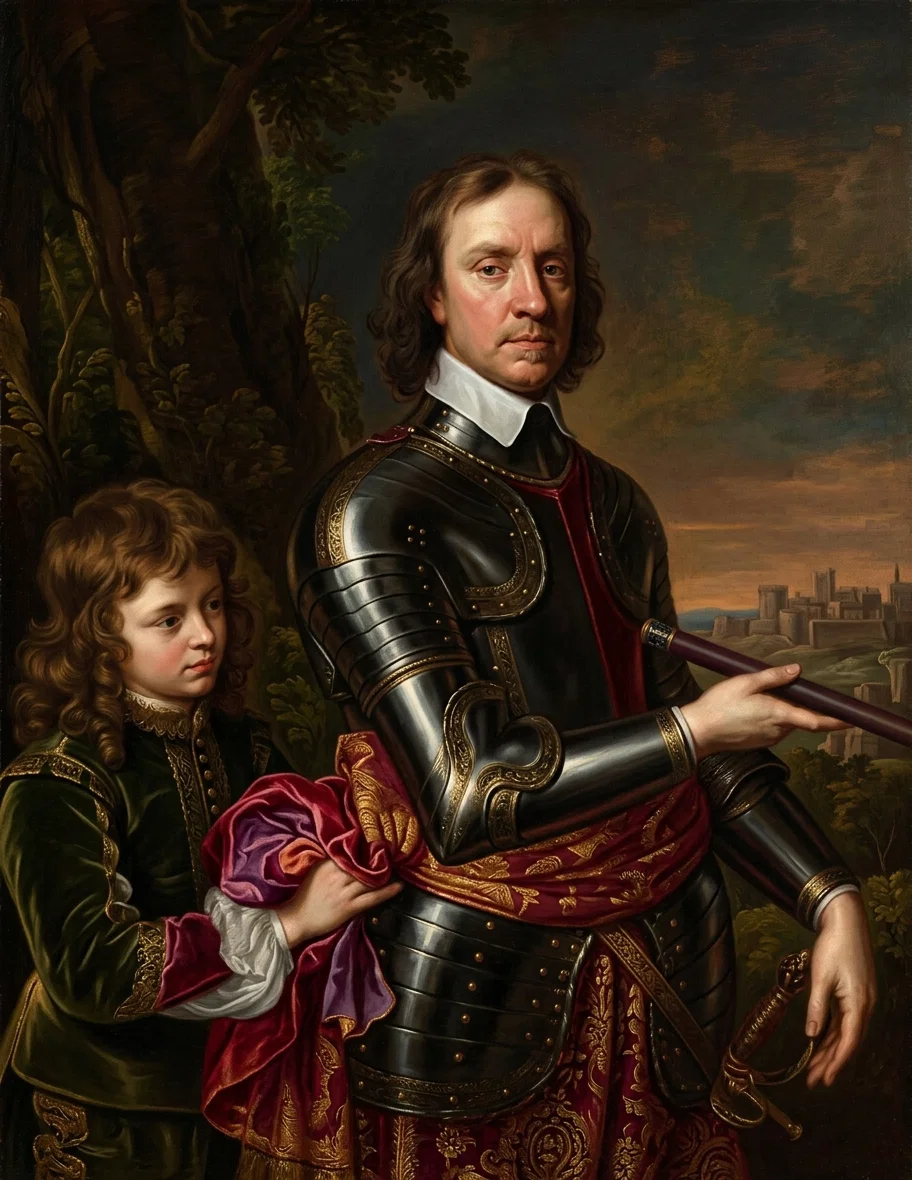
Oliver Cromwell, who said, “Liberty of conscience is a natural right, and he that would have it ought to give it.”
If we admit the Jews to seats in Parliament, we shall, by so doing, prove that the prophecies in question, whatever they may mean, do not mean that the Jews shall be excluded from Parliament.
In fact it is already clear that the prophecies do not bear the meaning put upon them by the respectable persons whom we are now answering. In France and in the United States the Jews are already admitted to all the rights of citizens. A prophecy, therefore, which should mean that the Jews would never, during the course of their wanderings, be admitted to all the rights of citizens in the places of their sojourn, would be a false prophecy. This, therefore, is not the meaning of the prophecies of Scripture.
But we protest altogether against the practise of confounding prophecy with precept, of setting up predictions which are often obscure against a morality which is always clear. If actions are to be considered as just and good merely because they have been predicted, what action was ever more laudable than that crime which made the earth shake and blotted out the sun from heaven? The same reasoning which is now employed to vindicate the disabilities imposed on our Hebrew countrymen, will equally vindicate the kiss of Judas and the judgment of Pilate. “The Son of Man goeth, as it is written of Him; but wo to that man by whom the Son of Man is betrayed.” And wo to those who, in any age or any country, disobey His benevolent commands under pretense of accomplishing His predictions. If this argument justifies the laws now existing against the Jews, it justifies equally all the cruelties which have ever been committed against them, the sweeping edicts of banishment and confiscation, the dungeon, the rack, and the slow fire. How can we excuse ourselves for leaving property to people who are to “serve their enemies in hunger, and in thirst, and in nakedness, and in want of all things;” for giving protection to the persons of those who are to “fear day and night, and to have none assurance of their life;” for not seizing on the children of a race whose “sons and daughters are to be given unto another people”? We have not so learned the doctrines of Him who commanded us to love our neighbor as ourselves, and who, when He was called upon to explain what He meant by a neighbor, selected as an example a heretic and an alien.
A Moral Right
THE State, then, can not give the person the right to liberty, nor can it deprive him of that right. True liberty is not a boon conferred on us by our fellow citizens, having its origin in sentimentality or utilitarianism, and withdrawable on a change in the mood or calculation of the ruling section; it is, as already insisted, the expression of our moral nature. True, even a State wholly given over to utilitarianism might allow numerous liberties to its citizens, but as it would not allow the “right” to liberty in general, or to any liberty in particular, the citizens, or sections of them, would hold their freedom on a most insecure tenure. Moreover the right to liberty not being allowed, liberties would be granted to which the recipients had no moral right—as the world rightly uses the term at present—and withheld where, as we at present should say, such right emphatically existed.
The effect of denying that personal right is the inspiration and constraining and directing force of the legislative activities of the ruling section of the nation, is to leave the nation and all the individuals composing it at the mercy of the doctrine that might is now right,—a doctrine to be modified, tho hardly improved, by the introduction of an element of unprincipled sentimentality and hysterical humanitarianism. —From “The Foundations of Liberty,” by E. F. B. Fell.
Only Experience Can Tell Us
“A LITTLE boy was born blind. An operation was performed; the light was let in slowly. When, one day, his mother led him out-of-doors and uncovered his eyes, and for the first time he saw the sky and earth, ‘O, mother!’ he cried, ‘why didn’t you tell me it was so beautiful?’ She burst into tears, and said, ‘I tried to tell you, dear, but you could not understand me.’ So it is when we try to tell what is in the Bible. Unless the spiritual sight is opened, we can not understand.”
The United States a Subject of Prophecy
By A. O. Tait
By A. O. Tait, Author of “Heralds of the Morning”
HERE are reasons why it should naturally be expected that the United States of America would be a subject of Bible prophecy.
It is one of the mightiest nations of all history, and it has had as much to do as any previous nation in advancing the cause of Gospel liberty, by placing on a firm basis the principles of true freedom. It is the only nation of consequence in the history of the world that has not had some form of union between the State and religion. In this respect it is unique among the world powers of both ancient and modern times. And because this Government has affirmed and maintained, up to the present, that there shall be no union of the church and the State, there has been an ideal condition for the highest development of the mind and the fullest and most untrammeled promulgation of the Gospel.
In view of the foregoing, and many other things that might be suggested, including the fact that the other great nations have been brought under the view of the prophet, we ought to expect to find this nation mentioned also.
For almost forty years this paper has been in the field, and prominent in its teaching for all that time has been the thought that verses eleven to eighteen of chapter thirteen of the Revelation apply directly to this United States Government. And for a longer period than the existence of this journal, the people it represents have held to and taught the same thing. A brief outline of some of the arguments we have used in advancing this doctrine, is all that can find space in this connection.
Protestants have quite unitedly taught for more than three hundred years, regardless of denomination, that the beast having the body of a leopard, the feet of a bear, and the mouth of a lion, mentioned in the first part of Revelation thirteen, applies to the great system of church-and-state domination that has oppressed the world during all the ages from Babylon’s time down. The Papacy was the last and crowning head of that beast, and it was this head that received the “deadly wound,” or the “death stroke.” The power that was used in giving this “deadly wound” to the Papacy, was the Reformation that had its great outburst in the sixteenth century. The Reformation broke the power of the Papacy, and took one part of the world after another from beneath the oppressions of church-and-state rule that was so general. The culminating act in giving this “death stroke” was in 1798, when the French under Napoleon took the pope prisoner, and the world and the Church of Rome for nearly two years were without a reigning papal head.
It seemed in that time that the power of the Papacy was forever broken. But the scripture already alluded to not only said that this power would receive the “deadly wound,” but it also said that “his deadly wound was healed; and all the world wondered after the beast.”
Another Beast
At the time (1798) when the papal beast received this “death stroke,” the prophet beheld “another beast coming up out of the earth.” Here we are shut up to one conclusion. The only power worthy of mention in all the world that was “coming up” in 1798 was the United States. This country had just previously declared its independence, and had established that independence by its successful Revolutionary War, and by organizing itself into the original States, and by the adoption of its Constitution.
But the identification of the symbol with the United States is not left alone to its “coming up” at precisely the right time. In its characteristics also this nation fits the figure used by the prophet. Beasts are used by the prophets to symbolize earthly governments.
The Horns
This “another beast” “had two horns like a lamb.” Rev. 13:11. These horns, by the very nature of the expression, represent the character of the power,—the horns of a lamb. You can not think of a lamb without thinking of the mildest and most gentle creature conceivable. And there being two horns, we must find a twofold nature in this Government, and both of them distinctly and conspicuously lamblike. And when we come to consider the nation from this view-point, we find that the utmost freedom was given to all its citizens in their secular matters, and furthermore that they were left just as free in matters of religion. Here is a distinctly twofold nature. Perfect freedom in all secular affairs and no interference at all in religious matters—here are surely the two horns of the lamb. Nothing like it has been seen before in history. Rome gave freedom to her subjects within a certain sphere, but she prescribed the religion of all. And thus it was with the other great nations both ancient and modern. They have had each their State religion. But here we have freedom to the utmost—freedom in everything. And while we have had freedom, we have also had government. The lawless element has been restrained, and all peaceable and law-abiding citizens have been protected in their inalienable and constitutional rights.
The Voice
But the time must not be taken to expand upon the “lamblike” glories of this Government. Any one born and reared in America, under its free institutions and among its liberty-loving and liberty-protecting citizens, can find no place to stop when he begins to voice his praises of the great republic. But while all these things have been true in our history in the main till now, still we can not avoid noting in the prophecy that the “he had two horns like a lamb,” yet “he spake as a dragon.” And not only is he to speak as a dragon, but “he exerciseth all the power of the first beast before him, and causeth the earth and them which dwell therein to worship the first beast, whose deadly wound was healed.” Rev. 13:12.
Then according to this prophecy, a “dragon” voice is to be heard in this land that has been so lamblike. And all the power of the first beast is to be exercised, and that beast is the papal power that is to be healed from the “death stroke.” Such are some of the startling things that are called for in this prophecy.
It will not be necessary to give place in this article to tell of the progress made in the fulfilment of this prediction. But reference may be made to the articles that we have given during the last few weeks, that tell of the advancement the Papacy is making in this great Protestant country. This has been recognized as one of the greatest Protestant powers of the world. But it is already claimed by the Papacy. The claim is boldly advanced that the nation was started by the Papacy, and that it has grown into its present greatness under the fostering care of Rome. This nation is looked to by the Papacy as the great field where it is to gain a footing that will swing it back into world power. An abundance of fact has been given in recent issues to show the wonderful strength gained in this nation by the Church of Rome.
Forces Operating
And not only is Rome gaining here in her own organization, but the Protestant element of the nation is rapidly swinging toward the principles of church-and-state union. Witness what the Federation of Churches is doing in this respect, also the Men and Religion Forward Movement, two mighty organizations that embrace practically all Protestant America so far as numbers are concerned. These mighty forces have been working in a truly marvelous way during recent years to bring into one federal union all the religionists of the nation. They are all united in making one great ecclesiastical civil body that shall control things, not alone in the field of religion, but they are aiming to dominate the State as well. They openly and repeatedly affirm that when they are all united, they will speak to the lawmakers, and their voice will have to be obeyed.
These united movements form in embryo all that the church-and-state régime of the Dark Ages ever was. A church-and-state policy puts the church at the head of the State, and all the intolerance and narrow bigotry of churchmen dominates the arm of civil law. It seems sad to think that such conditions are before us to be enacted again; but such is the prophecy, and we see how movements are shaping, and with what powerful momentum and rapidity, to fulfil what the prophets have said.
To sum up the case, let it be stated in a paragraph that the “deadly wound” of the Papacy—that system recognized by the State—is to be healed, and it is to become a world power again. “All the world wondered after the beast.” And furthermore, the lamblike America is to be one of the mightiest factors in healing the “death stroke”—she is yet to speak with the dragon’s voice.
Watch this prophecy closely, for it is the last link in the great prophetic chain that ends with the second coming of Christ. Men will be so intense in these modern religious movements, and will think that they are doing such big things for God and humanity, that they will not stop long enough to see that they are going over the ground exactly that built up the Papacy of the Middle Ages, and that instituted the Inquisition, and all the tortures that had their climax in the burning at the stake.
These are times of awful intensity. Movements form quickly, and with an intoxicating power they carry men to very great lengths in an exceedingly short time. Never was there an age when men needed so much as now to consider carefully the steps they were about to take.