The Youth’s Instructor, Vol. L, No. 27

The African Boy

The Youth’s Instructor

July 3, 1902

Review and Herald Publishing Company · Battle Creek, Mich. · July 3, 1902

The African Boy
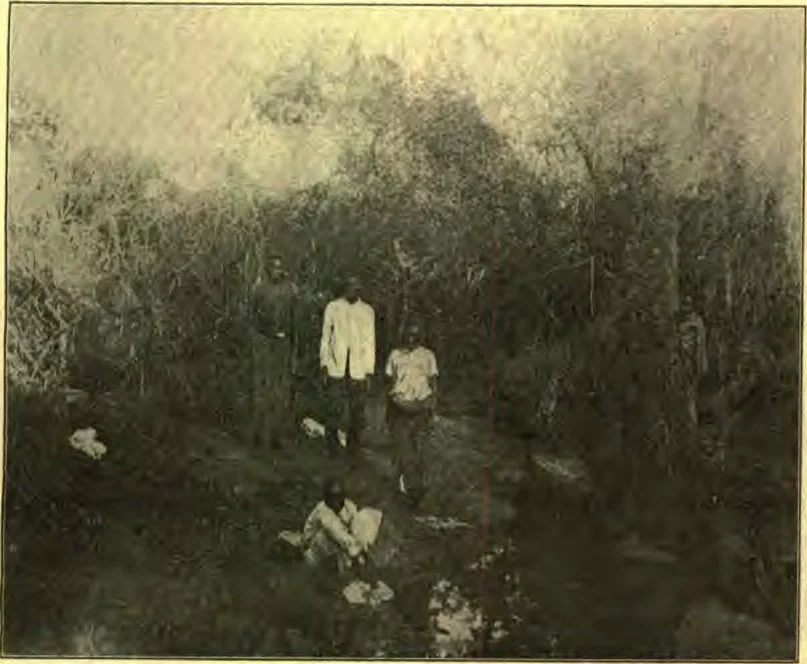
EVERY boy has in him the making of a man,—the African boy as well as his brother in other lands. In common usage, the full-grown African who works in the colonies, or serves on plantations or as a carrier in the interior, is called a “boy.” I am speaking, however, of the genuine African boy.
The man is very often spoiled in the making. This is true of every land. The fact is, though, that the African boy, bright-eyed, clear-faced, has small chance of learning much that might be helpful to him in getting ready for a useful life. His readiness to be taught—whether for good or for ill—is the thing that appeals to our hearts.
We shall be able to get better acquainted with the African boy in the next few years. Seven or eight years ago we became acquainted with two or three through the reports of our missionaries on the Gold Coast. Then sickness drove the workers away, and in the meantime our boy friends must have grown tall and strong; and all these years we have heard them appealing to be taught. One has now made his way to England, where he is studying. I hope when he is done with school, he will remember the needs of his home land, and be ready to help in the work. We surely must soon have a mission in West Africa again.
Later we learned of the Matabele boy. A few weeks ago our missionary journal printed a letter from one of these boys, “Jim,” now a teacher himself, telling of his gladness at the good things he had learned in the mission school from the word of God. That text, “God so loved the world,” he said, was a sweet message to him, and he appealed to us to send more teachers to carry the same word to the millions who do not know that there is a God who loves people. At eighteen or twenty these boys expect to be out teaching others the way of truth. They may be ignorant of many things, but when they know that Jesus Christ is a Saviour from sin,—their Saviour,—they have a message to bear that angels would rejoice to carry.
Now we shall learn of the Nyassaland people, through the mission just being opened. I have seen letters written by one or two of these Nyassa young men,—written in fairly good English, too. Already keeping the Sabbath, a number of young people are waiting for a thorough training in Bible truth, when they can go among the tribes as heralds of the coming Christ.
The knowledge of English brings temptations to these boys. Brother Booth told me that one young convert who was receiving about twelve dollars a month as a worker in the mission was offered fifty dollars a month by an official if he would work for the government as an interpreter. The offer made quite a stir in the mission circle.
It was wisely left for the people themselves to decide—whether the higher salary would justify accepting a position apart from God’s work, and one in which the Sabbath could not be kept.
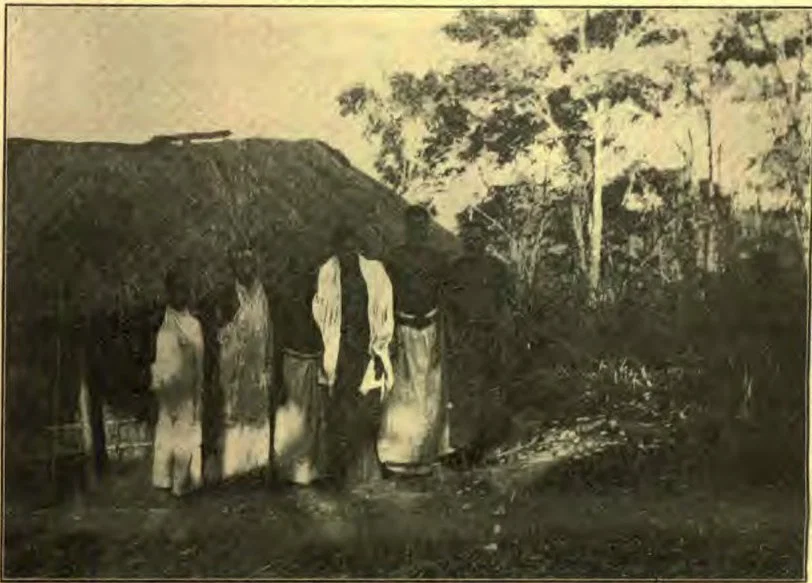
SIX OF TWELVE BROTHERS, SONS OF A CHIEF — NYASSALAND.
As these believers went over the problem, they decided that their baptism signified that they were ready to give their lives as Jesus did, if necessary, to be true and loyal to God. They had decided that twelve dollars was sufficient for an African teacher in Nyassaland to live upon. They therefore sent word to the official that they did not worship money, and that money could not buy their service from the missionary cause.
This temptation will meet the African youth continually, as European influences increase. It is so in all mission fields. Our own young people at home must every one be prepared to choose God’s call to service, as soldiers ready to endure hardness, as against the world’s offer of the higher salary and the apparently easier way. We are to teach people to be ready to forsake everything for the truth’s sake; and how can we so teach, unless our all is surrendered?
But a true heart beats in many a breast in Africa. The year 1886 is not so far in the past. There were sad and yet triumphal scenes enacted in the land just above the Nyassa country in that year. The king of Uganda, who, with some of his people, had favored Christianity, had just died. His son, M’tesa, tried to root out the truth from his kingdom. Many were slain for their faith, and many turned back to heathenism when danger appeared. Among those put to death were a number of young boys who had been associated with Mackay, the Scottish missionary, learning to read the Bible in their own tongue, and catching, also, the spirit of the martyrs of old. Refusing to give up their faith, they were tied to posts above piles of dry faggots. As the flames leaped upward, they took up the song of praise which they had learned to sing with the heart in their own Luganda speech:—
“Daily, daily, sing for Jesus, Sing, my soul, his praises due; All he does deserves our praises, And our deep devotion, too.
“For in deep humiliation He for us did live below; Died on Calvary’s cross of torture, Rose to save our souls from woe.”
Thus they sang, away in the heart of darkest Africa, until their tongues could no longer frame the words. Oh, there is power in the love of Jesus to make the young strong for service, and constant and true always!
Is it nothing to us that in the dark lands abroad, young people, with hearts like these, are asking for teachers? If the love of Jesus,—just that one thing, that greatest thing,—is but allowed to flame up in the hearts of our young people at home, we shall see the grandest missionary crusade that has ever carried light and blessing to darkened hearts in the Regions Beyond. We have every incentive to be true and loyal to God’s cause to-day. W. A. SPICER.

BOYS WASHING CLOTHES IN STREAM — OUR NYASSA MISSION

A Faithful Witness

When Paul was summoned to appear before Nero for his trial, it was with the near prospect of certain death. The nature of the crime charged against him, and the prevailing animosity against Christians, left little ground for hope of a favorable issue.
It was the practise among the Greeks and Romans to allow an accused person an advocate, to present his case and to plead in his behalf. By force of argument, by impassioned eloquence, or by entreaties, prayers, and tears, the advocate would often secure a decision in favor of the prisoner; or failing in this, would lessen the severity of the sentence. But no man ventured to act as Paul’s advocate; no friend was at hand even to preserve a record of the charges brought against him by his accusers, or of the arguments he urged in his own defense.
Paul before Nero—how striking the contrast! The height of earthly power, authority, and wealth, as well as the lowest depths of crime and iniquity, had been reached by the haughty monarch before whom the man of God was to answer for his faith. In power and greatness, Nero stood unrivaled. There was none to question his authority, none to resist his will. Kings laid their crowns at his feet. Powerful armies marched at his command. The ensigns of his navies betokened victory. His statue was set up in the halls of justice, and the decrees of senators and the decisions of judges were but the echo of his will. Millions of subjects bowed in obedience to his mandates. To incur his displeasure was to lose property, liberty, life. His frown was more to be dreaded than a pestilence.
Without money, without friends, without counsel, Paul had been brought forth from a dungeon to be tried for his life. His experience had been one of poverty, self-denial, and suffering. With a sensitive nature, that thirsted for love and sympathy, he had braved misrepresentation, reproach, and abuse. Shrinking with nervous dread from pain and peril, he had fearlessly endured both. Like his Master, he had been a homeless wanderer; he had lived and suffered for the truth’s sake, seeking to bless humanity and to live the Christ-life. How could Nero, a capricious, passionate tyrant, appreciate the character and motives of this son of God?
Paul and Nero face to face!—the countenance of the monarch bearing the shameful record of the passions that raged within; the countenance of the prisoner telling the story of a heart at peace with God and man. The result of opposite systems of education stood that day contrasted,—a life of unbounded self-indulgence and a life of entire self-sacrifice. Here were the representatives of two theories of life,—all-absorbing selfishness, which counts nothing too valuable to be sacrificed for momentary gratification, and self-denying endurance, ready to give up life itself, if need be, for the good of others.
The Jews brought against Paul the old charge of sedition and heresy, while both Jews and Romans accused him of instigating the burning of the city. While these accusations were urged against him, Paul preserved unbroken serenity. The people and the judges looked upon him with surprise. They had been present at many trials, and had looked upon many a criminal; but never had they seen a man wear a look of such holy calmness as did the prisoner before them. The keen eyes of the judges, accustomed to read the countenances of prisoners, searched Paul’s face in vain for some evidence of guilt.
When Paul was permitted to speak in his own behalf, all listened with eager interest to his words. Once more he had opportunity to uplift before a wondering multitude the banner of the cross. With more than human eloquence and power he presented the truths of the gospel. His words struck a chord that vibrated in the hearts of even the most hardened. Truth, clear and convincing, overthrew error. Light shone into the minds of many who afterward gladly followed its rays. The words spoken on this occasion were destined to shake nations. They were endowed with a power that would enable them to live through all time, influencing the hearts of men when he who uttered them would be silent in a martyr’s grave.
As Paul gazed upon the throne before him,—Jews, Greeks, Romans, with strangers from many lands,—his soul was stirred with an intense desire for their salvation. He lost sight of the occasion, of the perils surrounding him, of the terrible fate that seemed so near. He saw only Jesus, the Intercessor, pleading before God in behalf of sinful men. He pointed his hearers to the sacrifice made for the fallen race. An infinite price had been paid for man’s redemption. Provision had been made for him to share the throne of God. By angel messengers, earth was connected with heaven, and all the deeds of men, whether good or evil, were open to the eye of infinite Justice.
Thus pleads the advocate of truth. Faithful among the faithless, loyal among the disloyal, he stands as God’s representative, and his voice is as a voice from heaven. There is no fear, no sadness, no discouragement, in word or look. Strong in a consciousness of innocence, clothed in the panoply of truth, he rejoices that he is a son of God. His words are as a shout of victory above the roar of battle. He declares that the cause to which he has devoted his life is the only cause that can never fail. Though he may perish for the truth’s sake, the gospel will not perish. God lives, and his truth will triumph.
Paul’s countenance beams with the light of heaven. Many who looked upon him “saw his face as it had been the face of an angel.” Tears dimmed many eyes. The gospel found its way to the hearts of many who, but for Paul’s witness, would never have been led to the Saviour.
MRS. E. G. WHITE.

Aztec Education

From correspondence to the Mission Board

Aztec Education

II

Last week we noticed the instruction given the Aztec youth by his father. That imparted to the daughter by her mother is no less remarkable:—
“My daughter,” said the Aztec mother, “I have done my best to bring thee up well, and thy father has cared for thee, and polished thee as if thou wert an emerald, that thou mightest appear as a jewel of virtue. Strive always to be good; for if thou art not, thou wilt be despised. Life is laborious, and all our strength is necessary to obtain the goods which the gods send us; thou must therefore be neither idle nor negligent, but active in all things.
“Wherever thou goest, be modest: walk not hastily, and never mock people whom thou meetest; stare not at them, neither look to the right nor to the left. Answer with politeness those who speak to thee or salute thee. Employ thy hours in spinning, in weaving, in sewing, or embroidering; then thou wilt be esteemed, and wilt have wherewith to clothe and feed thyself. Do not sleep far into the day, rest not in the shade, do not abandon thyself to idleness; inaction gives birth to slothfulness and other vices.
“When thou workest, think only of the gods and the welfare of thy kinsfolk. If thy father or I call thee, quickly run to see what we want of thee, in order that by delay thou mayest not displease us. Never answer arrogantly, and never show repugnance to doing what thou art commanded. Abandon not thyself to the perverse appetites of thy body; for thou wilt then be the shame of thy people, and evil will pollute thy soul as mud pollutes water. Take care of thine own heart; remain at home; wander not about the streets nor in the market-place. Reflect that vice, like a poisonous plant, is death to him who tastes it; and that when it has taken possession of our souls, it is difficult to uproot it.
“My daughter, engrave my advice on thy heart, and thou wilt be happy. If by reason of not having listened to me or by despising my teachings, some misfortune should happen to thee, it would be thy fault, and thou wouldst suffer therefrom. May the gods help thee!”
Sentiments and proverbs like these were taught the children at home. They were especially warned against lying, stealing, killing, and dishonoring their parents. How strange that in the worship of their gods the youth were taught to rejoice in human sacrifices!
Separate schools were conducted for boys and girls, and again for the children of nobles and plebeians. The schools were usually near the temples. Priests were detailed to conduct the education of the children. Staid matrons looked after the girls in the seminaries devoted to them. Each girl who entered the seminary or nunnery had her hair cut, and divided her time between study and the service of the temple. There were several classes of nuns. Some entered because of vows for a short time; others, desirous of marrying well, sought the culture of the nunnery. Others were there who, after reaching a marriageable age, decided to serve in the temples; such took perpetual vows, and could never withdraw from the service. H. A. OWEN.

With a New Meaning

“Do you know, Gertrude,” she said, “I had such a surprise at Mildred’s!”
“What was it?” Gertrude asked, interested at once, for Mildred was a great favorite with the other girls.
“Well, we had mentioned Esther Morrill’s name, and Mildred leaned over to me and began: ‘They say, Helen——.’ I almost gasped, Gertrude; for you know that when anybody begins ‘they say,’ it means that there’s some unkind or unpleasant story to follow. I should not have thought anything of it from some of the girls, but Mildred is always so lovely and charitable that I was disappointed.”
“And what was the story?”
“That’s the best part of it,” Helen resumed. “She told me the sweetest story about Esther, and how she has given up her trip East, and sent her mother instead. I was so relieved, Gertrude! I couldn’t really believe that there would be anything unkind to say about Esther, and I didn’t want to think that Mildred would say it if there were. But I’ve heard that beginning a good many times, and I don’t wonder I was frightened for a minute. I’m surprised Mildred would begin that way.”
“Good for Mildred, I say,” Helen declared, with enthusiasm. “She’ll be doing a good work if she does even a little to change the atmosphere that hangs about those two harmless little words.”
“They say,”—the two words are almost always taken as indicating unkind, uncharitable gossip. Why should this be so? Can we not do a small part toward making them the sign and token of charity?—Selected.

Be Thou My Well, My Tree of Life

Be Thou the well by which I lie and rest; Be thou my tree of life, my garden ground; Be thou my home, my fire, my chamber blest, My book of wisdom, loved of all the best; O, be my friend, each day still nearer found, As the eternal days and nights go round! Nay, nay!—thou art my God, in whom all loves are bound!
— George MacDonald.

The Source of Power

THE strength of a chain is limited to the strength of its weakest link. If, therefore, we are connected with the source of power by a chain, the weakest link will be the limit to which we can avail ourselves of it. But if our connection is direct and immediate, there is no hindrance to the exercise of the mighty power of God.
God himself is the great source of power. It is his possession. “Power belongeth unto God.” And he manifests it according to his sovereign will; yet not in an erratic or arbitrary manner, but according to his declared purposes and promises.
God’s power is available power. . . . The risen Saviour, ere he ascended on high, said, “All power is given unto me in heaven and in earth. Go ye therefore”—disciple, baptize, teach all nations. “And, lo, I am with you alway, even unto the end of the world.” And again, “Ye shall receive power, after that the Holy Ghost is come upon you.” Not many days after this, in answer to united and continued prayer, the Holy Ghost did come upon them, and they were all filled. Praise God, he remains with us still. The power given is not a gift from the Holy Ghost. He, himself, is the Power. To-day he is as truly available and as mighty in power as he was on the day of Pentecost. But has the whole church, ever since the days before Pentecost, put aside every other work and waited for him for ten days, that that power might be manifested?
It is not lost time to wait upon God. May I refer to a small gathering of about a dozen men in which I was permitted to take part, a number of years ago? We, in the China Inland Mission were feeling greatly the need of divine guidance in the matter of organization in the field, and in the matter of reinforcement, and we came together before our conference to spend eight days in united waiting upon God—four alternate days being days of fasting as well as prayer. It was November, 1886, when we gathered together; we were led to pray for one hundred missionaries, to be sent out by our English Board in the year 1887, from January to December. And, further than this, our income had not been elastic for some years; it had been about twenty-two thousand pounds, and we were led in connection with that forward movement, to ask God for ten thousand pounds in addition to the income of the previous year. More than this we were guided to pray that this might be given in large sums, so that the force of our staff might not be unduly occupied in the acknowledgment of contributions. What was the result?—God sent us offers of service from over six hundred men and women during the following year, and those who were deemed to be ready and suitable were accepted, and were sent out to China; and it proved that at the end of the year exactly one hundred had gone. What about the income?—God did not give exactly the ten thousand pounds we asked for, but he gave us eleven thousand pounds, and that eleven thousand pounds came in eleven contributions; the smallest was five hundred pounds, say $2,500, the largest was $12,500, or twenty-five hundred pounds. We had a thanksgiving for the men and the money that were coming in November, 1886; but they were all received and sent out before the end of December, 1887.
God is the ultimate source of power; and faith is the hand which lays hold on God. And how important is that hand! If the contact of faith with the living God be to any extent broken, may it not again be true, as in the days of his flesh, that he can not do many mighty works because of our unbelief? How important is faith, and what is this so essential faith? Is it not simply the recognition of, and reliance upon, God’s faithfulness? Is it not simply reliance on the fact that faithful is he who hath promised, who also will do it? With this faith in lively exercise, God may manifest himself as he never has done. We are living in days of wonderful missionary successes, but we may see far more wonderful things in days to come.—J. H. Taylor, at Ecumenical Conference, New York.

Shine in the Home

BE a light to all who are in the house. Shine where you live. Go on the unpleasant errand without bewailing the necessity. Respond to the call for help cheerfully. Commend often, censure only when you must. The lights of kindness, gentleness, patience, and consideration should never go out; we should keep the light of a holy example always burning.
A boat went out to sea, carrying a father and daughter. A terrible storm came up as they were hurrying back. The coast was dangerous. The mother lighted a lamp, and started up the worn stairway to the attic window. “It won’t do any good, mother,” the son called after her. But the mother went up, put the light in the window, knelt beside it and prayed. Out in the storm the daughter saw a glimmer of gold on the water’s edge. “Steer for that,” the father said. Slowly but steadily they came toward the light, and at last were anchored in the little, sheltered harbor by the cottage. “Thank God!” cried the mother, as she heard their glad voices and came down the stairway, with the lamp in her hand. “How did you get here?” she asked. “We steered by mother’s light,” answered the daughter, “although we did not know what it was, out there.”
“Ah!” thought the boy—a wayward boy—“it is time I was steering by my mother’s light;” and ere he slept, he surrendered himself to God, and asked him to guide him over life’s rough sea. Months went by and disease smote him. “He can not live long,” was the verdict of the doctor; and one stormy night he lay dying. “Do not be afraid for me,” he said, as they wept; “I shall make the harbor, for I am steering by my mother’s light.”—Illustrator.

On Expectation

EXPECTATION is one of the mighty motive powers that move the will to aim, action, and achievement.
Columbus discovered America. Put more truly, expectation in Columbus discovered America. Confident expectation of discovery made him a discoverer. Expectation of a united Germany in Bismarck in 1834 brought its realization in the German Empire in 1870.
Expect to amount to nothing, and the grooves of uselessness are oiled for you. Expect to be somebody, and nobody but yourself can prevent you.
Expect to do something worth while that the world needs to have done, and you have all the room and time and chance necessary.
Expect to be respected, and you will be, if respectable. Self-respect wins other respect.
Expect to educate yourself, and, school or not, you will do it, if you are willing to pay the price.
Finally, we ought to expect great things from God. That is the attitude and spirit which fit man to do great things for God.—Selected.

May Study of the Field

Suggestive Program for Young People's Meeting

(July 12)
I. OPENING EXERCISES.— Scripture reading. Romans 10.
2. Remarks by the Leader.—The meaning of the Martinique disaster. (For facts, see INSTRUCTOR, June 19.)
3. Field Study:—
  • (a) Education among the Aztecs, and what we may learn from it.
  • (b) Christian education a means of reaching the heathen. (See reports from our schools in mission lands.)
  • (c) Elder Conradi's visit to Egypt.
  • (d) Reports of progress during the month. (A map may be used profitably with this exercise.)
4. Closing Exercises:—
  • (a) A brief mention of fields yet unentered by the message.
  • (b) Season of prayer.
NOTE.—Material for this study may be found in the Review and the INSTRUCTOR for June. If you do not have a map for use, an outline map may be drawn on a large sheet of paper, and the fields mentioned designated. After a study of the vast field to which the third angel's message is going, ten or fifteen minutes may be spent profitably in prayer for the workers in these fields, and for those who will yet go. Read the article on “The Source of Power,” if you want some facts on the relation of prayer to the progress of the gospel.

Courtesy Is Not a Marketable Commodity

COURTESY is not a marketable commodity.

A Suggestion:

A FEW weeks ago a letter written by Mrs. Annie S. Booth, wife of our missionary to Nyassaland, was received by the sisters of the Battle Creek church, asking that a supply of clothing suitable for the natives be made up and forwarded. A set of patterns, with descriptions and samples of the material best to use, were also received.
The church school, in its sewing department, has prepared a number of complete sets of pattern garments. One set of these, with corresponding paper patterns, has been taken by every district in the church; and the sisters in each district will make a number of each kind of garments. In her letter, Sister Booth says they “can never have too many.”
It has been suggested that some of the Young People’s Societies might like to help in preparing garments for this first shipment. Those who are interested should write to the Corresponding Secretary, Mrs. L. Flora Plummer, 705 Northwestern Building, Minneapolis, Minn., for particulars, patterns, and full directions. If any think of taking up this work, they should do so at once.

Maple-Tree Pluck

WHEN it dropped its leaves last autumn, one young maple tree promised great things for this summer. Its trunk had reached a diameter of fully three inches, and its bushy top suggested a welcome and delightful addition to the comfort of our small piazza, in the shade it would cast during the hot morning hours.
But, alas! ere the buds swelled in the spring, we awoke one morning to find the trunk of the maple tree splintered and broken, while its spreading boughs lay prostrate on the ground. We never knew how it happened. Conjecture failed to explain the unhappy event, and we could only expect the sad end of our maple tree, and hold our peace.
All through the freeze and thaw, snow and ice, wind and rain, of early spring the remains of the tree stood by the porch, a stump two feet high, with the bark frayed at the top. But lo! when the robins began to twitter, and the great maples behind the house put out their foliage, we noticed a bright shoot on one side of the stump, and, as if it were impossible to remain lifeless when everything else was flourishing, the young maple soon produced a leafy bunch to flutter in the breezes, and glow like a red pennant in the sun. The branch grew so rapidly that it bade fair, before the summer passed, to repair much of the damage that had been done to the tree by replacing the old top with another, nearly as large and just as beautiful.
But, once more alas! Glancing out one day, I missed the flutter of the tender branch, and looking more closely, saw that it had certainly disappeared. Some ruthless hand, in passing, had thoughtlessly plucked it away, and the poor stump was left as naked and cheerless as before. Now, I thought, my tree is ruined indeed. It will never have courage to try growing again, after all these painful and cruel reverses.
But I little realized the patience and perseverance planted within the heart of every thing that has life,—even the dumb things all about us. One day a little later my attention was unexpectedly attracted to a second sprout peeping out at the side of my tree stump; timidly, as if fearing further injury at the hand of the world, which, hitherto, had used it so ill,—yet bravely, too, because in spite of these injuries, it yet dared venture forth once more. The new-born sprout climbed safely into the sunlight, and after a little, another red branch appeared on the opposite side of the stump, and presently another. There are now three of them, all growing lustily, all tall and graceful, all giving promise of future beauty and blessing.
It is summer now. The blue-grass grows high at the foot of the tree, and clover blossoms, white and red, mingle with it, while the white heads of seeding dandelions outnumber their blossoms. Everything is teaching beautiful lessons, but none more beautiful than our brave maple tree, as the sun shines through its trembling, transparent leaves till they resemble nothing so much as slices of apple-jelly arranged on a stem. How plainly it tells us to take courage in adversity; not to despair at misfortune; to meet rebuff and cruelty with meekness and efforts to repay evil with good; and more than all, to persevere in any good work. The maple tree possessed no resources save its God-given life, but it has made the most of that, and none can say it is not doing well. Even so, “through God we shall do valiantly,” if, as human beings, we lay claim to at least mere maple-tree pluck.
MINNIE ROSILLA STEVENS.

Hepatica Triloba

Round-lobed Hepatica, Liverleaf, Liverwort

Description.—Corolla absent; sepals five to nine, generally blue or bluish-purple, but frequently white or flesh-color; flowers numerous, appearing before the leaves, and each borne on a separate hairy scape. Leaves smooth and evergreen, and somewhat leathery in texture, each consisting of three broad, rounded, entire lobes. All the leaves are radical, borne upon long, hairy petioles. Situated a little below the flower is an involucre of three entire, ovate, obtuse bracts resembling a calyx. All these parts are shown plainly in the illustration.
A few new terms are used in this description. A “scape” is a peduncle, or flower-stalk, that arises from the ground, or at least from very near the ground, and not from a stem higher up. “Entire,” used with reference to leaves, means that the edges are even, and not at all toothed, notched, or divided in any way. “Ovate,” shaped like an egg, with the broader end downward. “Obtuse,” blunt or round at the end.
The hepatica is a common plant throughout the eastern and central part of the United States. It grows chiefly in woods, but frequently in pastures or on sunny hillsides. The different names applied to this plant were doubtless suggested by the fancied resemblance of the leaves to the shape of the liver.
The species here described shows a preference for the south side of hills. Another species, called Hepatica acutiloba, or sharp-lobed hepatica, has the lobes of the leaves pointed, sometimes more than three. It prefers the north side of hills.
The hepatica is a beautiful little plant, and one of the earliest harbingers of spring. It often blossoms before the snow is entirely gone, and sometimes may be found in bloom near a lingering snowdrift, or even beneath the snow.
From its frail, delicate appearance, one would naturally think that it would not bear rough treatment; but the fact is that it is able to endure more storm and cold and hardship than many more robust-looking plants.
We can not always tell from appearances how much vitality the Creator has put into his creatures. Not infrequently men who are apparently in perfect health, and who seem to possess almost unlimited strength and vigor, are stricken down by disease or sudden death; while many who appear puny and delicate live on to a good old age, with but few if any days of sickness. This uncertainty with reference to the measure of our endurance should teach us the importance of living in accordance with all the light that has been given to us on the subject of health.
B. E. CRAWFORD.

Green Things Growing

O, THE green things growing! the green things growing! The faint, sweet smell of the green things growing! I should like to live, whether I smile or grieve, Just to watch the happy life of my green things growing.
O, the fluttering and the pattering of those green things growing! How they talk each to each, when none of us are knowing; In the wonderful white of the weird moonlight Or the dim, dreamy dawn when the cocks are crowing.
I love, I love them so—my green things growing! And I think that they love me, without false showing; For by many a tender touch they comfort me so much, With the soft, mute comfort of green things growing.
And in the rich store of their blossoms glowing Ten for one I take they're on me bestowing; O, I should like to see, if God's will it may be, Many, many a summer of my green things growing.
— Dinah Mulock Craik.

Believe in Others and They Will Believe in You

BELIEVE in others, and they will believe in you.

Praying for Others' Faults

“IN praying for others’ faults, recollect how long you have been correcting your own.”

Habits Hard to Break

Habits are soon assumed, but when we strive To strip them off, ’tis being flayed alive. — Cowper.

Industry Improves Talent Where Genius Falls Short

NEVER depend upon your genius; if you have talent, industry will improve it; if you have none, industry will supply the deficiency.— John Ruskin.

Unwelcome Guest: A Verse on Gossip

In my poor house a most unwelcome guest Is John, or Mary (never mind the rest), Who talks of others with a hateful glee. Change but the house, and so they talk of me.
— Selected.

Freely Given Gifts and the Value of Character

WHATEVER we have bought for money we have a right to sell for money; but that which God has freely bestowed upon us, we must give likewise—freely to all. A man who will sell his character, will steal when he has no longer a character to sell. DAVID PAULSON.

E. R. PALMER

THIS may seem a paradox; and, indeed, it is one of the many blessed paradoxes of the gospel. We have nothing until it has been given away; we increase by scattering, and decrease by withholding. All through his ministry, Jesus taught the riches of poverty and the poverty of riches.

E. R. PALMER

Forget Your Neighbors' Faults for Happiness

If you would increase your happiness and prolong your life, forget your neighbors’ faults. Forget all the slander you have ever heard. Forget the temptations. Forget the fault-finding, and give a little thought to the cause which provoked it. Forget the peculiarities of your friends, and remember only the good points which make you fond of them.—Lutheran.
Continue reading: In Tommy’s Care