The Youth’s Instructor, Vol. 67, No. 10.

What Do We Plant When We Plant the Tree

The Youth’s Instructor

Mar 11, 1919

Review and Herald Publishing Assn. · Takoma Park Station, Washington, D. C. · Mar 11, 1919

What Do We Plant When We Plant the Tree
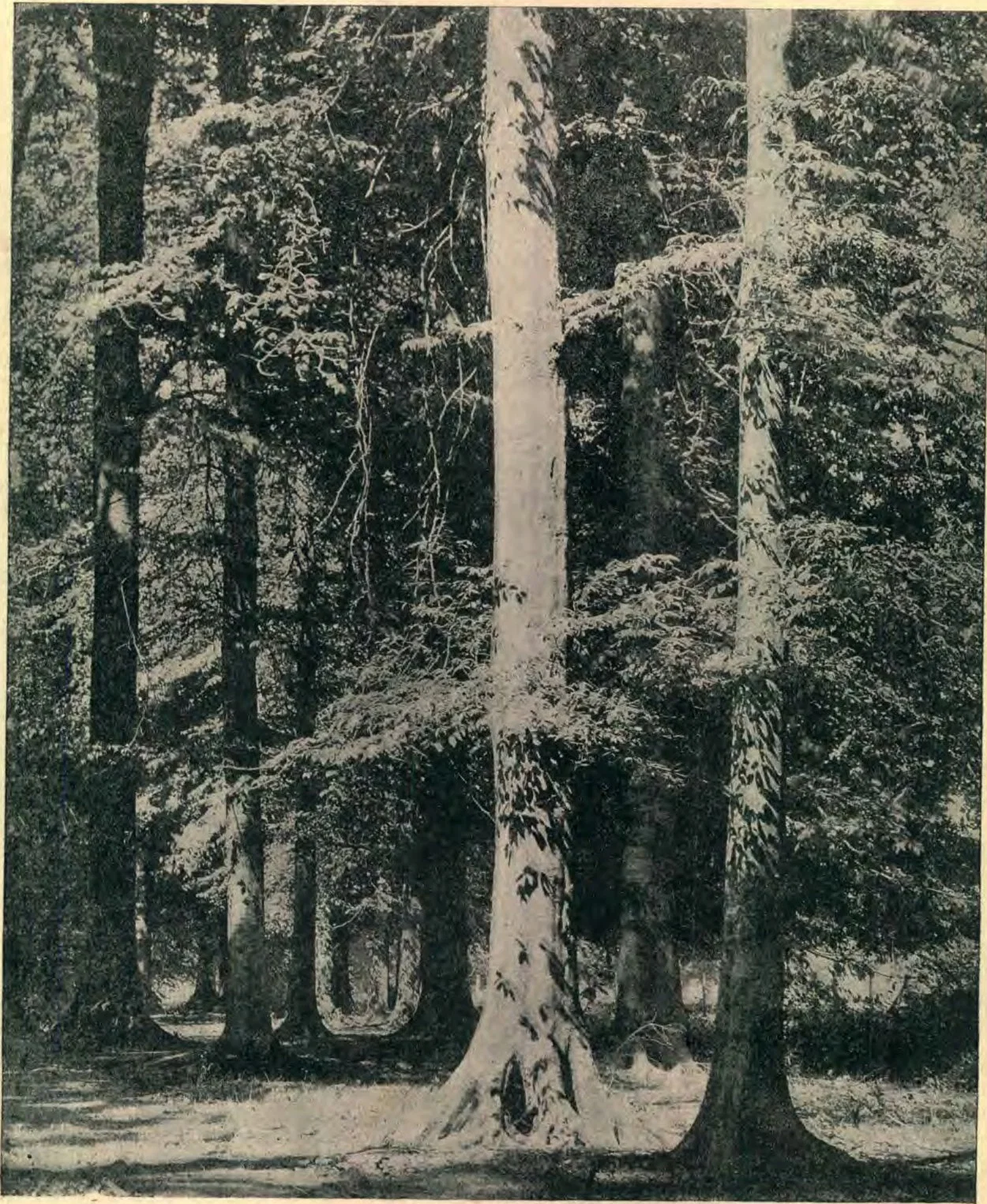
What do we plant when we plant the tree? We plant the houses for you and me; We plant the rafters, the shingles, the floors: We plant the studding, lath, the doors, The beams, the siding, all parts that be: We plant the house when we plant the tree.
What do we plant when we plant the tree? A thousand things that we daily see: We plant the spire that outtowers the crag; We plant the staff for our country's flag; We plant the shade from the hot sun free,— We plant all these when we plant the tree. — William A. Bixler.

Brief News Items from Around the World

Five planets were visible during February,— Saturn, Jupiter, Mercury, Venus, and Mars.
California has four women members of the State assembly for the first time in its history.
Paderewski, the celebrated pianist, is now prime minister of the provisional government of Poland.
France has honored America’s participation in the war by naming one of its streets Avenue du President Wilson.
Ninety-two earthquakes were recorded on the seismographs located in Washington, D. C., during the year 1918.
“Seventy-two German planes shot down” is the unexampled record of Col. William Bishop, of the Canadian Royal Flying Corps.
Now that national prohibition is assured, saloons in various cities are being converted into community clubs for both old and young.
Two hundred twelve airplanes recently flew over San Diego, California, in battle formation, maneuvered two hours, and landed without a mishap.
M. Clemenceau, the French prime minister, and chairman of the Peace Conference, by nomination of President Wilson, was attacked by an anarchist on February 19. None of the seven shots fired proved fatal.
An American naval seaplane recently broke the world’s record for passenger carrying, by flying with fifty passengers. The plane was equipped with three Liberty motors of 385 horsepower each, and it traveled seventy-two miles an hour.
The largest poison-gas plant in the world is located twenty-six miles from Baltimore, Maryland, and was completed about the time of the signing of the armistice. The 2,500 tons of mustard gas manufactured there, enough to kill every human being on our continent, will probably be taken to sea and sunk, since it is heavier than water.
No less than 84 archdukes and archduchesses belonging to the fallen imperial family of Austria are in dire poverty owing to the revolution. They have been deprived of their state incomes by the new republics which have arisen on the ruins of the old Hapsburg empire, and they have either been expelled from the imperial palaces or, in some cases, are in momentary expectation of being expelled.
John Pratt was the first man to make and sell typewriters. He took out his first patent on Dec. 1, 1866, only a little more than half a century ago. It was United States Patent No. 3,163. By 1889 there had come to be thirty typewriter factories in the United States, having an aggregate capital of $1,500,000, and an annual output valued at $500,000. Now there are eighty-nine factories making typewriters and typewriter supplies, with a capital of $26,300,000 and an annual output worth $20,000,000.
In round numbers there are 400,000 miles of railroad in the United States, 65,000 locomotives, and 2,500,000 cars of all kinds. A billion passengers are carried in an ordinary year, and nearly two billion tons of freight.
Mail is now carried daily from New York to Washington, D. C., by airplane in two hours. It is suggested that the $1,500,000,000 worth of aeronautic equipment built for the war be used in the postal service.
In October, 1918, America manufactured 5,603 airplane engines. This is more than the total production of France and England during the whole four years of the war.
More than $1,000,000 worth of gold leaf is imported into Siam annually, of which 90% is used to gild idols, temples, and royal property.

About the Army

An army corps is...60,000 men.
An infantry division is...19,000 men.
An infantry brigade is...7,000 men.
A regiment of infantry is...3,000 men.
A battalion is...1,000 men.
A company is...250 men.
A platoon is...60 men.
A corporal's squad is...7 men.
A field battery has...195 men.
A firing squad is...20 men.
A supply train has...283 men.
A machine gun battalion has...296 men.
An engineers' regiment has...1,098 men.
An ambulance company has...66 men.
A field hospital has...55 men.
A medical attachment has...13 men.
A major general heads the field army and also each army corps.
A brigadier general heads each infantry brigade.
A colonel heads each regiment.
A lieutenant colonel is next in rank below a colonel.
A major heads a battalion.
A captain heads a company.
A lieutenant heads a platoon.
A sergeant is next below a lieutenant.
A corporal is a squad officer.— Free Methodist.

The Lighthouse and Its Keeper

ON a sunken rock in the open sea Stood a lighthouse high and strong; And the lamp was there with its splendid flame, And the keeper, all night long.
But the keeper had naught of pity or love; A hard, selfish man was he; He shaded the lamp, and sent out no light O’er the dark and perilous sea.
Safe in comfort himself, the nightly ship Might strike, or go safely by. “Let them strike, and go down, who cares?” said he; “Men have only once to die.”
One dismal night, by a strong wind driven, Came a ship with all sails spread: No one thought of danger; for no one knew Of the sunken rock ahead.
Fast sweeping along, came the sail-clad ship, The white foam leaped from her prow; “All’s well!” cried the watchman, pacing the deck; “All’s well!” passed from stern to bow
But scarce died away had the watchman’s cry, When crash,— plunged the ship to her fate; And there was the beacon that would have saved; But ’twas seen, alas! too late.
The men of the ship are the heathen world; The beacon, the Book of God; The keeper, the Christian who shades his lamp, And sends not its light abroad.
— The Children’s Record.

Keeping a Light for the Lost

MATILDA ERICKSON

Our Business Here

ONE night, a year ago last winter, a young man was driving across one of those wide, sparsely populated plains in Canada. He was on his way home—or thought he was. But the night was dark; the snow was deep; and his horses were very tired. After driving for some time he became considerably alarmed, for he realized that he had missed the trail. He did not have even the faintest idea in which direction home lay. It was bitter cold, and he was about to give up in despair. He and his horses were too nearly exhausted to hope to keep moving through the night. But in that hour of seemingly hopeless despair, he discovered a faint light in the distance. Not once did he take his eyes away from it, and as he struggled toward it, it grew brighter and brighter. He was lost; but through the rays of that one light, he found his way home. What if the light had not been burning brightly that night?
We shudder at the thought! But what of the lost ones who are wandering about in the dark night of sin? Are you keeping a light burning for them? It is our business to keep a light for the lost. That is God’s purpose for our lives. And it is the purpose that controls the life of every truly converted young person. Finney, in one of his earnest appeals for keeping a light for the lost, said, in effect, that Christians are here to save others, and “if they are not doing it, they had better be dead.”
It is a sad and serious fact, however, that many young Christians, while longing for a home in the earth made new, do not seem to realize that it is their duty to keep a light for the lost. Yet, of course, we cannot shirk responsibility. It is born with us, so the Master pleads patiently and lovingly with us to do our duty. The night of sin is very dark. Dangers are on every hand. Soon probation will close, and then it will be too late to hold up a light for the lost. Now is the time to keep it shining brightly; and what the Master needs today is earnest young Christians who will be bright lights in this dark night of sin. Or, as Henry Drummond once said, “What the cause of Christ needs is not so much more of us, but a better brand of us.” Yes, there are enough Missionary Volunteers in your society to keep a light for the lost in your community. The question is, Are you the brand he can use? If not, will you not let him make you a better brand—the brand he can use in his service? If you will let him, the Master will save each one of you from a selfish, shallow religious experience—an experience that will be a smutty, flickering light, confusing those who see it—and make you a beacon light for others.

The Power of Example

“But it doesn’t make any difference what I do. My influence doesn’t count,” said a young woman when an older friend was pleading with her to do differently, if for no other reason than for what her example meant to her chums. That young woman was mistaken—sadly mistaken—in thinking she had no influence; and so is every other young person who takes that position. Your example is sure to count for good or ill.
A man who had been a Christian wandered away from God. After spending thirteen years in the wilderness of sin, he again became a Christian. Then he began to labor for his children, but his confession after repeated efforts was: “Every one of them has gone over to infidelity. Because of thirteen years of failure, I have lost them all.”
That poor heartbroken father’s influence might have been very different. And your influence over others may be very different from his if you will stand firmly for the truth, and follow the Master day by day. Like the Swiss guide, you may be the means of saving others who are sliding down to death.
One day two tourists were climbing together. Suddenly one slipped, and, as they were tied to the guide, it seemed that surely all three of them would go over the precipice. But the Swiss guide knew exactly what to do, and he did it without delay. He quickly stuck his large pick deep into the ice, and when the strain came to him, he stood his ground, and those bound to him were saved.
Just so, if you will keep close to the Master, you too will know exactly what to do, and if you do it, he will bless you in saving some who are bound to you by the cords of influence. Henry M. Stanley confessed that the influence of Livingstone’s beautiful life won him for Christ. An atheist who visited Fénelon once said: “If I stay here much longer, I shall be a Christian in spite of myself.” Such is the influence of a beautiful, consistent Christian life. It is well-nigh irresistible. So clearly, brightly, and steadily does it shine on the pathway of others that they are left without excuse if they do not reach home.

The Everyday Life

What about your everyday life? Is it clear and bright so that the light from heaven can shine through it on the pathway of others? Or is it dim and hazy, and sometimes pretty dark with smoke? Jenny Lind, the famous singer, met such questions, and her answer to them caused her to leave the stage when she had reached the pinnacle of fame. Some time after this, while she was sitting on the beach one afternoon, a friend came to her and asked her reason for abandoning the stage. “Why,” said she quietly, “how could I do otherwise, when every day it made me think less of this [laying her hand on the open Bible in her lap], and nothing at all of that [pointing to the glorious sunset]?” Jenny Lind was right. There is no other way for the Christian to do who would keep a light for the lost. If anything in his daily life is making him think less of God, that thing is darkening the light he carries for others. His conduct, his work, the way he does it, his personal appearance, and his recreation all affect his light for the lost.
But what are some of the things in everyday life that will help to keep the light burning brightly for others? Let us mention first as fundamental to all others—a spirit of genuine unselfishness seasoned with warm sympathy for others. Selfishness in a Christian almost, if not entirely, extinguishes his light. But when Christians reveal genuine Christlike unselfishness, the bright, warm rays emanating from their lives draw others heavenward. Then, to be humble and courteous in dealing with others, to be patient and forbearing when friction arises, to be earnest and enthusiastic in all service, and to be warm and friendly always will also help to keep the lamp of life trimmed and burning.

Our Recreations

And now let us consider recreation: The other day I picked up a book containing short studies on various topics. Opening it at random, my eyes fell on this topic, “About Questionable Amusements.” Here are the first sentences of that study: “We have come to a most serious problem. Perhaps the Christian himself needs this study as much as the non-Christian. No one can ponder the alarming increase of the spirit of worldliness in the church of Christ without realizing that before it can do the work which the Master has set it to do, a new era of self-denial must dawn.”
“Oh, I’ll do it just this once,” or “Really, this cannot be so bad,” says a young person. But you cannot safely pursue such a course. If you do pursue it, where will you draw the line? Will you draw it so as to allow yourself a few things your conscience does not approve? If you do, you have broken down a part of your intrenchments, and are almost sure to become a prey of the enemy. Says one writer on this subject: “The place of undoubted right is at once the safest to occupy and the easiest to maintain, and it is bad generalship to try to intrench at any other point.” So take a firm stand for what is right. Do not compromise with wrong, for compromising with wrong opens a door to endless trouble.
You may say that you can compromise occasionally without hurting your own experience. Are you sure that Satan is not deceiving you? However, let that be as it may; but do not forget for an instant that if you compromise with wrong, you cannot be a successful personal worker. The following bit of conversation points out one of the many young Christians who have failed because of compromise.
“Bessie,” said her brother, “have you ever asked Will if he is a Christian?” Will was the young man to whom she was engaged. She replied that she had not as yet, but was going to do so tomorrow night, “when we are at the ball.” Later her brother asked her if she had asked Will about his soul.
“Yes, I did.”
“What did you say?”
“I asked him if he was a Christian.”
“What was his reply?”
“He said, ‘No, are you?’ I told him yes; but he said, ‘Why, what are you doing here then?’”
Nor is he the only young person who has felt that Christians should not indulge in the pleasures that Satan has monopolized.
If you would protect your own spiritual life and if you would not be a stumblingblock to others, say with Mr. Beecher: “I take my stand against all demoralizing pleasures.” Never lend your influence to evil in any way. When you are in a group of lively young people, do not forget your contract with the Master. Do not laugh at sin. Do not exalt vice by word or deed. And do not ridicule virtue. Never compromise with evil—not even with the appearance of evil—but live in “that grander liberty of self-mastery which adds neither sorrow nor regret.”

Our Personal Appearance

“What have the clothes I wear to do with my Christian experience and with my soul-winning work?” you ask. “Very much, indeed” is the answer given by thousands of personal workers. So often clothes speak louder than words; for “dress,” as Frances E. Willard said, “is an index to the character.” The personal appearance of Christians is sure to affect their light for the lost; and this is true of young men, though perhaps not to so great a degree, as well as of young women. Both young men and young women have abundant opportunity to exemplify Christian simplicity in their clothes.
One young woman became aware of the fact that her clothes “preached to others.” Every day she crossed the city to her work. Somehow she seemed different from the swarm of young women who daily crowded the car. Finally the conductor approached her.
“Pardon me, madam,” he began, “if I ask you a question. But every day the neat, tasteful simplicity of your dress has attracted my attention. And I am curious to know why you dress as you do.”
“May I ask you a question before I answer yours?” she said pleasantly.
“Surely.”
“Why do you wear that uniform?”
“Oh, I wear that to show folks that I am employed by the traction company.”
“Well, I dress as I do to show all around me that I am a follower of Jesus Christ.”
That is a good reason for not following the fashions of the world. She found in her clothes another opportunity to witness for the Master, and she used it to his glory and for the good of others.
“Dear youth,” says the spirit of prophecy (Testimonies, Vol. III, p. 376), “a disposition in you to dress according to the fashion, and to wear lace, and gold, and artificials for display, will not recommend to others your religion or the truth that you profess.” But if you make your personal appearance harmonize with your religious convictions, it will help brighten the light you keep for the lost.

Waiting for You

“Dr. Adams came to his home one night, after he had preached a sermon, with a great burden upon him for the soul of another man. He sat down before his fire, and the burden would not lift. He retired to his room for the night, and still there was the greatest concern, which increased rather than diminished. At last, because he could find no rest, he made his way across the city, and, when he reached the house of the gentleman, it was apparently all dark, and he said to himself, ‘How perfectly foolish that I should come here when they are evidently all asleep!’ But he had no sooner touched the bell than the door was opened by the gentleman himself. The tears started as, putting out his hand, he said, ‘Dr. Adams, you are the very man I wanted to see.’ He led him into his library, and in a very short time the minister had led him to Christ. The man became one of the most efficient members of the church in that city.”
Thousands of others are waiting to be led to Christ. Will you keep your light burning for some of them? Of course, it will cost you something to do that. First comes the full and unconditional surrender that lets Christ into the heart and gives him full control, for he is the light we all need. Then there must be unbroken communion with the Master and his sacred Word. Finally, there is need of implicit obedience to all the Master’s wishes.
Yes, it costs something to keep a light burning for the lost—it costs everything; but, my dear young friend, it is also worth everything. Aside from the joy of finding the Saviour yourself, life holds no sweeter privilege for you than that of leading others to him. That is the noblest service any young Christian can render. It is the highest position any mortal can fill. And lost ones out in the dark, dark night of sin are waiting for you to help—waiting for you to light the way. Shall they wait in vain? Or will you keep a light for the lost?

The City of Bangkok, Siam

[One of our readers from Siam sends the following sketch of Bangkok:]
SIAM is, at the present time, one of the unentered fields, being part of the territory of the Malaysian Union Conference, but it is reported that some workers are soon to be sent out from the States. A few facts regarding its chief city, Bangkok, might therefore be of interest to those who desire to know something about this part of the field.
The city lies a considerable distance up the river Menam, and it takes a steamer about four hours to get to it after crossing the bar. The water being deep, ocean-going vessels from Hongkong and Singapore are able to proceed right up to the city and berth alongside the wharves. As the vessel enters the mouth of the river, one’s gaze falls on the luxuriant tropical growth lining the banks, with villages at almost every bend. The first intimation one has of approaching the city is the sight of the rice-mill smokestacks. Rice production is one of the principal industries here, hence there are scores of rice mills to be seen on both sides of the river.
On landing, one has a choice of conveyance, there being jinrikishas, electric trams, pony traps, and motor cars. The tram lines here are laid at the very edge of the road, this being an advantage for traffic, whereas in Singapore the lines are laid in the center of the road. The traps in use are phaetons and drays. The latter are used for the conveyance of luggage and cumbersome articles, and they all have the same dusty and untidy appearance. The phaetons are rubber tired, and these, as well as the drays, are drawn by ponies, either singly or in pairs. These animals are slightly larger than Shetland ponies, and it is rather odd to observe them in harness after being accustomed to see the same work done in Singapore by large horses.
The city is intersected with canals, known in Siamese as klongs, and although the water is very muddy looking, the people, especially the children, take delight in bathing in it, doing so at all hours of the day and for some hours after sunset. At one time the water supply of the city was entirely dependent on the river; and in consequence of the garbage thrown into it, it was not surprising to find epidemics taking a heavy toll yearly. Improvements have now been made, with the result that water mains have been laid, and the public has clean, fresh water.
In view of the fact that Buddhism is the national religion of the Siamese, there are monasteries and temples everywhere. These structures, known in Siamese as wats, are very massive, with numerous minarets, and the stone walls look more suitable for fortresses than for temples. Every day the occupants, dressed in yellow robes, go about soliciting alms.
One who is not acquainted with the Siamese language finds himself greatly handicapped, as, unlike other cities in the Malaysian Union Conference, where one is able to communicate with the natives either in English or Malay, down here Siamese is practically universal among the Siamese, Chinese, Malays, and Indians. The Siamese people are very polite and sociable, and although some authors have pictured them as being uncouth in appearance, this is a mistake; it is only the villagers and agriculturalists who can be said to come under that description. The city people, especially those of the middle and upper classes, are very fair in complexion and have good features, typical of Anglo-Indians. The national dress is somewhat queer. The men wear ordinary coats, with stockings that reach up to the kneecaps, while the upper part of the attire resembles the baggy trousers worn by Turks. The women, in the majority of cases, wear the latter also, together with blouses.
Most of the Siamese, Malay, and Chinese schoolboys dress uniformly; whether by order or not, the writer is unaware. They wear white coats, with black shorts that lack much of reaching the knees, and straw hats, and go about barelegged. The boy scouts, in uniforms of various hues, are to be seen everywhere, owing to the king’s taking a personal interest in the movement.
Considering present world conditions, living here is very cheap, with an abundance of luscious tropical fruits always obtainable. The whole city is lighted by electricity, and as this power can be supplied at a low rate, very few houses, even among the natives, have oil lamps.
To those unaccustomed to a tropical sun, the climate here would be very trying, as the heat is great, and it is only during the latter months of the year that the wet season sets in.

Fireside Pictures

MAE HARRIS SANDERS
Come now, children, gather ’round me, Let your games and playthings lie. Come and listen to Aunt Mary Tell you of the days gone by. Gather close, you restless darlings, Right beside Aunt Mary’s knee; In the cozy, glowing fireplace Living pictures we shall see.
See that dancing little streamlet Through the woods and valleys glide? Now look sharp and you will see A tiny cottage by its side. Such a humble little cottage, Neither windowpane nor door; No soft rugs for baby footsteps, Mother Earth has formed the floor.
See another blazing fireplace, And a mother with her boy; He is tracing words and figures In the sand with childish joy. In that homely little cottage, By the firelight’s fitful glow, Gems of thought were learned and treasured By this lad of long ago;
For his mother was his teacher, And his textbook was God’s Word. Children, ’twas the great man Lincoln, Who the hearts of all has stirred. You have heard that old, old story Written on the “sands of time,” “Lives of great men all remind us We can make our lives sublime.”
Thus he chose the noblest pattern, Through the years of grief and strife; Love and truth, and humble service, Was the motto of his life. Now the childish eyes are drowsy, And the fire no longer gleams; You may scamper to your slumber, While Aunt Mary sits and dreams.

How to Deal with Temptation

GEORGE S. BELLEAU
IN the great World War the first thing our generals did was to find out the location and strength of the enemy. After learning these facts, they were better prepared to enter the battle. The same is true of temptations. After we have taken account of them, made a list of them on paper, and learned their strength and under what circumstances they come to us, we are then better prepared to battle against them.
We should resist temptations with all our might, determined to overcome them. For instance, a person learning how to play football is timid about tackling at first, but when he gets used to it and knows that he can get his man, the harder the tackle he makes the more pleasure he has in getting his man. We should not compromise nor be satisfied with anything less than complete victory. If we are not determined from the first, we are fighting a losing battle. What should we say if a man stole ten thousand dollars from his employer, then decided to reform, but not too quickly. He would steal only eight thousand dollars the next year, six thousand the year following, and at the end of five years be an honest man. Would he? On this principle he would never be an honest man. After conquering a temptation, it rarely if ever returns with the same force as at first, and we are not so timid in meeting it, because we know that through Christ we have conquered once and can do so again.
If we must, we should run away from temptation. If experience has taught us that by needlessly exposing ourselves to certain temptations we are bound to fall, the part of manliness and wisdom is to escape from them. A story appeared in the New York Times, giving the reason why the president of a large concern in Lowell, Massachusetts, had disappeared without any one's knowing why he had gone or where he went. “There was a great fight on for the election of superintendent of public building, and certain Lowell men came to my house,” he later revealed, “and offered me five hundred dollars for my vote. They told me they knew I was in debt and that I needed the money. I saw poverty staring me in the face. When I refused they doubled the sum. As soon as they left, I started for the station and boarded the first train out.” He ran away from temptation, for he feared he might yield if he stayed. It is not cowardly to run from temptation. It is cowardly to yield to it.
No man should go about looking for temptation. We should not pray God, “Lead us not into temptation,” and then get up off our knees and walk right into it. The Lord knows our strength, and we have no right to invite temptation. No temptations are allowed to come to us unless there is power at our command to enable us to gain the victory over them. Christ was made a perfect Saviour by overcoming temptation.
We should make earnest effort to crowd temptation out. At a certain college, the students during a great revival combined to burn some vile books in the library. They knew it was the only way to get rid of them. John Bunyan realized this fact when he wrote “Pilgrim’s Progress” in the Bedford jail, because as he said, the devil was there and he wanted to get rid of him. He wrote to drive away the baser thoughts. We conquer sins by conquering sin.
It is no disgrace to be knocked down, but the disgrace comes if we stay down when we are floored by sin. Let us arise and resist sin with all our might. Krapf, the great missionary, said, “Though many missionaries may fall in the fight, yet the survivors will pass over the slain in the trenches and take this great African fortress for the Lord.” He considered every blow, every death, a victory for Christianity. The French guard at Waterloo said: “La garde ne se rend pas; elle meurt” (“The guard does not surrender; it dies”). I believe the purpose of every young person should be not to surrender to temptation, but to die, if need be, conquering the foe.
In conclusion, let us remember to discover our temptations, leave nothing undone to conquer them, run away from them rather than toward them, crowd them out of our lives and break away from them. Our power to do these things is as great as was Christ’s power to overcome temptations two thousand years ago.

A Wise Little People

“There be four things which are little upon the earth, but they are exceeding wise: the ants are a people not strong, yet they prepare their meat in the summer.” Prov. 30: 24, 25.
A TINY red ant came up through a crack in the porch floor, walked leisurely for a distance, examined a pencil shaving, walked around a hair, and suddenly became excited. Up went the forepart of his little body, antennæ waving in the air like tiny aerials anxious for a message. He took a few quick steps, and stopped again for further observation. “Nor’wes’ by wes’,” the message must have read, for he started quickly in that direction. Evidently some delicious odor had been detected by the little worker’s keen scent.
After a bit of anxious running to and fro, the scout located his booty, and seemed overjoyed when he found it a luscious big black fly. He ran nimbly over the wings and examined the body.
“Stone dead, victim of the housewife’s swatter,” pronounced the little juryman when the examination was complete. “Substantial food to store up for winter. Now to get it home.”
He grasped one of the fly’s legs in his pincers-like jaws, and turning his back toward the nest, pulled with all his might. Evidently he knew that he could pull more than he could push.
Tug, tug, tug. If it had been a smaller one he could have taken it alone. He must get help. Hesitating a second and raising antennæ high to get direction, he started in an almost straight line for the crack where he left the porch. Meeting another scout, they touched antennæ, and he hurried on, the other following the trail back to the fly. Finding that he could not pull it, scout No. 2 followed to the nest.
It was not more than a minute before fifteen or twenty ants came pouring through the crack and scurried directly along the path until they came to the fly. Each of the six legs were grasped at the extremity by one or two ants who bore their prize triumphantly down the dark passageway to their subterranean kitchen. Those who could not catch hold ran around in fruitless search and followed, leaving only a scout or two on duty.
A fly was pinned to the floor, and all the ants that could gather around could not loosen it. This was a time for reserves. Soon three or four large ants, four times the size of the others, came through the crack, accompanied by a number of smaller ones. These newcomers, aptly called “tanks,” pulled the fly loose and went back, leaving the others to take it home. Repeated trials proved that the “tanks” did only work that the others could not do. In some way the messenger made known the kind of help that was needed, for the reserves never came unless sent for.
It sometimes happened that black ants came into the same hunting ground. A lone red scout would pay no attention, but ants that were busy either killed or drove away the intruders. If a red ant was injured, two comrades would bear it away to the nest.
These particular black ants seemed less industrious than their red neighbors, and were more fond of sweets. They would sit and eat like tiny gluttons, seldom taking anything home.
A fly which had been stunned was discovered one day. An ant took hold of a foot. The fly began to kick, waving the clinging ant in the air. Another ant quickly caught another foot. The fly began to use his wings, but left the floor by only a few inches. The weight dragged it down again. It took all the ants that could catch hold to bear the struggling victim through the crack.
A very large worm was placed where the ants would find it. Both reserves and tanks came to view the strange creature, but did not seem inclined to swarm over it as was customary. Occasionally an ant would go close and evidently bite, for the worm would give an angry flounce. After what appeared to be a council, they must have decided they had no use for such a monster, and went their way.
To test the ingenuity of the ants, a dish of water was placed on the floor, having a large fly on the island in the center. A broomstraw bridge connected the island with the mainland. The ants smelled the fly, but none ventured onto the bridge. In the excitement one was pushed into the water, and after much kicking finally landed on the island. After smelling about the fly, he crossed the bridge with good news of discovery. In the general pushing one of the “tanks” fell into the water. As he struggled up the slippery side of the dish, he seemed very much offended, and scurried away home, caring little about the dainty fly lunch the others were working for.
Several small ants crossed the bridge. Taking hold of the fly, they let it swing below the straw, and holding it by the feet, they walked across, landing their burden easily.
The ants that fell into the water were rescued and placed on the floor, apparently drowned. These were not carried to the nest as they would have been if wounded. When finally dried sufficiently, they were able to walk home alone.
Another time a thread and a small weight were attached to a fly. It was difficult for enough ants to get hold of the fly to pull the whole, so some went back to the weight and pulled it, relieving the tension on the thread.
Many an interesting hour can be spent with these wise little creatures. The Bible says to consider the ways of the ant, “which having no guide, overseer, or ruler, provideth her meat in the summer, and gathereth her food in the harvest.”
MYRTLE ALLEY-RICE.

The Best That I Can

"I CANNOT do much," said a little star, "To make the dark world bright; My silver beams cannot struggle far Through the folding gloom of night: But I am a part of God's great plan, And I'll cheerfully do the best that I can."
"What is the use," said a fleecy cloud, "Of these dewdrops that I hold? They will hardly bend the lily proud, Though caught in her cup of gold; Yet I am a part of God's great plan, My treasures I'll give as well as I can."
A child went merrily forth to play, But a thought, like a silver thread, Kept winding in and out all day Through the happy, busy head: "Mother said, 'Darling, do all you can, For you are a part of God's great plan.'"
So she helped a younger child along, When the road was rough to the feet; And she sang from her heart a little song, A song that was passing sweet; And her father, a weary, toil-worn man, Said, "I too will do the best that I can."
— Selected.
Continue reading: Answers to Questions in “Instructor” of