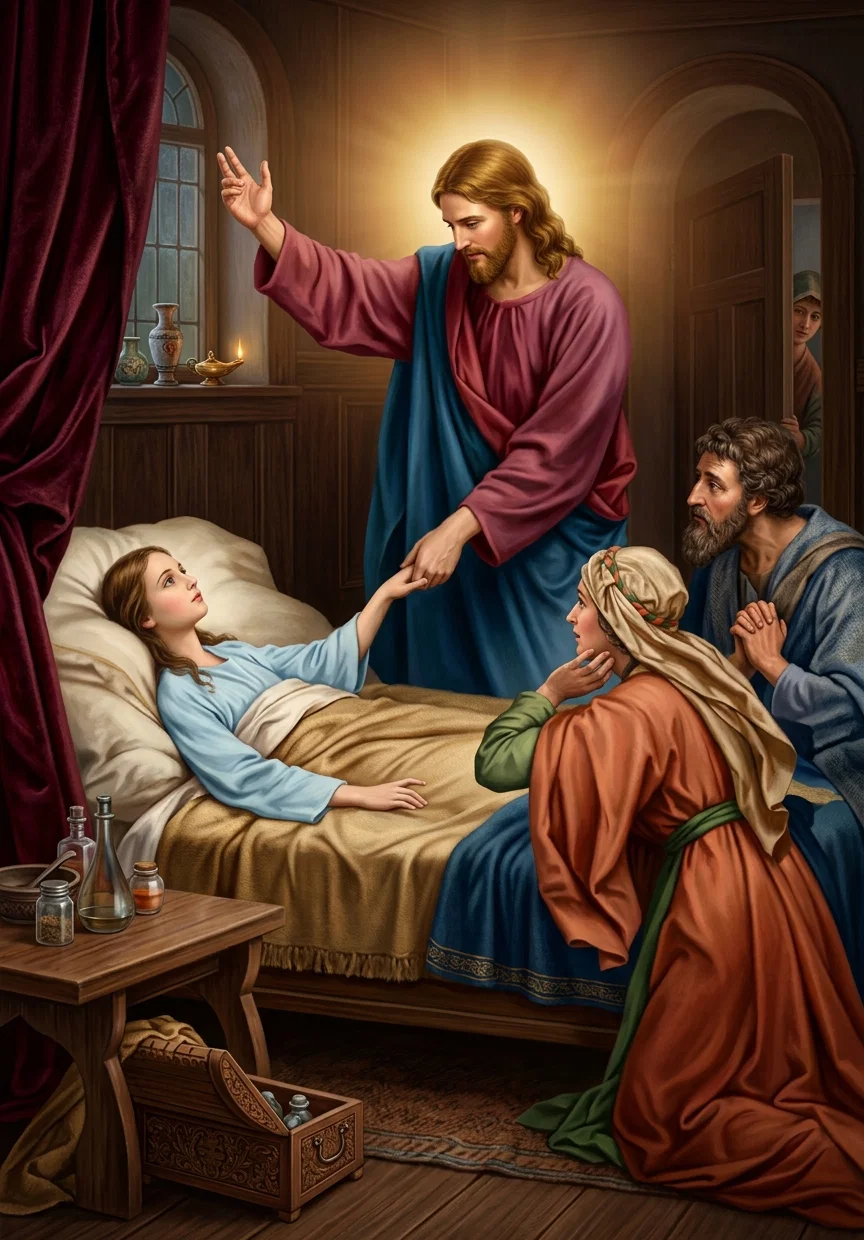
CHRIST THE LIFE-GIVER
There is hope of immortality in Him only
NOTE.— This is the simple, clear account of the creation of man, bringing into existence that which had not before existed. He was formed of the dust, a perfect being in all his organs and functions, but still lifeless. God breathes into that form the breath of life, and that which He has formed from the dust becomes a living soul. Before that, it was a soul, a person, but a lifeless soul. The breath of life made man a living soul. There is nothing said in either of these scriptures about a dual man, or man’s possessing an immortal soul or spirit. Yet it is argued that God is immortal; man is made in God’s image; therefore man is immortal. But this reasoning is a non sequitur; it proves too much; for if to be made in the image of God invests man with one attribute of Deity, immortality, it logically would clothe him with all His attributes, such as omnipotence and omnipresence. An argument which proves too much proves nothing. “Breath of life” does not mean an entity, a spirit capable of existing consciously and intelligently without the body; for if such were the case, the beasts possess the same “breath of life.” Gen. 7: 15, 22. The “breath of life” is simply the vital energy by which the man is caused to live, given to man in harmony with the law of his being. Neither does “living soul” convey any idea of immortality in man. Its meaning is simply LIVING CREATURE. See Gen. 1: 30, margin, and Rev. 16: 3.
5. What test was placed upon man?
“Of the tree of the knowledge of good and evil, thou shalt not eat of it: for in the day that thou eatest thereof thou shalt surely die.” Gen. 2: 17.
NOTE.— The responsible man was the “thou,” the one that reasoned, chose, decided, moved the hand to take, the mouth to taste. It was the whole man, the responsible whole, that was addressed, and that, if disobedient, would die.
6. What contradiction was made to God’s word?
“And the serpent said, . . . Ye shall not surely die.” Gen. 3: 4.
Dissolution of Man
7. What did God do that man might not live a sinner forever?
“Now, lest he put forth his hand, and take also of the tree of life, and eat, and live forever: therefore the Lord God . . . drove out the man; and He placed at the east of the Garden of Eden cherubim, and a flaming sword which turned every way, to keep the way of the tree of life.” Gen. 3: 22-24.
8. What sentence did He visit upon man?
“In the sweat of thy face shalt thou eat bread, till thou return unto the ground; for out of it wast thou taken: for dust thou art, and unto dust shalt thou return.” Gen. 3: 19.
9. What takes place at death?
“Then shall the dust return to the earth as it was: and the spirit shall return unto God who gave it.” Eccl. 12: 7.
“His breath goeth forth, he returneth to his earth; in that very day his thoughts perish.” Ps. 146: 4.
NOTE.— Strange, isn’t it, that men should still take the word of the serpent in preference to the word of God? God said that when man sinned he should surely die; the old serpent declared, “Ye shall not surely die: . . . ye shall be as God.” Gen. 3: 4, 5, A.R.V. To every human sense, God’s words have been true; but to deceive men, the theory of an immortal soul, a conscious spirit, surviving the death of the body, has been invented. Men love to believe the invention, because it exalts sinful man. Yet how simple is the truth of God! The spirit was given to man as “the breath of life,” and it made the man formed out of dust a living soul. Man dies; the spirit goes back to God as the breath of life, even as God gave it. The dissolution of man is the opposite of his formation. When he dies, the thinking man, the thoughts, perish.
10. In what does continued righteousness always result?
“In the way of righteousness is life; and in the pathway thereof there is no death.” Prov. 12: 28.
Result of Sin
11. What is always the result of sin?
“Sin, when it is finished, bringeth forth death.” James 1: 15.
“Wherefore, as by one man sin entered into the world, and death by sin; and so death passed upon all men, for that all have sinned.” Rom. 5: 12.
NOTE.— The stream can rise no higher than its fountainhead. The children of men can not in themselves rise higher than their first father. They die. All men are subject to death; and death is extinction of life, cessation of being. The whole man dies. How reasonable it is that sin should at last, sooner or later, destroy itself; that the universe should not, could not, know immortal sinners; that God’s law and plan for man should indicate His wisdom and love; and that man should have his own choice, to live or to die! How the simple plan wipes from the pages of the past every charge against God of cruelty and injustice, and reveals beauty instead of ugliness!
Death and the Resurrection
12. What is man’s condition in death?
“His sons come to honor, and he knoweth it not; and they are brought low, but he perceiveth it not of them.” Job 14: 21.
“For the living know that they shall die: but the dead know not anything. . . . Also their love, and their hatred, and their envy, is now perished.” Eccl. 9: 5, 6.
“Let me freely speak unto you of the patriarch David, that he is both dead and buried, and his sepulcher is with us unto this day.” Acts 2: 29.
The Resurrection
13. Inasmuch as the descendants of Adam were not responsible for his sin and the death which came in consequence, how does God save them from it?
“For as in Adam all die, even so in Christ shall all be made alive.” 1 Cor. 15: 22.
14. But as Adam’s nature was not originally sinful, and ours is, because inherited from sinful parents, how does God meet our need, that we may not die for our own sins?
“Where sin abounded, grace did much more abound.” Rom. 5: 20.
Eternal Life by Faith
15. In what way is grace manifested that we may live again?
“For God so loved the world, that He gave His only-begotten Son, that whosoever believeth in Him should not perish, but have everlasting life.” John 3: 16.
16. Do men have eternal life, connection with God, by nature? Is there hope apart from Christ?
“That at that time ye were without Christ, being aliens from the commonwealth7of Israel, and strangers from the covenants of promise, having no hope, and without God in the world.” Eph. 2: 12.
“Having the understanding darkened, being alienated from the life of God.” Eph. 4: 18.
17. But what do those who are in Christ possess?
“And this is the record, that God hath given to us eternal life, and this life is in His Son. He that hath the Son hath life; and he that hath not the Son of God hath not life. These things have I written unto you that believe on the name of the Son of God; that ye may know that ye have eternal life, and that ye may believe on the name of the Son of God.” 1 John 5: 11-13.
Two Resurrections
18. How, then, will the dead live, and how many classes will there be?
“Marvel not at this: for the hour is coming, in the which all that are in the graves shall hear His voice, and shall come forth; they that have done good, unto the resurrection of life; and they that have done evil, unto the resurrection of damnation.” John 5: 28, 29.
“There shall be a resurrection of the dead, both of the just and unjust.” Acts 24: 15.
19. Wherein, then, does the hope concerning the dead rest?
“Now if Christ be preached that He rose from the dead, how say some among you that there is no resurrection of the dead? But if there be no resurrection of the dead, then is Christ not risen: and if Christ be not risen, then is our preaching vain, and your faith is also vain. Yea, and we are found false witnesses of God; because we have testified of God that He raised up Christ: whom He raised not up, if so be that the dead rise not. For if the dead rise not, then is not Christ raised: and if Christ be not raised, your faith is vain; ye are yet in your sins. Then they also which are fallen asleep in Christ are perished.” 1 Cor. 15: 12-18.
20. When will the resurrection of the righteous occur?
“Behold, I show you a mystery; we shall not all sleep, but we shall all be changed, in a moment, in the twinkling of an eye, at the last trump: for the trumpet shall sound, and the dead shall be raised incorruptible, and we shall be changed. For this corruptible must put on incorruption, and this mortal must put on immortality. So when this corruptible shall have put on incorruption, and this mortal shall have put on immortality, then shall be brought to pass the saying that is written, Death is swallowed up in victory.” 1 Cor. 15: 51-54.
21. In connection with what great event will the trumpet sound?
“For this we say unto you by the word of the Lord, that we which are alive and remain unto the coming of the Lord shall not prevent them which are asleep. For the Lord Himself shall descend from heaven with a shout, with the voice of the Archangel and with the trump of God: and the dead in Christ shall rise first: then we which are alive and remain shall be caught up together with them in the clouds, to meet the Lord in the air: and so shall we ever be with the Lord.” 1 Thess. 4: 15-17.
22. Who alone possesses immortality by nature?
“The blessed and only Potentate, the King of kings, and Lord of lords; who only hath immortality.” 1 Tim. 6: 15, 16.
“Now unto the King eternal, immortal, invisible, the only wise God.” 1 Tim. 1: 17.
NOTE.— Everywhere in the Scriptures man is spoken of as mortal, subject to sin and death. He is vain man with a vain life, which is as a vapor, a cloud, his days swifter than a weaver’s shuttle, likened to things the most transitory and fleeting, everywhere demonstrating the truth of the word of God, “THE SOUL THAT SINNETH, IT SHALL DIE.” Eze. 18: 4, 20. His only hope of living is the resurrection through Christ. If he be a sinner, he is raised mortal, among the unjust, in the resurrection to condemnation; if he be clothed with Christ’s righteousness, he is raised to absolute eternal life and immortality of being, God’s stamp of an incorruptible character. Upon the perversions of truth concerning man’s nature—rather upon that first serpent’s falsehood—have been built the structures of idolatry in all its various forms,—spiritism ancient and modern, purgatory, invocation of saints, transmigration of souls, an eternally burning hell, and other equally soul-destroying errors.
The Parable of the Rich Man and Lazarus—No. 3
By A. R. Bell
By A. R. Bell
[In previous articles, Mr. Bell has shown that the purpose of the parable was to rebuke the covetousness of the Jews; that the parable could not be made arbitrarily partly literal and partly figurative; that it can not be made to contradict other plain scriptures which teach that man is unconscious in death.]
BUT whom does this rich man represent? As shown last week he represents the Jewish nation, that spoke against Jesus “in the gate”—the place of judgment—and that in their condemnation of Him judged Him worthy of death. In fact, the rich man represents that people who put the Son of God to death upon the cross. The rich man represents a covetous, self-righteous, wicked, stiff-necked people, who, resisting the Holy Spirit, had as “betrayers and murderers” slain “the Just One.”
Then just as surely as this is true, the rich man has his part with the class of whom we read, “The rest of the dead lived not again until the thousand years were finished.” Rev. 20: 5. That resurrection is the resurrection of the wicked—the “resurrection of judgment.” John 5: 29, R.V.
We read in Rev. 20: 12-14: “And I saw the dead, small and great, stand before God; and the books were opened; and another book was opened, which is the book of life: and the dead were judged out of those things which were written in the books, according to their works. And the sea gave up the dead which were in it; and death and hell [margin, “the grave”] delivered up the dead which were in them; and they were judged every man according to their works. And death and hell [the grave] were cast into the lake of fire. This is the second death.”
Now in the light of these scriptures, we can understand Luke 16: 23-25 clearly. When the rich man lifts up his eyes in the grave, and is in torment, the time of the resurrection of the wicked dead is reached. The grave—hell—delivers up its dead; and in the awful judgment of that hour, both the grave and death are cast into the lake of fire.
Surely, then he is in torment, and conscious. But we are carried, in these scriptures, down past the second coming of Christ for a thousand years; and then, and not till then, is the experience of the lake of fire reached—the time of the punishment of the wicked.
The apostle Peter brings to view this time, and the wonderful and awful events that belong to it. He says: “But the heavens and the earth, which are now, by the same word are kept in store, reserved unto fire against the day of judgment and perdition [“total destruction”—Webster] of ungodly men. . . . The day of the Lord will come as a thief in the night; in the which the heavens shall pass away with a great noise, and the elements shall melt with fervent heat, the earth also and the works that are therein shall be burned up.” 2 Peter 3: 7-10. Here we read that the wicked are to be destroyed by fire, and that the fire in which they are to be destroyed will be so great that the earth will melt and all the works in it will be burned up. The heavens—atmospheric—are in flames, the whole earth one vast lake of liquid fire. The mountains melt, and the world is dissolved like lead. Verses 11 and 12 tell us further, “All these things shall be dissolved. . . . The heavens being on fire shall be dissolved, and the elements shall melt with fervent heat.”
So then we are carried, in the parable we are studying, in the consciousness and torment of the rich man, down to the final blotting out, by fire, of the sinner, and of sin, and of every vestige and evidence of it; and the torment of that hour is the torment that the evil spirit had in mind when he said to Jesus, “Art Thou come hither to torment us before the time!” Matt. 8: 29.
Coming back to the story of the parable, Luke 16: 24-31 fastens the parable upon the Jews in their rejecting Christ, yet the application is for all. Like many other tremendous experiences through which the world and humanity have passed, and are yet to pass, some matters are scarcely touched upon, detail being left for other scriptures to point out and make clear. An illustration is given us in Isa. 61: 1, 2, where a connected and continuous prophecy is seemingly given. But when the Saviour, in His own life and work, and with His own word of mouth, shows to the Jews the fulfilment of the prophecy, in Luke 4: 16-21, He stops short in the very middle of verse 2 of Isaiah 61, because the latter part of the verse, and the details that belong to it, found in other664prophecies of the Scriptures, belong to another time, and are unnecessary in the matter which He desired them to know.
So also in Revelation 20. In this chapter, the resurrection of the wicked is brought to view; and as we read the story, it would seem as tho the wicked went right up direct from their graves, and laid siege to the city of God. The details and other experiences are left for other scriptures to make clear.
Thus in the parable, it would seem as tho the rich man was conscious in the grave immediately upon his burial; but other scriptures show that when any man dies, he knows absolutely nothing, and has no life nor consciousness whatever until the time when he is raised from the dead. Other scriptures reveal the fact of two resurrections—that of the righteous, and that of the wicked—and show clearly that an interval of a thousand years separates them.
In the parable, the rich man is found entreating Abraham to send Lazarus. The interval of all the centuries is but the “twinkling of an eye.” The great gulf is the lake of fire into which the grave is cast (see Rev. 20:14), and lies between them. The holy city and the saints, with Christ and the Father, have descended to earth; and as the antitype of the ark that was the salvation of God’s people when He destroyed the world with water, that beautiful city, the New Jerusalem, is the salvation of God’s people in the day when God destroys the world with fire.
In the plea that the rich man makes for his brethren, Jesus comes back, in the parable, to His present hour and experience—somewhat after the way in which Rev. 12: 1-6 brings us down to the end of the twelve hundred and sixty days, and then leads us back again to the resurrection of Christ, and from then on down to the development of the remnant—and adroitly presents conditions which exist even as He talks with them. Israel’s apostasy in the past is portrayed, and shown to be hopeless; and so far as their present condition is concerned, Jesus declares it to be the same. It is plainly seen that the parable does not apply to us or any other generation or people or dispensation, only as a lesson by which we may profit. Christ fastened the parable upon the Jews; and surely they fit the mold in every particular. They had Moses and the prophets, but they would not hear them. They wanted signs, and signs were in evidence at every turn.
Said Jesus to them, “Had ye believed Moses, ye would have believed Me: for he wrote of Me.” John 5: 46. Covetous and proud, making their boast in the flesh, and not in the Lord, Jesus sought to set before them the utter hopelessness of a trust in any but the living God.
Next came the plea that if one rose from the dead, they would believe, and this was met in the raising up of Lazarus from the dead. How it was received is told us as follows: “Much people of the Jews therefore knew that He was there: and they came not for Jesus’ sake only, but that they might see Lazarus also, whom He had raised from the dead. But the chief priests consulted that they might put Lazarus also to death; because that by reason of him many of the Jews went away, and believed on Jesus.” John 12: 9-11.
Then came the supreme climax in His own resurrection, and their rejection of the last rays of light when they counseled together and “gave large money unto the soldiers, saying, Say ye, His disciples came by night, and stole Him away while we slept.” Matt. 28: 12, 13.
All this is told them in the parable, and they carried it out in their lives in the minutest detail. And the whole parable, while specially applicable, in every experience of it, to the Jewish nation, is also the story of sin and a personal Saviour in every human experience.
Let us heed the tragic lesson, and profiting by the things written, know as did Philip, “We have found Him, of whom Moses in the law, and the prophets, did write;” and like Nathanael be able to say, “Rabbi, Thou art the Son of God; Thou art the King of Israel.” John 1: 45, 49.
Knowledge Worth Knowing
By John Norton Loughborough
The Scriptures speak of things that we know, and of things that we may know. Of the former we read, “I know that the Lord will maintain the cause of the afflicted, and the right of the poor.” Ps. 140:12. “The living know that they shall die: but the dead know not any thing.” Eccl. 9:5. “We know that the Son of God is come, and hath given us an understanding, that we may know Him that is true.” 1 John 5:20. “We know that we are of God, and the whole world lieth in wickedness.” 1 John 5:19. “I know that my Redeemer liveth, and that He shall stand at the latter day upon the earth: and tho after my skin worms destroy this body, yet in my flesh shall I see God.” Job 19:25, 26. “We know that if our earthly house of this tabernacle were dissolved, we have a building of God, an house not made with hands, eternal in the heavens.” 2 Cor. 5:1. “We know that, when He shall appear, we shall be like Him; for we shall see Him as He is.” 1 John 3:2.
Of what we may know, we read, “Lord, make me to know mine end, and the measure of my days, what it is; that I may know how frail I am.” Ps. 39:4. “Ye are My witnesses: . . . that ye may know and believe Me, and understand that I am He: before Me there was no God formed, neither shall there be after Me.” Isa. 43:10. “O My people, remember now what Balak king of Moab consulted, and what Balaam the son of Beor answered him from Shittim unto Gilgal: that ye may know the righteousness of the Lord.” Micah 6:5. “Now we have received . . . the Spirit which is of God; that we might know the things that are freely given to us of God.” 1 Cor. 2:12. “The eyes of your understanding being enlightened; that ye may know what is the hope of His calling, and what the riches of the glory of His inheritance in the saints.” Eph. 1:18. “These things have I written unto you that believe on the name of the Son of God; that ye may know that ye have eternal life.” 1 John 5:13.
O, let Thy candle, Lord, upon me shine!
I long to see, 'mid darkness, light divine.
Preserve, O Lord, Thy servant, day by day,
And let me humbly walk with Thee, I pray!
Thy glory is a candle o'er my head.
Thy word has power to resurrect the dead.
O, let that Word abide within my heart,—
My sun, my shield, of life a part!
Light Thou my candle, Lord, with sparks of love.
My spirit yearns for power from above.
When every candle shines that Thou hast given,
Then earth will lightened be with light from heaven.
A Christian’s Responsibility
By Clarence Santee
Entrusted with the Keys
“And I will give unto thee the keys of the kingdom.” Matt. 16:19.
THE person to whom are committed the keys, is responsible for the opening of the door to every person who has business within. The faithful doorkeeper has an important position in the “house of God.” If he becomes indifferent or careless, some person may knock and not be heard. The knock may be faint, it may be with the last ebbing strength of the seeker for admittance. A failure to open at that time may turn a soul away forever. The Saviour has said, “Knock, and it shall be opened unto you.” Matt. 7:7. But He invites the one to whom He has committed the keys, to assist in making His promise availing.
When a Saul of Tarsus, or a Cornelius of Cæsarea, under conviction, said, “Lord, what wilt Thou have me to do?” (Acts 9:6; 10:3-6) the Lord sent them to members of His church for the answer. He has committed the opening of the door to His followers here. The Saviour said, “Ye are the light of the world.” Matt. 5:14. He turns the soul lost in darkness, to His church for the light of life.
Christ calls the Christian His “porter.” He gave “to every man his work, and commanded the porter to watch. Watch ye therefore.” Mark 13:34, 35. “Therefore” means, “for this reason.” He says that because He has commanded the porter to watch, for this reason you are to watch. The duty of the porter is to meet all who come to the door, lead them to the Master, and make them acquainted with Him. Or as the porter on the train, under the direction of the conductor, faithfully calls the stations by the way, apprising the passengers of the nearness of their destination, assisting with their burdens and supporting the weak, so Christ commissions you to make known faithfully to the passers-by the way, the nearness of the final change, the last passing landmarks to the city of God.
“One is your Master, even Christ.” Matt. 23:10. “As My Father hath sent Me, even so send I you.” John 20:21. Then, while the Father has committed “all power” to the Son, and sent Him to unlock the treasures of the kingdom for lost, fallen mortals, making a “door of hope,” Christ has graciously associated with Himself His followers here, placing in their hands the keys, asking them to watch, and to open the door to every son and daughter of Adam who can be turned from the way of sin. You are not asked to arrest the person in his course. God has promised to do that. John 16:8; Isa. 30:21. He asks you to open the door and invite him in, and, as a true porter, lead him to the Master.
Are you willing to be entrusted with the keys? CLARENCE SANTEE.