Review and Herald, Vol. 92, No. 7.

God Knows the Best
Earlier text: God Knows the Best

The Origin of Evil and Its Remedy

A Bible Study

God's Character

1. What is the character of God? “Art thou not from everlasting, O Lord my God, mine Holy One? . . . Thou art of purer eyes than to behold evil, and canst not look on iniquity.” Hab. 1:12, 13.
2. With what kind of moral nature did God endow man when he created him? “So God created man in his own image, in the image of God created he him.” Gen. 1:27. “God made man upright.” Eccl. 7:29.
3. What are we told that God saw when he looked upon his finished work, including man? “And God saw everything that he had made, and, behold, it was very good.” Gen. 1:31.

The Character of the Angels

4. What did God create besides the earth and man upon it? “For by him were all things created, that are in heaven, and that are in earth, visible and invisible, . . . all things were created by him, and for him.” Col. 1:16.
5. How did the angels, as they were created, compare with man? “What is man, that thou art mindful of him? and the son of man, that thou visitest him? For thou hast made him a little lower than the angels.” Ps. 8:4, 5.

Sin of Men and of Angels

6. Do we find the human race upon the same moral plane now upon which the Creator originally placed them? “For all have sinned, and come short of the glory of God.” “They are all gone out of the way, they are together become unprofitable; there is none that doeth good, no, not one.” Rom. 3:23, 12.
7. What is said of some of the angels in regard to sin? “God spared not the angels that sinned, but cast them down to hell, and delivered them into chains of darkness, to be reserved unto judgment. The angels which kept not their first estate, but left their own habitation, he hath reserved in everlasting chains under darkness unto the judgment of the great day.” 2 Peter 2:4; Jude 6.

Sin Defined

8. What is sin? “Whosoever committeth sin transgresseth also the law: for sin is the transgression of the law.” 1 John 3:4.
9. As briefly stated by the Saviour, what does the divine law require? “Thou shalt love the Lord thy God with all thy heart, and with all thy soul, and with all thy mind. This is the first and great commandment. And the second is like unto it, Thou shalt love thy neighbor as thyself.” Matt. 22:37-39.
10. Since man was created upright in the beginning, how was he led into sin? “Now the serpent was more subtle than any beast of the field which the Lord God had made. . . . And the serpent said unto the woman, Ye shall not surely die; for God doth know that in the day ye eat thereof, then your eyes shall be opened, and ye shall be as gods, knowing good, and evil. And when the woman saw that the tree was good for food, and that it was pleasant to the eyes, and a tree to be desired to make one wise, she took of the fruit thereof, and did eat, and gave also unto her husband with her; and he did eat.” Gen. 3:1-6.

Satan and His Fall

11. Who was the real serpent who tempted our first parents? “He laid hold on the dragon, that old serpent, which is the Devil, and Satan, and bound him a thousand years.” Rev. 20:2.
12. What was the immediate cause of Satan's, or the dragon's, enmity against God, and against man, whom God had created in his own image? “There was war in heaven: Michael and his angels fought against the dragon, and the dragon fought and his angels, and prevailed not; neither was their place found any more in heaven. And the great dragon was cast out, that old serpent, called the Devil, and Satan, which deceiveth the whole world; he was cast out into the earth, and his angels were cast out with him.” Rev. 12:7-9.
13. What was the primary cause of Satan's enmity against God? “How art thou fallen from heaven, O Lucifer, son of the morning! . . . For thou hast said in thine heart, I will ascend into heaven, I will exalt my throne above the stars of God: . . . I will ascend above the heights of the clouds; I will be like the Most High.” Isa. 14:12-14. NOTE.—Lucifer was the angel name of the great leader in rebellion in heaven. After his fall, he was called Satan, a name which Cruden says “is a mere Hebrew word, and signifies an adversary, an enemy, an accuser.”
14. What do the Scriptures say of Satan before his fall? and what are we told was the cause of his fall? “Thou art the anointed cherub that covereth; and I have set thee so. . . . Thou wast perfect in thy ways from the day that thou wast created, till iniquity was found in thee. . . . Thine heart was lifted up because of thy beauty.” Eze. 28:14-17. NOTE.—Pride, envy, and covetousness filled Satan's heart before he committed any outward, overt act of rebellion; and these were sin.—“all unrighteousness is sin,” says the apostle. 1 John 5:17.

Freedom of Choice

BEHOLD THE LAMB OF GOD, THAT TAKETH AWAY THE SIN OF THE WORLD
15. What kind of service only is acceptable to God? “If it seem evil unto you to serve the Lord, choose you this day whom ye will serve.” Joshua 24:15. “Elijah came unto all the people, and said, How long halt ye between two opinions? If the Lord be God, follow him: but if Baal, then follow him.” 1 Kings 18:21. “Behold, I have set before thee an open door, and no man can shut it.” Rev. 3:8. “Whosoever will, let him take the water of life freely.” Rev. 22:17. NOTE.—God desires and accepts only willing service, service inspired by love. “God is love,” and his great heart of infinite tenderness yearns for the love of his children, both of men and of angels, in the same way as the hearts of human parents yearn for the love of their children, though in infinitely greater degree.
16. Is there anything that God cannot do? “The word of God is not bound.” “If we believe not, yet he abideth faithful: he cannot deny himself.” 2 Tim. 2:9, 13. NOTE.—God being what he is, and his nature being as it is, he could not create moral beings without giving them freedom of choice. There is not and never could be any moral responsibility without freedom of the will. This being true, it follows that God is in no wise responsible either for Lucifer's rebellion in heaven or for man's sin upon earth. “I the Lord speak righteousness, I declare things that are right.” Isa. 45:19.

The Plan of Salvation

17. How do we know that God was not taken by surprise when man sinned? Because God is all-wise. He knows the end from the beginning. “I have declared the former things from the beginning, . . . and they came to pass.” Isa. 46:10.
18. What provision had infinite love and foreknowledge made for man's redemption, even before the fall? “All that dwell upon the earth shall worship him, whose names are not written in the book of life of the Lamb slain from the foundation of the world.” Rev. 13:8. “And I will put enmity between thee and the woman, and between thy seed and her seed; it shall bruise thy head, and thou shalt bruise his heel.” Gen. 3:15. NOTE.—We learn from Isa. 45:18 that the divine purpose in creating this world was that it might be inhabited by a race of beings loyal to their Creator. This plan involved everything necessary to its success. Therefore we might know, even if we had not been told, that when, in the council between the Father and the Son, it was decided to create man, the great plan of providing the sacrifice necessary for his redemption was made.
19. What moved the Father to make this sacrifice in behalf of fallen humanity? “God so loved the world, that he gave his only begotten Son, that whosoever believeth in him should not perish, but have everlasting life.” John 3:16.
20. What was the Son's attitude toward this great sacrifice of which he himself was the central figure? “For there is one God, and one mediator between God and men, the man Christ Jesus; who gave himself a ransom for all, to be testified in due time.” 1 Tim. 2:5, 6.
21. How do we know that the Father and the Son were associated in the creation of man? “And God said, Let us make man in our image, after our likeness.” Gen. 1:26. “Wherefore I was made a minister, . . . to make all men see what is the fellowship of the mystery, which from the beginning of the world hath been hid in God, who created all things by Jesus Christ.” Eph. 3:7-9.
22. What beautiful prophetic scripture shows that the Father and the Son are just as closely associated in the work of redemption? “Behold the man whose name is The BRANCH; and he shall grow up out of his place, and he shall build the temple of the Lord; . . . and shall sit and rule upon his [the Lord's] throne; and he shall be a priest upon his throne; and the counsel of peace shall be between them both.” Zech. 6:12, 13.
23. What is contemplated by the plan of redemption? “And she shall bring forth a son, and thou shalt call his name JESUS: for he shall save his people from their sins.” Matt. 1:21.
24. What does it mean to be saved from sin? “If we walk in the light, as he is in the light, we have fellowship one with another, and the blood of Jesus Christ his Son cleanseth us from all sin. . . . If we confess our sins, he is faithful and just to forgive us our sins, and to cleanse us from all unrighteousness.” 1 John 1:7-9.
25. What besides present salvation from the dominion of sin is included in redemption? “And this is the will of him that sent me, that every one which seeth the Son, and believeth on him, may have everlasting life; and I will raise him up at the last day.” John 6:40. “And if I go and prepare a place for you, I will come again, and receive you unto myself; that where I am, there ye may be also.” John 14:3.
26. What else is promised to those who shall be heirs of eternal life? “If ye have heard of the dispensation of the grace of God which is given me to you-ward: . . . That the Gentiles should be fellow heirs, and of the same body, and partakers of his promise in Christ by the gospel.” Eph. 3:2-6.
27. To whom does the apostle here refer? “For the promise, that he should be the heir of the world, was not to Abraham, or to his seed, through the law, but through the righteousness of faith.” Rom. 4:13.
28. How do we certainly know that we who are Gentiles by nature shall share in that promise? “Now to Abraham and his seed were the promises made. He saith not, And to seeds, as of many; but as of one, And to thy seed, which is Christ. . . . And if ye be Christ's, then are ye Abraham's seed, and heirs according to the promise.” Gal. 3:16, 29.
29. To whom does our Saviour himself say this inheritance will be given? “Blessed are the meek: for they shall inherit the earth.” Matt. 5:5.
30. When shall those who are saved from sin in this life be clothed with immortal life? “For ye are dead, and your life is hid with Christ in God. When Christ, who is our life, shall appear, then shall ye also appear with him in glory.” Col. 3:3, 4. “Behold, I show you a mystery; We shall not all sleep, but we shall all be changed, in a moment, in the twinkling of an eye, at the last trump: for the trumpet shall sound, and the dead shall be raised incorruptible, and we shall be changed.” 1 Cor. 15:51, 52.
31. When will the righteous receive their inheritance? “When the Son of man shall come in his glory, and all the holy angels with him, then shall he sit upon the throne of his glory. . . . Then shall the King say, . . . Come, ye blessed of my Father, inherit the kingdom prepared for you from the foundation of the world.” Matt. 25:31-34. And looking down the stream of time to the day when our returning Lord is about to be revealed, when his message to his waiting people is, “Surely I come quickly,” the beloved John, speaking for the latter-day church, responds, “Amen. Even so, come, Lord Jesus.” Rev. 22:20.

What Think Ye of Christ?

By D. L. Moody
Every living soul on the face of the earth is more or less concerned with this question, “What think ye of Christ?”
I do not ask you what you think of the Established Church, or of the Presbyterians, or of the Baptists, or the Roman Catholics; I do not ask you what you think of this minister or that, of this doctrine or that; but I want to ask you what you think of the living person of Christ?
I should like to ask, Was he really the Son of God—the great God-Man? Did he leave heaven and come down to this world for a purpose? Was it really to seek and to save? I should like to begin with the manger, and follow him up through the thirty-three years he was here upon earth. I should ask you what you think of his coming into this world and being born in a manger when it might have been a palace; why he left the grandeur and glory of heaven, and the royal retinue of angels; why he passed by palaces and crowds and dominion and came down here alone.

Christ the Teacher

I should like to ask you what you think of him as a teacher. He spoke as never man spake. I should like to bring you to that mountainside, that we might listen to the words as they fall from his gentle lips.

Christ the Physician

I should like to ask you what you think of him as a physician. A man would soon have a reputation as a doctor if he could cure as Christ did. No case was ever brought to him but what he was a match for. He had but to speak the word, and disease fled before him. Here comes a man covered with leprosy.
“Lord, if thou wilt, thou canst make me clean,” he cries.
“I will,” says the Great Physician, and in an instant the leprosy is gone. The world has hospitals for incurable diseases; but there were no incurable diseases with him.

Christ the Comforter

Now, see him in the little house in Bethany, binding up the wounded hearts of Martha and Mary, and tell me what you think of him as a comforter. He is a husband to the widow and a father to the fatherless. The weary may find a resting place upon that breast, and the friendless may reckon him their friend. He never varies, he never fails, he never dies. His sympathy is ever fresh, his love is ever free. O widow and orphans, O sorrowing and mourning, will you not thank God for Christ the Comforter?
But these are not the points I wish to take up. Let us go to those who knew Christ, and ask what they thought of him. If you want to find out what a man is nowadays, you inquire about him from those who know him best. I do not wish to be partial; we will go to his enemies and to his friends.

The Testimony of His Enemies

The Pharisees

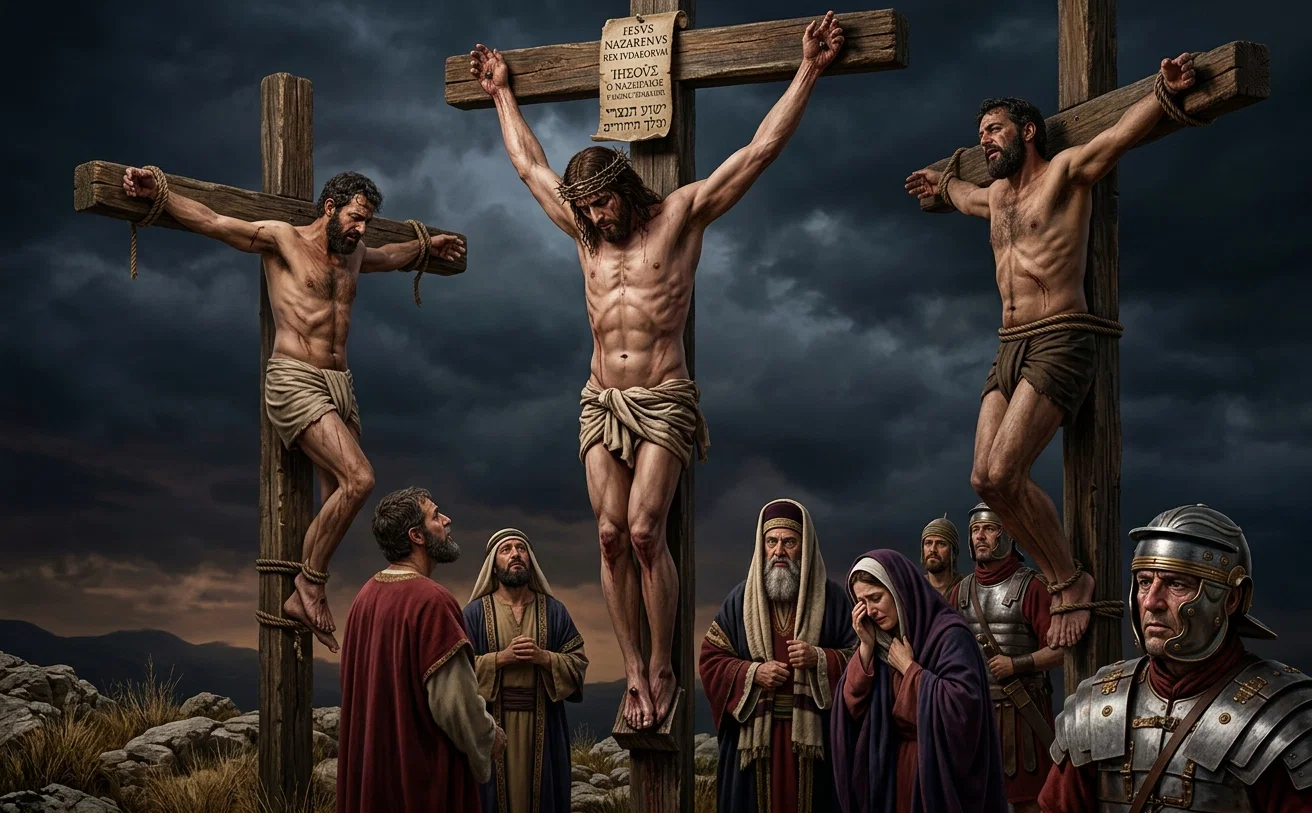
First among the witnesses, let us call upon the Pharisees. We know how they hated him. Let us put a few questions to them: Come, Pharisees, tell us what you have against the Son of God. What do you think of Christ? Hear what they say! “This man receiveth sinners.” Why, it is the very thing that makes us love him! What an argument to bring against him. It is the glory of the gospel. He receives sinners. If he had not, what would have become of us? Have you nothing more to bring against him than this? Why, it is one of the greatest compliments that was ever paid him. Once more: when he was hanging on the tree, you had this to say of him, “He saved others; himself he cannot save.” But he could not save himself and save us too. So he laid down his own life for yours and mine. Yes, Pharisees, you have told the truth for once in your lives! He saved others. He died for others. He was a ransom for many; so it is quite true what you think of him—“he saved others; himself he cannot save.”

Caiaphas the Priest

Now let us call upon Caiaphas. Let him stand up here in his flowing robes; let us ask him for his evidence. Caiaphas, you were chief priest when Christ was tried; you were president of the Sanhedrin; you were in the council chamber when they found him guilty; you yourself condemned him. Tell us, what did the witnesses say? On what grounds did you judge him? What testimony was brought against him? “He hath spoken blasphemy,” says Caiaphas. “He said, ‘Hereafter shall ye see the Son of man sitting on the right hand of power, and coming in the clouds of heaven.’ When I heard that, I found him guilty of blasphemy; I rent my mantle and condemned him to death.” Yes, all that they had against him was that he was the Son of God; and they slew him for the promise of his coming for his bride!

Pilate the Roman

Now let us summon Pilate. Let him enter the witness box. Pilate, this man was brought before you; you examined him; you talked with him face to face; what think you of Christ? “I find no fault in him,” says Pilate. “He said he was the King of the Jews [just as he wrote it over the cross]; but I find no fault in him.” Such is the testimony of the man who examined him! And, as he stands there, the center of a Jewish mob, there comes along a man who examined him! And, as he stands there, the center of a Jewish mob, there comes along a man elbowing his way in haste. He rushes up to Pilate, and, thrusting out his hand, gives him a message. He tears it open; his face turns pale as he reads, “Have thou nothing to do with that just man; for I have suffered many things this day in a dream because of him.” It is from Pilate’s wife—her testimony to Christ. You want to know what his enemies thought of him? You want to know what a heathen thought? Well, here it is, “no fault in him;” and the wife of a heathen, “this just man.”

Judas, Who Betrayed Him

And now, look—in comes Judas. He ought to make a good witness. Let us address him. Come, tell us, Judas, what think you of Christ? You knew the Master well; you sold him for thirty pieces of silver; you betrayed him with a kiss; you saw him perform those miracles; you were with him in Jerusalem. In Bethany, when he summoned up Lazarus, you were there. What think you of him? I can see him as he comes into the presence of the chief priests; I can hear the money ring as he dashes it upon the table, “I have betrayed the innocent blood!” Here is the man who betrayed him, and this is what he thinks of him! Yes, those who were guilty of his death put their testimony on record that he was an innocent man.

The Roman Centurion

Let us take the centurion who was present at his execution. He had charge of the Roman soldiers. He told them to make him carry his cross; he had given orders for the nails to be driven into his feet and hands, for the spear to be thrust in his side. Let the centurion come forward. Centurion, you had charge of the executioners; you saw that the order for his death was carried out; you saw him die; you heard him speak upon the cross. Hark! Look at him; he is smiting his breast as he cries, “Truly this was the Son of God!”

The Thief on the Cross

I might go to the thief upon the cross, and ask what he thought of him. At first he railed upon him and reviled him. But then he thought better of it. “This man hath done nothing amiss,” he says.

The Devils

I might go further. I might summon the very devils themselves and ask them for their testimony. Have they anything to say of him? Why, the very devils called him the Son of God! In Mark we have the devils crying, “Jesus, thou Son of the Most High God.” Men say, “O, I believe Christ to be the Son of God, and because I believe it intellectually I shall be saved.” I tell you the devils did that. And they did more than that, they trembled.

The Testimony of His Friends

John the Baptist

Let us bring in his friends. We want you to hear their evidence. Let us call that prince of preachers. Let us hear the forerunner; none ever preached like this man—this man who drew all Jerusalem and all Judea into the wilderness to hear him; this man who burst upon the nations like the flash of a meteor. Let John the Baptist come with his leathern girdle and his hairy coat, and let him tell us what he thinks of Christ. His words, though they were echoed in the wilderness of Palestine, are written in the Book forever, “Behold the Lamb of God, which taketh away the sin of the world!” This is what John the Baptist thought of him. “I saw, and bear record that this is the Son of God.” No wonder he drew all Jerusalem and Judea to him, because he preached Christ. And, whenever men preach Christ, they are sure to have plenty of followers.

Simon Peter

Let us bring in Peter, who was with him on the mount of transfiguration, who was with him the night he was betrayed. Come, Peter, tell us what you think of Christ. Stand in this witness box and testify of him. You denied him once. You said, with a curse, you did not know him. Was it true, Peter? Don’t you know him? “Know him!” I can imagine Peter saying, “It was a lie I told them. I did know him.” Afterward I can hear him charging home their guilt upon these Jerusalem sinners. He calls him “both Lord and Christ.” Such was the testimony on the day of Pentecost, “God hath made that same Jesus, . . . both Lord and Christ.” And tradition tells us that when they came to execute Peter he felt he was not worthy to die in the way his Master died, and he requested to be crucified with the head downward. So much did Peter think of him!

John, the Beloved Disciple

Now let us hear the beloved disciple, John. He knew more about Christ than any other man did. He had laid his head on his Saviour’s bosom. He had heard the throbbing of that loving heart. Look into his Gospel if you wish to know what he thought of him.
Matthew writes of him as the royal king come from his throne. Mark writes of him as the servant, and Luke as the Son of man. John takes up his pen, and, with one stroke, forever settles the question of Unitarianism. He goes right back before the time of Adam. “In the beginning was the Word, and the Word was with God, and the Word was God.” Look into the Revelation. He calls him “the bright and morning star.” So John thought well of him—because he knew him well.

Doubting Thomas

We might bring in Thomas, the doubting disciple. You doubted him, Thomas! You would not believe he had risen, and you put your finger into the wound in his side. What do you think of him? “My Lord and my God!” says Thomas.
Then go over to Decapolis and you will find that Christ has been there casting out devils. Let us call the men of that country and ask what they think of him. “He hath done all things well,” they say.

Saul of Tarsus

But we have other witnesses to bring in. Take the persecuting Saul, once one of the worst of his enemies. Breathing out threatenings, he meets him. “Saul, Saul, why persecutest thou me!” says Christ. He might have added, “What have I done to you? Have I injured you in any way?”
YE MUST BE BORN AGAIN
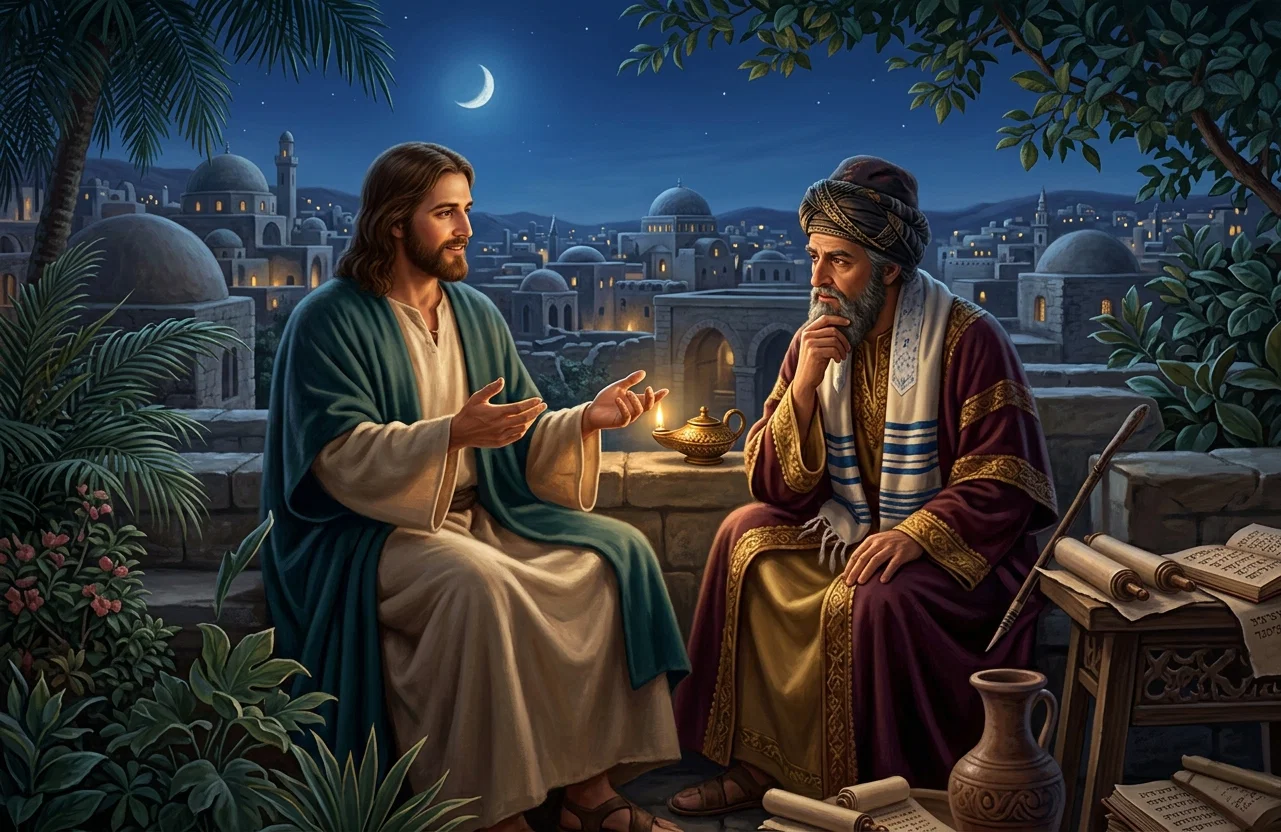
“Did I not come to bless you? Why do you treat me thus, Saul?” And then Saul asks, “Who art thou, Lord?” “I am Jesus of Nazareth whom thou persecutest.” You see, he was not ashamed of his name, although he had been in heaven: “I am Jesus of Nazareth.” What a change did that interview make to Saul! A few years afterward we hear him say, “I have suffered the loss of all things, and do count them but dung, that I may win Christ.” Such a testimony to the Saviour!

The Angels

But I shall go still further. I shall go away from earth into the other world. I shall summon the angels and ask what they think of Christ. They saw him in the bosom of the Father before the world was. Before the dawn of creation, before the morning stars sang together, he was there. They saw him leave the throne and come down to the manger. What a scene for them to witness! Ask these heavenly beings what they thought of him then. For once they are permitted to speak; for once the silence of heaven is broken. Listen to their song on the plains of Bethlehem, “Behold, I bring you good tidings of great joy, which shall be to all people. For unto you is born this day in the city of David a Saviour, which is Christ the Lord.” He leaves the throne to save the world. Is it a wonder the angels thought well of him?

God the Father

But there is still another witness, a higher still. Some think that the God of the Old Testament is not the Christ of the New. But when Jesus came out of Jordan, baptized by John, there came a voice from heaven. God the Father spoke. It was his testimony as to Christ: “This is my beloved Son, in whom I am well pleased.” Ah, yes! God the Father thinks well of the Son. And if God is well pleased with him, so ought we to be. If the sinner and God are well pleased with Christ, then the sinner and God can meet. The moment you say, as the Father said, “I am well pleased with him,” and accept him, you are wedded to God. Will you not believe the testimony? Will you not believe the testimony, this last of all, the Lord of hosts, the King of kings himself? Once more he repeats it, so that all may know it. With Peter and James and John, on the mount of transfiguration, he cries again, “This is my beloved Son; hear him.” And that voice went echoing and reechoing through Palestine; through all the earth from sea to sea; yes, that voice is echoing still, Hear him! Hear him!

Accept Him Today

My friend, will you hear him today? Hark! what is he saying to you? “Come unto me, all ye that labor and are heavy-laden, and I will give you rest. Take my yoke upon you, and learn of me; for I am meek and lowly in heart: and ye shall find rest unto your souls. For my yoke is easy, and my burden is light.” Will you not think well of such a Saviour? Will you not believe in him? Will you not trust in him with all your heart and mind? Will you not live for him? If he laid down his life for us, is it not the least we can do to lay down ours for him? If he bore the cross and died on it for me, ought I not to be willing to take it up for him? O, have we not reason to think well of him?

The Fall and Recovery of Man

Man was created in the image of God. Knowledge and perfect holiness were impressed upon the very nature and faculties of his soul. He had constant access to his Maker, and enjoyed free communion with him, on the ground of his spotless moral rectitude. But, alas! the glorious diadem is broken; the crown of righteousness is fallen. Man's purity is gone, and his happiness is forfeited. "There is none righteous, no, not one." "All have sinned, and come short of the glory of God." But the ruin is not hopeless. What was lost in Adam is restored in Christ. His blood redeems us from the bondage, and His gospel gives us back the forfeited inheritance. "For if through the offense of one many be dead, much more the grace of God, and the gift by grace, which is by one man, Jesus Christ, hath abounded unto many."
Hither, O ye guilty! come and cast away your weapons of rebellion! Come with your bad principles and wicked actions; your unbelief, and enmity, and pride; and throw them off at the Redeemer's feet! God is here waiting to be gracious. He will receive you; he will cast all your sins behind his back, into the depths of the sea; and they shall be remembered against you no more forever. By Heaven's "unspeakable gift," by Christ's invaluable atonement, by the free, infinite grace of the Father and the Son, we persuade you, we beseech you, we entreat you, "be ye reconciled to God!"—C. Evans.

“The New Heart”

“A new heart also will I give you, and a new spirit will I put within you; and I will take away the stony heart out of your flesh, and I will give you an heart of flesh.” Eze. 36: 26.
Observe how this property of “new” runs through the whole economy of grace. When man first rose upon this world, an attribute of Divinity appeared which was new to the eyes of men and angels. Again: the Saviour was born of a virgin; and he who came forth from a womb where no child had been previously conceived, was sepulchered in a tomb where no man had previously been interred. The infant had a new birthplace, the crucified had a new burial place. Again: Jesus is the mediator of a new covenant, the author of a new testament, the founder of a new faith. Again: the redeemed receive a new name; they sing a new song; their home is not to be in the old, but in the new Jerusalem, where they shall dwell on a new earth, and walk in glory beneath a new heaven. Now it were surely strange, when all things else are new, if they themselves were not to partake of this general renovation. Nor strange only, for such a change is indispensable. A new name without a new nature were an imposture. It were not more an untruth to call a lion a lamb, or the rapacious vulture by the name of the gentle dove, than to give the title of sons of God to the venomous seed of the serpent.
Then, again, unless man received a new nature, how could he sing the new song? The raven, perched on the rock, where she whets her bloody beak, and impatiently watches the dying struggles of some unhappy lamb, cannot tune her croaking voice to the rich, melodious music of a thrush; and, since it is out of the abundance of the heart that the mouth speaketh, how could a sinner take up the strain and sing the song of saints? Besides, unless a man were a new creature, he were out of place in the new creation. In circumstances neither adapted to his nature nor fitted to minister to his happiness, a sinner in heaven would find himself as much out of his element as a finny inhabitant of the deep, or a sightless burrower in the soil, beside an eagle soaring in the sky, or surveying her wide domain from the mountain crag.

God Gives “a Heart of Flesh”

He says, “I will take away the stony heart out of your flesh, and I will give you a heart of flesh.”
Near by a stone—a mass of rock that had fallen from the overhanging crag—which had some wild flowers growing in its fissures and on its top the foxglove, with its spike of beautiful but deadly flowers, we once came upon an adder as it lay in ribbon grass, basking on the sunny ground. At our approach the reptile stirred, raised itself, and, raising its venomous head, with eyes like burning coals, it shook its cloven tongue, and, hissing, gave signs of battle. Attacked, it retreated, and making for the gray stone, wormed itself into a hole in its side. Its nest and home were there. And in looking on that shattered rock—fallen from its primeval elevation—with its flowery but fatal charms, the home and nest of the adder, where nothing grew but poisoned beauty and nothing dwelt but a poisoned brood, it seemed to us an emblem of that heart which the text describes as a stone, which experience proves is a habitation of devils, and which the prophet pronounces to be desperately wicked.

A Warm Heart

When faith receives the Saviour, how does the heart warm to Jesus Christ? There is music in his name. “His name is an ointment poured forth.” All the old indifference to his cause, his people, and the interests of his kingdom, has passed away; and now these have the warmest place in a believer’s bosom, and are the object of the strongest and tenderest affections. The only place, alas! that religion has in the hearts of many is a burial place; but the believer can say with Paul, “Christ liveth in me.” Nor is his heart like the cottage of Bethany, favored only with occasional visits. Jesus abides there in the double character of guest and master, its most loving and best loved inmate; and there is a difference as great between that heart as it is and that heart as it was, as between the warm bosom where the infant sleeper slept or smiled in Mary’s arms and the dark, cold sepulchre where weeping followers laid and left the Crucified.
Is there such a heart in you? Do you appreciate Christ’s matchless excellences? Having cast away every sin to embrace him, do you set him above your chiefest joy? Would you leave mother, wife, children, to follow him, with bleeding feet, over life’s roughest path? Rather than part with him, would you part with a thousand worlds? Were he now on earth, would you leave a throne to stoop and tie his shoes? If I might so speak, would you be ready to carry his shoes? Then, indeed, you have got the new, warm heart of flesh.

A Living Heart

The perfection of this life is death. The child of God is dead to sin, but alive to righteousness, alive to Christ, alive to everything which touches his honor, and crown, and kingdom. With Christ living in his heart, the believer feels that now he is not himself, not his own; as another’s, the grand object of his life is to live to Christ.
It is a mark of grace that the believer, in his progress heavenward, grows more and more alive to the claims of Jesus. If you “know the love of Christ,” his is the latest name you will desire to utter; his is the latest thought you will desire to form; upon him you will fix your last look on earth; upon him your first in heaven. When memory is oblivious of all other objects, when all that attracted the natural eye is wrapped in the mists of death, when the tongue cleaves to the roof of our mouth, speech is gone, and the right hand, lying powerless by our side, has lost its cunning, Jesus! then may we remember thee!
If the shadows of death are to be thrown in deepest darkness on the valley, may it be ours to die like that saint, beside whose bed wife and children once stood, weeping over the wreck of faded faculties, and a blank, departed memory. One had asked him, “Father, do you remember me?” and received no answer; and another, and another, but still no answer. And then, all making way for the venerable companion of a long and loving pilgrimage, the tender partner of many a past joy and sorrow, his wife draws near. She bends over him, and as her tears fall thick upon his face, she cries, “Do you not remember me?” A stare, but it is vacant. There is no soul in that filmy eye; and the seal of death lies upon those lips. The sun is down, and life’s brief twilight is darkening fast into a starless night. At this moment, one calm enough to remember how the love of Christ’s spouse is “strong as death,” a love that “many waters cannot quench,” stooped to his ear, and said, “Do you remember Jesus Christ?” Touched as by an electric influence, the heart beat once more to the name of Jesus; the features, fixed in death, relax; the countenance, dark in death, flushes up like the last gleam of day; and, with a smile he replied, “Remember Jesus Christ! He is all my salvation, and all my desire.”

THE BEREAN LIBRARY

All who desire to study further the important Bible subjects presented in this series of Extras should order from this list of valuable books put up in paper covers, postpaid, at the following very low prices:—
Steps to Christ, 144 pages.......................$ .25
Thoughts on Daniel, 345 pages................... .25
Thoughts on Revelation, 430 pages............. .35
His Glorious Appearing, 124 pages............. .15
The Sabbath in the Scriptures, 216 pages ..... .25
The Sabbath in History, 600 pages............... .50
Capital and Labor, 208 pages.................... .35
Here and Hereafter, 360 pages................... .25
Bible Footlights, 320 pages..................... .35
Our Paradise Home, 128 pages.................... .15
Religious Liberty in America, 448 pages....... .35
The Coming King, 320 pages...................... .50
Order from the publishers, whose address is given below

You have reached the end of this edition.

Review and Herald · Feb 8, 1915