A church of ten members was recently organized at Canandaigua, N. Y., by Brother S. B. Whitney.
The forty-second annual session of the Minnesota Conference will be held at Anoka, November 19-30.
The brethren in the South African Conference have started out a colporter wagon, in charge of Brethren H. J. Edmed and T. J. Francis.
The mission school at our Matabele station, Rhodesia, South Africa, has a daily attendance of over sixty native pupils. The workers there are erecting a new church building.
Brother E. H. Gates and wife and Sister Hattie Andre, our well-known laborers in the Australasian field, have gone to Norfolk Island to spend the “summer,” our winter time.
Brother D. Kalaka, our native missionary in Basutoland, South Africa, makes extensive tours in a cart, holding meetings and distributing small books and tracts in the Basuto language.
Our first publication in the Malay language has recently made its appearance. It is a 32-page tract, by Brother R. W. Munson, of Padang, Sumatra. It treats of the signs of the times and the coming of Christ.
Brethren W. T. Knox, president of Pacific Union Conference, and Alonzo T. Jones, president of California Conference, were called by telegram to Battle Creek, Mich., last week, to attend a meeting of the General Conference Committee.
As a result of labor at Farmington, Col., by Brother Wm. Kennedy, four members have recently been added to the church, making nineteen so far during the year. They contemplate a church-school the coming winter. Brother M. McIntosh, who makes this report to Echoes, also notes two candidates for baptism at Durango.
It is gratifying to learn of the success attending the enterprise of the Review and Herald Publishing Co., in issuing special numbers of their Scandinavian papers—Evangeliets Sendebud (Danish-Norwegian) and Sions Väktare (Swedish). Through the Iowa Conference office alone, says the Bulletin of October 28, orders have passed the ten thousand mark.
The South African Sentinel says: “Brother A. Tickton, a colporter of Kimberly, made two successful trips last month to the Orange River refugee camps, where he sold a large number of Bibles and religious books, and distributed thousands of papers and tracts. He had the good-will and assistance of one minister who had charge of the spiritual interests of a camp.”
Reporting the work in China, Brother J. N. Anderson says: “A few days ago wife and I made our long-delayed trip to Canton. It was an eye-opener in many respects. Canton is perhaps the largest city of all China. The people dislike foreigners, and do not hesitate to show it by looks and words. It is an important center, and we must not fail to enter there soon. In our work for this and other provinces, it is the gateway.”
Meetings held at Ionia, Neb., resulted in the acceptance of the faith by fifteen persons. The meetings were conducted by Brethren E. L. Cook and J. W. Beams, who were returning to the eastern part of the State from a canvassing tour in Wyoming.
Concerning the branch Sabbath-school work, Sister L. Flora Plummer writes: “There are two young ladies in different locations in the South, who are all alone in the truth, and they each have a fine school. The attendance of each averages fifteen children. What a wonderful factor in spreading the truth this branch Sabbath-school work might be, if it were taken up by every church, and as far as possible in every home. These little schools will become centers of light reflecting truth to all who come within their influence. The light from such schools would form no small part of that great light which fills the whole earth with its glory.”
From Rarotonga, Cook Islands, Brother A. H. Piper writes to the Mission Board: “Our school buildings proper are nearly finished. Our hearts are rejoicing as we see already the lives of many of the children and young people changing for the better. At first they were so hard to control. We are also pleased with the spirit of our native brother and his wife, who are now helping us in the teaching and work. What can you do with our plea for another worker for this group? Now is the time to work these islands. It seems to me I can not do alone any more than I am doing. Chances for work are offered on all sides. The other islands are calling continually for some of our people to visit them.”
At the Greater New York Conference held last month, the following disposition of labor was decided: Brother E. E. Franke to have supervision of the Manhattan division of the city; address, 119 W. 114th Street, New York, N. Y. Brother Luther Warren to have supervision of the Brooklyn division; address, 400 W. 57th Street, New York, N. Y. Brother C. H. Edwards to have supervision of the Bronx district; address, 986 Freeman Street, Bronx Borough, New York, N. Y. Brother O. E. Reinke to have direction of the German work; address, 147 Himrod Street, Brooklyn, N. Y. Brother C. Meleen to have charge of the Scandinavian work; address, 256 19th Street, Brooklyn, N. Y. Brother S. N. Haskell to have direction of the mission work; address, Vendome, 363 Grand Avenue, Brooklyn, N. Y.
From Regret to Resolution
By Canon Farrar
We can not rightly carry out any true or noble object in life in a spirit of despondency. . . . A depressed life—a life which has ceased to believe in its own sacredness, its own capabilities, its own mission—a life which contentedly sinks into querulous egotism or vegetating aimlessness—has become, so far as the world is concerned, a maimed and useless life. All our lives are in some sense a “might have been;” the very best of us must feel, I suppose, in sad and thoughtful moments, that he might have been transcendently nobler and greater and loftier than he is; but while life lasts every “might have been” should lead, not to vain regrets, but to manly resolutions; it should be but the dark background to a “may be” and “will be yet.”—Canon Farrar.
PUBLICATIONS WANTED.
LATE clean copies of the SIGNS, Review, Instructor, Little Friend, Life Boat, and any of our health journals. Address, post-paid, Mrs. M. E. Coffin, Santa Rosa, Cal., Doyle & Overton building.
NINETEENTH CENTURY
A monthly review of the most important subjects of general interest by the most distinguished and capable writers. World-wide in scope and invaluable to every one.
$4.50 PER YEAR
SAMPLE COPY AND HISTORICAL BOOKLET FREE.
NINETEENTH CENTURY, CONTEMPORARY, FORTNIGHTLY AND WESTMINSTER REVIEWS, BLACKWOOD'S MAGAZINE, EDINBURGH REVIEW, QUARTERLY REVIEW.
WRITE FOR COMBINATION RATES.
LEONARD SCOTT PUBLICATION CO.
7 Warren St., New York.
“always timely”
Baby's Things
By Mrs. Rev. J. F. R.
I prefer PEARLINE to other soap powders. For cleaning baby bottles, nipples and silverware it has no equal. I will try it alone for washing.
Mrs. Rev. J. F. R.
One of the Millions.
683
LESSON 9.—NOVEMBER 29.—THE INTERPRETATION OF THE VISION.
“And it came to pass, When I, even I Daniel, had seen the vision, that I sought to understand it; and, behold, there stood before me as the appearance of a man. And I heard a man's voice between the banks of Ulai, which called, and said, Gabriel, make this man to understand the vision. So he came near where I stood; and when he came, I was afraid, and fell upon my face; but he said unto me, Understand, O son of man; for the vision belongeth to the time of the end. Now as he was speaking with me, I fell into a deep sleep with my face toward the ground; but he touched me, and set me upright. And he said, Behold, I will make thee know what shall be in the latter time of the indignation; for it belongeth to the appointed time of the end. The ram which thou sawest that had the two horns, they are the kings of Media and Persia. And the rough he-goat is the king of Greece: and the great horn that is between his eyes is the first king. And as for that which was broken, in the place whereof four stood up, four kingdoms shall stand up out of the nation, but not with his power. And in the latter time of their kingdom, when the transgressors are come to the full, a king of fierce countenance, and understanding dark sentences, shall stand up. And his power shall be mighty, but not by his own power; and he shall destroy wonderfully, and shall prosper and do his pleasure; and he shall destroy the mighty ones and the holy people. And through his policy he shall cause craft to prosper in his hands; and he shall magnify himself in his heart, and in their security shall he destroy many; he shall also stand up against the Prince of princes; but he shall be broken without hand. And the vision of the evenings and mornings which hath been told is true; but shut thou up the vision; for it belongeth to many days to come. And I, Daniel, fainted, and was sick certain days; then I rose up, and did the king's business; and I wondered at the vision, but none understood it.”
QUESTIONS.
After seeing the vision what did Daniel seek to learn?
Who then stood before him? What did he hear?
What command was issued?
What effect did his presence have upon Daniel?
What was the first statement made concerning the vision?
What effect did his speaking have upon Daniel?
What did the interpreter of the vision then do? What did he promise to make known? At what time did he locate the matter?
What interpretation was given to the ram of the vision?
What interpretation was given to the he-goat?
What was the significance of the great horn of the goat?
What interpretation was given to the four horns which succeeded the great horn? What is said of their power?
How is the next king described? When would he stand up?
How is his power described? How is his conduct described?
How will he cause his wrong course to appear right?
What mention is made of his self-exaltation? What further statement is made concerning his relation to others?
What marks the climax of his rebellious course? How will he come to his end?
What was said about the days mentioned in the vision? What instruction was given about the vision? Why?
What effect did the vision have upon the health of the prophet Daniel? What effect did it have upon his mind? Was the vision understood?
NOTES.
The vision of the eighth chapter was given only two years after the vision of the seventh chapter, and stands in close relation to it. In the vision of the seventh chapter the whole period of the time covered by Babylon, both ancient and modern, is dealt with, and by the aid of later prophecies it appears that the pagan principles of ancient Babylon are revived under Christian forms and names in modern Babylon, and are taught as the truth in the place of the genuine Gospel of salvation. This connection between ancient and modern Babylon having been established in the vision of the seventh chapter and the additional visions of John covering the same period, ancient Babylon now drops out of view, and the whole attention is directed to the outworking of its principles in modern Babylon. Enough particulars are given to locate with definiteness the territory and the time of the little horn, and these specifications are so explicitly interpreted in this lesson that all doubt is removed in their application. In the field of view of this vision we have the kings of Media and Persia, the king or kingship of Greece (margin, “Javan”), with particular mention of “the first king,” Alexander the Great, and the “four kingdoms” into which his kingdom was divided soon after his death. “Then, 301 B. C., twenty-two years after the death of Alexander the Great, when all his house, whether relatives or posterity, had perished, the empire conquered by ‘the prince of Grecia’ was divided among themselves, by Ptolemy, Seleucus, Lysimachus, and Cassander, ‘toward the four winds of heaven,’ as follows: In the north, Lysimachus [had] Thrace, Bithynia, and some smaller provinces of Asia Minor. [In the] east Seleucus [had] Syria and all the country to the river Indus. [In the] south Ptolemy [had] Egypt, Libya, Arabia, and Palestine. [In the] west Cassander [had] Macedon and Greece.” (“Great Empires of Prophecy,” page 199.)
The kingdom of Javan included Macedonia as well as Greece. Alexander the Great was the son of Philip II., the king of Macedon, and at twenty years of age succeeded Philip as king of Macedon and head of Greece, B. C. 336.” Thus it was from Macedon that “the prince of Grecia” went forth to conquer Medo-Persia, and when the great horn was broken and the kingdom was divided into four kingdoms symbolized by the four horns, it was out of the Macedonian horn that there “came forth a little horn, which waxed exceeding great, toward the south, and toward the east, and toward the glorious land.”
The conquest of Macedonia marked the worldwide supremacy of Rome. “This victory, which destroyed the kingdom of Macedonia, and added that country finally to the Roman Empire, was gained in the battle of Pydna, June 22, 168 B. C. ‘Thus perished the empire of Alexander the Great, which had subdued and Hellenized the East, one hundred and forty-four years after his death. . . . Polybius dates from the battle of Pydna the full establishment of the empire of Rome. It was, in fact, the last battle in which a civilized state confronted Rome in the field on a footing of equality with her as a great power.’” (“Great Empires of Prophecy,” pages 243, 244.)
A comparison of the prophecies of the seventh and eighth chapters of Daniel and other prophecies with the record of history makes it clear that the “king of fierce countenance, and understanding dark sentences,” who arises “in the latter time” of the four kingdoms which succeeded the kingdom of Alexander, is the same power as is represented by the fourth beast of the seventh chapter, including the ten horns and the little horn. This is Rome. And the little horn of the eighth chapter represents Rome in both of its phases,—Rome pagan and Rome papal, the former a kind of picture of the latter; “for what were the Caesars, king and priest of the Roman world, but types of that more terrible power, temporal and spiritual, that was to center in the chair of the popes?”—(J. A. Wylie, L. L. D., author of “The History of Protestantism.”)
The HOLMAN QUARTO BIBLES
are the recognized standards everywhere. FAMILY and PULPIT Editions in ENGLISH, GERMAN, DANISH, SWEDISH, NORWEGIAN, DUTCH and FINNISH. Substantial binding. Rich cover designs. A. J. HOLMAN & CO., Philadelphia, Pa.
(1) “WOE to the crown of pride of the drunkards of Ephraim, and to the fading flower of his glorious beauty, which is on the head of the fat valley of them that are overcome with wine! (2) Behold, the Lord hath a mighty and strong one; as a tempest of hail, a destroying storm, as a tempest of mighty waters overflowing, will be cast down to the earth with the hand. (3) The crown of pride of the drunkards of Ephraim shall be trodden under foot; (4) and the fading flower of His glorious beauty, which is on the head of the fat valley, shall be as the first-ripe fig before the summer; which when he that looketh upon it seeth, while it is yet in his hand he eateth it up. (5) In that day will Jehovah of hosts become a crown of glory, and a diadem of beauty, unto the residue of His people; (6) and a spirit of justice to him that sitteth in judgment, and strength to them that turn back the battle at the gate. (7) And even these reel with wine, and stagger with strong drink; the priest and the prophet reel with strong drink, they are swallowed up of wine, they stagger with strong drink; they err in vision, they stumble in judgment.”
Golden Text.—“They also have erred through wine.” Verse 7.
Special Helps.—“Patriarchs and Prophets,” Ch. 54, p. 562.
SUGGESTIVE QUESTIONS.
(1) Against whom is a woe pronounced in this prophecy? Who were being warned by the prophecy? Verse 1. Note 1. (2) By what means would the woe come? To what was the woe likened? Verse 2. Note 2. (3) What expression indicates the completeness of the overthrow? Verse 3. Note 3. (4) What illustration is used to show the rapacity of the enemy? Verse 4. Note 4. (5) What would the Lord be in that day? To whom? Verse 5. Note 5. (6) What else would the Lord be to His faithful ones? Verse 6. (7) But of what had even these been guilty? Verse 7. Note 6.
NOTES.
1. This prophecy was spoken shortly before the fall of Samaria and the kingdom of Israel. It was spoken to Judah and Jerusalem as a warning, in view of the approaching downfall of the northern kingdom and the captivity of the people. The “crown of pride” and the “fading flower” are figures of Samaria, which was a beautiful city, crowning the hills and overlooking the fertile valleys and prolific vineyards. The “drunkards of Ephraim” were the leading men of the kingdom—Ephraim standing for all Israel, being the leading tribe, and Samaria being in the land of Ephraim. The prime cause of the lamentable downfall just about to be accomplished, was excessive luxury and drunkenness—“overcome with wine.” The “woe” here pronounced was not the arbitrary fiat of God, but the consequence of pride and debauchery. See Amos 6.
2. The “mighty and strong one” here referred to is the king of Assyria, whose devastating armies were even then threatening Israel.
3. The complete overthrow of Samaria is indicated by the expression “trodden under foot.”
4. The greediness with which a lover of figs will devour the first ripe one of the season is used as a figure of the rapacity of the enemies of Israel when they beheld the luxurious spoil within their reach.
5. “In that day”—when the “drunkards of Ephraim” perished, the Lord was for a “crown of glory” to those who would obey Him. And just as Israel was going down Hezekiah came to the throne of Judah. He began his reign with a political and religious reformation. He threw off the yoke of the Assyrians, to which his father had submitted, and when they pressed the battle to the gates of Jerusalem, the Lord overthrew them by His angel, because of the humiliation and prayers of Hezekiah and His people. See 2 Chronicles 32.
6. “But these also have erred.” That is, Judah also had erred through the excessive use of wine. Hence the warning concerning the doom of Ephraim. “They err in vision”—can not see things in their true light. “They stumble at judgment”—can not judge correctly. Notwithstanding the reformations under Hezekiah, and in the latter part of Manasseh’s reign, and again under Josiah, Judah at last ignored the experience of Israel, and went down in the same manner. But in no age of the world have the people stood in greater need of the warning given in this lesson to Judah, than in our own day and generation.
SHREDDED WHOLE WHEAT BISCUIT
Some people go blindfolded through life regarding what food is best suited to sustain them, until their bodies become physical makeshifts and their minds correspondingly faulty. SHREDDED WHOLE WHEAT BISCUIT is a Naturally Organized Food, that contains all the properties in correct proportion necessary to nourish every element of the human organism. “Soft-cooked” cereals are swallowed without the necessary mastication, thus robbing the teeth of their NATURAL exercise, causing weakness and decay. SHREDDED WHOLE WHEAT BISCUIT, being crisp, compels vigorous mastication and causes the NATURAL flow of saliva which is necessary for NATURAL digestion.
Don’t “go it blind” but send for “The Vital Question” Cook Book (free). It will remove the blindfold of habit. SOLD BY ALL GROCERS. Address,
THE NATURAL FOOD CO.
Niagara Falls, N. Y.
Save Your Clothes
Save your time; save your strength; by usingE-Z WASHING TABLETS
They save half the labor—the hard work of rubbing.
“Every one that bought the Tablets is after more. One lady says she would do without her washing machine sooner than be without the Tablets.
“MRS. R. N. MOODY, Aberdeen, Wash.”
Samples for ten cents.
Address, ALFRED MALLETT, Nyack, N. Y.
PURE FOOD MAKES PURE BLOOD
A mill that enables your cook to do the work of three mills on one combination mill, is up-to-date and economical. It grinds grains, makes nut butter, cuts up meats, figs, dates, pulverizes coffee, drugs, salt, etc.
Price $4.00
For circulars, terms, etc., address W. T. DAWSON, 308 Ottawa Street, Grand Rapids, Michigan. Also Memphis, Tennessee.
THE WORD
A Beautiful Translation
Each, Bourgeois Type, Size 5¼ x 8 with 12 Maps and Index
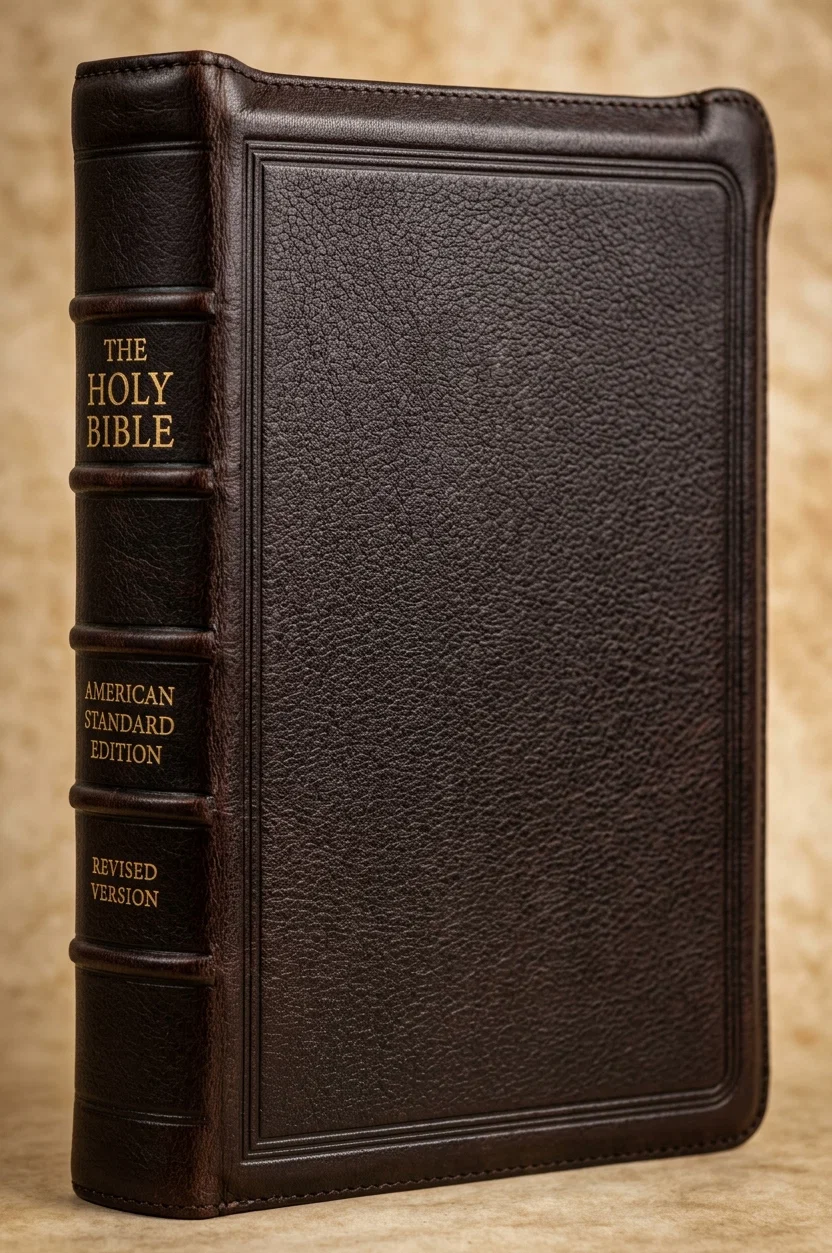
The American Standard Edition of the Revised Bible is believed to be the most perfect translation in the world. Read the following extract from the preface:—
“The present volume, it is believed, will, on the one hand, bring a plain reader more closely into contact with the exact thought of the sacred writers than any other version now current in Christendom, and, on the other hand, prove itself especially serviceable to students of the Word.”
The Revision Committee have indeed performed wonderful service to all lovers of the Holy Scriptures by this patient, careful, and conscientious effort to present to the world the pure Word of God.
WHAT OTHERS SAY
“The most perfect translation of the Bible into English there is in the world.” —M. C. Wilcox, Editor Signs of the Times.
“It is by far the most exact that has yet appeared and ought to be in the hands of every student of the Bible.” —The Independent.
“The best version of the Scriptures yet produced.” —The Standard.
“The standard translation of the Bible for the English-speaking world.” —Sunday-School Times.
“There can be no doubt that in this version we are nearer the thought, and therefore the spirit of the Master than in any other version now existing in English.” —Northwestern Christian Advocate.
See Styles and Prices Above
Pacific Press Publishing Company
11 W. 20th St., New York OAKLAND, CAL. 18 W. 5th St., Kansas City, Mo.
Take a Tourist Car
—A Santa Fe tourist car—if you would enjoy your trip across the continent.
The cars are so comfortable, the route so interesting, the people so pleasant, the excursion manager so accommodating, the porters so obliging, and the meals so good, that you simply can't help being satisfied.
Personally conducted east and west three times a week—Mondays, Thursdays and Saturdays—to Chicago, Kansas City, Los Angeles and San Francisco.
Folder giving full information furnished on request by any Santa Fe Agent.
News from the Pacific Press
A new volume of “Testimonies for the Church,” Volume 7, is now in press. It will contain about 300 pages, and the price will be 75 cents for the cloth, and $1.25 for the limp leather.
The subscription list of the SIGNS OF THE TIMES increased nearly 1,000 copies the past week. A large proportion of this increase was in single subscriptions.
Among the orders just received by our Book Department, we note the following:—
700 THINGS FORETOLD
250 BOY PUZZLE
750 GREAT CONTROVERSY
1000 COMING KING
250 POWER FOR WITNESSING
200 HOUSE WE LIVE IN
25 OUTLINES OF MODERN CHRISTIANITY
All the “Power for Witnessing” and 500 of the “Great Controversy” were for export.
The Thanksgiving issue of the Pacific Health Journal is attracting general attention. Special orders for it already aggregate 1,000 copies. Price $2.50 per hundred.
Subscriptions for the Little Friend and the new book “Things Foretold” are coming in rapidly since the combination of both for 75 cents has been made.
The first installment of the new book “Boy Puzzle” is being finished by our Bindery. The price is 75 cents.
A 25-cent edition of “Power for Witnessing” bound in paper covers is just going to press.
PACIFIC PRESS PUBLISHING CO., Oakland, Cal.
BUSINESS FOR SALE.
ONE-HALF interest in the Garden City Sanitarium Distilled Water Co. A good opportunity for suitable person. Address, Distilled Water Co., 100 Latawana St., San Jose, Cal.
WANTED
Adventist girl or woman to do housework in family of three grown persons. Will pay any reasonable wages to right person. Address Mrs. F. H. Owen, Winters, Cal.