The Youth’s Instructor, Vol. 67, No. 24.

Last Spike Driven in Transcontinental Railway, 1869

The Youth’s Instructor

Jun 17, 1919

Review and Herald Publishing Assn. · Takoma Park Station, Washington, D. C. · Jun 17, 1919

Last Spike Driven in Transcontinental Railway, 1869

The last spike in the transcontinental railway system was driven fifty years ago, on the tenth of May, 1869.
The former kaiser has requested the German government to be allowed to return to Germany and reside on one of his estates, says a Berlin dispatch.
In our flag, red stands for valor; white for hope, purity, and truth; blue for loyalty, sincerity, and justice. The stars represent high aspirations and Federal union.
Ismael Haki Bey, who took three hundred Armenian orphans from an asylum, put them on a train, and fired the train, killing all the children, awaits trial by the Allied Commission, having been saved from the wrath of an Armenian mob by British soldiers.
All Rumania is eating flour from America today. The people realize where the aid has come from and are exceedingly grateful. Without American help, starvation certainly would have become very general. The great bulk of the Rumanian food supply, including about 20,000 tons of flour monthly, is furnished by the American Food Administration.
Pike’s Peak, Colorado, is 14,107 feet high instead of 11,200 as given in the INSTRUCTOR of June 3. We used the figures given by the company that furnished the photograph, and we hardly know why the latter figures were used, unless reference was made to the actual distance traveled by the climbing tank and not to the height of the peak above sea level.
The youngest son of ex-President Monroe is still living. Though he is more than 103 years old, he looks to be a well-preserved man of about seventy or seventy-five. He bears the title of major, on account of his service in the Civil War. When the recent war was declared, the major was among the first to offer his services to Uncle Sam. He was refused, but later he went as a recruit to the shipyard at Jacksonville, Florida, and did good service.
More than 3,000 French orphans have been adopted by soldiers of the United States and will be maintained by a fund of nearly $400,000 given by 450,000 American fighters. This money will be used for the education and general welfare of the 3,444 children selected by the American Red Cross. Interest of the home-coming soldiers does not end with contributing to the fund, it is stated. Hundreds of the veterans maintain correspondence with their “mascots.”
There were 124,187 mules who had a definite part in the war work of the camps here and on the battle-fields of France. There is a handsome mule at Camp Travis, which is said to be apt at learning tricks, but refuses to be mounted. He is said to make an attempt to give a salute, with a sardonic grin and a bow, every time he meets an officer, and to let out a contemptuous bray when he is ignored. Camp Gordon is said to have a mule that knows all the bugle calls, but pays attention to only one, the “recall.” He never allows this call to pass unobserved. The men named him Samuel Gompers, not out of disrespect for the champion of labor, but in compliment to the mule, because he knows how long a day’s work should be.
Following closely upon the announcement that the War Department was prepared to pay discharged soldiers extra mileage due them in traveling to their homes, the American Red Cross, through its Home Service Sections throughout the country, will co-operate with the Government in assisting men to present all claims of this nature. Those soldiers who, in returning to their homes from the place where they were mustered out of service, were paid only three and one-half cents a mile, travel allowance, can obtain the extra cent and a half, authorized by Congress, by sending their discharge or a true copy certified to by a recruiting officer, accompanied by an affidavit on Government form to the Zone Finance Office, Travel Allowance Division, Lemon Building, Washington, D. C.
Bullrun Lake, near Portland, Oregon, is utilized as a natural reservoir in connection with that city’s water supply. It having been found that water was wasted by running off through the bottom, which was of naturally broken rock, the leaks were stopped by “blanketing” the bottom with clay, which was deposited by dumping it into the water from rafts. A dike was also built to cut off an especially leaky corner of the lake, and the whole of the contained water is now conserved for the consumption of the people of Portland.

A Child’s Query

Why, mother, Miss M. is good! If she wears such things, why is it wrong for me?” asked a bright young girl of her mother, who ever sought to guide her daughter’s feet in the way of Christian simplicity and modesty.
It was a hard question for the mother to answer, for Miss M. was her daughter’s Sabbath school teacher.
Are flowers and jewels worth the price of offense to a child’s sensitive soul? F. D. C.

Worth the Price

An unusually readable and instructive work on archeology, is “The Monuments and the Old Testament,” by Dr. Ira M. Price. It is a book of more than three hundred pages, and sells for $1.25. Order of your tract society, or of the Review and Herald Publishing Association, Takoma Park, D. C.

Time and Patience Changing the Mulberry Leaf

“TIME and patience will change the mulberry leaf to satin.”

How to Read the Bible

I’ll read the Bible with a microscope, The many hidden blessings there to find, The gold that well repays my searching hope, The jewels of the heart and of the mind.
With telescope the Bible I will read, So far and vast its shining glories are, So swiftly truths to ardent truths succeed, A bright-heaped galaxy of sun and star.
I’ll read the Bible with a garden spade, For hosts of seedling thoughts are growing there. Transplanted to my life, they give me shade, And healthful fruit, and flowers richly fair.
I’ll read the Bible with a light-poised boat, With crowding sail or with a laboring oar, For it has many a fairyland remote, And many winding channels to explore.
I’ll read the Bible with a miner’s pick, For deep in solid rock its wealth is found; But ah, the secret veins are rich and thick, And glorious Eldorados here abound.
All instruments, all modes of eager quest, Find here their recompense of high reward, Find here the wisest, worthiest, and best, The free and waiting treasures of the Lord. — Amos R. Wells.

RUTH WILCOX

Opportunity

RUTH WILCOX

The men and women who have achieved success are those who have improved the opportunities which life has brought to them. They are individuals who, having resolved to be a success, have sought opportunity, grasped it, and held it fast. To some it comes begging a welcome. From others it seemingly flees, and must be pursued and captured. All do not have the same opportunities, neither do all have them in the same proportion. But each one can make the most of those which come to him, whether they be great or small.
Young Abraham Lincoln spent many hours reading by the flickering light of a log in the fireplace. These stolen hours from sleep were rungs in the ladder by which he climbed to success. Early in life he cultivated sympathy for the suffering. Eventually he was the chosen instrument of Providence in giving freedom to the colored race.
Steadily and faithfully young Charles Schwab worked in a little country store. While faithful to his trust he was waiting for an opportunity to do something greater. It came; he recognized it, grasped it, and today he is one of the world's great men.
During the Crimean War, Florence Nightingale, recognizing her opportunity to serve humanity, left her home to nurse the wounded. Her mission was a great one. While she brought cheer to hundreds of hearts, she won for herself a name which will never be forgotten.
And so it is with all who have become successful. When opportunity came, they seized it; while others loitered, they toiled.
“The heights by great men reached and kept Were not attained by sudden flight; But they, while their companions slept, Were toiling upward in the night.”
To us as Christian young people, opportunities of becoming great, as the world counts greatness, will come to but few. Nor, indeed, do we aspire to be counted among the world's great leaders. Our highest aim is to be life-savers in the world. And in service to humanity we will be counted great by the all-wise Judge; for, “whosoever will be chief among you, let him be your servant.”
With the dawn of each new day, there comes to us the opportunity to live and learn and labor. To some of us it comes in one way, to some in another. But we are credited with that which we accomplish with the means God has given us. Each day we may increase our knowledge and learn of the world about us. Each hour brings the privilege of lending a helping hand, saying a kind word, or brightening some life with a smile. None of us live unto ourselves. There are those who influence us, and those whom we influence. Ours is the opportunity, ours the duty to be friendly. If we have something helpful for others, let us give it. Let us be inspired by the good in our fellow men.
Finally, there is that greatest of all opportunities—the privilege of acquaintance with the One who is always our Friend. He it is who can help us recognize and improve every other opportunity. He will help us act at the right time. Opportunity is patient, but she will not always plead; let us be quick to recognize and embrace her.
“There is a tide in the affairs of men, Which, taken at the flood, leads on to fortune; Omitted, all the voyage of their life Is bound in shallows and in miseries. On such a full sea are we now afloat, And we must take the current when it serves, Or lose our ventures.”

Camp-meeting Ideals

CAMP-MEETING ideals might mean ideals about how to conduct camp-meetings, but it doesn’t. It means ideals we may get at camp-meetings, and that is a different matter.

What Are Ideals?

Ideals are our vision of better things. They are our standards of excellence and attainment. We see them through the imagination before they are realized. We make them by combining into new forms the best of the things we already have. They are the germ of all invention, all progress, all improvement. We may not attain to our ideals of excellence, because as we approach them they resolve into something higher and better. But, like Paul, we may “follow after.” He did not profess to have attained to the perfect standard, but he followed after it, that he might finally grasp it as his own. Even if our ideals are somewhat vague, yet they have an influence to cause us to reach up for that which is perfect in character.
Ideals are the objects of our ambitions. And our ambitions are good or bad, right or wrong, according to the nature of the ideals they strive to grasp. If we are ambitious to obtain something good, and pure, and noble, then our ambitions are good, and pure, and noble; and by striving to reach them our lives become pure and noble also. Without ambition there could be no approaching our ideals. Progress would be at an end. Ambition is the ladder by which we mount up to our ideals. Our ideals shape our ambitions, and hence determine our lives and characters. Therefore, we should cherish carefully our ideals, for they are the very citadel of our character.

The Part of the Will

And there is something which we can do, and which we are held responsible to do, in the formation of our ideals. We are not left at their mercy. We need not sit idly by and allow unworthy ideals to take possession of our minds. We have a power through which, by the aid of Almighty God, we can change them—the will. This is conversion—the process of breaking up, destroying, casting out wrong ideals and filling the mind with ideals new, and pure, and noble. If any man be in Christ, there is a new creation, old things have passed away. The Holy Spirit comes into the heart, casts out the old wrong ideals, and replaces them with new and holy ones.

Best Place for Gaining New Ideals

Now, the camp-meeting is the best place on earth for the accomplishment of this work. Here the loftiest ideals are held before us,—ideals the influence of which will cause us to forget difficulties, and brave dangers, and put forth every effort in our power to gain that which is so dear to us.
Think of the wonderful ideals offered to our young people. We are living in the most interesting and most important time of the world’s history. All influences are focused in this age. Tremendous principles are at work. The world is filled with strife and commotion. There are also things that are cheerful and tend to delight, but all hastening on to that final event,—the end toward which all these influences have been tending since the world began,—the event which is to bring order out of confusion, the event which is to let light shine through the darkness, the event which is to put an end to sin and misery. God has called his people to the work of giving the warning messages to every nation, kindred, tongue, and people. He has laid this burden upon his people, especially upon the young people.

Opportunities for Realizing Ideals

There are numerous openings before us. There is the work of the nurse, the cook, the matron, the physician, the minister, the printer, the artist to illustrate the page, and the canvasser to bring the printed page before the people. We have books, comparing favorably with the best books of the world in appearance, and of infinitely more value than anything else the world has produced. What a field there is for editors, bookmakers, and canvassers; for bookkeepers, stenographers, typists, secretaries, and business managers. What a field in the work of evangelization, the carrying of the good news to all nations, kindreds, tongues, and peoples. What a field for Bible workers, colporteurs, missionaries, and ministers, the highest calling that God has extended to men.
All these worthy, noble, stirring ideals are held before our young people at the camp-meetings by Spirit-filled men and women, called of God to lead us forward in all these departments of glorious achievement. Come, then, dear young friends, to the camp-meeting, and receive a great uplifting to an eminence from which we may see that the present life is worth living as a means of gaining eternal life for ourselves and others, the highest goal of human endeavor. C. C. LEWIS.

Before the Great White Throne

[The following paragraphs are taken from “Testimonies for the Church,” Volume VII.]

Before the Great White Throne

WE are nearing the close of this earth's history; soon we shall stand before the great white throne. Soon your time for work will be forever past. Watch for opportunities to speak a word in season to those with whom you come in contact. Do not wait to become acquainted before you offer them the priceless treasures of truth. Go to work, and ways will open before you.”

One’s First Duty and Privilege

“It is an eternal law of Jehovah that he who accepts the truth that the world needs is to make it his first work to proclaim this truth. But who is there that makes the burden of perishing sinners his own? As I look upon the professed people of God, and see their unwillingness to serve him, my heart is filled with a pain that I cannot express. How few are heart to heart with God in his solemn, closing work!”

The Christian’s Joy

“The Christian has no desire to live for self. He delights to consecrate all that he has and is to the Master’s service. He is moved by an inexpressible desire to win souls to Christ. Those who have nothing of this desire might better be concerned for their own salvation. Let them pray for the spirit of service.”

The Cause of Spiritual Weakness

“So long as church members make no effort to give to others the help given them, great spiritual feebleness must result.”

The Benefits of Real Conversion

“Those for whom the fetters of sin have been broken, who have sought the Lord with brokenness of heart, and have obtained answer to their yearning request for righteousness, are never cold and spiritless. Their hearts are filled with unselfish love for sinners. They put away from them all worldly ambition, all self-seeking.”
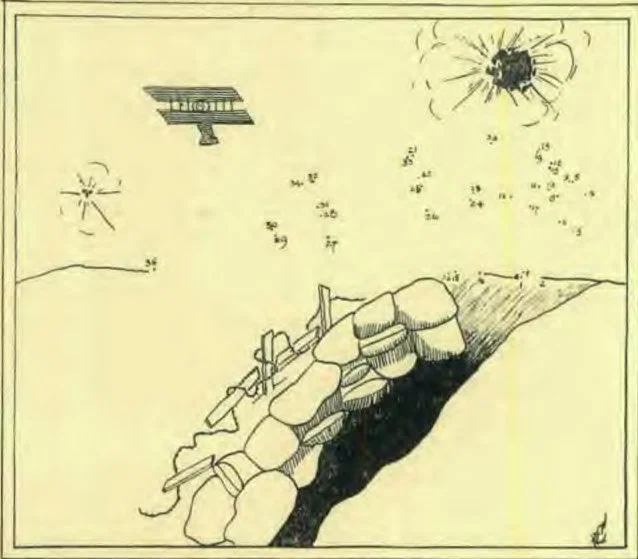
Complete the Picture

Life-saving Carrier Pigeons

IN the Great War the carrier pigeons of the United States Navy proved themselves one of the most efficient arms of the service. In the thousands of flights which they made over the enemy country and the battle fronts, the plucky little birds could be counted on ninety-eight per cent of the time. The missing birds probably lost their way in the smoke of battle, or were brought down by shock of exploding shells, so close were their journeys to the firing lines.
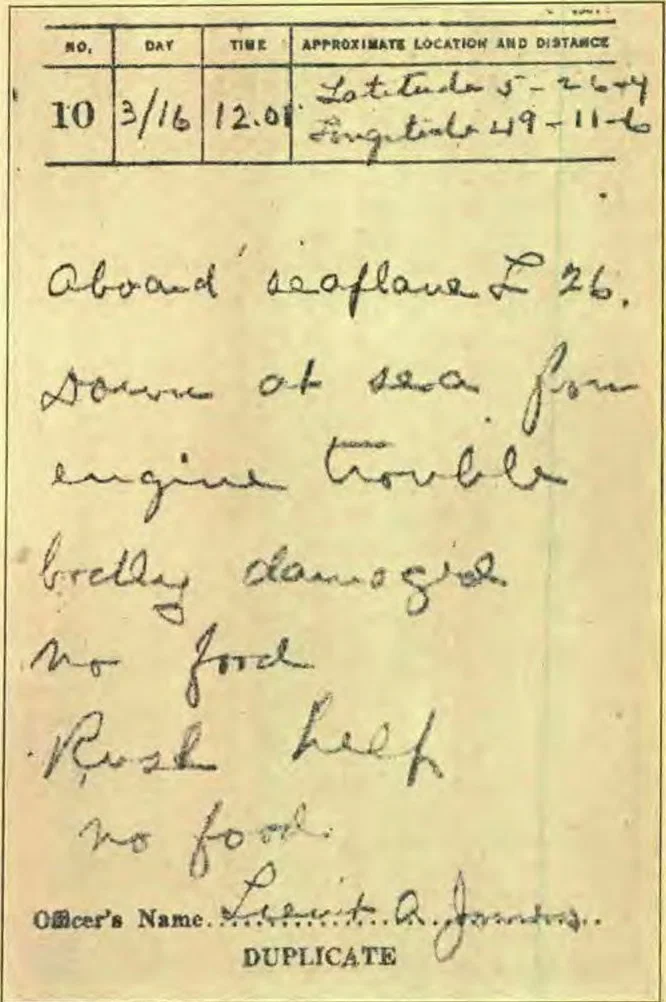
In a single year our navy birds at the front made 778 flights, covering a total of 10,995 miles. They carried messages, which meant life or death to our boys, in incredibly short time, often under the direct fire of the enemy. The birds were taken into the front-line trenches or carried with the advancing troops. Their most important work, however, was probably in the aeronautic service. Carried aloft on aeroplanes, they sped back to their homes over sea and land, carrying priceless information. Some 219 flights were made from seaplanes “down at sea.” When an aeroplane is forced to come down at sea, its position is especially dangerous. The frail craft is at the mercy of every wave, there are no lifeboats, and scarcely a spar to hold to. No matter how remote the aeroplane wreck may be, the pigeons, with unerring instinct, soon find their way home, carrying news from the wreck. An American air pilot, Lieutenant Stone, found himself in such a plight off the coast of France. He released his birds and watched them disappear. His message reached his naval base in short order, and scouting seaplanes and motor boats were quickly sent out to his relief. He was not found for seventy hours, but his life, like that of many others, could have been saved only by the faithful pigeons.
One of the English carrier pigeons, “Red Cloud,” flew 535 miles in the incredibly short time of 643 minutes. The longest flight on record, by the way, is 1,680 miles, covered in less than three days. No boats which sail the seas, and scarcely any aircraft, can rival these birds. As one of the sailors in charge of the carrier pigeons explained, “they have no engine troubles.” The British bird “Peerless Pilot” averaged three flights a day for eleven months. It is not generally known that the Germans had some 60,000 carrier pigeons in service, so important did they consider their work. The Allies had 30,000 birds. When the German armies marched through Belgium, they confiscated every pigeon, and announced that any citizen found with a carrier pigeon in his possession would be instantly shot.
A Carrier-Pigeon Dispatch
In dispatching pigeons at the front, the messages are always sent in duplicate. The officer in charge carries a little pad made up of sets of three sheets of paper, two thin sheets for carbons, and a third, heavier sheet for the record. The sheet, which measures three by five inches, is ruled with columns for the date, the number of the message, the time, the officer’s name, and the position from which the bird is set free. The message itself is usually written in cipher. By using two carbon sheets, the three leaves are filled in with one writing. The two thin sheets are then detached, rolled up, and each inserted into a water-tight aluminum tube, which is fastened to the leg of a pigeon. The two birds are then released, carrying duplicate copies of the message, which gives two chances that the message will be delivered. The birds object at first to the little cartridges and try to peck them loose, but soon grow accustomed to them.
The carrier pigeons used by our navy abroad have been British or French birds. The champions have been brought to America, and will be used for breeding birds for American flights. Special attention will be paid to this work in future at all naval stations.
The British and French birds would, of course, be useless if liberated in America, since their homes lie so far away, and in trying to find them they would be lost at sea. The American aircraft starting on their trip across the Atlantic, in order to keep in touch with both continents carried both American and European birds.— F. A. Collins, in St. Nicholas.

Awake or Asleep — Which?

BOYS and girls, are you awake or asleep? If you are awake to life's opportunities, you are improving your time, and doing something really worth while. If you are asleep, you are wasting the days. There were two girls in a recent audience. One gave a piano recital, and the selections were beautifully rendered. The performance did her great credit. The other girl was older, and had been given musical opportunities also; but her mother remarked, “She would not practise.”
Do you practise? or are you slighting your opportunities? It may be you have no special talent for music; but talent is largely acquired. Persistence, perseverance, is talent. Without it Paderewski would not have been the world's pianist.
Perhaps you are more inclined to mechanical or agricultural pursuits than to the fine arts. That is all right. The world would be a poor place if all were musicians, sculptors, and painters. But if you have two hands, do something worth while. You might follow with profit the example of a Massachusetts youth, James V. Spadea. He awoke from sleep at the age of twelve years, and has been wide-awake ever since. His story, as given to the American Magazine, will, I think, convince you of the truthfulness of this statement.
James wanted an education; but his parents wanted him to work in a factory. Even when James was in the eighth grade his parents told him he must leave school and become self-supporting. But James himself proved the inadvisability of this plan. He says:
“Six years ago, when in the seventh grade of grammar school, I was as mischievous a boy as one could find anywhere.
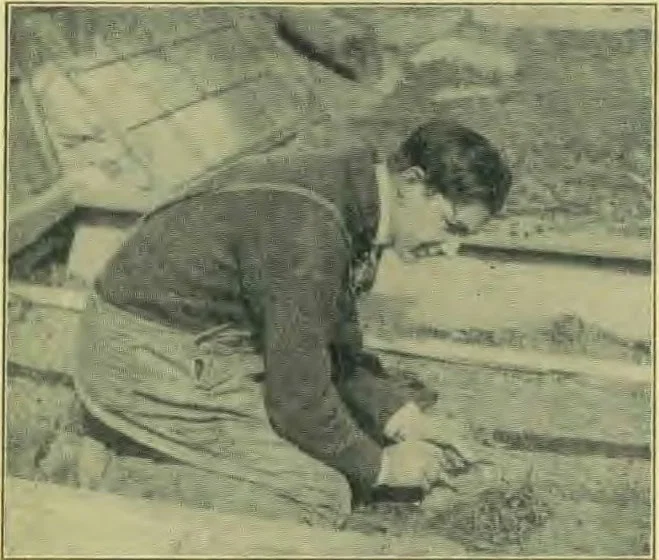
James V. Spadea at Work
“Fortunately, that year there was a contest in our city for the best story of a pet animal. I made myself acquainted with an old dog named Jack. I wrote about this dog Jack, and received a fourth prize of fifty cents. This insignificant start from a mere contest was enough, evidently, to spur me on to greater achievements.
“In the spring of 1913 a new movement was started in our schools. Prof. Q. A. Morton, who was State leader of boys' and girls' extension work at the time, came to Brockton to interest us in the home garden club work. I was one of his first converts. Several days later our local leader distributed some cotton bolls containing seed. Prizes were offered by a public-spirited citizen for the best cotton plant received from these seeds. Receiving one of these bolls, I went home, and without stopping to eat my supper, removed the seeds from it and planted them in several boxes. These were the first seeds I ever planted in my life. Several days later I discovered two big leaves coming through the soil, which showed that my seeds were coming ‘over the top.’
“Besides these boxes of cotton, I planted a little garden twelve feet square. I was interested enough to want to try to grow all kinds of crops, although when I started I knew nothing about any of them.
“Besides the many ordinary garden seeds, I planted tea, coffee, rice, wheat, oats, barley, and the like. These experiments made me the ‘Charlie Chaplin’ member of our home club, and my ‘twelve-foot-square’ garden became to every one a sort of home-garden continuous vaudeville.
“My cotton plants so thrived that when they were shown at the boys' and girls' club fair I had the best cotton plant in the city, and won the first prize—a five-dollar bill. I exhibited the plant at our local exhibit, and won a first prize of three dollars. Making eight dollars so easily, after having before practically wasted all my time and energy, I was convinced that life is not a mere joke, but that great things can be accomplished by a mere boy; so, with this in mind, I set out to do things; and when my parents saw how enthusiastic I was over the work, they began to hope for better things for me.
“During the evenings of the following winter I was constantly reading the boys' and girls' club instructions and Government Bulletins, and other material, to get ideas and help for my garden club work.
“With the opening of the next planting season I planted one-eighth acre of potatoes and our garden at home, and was able to supply my family not only with fresh vegetables during the summer, but also with the entire winter's supply of white potatoes.
“At the fairs in the fall I captured twelve dollars in prize money.
“The next year I cultivated one and a half acres of land and took charge of nine other club boys as the local volunteer leader. Each of these boys had one-eighth acre of potatoes. This land was situated one and one-half miles from home; but in spite of this I kept three pigs out there on my garden plat. These pigs were fed twice daily and I had to walk six miles each day to take them their feed.
“I made a profit of twenty dollars on the pigs, besides receiving a fourth prize for them at the local club fair.
“One hundred forty bushels of potatoes were raised by us boys, besides large quantities of other vegetables. Many of these were sold; the surplus vegetables I soon learned to can for winter use.
“A team of our club boys carried their work through to a finish, raising an average of fifteen bushels of potatoes each. At the fairs this year I also won many dollars in prizes.
“The next year I was ready to enter high school; I was told by my parents that I could go if I pleased, but that they could not help me. I entered school with two objects in view: to earn enough money to stay in high school, and to save from my club activities as much as possible toward my college expenses for the future, for I was planning to enter the Massachusetts Agricultural College. I received constant encouragement and help in carrying out my plans from Supt. George L. Farley, who has since been promoted to State director of boys' and girls' extension work.
“That year I cultivated over an acre of land and entered one-twentieth acre in the State contest. In the summer I entered the canning contest, and received a third prize for canning two hundred sixty-nine quarts of fruits, vegetables, and soup combinations, which entitled me to a free trip to our State agricultural college. In the market-garden contest I received first prize, which entitled me to a second free trip—this one carried me to our national capital.
“At the fairs that year I won over fifty dollars in cash prizes. In the summer I assisted Miss Annie L. Burke, supervisor of Brockton, in the care of the home and school gardens. The achievements of this year absolutely proved to my people that my efforts had not been wasted and that I should carry out my plan of going to college.
“The next spring, April, 1917, I went to Washington, and arrived on the historic day that our country entered the war.
“When I returned from the joyous trip, the call for planting came, and now I was able to help my people and the community through my four years of hard work, study, and experience.
“This I did gladly by giving instructions through the local newspapers and many times by personal visits to club members.
“During this same year I also planted about one-quarter acre of land, principally to staple and garden crops. From this quarter acre I was able to supply my family with all kinds of vegetables, both winter and summer.
“Several hundred cans of perishable products were canned for home use and for the market.
“I had charge of our boys' and girls' canning kitchen, where more than five thousand quarts of surplus food products were canned. At the fairs that year, more than fifty dollars was realized in prizes. The garden that I entered in the State contest again received the first prize, which gave me, for a second year in succession, a trip to Washington.
“These achievements have led me to undertake greater things, for now I have taken over a nursery business, where I also have a hothouse and many hotbeds. I have one hired man working for me and with me all the time, and several people when extra help is needed. I own an autotruck to help me in the business, and things are running finely. In undertaking this business my aim is one thing only, and that is to earn money enough now to go through college. I am also attending the local high school, preparing for a higher institution.
“This is a brief summary of the work done by one who might have amounted to worse than nothing had he not been introduced to the boys' and girls' club work by trained co-operative leaders of the United States Department of Agriculture and the Massachusetts State College of Agriculture.
“Now, if there are others in the same predicament as I was six years ago, I want to introduce them to the boys' and girls' club work, where there is an opportunity to be of great service, and a help to one's family, school, city, and country, and to humanity.”
F. D. C.

Part I

What Is the Name of This Stone?

HOW would you like to write with pictures? That is the way the ancient Egyptians wrote, only these pictures are called hieroglyphics. They were soon found too elaborate for ordinary use, and were later abbreviated by the scribes, and the form of writing was called hieratic. Then, about fifteen hundred years before Christ, the system of pictures was modified and conventionalized, and the script called demotic. When the demotic writing came into use, the other two were abandoned.
When Christianity was accepted, the Egyptians desired a translation of their Bible by the use of Greek letters. They found that they had seven sounds in their language not readily duplicated by a Greek letter, so they incorporated seven demotic characters into their translation.
Soon after the Egyptians began using Greek letters, all knowledge of hieroglyphics was lost, and from that time until the beginning of the nineteenth century, no translations of the ancient writings were possible, by either American, European, or Oriental.
Travelers in Egypt looked long at the orderly rows of real and imaginary objects inscribed on the ancient ruins, but none could find a key whereby they might read them. It was as if this ancient civilization had been hidden from view by a “securely barred and bolted door,” the key of which had been lost, and no duplicate would ever be found.
In 1799, when Napoleon’s campaigns were being carried on in Egypt, a French engineer, while excavating at the mouth of the Nile, removed a stone of basalt or black granite, three feet nine inches high, two feet four and one-half inches wide, and eleven inches thick. It is thought to have been at least a foot higher, but the top had been broken off.
There appears on this stone fourteen lines of hieroglyphics, thirty-two lines of demotic writing, and fifty-four lines of Greek letters. The Greek was easily translated, and was found to have been written in 195 B. C., but the other two portions remained entirely incomprehensible. It was thought, however, that these other two told the same story as the Greek, but it was not until 1822 that this was found to be true. A French scholar, by comparing the two unknown languages with the known, discovered a means of comparison. He published an alphabet, by the use of which many Egyptian inscriptions have since been translated. He had found the key that unlocked the supposedly bolted door of this ancient civilization.
Since the discovery of this most wonderful stone, the history of ancient Egypt has been found to be one of the most interesting studies undertaken by archeologists. This stone, the key to this wonderful civilization of the past, is now in the British Museum.
RUTH M. EVERETT.

Part II

Miscellaneous Questions

1. Who said: “The Lord is a God of knowledge, and by him actions are weighed”?
2. What probably led Goliath to say to David, “Am I a dog, that thou comest to me with staves?”
3. What does the word “Egypt” mean? Why was it so named?
4. Tell the story of the lions of Samaria.
5. Select from the dictionary ten very interesting facts,—points that were new to you.
6. What does NC mean as used by the navy in designating seaplanes?

Work

He builds his temple on the shifting sand Who holds no toil-worn hand within his own— A portless mariner by Fate's wind blown, He wrecks his ship on Failure's deadly land. Who has not high ideals at his command Knows not Creation's joy, nor can enthrone The Mind's high majesty, but walks alone, Nor feels the rapture born of Work's demand.
Then do the thing which Life ordains for thee For its own sake, and set thy spirit free From all that holds thee to the lesser thought; Make of thy task a shrine, and kneeling there Lift to thine eye the thing thy hand hath wrought, And in thy soul breathe deep Achievement's air.
— Edward DeWitt Taylor.
Continue reading: The Archeologist in Babylonia and Assyria