God had exposed to Nebuchadnezzar the impotent nature and fraudulent character of all the gods of Babylon, and had brought the king to the knowledge of the true God. And this instruction was given in such a way that it reached all the people as instruction also.
The Lord next taught the king that however great was the power of kings over people and nations, yet they could of right have no power at all over the religion or worship of those whom they ruled. God showed him that the edicts of rulers must yield, that the words of kings must change, in the presence of the right of the individual to worship according to the dictates of his own conscience. This also was taught in such a way as to make it instruction to “all people, nations, and languages” in all the wide extended empire of Babylon.
Finally the Lord taught the great king that it is the Most High who rules in the kingdom of men, and gives it to whomsoever he will; that though Nebuchadnezzar had made the conquest of all the nations, and had become ruler over them all, yet it was the God of heaven who had given all these nations into his hand, and had made him ruler over them all. This great truth, too, was taught not only to Nebuchadnezzar direct, but through him, by official proclamation, to “all people, nations, and languages, that dwell in all the earth.”
Though all this was known by the princes, and the lords of all the realm, yet at the death of Nebuchadnezzar, his son and successor made himself so profligate and so altogether vicious that his own relatives put him to death at the end of his second year’s reign. This man’s successor held the power only four years, three of which were busily employed in preparation for the war that came in the fourth year, and in the first battle of which he was killed. He was in turn succeeded by a king who so “let himself loose in the utmost excess, without any manner of restraint whatever,” that it was only nine months before his excesses became so unbearable that “his own people conspired against him, and slew him.” And this man was succeeded by a king who at last actually associated with himself upon the throne his son, the outbreaking Belshazzar, in whose riotous excesses in debauchery and blasphemy the Babylonian iniquity culminated, and brought upon the wicked city the swift judgment of God in the very night of this king’s greatest drunken, lascivious, and blasphemous feast.
“Belshazzar the king made a great feast to a thousand of his lords, and drank wine before the thousand. Belshazzar, whiles he tasted the wine, commanded to bring the golden and silver vessels which his father Nebuchadnezzar had taken out of the temple which was in Jerusalem; that the king, and his princes, his wives, and his concubines, might drink therein. Then they brought the golden vessels, that were taken out of the temple of the house of God which was at Jerusalem; and the king, and his princes, his wives, and his concubines, drank in them. They drank wine, and praised the gods of gold, and of silver, of brass, of iron, of wood, and of stone. In the same hour came forth fingers of a man’s hand, and wrote over against the candlestick upon the plaster of the wall of the king’s palace: and the king saw the part of the hand that wrote. Then the king’s countenance was changed, and his thoughts troubled him, so that the joints of his loins were loosed, and his knees smote one against another.” Dan. 5:1–6.
The conscience-cowardly king, in his frenzy, “cried aloud to bring in the astrologers, the Chaldeans, and the soothsayers;” and promised great rewards and the highest honor, next to the king, to whomsoever would explain the terrible writing. None could do it until the holy Daniel was brought. “Then Daniel answered and said before the king, Let thy gifts be to thyself, and give thy rewards to another; yet I will read the writing unto the king, and make known to him the interpretation.” Verse 17.
“O thou king, the most high God gave Nebuchadnezzar thy father a kingdom, and majesty, and glory, and honor: and for the majesty that he gave him, all people, nations, and languages, trembled and feared before him: whom he would he slew; and whom he would he kept alive; and whom he would he set up; and whom he would he put down. But when his heart was lifted up, and his mind hardened in pride, he was deposed from his kingly throne, and they took his glory from him: and he was driven from the sons of men; and his heart was made like the beasts, and his dwelling was with the wild asses: they fed him with grass like oxen, and his body was wet with the dew of heaven; till he knew that the most high God ruled in the kingdom of men, and that he appointeth over it whomsoever he will.” Verses 18–21.
“And thou his son, O Belshazzar, hast not humbled thine heart, though thou knewest all253this; but hast lifted up thyself against the Lord of heaven; and they have brought the vessels of his house before thee, and thou, and thy lords, thy wives, and thy concubines, have drunk wine in them; and thou hast praised the gods of silver, and gold, of brass, iron, wood, and stone, which see not, nor hear, nor know: and the God in whose hand thy breath is, and whose are all thy ways, hast thou not glorified: then was the part of the hand sent from him; and this writing was written.” Verses 22–24.
And now every one who reads these lines likewise knows “all this.” It has been told to you. It has been written in the holy Book and preserved to you by the Lord, “in whose hand thy breath is, and whose are all thy ways.” You have read it many a time; and it has been brought to your attention many more times. And what are you doing with it all?
Knowing “all this,” have you humbled your heart? or are you, like Belshazzar, going on, with a heedless heart and a high head, to swift destruction?
This was not made known to Belshazzar in his time in vain: no more in vain is it made known to you in this time of all the world in which it most applies. Knowing “all this,” are you lifting up your heart “against the Lord of heaven”? Is it now true of you, as of him, that knowing “all this,” “the God in whose hand thy breath is, and whose are all thy ways, hast thou not glorified”?
Take heed; for the writing that night was that once written for all time.
Take heed lest you, too, knowing “all this,” shall, when “weighed in the balances,” be “found wanting.”
For “this is the writing that was written, MENE, MENE, TEKEL, UPHARSIN.”
And “this is the interpretation of the thing: MENE; God hath numbered thy kingdom, and finished it. TEKEL; Thou art weighed in the balances, and art found wanting. PERES; Thy kingdom is divided, and given to the Medes and Persians.” Verses 26–28.
“In that night was Belshazzar the king of the Chaldeans slain. And Darius the Median took the kingdom, being about threescore and two years old.” Verses 30, 31.
Living and Walking in the Spirit
It is as easy to “live in the Spirit” as it is to live at all, because it is impossible to find a place where the Spirit is not an all-pervading presence.
If any one does not live in the Spirit, it is not because the Spirit is not where he is; but solely because he will not receive the Spirit, he will not choose the way of the Spirit, he will not believe.
We cannot find a place to live where the Spirit is not. Then as we must live anyhow, why not live in the Spirit? why not live the right way, instead of the wrong way?
Come, then, every soul; let us live in the Spirit.
Then, upon this, the exhortation is, “If we live in the Spirit, let us also walk in the Spirit.”
The Spirit being everywhere, it being impossible to flee from his presence, surely it is just as easy to walk in the Spirit as it is to walk at all.
We cannot find any place to walk where the Spirit is not. Then as we must walk anyhow, why not walk in the Spirit? why not walk the right way, instead of the wrong way?
And, indeed, this is even the promise of God. Read it: “Walk in the Spirit, and ye shall not fulfil the lust of the flesh.” What a joyful promise!
Blessed be God for the unspeakable gift of his Spirit in such measure as to reach and surround every soul wherever he may be!
Praise the Lord that he ever longingly woos us by his gentle Spirit, to live in the Spirit, that we may walk in the Spirit, that we shall not fulfil the lusts of the flesh!
“Grieve not the Holy Spirit of God.”
“Receive ye the Holy Ghost.”
Jesus and the Resurrection Versus the Immortality of the Soul
WHEN Paul was at Athens, he seemed to the Athenians to be “a setter forth of strange gods: because he preached unto them Jesus, and the resurrection.” Now if Paul had preached Jesus and the immortality of the soul, would he have seemed to them to be a setter forth of “strange gods”?—Not for a moment. With men and the immortality of the soul, they were perfectly familiar; indeed, such was their whole thought. Of the immortality of the soul, many of their gods were made. Paul could have preached to them forever Jesus and the immortality of the soul, without once being thought to be a setter forth of strange gods; such would have been precisely in the channel of their thought from ancient time. But Jesus and the resurrection was to them altogether new and strange. That the dead should be awakened, and rise up, and stand alive again, was so utterly foreign to all their ideas that to them such preaching was only the setting forth of strange gods; and as it was always feared of new gods that they might supplant the old, they at once brought Paul to the highest court for examination. From this whole record it is perfectly certain that Paul never preached Jesus and the immortality of the soul.
AN IMPORTANT QUESTION.
By Uriah Smith
A BROTHER has sent us, for examination and review, a little pamphlet of twenty-five pages, entitled, “Are We Keeping the Right Sabbath?” This is an important question; for if God has given us a Sabbath, and the institution is confined to a particular day, it is important to know just what day that is, and keep that identical day; for God will not accept any man-devised substitute for his own arrangement. But if we are keeping the Sabbath at all, we are keeping the right one; for not to keep the right day is not to keep the Sabbath. The real question, therefore, is, Are we keeping the Sabbath?
The title-page of the pamphlet continues: “The Question Answered, by Rev. Wm. Cope.” But why does Mr. Cope take it upon himself to answer the question, when the Bible, the only competent authority to appeal to, has answered it so fully and explicitly? We have only to turn to its testimony; and when we appeal to its pages, we find clearly set forth these great facts: There is but one weekly Sabbath brought to view in the Bible. That was made in Eden, before sin entered the world, and was set apart for man. Mark 2: 27. It was made upon the first seventh day of time. The second seventh day was man’s first Sabbath.
Thus the week was established, and the right Sabbath designated. It was the seventh day of the week; for there was no other established period of time, except the day, then in existence. The week thus established has never fallen into confusion, nor been lost. There have been two great epochs in human history when it was recognized, and shown to be identical with the week of creation. One was when God spoke his law from Sinai, declaring his Sabbath, and fixing it to the seventh day, as in the beginning. The second was at the time when Christ was upon earth, who recognized the same week, and the Sabbath as the seventh day of that week.
The week of the New Testament was identically the same as the week of the present time. There has been no break nor confusion in this matter from that day to this. Therefore he who is keeping the seventh day is keeping the right Sabbath; and he who is keeping any other day is not keeping the Sabbath at all. So simple is this important question, and thus plainly is it answered by the unequivocal testimony of the Scriptures. But Mr. Cope undertakes to give a different answer; and there is where his trouble comes in.
We noticed last week the false claim, so often set up in these days, that the ten commandments, of which the Sabbath commandment is one, constituted the old covenant, and has been done away. This view is vehemently urged by Mr. Cope in the pamphlet before us; and he also, like the writer reviewed last week, totally ignores the distinction between the moral and ceremonial laws, putting, in many passages, the moral law in place of the ceremonial, and the ceremonial in place of the moral. Thus he reduces the plain testimony of the Scriptures to a tissue of falsehoods and confusion.
The proposition that the ten commandments have been abolished seems to appear, even to Mr. Cope himself, too outrageous a proposition to pass unchallenged; so he feels called upon to explain, as follows: “When I say the ten commandments were abolished, I mean to be understood they were abolished as the covenant between God and his people.” But since from the days of Adam until now they have never been such a covenant, they could not be abolished as such, and certainly in no other sense. The original obligation upon Adam was, Obey and live; but since the introduction of the plan of redemption, through Christ, the condition has been, Believe and live. And this shows in what sense only the ten commandments are ever called a covenant; for God can enter into no engagement to confer favors or blessings upon any man except on the condition, that he will obey him by keeping his commandments. He cannot bless disobedience, as that would be to bless sin, and put the seal of his approbation upon unrighteousness.
That the ten commandments ever constituted the first, or old, covenant, which has been done away, is in direct contradiction of the Scriptures, and as far from the truth as can be. Heaven and earth have not yet passed away, but until they do, on the express declaration of Christ, not one tittle of that law of which the Sabbath is a part can pass away. This is not saying that it will pass away then; but it places a limit this side of which every one ought to have enough regard for truth to know that the ten commandments cannot be abolished, or even changed in the least particular.
But, it may be asked, were not the ten commandments incorporated into the civil polity of the Jews, in which the penalty of death was attached to their violation? and has not that all been done away? To which the reply is at hand that whatever system the principles of the ten commandments may have been incorporated into, the abrogation of that system would not affect the ten commandments as such. They are to be contemplated apart, and by themselves, as God’s universal rule of moral conduct among men; and to speak of them as having been abolished is blasphemous. Think of God’s withdrawing from the world his prohibitions against idolatry, blasphemy, murder, lying, stealing, and adultery! Only the darkest moral obliquity could harbor the thought for a moment.
A few of Mr. Cope’s particular declarations, which he strangely offers for arguments, must be deferred to another paper. U. S.
Church Members as Partners with Christ in Service
THE State Conferences must have men at their head who love and fear God,—capable men, who will learn in the school of Christ to be laborers with him, to wear his yoke, and lift his burdens. They are to be partners with Christ in the sacred service of soul-saving. All the members of the church are to labor interestedly, zealously, not striving, as many have done, to see who shall be greatest, and how to secure the highest wages; but striving to win souls for Christ, which means a part of the firm, in partnership with Christ. Let all try to do their best.—Testimonies.
Satan's Emissaries Watch God's People
“WE are yet in the territory of the devil, and his emissaries, faithful to their trust, are on the alert for God’s people.”
A FRIEND OF GOD.
By W. E. C.
“George Muller is dead.” Such was the import of a cablegram from Scotland a short time ago, notice of which appeared in these columns. There is something so remarkable in the life history of this man that the statement of a few facts in his experience will not be uninteresting.
He was born in Prussia in 1805, and hence was in his ninety-third year when he died. Educated for the Lutheran ministry, he abandoned it to engage in mission work before the completion of his course of study, much to the disappointment of his father. He states that of the twelve hundred and sixty students at the university he attended, nine hundred studied divinity, and all were allowed to preach the gospel, although there is reason to believe that not nine were truly converted.
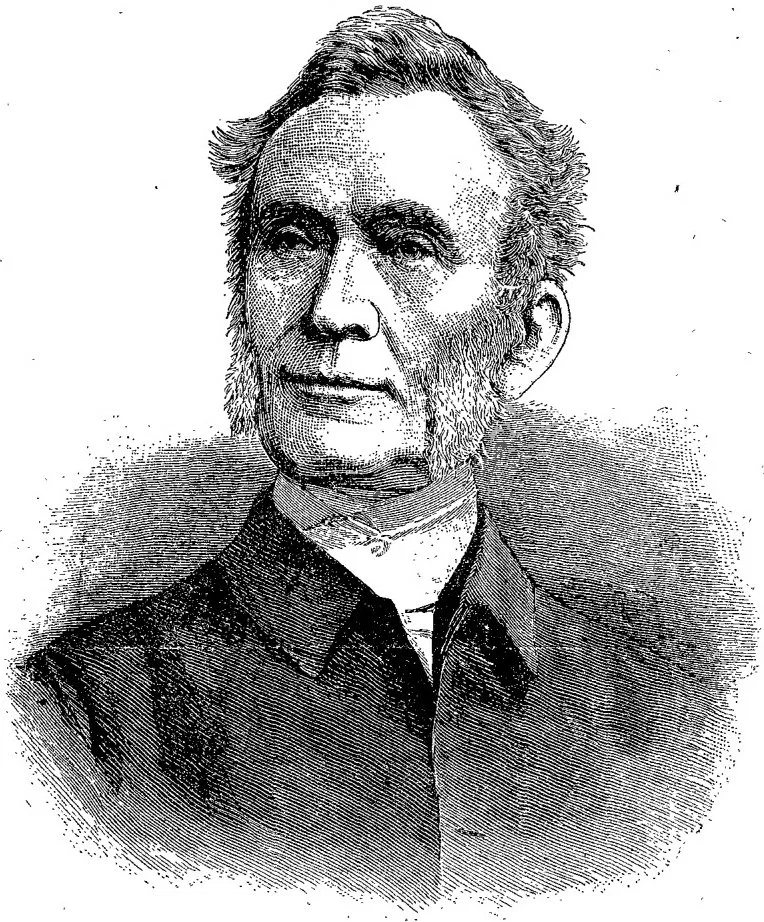
GEORGE MULLER,
Founder of the Bristol Orphanage.
He fell into bad habits, grew dissipated, and was at one time imprisoned for some misdemeanor. In 1825 he saw his spiritual condition, and was soundly converted. Immediately he began planning and making sacrifices to become a missionary.
His first experience was among his fellow students; then his next-door neighbors, the miners in a village near by; and finally, after graduation, he secured, through the London Missionary Society, an appointment as missionary to the Hebrews. Following this, he passed through discouragements, trials, and seasons of depression for several years; but from them all he came out stronger in Christian experience, and with implicit faith in God’s overruling providence.
In 1833 he moved to Bristol, England, and soon began to labor among a cholera-stricken people. The next year a burden was laid upon him to work in behalf of the poor among the children. So rapidly did this grow on him that he severed his connection with the missionary society, and began to plan for the building and maintenance of an orphanage. Being without money, he laid the matter before the Lord, and soon the answer came. The first orphan house was opened with thirty children, under the care of a volunteer matron and an experienced governess. Additions were made to this home until five commodious orphanages were erected, providing for over two thousand children. These orphanages have cost, for construction and maintenance, nearly seven million dollars; and never has a single individual been asked by Mr. Muller for a cent of contribution. When he was in need, he laid the matter before the Lord in prayer, and in simplicity asked that his needs be supplied; and he declared that never once were his prayers unanswered.
In the report of an interview with him two years ago, he said that in addition to his orphanage work, he had distributed a million and a half of New Testaments, over a quarter of a million Bibles, and over one hundred and six million tracts and pamphlets, educated nearly fifty thousand children in Spain, Italy, India, Great Britain, and elsewhere; supported two hundred missionaries annually; and yet was never in debt, never owned a home, nor ever received any fixed salary.
Such a work as he has accomplished no other man in this generation has performed, and it can all be directly traced to “believing prayer.” Dr. Pierson, in the Missionary Review, says that “thousands of times he has not had enough in hand to provide one day’s meals,—even the next meal,—and has had prayer-meetings between breakfast and dinner to ask supplies for the immediate need,” and they always came. Dr. Muller’s was literally a life of faith—a demonstration that there is power in fervent prayer.
Now in these last days, when the Lord has a message of solemn import to give to the world, and when money is lacking to send it to earth’s remotest bounds, is his ear heavy, is his arm shortened, that he cannot thus work for those into whose hands he has committed the interests of this great cause? Shall we not pray, “Lord, teach us to pray”? W. E. C.
WHAT DOEST THOU HERE?
By F. M. Wilcox
“WHAT doest thou here, Elijah?” This was the question propounded to the prophet of Israel. God had given Elijah a work to do. He had set him for a light to his people, and had wrought mightily through his instrumentality. Immediately following the wonderful triumph at Mount Carmel over the prophets of Baal, the weakness of human nature in the prophet became manifest in his fear of the threat of Jezebel, and his fleeing to the Desert of Sinai to escape her wrath. For the moment, Elijah forgot the source of his strength. He became disheartened at the hardness of the way, and felt that peace, even in the midst of solitude, was better than continual warfare in holding aloft the banner of the Lord in the midst of his backslidden people.
This same question might be propounded with equal application and pertinence to many of the professed followers of the Lord to-day. They have departed from the work God gave them to do. They have pulled down the banner, extinguished their light, and betaken themselves to some retreat, in order to avoid the conflict into which allegiance to the right continually brought them.
God has appointed his followers as the light of the world. I used to wonder why it would not be an excellent thing for Seventh-day Adventists to colonize in some State or Territory, as does the church of Latter-day Saints. There they could govern themselves, and not meet with the rebuffs and persecution which are now many times their lot. But in later years I have come to see that this would be entirely contrary to the purpose of God. He designs that his people shall dispel the darkness by letting the light of righteousness shine forth from them. If one wished to light a large room, he would not put his lights in one corner, but would set them in different places, in order that the gloom might be pierced and the darkness dispelled. So, in God’s order, in connection with the closing gospel work, he has not placed his people in one State, nor yet in one country, but has scattered them abroad, placing a church here, a little company there, a family somewhere else, each forming a center from which light shall radiate to dispel the surrounding gloom. The principle of the gospel of Christ is the principle of diffusion, never centralization; and the principle of diffusion is the principle of giving, of scattering, of shedding abroad. If our brethren and sisters could all recognize this principle, there would be less congregating of families into large churches, and more of a scattering abroad, to give the precious light we possess to those in darkness.
Many are the Testimonies given to the people of God about centering means and membership at the center of our work. This principle applies not alone to Battle Creek, but to every local center throughout the world.
No doubt our people are led to move to these various centers for different reasons. Some hope to enjoy greater spiritual advantages, but in doing this they declare their dependence on man and not upon God; for they could receive divine help as well at home as elsewhere. Others are led to these centers from mercenary motives, in the hope that by the employment which they may receive, they may the more easily gain a livelihood. The larger number of this class are disappointed. We believe that the followers of the Master will always find that the richest blessings, both from a spiritual and a temporal point of view, are to be obtained when they are filling the place to which God has appointed them.
A word in this connection regarding the conditions in Boulder might not be inappropriate. The opportunities for gaining a livelihood are not at all favorable. The church is chiefly made up of laboring people, and the town itself is composed largely of the laboring classes. There are no wealthy brethren in the church, and very few who are so situated as to furnish employment for others. The sanitarium has all the helpers it can employ, and is daily receiving applications from those who wish work, but for whom there is no opportunity. So far as coming to this place is concerned, we would plainly advise our brethren and sisters not to come, especially if, by so doing, they hope to benefit themselves in a temporal way.
While the Lord is blessing us in our work, we are confident that those who are contemplating moving to Boulder may receive the same blessing at home as here. If the object in the mind of those who think of coming to Boulder is to avail themselves of the medical help at the sanitarium, that is another thing; but even if this is the purpose, we believe that after such help is secured, they should go into some needy field where there are not many Sabbath-keepers, and there let their influence be felt for the truth.255
We hope the time will come in our work when there will be no further demand for the enlargement of church buildings. We are convinced that it is not the Lord’s order, when Seventh-day Adventist congregations become too large for their church quarters, that thousands of dollars should be paid out for church enlargement. The Lord does not want us to centralize, but to scatter. As to Elijah of old, so is the Lord saying to many Seventh-day Adventists to-day, What doest thou here? Why hast thou left the post to which I assigned thee? When there is need of church enlargement or new buildings for congregations which have been added to the church from that particular locality, by the natural order of church aggregation, it is indeed encouraging; but where church buildings must be erected, or old buildings enlarged, to meet the demands of the centralization of Seventh-day Adventists, it is a denial of the profession we make, and of the spirit which should characterize our work to-day.
We trust that every Seventh-day Adventist family, however isolated may be their association with brethren and sisters, will ask themselves if God has not set them for a light in the particular locality where they stand, and if it will not be a forsaking of their post of duty merely for the love of Christian association or for mercenary purposes to move to some center, and thus permit the light which God placed in their neighborhood to go out in darkness, leaving none to hold it up. Better the fiercest sorrows and trials, the strongest temptations, with God’s sustaining grace, and the consciousness that we are doing our duty, than the most pleasant surroundings, the best advantages of church and Christian associations, with the consciousness that we are out of our place and neglecting duty. May every one connected with the third angel’s message to-day seek to do the work, and to be in the place, to which God has appointed him. F. M. WILCOX.
SUMMARY REPORT OF SPRING COUNCIL.
By L. A. Hoopes
We give herewith a summary report of the transactions of the spring council held in Battle Creek, Mich., from March 10 to April 3:—
Ministerial license was granted Mrs. S. M. I. Henry. It was recommended that W. S. Hyatt and family go to South Africa; that H. E. Robinson, of the Nebraska Conference, have the oversight of the work in the Battle Creek church; that N. P. Nelson, of the Dakota Conference, act as president of the Nebraska Conference; that O. O. Farnsworth labor in the Vermont Conference; that J. O. Corliss go to Quebec; that J. C. Foster, of Manitoba, connect with Montana; that G. C. Tenney go to London, England, to act as editor of Present Truth; that Charles Nelson labor in Utah, and be granted missionary credentials; that H. A. Owen and wife, of Battle Creek College, take charge of the Bonacca school, in the Bay Islands; that H. L. Peterson assist Elder F. J. Hutchins in the Bay Islands; that Geo. F. Watson, of the Dakota Conference, go to the Colorado Conference; that Miss Mattie E. Johnson, of the North Pacific Conference, engage in Bible work in Montana; that W. B. White, of Indiana, go to Arizona, owing to the failing health of his wife; that Frank Lyndon, of the Southern Industrial School (Graysville Academy), connect with the school in Australia; that R. S. Donnell, of the Upper Columbia Conference, take the presidency of the Indiana Conference, provision for the presidency of the Upper Columbia Conference being left with the district superintendent; that W. T. Millman, of Missouri, take the presidency of the Dakota Conference; that L. L. Lawrence, of Battle Creek, act as business agent of the Southern Industrial School, appointment of business agent for the Keene Industrial School being left with the district superintendent; that Clifford Hart act as State agent of Alabama; that J. O. Johnston and his wife, of Georgia, go to Trinidad to assist E. W. Webster; that William Simpson, of Ontario, connect with J. L. Johnson on the boat “Sentinel” in New York Harbor; and that H. M. Stewart, of the Indiana Conference, take the place on the Missouri Conference Committee made vacant by the removal of W. T. Millman.
A number of recommendations regarding laborers, which were referred to the Foreign Mission Board, will doubtless appear in their report.
A resolution was passed endorsing the envelope plan recommended by the Foreign Mission Board for the collection of First-day offerings.
A motion prevailed requesting the Foreign Mission Board to open up the work in China, and to select competent persons for this purpose.
Voted, To concur in the request of the District Conference held at Graysville, Tenn., November last, that the name of Graysville Academy be changed to the Southern Industrial School.
Voted, To continue the endowed bed at the Battle Creek Sanitarium, and that the district superintendents—work the matter up in their several districts; and, further, that the president and secretary of the General Conference have charge of the bed, and decide who shall occupy it.
A motion prevailed that the Chair appoint a committee of two to act with himself to investigate the opening of a farm to provide a home for superannuated and worn-out laborers, with power to act.
Considerable time was spent in the discussion of our camp-meeting work. It was the unanimous expression that our camp-meetings should be thorough schools in the important phases of the third angel’s message. Special attention should be given to the consideration of our work in foreign lands, and the necessity of having a thorough and systematic plan for supporting the same. The time for the camp-meetings will be found in another column. The location of, and the laborers for, the meetings will be arranged by the president of the General Conference, the superintendents of the several districts, and the presidents of the State Conferences.
The time for the week of prayer and annual offerings was set for November 23–26, the collection to be taken up at the Sabbath meeting.
Owing to the pressing need of money, in order for the General Conference and the Foreign Mission Board to sustain the laborers now in the field, the following preambles and resolution were adopted:—
Whereas, The Foreign Mission Board is very much in need of funds; and,—
Whereas, Some of the churches are already paying their tithes monthly, and, in turn, their State treasurers remit monthly to the General Conference treasury; therefore,—
It is the sense of this body, That all our Sabbath-schools, churches, and Conferences be recommended to follow the same plan; and, further, that the First-day offerings be remitted monthly to the Foreign Mission Board.
This motion was passed with the view of having the use of the money, at as early a date as possible, to prosecute the work for which it is designed.
Another question raised was, “Shall the General Conference call for special donations to meet the appropriations made at the last General Conference?” After considerable discussion, a motion prevailed “that July 2 and 3 be set apart for special days of consecration and seeking God; and, further, that offerings be taken up for the General Conference, all funds thus collected to be sent to A. G. Adams, treasurer of the General Conference, Battle Creek, Mich.”
A motion prevailed to have the fiscal year changed to begin January 1 instead of July 1. It was voted to incorporate the Wisconsin Conference into General Conference District 3.
It was recommended that the Montana Mission Field be organized into a Conference as soon as the superintendent can arrange for the time, place, and laborers for the same.
A recommendation was passed that that part of Ontario as far east as the counties of Lanark and Leeds, be set off to the Michigan Conference, and incorporated into District 3. The final arrangement of this was left with the district superintendent and the presidents of the Michigan and Quebec conferences.
The propriety of having a uniform series of text-books, which would be standard in all our schools, was considered; and a committee was appointed to investigate the matter, and report at the next General Conference. The committee, as appointed, stands: G. A. Irwin, A. T. Jones, L. A. Hoopes, F. W. Howe, and the head of each of the denominational schools in America.
The following preambles and resolutions respecting our schools were passed:—
Whereas, Our schools occupy a leading place in the denomination for the education of workers and the promulgation of the third angel’s message; and,—
Whereas, The relations that should exist between schools should be better defined; and,—
Whereas, The General Conference Committee, being the executive body of the denomination, and having the general watch-care over the schools, the same as over every other institution, should see that each is meeting the aim for which it was established; therefore,—
It is the sense of this body, 1. That one school should not seek to cast the mold for the entire school work of the denomination.
2. That one school should not be shown preference because of advantages, financially, numerically, or by being in close proximity to other institutions.
3. That there be uniformity of action in all the schools, so far as the principles which underlie the school work are concerned.
L. A. Hoopes, Sec. Gen. Conf.
ARGENTINA
By John McCarthy
CORDOVA.—It is good to know that the Spirit of God is working in great power now, and that already we begin to receive blessings which reveal to us the desire of the Lord to hasten the descent of the latter rain. We sometimes show our lack of faith in our Heavenly Father by limiting him to space, but he treats us better than we deserve, and blesses us abundantly “above all that we ask or think.”
This has been marvelously verified in the work in the great province of Cordova. Four months ago I began to work in this seat of bigotry and superstition, and at one time it looked as if the efforts put forth would show but poor results. The difficulties in the way drove us to the feet of the sympathizing Saviour, who immediately came to our succor, and by his Holy Spirit convinced many of sin. As the truth of the third angel’s message was unfolded, the omnipotent power of God’s word was felt, and many accepted the truth as far as it was presented. As the faith of Jesus takes possession of the hearts of the residents of this colony of French Swiss, immorality gives place to purity, and revelry steps aside to make way for the praises of God.256
The Lord has worked wonderfully, and no credit whatever is due to man. I came here expecting to preach in Spanish; but upon arriving, I found that half of the colony spoke only the French. I expected Brother Vuilleumier here to preach in French, but unforeseen circumstances prevented his coming, so I was obliged to help the people in their own language, the best I could. Although, upon my arrival, I was entirely ignorant of the French language, the Lord sent his good angels to my assistance, and I was able to show the people the truth for these last times.
We have had great struggles against the use of alcoholic drinks and tobacco; but through all-conquering grace, the majority of the converts have surmounted this obstacle and gained a glorious victory. The standard lifted up against the worship of Bacchus is already producing good fruit, and I believe that this step will tend to lead others to the feet of Him who is strong to deliver, and mighty to save from the thraldom of drink.
February 9 Brother F. H. Westphal visited this place, and baptized fifteen persons, all of whom had recently taken their stand for God’s holy commandments. Thus the first Adventist church was organized in this province, with a membership of fifteen. Four or five others are keeping the Sabbath, and will doubtless unite with the church in a short time.
So the good work goes on, and the gospel has reached still another dark corner of this great continent. Soon the glorious message will have been preached to all nations, the last prophetic discourse will be pronounced, and the last sermon uttered; for the day of mercy is fast drawing to a close. If we would have a part in the glorious work of proclaiming this truth to a dying world, let us consecrate all to Jesus, and then take up our cross, and faithfully follow him. JOHN McCARTHY.