Your ShelfYour Projects

Signs of the Times, Vol. 38, No. 14.

True Freedom
Earlier text: True Freedom

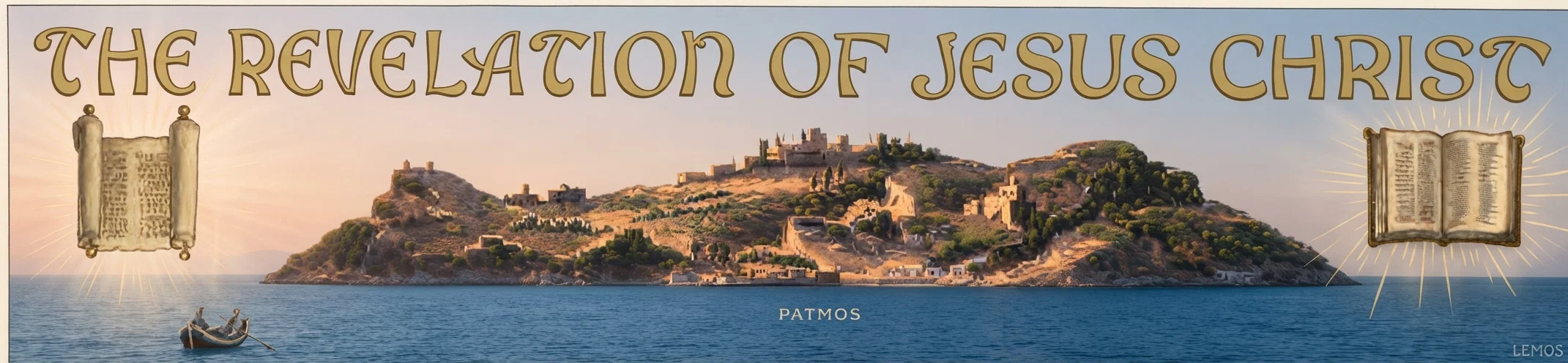
THE REVELATION OF JESUS CHRIST

"Let the Revelation speak and tell what is truth. . . . Uplift Jesus as the center of all hope."

XXII. God's Unimpeachable Witnesses

VERSES 1-13 of the 11th chapter of the Revelation constitute another supplementary, or episodial prophecy, the great events of which occurred during the time of the sixth trumpet, but which have their beginnings in the distant past and their endings in eternity. Chapter 10 was a prediction of the opening of the Word of God in the Reformation, special emphasis on its latter prophetic phase of "the time of the end" in 1798, and more emphatically the great advent movement of 1840 to 1844, and the bitter disappointment which followed the passing of the time, which the very core of that movement, led by William Miller, had set for the Lord to come. He and his fellow workers were not mistaken as to the time, but as to the event to occur at its close, just as the disciples were disappointed at the death of our Lord. The tenth chapter closes with the information that the disappointed ones are to prophesy again to all the world.
Chapter 11:1-13 contains the basis of that future prophesying in the command given to John and in the character and power of the two witnesses. There are many diverse opinions as to the prophecy, but it is one over which we need not remain ignorant if we will keep to the Word. Let us ever remember the blessing pronounced by God upon those who read and do the things written in the book. Chapter 1:3. Surely the prophecy is itself an encouragement; for what are witnesses for but to testify? First then let us question the prophecy, and learn —

The Answer of the Text

[The answers to the questions are from the American Revised Version. Omitting questions, and disregarding sometimes the capital at the beginning and the period at the close of an answer, the text may be read continuously. In notes and comments both versions are used without designation.]
1. What was given to John, and what was he commanded to do?
And there was given me a reed like unto a rod: and One said, Rise, and measure the temple of God, and the altar, and them that worship therein. Verse 1.
2. What was to be rejected by this measurement, and why?
And the court which is without the temple leave without, and measure it not; for it hath been given unto the nations: and the holy city shall they tread under foot forty and two months. Verse 2.
3. Who would stand for God during this time of treading down?
And I will give unto My two witnesses, and they shall prophesy a thousand two hundred and threescore days, clothed in sackcloth. These are the two olive-trees and the two candlesticks, standing before the Lord of the earth. Verses 3, 4.
4. What manifestations of their power are cited?
And if any man desireth to hurt them, fire proceedeth out of their mouth and devoureth their enemies; and if any man shall desire to hurt them, in this manner must he be killed. These have the power to shut the heaven, that it rain not during the days of their prophecy: and they have power over the waters to turn them into blood, and to smite the earth with every plague, as often as they shall desire. Verses 5, 6.
5. What occurred at the close of the period of their sackcloth testifying?
And when they shall have finished their testimony, the beast that cometh up out of the abyss shall make war with them, and overcome them, and kill them. And their dead bodies lie in the street of the great city, which spiritually is called Sodom and Egypt, where also their Lord was crucified. And from among the peoples and tribes and tongues and nations do men look upon their dead bodies three days and a half, and suffer not their dead bodies to be laid in a tomb. Verses 7-9.
6. How did their enemies regard it?
And they that dwell on the earth rejoice over them, and make merry; and they shall send gifts one to another; because these two prophets tormented them that dwell on the earth. Verse 10.
7. What occurred at the end of the three and one half days?
And after the three days and a half the breath of life from God entered into them, and they stood upon their feet; and great fear fell upon them that beheld them. Verse 11.
8. What call was given them?
And they heard a great voice from heaven saying unto them, Come up hither. And they went up into heaven in the clouds; and their enemies beheld them. Verse 12.
PATMOS
PATMOS
9. What was the result of the opposition to these witnesses?
And in that hour there was a great earthquake, and the tenth part of the city fell; and there were killed in the earthquake seven thousand persons: and the rest were affrighted, and gave glory to the God of heaven. Verse 13.

Note and Comment

1. Given me.—John in his representative character. Wherever the prophet is shown future events or commanded to do aught concerning them, he does it for others, the representative of God's active forces when the event is fulfilled. A reed.—The object of the reed is indicated; it is a measuring-rod. It is not designed to give actual measurement in cubits and handbreadths, as was that of Ezekiel which pertained to a material temple. (See Eze. 40:1-8.) It was a standard by which to determine truth, light, character. What is the meaning of "the temple," "the altar," and what is the character of those who "worship" in it? — It was the purpose of the reed to ascertain these things. What does it represent? That temple (margin, "sanctuary") stands for God's plan of salvation, revealed in type and antitype, sanctuary and temple on earth, and sanctuary and temple in heaven, in both the Old and New Testaments. Therefore the injunction of Malachi looking forward to this very time just before Christ shall come: "Remember ye the law of Moses My servant, which I commanded unto him in Horeb for all Israel, with the statutes and judgments." Mal. 4:4. That law of Moses throws wonderful light on God's plan of saving men in the sanctuary offerings and services, especially in connection with the book of Hebrews. That altar stands for the great Victim of sacrifice, our Lord Jesus Christ, whom all other victims of the Levitical service typified as the one only Saviour. "Them that worship" stands for character. The truest worship is service, obedience. Says Jesus, "Thou shalt worship the Lord thy God, and Him only shalt thou serve." Matt. 4:10. The rule of character is the Ten Commandments, "the whole duty of man," and the standard of judgment. (See Eccl. 12:13, 14; James 2:8-12.) John's reed, then, was God's complete message of salvation, "the commandments of God and the faith of Jesus" in all their fulness, exalted once more, and cleansed from all the dross and worldly traditions of the dark centuries. Rise and measure.—It is Christ's command. Verse 3. The best Greek copies omit "And the angel stood."
2. The court.—That which was outside the sanctuary where God's worshipers are, literally cast without your measurements. This message, like all God's messages, comes first to His church, His worshipers represented as before Him in heavenly places. Eph. 2:4-6. These, to be preserved, must meet the standard. The great world with apostasy, lies without. It is not a friend of grace to help sinners on to God; it is in rebellion against Him, often in direct, active apostasy. "The holy city" does not mean literal Jerusalem. Her day was past when she had rejected her Lord; but that which "the holy city" symbolizes is God's church, even as the city of verse 13 represents the organized enemies of God's truth. Forty and two months.—The same as the 1260 days of verse 3 and chapter 12:6, as the forty-two months in chapter 13:5, and the time and times and half a time of chapter 12:14, and the similar periods in Dan. 7:25 and 12:7. A time is one year; times, dual number, two years; and half a time, one half year, three and one half literal years, or forty-two months, at thirty days to the month, 1260 days, or according to the symbolic rule, "a day for a year" (see Num. 14:34; Eze. 4:4-6), 1260 years. These, beginning with papal domination in 533-538, when the bishop of Rome was made by the Emperor Justinian "head over all the churches" and "true and only corrector of heretics," ended in 1793-1798, when the power of papal domination was effectually broken. During this time,—more fully treated on chapters 12 and 13,—the holy city, or the true church, was trodden down by rejection, anathema, oppressive laws, and persecution.
3. I will give.—"Power" is not in the original, but more than that is implied, power and grace and patience, all that is needed. Christ is with His own. My two witnesses.—Christ's two witnesses. Why two?—It is the Scripture law. God is most reasonable. The law of witness in both Old and New Testaments is that there must be at least two witnesses for the establishment of any great fact. See Deut. 17:6; 19:15; Matt. 18:16; 1 Tim. 5:19, et al. A witness is one who testifies to what he knows, a true witness to fact. Christ's witnesses testify of Him, His Gospel, His work, and predicting things to come. Compare John 14:26; 16:13, 14; 15:26, 27; Acts 1:8.
Clothed in sackcloth.—Sackcloth is a sign of mourning, sorrow, repentance. The witnesses prophesy at other times, and have in fact all through the ages, and will till the Master comes; but for 1260 years, when God's truth is hidden from men, buried under tradition, when man is put in the place of Christ, and audience with God can be secured only by the permission of a cordon of ecclesiastical police, prophecy represents that Word as two persons, still teaching, still pleading, still calling to repentance, in sackcloth and mourning, because professed children of God treat the Word as a mere fetish, or destroy it by traditions, or suppress it by law, or endeavor to crush it by putting to death those with whom it lives, those in whose lives it shines forth. The Reformation hindered that persecution in some parts; it stirred it up in others. But through all the days from 533 to 1793 was there cause for mourning.
4. Olive-trees . . . candlesticks.—This is an important question, vital with consequential truth. The witnesses are defined by John by two symbols, borrowed from Zech. 4:2, 3, and the olive-trees are again defined in Zechariah as the two anointed ones, literally "sons of oil," that stand by the Lord of the whole earth. Verse 14. Each witness is represented by an olive-tree and a candlestick, by that which furnishes the oil and that which helps it to shine; first, pertaining to its relation to God the giver, and second, to its relation to the church and to those in need; and these both witness for Christ.
But these are further defined by Zechariah. After showing the prophecy of the two olive-trees and the two candlesticks, the angel declares in response to the question of the seer, "This is the Word of the Lord unto Zerubbabel, saying, Not by might, nor by power, but by My Spirit, saith the Lord of Hosts." Zech. 4:6. The witnesses, then, are God's Spirit-filled Word.
This will be more clearly seen in the life and experience of Christ's teaching and God's affirmation of His mission. Note the twofold witness to the divine mission of Christ. He did not come as came many false prophets, saying, Believe on me because I say so; or as one that we met recently bearing an incoherent message, accompanied by one who declared him to be a prophet. All that claim might be made by any deluded or presumptuous man. Not so with Christ. Hear Him: "Yea and in your law it is written, that the witness of two men is true. I am He that beareth witness of Myself, and the Father that sent Me beareth witness of Me." John 8:17, 18. How did the Father bear witness? "Ye search the Scriptures, because ye think that in them ye have eternal life; and these are they which bear witness of Me." John 5:39. How did the Master bear witness? "But the witness which I have is greater than that of John; for the works which the Father hath given Me to accomplish, the very works that I do, bear witness of Me." John 5:36. What then was the twofold witness? It was God's Word witnessing through the prophets from Moses to Malachi, of Christ Jesus, of His time, the manner of His coming, His character, His work, His death. It was that same Word working through Christ, the incarnate Word, "the Word made flesh," the exact fulfilment of all that the prophet had said. Never could that witness be impeached. For four hundred years the Old Testament canon had been closed. The Jews knew that Jesus the man had not written it or altered it. They admitted its verity and source. Now He came meeting in His mission all that had been predicted by prophet of old, meeting in His character all the fulness of the law. The only way in which rebellious hearts could meet this mighty evidence was to kill the confirming Witness.
But written out in the New Testament are the character, time, work, and mission of Christ and His apostles. For eighteen centuries nearly that record had been closed. These two witnesses are still testifying of Christ the Lord, testifying more fully than they ever testified in the past; for the record of Christ and His church is not yet finished, nor will it be till the last soul-sheaf is gathered in and the work of Christ for the sinner is ended. "Forever, O Jehovah, Thy Word is settled in heaven." Ps. 119:89. "Thou hast magnified Thy Word above all Thy name." Ps. 138:2. And forever that Word abides before the Lord of the whole earth, to be brought forth in the judgment as a witness against all who have rejected it, as a comfort to all in whom it is a living power. That Word translated into the life saves from sin, and is a lamp to the feet and a light to the path. Ps. 119:11, 105. Filled with that Word David became a living, oil-bearing olive-tree in the house of God (Ps. 52:8), and God's church is called for that same purpose (Jer. 11:16). That Word declares that God's church is the candlestick (Rev. 1:20); and filled with His Spirit, which translates the Word into her life, she becomes a "living epistle," the "light of the world," and thus holds forth to the world the Word of light. Therefore not by numbers, not by claim however ancient, not by wealth or worldly influence, not by anathema and forced outward unity, not by the acknowledgment of kings or emperors, not by so-called apostolic succession,—not by any or all these is the true church to be planted; but does she meet in her character, career, experience, the testimony of the true Witness?
5. These have the power.—Verses 5, 6 are illustrations of the great fact that the great power manifested in all the past through or by the servants of God is not in and of the man, but in the Word, in the message, which God simply spoke. Jeremiah was given power to overthrow and build up kingdoms, but the power was in the message he bore, and how that message was received or rejected. Compare Jer. 1:10 with 18:7-10. So the apostles were given power to bind or loose, but it was in the message they bore to the world, determined by the way men received or rejected it. Compare Matt. 16:19 and John 20:23 with 1 Cor. 15:1, 2 and 2 Cor. 2:15, 16. That Word in Elijah devoured the opposers of God's truth, and shut heaven that it did not rain. 2 Kings 1:9-12; 1 Kings 17:1; James 5:17, 18. That Word in Moses turned the rivers of Egypt into blood, and smote the land with plague. Exodus, chapters 7 to 12. Haman planned for the destruction of the people of the Scriptures; but he was hung on the very gallows erected to hang Mordecai.
6. Shall have finished their testimony in the sackcloth state. In 1793 began the ending of the 1260 days. A "beast" in prophecy represents an organized power, government, or dynasty antagonistic to God and His truth. Of this we will learn more as we proceed. Abyss.—"Deep" it is rendered in Luke 8:31; where the devil and his angels belong, referring to the character of the power. Out of the Roman Empire, as the fruits of the centuries of apostasy, came at that time the blackness and darkness of infidelity, centering in France, there sanctioned by law. Recoiling from the corruptions of the apostasy in the Papacy, and not knowing the true religion of God's Word, men set themselves, or tried to, against all religion, a negation of blackness, hopelessness, a religion of present, dominant lust for power, for blood, for licentiousness, for malice, against the Word of God. Tribunal and guillotine became dominant in 1793. Christianity was proscribed, the worship of God abolished, reason apotheosized, death declared an eternal sleep, God's week abolished. That Reign of Terror lasted three and one half years, or prophetic days. We have not space in this article to detail the fulfilment of God's Word in infidel France during the Revolution and Reign of Terror. France is represented by a street in a great Babylonian-Roman city, called metaphorically Sodom because of licentiousness, and Egypt because of rejection of God's Word. We commend the reader to chapter 15 of "The Great Controversy between Christ and Satan," where facts are stated, and references given to historical proof.
7. Rejoice.—The devil made men believe that God's Word would be overthrown, destroyed, killed, entombed, and Christ's memory perish. In that they rejoiced. They did not know that "truth crushed to earth will rise again; the eternal years of God are hers." Men tried to destroy truth's Author, they maltreated, crucified, and buried Him, but He rose again. His very death destroyed the power of sin. So they tried to destroy His Word in France. But the intrinsic power of the Word through the call of God brought it again to life.
8. They stood.—The figure of witnessing men is still carried out. Paul, a faithful witness of the Word, was once stoned and left for dead, but life from God sent him forward a mightier witness than ever. So when the fruits of infidelity began to react upon the world, men turned pitiful faces up to God. His Word was given freedom, Bible societies were organized, the Word began to go forth to the world witnessing for Christ in printed volumes and converted life as never before. God called, and the Word degraded to corruption was given its true place and exalted to the divine.
9. Earthquake.—We are still with France, within Roman dominions, where God's Word had languished for over twelve centuries. As the result of that infidelity the government of France, one tenth part of the mystical city of Babylon, fell. Jerusalem was called the holy city, Babylon the great city. France was convulsed with trouble, and as a result titles of nobility were abolished, it is said, to the number of seven thousand. Man was humbled in the dust, and soul terror took possession of the hearts of many who had almost yielded to the sophistical arguments of Voltaire and his school. God's Word triumphed, as triumph it will eternally, to the salvation of all those who will keep it to the end.

When Roads Divide

By Delwin Rees Buckner
SOMETIMES we travel on for many a year, Then all at once our roadway doth divide, And we can not—try as we may—decide Which hand to take, the right or left. Then hear Us, Lord, and help. Tho dark, the path is clear When Thou art serving as our faithful Guide; Tho narrow, still the road seems amply wide If Thy abiding presence be but near.
Upon this earth we're only pilgrims, Lord; Yet as we file along o'er hill, through vale, A band bound for a city firm, secure, We pray that Thou wilt keep us by Thy word, That we may stand tho powers unseen assail; That we may ever faithfully endure.
Colon, Panama.

An Ever-Present Truth

THIS day we fashion Destiny; our web of Fate we spin; This day for all hereafter choose we holiness or sin; Even now from starry Gerizim, or Ebal's cloudy crown, We call the dews of blessing or the bolts of cursing down. —Whittier.

Protestantism Drifting

IV. Science and the Bible

THE apostle Paul has uttered a warning concerning the misleading teaching of "science falsely so called." True science and the Bible agree; but much that is palmed off as science is simply speculation, and men's opinions about things of which they know but little. Yet the foundation of true Protestantism, the very "essence" of this glorious system, the Bible, is diluted by the scientific speculations of men who stand as the professed Protestant expositors of the present time.
Critics in colleges and universities in this and other lands, pry into musty tomes and study the roots of words and seek to figure out the past. These same critics have but little understanding of the present, which, like a panorama, is passing before them. Yet their speculations are of sufficient weight to set aside in thousands of minds the divine utterances of the sacred Scriptures.

Account of Creation

Nowhere are the batteries of "Higher Criticism" and scientific guessing more concentrated than in their attack on the Bible account of creation. The conflicting guesswork of geology and Evolution is accepted instead of the account given by Moses. Millions of years, instead of six days, were occupied in making the world, according to scientific, geological guessing. Man was not made in the image of his Maker, from the dust of the ground, but came up, through countless ages of evolution, from the very lowest order of animal life, through tadpoles and apes.
The International Congress of Zoölogy in session at Cambridge, England, is reported a few years ago to have declared that "science had now established the absolute certainty that man has descended through various stages of evolution, from the lowest form of animal life, during a period estimated at a billion years."
Mr. Harold Bolce says in the February (1910) Cosmopolitan:
It is explained to the girls of Cornell that both man and the simian stock sprang from the same progenitor, and that this early antecedent of man "was a hairy tailed quadruped, probably arboreal in its habits." But the teaching goes still farther behind the record of Holy Writ, declaring that before this four-footed "Adam" there was a "pre-Adamite," and that "if we look still farther back in the dim recesses of time, we shall see the geological line running through a long series of diversified forms of marsupial, of reptile, of fish, to an ultimate ancestral animal—a fish-like creature, which united both sexes in itself, and in which the lungs existed as a float and the heart as a simple pulsating vessel. No Paradise was the birthplace of this first parent, but the shore of a restless sea, whose changes by day and by month begot in him that periodicity of function, which, like an echo over eternities, to this day survives in his latest human descendant."
Such statements are indeed startling, and awaken a righteous indignation. Both man and apes from the "same progenitor"— man related to apes! — Darwinism pure and simple. So then if we wish to see our ancestry we have only to visit a zoölogical garden and look at the simians confined there.
"Of course," says Hastings, "there is no disputing about tastes; and if a man chooses to put away his history, his heritage, and his hopes as a son and creature of Almighty God, and trace his genealogy to the monkey, the mollusk, the moner, and the mud, we must respect his rights, and allow him to exercise his preferences; but when he insists that we shall also trace our genealogical line through ancestral apes and patriarchal pollywogs, we respectfully decline the honor. We prefer to look higher; and as there is still a little uncertainty among scientific men on the point, we propose to give ourselves the benefit of the doubt and still look up to a heavenly Father, instead of down to a little dot of a mud-spawned moner, as the source of our existence."
To prove the claim of science that man is the result of evolution, and came from the simian stock, the earth has been bored into at a thousand places, and the bottom of the sea explored in search of the "missing link." But with all the scientific investigation of earth and sea made in search of the coveted "link," it has not yet been discovered.

Some Results of Research

They found the missing link once in "the Calaveras skull." It was 150 feet below the surface. There could be no doubt about it! But when Wm. R. C. Scribner confessed that he had brought it into the mine as a practical joke, scientists were ashamed. . . . They found the missing link in the Neanderthal skeleton in Prussia, and proclaimed it three hundred thousand years old; but it turned out to be only a Cossack killed in 1814. Columbia College had a smart professor who dug out of Colorado's soil a skeleton. It was heralded as of remarkable antiquity, and the friable bones were being paraded to the ends of the earth, when some cowboys complained that the grave of their pet monkey had been rifled. I was taken into a little pavilion near Manitou, and was shown the petrified(?) body of a remarkable little fat fellow who had been brought up from the bottom of the Colorado River. But a man needed not to be a scientist to discover that it was nothing more than a figure hewn out of stone. To be sure, the greatest ado has been made over the Pithecanthropus Erectus. It consists of a piece of a skull and leg bone and two teeth, found in Java, in 1891. Dr. Alexander Patterson says the cubic measurement
of that skull is sixty inches—the same as that of an idiot. These specimens were found at separate places and times. The skull is too small for the thigh bone. The age of the strata in which they were found is uncertain. Even Haeckel admits that the belief that this is the missing link is strongly combated by some distinguished scientists.—"The Finality of Higher Criticism," pages 79, 80.
It is thus that the sapping and mining goes on, and in the schools, colleges, universities, and the authority of the Bible is neutralized in the minds of the people, and the philosophical speculations of men are substituted in its place. The following eloquent words from the pen of the late H. L. Hastings are a fitting commentary with which to close this article:
We do not always see most clearly the things that are nearest to us. Our estimates of contemporaneous matters often need revision. We must bow to the logic of events, and accept the verdict of history. If in the dawning of the fortieth century, it shall be found that the law and the prophets are obsolete, the Gospels and Epistles discarded, Moses forgotten, and Paul and his writings set aside to make room for the inerrant productions of Wellhausen, Kuenen, Briggs, and Harper; if the Queen of Sheba of that remote period, in her quest for wisdom, shall take a limited through ticket for Chicago, without so much as asking for a stop-over at Jerusalem; if it shall be found at last that men have lived in this world for centuries and millenniums, not knowing whence they came or how they got here, until the last half of the nineteenth century—the Creator having kept these things from wise and prudent men like Adam, and Enoch, and Abraham, and Moses, and David, and Solomon, and Daniel, and Paul, and Jesus of Nazareth, that He might reveal them to such devout and guileless babes as Darwin, with his "early, ape-like progenitors;" Huxley, with his life-producing, jelly-like Bathybius, at the bottom of the sea; Haeckel, with his "spontaneous generation" of "organisms without organs;" Tyndall, with his prayer-gage and his agnosticism; and the Higher Critics with their conglomerate theories and inventions; and if the experience of twenty centuries shall demonstrate the superiority of the new and inerrant evangel which these men are proclaiming; the world will rejoice in the "survival of the fittest,"—unless, indeed, the Higher Critics of those times shall dissect and discredit these new scriptures, and discarding them, produce yet "another gospel," which shall be entirely their own.
If it shall then appear that the hunted prophets, who wandered in sheepskins and goatskins, and were destitute, afflicted, and tormented, "of whom the world was not worthy," have gone down before the onslaught of the learned and well-salaried professors of modern universities; if it shall appear that the Word of the Lord which they uttered at the loss of all things and at the peril of life itself, has paled its ineffectual fires before the rising radiance of oracular Higher Criticism; if it shall then be learned that God hath chosen the rich in this world, poor in faith, and heirs of the kingdom; who can tell how welcome this information may prove to those who suppose that gain is godliness, and that it is easier for a camel to go through the eye of a needle than for a poor man to enter the kingdom of heaven?

Another Side

But if, from the far distant mountain peaks of the fortieth century—provided this groaning creation has not ere that time been "delivered from the bondage of corruption into the glorious liberty of the children of God," and entered upon those dateless cycles of bliss and blessing where centuries are no more numbered—mankind shall still look back beyond Astruc and Wellhausen to Moses and the prophets; if the little tracts of the hunger-bitten apostle to the Gentiles shall still be read, while the huge tomes of well-fed professors are forgotten; if the men who stood alone and faced the lions shall be found to be as clear-sighted as their critics who are backed by millions and millionaires; if prophets and apostles still shine "as the stars forever and ever," while learned experts are lost in haze and gloom and darkness; if it be seen that Jesus of Nazareth is still the Light of the world, after all that Higher Critics have said by way of correcting His errors and exhibiting His "limitations;" if the law still goes forth from Zion instead of Chicago, and the Word of the Lord from Jerusalem instead of from some German university or beer-garden; if, instead of pocket editions of the works of the Higher Critics for use in family worship, in Sunday-schools, and in churches, the writings of Moses and the prophets and Christ and the apostles are still read in the synagogs every Sabbath day, while the learned lucubrations and ponderous misrepresentations of the Higher Critics of our times are forgotten—the people who live in those days must accept the conditions they can not alter, and inquire for the eternal paths and see where is the good way, and walk therein.
A further study of this must be reserved till next week.

A Change of People, Not of Plan

By C. L. Taylor

HY should one reason that the day of miracles is past? Why believe that the blessings of healing the sick, of giving sight to the blind, of restoring hearing to the deaf, of casting out evil spirits, all belonged to the days of the apostles, and ceased to be when those first gifted workers passed away?
It is common nowadays to hear even Christian people express their doubts about the efficacy of prayer for the sick or the infirm, and to hear them remark that "it really seems as tho the plan has been changed."
Not so, brother, sister. Our Lord Jesus Christ is "the same yesterday, and to-day, and forever." When He instituted His church, and sent it forth into the sinful world, He gave it a commission as broad as the world, and a promise covering all time. His children were to go into all the world to make disciples of all nations; and to enable them to succeed, He gave the assurance, "Lo, I am with you alway, even unto the end of the world." Matt. 28: 19, 20.
Certainly He planned out His work for His church from the day He spoke until time should be finished. And we may all be absolutely sure that whatever blessings were received by the first workers who went out to give His Gospel message may be and ought to be received by the last workers in that message.
Now, do we not know that the greatest miracle of all miracles is the conversion of the human heart? And do we not know also that the most delightful and long-continued miracle of all miracles is a consistent Christian life? All other miraculous gifts are bestowed only as aids to this one; and wherever the miracle of true conversion has been wrought by the Holy Spirit, there the other miracles of the same Spirit naturally belong. The same blessed power that enables one to overcome sin, is with him also to accomplish God's purpose in overcoming all other ailments, of either body or mind.
Just a short time ago a young lady of sixteen summers was taken by her parents to a health institution for an operation. The surgeon made an incision, and found all the vital organs more or less involved by a cancerous growth, and announced to the parents that operation was impossible, and that the daughter must die. When the news was broken to the daughter, and she was told that her case was hopeless, she smilingly and confidently replied, "But I believe Jesus will heal me," and indicated her desire to be anointed and prayed for in harmony with the Scriptures. This was done, and immediately her pulse became normal, her appetite returned, and to-day, after about a year, she is strong and well.
Another case comes to my mind. A young lady who herself had found healing through prayer, was called to the bedside of a young man dying of typhoid fever. With heart full of love for God, and with desire to glorify His name, she was moved by the Holy Spirit to say, "My dear Brother —, I command you, in the name of my Lord Jesus Christ, to rise up and walk." And instantly he was restored to perfect health and strength.
Multiplied instances might be given to illustrate that the "mighty works" of apostolic days may be known to-day by those who will take God at His word.
We may rest assured that the plan of God has not changed and can not be changed. The only trouble is that men and women have allowed simple Bible faith so small a place in the life. All that is needed is that the followers of Jesus shall empty themselves of pride, selfishness, and vain ambitions, and then in humble submission to the will of God ask Him to honor His promises, and expect Him to do it.
He can not deny Himself. All His promises are yea and amen "unto the glory of God by us." His divine notes, given in the name of His Son, are now all due, and He is willing and anxious to pay.
It is high time that we forever dismiss from our hearts the wretched thought that the miracle days are past. Let us see right now that God's blessed plan of Spirit-living and Spirit-working holds good throughout all time, and only awaits a change of heart and of faith on our part to become available to us.
O, it is so simple, so beautiful, so intensely enjoyable, this taking God's promises at their full face value! Blessed indeed are the sons and daughters of Jehovah who in childlike faith can follow the Saviour in His prayer at the grave of Lazarus: "Father, I thank Thee that Thou hast heard Me. And I knew that Thou hearest Me always."
Faith itself is a miraculous gift of God's love; and operated by the Holy Spirit, it brings into the life the fulness of the miracle power of God, and makes the life and times and works of the Saviour an ever-present truth to all His followers.
Continue reading: Our Bible Reading