Your ShelfYour Projects

Review and Herald, Vol. 78, No. 53.

GODLINESS IN THE EVERY-DAY LIFE
Earlier text: The Fear of Man

MICHIGAN

THINKING the readers of our dear church paper might be encouraged to know of the late experience of the Grand Rapids church, we take pleasure in relating something of the situation. It pleased the Lord to send Brother B. F. Stureman to visit the church, December 7, at which time three dear girls wished to be baptized. The cases of these precious souls was a most peculiar one, in that one was a Roman Catholic, and one a Jewess, the third being bound to no denomination. Elder Stureman, on investigating these cases, found evidence of the marked leading of the Lord, and decided to remain over Sabbath (he having intended to stay only a day or so, and go on to another appointment for the Sabbath), and administer the ordinance of baptism himself. Sabbath morning he spoke with great power on the necessity of earnest prayer, as a means of preparation for the trying times before us. At the conclusion of the sermon, the Lord, in a marvelous manner, moved upon the hearts of the people to seek Him as never before. The earnest words of the speaker sank deep into every heart, and when an appeal was made for those who wanted a deeper experience in the divine life, almost the entire church responded. Front seats were cleared for those who wished special prayer, and chairs were also placed in the aisles for those seeking new spiritual life and power for service. The young people of the church took a stand for the Lord Jesus. Old men, youth, and children were moved to seek God. There was no excitement; just the deep, quiet, yet powerful moving of the Holy Spirit. O, it was the most blessed Sabbath this church ever saw! and the baptism in the church baptistery closed a most memorable Sabbath service.
In the afternoon, at the Young People’s meeting, a fresh and blessed experience followed. This season has stirred the entire church: confessions were made, and stony hearts broken, and tears of joy and penitence flowed freely. It was indeed good to be there. The Lord thus prepared us for a precious Week of Prayer, and we praise His Holy name.
W. H. AND M. D. McKEE.

NORTHERN WYOMING.

AFTER closing a series of tent-meetings at Alliance, Neb., where six accepted the truth, were baptized, and united with the church, our tent company attended the State meeting at Lincoln, after which, accompanied by Brother Jay Nethery, we returned to northern Wyoming to visit the three organized churches and the isolated Sabbath-keepers in that part of the State.
Six years ago last October the General Conference sent Brother Ketring and myself to Sheridan, where we pitched our tent and began meetings. Our tent was banked around the base, and was furnished with electric lights, and warmed with two large heaters. October 11 we held our first meeting. November 20 a church of about sixteen members was organized. Later on, others united, until we numbered over twenty. Removals, death, and apostasy left the little church with only a few members, but others have moved in, a few taking a stand with them, until we have another live church. We have had no place of meeting only in private rooms until now. The people asked us why we did not build a church. We told them that when we got the cash, we would build. This has been the situation for six years. One brother said he would give one hundred dollars, and other brethren gave over three hundred dollars. We took the subscription paper to the business men, and in two days we had money enough to build, seat, paint, hard finish, light, and heat a nice little church, 24 x 36 ft., with entry 6 x 8 ft. Brethren Cook and Beams, Brother and Sister Nethery, and the writer camped on the ground, in tents and colporteur wagons, working from before light in the morning until nine or ten at night. Our brethren came to help us, and the sisters brought cooked foods, until the dedication, December 7, 8, when Elders Nelson, Brown, and Johnson arrived, and found a goodly number of our people camped on the ground, ready for the meeting. When we announced through the papers that the building was completed and ready for dedication, and that there would be no collection taken, all bills being paid, the people of the neighborhood rejoiced with us.
This is the first church of Seventh-day Adventists in northern Wyoming. We are building another, of logs, forty miles from Sheridan, on Columbus Creek. This is the first time our ministerial brethren have visited this part of Wyoming. They left a good impression of the onward march of the great message for the times, and I trust they received encouragement from all the companies they visited. May God’s rich blessings abide with the consecrated worshipers.
O. S. FERREN.

COLORADO SANITARIUM.

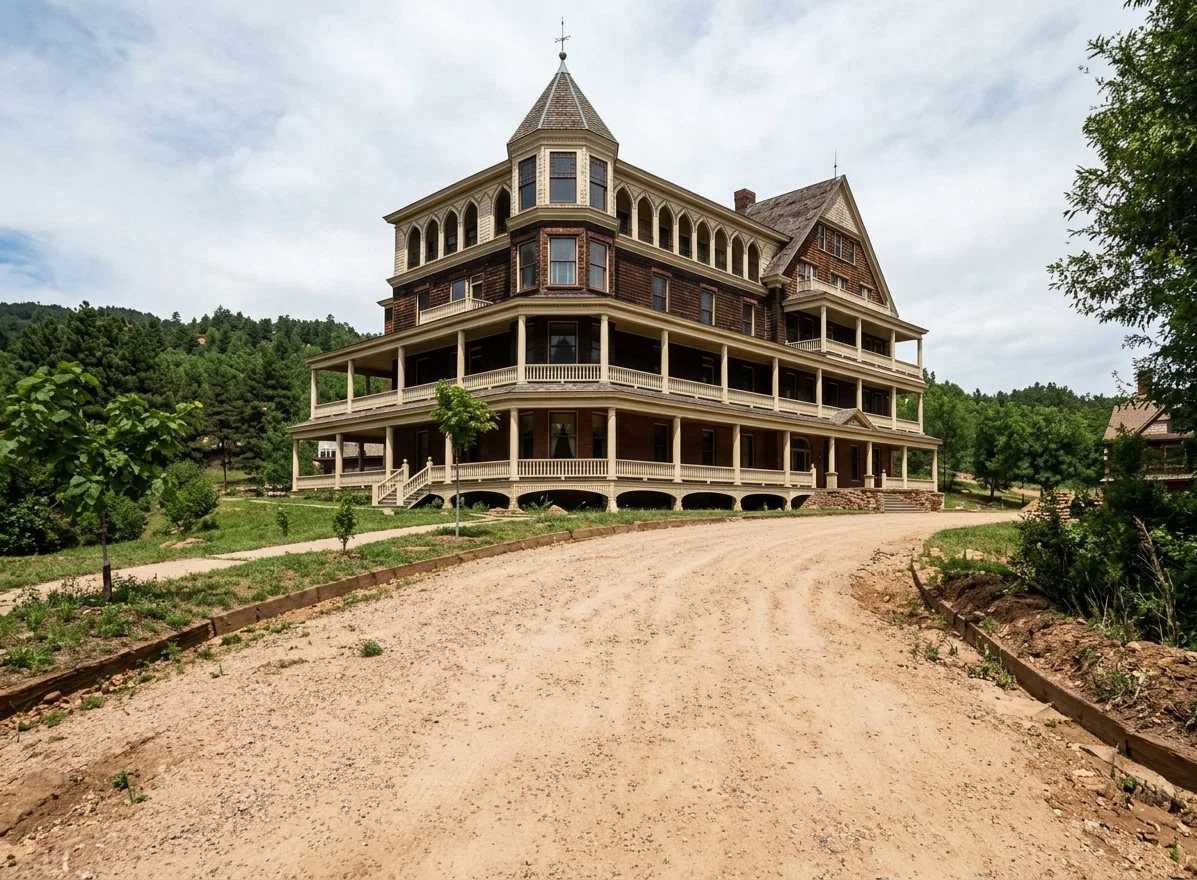
This institution is located at Boulder, Colo., thirty miles north of Denver, on the Colorado and Southern Railway. Boulder is a thriving city of seven thousand people, and is the seat of the State University. Here also the Texas-Colorado Teachers’ Chautauqua is located.
The sanitarium was opened five years ago, in July, 1896. Accommodations are provided for one hundred guests; but by the rental of rooms in the vicinity, the number of patients receiving treatment, especially during the last year, has greatly exceeded this number. The building is well equipped with all needed appliances, and perhaps, excepting the Battle Creek Sanitarium, affords as generous facilities as any institution in the sisterhood of sanitariums.
For several years there has been carried on in connection with the institution, a nurses’ training-school; hence the sanitarium possesses a corps of efficient and well-instructed nurses. At the present time the medical staff is made up of four experienced physicians, two men and two women. As comprising our staff, the names of Drs. Riley, Lindsay say, Place, and Conway will be familiar to the majority of the readers of the REVIEW.
The one unique feature of the Colorado Sanitarium which particularly distinguishes it from all the others, especially in the opportunities which it affords to the sick and suffering, is its location. The State of Colorado itself is coming to be a veritable hospital, and this is true not alone for those who are affected with pulmonary difficulties. Sufferers from many chronic diseases are learning that they can derive greater benefit from the dry, bracing atmosphere of Colorado than from any other resort to which they may go.
The Colorado Sanitarium is located at an altitude of five thousand three hundred feet. One who never enjoyed the privilege of life in a mountainous region cannot fully appreciate the exhilarating, tonic effect that this altitude has upon one’s physical powers. Every energy of life seems to be quickened. The effect is particularly seen in the increased power of assimilation and digestion. With the writer, foods, good of themselves, which were entirely indigestible in the East, are readily appropriated in this altitude.
The days are invariably mild and warm throughout the year, affording one the opportunity of outdoor life the year round. This is the reason that invalids do so well. There is hardly a day but they can walk or ride in the open air with perfect safety. Such a thing as sunstroke in the summer is unknown. But during the winter season, particularly, there is found an ideal climate. At this present writing, the days are bright and warm and beautiful. The dryness of the atmosphere robs the air of its chilliness, and yet there is in it a freshness of life which gives one new vigor. The nights are cool the year round, being thus conducive to more perfect rest and sounder sleep.
Hundreds of tourists are spending their summer months in Colorado; and when it is known by Eastern residents that this region possesses such an ideal winter climate, there will be quite as many visitors from those portions of our country during the winter months as come from the South during the summer season. During the last six months more than forty thousand tourists have spent from one to ten weeks in this State. This speaks well for its growing popularity. The sanitarium has partaken of the benefit of this tide of travel, and has enjoyed, during the last year, the largest patronage of all its history.
The Colorado Sanitarium enjoys the distinction of being the first sanitarium in this country, and perhaps in the world, to adopt a vegetarian dietary. No flesh foods of any description have been served for three years upon the tables of helpers or patients. The results of this plan have been most beneficial. This system gives much more general satisfaction to all our guests than the old method of serving meats, and the results in a physical way have been more pronounced. Some suffering from pulmonary troubles who have entirely discarded the meat diet, have gained the most in flesh and strength, and made the most improvement healthwise.
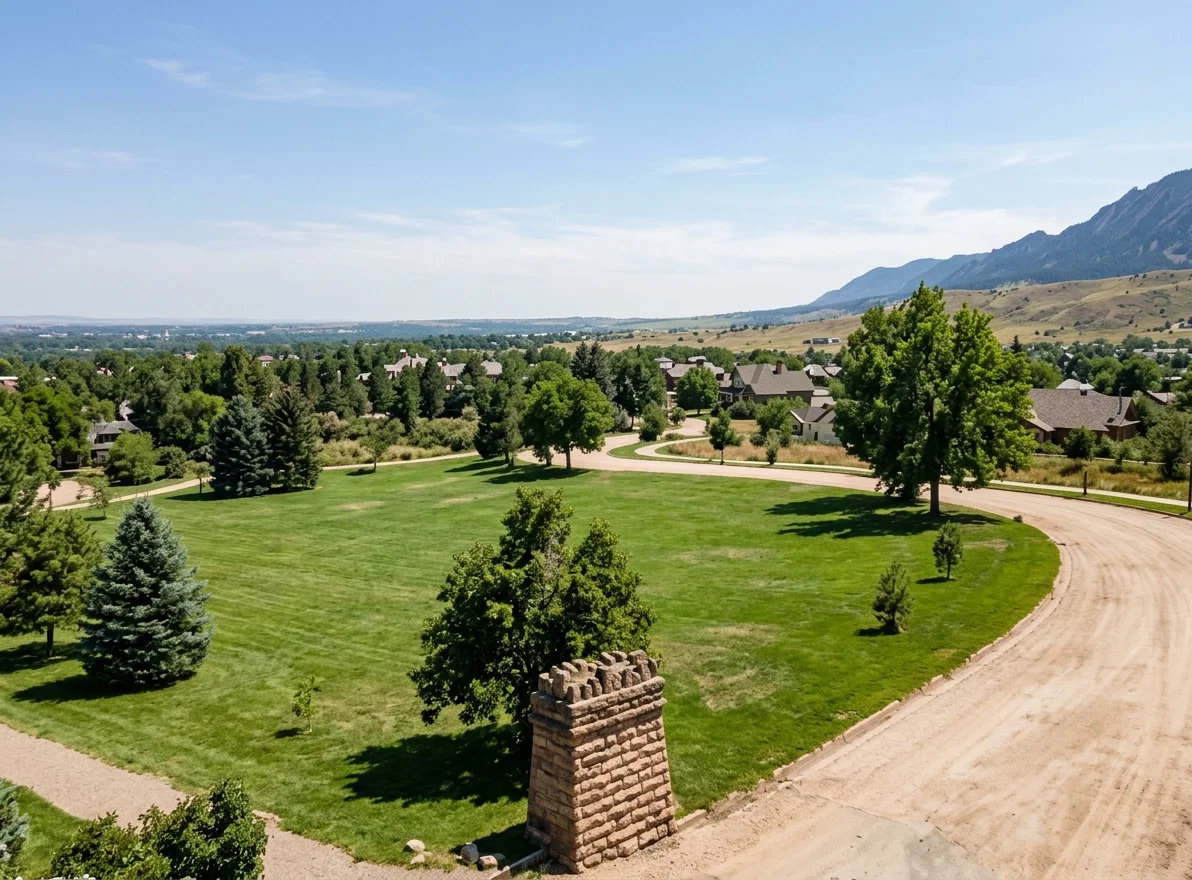
VIEW OF SANITARIUM. GROUNDS.
There are thousands of sufferers from chronic diseases throughout our country, who, if they were directed to this climate and to this institution, would, no doubt, have their lives greatly prolonged. Will not our friends who come in contact with those sufferers, direct their attention to the work here? We ask from none exclusive attention to this sanitarium. It would be manifestly unwise to direct a patient in the extreme East to this institution when he could receive benefit from an institution near his own home. But there are thousands of invalids who need the climatic advantages offered here, in addition to the help they can receive from sanitarium life. To those suffering from dyspepsia in its various forms, nervous troubles, Bright’s disease, dropsy, and other chronic maladies. Colorado is an ideal place in which to spend the winter.
In this connection we might state, generally, what we have oftentimes been called upon to write personally to various invalids and churches: The Colorado Sanitarium has no endowment fund. Its only resource is the money it receives from its patronage. For this reason, it cannot care gratuitously for those who are sick. Those unable to pay for their care and treatment should look to their home churches, Conferences, or friends for assistance. The sanitarium has done much in the past in the way of gratuitous work, and will gladly do in the future all within its power. But there are necessary limitations to the exercise of this generosity.
If any of our friends wish to place in the hands of the afflicted, literature regarding our work, or if they desire further information with reference to the same, the desired information or literature will be gladly furnished upon application.
FRANCIS M. WILCOX.
Colorado Sanitarium, Boulder, Colo.

THE HILDEBRAN (N. C.) SCHOOL.

We wish to make a statement through the columns of the REVIEW in reference to the Hildebran school. Judging from the number of letters received from old friends in various parts of the country, a few words on this subject will be read with interest by many.
We have sought the Lord at every step in establishing this school, and feel that He has guided us in it all. Those who have united with us from time to time have been ready to make any sacrifice, and by hard labor and self-denial to assist in building up the school.
Those who have furnished us money and clothing to help the needy and to strengthen the work, are held in grateful remembrance. The encouraging letters written to us during those years of toil and care, are graven on the tablets of our memory, never to be forgotten until effaced, it may be, by the glories that shall be revealed in all God's children. Especially, we shall ever remember Brother J. E. White's coming to our relief when we were passing through deep trials.
The time has now come for us to lay down the burden we have so long carried in this school work, allowing it to rest upon younger shoulders. Age is stealing upon us, and our means are far too limited to do what ought to be done for this school. We have therefore placed the Hildebran school in the hands of the Southern Missionary Society, whose officers have had large experience in establishing and operating mission schools.
We hope and pray that whoever connects with this school in the future will lean on the same Arm that has sustained this work in the past.
There is a small farm of eighty-five acres connected with this school. There is on this farm a young orchard, some small fruit, and about thirty-five acres sown to grain. We need from ten to twelve hundred dollars for necessary improvements, farm buildings, farm implements, etc. The Southern Missionary Society is doing all that it can to make both the school and the farm what they ought to be, but it has not means to put the farm in shape to bring the returns that it should. The way is open therefore for those who desire to do so to assist in providing the necessary means for this work. Donations may be sent to Brother B. A. Rogers, secretary and business manager of the school, Hildebran, N. C.
We shall be glad to hear from old friends as well as from new ones. Write us for any desired information concerning the school.
D. T. SHIREMAN, AMELIA SHIREMAN.

BATTLE CREEK CHURCH SCHOOL.

THIS school has been very prosperous during the term which closed Friday, December 20. Its present membership is one hundred and fifty. The pupils have made rapid progress during the term, and the school is giving general satisfaction. The teachers have been devoted and earnest, and the children have made progress not only in knowledge, as far as the arts and sciences are concerned, but also in spiritual growth, as shown in their daily conduct.
COLORADO SANITARIUM, BOULDER, COLO.
During the last few days of the term many of the students have been canvassing for the Missionary Magazine, and have secured eighty subscriptions for that journal.
The teachers, with one accord, have heartily seconded the plans of the superintendent, Miss Grace Amadon, and union and harmony have prevailed, so that each plan has been effectual. It is the design of the teachers to inculcate the missionary spirit in every heart, and next term the students and teachers will work to get our books and periodicals before the people.
As the last day of school was so near the Week of Prayer, the children desired, and the teachers thought it profitable for the students, to make their annual offering at the conclusion of the exercises at the close of the school. Elder Daniels made a few appropriate remarks, and the offering was taken, which amounted to fifty-nine dollars, coming from children from seven to sixteen years of age.
School closed with good cheer on the part of all, and this term has certainly marked an era of good in the Battle Creek church school. We trust that the children throughout our ranks will take as great an interest in the annual offering as the children of the Battle Creek church school have taken.
S. H. LANE.

Children Sell Forty Copies of "The Master's Greatest Monosyllables"

“THIS is what an agent handling the new book, “The Master's Greatest Monosyllables,” says: “One week ago I received two copies of this excellent book. Our little boy and girl thought that between school hours they might sell a few copies. And though the weather has not always been favorable, up to date these two children have taken forty orders, with more in sight.”

NORTH CAROLINA.

Sister Mary G. Fisher writes us from Valle Cruces, N. C., where she and her husband are engaged in teaching and general missionary work:—
“There are many of our people who are interested in this field, and I have wondered if we could not find some way for them to help us by sending some old clothing and books. There are several children that we will have to clothe in order to get them to school. About eight miles from here we found a man nearly one hundred years old. His clothing is thin and worn, and his aged wife tramps over the mountains gathering ginseng, coltsfoot, etc., to get money to live on. I told him I would call on him again. I felt that I must take him something to wear. I have asked one or two women what they need most, thinking I could spare something more, and I felt indeed sorry for them when they said they had so little that they did not know which was the greatest of their needs.
“We expect a number from other churches will attend our school this winter. This is encouraging. I have taught here six weeks. I wish we could have a few copies of ‘Christ’s Object Lessons’ and ‘Best Stories.’ I hardly know how to go to work with so little, yet ‘my Father is rich in houses and lands,’ and I know He will provide.
“In regard to things to send, there is absolutely nothing too poor for use here. Many appear to lack wash cloths, and are thankful for even small pieces of cloth for patches and to make quilts of.
“The Lord has blessed us much since coming here. It is a grand thing to work for Him, even in a very humble place; and although we have to live very simply, I would not go back to the city to live if I could. We do not expect to get anything for our work except as the people bring us vegetables and things to eat. If they were able to supply us with these, we could use what money we have to obtain books and helps for our school. We are much interested in this work, and our courage is good. Some of the people here have been prejudiced against us, but since our little meeting last Sabbath, they are kinder, and show a much better spirit. These things fill our hearts with praise and rejoicing.”

Items Gleaned from the Reaper, December 1901

The following items are gleaned from the Reaper of Dec. 11, 1901:—
Brother W. M. Fee writes that he has decided to stop in the vicinity of Burns, Ore., for a while.
Daisy Afton spent Sabbath, November 30, with the Baker City church. She reports good prospects for work there.
The first annual meeting of the Pacific Union Conference will be held in Portland, Ore., early in March, 1902.
An order for one hundred copies of “Christ’s Object Lessons” has been sent in by Elder H. W. Oliver, from the Wallowa Valley.
Word received indirectly from the church school at North Yakima states that it is making good progress. Miss Lydia Kime is teaching there.
Elder Loughborough has occupied the chapel hour at Walla Walla College for the past week, giving some excellent instruction along lines of present truth. Evidences of the truthfulness of God’s word, and the false manifestations of power have been the topics presented the last few days.
A recent letter from Mrs. Ida Belknap, dated December 2, contains the following: “Our school started last Monday, with an attendance of ten pupils. Will have more to-day. Our schoolhouse is a tent, and we are quite crowded, but trust the Lord will bless us in our work.”
The College Place (Wash.) Sabbath-school seems to be in a prosperous condition at the present time. It has a membership of over two hundred, and a deep interest is manifested in the study of the lessons, especially by the younger members. The teachers’ meeting Friday evening is also well attended, and in addition to the regular lesson study, a few minutes are spent each evening in reading from the Testimonies on Sabbath-school work.
We take the following from a private letter dated December 1, from Brother Lusk, regarding the work at Halfway, Ore.: “The work is still moving nicely here. Members are joining us every week. We now have a church of thirty-four. Our church building is nearing completion. When we get it done, we will not owe anything on it. . . . Our Sabbath-school is increasing in numbers and interest. There were sixty present yesterday.” Under date of December 5, he writes further: “We papered the church yesterday, and will put the inside casings in to-day. It is very neat. We have the building almost completed, and have not paid out anything for work except to a paper-hanger, about two dollars.”

UPPER COLUMBIA CONFERENCE.

Flora, Ore.—For several weeks I have been making a systematic canvass for “Christ’s Object Lessons” in Lost Prairie and Paradise, these settlements being in northeastern Oregon and southeastern Washington. Though remote from railroads, they are rapidly developing into prosperous communities. The people are hospitable, and can be interested in our literature.
On Thanksgiving day I called at a house where several families were met together. They made me welcome, and after a good dinner, invited me to speak to them. I did so, and in conclusion read the “Marriage Feast,” from page 423 of “Christ’s Object Lessons.”
While I have an occasional appointment, I do not expect to hold serial meetings until after the holidays. Brethren, if you wish good experiences, and an increase of faith, canvass for “Christ’s Object Lessons.” H. W. Oliver.

Christmas, Fires, Disasters, and Political News Briefs

— Wednesday, December 25, was celebrated as Christmas day throughout the country.
— A fire destroyed the Champion paper works, Hamilton, Ohio, the 23d inst. Loss, $750,000.
— The schooner “Eliza H. Parkhurst” is lost off the New England coast, with its crew of eight men.
— The steamer “Sun” is destroyed by fire at Memphis, Tenn., four persons being burned to death.
— The first Niagara River gorge ice bridge of the year formed below the falls the afternoon of the 22d inst.
— Judge Tuley is said to have told Dowie that he must pay Samuel Stevenson, his brother-in-law, $187,000.
— Trenton, N. J., celebrated, on the 26th inst., the one hundred and twenty-fifth anniversary of the battle of Trenton.
— The Bolivian Congress adjourned the 25th inst., “without providing for a settlement of the boundary dispute with Peru.”
— On the 25th inst. a protocol was signed by representatives of Chile and Argentina, agreeing to let England arbitrate their differences.
— A Boer force under General De Wet captures “four companies of British yeomanry, with two guns, on Christmas eve, at Tweefontein.”
— The Secretary of the Navy approves of the majority report of the court of inquiry in the Schley case, in spite of Admiral Dewey’s opinion rendered.
— A Childersburg, Ala., race war the 26th inst. resulted in the death of two persons and the wounding of two others. Cause, a quarrel over a game of craps.
— Marconi leaves Newfoundland for Ottawa, whence he will soon go to England. He will probably select Cape Breton for a permanent wireless telegraphy station.
— Turkey notifies naturalized Americans at Beyrouth, Syria, that they must renounce their naturalization in fifteen days, or be expelled from the country. The United States will oppose this action.
— The Salvation Army of New York City fed “a host of people” at the Madison Square Garden, Christmas day, 3,400 baskets of food being distributed. Each basket contained food enough for a family of five.
— There was announced on the 22d inst. the discovery by Dr. F. G. Novy and Prof. P. C. Freer, of the University of Michigan, “an absolute antiseptic for all intestinal diseases, such as dysentery, typhoid fever, and cholera.”
— On the 23d inst. Lord Kitchener reported “five different engagements, in four of which the British loss in killed and wounded was upward of one hundred.” It seems that De Wet and Botha, the Boer generals, are “forcing the fighting.”
— E. S. Maclay, employee of the Brooklyn navy yard, and author of the history throwing discredit upon Admiral Schley, was summarily discharged from the government service the 26th inst., by order of the President of the United States.
— A $2,500 prize is offered for the best symbol design for the coming Louisiana Purchase Exposition. The symbol will be used in the seal, on the stationery, and other official documents. Six months are allowed to the competitors. “The only stipulation concerning the design is that it shall be symbolical of the great historical event which the exposition commemorates.” Foreigners may compete.

Leading Events Dec. 22 – 28.

— A British punitive expedition razes a fort in Baluchistan.
— The Newfoundland coast was swept by gales the 27th inst., causing great damage to shipping.
— A Santiago de Chile dispatch of the 27th inst. reports rumors that “a revolution has broken out at Buenos Ayres.”
— Admiral Schley and General Miles plan to take steps towards vindication for their recent censure by the Secretary of the Navy.
— A Sofia dispatch of the 27th inst. states that the Bulgarian Cabinet has resigned, and that the new cabinet will include two members of the Stambuloff party.
— England is rushing the work of printing a new issue of postage stamps to bear the portrait of Edward VII. The plan is to have them ready by Jan. 1, 1902.
— A Rio de Janeiro dispatch of the 27th inst. states that the Brazilian Senate “has approved an agreement regarding the boundary between British Guiana and Brazil.”
— Samson, the Filipino general, and all of the insurgent leaders on the Island of Bohol, surrender to the United States forces, giving up forty-five guns and twenty-eight cannon.
— United States Senator Chauncey M. Depew and Miss May Palmer were civilly united in marriage at Nice, France, the 27th inst. The bride being a Catholic, Catholic and Episcopal services were also held the next day.
— The United States battle-ship “Missouri” was launched at Newport News, Va., the 28th inst. Its contract price was $2,885,000, its keel having been laid Feb. 7, 1900. Fifty-one per cent of the construction is completed.
— A dispatch from Colon, Colombia, dated the 27th inst., reports that on the 9th inst. the government garrison at Honda, consisting of but 430 men, successfully repulsed a body of 1,200 revolutionists. Number of men killed, 400.
— A Salonica dispatch of the 27th inst. states that W. W. Peet, treasurer of the Missionary Society in Constantinople, “has established communication with the brigands who hold Miss Ellen M. Stone captive,” and hopes to bring about her release within two weeks.
— German war-ships are gathering near Venezuela, the “Vineta” having anchored off La Guayra the 27th inst. The United States is deeply interested in Germany’s movements there just now. The Monroe Doctrine is what adds importance to these movements.
— According to an Amsterdam dispatch of the 27th inst., Mr. Kruger will send C. M. Wessels to the United States in January, 1902, with a letter to President Roosevelt. Mr. Wessels is the former chairman of the Orange Free State Raad, or Legislative Assembly.
— A dispatch from London dated the 27th inst. reports “the ambuscading near Beginberyn on December 21, of 200 mounted infantry, by 300 Boers and forty armed natives, led by Commandant Britz.” The British loss was ten men killed and fifteen wounded. Boer losses not known.
— A Washington dispatch of the 27th inst. states that General Chaffee had sent a cablegram from Manila “giving an account of the engagement near Dapado, Samar, in which Company E, Ninth Infantry lost seven men killed and a number wounded.” The Americans were ambushed, but defeated the Filipinos.
— A London dispatch of the 27th inst. states that General Bruce Hamilton “has captured the laager of Commandant Pretorius, killing one and capturing fifteen Boers,” and that Colonel De Moulin “has captured Field Cornet Jacobus Dutoit and twenty-eight men.” These actions took place in Orange River Colony.
— A dispatch from London, dated the 28th inst., states that Great Britain’s iron trade “seems to be on the down grade.” The production of pig iron for 1901 is estimated to be “about 2,800,000 tons, as compared with 3,109,000 tons in 1900, and 3,251,000 tons in 1899.” There is also a big falling off in England’s steel production.
— On the afternoon of the 26th inst. “a large, orderly demonstration took place at Christiansted, Island of St. Croix, Danish West Indies,” comprising representatives of the native, official, and planting elements, the purpose being to urge Denmark to introduce reforms in the islands, but that the latter be not sold. The procession was headed by bands of music, carried nine hundred flags, and cheered for the king.
— A dispatch of the 25th inst., from Mexico City, reports a $1,000,000 fire in progress at Progreso, Yucatan.
— The American Express Company gives each of its employees $10 as a Christmas present. Last year the sum given was only $5.
— Six were killed and ten injured the 23d inst. in an accident on the Coopersburg branch of the Lehigh Valley Traction Company, near Allegheny, Pa.
— A dispatch from Christiania, dated the 27th inst., states that “the violence of the snow-storms which have prevailed during the last week is almost unprecedented. A number of railway trains are stalled in the snow in the southern districts of Norway, and most of the telegraph wires are down.”
— A Washington, D. C., dispatch of the 25th inst. states that Governor Leslie M. Shaw, of Iowa, “has formally accepted the offer made to him to become Secretary of the Treasury, and the fact was officially announced to-night at the White House.” Secretary Gage will leave Washington some time before Feb. 1, 1902. The next man to retire from the Cabinet will doubtless be Mr. Wilson, Secretary of Agriculture. Owing to the “burden of social duties,” he, as well as other Cabinet members, “is forced to spend every year a good deal more than his salary.” Secretary Wilson has done much for the Department of Agriculture. A. J. B.
Continue reading: The Haskell Home Training School for Missionary Mothers