Your ShelfYour Projects

Signs of the Times, Vol. 25, No. 20.

HE STAGGERED NOT

Signs of the Times

May 17, 1899

Pacific Press Publishing Company · Oakland, California · May 17, 1899

"HE STAGGERED NOT."
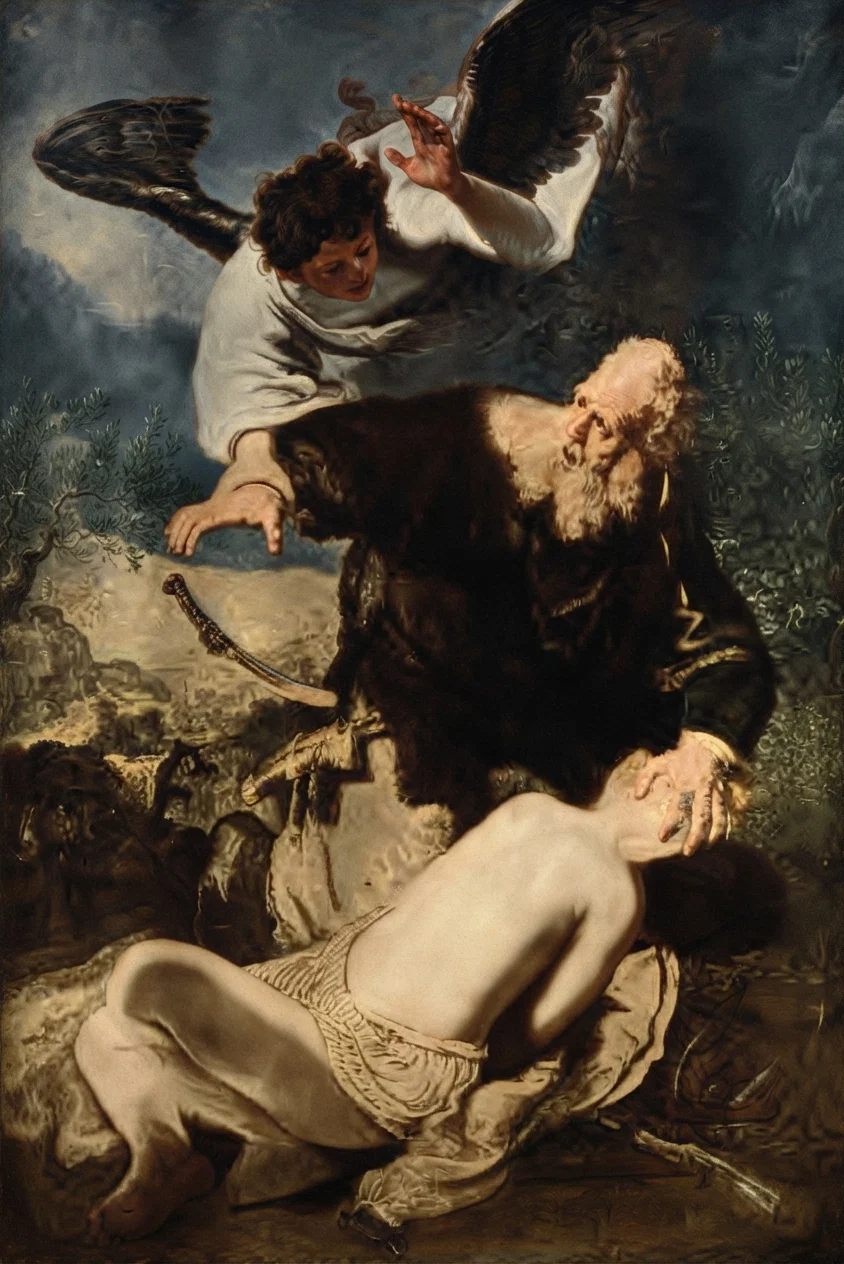
IT is stated concerning Abraham, in Rom. 4:20, that "he staggered not at the promise of God." Staggering is a very forcible illustration; it refers to the conduct of a man who is intoxicated, and is used several times in the Scriptures. "They are drunken, but not with wine; they stagger, but not with strong drink." Isa. 29:9. "As a drunken man staggereth in his vomit." Isa. 19:14. "The earth shall reel to and fro like a drunkard." Isa. 24:20.
These passages show what it is to stagger. The spectacle of a drunken man staggering and reeling in his filthy, intoxicated condition is so common that one can not fail to understand the signification.
There is a moral or spiritual condition that is similar to the physical condition mentioned—drunk. This figure is employed in Rev. 14:8; 17:2, etc. Spiritual drunkenness comes from imbibing false doctrine, the teachings of men rather than the commandments of God, as will be seen by comparing Isa. 29:9, 13 with Matt. 15:7-9, and by disbelief of God's Word.
But it is recorded of Abraham that he staggered not. This is not to say that he never did stagger. When he asked Sarah to conceal the fact that she was his wife, and when he yielded to the suggestion to take Hagar instead of his lawful wife, and thus enter into polygamy, he certainly staggered. But this time he did not stagger at all. "He staggered not at the promise of God."
Why should any one stagger at a promise anyway? What is there about a promise to make one stagger? Men stagger at a burden, a requirement, a commandment, a duty, but why stagger at a promise?
But, after all, that is just where men do stagger. If they would not stagger at God's promises they would not be likely to at His commandments. God's promises are so great as to fairly stagger us unless we are, like Abraham, "strong in faith."
When God called Abraham to go up into the mountain and sacrifice his son, he staggered not at this most severe test that God ever presented to a man. He accounted "that God was able to raise him up, even from the dead; from whence also he received him in a figure." Heb. 11:19. This was all because he believed God when He promised that He would give him a son, even when it seemed to be an absolute impossibility.
“And Abraham stretched forth his hand, and took the knife to slay his son. And the Angel of the Lord called unto him out of heaven, and said, Abraham, Abraham; and he said, Here am I. And He said, Lay not thine hand upon the lad, neither do thou anything unto him; for now I know that thou fearest God, seeing thou hast not withheld thy son, thine only son from Me.” Gen. 22:10-12.
Seeing he had already believed God's promise, he could now obey His commandment. So it is to-day. Why do not more people keep the Sabbath? We may say they stagger at the commandment, such a heavy burden! The trouble really is they stagger at the promise. They say, My business would go to ruin, and I would have no way of making a living. Has God made any promises concerning this matter? —Abundant promises. "Observe to do all the words of this law; . . . because it is your life." Deut. 32:46, 47. See also Ex. 20:6; Ps. 37:3; 1 Tim. 4:8, etc. God has made the most complete promises possible in this matter, but men stagger at these promises, they do not believe them, and consequently they stagger at the requirement of God.
Why do not more people pay the tithe of their income to God?—Perhaps they say the requirement is too great, they need all the money for their families, that they could not do that and make a living. Are they staggering at the duty, the commandment? Well, in the first place, they are staggering at God's promise. What is His promise? Read it in Mal. 3:10. But says unbelief, God has promised too much; He would never do all that for me. So there it is, staggering at the promise of God! It is plainly to be seen, then, why men who know their duty in the matter of tithe-paying do not do it. They doubt God's promises. Those promises are so large, they stagger at them.
When the Lord says, "If we confess our sins, He is faithful and just to forgive us our sins, and to cleanse us from all unrighteousness" (1 John 1:9), why do so many go mourning all the day because of the oppression of the enemy? That promise is so large, they stagger at it. Shall we not from this time, like faithful Abraham, stagger not at the promise of God?
F. D. STARR.

THE PROMISE OF THE SPIRIT.

“NEVERTHELESS I tell you the truth,” said Christ to His disciples; “it is expedient for you that I go away; for if I go not away, the Comforter will not come unto you; but if I depart, I will send Him unto you. . . . When He, the Spirit of truth, is come, He will guide you in all truth; for He shall not speak of Himself; but whatsoever He shall hear, that shall He speak; and He will show you things to come. He shall glorify Me; for He shall receive of Mine, and shall show it unto you.” “Peace I leave with you, My peace I give unto you; not as the world giveth, give I unto you. Let not your heart be troubled, neither let it be afraid.” “When the Comforter is come, whom I will send unto you from the Father, even the Spirit of truth, which proceedeth from the Father, He shall testify of Me, and ye also shall bear witness, because ye have been with Me from the beginning.”
Christ’s triumphant ascension to heaven was the signal that His followers were to receive the promised blessing. For this they were to wait before they entered upon their work without the visible presence of their beloved Teacher. While He was yet with them, He commanded that they should not depart from Jerusalem, but wait for the promise of the Father, “which, saith He, ye have heard of Me. For John truly baptized with water, but ye shall be baptized with the Holy Ghost not many days hence.”
When Christ entered within the heavenly gates, He was enthroned, amid the songs of millions of angels. As soon as this ceremony was completed, the Holy Spirit descended upon His followers in rich currents according to Christ’s promise, and they were no more orphans. How quickly Christ fulfilled His promise, and sent from the heavenly courts the guarantee of His love! After His inauguration, the Spirit came and Christ was indeed glorified, even with the glory which He had from all eternity with the Father. During His humiliation upon this earth, the Spirit had not descended with all its efficacy; and Christ declared that if He went not away, it would not come, but that if He went away, He would send it. It was a representation of Himself, and after He was glorified it was manifest.
Then the people beheld the Lamb of God, which taketh away the sin of the world. How glorious did the Saviour appear, in the eyes of the awe-stricken multitude, invested with the robes of divinity! O, if He would only visit them again in human form, how gladly would they receive Him! How did Peter look upon his denial of Christ in the hour of temptation, as, with his brethren, he endured the seeing of Him who is invisible? He longed to witness to Christ’s divinity and glory. And he was given opportunity.
“When the day of Pentecost was fully come, they were all with one accord in one place. And suddenly there came a sound from heaven as of a rushing mighty wind, and it filled all the house where they were sitting. And there appeared unto them cloven tongues like as of fire, and it sat upon each of them. And they were filled with the Holy Ghost, and began to speak with other tongues, as the Spirit gave them utterance.” “Peter, standing up with the eleven, lifted up his voice, and said unto them, Ye men of Judea, and all ye that dwell at Jerusalem, be this known unto you, and harken to my words. . . . Jesus of Nazareth, a man approved of God among you by miracles and wonders and signs, which God did by Him in the midst of you, as ye yourselves also know; Him, being delivered by the determinate counsel and foreknowledge of God, ye have taken, and by wicked hands have crucified and slain. . . . This Jesus hath God raised up, whereof we all are witnesses. Therefore being by the right hand of God exalted, and having received of the Father the promise of the Holy Ghost, He hath shed forth this, which ye now see and hear. . . . Therefore let all the house of Israel know assuredly, that God hath made that same Jesus, whom ye have crucified, both Lord and Christ.”
This chapter is full of interest to all who love the Lord. Divine power was arrayed on the side of redemption. See the people coming in from all directions to hear the apostle witness to the truth as it is in Jesus. They press in, crowding the temple. Priests and rulers are present, the dark scowl of malignity still on their faces; their hearts still full of the spirit of abiding hatred toward Christ; their hands not cleansed from the blood they had shed when they crucified the world’s Redeemer. They thought to find the apostles cowed with fear, because the strong hand of oppression and murder had testified of their purpose. But mark how intently they gaze, how earnestly they listen, as if spellbound. They find the apostles, instead of being sad, disheartened, and discouraged, ready to yield up their faith in Christ, full of courage, proclaiming, by the power of the Holy Spirit, the divinity of Christ. They hear them declare with boldness that the Man recently humiliated, spit upon, derided, smitten by cruel hands, crowned with thorns, and crucified, is the Prince of Life, and that He is now sitting at the right hand of God.
Those who listened to the disciples had taken an active part in the death of Christ. Their voices had mingled with the rabble throng in His rejection. When Jesus and Barabbas stood before them in the judgment hall, and Pilate asked, “Whom will ye that I release unto you?” they shouted, “Release unto us Barabbas.” “What shall I do then with Jesus?” “Crucify Him, crucify Him.” They choose a robber, a murderer, rather than the Son of God. Pilate delivered Christ to them, saying: I find no fault in this Man. Take ye Him and crucify Him. I wash my hands, as innocent of His blood. Then there arose, like the bellowing of wild beasts, “His blood be on us, and on our children.” The deed was done; Christ was crucified.
Now these people hear the disciples declaring that it was the Son of God they had crucified. Priests and rulers trembled. Conviction and anguish seized the heart of the people. “They were pricked in their heart, and said unto Peter and to the rest of the apostles, Men and brethren, what shall we do? Then Peter said unto them, Repent, and be baptized every one of you in the name of Jesus Christ for the remission of sins, and ye shall receive the gift of the Holy Ghost. For the promise is unto you, and to your children, and to all that are afar off, even as many as the Lord our God shall call. . . . Then they that gladly received his word were baptized; and the same day there were added unto them about three thousand souls.”
Now the disciples understood the words spoken by Christ when He was yet with them, “At that day ye shall know that I am in My Father, and ye in Me, and I in you.”
“Ye shall receive power,” Christ had said, “after that the Holy Ghost is come upon you; and ye shall be witnesses unto Me both in Jerusalem, and in all Judea, and in Samaria, and unto the uttermost part of the earth.” By the descent of the Holy Spirit, the apostles were qualified for the very work Christ had given them to do,—the work of gathering in the harvest. The great Teacher came to sow the world with truth; and after His ascension, the harvest revealed the power of His teaching.
To-day, as in the days of the apostles, these rich promises, the inexhaustible supplies of heaven, are at the command of every soul that is united with Christ. He pitied poor sinners so much that He left the courts of heaven and laid aside His robes of royalty, humiliating Himself to humanity, that He might become acquainted with the needs of men, and help them to rise above the degradation of the fall. He bound Himself closely to the Father, that He might bring their united strength to bear upon the souls of men, and save them from eternal ruin. In like manner should His servants cultivate spirituality, if they hope to succeed in their work.
The Holy Spirit, sent from heaven by the benevolence of infinite love, takes the things of God, and reveals them to every soul that has an implicit faith in Christ. By its power the vital truths, upon which the salvation of the soul depends, are impressed upon the minds of men, and the way of life is made so plain and clear that those who are ignorant, who have not had the advantage of great learning, need not err therein. Faith is simple; it means no more nor less than belief in the Word of the infinite God. Believing, all may have life through His name. When the Jews asked, “What shall we do, that we might work the works of God?” the answer came from the lips of One that never lies, “This is the work of God, that ye believe on Him whom He hath sent.” “As many as received Him, to them gave He power to become the sons of God, even to them that believe on His name.
The principles of divine truth, received and cherished in the heart, will carry us to a height of moral excellence that we had not deemed it possible for us to reach. Belief in Christ makes it possible for each one to be an overcomer. “Behold, what manner of love the Father hath bestowed upon us, that we should be called the sons of God; therefore the world knoweth us not, because it knew Him not. Beloved, now are we the sons of God, and it doth not yet appear what we shall be; but we know that, when He shall appear, we shall be like Him; for we shall see Him as He is. And every man that hath this hope in him purifieth himself, even as He is pure.”

BE PATIENT.

“LORD, why can not I follow Thee now?” This was the impatient plea of the impetuous, unconverted Peter. He was so anxious for the reward that he was loath to bide the time of Him who alone could give the reward. In this respect the Peters have always been numerous. Like many other poor, selfish mortals, Peter was anxious to have his reward in advance of fulfilling the conditions. Like him, many others imagine themselves ready to die for Christ, whereas they are not yet willing to live for Him, not willing to exemplify His life of self-denial before the world. The anxiety is for self-salvation rather than for the salvation of others.
The Lord had spoken truly when He said to Peter, “Whither I go, thou canst not follow Me now,” and the experiences of that night demonstrated that Peter did not then know what it meant to follow his Master, but that Jesus knew why the ambitious yet self-deceived disciple could not follow Him then. Peter did not know what was coming that very night and the following day that would dampen his ardor and set him away in the background. He did not know of the betrayal; he did not know of the agony in Gethsemane; he did not know of the cruel arrest and the condemnation by the council; he did not know of the forsaking by friends, or of his own base denial of the One he was then so anxious to follow. He did not know of the mockings, the scourgings, the contempt of the priests and the masses, and, last of all, the crucifixion and death. Within a few hours Peter was shown more of what it meant to follow Jesus then than he had ever dreamed of.
But the Lord gave Peter and the other disciples some very comforting assurances along with the announcement that they could not follow Him then: “Thou shalt follow Me afterwards.” “Let not your heart be troubled.” “I will not leave you comfortless; I will come to you.” “I go to prepare a place for you. And if I go and prepare a place for you, I will come again, and receive you unto Myself.” “I will pray the Father, and He shall give you another Comforter, that He may abide with you forever.” After Christ had fulfilled His mission on earth, and had ascended to the Father, and the Holy Spirit had come down upon them, then they understood why they could not follow Him when He went away. They learned then the meaning of the parable, “For the Son of man is as a man taking a far journey, who left his house, and gave authority to his servants, and to every man his work.”
Then there were two reasons why Peter could not follow the Lord on that eventful night: (1) He was not converted, he had not yet the Spirit of Christ; (2) he had not yet finished his work on earth. And the last condition was dependent upon the first. The Master Himself did not essay to go back to His reward until He had finished His work. On the night of His betrayal, in His prayer to His Father, He said, “I have glorified Thee on the earth; I have finished the work which Thou gavest Me to do. And now, O Father, glorify Thou Me with Thine own self with the glory which I had with Thee before the world was.” John 17:4, 5. On the cross He again declared, “It is finished.” Even His death could not be accomplished until His work was done. Until that Passover night, neither officers nor mobs were able to hurt Him, because “His hour was not yet come,”—His work was not finished. When that was completed, God “highly exalted Him,” and gave Him “a name which is above every name.” Phil. 2:9.
Now this is the lesson that the disciples must learn,—the Master has given to every man his work, and to be pining for relief, or for something to happen by which some one else shall do that work, is not the Spirit of Christ. Such a disciple never can have it said to him, “Well done, good and faithful servant; . . . enter thou into the joy of thy Lord.” Matt. 25:23. If any disciple is longing to follow the Master in glory, and is saying, “I am ready to go at any time,” let him ask himself if he is tired of the humble life here that will lead others to God; if he is sure his work is done and his account straight.
There is more than one man walking the earth to-day in a backslidden condition who, in times past, were as confident of being able to follow the Lord anywhere as was the boastful Peter. But such need not be discouraged; Peter sought repentance and found it, together with the favor of his Lord. He received the baptism of the Holy Ghost, by which he was enabled to go on and finish his work. That same Spirit is yet available to you. “Humble yourselves in the sight of the Lord, and He shall lift you up.” James 4:10. “If ye then, being evil, know how to give good gifts unto your children; how much more shall your heavenly Father give the Holy Spirit to them that ask Him?”
The Master said, “My Father worketh hitherto, and I work;” then shall not the disciple be willing to work in whatever calling or place his lot may be cast until the Lord says, It is enough; the work here is finished? He endured because of “the joy set before Him;” is that not sufficient incentive for the disciple? Let us all take courage, and endure to the end. The fields are yet white unto the harvest, while the laborers are few. True, there are trials all around, but “be ye also patient; stablish your hearts; for the coming of the Lord draweth nigh.” James 5:8.
W. N. G.

CAN YOU SEE IT?

THE believer in Jesus sees these to be days filled with peril and events which make this time most solemn. With a clear light flowing from the Living Fountain of prophecy, we see in the startling events of the present and the immediate past, a direct fulfilment of God's sure Word, and with every turn of the rapidly-moving wheel of developments foretold by the prophets, we realize that our faith is being strengthened.
The peace-and-safety cry foretold by the prophet (Micah 4:1-4) has been heard from numberless lips, but perhaps few were looking for such a literal fulfilment of the prophecy as is afforded in the call for a "peace conference" by one nation, and its acceptance by "many nations," according to the Scripture of truth. By this action we know "sudden destruction" is at hand. 1 Thess. 5:3.
Whether such a conference for the disarming of the nations will ever actually amount to anything or not, this text does not say, but simply that it will be called by the nations, and it is now literally fulfilled before our eyes, tho in an unexpected way. But a few years, yes, even a few months ago it was a question how Rev. 16:12, which speaks of the kings of the East, would meet its fulfilment. But now many of the kings and powers of earth are turning their covetous, envious eyes to China, the Flowery Land of the far East, and thither armies and navies are being sent; and when they have each established themselves there, then the "kings of the East" at the head of their vast armies, turn their way westward, perhaps to divide another fair portion of earth; and then their work and armies are crushed by the revelation of Jesus Christ.
The manifestation of God's power in the earth as was seen 1,800 years ago is being proclaimed, and accepted, and by it sinners are being turned to righteousness, and are preparing for the fearful time already crowding upon us. People are longing for this year of perplexity, disaster, and wo to close, hoping that coming years will not be bathed in sorrow and blood as is the present; but do they know the next will be better? They may "hope," but we fear it will be worse; for, while men and nations cry peace, still war is being prepared. Joel 3:9,10. And tho a thousand tongues proclaim a better time at hand, more than ten thousand homicides in America declare otherwise.
At this most remarkable time in the history of the world and of nations, God is preparing extensive means for warning the world of its approaching doom. Everything now indicates that the work portrayed in Rev. 18:1 is about to be accomplished; and this again brings us to that greatest of all events in the history of mankind.
Christian, are you doing your duty? Are you heeding the earnest call to labor?
Sinner, are you ready for the consummation of all these things? Are you seeking a secure shelter from these rude blasts of calamity? When plague, disaster, and strife sweep over the earth, with mercy gone, will you be found in the "sure dwellings," and in the "quiet resting-places"? Isa. 32:18.
H. G. THURSTON.

AT PRAYER-MEETING.

THERE were only two or three of us Who came to the place of prayer— Came in the teeth of a driving storm; But for that we did not care, Since after our hymns of praise had risen, And our earnest prayers were said, The Master Himself was present there, And gave us the living bread.
We knew His look on our leader's face, So rapt and glad and free; We felt His touch when our heads were bowed; We heard His, "Come to Me." Nobody saw Him lift the latch, And none unbarred the door, But "peace" was His token to every heart, And how could we ask for more?
Each of us felt the load of sin From the weary shoulder fall; Each of us dropped the load of care, And the grief that was like a pall; And over our spirits a blessed calm Swept in from the jasper sea, And strength was ours for toil and strife In the days that were thence to be.
It was only a handful gathered in To the little place of prayer; Outside were struggle and pain and sin, But the Lord Himself was there; He came to redeem the pledge He gave— Wherever His loved ones be To stand Himself in the midst of them, Tho they count but two or three.
And forth we fared in the bitter rain, And our hearts had grown so warm It seemed like the pelting of summer flowers And not the crash of a storm; " 'Twas a time of the dearest privilege Of the Lord's right hand," we said, As we thought how Jesus Himself had come To feed us with living bread. —Margaret E. Sangster.

THE SPIRIT OF OBEDIENCE.

HAVE we the spirit of a hireling, or the spirit of a son and heir? An honest introspection to determine this point may be a painful tho profitable task. There are those who regard with suspicion this practise of introspection. They say that if a man will make himself busy in external good works, his inner states and experiences may safely be left to take care of themselves. We do not deny that one of the best methods of reaching a satisfactory experience of inward grace is to occupy our time, our strength, and our opportunities in doing good to others. "He that watereth shall himself be watered."
Nevertheless, this does not exclude the duty of self-examination, by which we may learn, however active in good works we may be, whether our service is a service of love, or a service of constraint. At least once in a while we may profitably discuss this question with ourselves, for the spirit of service makes a world of difference, both as concerns our character and our attitude toward God. If we are simply rendering the obedience of fear, or constraint, or policy, or self-interest, we may be sure that it will neither honor God nor profit us. It is not difficult to define the obedience of a son. It is characterized by zeal for the family interests, the family name, the family honor. It is not the obedience of calculation, for that is from the head, but of affection, for that is from the heart.—Brethren Evangelist.

THE GLORY OF THE CROSS.

WE come now to the closing portion of the Epistle to the Galatians. The importance of the Epistle, not less to us than to those to whom it was first addressed, appears in every chapter. The consuming zeal of the apostle Paul in writing it, is seen in the fact that, contrary to his usual custom, he seized the pen and wrote the Epistle with his own hand. Chapter 6:11. As intimated in chapter 4, the apostle suffered from weak eyes, which hindered him much in his work, or would have hindered him but for the power of God resting on him; so that it was necessary for him always to have some one with him, to minister unto him, and to serve as amanuensis. From the second Epistle to the Thessalonians (chap. 2:2), we learn that some took advantage of this fact to write letters to the churches in Paul's name, which troubled the brethren; but in the close of that Epistle (chapter 3:16-18) Paul indicated to them how they might know an Epistle that came from him. No matter by whom the body of it was written, he wrote the salutation and the signature with his own hand. So great was the urgency in this case, however, that he wrote the entire Epistle himself.
The lesson for this week, which follows, we quote from the Revision:—
"As many as desire to make a fair show in the flesh, they compel you to be circumcised; only that they may not be persecuted for the cross of Christ. For not even they who receive circumcision do themselves keep the law; but they desire to have you circumcised, that they may glory in your flesh. But far be it from me to glory, save in the cross of our Lord Jesus Christ, through which the world hath been crucified unto me, and I unto the world. For neither is circumcision anything, nor uncircumcision, but a new creature. And as many as shall walk by this rule, peace be upon them, and mercy, and upon the Israel of God.
"From henceforth let no man trouble me; for I bear branded on my body the marks of Jesus.
"The grace of our Lord Jesus Christ be with your spirit, brethren. Amen." Gal. 6:12-18.

True and False Circumcision.—From the twelfth verse it is evident that the circumcision which was being taught to the brethren, and which Paul stood so stiffly against, as recorded in the second chapter, and warned them against so strongly in chapter 5, was mere outward circumcision, in the flesh. That stood merely for outward righteousness, the works of the flesh. The true circumcision was and is to "worship God in the spirit, and rejoice in Christ Jesus, and have no confidence in the flesh." Phil. 3:3. True circumcision is the keeping of the law, which can be done only as the Spirit of God writes the law in the heart. See Rom. 2:25-29; Heb. 8:10. The man who had the circumcision in the flesh merely, but did not keep the law, was reckoned by the Lord as uncircumcised. Such ones gloried or boasted in the flesh, and denied the cross of Christ, which is the only thing in the world in which one may rightly glory. The true circumcision is crucifixion with Christ; for that is, as seen from verse 14, a complete cutting off from "this present evil world."

God Revealed in the Cross.—The apostle said, "God forbid that I should glory, save in the cross of our Lord Jesus Christ." Read now the words of the Lord by the mouth of Jeremiah:—

"Let not the wise man glory in his wisdom, neither let the mighty man glory in his might, let not the rich man glory in his riches." Jer. 9:23.
Why should not the wise man glory in his wisdom?—Because, so far as it is his own wisdom, it is foolishness. "The wisdom of this world is foolishness with God." "The Lord knoweth the thoughts of the wise, that they are vain." 1 Cor. 3:19, 20. No man has any wisdom in which to glory, for his own wisdom is foolishness, and wisdom which God gives is something to cause humility instead of pride.
What about might? "All flesh is grass." Isa. 40:6. "Every man at his best state is altogether vanity." Ps. 39:5. "Men of low degree are vanity, and men of high degree are a lie; to be laid in the balance, they are altogether lighter than vanity." But "power belongeth unto God." Ps. 62:9, 11.
As to riches, they are "uncertain." 1 Tim. 6:17. Man "heapeth up riches, and knoweth not who shall gather them." "Riches certainly make themselves wings; they fly away as an eagle toward heaven." Prov. 23:5. Only in Christ are found unsearchable and abiding riches.
Man therefore has absolutely nothing in which to boast, for what is there left of a man when he has nothing that can be called wealth, no wisdom whatever, and absolutely no strength? Everything that man is or has comes from the Lord. Therefore the Lord says, "Let him that glorieth glory in this, that he understandeth and knoweth Me, that I am the Lord which exercise loving-kindness, judgment, and righteousness, in the earth; for in these things I delight." Jer. 9:24.
Now put this text with Gal. 6:14. The same Spirit inspired them both, so that there is no contradiction. One text says that we are to glory only in the knowledge of the Lord; the other says that there is nothing in which to glory save the cross of our Lord Jesus Christ. The conclusion therefore is that in the cross we find the knowledge of God. To know God is eternal life, and there is no life for mankind except through the cross of Christ. So again we see most clearly that all that may be known of God is revealed in the cross. Aside from the cross, there is no knowledge of God.

The Cross Crucifixion.—The cross in which we are to glory is the cross of Christ, the cross on which Christ suffered crucifixion. To Him it meant crucifixion, and so it does to us, for by it the world is crucified to us, and we unto the world. It meant humiliation and disgrace, yet nevertheless it is something in which to glory, because the disgrace is only that which the world regards as disgrace. Since the friendship of this world is enmity against God, it follows that the hatred of the world is friendship with God; and the friendship of God is something in which to rejoice.

The cross of Christ, in which alone there is glory, separates from the world. By it the world is to us as tho it did not exist. If the world is crucified to us, and we to the world, then, altho in the world, we are no longer of it. The cross means death and disgrace as far as the world is concerned. That which is contrary to the world, and to all the calculations of the world, and which the world despises and turns from, is that in which the child of God is to glory.

The Cross Elevates.—Jesus said, "I, if I be lifted up from the earth, will draw all men unto Me." This He said, signifying what death He should die, namely, the death of the cross. He humbled Himself to death, even the death of the cross; "wherefore God also hath highly exalted Him, and given Him a name which is above every name." Phil. 2:8, 9. He descended first into the lower parts of the earth. "He that descended is the same also that ascended up far above all heavens, that He might fill all things." Eph. 4:9, 10. It was through death that He ascended to the right hand of the Majesty in the heavens. It was the cross that lifted Him up from earth to heaven. Therefore it is that alone that brings us glory, and so it is the only thing in which to glory.

The Cross Creates.—"For in Christ Jesus neither circumcision availeth anything, nor uncircumcision, but a new creation." That is, neither circumcision nor uncircumcision has any power. The only thing that is of any value is a new creature, or, as indicated in the margin of the Revision, "a new creation." "If any man be in Christ, there is a new creation;" and it is only through death that we become joined to Him. Rom. 6:3. The cross makes a new creation, so that here again we see a reason for glorying in it; for when the new creation came from the hand of God in the beginning, "the morning stars sang together, and all the sons of God shouted for joy." Job 38:7.

The Cross Seen in Creation.—The preaching of the cross is the power of God unto salvation to those who believe. 1 Cor. 1:18. "For the preaching of the cross is to them that perish foolishness; but unto us which are saved it is the power of God." Thus we see that it is the Gospel. Rom. 1:16. But the power of God is seen only in the things that are made. Rom. 1:20. It is in the things that are made that we learn that which may be known of God, "His eternal power and divinity." Now since the cross is the power of God, it follows that the cross is revealed in the things that are made. Altho the curse, death, has come upon all the earth, we nevertheless see life all about us. How can that be?—Only because Christ, who can suffer death and yet live, is everywhere present. But wherever Christ is, there is the cross; for Christ is not known to mankind except as the Crucified One.

The Glory.—We have seen that the cross is the power of God, and that the power of God is seen in the things that He has made, so that the cross is everywhere visible in creation. It is by the cross that everything is sustained. But for the cross, there would be universal death. Not a man could breathe, not a plant could grow, not a ray of light could shine from heaven, if it were not for the cross. Now "the heavens declare the glory of God; and the firmament showeth His handiwork." Ps. 19:1. They are some of the things that God has made. They show God's power. They declare the glory of God, for His power is His glory. No pen can describe, and no artist's brush can depict, the wondrous glory of the heavens; yet that glory is but the glory of the cross of Christ. This follows from the facts already learned, that the power of God is seen in the things that are made, and that the cross is the power of God. The glory of God is His power, for "the exceeding greatness of His power to usward" is seen in the resurrection of Jesus Christ from the dead (Eph. 1:19, 20), and "Christ was raised up from the dead by the glory of the Father" (Rom. 6:4). It was for the suffering of death that Jesus was crowned with glory and honor. Heb. 2:9. So wesee that all the glory that He has now in heaven, and all the glory that the saints will ever share with Him, is nothing more than the glory of the cross. Surely there is enough glory in the cross to satisfy anybody.

The Marks of Christ.—"From henceforth let no man trouble me; for I bear in my body the marks of the Lord Jesus." The marks of the cross were upon Paul. He had been crucified with Christ, and he carried the nail-prints. They were branded on his body. They marked him as the bond-servant, the slave, of the Lord Jesus. Let no one then interfere with him; he was not the servant of men. He owed allegiance to Christ alone, who had bought him. Let no one seek to get him to serve man or the flesh, because Jesus had branded him with His mark, and he could serve no other. Moreover, let men beware how they sought to interfere with his liberty in Christ, or how they treated him, for his Master would surely protect His own.

Ah, what glory there is in the cross! All the glory of heaven is in that despised thing. Not in the figure of the cross, but in the cross itself. The world does not reckon it glory, but then it did not know the Son of God, and it does not know the Holy Spirit, because it can not see Him. May God open our eyes to see the glory, so that we may reckon things at their true value. May we consent to be crucified with Christ, that the cross may glorify us. In the cross of Christ there is salvation. In it is the power of God to keep us from falling, for it lifts us up from earth to heaven. In the cross there is the new creation, which God Himself pronounces "very good." In it is all the glory of the Father, and all the glory of the eternal ages. Therefore God forbid that we should glory save in the cross of our Lord Jesus Christ, by which the world is crucified to us, and we unto the world.
"In the cross of Christ I glory, Towering o'er the wrecks of time; All the light of sacred story Gathers round its head sublime."
Therefore, "Since I, who was undone and lost, Have pardon through His name and Word, Forbid it, then, that I should boast, Save in the cross of Christ, my Lord." E. J. WAGGONER.
Continue reading: HIS LOVE REVEALED IN HIS WORD