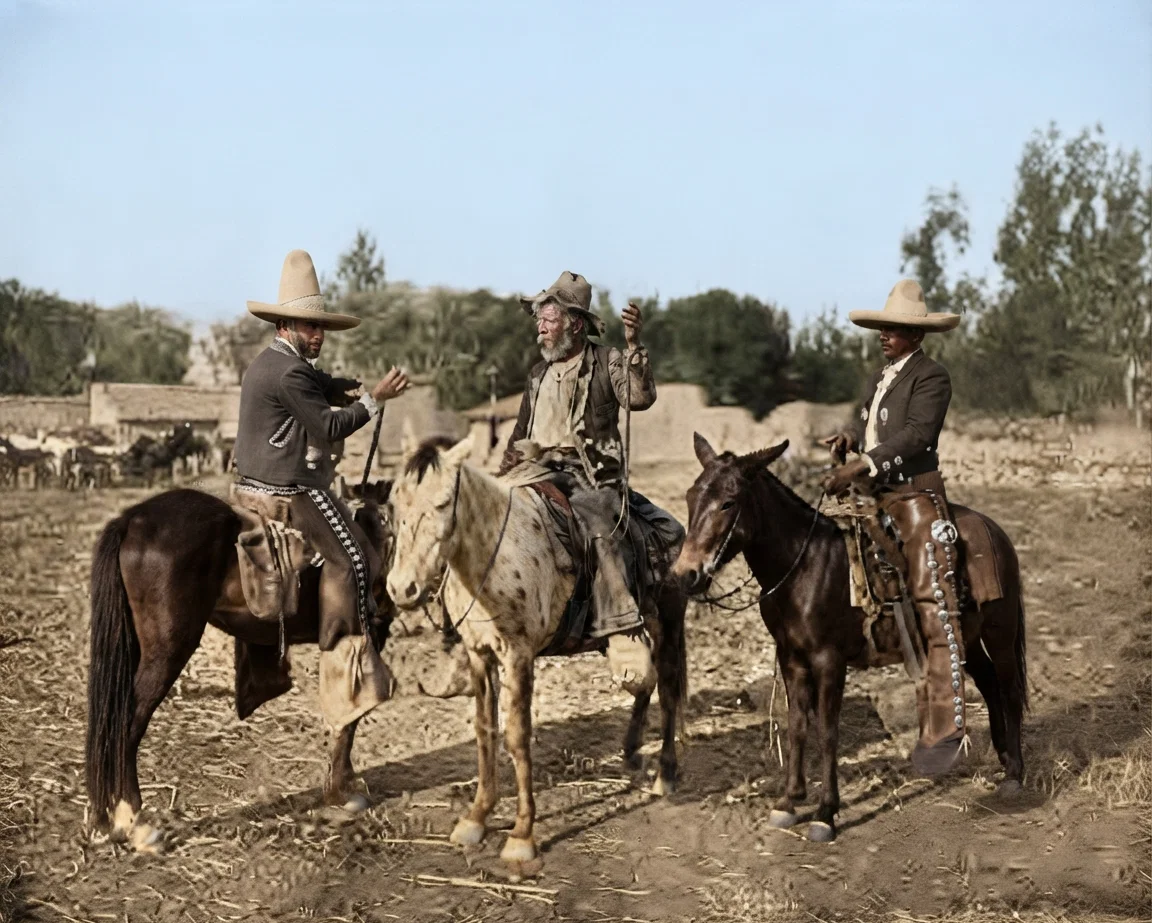
At the beginning of the sixteenth century Spain ranked among the first of European nations. Her king, Charles I., was also king of the Netherlands and emperor of Germany (Charles V. of Germany). She sent forth her armies to conquer in the Old World, and to explore and take possession in the New. In America more than one-third of the present territory of the United States, and everything from the Rio Grande to Cape Horn, except Brazil, and including nearly all of the West India Islands, fell into her hands. The treasures of the Montezumas of Mexico and of the Incas of Peru, with the vast commerce of her other possessions, filled her coffers to overflowing. She was intoxicated with the pride of wealth and power.
Just when Spain was making her greatest conquests in America, the influence and power of the Reformation began to be felt in all the nations of Europe. Spain had already established the Inquisition, and its machinery was put to work so effectually that it promptly crushed out everything that the Roman Catholic hierarchy denounced as heresy. All investigation and freedom of speech were prohibited. The Bible was taken from the laity, and was practically discarded by the clergy. The people became the servants of the priests. The Inquisition was also established in Mexico and other Spanish possessions in America, and the same baneful results followed.
From the time the Inquisition was established dates the decadence of Spain. But her possessions were so large and her wealth and power so great that it was many years before the paralyzing and deadly effects of the course she had adopted were discernible; and it has taken four hundred years for her to gather the last fruits from the seed she had sown.
As the tree began to die, the branches began to drop off. Early in the nineteenth century the Louisiana territory was ceded to France; Florida was purchased by the United States in 1815. Mexico gained her independence in 1820, and all the countries of Central and South America quickly followed her example. The last of her foreign possessions have just been stripped from her, and her humility, weakness, and poverty are now as conspicuous as were once her arrogance, her power, and her wealth.
After civil liberty came it was years before the nations that had thrown off the yoke of Spain could break the ecclesiastical bands which three hundred years of papal rule, supported by the civil power, had placed upon them. Mexico is a fair type of Spanish-American countries. She has led in every move for civil and religious liberty, as also in the material prosperity which has so remarkably characterized her during the last quarter of a century.
A Typical Mexican Scene.
The first constitution adopted by Mexico is known in history as the constitution of the three guarantees. One of these guaranteed that Roman Catholicism should be the only religion tolerated by the government. It was not until 1867 that the laws of reform, which had been enacted by Congress ten years before, went into effect. The laws of reform abolished all monastic orders, confiscated all property held by the church except that actually used for public worship, made marriage a civil contract, placed the cemeteries under municipal control, forbade religious processions and other public demonstrations, and conferred upon every citizen and stranger freedom and protection in his religious faith and practise. The noble and patriotic men who have given civil and religious liberty to their country have also opened up before it an era of prosperity such as has not been known before in its history. A splendid system of public schools has been established, and all the useful arts and sciences are fostered. They encourage all benevolent and philanthropic enterprises that are calculated to benefit society, and welcome foreigners who bring with them the enterprise and advanced experience of other countries to assist them in developing their own.
But Roman Catholicism is endeavoring to maintain, through clerical influence, what it has lost at the hands of the civil power. Every effort is being made to keep the people wholly under the influence of the Church of Rome. Protestantism is misrepresented and scandalized. But God has prepared the way for His truth to go to all these millions of Spanish-speaking people. They are still in almost total darkness in reference to the love of God and of the saving power of faith through the Gospel. The Bible has been, and still is, almost unknown among the masses. But the way is open for the Bible to be placed in the hands of the people, and for the Gospel to be preached to them. God has done wonders in opening up the way. It now remains for His people, whom He has commissioned to preach the Gospel of the kingdom to all nations, to step into the opening and do the work the Lord has enjoined upon them to do.
Spanish is more extensively spoken than any other modern language except the English. At a moderate estimate seventy-five millions of people speak Spanish, and very few of all these speak any other language. More people speak Spanish to-day than spoke English at the beginning of the century. Spanish-speaking nations encircle the globe. They may be summed up as follows: Spain, 17,000,000; Mexico, 13,000,000; Central America, 3,000,000; South America, 30,000,000; West Indies, 3,000,000; the Philippine and other Pacific islands, 8,000,000; North Africa, 1,000,000. DAN. T. JONES.
A PRAYER.
I AM weary, O, so weary!
Cares of life do press me sore;
And I long to rest in heaven,
Where dark sorrows come no more.
Heavenly Father, guide me gently
Through this dark and tangled wild;
Take my hand, dear, loving Father,
Guide, O, guide Thy weary child!
Loved of earth have left me, Father,
Sad and lone henceforth to be;
Dark the clouds that shade my pathway;
Helplessly I cling to Thee.
Closer in Thine arms enfold me;
Let me lean upon Thy breast;
Shield me from the tempter's power;
Give the heavy-laden rest.
Take this wayward heart I give Thee,
Saviour, make me all like Thee;
Fill me with Thyself, I pray Thee,
Till Thine image Thou canst see.
When at last my work is finished,
And my record stands complete,
Take me to Thyself, dear Father,
Where there's rest for weary feet.
Answer.
By Mrs. Addie B. Hammond
On My hands thy name is written;
I have heard each plaintive sigh.
Trust Me, child, whate'er befall thee;
I will guide thee with Mine eye.
Mrs. Addie B. Hammond.
Rockford, Ill.
No Non-Essential Duties
By Jenkin Lloyd Jones
We talk too flippantly about “essentials” and “non-essentials” in morals. There are no unimportant things in conduct, no “non-essential” duties.—Rev. Jenkin Lloyd Jones.
REDUCTION OF FARES TO CAMP-MEETING AT STOCKTON, CALIFORNIA.
By C. H. Jones
Southern Pacific Company.
THOSE coming to the camp-meeting over any of the lines of the Southern Pacific Company will purchase a first-class ticket to Stockton, paying the regular fare, and at the same time presenting a certificate, which must be filled out and signed by the ticket agent. After these certificates have been endorsed by the secretary of the conference on the camp-ground, they will entitle the holder to a return ticket at one-third the regular rate, at any time, and up to June 12, 1899. Return tickets must be used within forty-eight hours after they are purchased.
California Northwestern Railway.
Arrangements have been made with the California Northwestern Railway Company (formerly San Francisco and North Pacific R. R.) for the sale of tickets from any point on its line to San Francisco, on the certificate plan the same as above, excepting that return tickets can be purchased on properly-signed certificates at any time up to and including June 30, 1899. Return tickets over this line must be purchased on day of departure, as they will be good for passage on trains of that date only.
These certificates can now be obtained free of charge, by addressing J. J. Ireland, 1059 Castro Street, Oakland, Cal. We suggest that where several persons are coming from one place, it be arranged to have all the certificates needed sent to one person, and then passed around to those who are coming. Be sure to order enough for all.
San Francisco and San Joaquin Valley Ry. Co.
Definite arrangements have not yet been made with this company, but we think it is safe to say it will be on the certificate plan, the same as above. Full information will be given in our next issue.
By Steamer from San Francisco to Stockton.
Those coming to San Francisco over the California Northwestern Railway, and those residing around the bay, can go by boat from San Francisco to Stockton, if desired. Steamers leave San Francisco every evening (except Sunday) at six o'clock, and every morning (except Saturday) at eight o'clock. Fare, 50 cents each way. Sleeping accommodation can be secured in outside rooms for $1.00, and inside rooms for 75 cents. Nearly all outside rooms will accommodate three persons; the inside rooms will accommodate but two. Each person is allowed to take 150 pounds personal baggage. No certificates are required on these steamers.
For further information, address J. J. Ireland, 1059 Castro Street, Oakland, Cal. C. H. JONES, Transportation Agent.
36 "And one of the Pharisees desired Him that He would eat with him. And He entered into the Pharisee's house, and sat down to meat. And behold, a woman which was in the city, a sinner; and when she knew that He was sitting at meat in the Pharisee's house, she brought an alabaster cruse of ointment, 38 and standing behind at His feet, weeping, she began to wet His feet with her tears, and wiped them with the hair of her head, and kissed His feet, and anointed them with the ointment. 39 Now when the Pharisee which had bidden Him saw it, he spake within himself, saying, This Man, if He were a prophet, would have perceived who and what manner of 40 woman this is which toucheth Him, that she is a sinner. And Jesus answering said unto him, Simon, I have somewhat to 41 say unto thee. And he saith, Master, say on. A certain lender had two debtors; the one owed five hundred pence, 42 and the other fifty. When they had not wherewith to pay, he forgave them both. Which of them therefore will love him 43 most? Simon answered and said, He, I suppose, to whom he forgave the most. And He said unto him, Thou hast rightly 44 judged. And turning to the woman, He said unto Simon, Seest thou this woman? I entered into thine house, thou gavest Me no water for My feet; but she hath wetted My feet 45 with her tears, and wiped them with her hair. Thou gavest Me no kiss; but she, since the time I came in, hath not ceased 46 to kiss My feet. My head with oil thou didst not anoint; but 47 she hath anointed My feet with ointment. Wherefore I say unto thee, Her sins, which are many, are forgiven; for she loved much; but to whom little is forgiven, the same loveth 48 little. And He said unto her, Thy sins are forgiven. And 49 they that sat at meat with Him began to say within them- 50 selves, Who is this that even forgiveth sins? And He said unto the woman, Thy faith hath saved thee; go in peace.
1 "And it came to pass soon afterwards, that He went about through cities and villages, preaching and bringing the good tidings of the kingdom of God, and with Him the twelve, 2 and certain women which had been healed of evil spirits and infirmities, Mary that was called Magdalene, from whom 3 seven devils had gone out, and Joanna the wife of Chuza Herod's steward, and Susanna, and many others which ministered unto them of their substance."
22 "Then was brought unto Him one possessed with a devil, blind and dumb; and He healed him, insomuch that the dumb 23 man spake and saw. And all the multitudes were amazed, 24 and said, Is this the son of David? But when the Pharisees heard it, they said, This Man doth not cast out devils, but by 25 Beelzebub the prince of the devils. And knowing their thoughts He said unto them, Every kingdom divided against itself is brought to desolation; and every city or house di- 26 vided against itself shall not stand; and if Satan casteth out Satan, he is divided against himself; how then shall his king- 27 dom stand? And if I by Beelzebub cast out devils, by whom do your sons cast them out? therefore shall they be your judges."
38 "Then certain of the scribes and Pharisees answered Him, saying, Master, we would see a sign from Thee."
46 "While He was yet speaking to the multitudes, behold, His mother and His brethren stood without, seeking to speak to1147 Him. And one said unto Him, Behold, Thy mother and Thy 48 brethren stand without, seeking to speak to Thee. But He answered and said unto him that told Him, Who is My 49 mother? and who are My brethren? And He stretched forth his hand towards His disciples, and said, Behold, My mother 50 and My brethren! For whosoever shall do the will of My Father which is in heaven, he is My brother, and sister, and mother."
What invitation did one of the Pharisees give to Jesus? Luke 7:36. See note 1. (John 11:2.)
While Christ was eating in the Pharisee's house, who came behind Him? For what purpose? Verses 37, 38. See note 2. (Matt. 26:6; Mark 14:3.)
Seeing this, what did the Pharisee say in his heart? Verse 39. (Luke 15:2.)
Knowing what was in his mind, how did Christ draw from him a confession of the truth? Verses 40-43. (Matt. 18:23-27.)
How did the Saviour then contrast the Pharisee's treatment of Him with the woman's? Verses 44-47. See note 3. (Ps. 23:5.)
What did Jesus say to the woman? Verses 48, 50. (Matt. 9:3; Mark 2:7.)
What question was raised by those present? Verse 49.
After this, where did Jesus and the twelve go? Luke 8:1.
What women attended these journeys, to care for the needs of the company? Verses 2, 3. (Matt. 27:55; Luke 23:55, 56.)
At Capernaum what sort of case was brought to Christ to be healed? With what result? Matt. 12:22. See note 4. (Luke 11:14.)
Upon witnessing the miracle, what question did the people ask? Verse 23. See note 5.
Hearing, this question seriously asked, how did the Pharisees from Jerusalem reply? Verse 24. See note 6. (Mark 3:22, 30.)
Knowing what the Pharisees were saying, what did the Saviour do and say? Verses 25, 26. (Mark 3:28-37.)
What cutting question did He then ask them? Verse 27.
Tell the moral and warning that Christ drew from His open conflict with these men. Verses 28-37. See note 7.
With what request did some of the Pharisees interrupt His discourse? Verse 38. (1 Cor. 1:22.)
What answer did Christ return? Verses 39-45. See note 8. (Luke 11:33-36.)
The rumor having reached Nazareth that Jesus was "beside Himself," what did His mother and brethren do? Verse 46. See note 6. (Mark 3:21.)
Upon being told of His mother's and brethren's presence, and their mission, what reply did Christ make? Verses 48-50. (Mark 3:33-35.)
NOTES.
THIS was probably to draw the Saviour out in private company in a way to compromise Himself, so that evidence might be found against Him sufficient to condemn Him. For evidence of this, see Luke 11:37-54.
THE custom of the Jews was to sit at meals, having the feet crossed beneath the body. See side texts with question 2. The same custom now prevails in the East, with tables about a foot high. In Christ's day the custom of the Persians, Greeks, and Romans, of reclining on cushions, had become common. The guest lay on his left arm, with feet extended outside.
FOR the master of a house to meet his guest with a kiss on the cheek, and to invoke a blessing upon him, was a formal welcome. This was always followed by bringing water to wash the guest's feet, in order to remove the dust. The head and beard were next anointed with fragrant oil, either by the host or one of his servants. This last was an especial point of etiquet.
THE Jews themselves pretended to cast out demons, but they had never shown power to make the blind see and the dumb speak. This was what so hurt the proud Pharisees. They could not deny the miracle, and, what was more, they saw that the common people would recognize its genuineness, and so they feared the result.
THIS was an expression meaning, "Is not this the Messiah?" It was the first general public confession of Christ as to His true mission, and it only angered the Pharisees.
BEELZEBUB.—The filth god. Mark says they charged Him with having an "unclean" spirit. The Phenicians assigned to this god the power to inflict diseases of all kinds. They implied that the unclean spirit on Him had made Him mad, and turned His brain. See also John 10:20. When this report reached His brethren, they went to take Him home, because they said He was "beside Himself."
MATT. 12:28-37.—These verses are not printed. The lesson is that the condition of the heart determines the deeds and words; and the deeds and words show the condition of the heart. The warning is that there is danger of sinning beyond all recall, of resisting the Spirit till it can no longer affect the heart. Study the Scripture.
VAST multitudes had followed John, and seemed temporarily benefited by his ministrations. The old, unclean spirit had, for a time, seemed to be gone out of the people. But inasmuch as they refused to let God's Spirit come in and fill them, Jesus predicted that their old spirit, with others still worse, would come in to dwell with them, and they would be worse than before. This was but to foretell His rejection by them. For application of the "diseased eye," see "Desire of Ages," p. 322.
NOTE.—The texts inclosed in marks of parentheses, while not essential to the lesson study, will be found to throw much light upon the lesson, and are suggested for those who wish to study further.
OUR WORK AND WORKERS
By Editor
At Papperwood, Humboldt Co., Cal., April 30, a new house of worship was dedicated.
The Health Food Company of St. Helena, Cal., recently shipped forty tons of food in one week.
During the State meeting held last month at Mount Vernon, Ohio, three persons were baptized.
April 30 six candidates were baptized in the Van Duzen River, Humboldt County, Cal., by Brother F. M. Burg. These were from the vicinity of Rhonerville.
The Quarter-centennial Number of the Signs is still being sold with success by brethren and sisters who realize that its contents are just as important to-day as they were when the paper was first issued.
On Green River, Wyoming, Brother O. S. Ferren reports holding meetings in a private house, twenty-five miles from a railroad and ten miles from a post-office. After one week's work he left five persons keeping the Sabbath "according to the commandment," and had baptized two heads of families.
In April 1897, Brother G. T. Kerr and wife, who had been laboring some time in the Gold Coast country, Africa, were obliged to leave on account of failing health. Since then they have been connected with the sanitarium at Claremont, South Africa, and Brother Kerr contemplates returning to the Gold Coast in August. In reporting to the Review, he notes the fact that in his two years' connection with the Claremont Sanitarium he has seen it "grow to more than three times its original size." Also that it is "patronized by all classes, from members of parliament to the humble huckster."
The May number of the Life Boat is a special "Prisoner's Number," and as for interesting narrative is a sterling witness to the adage that "truth is stranger than fiction." And its testimony to the efficacy of the Gospel in lifting up the fallen is of the most practical nature. Persons who are skeptical in regard to the utility of prison missionary work, or who desire a first-class document to put into the hands of prisoners, should not fail to procure this number of the Life Boat. The price of this special number is only $1.00 per hundred. Price, per year, monthly, 25 cents. Address, 1926 Wabash Avenue, Chicago, Ill., or your State tract society.
The Kansas Tract Society secretary gives this extract from an aged brother's experience in selling the Resurrection Number of the Signs: "I am almost ashamed that I had no more faith. I thought I might sell a few papers in ——, so started out with twenty to canvass the town. This is what astonished me. I sold a paper in every house, and in some houses sold two or three. No, not I, but the Lord. I did the delivering. I took a little walk into the country to-day; sold a paper to every family. I wish I had fifty more, so I could go to ——. Can't you send them quick?" Many of our brethren and sisters have yet to learn that success in selling our papers is a matter of faith, and not merely of talent or human aptitude.
Another missionary journal, the Life Line, has been started by one of our missions. This one is issued from the Gospel Medical Mission in Topeka, Kansas; monthly, 25 cents a year. It gives this very encouraging account of the work of the mission: "There are between 150 and 160 persons that daily come to the home for their meals, which are prepared in a healthful way. From 18 to 25 come for lodging every night, and for 10 and 15 cents get a nice clean bed. Every one that in any way is led to our mission, leaves with the impression that all is done for Christ; and thus the place, tho only a few months old, is well known throughout the city, yes, even throughout the State. It would do your soul good to be here in the evening, and see what the Lord will and can do for publicans, sinners, drunkards, and harlots."
LESSON XI.—SABBATH, JUNE 10, 1890
PARABLES OF THE KINGDOM, AND THE OBEDIENT ELEMENTS.
37 "Now AS He spake, a Pharisee asketh Him to dine with 38 Him; and He went in, and sat down to meat. And when the Pharisee saw it, he marveled that He had not first washed before dinner. And the Lord said unto him, Now do ye Pharisees cleanse the outside of the cup and of the platter; but your 40 inward part is full of extortion and wickedness. Ye foolish ones, did not He that made the outside make the inside also? 41 Howbeit give for alms those things which are within, and behold, all things are clean unto you.
42 "But wo unto you Pharisees! for ye tithe mint and rue and every herb, and pass over judgment and the love of God; but these ought ye to have done, and not to leave the other un43 done. Wo unto you Pharisees! for ye love the chief seats in 44 the synagogs, and the salutations in the market-places. Wo unto you! for ye are as the tombs which appear not and the men that walk over them know it not.
45 "And one of the lawyers answering saith unto Him, Master, 46 in saying this Thou reproachest us also. And He said, Wo unto you lawyers also: for ye lade men with burdens grievous to be borne, and ye yourselves touch not the burdens with one 47 of your fingers. Wo unto you! for ye build the tombs of the 48 prophets, and your fathers killed them. So ye are witnesses and consent unto the works of your fathers; for they killed 49 them, and ye build their tombs. Therefore also said the wisdom of God, I will send unto them prophets and apostles, and 50 some of them they shall kill and persecute; that the blood of all the prophets, which was shed from the foundation of the 51 world, may be required of this generation; from the blood of Abel unto the blood of Zachariah, who perished between the altar and the sanctuary; yea, I say unto you, it shall be re52 quired of this generation. Wo unto you lawyers! for ye took away the key of knowledge; ye entered not in yourselves, and them that were entering in ye hindered.
53 "And when He was come out from thence, the scribes and 54 the Pharisees began to press upon Him vehemently, and to provoke Him to speak of many things; laying wait for Him, to catch something out of His mouth."
1 "On that day went Jesus out of the house, and sat by the sea2 side. And there were gathered unto Him great multitudes, so that He entered into a boat, and sat; and all the multitude stood on the beach."
18 "Now when Jesus saw great multitudes about Him, He 19 gave commandment to depart unto the other side. And there came a scribe, and said unto Him, Master, I will follow Thee 20 whithersoever Thou goest. And Jesus saith unto him, The foxes have holes, and the birds of the heaven have nests; but 21 the Son of man hath not where to lay His head. And another of the disciples said unto Him, Lord, suffer me first to go and 22 bury my father. But Jesus saith unto him, Follow Me; and leave the dead to bury their own dead.
23 "And when He was entered into a boat, His disciples fol24 lowed Him. And behold, there arose a great tempest in the sea, insomuch that the boat was covered with the waves; but 25 He was asleep. And they came to Him, and awoke Him, 26 saying, Save, Lord; we perish. And He saith unto them, Why are ye fearful, O ye of little faith? Then He arose, and rebuked the winds and the sea; and there was a great calm. 27 And the men marveled, saying, What manner of man is this, that even the winds and the sea obey Him!"
21. How were the disciples affected? What questions did they ask among themselves? Verse 27. (Luke 8: 25; Mark 4: 41.)
NOTES.
1. THE Pharisees were a sect of the Jews, who believed that all the principles of the law needed to be elaborated, in order to be understood by the common people. They had, therefore, in the days of Christ, so elaborated these as to employ the entire worship of the people in carrying out these multitudinous forms prescribed for them. The lawyers are generally supposed to have been the same as scribes,—Pharisees learned in the law. The term "lawyer" was simply a title used in common parlance.
2. Parables.—We have not space for this scripture on the parables. There are the following in Matthew 13: Parable of the sower and its interpretation by our Lord (verses 3-9, 18-23), the parable of the tares and its interpretation (verses 24-30, 36-43); of the mustard seed (verses 31, 32); of the leaven (verse 33). Besides there is given the important instruction on the necessity of keeping the heart open and tender and willing to hear and do, in verses 10-17. Read the whole chapter carefully. It will be noticed that each of these parables relates to some particular phase of the one great subject,—the kingdom of God. The first (tares) shows the kingdom entire before sin entered, its corruption through sin, and its restoration. The next shows the growth of the kingdom in the heart, and so on through the list. These parables should be closely studied to get the most good from the teaching of Christ relative to the kingdom of God.
17 "They took Jesus therefore; and He went out, bearing the cross for Himself, unto the place called The place of a skull, 18 which is called in Hebrew Golgotha; where they crucified Him, and with Him two others, on either side one, and Jesus in the midst. And Pilate wrote a title also, and put it on the cross. And there was written, JESUS OF NAZARETH, THE 20 KING OF THE JEWS. This title therefore read many of the Jews; for the place where Jesus was crucified was nigh to the city; and it was written in Hebrew, and in Latin, and in 21 Greek. The chief priests of the Jews therefore said to Pilate, Write not, The King of the Jews; but, that He said, I am King 22 of the Jews. Pilate answered, What I have written I have written.
23 "The soldiers therefore, when they had crucified Jesus, took His garments, and made four parts, to every soldier a part; and also the coat; now the coat was without seam, woven 24 from the top throughout. They said therefore one to another, Let us not rend it, but cast lots for it, whose it shall be; that the scripture might be fulfilled, which saith,
They parted My garments among them,
And upon My vesture did they cast lots.
25 These things therefore the soldiers did. But there were standing by the cross of Jesus His mother, and His mother's sister, Mary the wife of Clopas, and Mary Magdalene. When 26 Jesus therefore saw His mother, and the disciple standing by, whom He loved, He saith unto His mother, Woman, behold, 27 thy son! Then saith He to the disciple, Behold, thy mother! And from that hour the disciple took her unto his own home.
28 "After this Jesus, knowing that all things are now finished, 29 that the Scripture might be accomplished, saith, I thirst. There was set there a vessel full of vinegar; so they put a sponge full of the vinegar upon hyssop, and brought it to His 30 mouth. When Jesus therefore had received the vinegar, He said, It is finished; and He bowed His head, and gave up His spirit."
Golden Text: "The Son of God, who loved me, and gave Himself for me." Gal. 2:20.
SUGGESTIVE QUESTIONS.
(1) In what manner did Jesus finally go forth from Pilate's palace? To what place did He go? V. 17. Note 1. (2) What was done with Him there? Who else were also crucified? V. 18. Note 2. (3) What then did Pilate do? What was the writing? V. 19. (4) What especially enabled many to read the title? V. 20. (5) What protest did the chief priests make to Pilate? V. 21. (6) What was Pilate's reply? V. 22. Note 3. (7) What was done with the garments of Jesus? How was the coat made? V. 23. (8) How did the soldiers dispose of this particular garment? In this action what scripture was fulfilled? V. 24. Note 4. (9) What close friends of Jesus stood by the cross? V. 25. (10) Whom did Jesus particularly notice? Then what did He say to His mother? V. 26. (11) What did He say to the disciple of whom He had spoken? What then did that disciple do? V. 27. (12) After this, what did Jesus know and say? V. 28. (13) What was done in response to this expression? V. 29. (14) When Jesus had received the vinegar, what did He say? Then what followed? V. 30. Note 5.
NOTES.
1. "Bearing the cross."—It was the custom for those who were crucified to suffer the added indignity of bearing their own crosses to the place of execution. No doubt the two malefactors who were crucified with Jesus also bore their crosses, and He, in the role of a condemned criminal, must not be spared any of the cruelty or the disgrace. But His cross could not be measured by the wooden crucifix. His cross included a life of sorrow and acquaintance with grief; it included the humiliation of a perfect Creator to the likeness of sinful flesh; it included the suffering of the just for the unjust; it included the ingratitude of His own people, with whom He had kept covenant for thousands of years that He might exalt them through His humiliation. Cruel as was the infliction at the moment, after hours of personal insult and abuse, the bearing of the instrument of death was but an incident in His cross-bearing, as with it He also bore the sins of the world. All this was borne that sinners, under penalty of death for violation of God's holy law, might have eternal life. Such is Christ, and such a spirit of self-denial is true Christianity.
2. "They crucified Him."—"Death by crucifixion seems to include all that pain and death can have of the horrible and ghastly,—dizziness, cramp, thirst, starvation, sleeplessness, publicity of shame, long continuance of torment, horror of anticipation, mortification of untended wounds,—all intensified just up to the point at which they can be endured at all, but all stopping just short of the point which would give to the sufferer the relief of unconsciousness. Such was the death to which Christ was doomed."—Farrar. "And two others."—These were men who had been previously convicted of crime, and in executing Jesus with them the scripture was fulfilled which says, "He was numbered with the transgressors." (Isa. 53:12.)
3. The protest of the priests.—The Jews felt the sting of the inscription, "Jesus of Nazareth, the King of the Jews;" but it was the truth. No doubt Pilate meant it as a bitter sarcasm, as he had no love for the Jews, and was disgusted with their action; yet he unwittingly and providentially wrote the truth. Had he shown the same degree of independence before giving Jesus into the hands of His enemies that he did in refusing to alter the inscription, he might have saved himself the sin and disgrace of authorizing the death of One whom he had pronounced innocent.
4. The scripture fulfilled.—The fulfilment of the prophecy of David (Ps. 22:18) concerning the disposition of Christ's raiment is only one of many apparently small details mentioned in the Scriptures, testifying to the identity of Jesus of Nazareth as the true Messiah. The aggregate of such prophecies minutely fulfilled forms an irrefutable voucher not only for the genuineness of His claim, but for the truthfulness of the Scriptures. See, also, verse 28.
5. "Gave up His spirit."—That is, His life; He died. The record of the trial and crucifixion of Christ, as given by John, is very brief. To get a more comprehensive idea of the whole circumstance, it is necessary to read the records of other evangelists. The fact that He died so soon upon the cross was not due to the ordinary effect of the punishment but to the terrible anguish of heart. Literally, He died of a broken heart. He bore all without a cry until the Father's face was hidden from Him. He bore the sins of the whole world, and this was part of the awful penalty. "The wages of sin is death" (Rom. 6:23), and death implies the wrath of God (John 3:36). Jesus deeply realized this fact as He came face to face with death; He realized it as no other ever could. Hence His agonizing cry, "My God, My God, why hast Thou forsaken Me?" Mark 15:34. And all this was suffered that we might have hope in the hour of death.
MAKE ROOM FOR JESUS.
By Eva Williams Malone
MAKE room, make room for Jesus,
O man of many cares!
Drive out the money-changers,
With their soul-enthralling snares.
The golden lures of mammon
Entice thee to thy doom;
Then, in thy soul o'erburdened,
For the spotless One make room.
Make room, make room for Jesus,
Thou happy child of joy;
The pleasure that He bringeth
Hath naught of earth's alloy;
The flowers that now you gather
But for a day shall bloom—
You pluck the fair immortelles
When you for Christ make room.
Make room, make room for Jesus,
O weary child of pain,
With soul o'ercharged with sorrow,
And fear and doubting rain!
The sunshine of His presence
Will scatter far thy gloom,
Nor leave a lurking shadow;
Then haste, for Him make room.
Make room, make room for Jesus,
Ye Christian hearts astray,
In ways of sin and folly,
O, tarry not to-day!
If wayward feet forsake Him,
Then, lost in night and gloom,
You'll wander when the Saviour
Will not for you make room.
—Eva Williams Malone.