The Youth’s Instructor, Vol. 32, No. 9.

CAPITAL FUN

The Youth’s Instructor

Feb 27, 1884

S. D. A. Publishing Association · Battle Creek, Mich. · Feb 27, 1884

CAPITAL FUN.
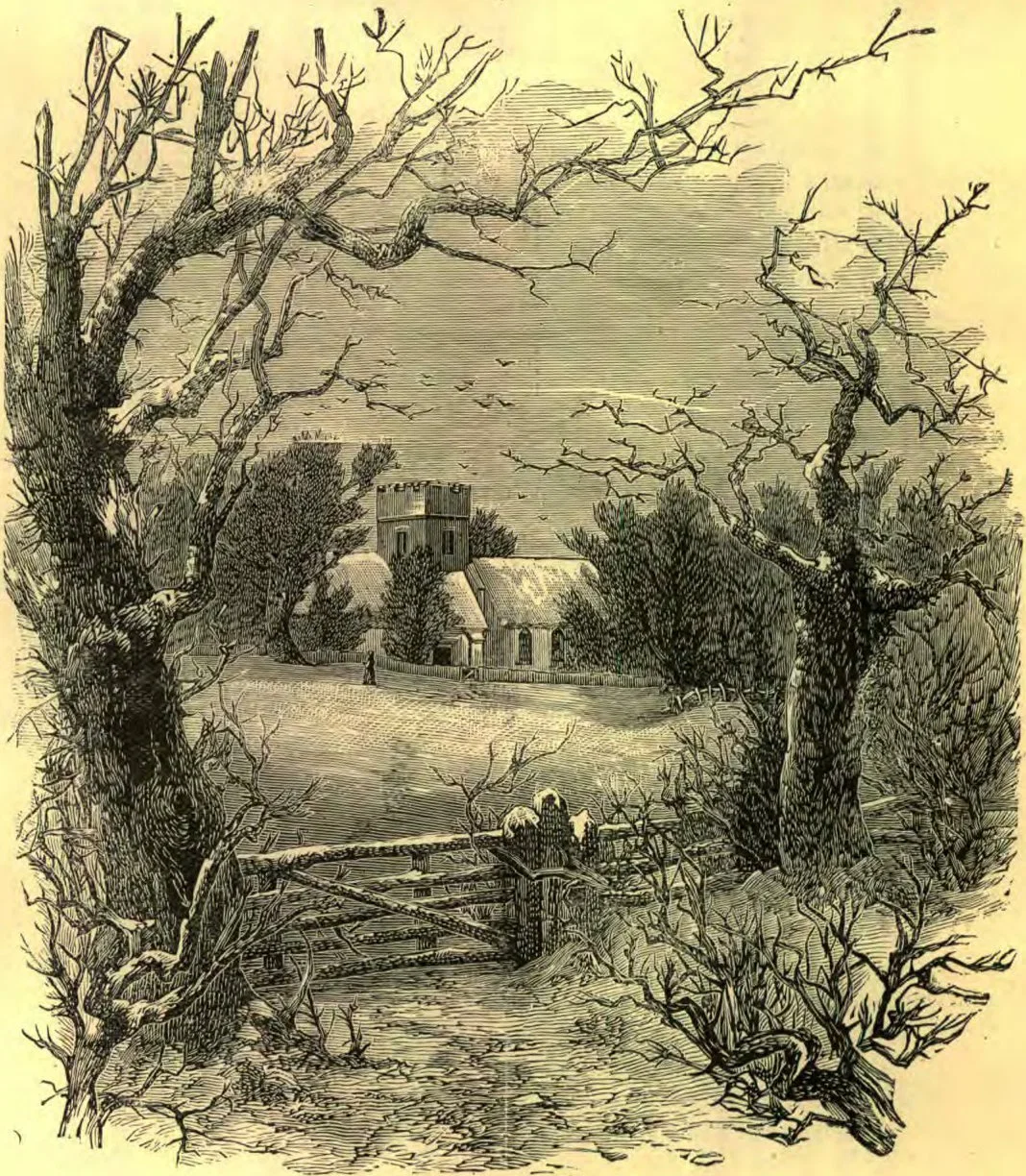
'Twas a little past twelve o'clock, and a merry group of boys were seated on the young grass under the trees that shaded the academy play-grounds. A little later, they would be scattered in every direction at their play; but first they must attend to the contents of the well-filled pails and baskets, where their dinners are stored away.
“I should like to know,” said Howard Colby, “why Joe Green never comes out here to eat his dinner with the rest of us, but always sneaks off somewhere till we all get through!”
“Guess he brings so many goodies he is afraid we shall rob him,” said another.
“Pooh!” said Will Brown, throwing himself back upon the grass, “more likely he doesn't bring anything at all. I heard my father say the family must be badly pinched since Mr. Green was killed; and mother said she didn't pity them, for folks had no business to be poor and proud.”
“Well,” said Sam Merrill, “I know Mary Green asked my mother to let her have her plain sewing to do; but then, folks do that sometimes that aren't very poor.”
“And Joe is wearing his winter clothes all this warm weather, and his pants are patched behind; I saw them,” said Howard Colby, with a very complacent look at his new spring suit of light gray.
“I tell you what, boys,” said Will Brown, “let's look to-morrow, and see what the old fellow does bring, any way. You know he is always in his seat by the time the first bell rings, and we can get a peep into his basket, and then be in season for the roll-call.”
The boys agreed to this, all but Ned Collins, who had quietly eaten his dinner, and had taken no part in the conversation. Now he simply remarked, as he brushed the crumbs from his lap, “I can't see what fun there will be in that, and it looks real mean and sneaking to me. I'm sure it's none of our business what Joe brings for dinner, or where he goes to eat it.”
“You're always such a granny, Ned Collins,” said Will Brown contemptuously. “You've got every one of your old Aunt Sally's notions.”
Ned could not bear to be laughed at, and it made him a little angry to hear his kind old aunt sneered at; but his eyes only flashed for a minute, and then he sprang up shouting, “Hurrah, boys, for football!” and in five minutes the whole playground was in an uproar of fun and frolic.
The next morning, at the first stroke of the bell, a half-dozen roguish faces peeped into the school-room, and, sure enough, there was Joe Green busily plying his pencil over the problems of the algebra lesson. It was but the work of an instant to hurry into the little clothes-room; and soon the whole group were pressing around Will Brown, as he held the mysterious basket in his hand. Among them, in spite of the remonstrance of yesterday, was Ned Collins, with his fine face fairly crimson with shame, or something else; we shall see.
“It's big enough to hold a day's rations for a regiment,” said Howard Colby, as Will pulled out a nice white napkin. Next came a whole newspaper, a large one, too; and then in the bottom of the basket was one poor little cold potato. That was all. Will held it up with a comical grimace, and the boys laughed and cheered as loudly as they dared in the school-house.
“See here,” said Howard, “let's throw it away and fill the basket with coal and things; it will be such fun to see him open it.”
“The boys agreed,” and the basket was soon filled, and the napkin placed carefully on the top; and before the bell commenced tolling, they were on their way down stairs.
Ned Collins was the last one to leave the room, and no sooner did the last head disappear than, quick as a flash, he emptied the coal into the box again, replaced the paper, and half filled the basket, large as it was, with the contents of the bright tin pail that Aunt Sally delighted to store with dainties for his dinner. Ned was in his seat almost as soon as the rest, and all through the forenoon he looked and felt as guilty as the others, as he saw the sly looks and winks that were exchanged among them. Noon came, and there was the usual rush to the clothes-room for dinner-baskets, but instead of going out to the yard, the boys lingered about the door and hall. Straight by them marched Ned Collins, with his pail on his arm.
“Hello, Ned,” said Sam Merrill, “where are you going now?”
“Home,” said Ned, laughing. “I saw Aunt Sally making a chicken pie this morning, and they can't cheat me out of my share.”
“Ask me to go too,” shouted Howard Colby; but just at that moment they spied Joe Green carrying his basket into the school-room.
“I should think he'd suspect something,” whispered Will Brown; “that coal must be awful heavy.”
Joe disappeared in the school-room, and the curious eyes that peeped through the crack of the door were soon rewarded by seeing him open his basket. “Hope his dinner won't lie hard on his stomach,” whispered Howard Colby. But Joe only wished to get his paper to read; for he took it by the corner and pulled, but it was fast. He looked in in surprise, and then in a sort of bewildered way took out a couple of Aunt Sally's great, crispy doughnuts, then one of the delicious round pies he had so often seen in Ned's hands; bread and butter, and such honey as nobody's bees but hers ever made, and the plump, white breast of a chicken. It was a dinner fit for a king, so poor Joe thought, and so the boys thought, as they peeped wonderingly from their hiding-place. But Joe did not offer to taste it; he only sat there and looked at it with a very pale face, over which the tears began presently to flow very fast. Then he laid his head on his desk, and Freddy Wilson, one of the smallest of the boys, whispered, “I guess he's praying;” so they all stole away to the playground without speaking another word.
“That's some of Ned Collins' work,” said Will Brown after a while; “it's just like him.”
“I'm glad of it, any way,” said Sam Merrill; “I've felt as mean all the forenoon as if I had been robbing a hen-roost. The Greens are not to blame for having only cold potatoes to eat, and I don't wonder Joe didn't want all of us fellows to know it.”
“I like Joe Green best of any boy in school,” said little Freddy Wilson, “and I think it was too bad to try to make fun of him.”
“Nobody asked you what you thought,” said Will Brown, fiercely; “wait till your opinion is called for.”
The little boy looked very meek, and ate his dinner in silence; but the fact was, Will Brown began to feel uncomfortable.
“Father says Mr. Green was the bravest man in the company,” said Sam Merrill, “and that he wouldn't have been killed, only he thought of every one else before himself.”
“I tell you what, boys,” said good-natured Tom Granger, “I move and second that we are all ashamed of ourselves; all in favor of this motion will signify it by giving three cheers for Ned Collins—there he comes this minute, brimful of chicken pie.”
The boys sprang to their feet, and, swinging their caps in the air, gave three hearty cheers for Ned Collins, and even Will Brown joined in the chorus with as loud a “hurrah” as any of them. Sam Merrill explained the whole matter to Ned, and he only said in reply, “I've often heard Aunt Sally say that ‘it is a poor kind of fun that must be earned by hurting somebody's feelings,’ and what Aunt Sally says is ‘most always so.’”—Emily Huntington Miller.

WINTER

HUSHED in a dream of rest, the earth is keeping Beneath the snows a Sabbath of repose; Her buds and blossoms are not dead, but sleeping Till spring their eyes unclose.
The hoary frost of heaven with noiseless fingers Spreads its white raiment over field and fold; And all is still, save where the robin lingers To sing amid the cold.
Ah, troubled heart, in doubt and sadness sighing, Bearing life's winter as a heavy cross, God hath bright buds of promise underlying The snows of pain and loss.
What though the great rains of his strength have broken The summer flowers love cherished all in vain, And hope discerns no resurrection token That such shall rise again?
Be still and wait; the frosts of life shall harden Thy fallow ground, and make it richer far, And He who slept and wakened in a garden Knows where the violets are.
Soon shall the long, eternal summer, breaking Across the bloom, His thoughts of love disclose; And satisfied at last, the soul, awaking, Shall blossom as the rose.
—Sunday at Home.

Firmness of Senator Wilson.

SENATOR HENRY WILSON was a self-controlled as well as a self-made man. He left his New Hampshire home early in life, and changed his name in order to get out from under the baleful shadow of intemperance. He began on the lowest round of the social ladder, and climbed up, round by round, until he became a political power in the nation.
The first step he took in the ascent placed him on the pledge never to drink intoxicating liquors. The second step he took made him an industrious laborer; the third, a diligent reader.
He was sent to Washington to carry a petition against the admission of Texas into the Union. John Quincy Adams asked him to a dinner party, where he met with some of the great men of the nation. He was asked to drink wine. The temptation to lay aside his temperance principle for a moment, in order not to seem singular, was a strong one. But he resisted it, and declined the glass of wine. Mr. Adams commended him for his adherence to his convictions.
After Mr. Wilson was elected to the United States Senate, he gave his friends a dinner at a noted Boston hotel. The table was set with not a wine-glass upon it.
“Where are the wine-glasses?” asked several, loud enough to remind their host that some of his guests did not like sitting down to a wineless dinner.
“Gentlemen,” said Mr. Wilson, rising and speaking with a great deal of feeling, “you know my friendship for you, and my obligations to you. Great as they are, they are not great enough to make me forget ‘the rock whence I was hewn, and the pit whence I was dug.’ Some of you know how the curse of intemperance overshadowed my youth! That I might escape, I fled from my early surroundings, and changed my name. For what I am, I am indebted, under God, to my temperance vow and my adherence to it.
“Call for what you want to eat, and if this hotel can provide it, it shall be forthcoming. But wines and liquors cannot come to this table with my consent, because I will not spread in the path of another the snare from which I have escaped.”
Three rousing cheers showed the brave Senator that men admired the man who has the courage of his convictions.—Selected.

WINTRY WINDS.

The wintry winds are up and away, Ploughing a path o’er the stormy sea; They clothe the rocks in clouds of spray, They make the staggering ships their prey, With the howl of a fury they seem to say, Who so mighty as we?
The wintry winds are having their will Out on the desolate country side; Along the valley, across the hill, And through the wood, when the night is chill, Come a rush and a roar and a warning shrill— Room for the storm to ride.
The wintry wind is wandering by, Here in the heart of the city ways: The rich may gaily its power defy, The poor, alack, at its mercy lie; And the wind, while it echoes their patient sigh, Laughs at the prank it plays.
The wintry winds may whistle and shriek, Holding their mission from One above; Let spring but waken and softly speak, Right soon will tempest and gale grow weak, Like a tumult of anger, a frenzied freak, Conquered at last by love.
—Selected.

EDITOR'S CORNER.

LITTLE EDDIE told his mother that he was taller than a giant; for he said he measured eight feet, whereas a giant which he had just read about measured only seven feet. “For see!” said he, “I have made a mark up the door for each foot,—one, two, four, six, eight.”
When asked what his standard measure was, he held up in his hand a neat little pasteboard ruler which he had made for himself, with divisions nicely marked on it for the inches. But his inches were only half their proper length, so that instead of being eight feet high, he was only four feet.
Would you not think he was a very foolish little boy? Well, there are thousands of boys and girls, and of men and women too, who are doing exactly the same thing in measuring not the outer form, but the inner man,—stretching themselves beyond measure by using a faulty standard.
The Bible furnishes the only true standard measure; but we are too apt to lay it one side, and use one of our own making for ourselves, and then to think we are wise and good, when really our wisdom is foolishness, and our actions are sinful. Paul, you remember, speaks of a class who measure themselves by themselves, and compare themselves among themselves; and he says they are not wise. His standard was “according to the measure of the rule which God hath distributed to us.”
This use of a faulty standard makes sin appear less sinful to us than it does to a holy God; yet he nevertheless requires holiness on our part. And when he bids us avoid foolish talking, jesting, and joking, and says that for every idle word we must give an account, because our standard allows the indulgence of these practices to a greater or less extent, it does not make the sin any less in God’s sight. “Be not deceived; God is not mocked.” He requires strict obedience according to the measure of his own rule—in a few things?—no! but in every precept of his word.
Which will be the safer, to come up to the Judgment willfully using the standard of our own marking, or to have characters all squared up by the rule which God has given? Will not your better judgment tell you the latter is the only wise course? May God grant you strength of purpose to adopt it.
The oak-tree’s boughs once touched the grass; But every year they grew A little farther from the ground, And nearer toward the blue.
So live that you each year may be, While time glides softly by, A little farther from the earth, And nearer to the sky.
M. J. C.

A WHALING VOYAGE.

PERHAPS the INSTRUCTOR family would like to learn something about whales and the manner in which they are caught. The writer has been engaged in this perilous occupation for a number of years past, and can tell something about these monsters of the deep. Many who live away from the ocean get imperfect ideas of these things. If it were not so, we should not have so many green hands when the ship leaves port.
As I wish to give you a correct idea of whaling, we must commence with the vessel. These ships are like others, except in the apparatus used. On the deck are two large pots, or kettles, set in brick. The ship has several boats capable of carrying from fifteen to forty men, according to the size of the boat.
As soon as the ship is clear from the land, the search for whales is begun. The men go aloft, and stand upon the top gallant cross-bars, which is nearly as high as they can go on the masts, and from this height they look in all directions. Generally there are five men aloft at the same time, and these are relieved by others every two hours. This watch is kept up constantly every day during the entire voyage. The deck of a whale ship presents a busy scene the first few weeks from home. The boats are to be put in readiness, which is no small matter. These boats are twenty-eight feet long. Both ends are very sharp, enabling them to be moved backward or forward with ease. There are five seats, and each boat is managed by six men, five pulling or rowing, and one steering with an oar twenty feet long. Each man has his place in the boat, and each his own particular duty. The safety of the crew depends upon prompt obedience to the commands of the officer. Many a poor fellow has found a watery grave by the neglect of duty or the carelessness of one of the crew.
Between the last two seats is a tub of tow line two hundred fathoms long. On one side of the boat, at the forward end, are three or four harpoons; on the other are three lances. The harpoon is a rod of one-half inch iron, having on one end a socket in which to insert the sharpened end of a pole six feet long; the other end has a head about seven inches long, fastened at the extreme end of the rod by means of a rivet, thus allowing the head to turn crosswise of the rod, or shank. This head is ground very sharp, and turned so as to have it in line with the shank; and it is kept in its place by a small wooden pin. When it is driven into the whale, the wooden pin breaks, and allows the head to turn crosswise as soon as there is any strain upon the line that is attached to it, so the harpoon cannot be very easily withdrawn.
The lance is placed upon the whale in the same manner, but the shank is much longer, often measuring six feet. The head is diamond shaped, and is five inches long, ground very sharp all around its edge. This is the common instrument for killing. We have still another that is used very successfully. It is the bomb lance. This is about fifteen inches long and one and a quarter inches in diameter, and has a sharp point. It is a tube filled with powder. It is discharged from a gun, and explodes after entering the whale.
The boat is also provided with a long, narrow keg, wherein is stored some sea biscuit, a compass, and a tinder box and flint, as matches would soon become useless. A large knife is placed at each end of the boat, and also a hatchet. The boat carries a mast and sails; this mast can be raised, and the sails set, in less than one minute. A keg of fresh water, a bucket to bail out with, and a paddle for each man, and the boat is ready for the first whale that shows itself. These boats are hung upon cranes at the side of the ship, and can be lowered into the water very quickly. By the time one reaches the water, each man is in his place, and the boat drops astern.
There are several different kinds of whales, the most valuable being the sperm whale, and right, or Arctic, whale. The latter grows to a great size, and yields as high as two hundred barrels of oil and over a thousand pounds of bone. This bone, strange as it may seem, all comes from the inside of the mouth. The sperm whale grows very large, and yields as high as one hundred and forty barrels of oil, but it has no bone. There are also three other kinds,—the Humpback, the Finback, and the Sulphur Bottom; but the two latter are seldom captured, partly because of the inferior quality of the oil, but more particularly on account of the rapidity with which they swim. The Sulphur Bottom sounds, or goes down, so deep that there is great danger of drawing the boat after it, so that this whale is not often troubled. The Humpback is quite extensively taken, although the bone is almost useless, and the oil of inferior quality.
I have shown you what a whale boat is, and think you all understand it. Now let us return to the ship. It often happens that whales are met with when only a few days from home. One of the men at the mast head, as his eyes wander over the vast surface of water spread out before him, sees in the distance, perhaps three or four miles away, a little cloud of spray, like a puff of steam. In an instant his eye is riveted to the spot, and in about thirty seconds he sees it again. No, he is not mistaken—it is a whale; and with the next breath, he shouts, “There blows.” The officer on the deck shouts, “Where-a-way?” The man at the mast head gives the direction of the whale from the ship, and each time he sees the whale spout, the cry, “There blows,” is heard from aloft. The Captain now goes aloft, and gives directions as to the course to steer. All seems to be confusion on deck. The green hands are watching with eager eyes for something, they hardly know what; but those who understand the business are looking to see if the boats are all right. When the Captain thinks the ship is near enough, he orders the boats to be lowered and manned; and if there is any wind, the mast is raised, the sail set, and the boat is soon speeding away over the rough sea, its course being guided by signals from the ship. The poor whale, unconscious of its danger, is quietly feeding. As the boat nears the victim, the paddles are used in place of the oars, so as to make as little noise as possible. The boat header tells the boat steerer to stand up. The long tow line is already attached to the harpoon; for a moment it is poised in the air, when the officer says, “Give it to him,” and the harpoon is buried in the side of the whale. It hardly knows what has happened to it, and for a moment shivers, and then plunges headlong down into the dark waters. The boat is now fast to the whale, and the line runs out so rapidly that it is necessary to have it soaked with water to prevent its taking fire. All this time the boat is rushing through the water with great speed, but all at once it stops—the whale is coming up. The direction of the line shows where the whale is; and as soon as he starts to come to the surface, the line slackens, and it is immediately drawn into the boat. When the whale makes his appearance, the boat is so close upon it that it is lanced and sometimes killed before it can go down again. At other times it takes all day and often all night to kill it. The next work is to get it along-side of the ship. The ship follows the whale as near as it can; and when the whale is dead, she sails along-side of it, and firmly secures it by the fluke or tail.
GEO. F. KING.

PROGRESSION

“Be ye therefore perfect, even as your Father which is in heaven is perfect.” Of course, the standard is beyond us now, or there would be no occasion for earnest endeavor. Of course, it will always be beyond us, else there would come a time when development would cease to be possible, and to cease developing is to die.
This is true not only of individuals, but of churches, of Sabbath-schools, and every sort of institution, human and divine. So long as there is a vigorous and persistent pressing forward to some bright beyond, there is growth and glow; but just so soon as there comes the conviction of having reached the goal, of having seen “an end of all perfection,” and touched the topmost point of all its greatness, then look for, swift decadence and untimely death.
If any Sabbath-school is simply content to “hold its own,” it will presently “hold” nothing and “own” nothing. While we are aware that in spiritual things all success depends upon God’s blessing, still God does not expect us to take leave of our wits in carrying forward his kingdom; and experience and Scripture concur in proving that his blessing is more apt to be bestowed when we use such means as are adapted to the ends in view.
Let us, fellow-workers, not be complacent and self-satisfied; let us not be contented with the past or the present, but let us press forward to do yet better work in the coming days.—Baptist Teacher.

NEW-TESTAMENT HISTORY.

LESSON 176.—REVIEW ON ACTS 14 AND 15.

1. How extensively did Paul and Barnabas preach the gospel in Antioch and its vicinity? Acts 13: 49.
2. How did they come to seek a new field of labor? Verse 50.
3. By what sign did they show that a fearful doom was awaiting their persecutors? Verse 51.
4. What had Jesus said about this? Matt. 10: 14, 15; Mark 6: 11.
5. How were the disciples at Antioch comforted? Verse 52.
6. Where did the apostles next go?
7. What did they do on arriving at that place? Acts 14: 1.
8. With what opposition did they meet? Verse 2.
9. What effect had this opposition upon their labors? Verse 3.
10. How did the apostles escape the fury of the mob that was finally raised against them? Verses 4-6.
11. What astonishing miracle was performed at Lystra? Verses 8-10.
12. What effect had this miracle upon the minds of the people? Verses 11, 12.
13. What acts of worship did they set on foot? Verse 13.
14. How were they prevented from carrying out their purpose? Verses 14, 15, 18.
15. How were the feelings of the people changed? Verse 19.
16. Where did Paul and Barnabas next preach? Verse 20.
17. Which way did they then travel? Verse 21.
18. What instruction did they give to the churches? Verse 22.
19. What other good work did they do? Verse 23.
20. As they were returning to Antioch in Syria, in what new place did they preach? Verse 25.
21. What did they do on reaching the place from which they first started out to preach? Verses 26, 27.
22. What trouble was made by certain Jews who came from Judea to Antioch? Acts 15: 1.
23. What way did they take to settle the difficulty? Verse 2.
24. What good work did the apostles do while on their way to Jerusalem? Verse 3.
25. What did they do when they reached Jerusalem, and had been introduced to the brethren there? Verse 4.
26. What dispute immediately arose? Verse 5.
27. What was then done? Verse 6.
28. Who made speeches at this council?
29. What was finally agreed upon? Verses 19, 20, 28, 29.
30. How was this decision made known to the churches? Verses 22, 23.

STRANGE HOUSES

Written for the Instructor.

STRANGE HOUSES.

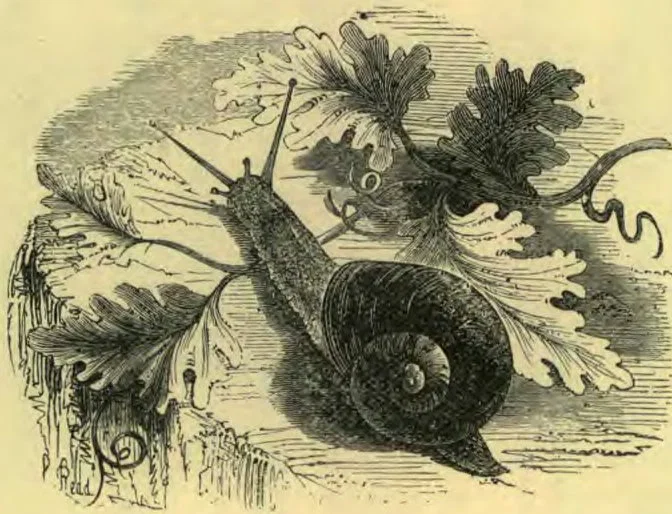
SOME animals live in very queer homes. The snail always carries his house around with him on his back. When he is frightened, he curls all up in his house of shell, so that you could hardly tell whether there was any live thing in there or not. All of you have no doubt seen the common garden snail crawling along the walks on a wet morning, after a breakfast of some tender vegetables or choice fruit. He knows very well which fruits are the ripest and best, and is sure to make his meals out of them.
He is a queer-looking animal. At the top of his head are two long, sensitive horns, or tentacles, as they are called, that he uses for feelers. At the end of these horns are two black points, that many people think are eyes. But the snail’s eyesight cannot be very good, for he does not in the least mind going from the dark into a bright light; and when he travels in the night, he does not turn aside for anything that lies in his way. He doesn’t seem to hear very well either, for he never draws into his shell unless the noise is so close as to move the air around him.
In the ocean there is a very curious snail called the violet snail, because its shell is a violet-blue color.
It lives on the surface of the water. It has no power to steer itself where it wants to go, and cannot even sink when in danger. How do you suppose it keeps on top of the water? Let us see.
At the foot of the animal is a sort of raft, made of a large number of little sacs. These sacs are filled with air, and thus form a life-preserver for the snail. But this raft is not very strongly fastened on; so in a hard storm the snail sometimes loses his preserver, and goes to the bottom, where he dies. This raft is of a delicate white color, and looks very beautiful floating along with a violet-blue shell.
One man, who was watching these snails to learn all he could about them, pierced the bodies of some of them, and there flowed out of each one three or four drops of a very blue liquid. He used it for ink, and wrote several pages in his journal with it. He found at the end of five years that the writing was just as bright and plain as it was when he first wrote it. He tried to keep some of this natural ink in a bottle, but in a little while it faded out.
Is it not wonderful to what strange uses even a snail may be put? W. E. L.

WORDS OF GOOD CHEER.

We are daily in receipt of letters from canvassers for the INSTRUCTOR, and we report progress; the good work is advancing. This makes glad our hearts, as it will yours also; but a much greater effort should be made than has ever yet been done to introduce the paper to the many who have never seen its pages. What better opportunity can those who are restless for missionary work ask for? and what better inducement will ever be held out to those who are working for a prize than we offer in our Prize List? Examine our Prize List again, and be sure to examine once more the Record for the reward of the faithful missionary worker. M. J. C.

THE HAT-BOY.

The power of location and connection may be naturally very marked in some people; but in the matter of memory, this power can be developed to a surprising degree by habit and use, and one can educate himself to it by acute observation. In employments where its use is much required, it becomes almost a special attribute of mind. A striking example is here given, from a New York paper, of what is called “the hat-boy faculty”:—
“There is a special line of work required from hotel employees, which needs the exercise of extraordinary powers of memory. The ‘hat-boy’ who succeeds in the metropolitan hotel in filling his place acceptably is sure of a berth for life. In all large hotels of the city, the hats of the guests are likely to be left in a room adjoining the dining-room, and they are left in charge of the hat-boy.
“Perhaps the most remarkable of all the hat-boys in New York is a little man who has charge of the hats of the guests of the Fifth Avenue Hotel. He is small and wiry, and seldom seems to take his eyes from the racks which line the ante-room on either side.
“When he takes a visitor’s hat, he glances at his face carelessly, and puts the hat on one of the several racks. When the man comes out of the dining-room an hour or two later, the boy picks out his hat without a moment’s hesitation, and hands it to him. Often he has from three to four hundred hats on his racks at one time, and in the course of six years he has never been known to make a mistake. The hats look very much alike, and it is a mystery to the majority of diners how he remembers their faces and their hats at the same time.
“The attendant was asked, a night or two ago, how it was that his memory served him in so many cases, and he said,—
“‘I don’t know. It seems to come natural.’”
“‘Do you pick out some particular feature on the wearer’s face by which you fix him in your memory?’”
“‘Oh no; that would never do. I remember the face itself. I look along the rack, and I seem to see the face that fits every hat, and when a man comes out, I go to the hat that is associated with his face naturally. It doesn’t make any difference whether the man has his hat on when he comes in or not. He hands it to me, and I look at his face, and somehow I cannot forget it. The gentlemen of the house often try to fool me, but they have never succeeded in catching me in a blunder. For instance, sometimes two of them will come in looking somewhat alike, and wearing hats that are exactly the same pattern. One of them hands me the two hats. When they come out, I give each his hat separately. I never give the wrong hat to the wrong man, although I had no positive proof which man owns the particular hat.’”—Youth’s Companion.

A CLOCK MADE OF BREAD.

Milan has a curiosity in a clock which is made entirely of bread. The maker is a Brahmin, a native of India, and he has devoted three years of his time to the construction of this curiosity. He was very poor, and being without means to purchase the necessary metal, deprived himself regularly of his daily bread, which he devoted to the construction of his curiosity, eating the crust and saving the soft part for doing his work. He made use of a certain salt to solidify his material, and when the various pieces were dry, they were perfectly hard and insoluble in water. The clock is of respectable size, and goes well. The case, which is of hardened bread, displays great talent in design and execution.

BE POLITE.

HEARTS, like doors, will ope with ease To very, very little keys; But don't forget the two are these: “I thank you sir,” and “If you please.”
Be polite, boys; don't forget it, In your wandering day by day, When you work and when you study, In your home and at your play.
Be polite, boys, to each other— Do not quickly take offense, Curb your temper—you'll be thankful For this habit seasons hence.
Be respectful to the aged, And this one thing bear in mind; Never taunt the wretched outcast, Be he helpless, lame, or blind.
Be polite, boys, to your parents, Never let them fail to hear From their sons the best of language In the home you should hold dear.
To your brothers and your sisters Speak in accents kind and true; Be polite, ’twill serve you better Than a princely gift can do. —N. Y. Ledger.

Letter Budget.

MARTHA REES writes from Woodbine, Iowa. She says: “I am thirteen years old. I keep the Sabbath; but as there are no Sabbath-keepers near here, I do not have any Sabbath-school to go to. I am living with my aunt. She does not keep the Sabbath, but I hope she will some day. I want to meet the INSTRUCTOR family in the kingdom.”
CLARA B. ANDRE, of Mechanicsville, Iowa, writes: “As I have never seen a letter in the INSTRUCTOR from this place, I thought I would write one. I am nine years old. I go to Sabbath-school, but do not have far to go, as the Adventist church, the Methodist church, and the school-house are all on our farm. I learn lessons in Book No. 3. Mamma is my teacher. My cousin, Ida Andre, is in my class. I have a little brother who will be four years old in January. His name is Charlie. He calls me Sissy. I wrote for the INSTRUCTOR once before, but I did not see my letter in print. I did not see any letter in the paper this time, so I thought perhaps you would print mine, if I would write one. It may be that cousin Ida will write next time. I send my love to all the INSTRUCTOR family.”

You have reached the end of this edition.

The Youth’s Instructor · Feb 27, 1884