Sin Does Not Overthrow the Original Design—A Great Promise to the Hero of Faith—He Is Heir of the Whole World
IN the wondrous draft of creation, it was agreed that man should not only be formed after the likeness of his Creator, but he was also to have sovereign authority over the earth and all its living issue. Gen. 1:26. But when one considers that the creation of the world and its equipment was not only accomplished by the Lord Christ, but was especially designed for His direction and control (Col. 1:16), he readily concludes that man's original tenure of earth's dominion was simply the trusteeship of a divine holding, to be administered by him only so long as he maintained the mind likeness of his Creator and Benefactor. Gen. 2:17.
So when the man's mind was given to the service of Christ's enemy, he was at once removed from his Paradise garden, to become an alien from Christ, and an outcast from his intended inheritance. By compassing the brain thralldom of the divinely constituted trustee of earth's dominion, the wily captor was enabled to lead the world's thought against the rightful owner of all created things, and so to bring the world under his own full control. 2 Peter 2:19.
INSTRUCTED TO MEET THE CRISIS
So far, indeed, did this matter carry, that within a few generations every imagination of the world thought was continuously evil. Gen. 6:5. Had this extreme condition been permitted to extend indefinitely, no representative of Christ's earthly ownership would have been in evidence, for even then but a single family of earth's offspring was seen to be righteous before God. Gen. 7:1. Noah, the head of this household, gladly received divine instruction in the awful crisis, for the salvation of his kindred. Thus he condemned the world's wickedness, and became "heir of righteousness by faith," which was really to be recognized as being in the image of God through entire belief in the divine word. Heb. 11:7.
The same commission confided to Adam was thus entrusted to Noah. The Flood having swept the earth of its wickedness, Noah became, in Adam's stead, the great father of the human race. Gen. 9:1. The everlasting covenant, before confirmed to Adam, was there renewed to Noah. Verses 9-17. But in process of time, the trend of human thought was once more depraved; and though God could not violate the word of His covenant with Noah, not to destroy again the world, yet He did operate a plan by which to establish a permanent earthly father, not of the entire world, but of all God's faithful ones. Rom. 4:1, 11. The one chosen for this important place was separated from the world, and from his own family, to be settled in a country apart from the superstition of the nations, where might be developed a people devoted to the worship of the true God.
MADE RIGHTEOUS BY FAITH
It is perhaps well to consider here why Abraham was so highly exalted. It is readily gathered, from the last Scripture reference, that the patriarch was not to be simply father of circumcised Jews, but of all who believe, even though not circumcised. Abraham's circumcision was solely for a seal of the righteousness of his faith before he was circumcised. His was a complete "righteousness by faith," as much so as is possible for any of the present generation. It was this, and this only, that gave him the appointment of "father of the faithful."
Then, too, Abraham's righteousness by faith comprehended salvation through a risen Christ, just as clearly as does the advanced Christian faith of to-day. More than this, the patriarch rejoiced in the possession of that faith so strongly that his case was thought worthy of special mention by the world's Saviour. Discoursing of His earthly sojourn to the proud Jews, He said, "Your father Abraham rejoiced to see My day; and he saw it, and was glad." John 8:56.
Passing to the record of Abraham's reception of the gospel by faith, one finds it coming to him in these words of God: "I will establish My covenant between Me and thee and thy seed after thee in their generations for an everlasting covenant, to be a God unto thee, and to thy seed after thee. And I will give unto thee, and to thy seed after thee, . . . the land of Canaan, for an everlasting possession." Gen. 17:7, 8.
TO LAST FOREVER
It will be advantageous, in this consideration, to remember that this covenant renewed to Abraham was one of everlasting continuance. It also included the gift of earthly territory, as did former arrangements with Adam and Noah. True, this promise mentions specifically the land of Canaan, the beloved country of the patriarch, and the only one included in his geographical knowledge; but an inspired comment on this promise makes it the gift of the whole world to the seed of Abraham. Rom. 4:13. This "everlasting" gift was, and is, to be bestowed by the terms of God's everlasting covenant, made sure by the oath of the Eternal. Heb. 6:13-18.
THE PROMISE WAS IN CHRIST
But how did Abraham see Christ in all this? The apostle has made this plain by saying: "Now to Abraham and his seed were the promises made. He saith not, And to seeds, as of many; but as of one, And to thy seed, which is Christ." Gal. 3:16. Then follows the statement that this covenant was confirmed by God, in Christ. It was this fact that gave the promise everlasting verity.
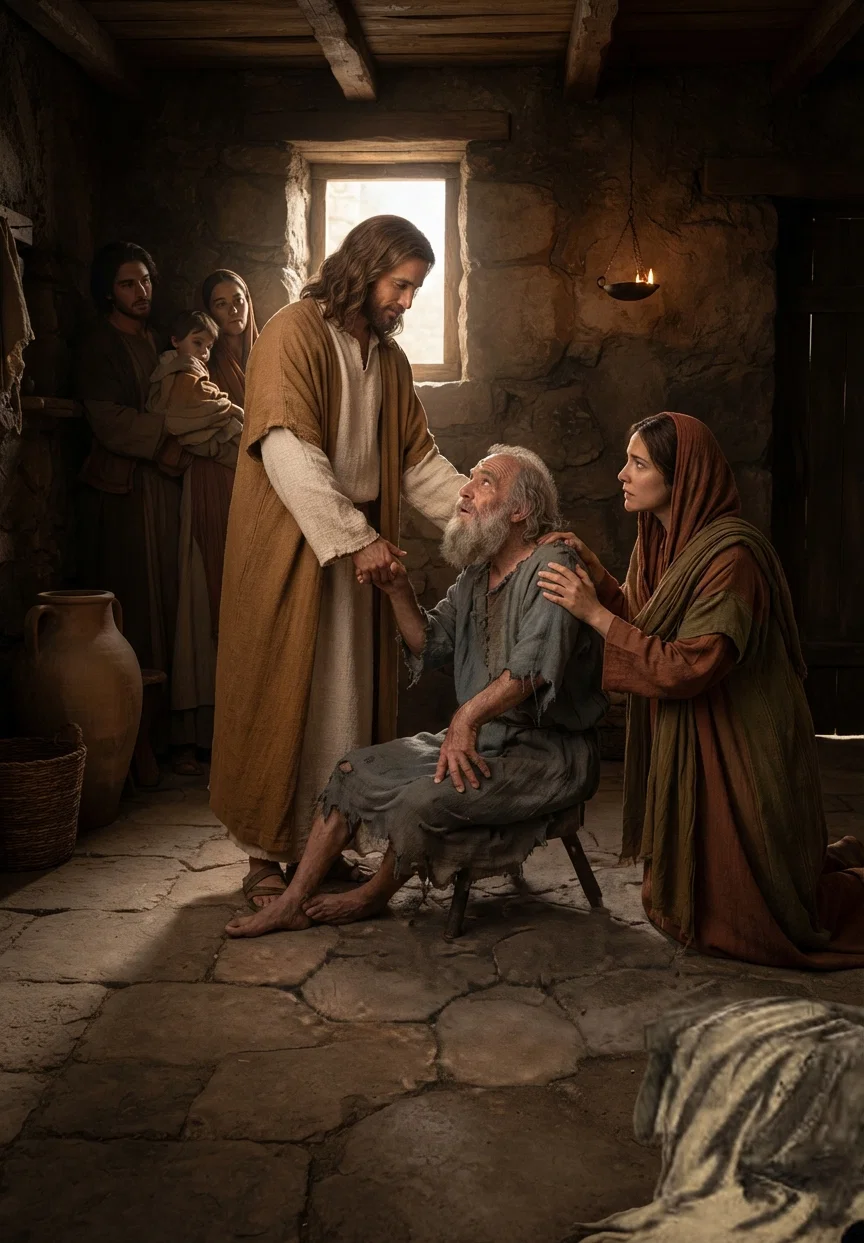
Why should not the gift of the world come to the faithful in Christ? The world is His by virtue of creative action, and was bestowed on the first man made in His own likeness. Its dominion having been lost through sin, it must follow that as He came to earth to redeem that which was lost (Luke 19:10), His salvation will not only restore the image of God in man, but return to him his first possession. J. O. C.
THE FATE OF THE IMPENITENT WICKED
By George B. Thompson
Can the Story of Endless Misery Be True? — Can the God of Love Be a Demon of Tyranny? — The Final End of the Lost
"Then shall He say also unto them on the left hand, Depart from Me, ye cursed, into everlasting fire, prepared for the devil and his angels. . . . And these shall go away into everlasting punishment; but the righteous into life eternal." Matt. 25: 41, 46.
IN the words "everlasting punishment," those who believe in the eternal pain and suffering of the damned claim to find proof of that doctrine. Here, they say, is evidence that through numberless millions of ages, the lost will be pierced with the remorseless tooth of conscience, and tormented in the perpetual fire of God's vengeance, miraculously preserved to endure the tortures of the avenging flames. The horrors of this orthodox belief have been expressed by the poet in the following language:
"Infinite years in torment shall I spend,
And never, never have an end.
Ah! Must I live in torturing despair
As many years as atoms in the air?
When these are past, as many millions more
As grains of sand that bound the ebbing shore?
When these run out, as many more behind
As leaf of forest shaken by the wind?
When these are spent, as many more to flow
As blades of grass on hills and dales that grow?
When these run out, as many on the march
As starry lamps that gild the spangled arch?
When these are gone, as many millions more
As every moment in the ages before?
When all these doleful years are spent in pain,
And multiplied by myriads yet again,
I must in that fierce gulf in misery lie,
And madly writhe to all eternity."
A million years for every mote that dances in the sunbeam, a million years for every grain of sand, a million years for every11leaf of the forest and for every blade of grass, a million years for every star in the firmament, a million years for every tick of the watch since time began its flight, then this infinite multiplicand multiplied by a myriad! Then when all these years of torture are past, an eternity of unspeakable suffering still stretches before lost souls in which to curse and blaspheme God! Talk about a gloomy doctrine! Behold it here! This is indeed a terrible dogma to teach, built upon the adjective "everlasting."
But you say the above is only poetry. Very true, but the words of the poet are true, provided man by nature has an immortal, indestructible soul, and the lost are conscious in death, and enter on their reward in the lake of fire when this life ends.
There is no language available which could adequately describe such a monstrous belief. It clothes the God of love with the most awful attributes.
The teaching of the text under consideration leads to no such shocking conclusion. We read of "eternal judgment" (Heb. 6: 2) and "eternal redemption" (Heb. 9: 12). "Eternal judgment" is not an everlasting judging, but the eternal effect of a judgment. "Eternal redemption" is not everlasting redeeming, but an eternal effect of an act of redemption. Likewise with "everlasting punishment." It is not everlasting punishing, but the eternal effect of an act of punishment.
The question is made quite clear when, instead of taking for granted some tenet of modern belief, handed down to us from the remote past, we look into the Bible, and find out what it really teaches on the subject. So we inquire, What is the punishment of the wicked? The righteous receive eternal life. The wicked receive everlasting punishment. Is their portion life also? — No, indeed. "For the wages of sin is death; but the gift of God is eternal life through Jesus Christ our Lord." Rom. 6: 23. The punishment for sin, then, is death, not life in misery. Hence when those on the "left hand," who have refused the "gift of God," or eternal life, receive the reward for their deeds, they will go away into eternal death,—a death from which there will be no deliverance through a resurrection. All, both righteous and wicked, die the first death. The wicked will die the second death. They will be dead forever, while the righteous will live forever. This is the teaching of the Scriptures throughout.
Our hope of life is not in inherent immortality, but in Christ, who came that we might have life abundantly. John 10: 10. In Him is our hope. By faith in the Son of God, who died that we might have life, we can lay hold upon this inestimable gift, and live with the pure and holy through eternal ages.
G. B. T.
WE can not answer repeatedly in the same volume questions upon the same scripture. The name and address must accompany question. It is well always to enclose stamp for reply.
Verse 46 reads: "And why call ye Me, Lord, Lord, and do not the things which I say?" The repetition of the title "Lord" denoted their zeal in according lip service to Christ. Our Lord claims and expects this recognition from all His disciples, as in John 13: 13,—"Ye call Me Master and Lord; and ye say well; for so I am"; but if they recognize Him as their Lord and Master, why do they not obey His commandments?
Verse 49: "But he that heareth, and doeth not, is like a man that without a foundation built an house upon the earth; against which the stream did beat vehemently, and immediately it fell; and the ruin of that house was great."
Compare with the parallel scripture in Matt. 7: 26, of the man who built his house on the sand, denoting a loose foundation,—that of an empty profession and mere external services. Christ used this figure because it was an experience with which the people were familiar,—the fierce Eastern tempests, and the suddenness and completeness with which they sweep everything unsteady before them. Those whose faith is not established upon a firm foundation,—a thorough knowledge of the word of God, and obedience to His commandments,—will be overcome when the tempests of doubt and unbelief assail them.
4249—EXTREMES IN DIET
A lady in this neighborhood says, "God wants us to be healthy, but unless we obey Him we won't be." She says in Gen. 1: 11, 12, 29 we have what He gave Adam and Eve to eat,—the herb and fruit yielding seed in itself, like the tomato, grape, peach, apple, and olive, but not such as potatoes, cabbage, lettuce, navel oranges, pineapples, and the like, because they do not bear seed in themselves. Is she right, or is she fanatical?
There are a great many people who seem to be given to very questionable extremes, and many of the worst of these extremists like to place a religious sanctity about what they are doing, and frequently quote Scripture very fluently; and if a person does not know the Bible for himself, he may think that the Scriptures actually teach such things.
The dietary of man was modified after he sinned. The scriptures to which the woman refers applied to man in his sinless condition in the Garden of Eden; but after man had sinned, the Lord said to him, "Cursed is the ground for thy sake; in sorrow shalt thou eat of it all the days of thy life; thorns also and thistles shall it bring forth to thee; and thou shalt eat the herb of the field." Gen. 3: 17, 18. And again, we have this text: "He causeth the grass to grow for the cattle, and herb for the service of man: that he may bring forth food out of the earth." Not only these scriptures, but our experience, shows that there are many herbs in the vegetable kingdom that are not only very proper foods, but very valuable foods; and among this class there is none any more valuable than the lettuce, which the woman seems to think is forbidden by Scripture.
One of the most unfortunate things that a person can do is to fail to weigh all sides of a question. Such persons frequently have a partial truth. And the great science of sin is the commingling of good and evil in such a way as to make some of the evil appear as good.
4250—TYPICAL SERVICE OF THE OLD DISPENSATION
Where in the Scriptures have we any evidence that the Israelites might understand that their sacrifices were typical, and not real? I can't find a hint anywhere that even Moses knew they were typical.
Read carefully the eighth, ninth, and tenth chapters of Hebrews; also Col. 2: 16, 17. Paul understood that the meats, the drinks, the typical sabbaths, and the new moons of the old dispensation were "a shadow of things to come," and that the body was of Christ. In those chapters in Hebrews we are informed that the ministrations of the sanctuary on earth served only as a shadow of the things in heaven, but Christ Himself was the High Priest who is set forth as the real substance of the "good things to come." Verse 8 of Hebrews 9 would seem to indicate that they did not have the full light of the gospel significance of those ceremonies, that we enjoy in this dispensation.
After receiving instruction in regard to building the earthly or typical sanctuary, which was the center of service in the old dispensation, Moses was told to "look that thou make them after their pattern, which was showed thee in the mount." Ex. 25: 40. These texts seem to make it quite clear that the Israelites understood that their service had a great deal in it which was typical and shadowy, and that it pointed to the real substance of the Redeemer Himself, who was to be revealed in due time. The prophet Simeon was looking for Christ to be revealed in His first advent, as will be seen by Luke 2: 25 and onward. And Anna the prophetess "spake of Him [the infant Christ] to all them that looked for redemption in Jerusalem." Luke 2: 38. Those who were really spiritually minded and following the Bible teaching were definitely looking for Christ in His first advent. The prophecies taught them this, and an understanding of those prophecies was very closely interwoven with all the teaching of the service of the sanctuary. It was when David went into the sanctuary that he understood the end of the wicked. Ps. 73: 17. And other texts, like Ps. 20: 2; 63: 2; 68: 24, would indicate that there was special enlightenment in the sanctuary service itself during the old dispensation.
SYSTEMATIC BIBLE STUDY
"TAKE heed that no man deceive you," are the ringing words of the Master; and He adds, "Many shall come in My name, saying, I am Christ; and shall deceive many." See Matt. 24: 4, 5. His prophetic announcement is that many will be deceived, but His warning to "take heed" is for the purpose of avoiding the deception.
The arch-deceiver, who is the embodiment of all that is known of the arts and crafts of fraud and delusion, did his best to deceive and overthrow the Master. The record of the mighty struggle may be read in the fourth chapter of Matthew. The Master's invariable defense was the written Word.
The Old Testament Scriptures contain 929 chapters, and the New Testament 260, or a total of 1,189. A simple problem in mathematics shows us that if we read three chapters regularly each week-day and five chapters on the Sabbath, we will finish the Bible within the year. Every lover of the Bible, and every one who can be induced to love its sacred teaching, should set before himself the pleasure of reading entire this great Book at least once during each year. How many will try it during this year 1914?
SUGGESTED PLAN OF READING
For the month of January, read one chapter a day in Genesis during the week-days and two on the Sabbath; read one psalm each day in the week; read one chapter in Matthew each week-day and two on the Sabbath. If you have not started this systematic study with the first day of the year, seize a little time for extra reading until you catch up with the schedule.
SUGGESTED HELPS
The first part of the book of Genesis is the divinely sublime record of creation. Science falsely so called has attempted to overthrow this record. "The Fundamentals of Geology," by Price, is a splendid help in the study of this part of the great Book. "Patriarchs and Prophets" is also one of the best of helps in the study of the entire book of Genesis. For helps in the study of the four Gospels, Matthew, Mark, Luke, and John, no better book can be found than "The Desire of Ages."
A Miracle of Healing
By George Thomason
Sick in Body and Violently Insane—Restored to Normal
Health in Answer to Prayer
By GEORGE THOMASON
GEORGE THOMASON, M.D., is a regular medical practitioner of a wide range of successful experience. In connection with his general practise, he is a specialist in surgery, performing some of the most difficult operations known to the profession. His accomplishments as a scientific physician are embellished and strengthened by his experience as a Christian gentleman. He firmly believes that it is his duty as well as his exalted privilege to bring into all his work the guiding Spirit of the living Christ. He makes it a practise to have a season of prayer with his attendants before going into the operating room.
His account herewith of the manifest miracle of God in healing the sick woman is not the production of an ignorant fanatic, but it is the writing of one who is recognized by his medical brotherhood as a skilful, scientific doctor of medicine. He is at present the medical superintendent of the large sanitarium at St. Helena, California.
From "Ministry of Healing"
"This is the confidence that we have in
Him, that, if we ask anything according
to His will, He heareth us."
JESUS, in His wonderful prayer, said of His disciples, "As Thou hast sent Me into the world, even so have I also sent them into the world." And involved in this great commission was the doing of the things which Christ did, and greater than He did, according to His word. How fully the disciples fulfilled their mission is a matter of inspired record in the Acts of the Apostles.
Continuing His prayer, Jesus said, "Neither pray I for these alone." Disciples for all time were graciously and solicitously included in that prayer. And just as the achievements and accomplishments of the early disciples make up the Acts of the Apostles, it was evident the great Master designed that there should be, during all time, a supplementary Acts of the Apostles, and that to-day He wants a twentieth century edition of the Acts of the Apostles. And just as the early disciples were to do the works of Christ, and greater, just so should present-day disciples be able to accomplish greater things for God through following the path that has grown brighter and brighter to a more perfect day, and because of a fuller revelation of the "many things" that Jesus could not say to the early disciples because they could not bear them.
As one of the "things" that would be accomplished through the promise of Jesus, the following experience is made a matter of record to the glory of God and the encouragement of those who may read it.
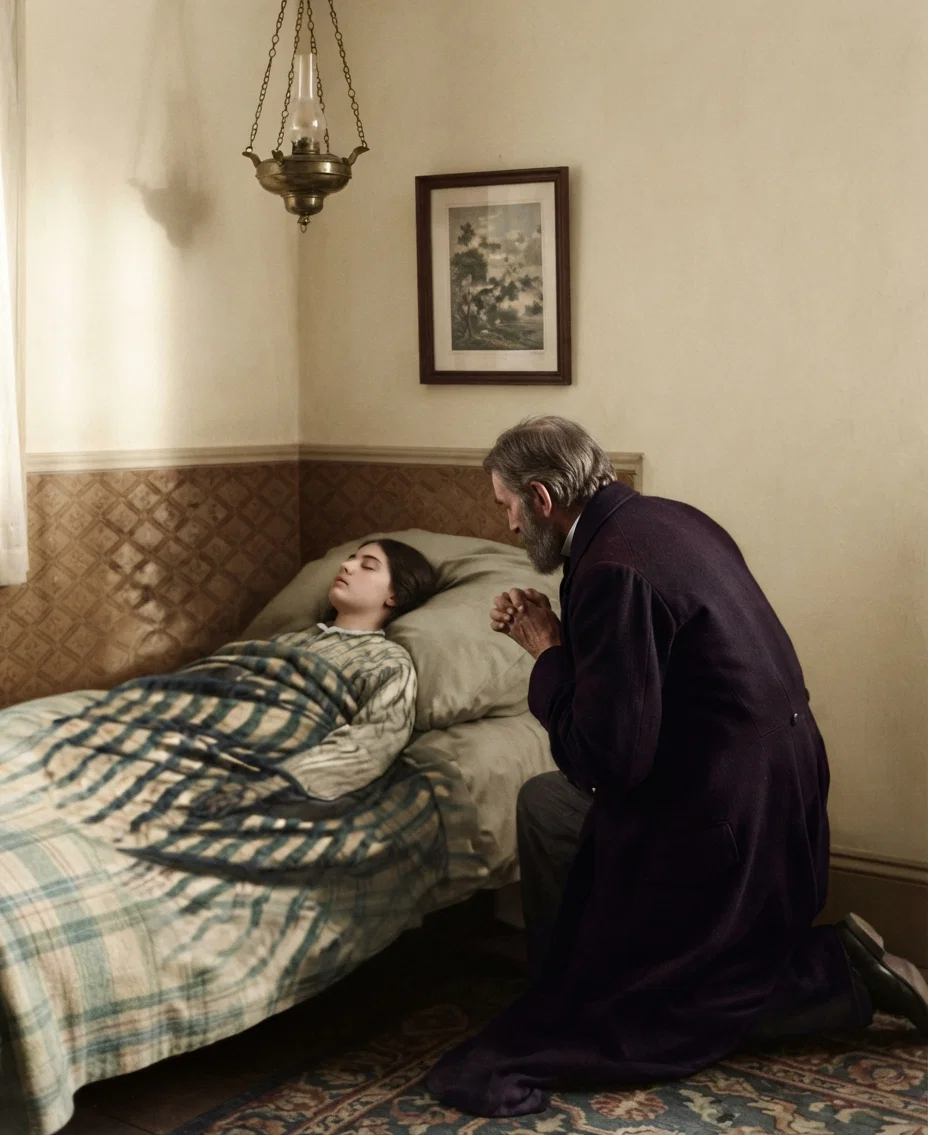
Some months ago the writer, on his way to his city office, reading the morning paper, noticed an announcement of the return of a missionary from a far Eastern field. After more than twenty years of service in China, with terrible personal experiences during the Boxer uprising, and, more recently, the revolution, this lady was brought, with her family, to this country. Her body was weak and emaciated, and her mind completely shattered. She was at times very violent, seeking to injure members of her family and attempting to end her own life. This was outlined in the paper the morning following the arrival of the company in San Francisco.
Upon reading the item, in just a passing thought, it was hoped that this patient might in some way be brought to the St. Helena Sanitarium for treatment. On arriving at his office, the writer found some gentlemen waiting; and before they uttered a word, the impression was felt that they had come in behalf of the returned missionary. This proved true, and arrangements were soon made for her removal to the sanitarium.
As the weeks went by, proper treatments were administered and many earnest prayers were offered, but the patient seemed to grow worse rather than better. The husband, a devoted man of God, prayed with "strong crying and tears" for the restoration of his wife; but as he said, the more he prayed, the worse the patient became, until it seemed that the stability of his faith was involved in the matter.
In the evening of a day of special violence on the part of the patient, the matter was presented to the family of nurses, and they were requested to make this case one of special prayer at their regular class prayer-meetings. The writer went to his room, and opened his Bible at a venture, hoping for a special promise before kneeling in prayer. The first words upon which the eye rested, were these: "And this is the confidence that we have in Him, that, if we ask anything according to His will, He heareth us: and if we know that He hear us, whatsoever we ask, we know that we have the petitions that we desired of Him." That promise was spread before the Lord, and earnest prayer offered for the restoration of the patient to mental and physical health.
On waking, the first thought in the morning was of the experience of the company who were praying for the release of Peter from prison, and their evident surprise at the answering of their prayer, and we wondered if that would be our experience that day. Immediately upon dressing, the first person to be seen was the nurse of our patient, who came running and saying, "Doctor, my patient wants to know if she can not go to her family."
The family were in a cottage over the hill, and hitherto not one of them could be brought near the patient, as it made her very violent. Then we knew that our prayers had been heard and answered.
The doing of the things which Christ did
The patient was taken to her family. It was a most touching scene. The wife and mother fondly embraced her husband and children, and with great joy and rejoicing they said to the nurse, "Leave us for the day, a happy, reunited family."
From that very hour the patient was healed. And such a prayer of gratitude as was poured out to God by that husband, it has seldom been my privilege to hear. A number of letters since received, state that the blessing remains with them, and the husband says that when he preaches, as he sees the face of his wife looking up at him, it seems to bring the greatest possible inspiration into his sermons.
"He that believeth on the Son of God hath the witness in himself." Such experiences confirm within one a faith in the Lord Jesus Christ which principalities nor powers, nor things present nor things to come, can ever shake. "Now thanks be unto God, which always causeth us to triumph in Christ, and maketh manifest the savor of His knowledge by us in every place."
Silence
By Jean N. Grou
THERE is another kind of silence to be cul-tivated, besides that of the tongue as regards others. I mean silence as regards oneself—restraining the imagination, not permitting it to dwell overmuch on what we have heard or said, not indulging in the phantasmagoria of picture-thoughts, whether of the past or fu-ture. Be sure that you have made no small progress in the spiritual life, when you can control your imagination so as to fix it on13the duty and occupation actually existing, to the exclusion of the crowd of thoughts which are perpetually sweeping across the mind. No doubt you can not prevent those thoughts from arising, but you can prevent yourself from dwelling on them. You can put them aside. You can check the self-complacency, or irritation, or earthly longings which feed them. And by the practise of such control of your thoughts, you will attain that spirit of inward silence which draws the soul into a close intercourse with God.—Jean N. Grou.
Best Foods for Body Building and Work
By G. B. Starr
FORTUNATELY for the bulk of mankind, the foods most essential to sustain life at its best and most efficient working point, are the most abundant and consequently the cheapest in the world's market everywhere.
The Creator has evidently arranged matters just this way so as to provide for the table of His great family of common folk, who form the bulk of the world's population and who do the bulk of the world's work.
Wheat, oats, corn, rye, barley, rice, peas, beans, lentils, potatoes, eggs, and milk, together with apples, prunes, peaches, pears, grapes, and bananas, with an abundance of pure water, are among the staples for keeping the human machine supplied daily at the working point of good health.
Fortunate also is it that roast beef, rich pastry, tea and coffee, and ice-cream and cake, are no more essential to man than they are to his faithful horse, his companion in work, which builds up such fine muscle, blood, and nerve power on oats, hay, and water, and keeps so well on them.
Wheat, oats, and corn, and the other grains mentioned above, contain over 80 parts of nourishment to the 100 parts, with no clinkers and ash in the waste; while the best lean beef and mutton contain only 28 parts to the 100 parts, and contain 72 parts of clinker and ash, in the form of uric acid, carbon, broken-down tissue, etc., which overtax the kidneys and the liver. The human family mistakes stimulation for strength. Flesh foods and tea and coffee are stimulating because of the body irritants they contain.
The true food supply for man and bird and beast grows standing still in the earth. Its function is to store energy. The function of man and beast is to consume this stored energy.
The best-natured and most useful of animals live upon the products of the earth. So the most robust and best-disposed among men are practically vegetarians. The peasantry of all nations — English, Scotch, Irish, Norwegian, Russian, Turk, Indian, Japanese, and Chinese — all of whom eat very little flesh food, are doing the world's hard work.
Lord Playfair says, "Animal diet is not essential to man."
Dr. Alex Haig, in his famous work on "Uric Acid," writes: "That it is easily possible to sustain life on the products of the vegetable kingdom needs no demonstration for physiologists, even if a majority of the human race were not constantly engaged in demonstrating it; and my researches show not only that it is possible, but that it is infinitely preferable in every way, and produces superior powers both of mind and body."
Dr. Oldfield writes: "To-day there is the scientific fact assured that man belongs not to the flesh eaters but to the fruit eaters. To-day there is the fact in the hands of all, which none can gainsay, that the products of the vegetable kingdom contain all that is necessary for the fullest sustenance of human life."
G. B. STARR.
Courtesy at Home
By W. J. Buch.
TRUE courtesy in the home means more, and more clearly reveals the real character of an individual, than most persons realize. We should exercise Christian courtesy to one another in the home,— father and mother to each other, parents to their children, and children to their parents, and employers to their employees. How often is this neglected! As soon as one enters the14home, he receives an impression as to whether or not peace reigns there.
The home is the most sacred place on earth, and such love should prevail as to bind the hearts of all members of the family in the bond of peace and fellowship.
We need to be sociable with the poor, the forsaken, and the orphans,— those who have no homes, and scarcely enough to eat. Let us invite them to our homes and entertain them, and endeavor to make them happy. Surely the blessing will be greater than when we invite those who have an abundance to provide for their own needs.
We are sometimes inclined to be cross and selfish at home, and pleasant when among strangers. Let us be careful to live as Christians in our homes first, and then our sympathy and friendship and charity will go out for good to every one, no matter who or where they may be, at home or abroad.
W. J. BUCH.
Messages of Hope
By Editor
UNMISTAKABLY the signs of Christ’s coming as outlined in His own words found in Matthew 24, and recorded in Luke and elsewhere in the New Testament, are multiplying. There is joy and hope for those who will thus be led to a careful study of the Word. The following series of beautiful Bible study pamphlets take up subjects of vital interest in a clear, easy way, to assist in personal study, and to use in interesting others in the Scripture. Every Christian should be supplied with these.
Ask for New Booklet
By Editor
“All Can Use Tracts”
In looking over this list, consider friends and relatives who would be pleased to receive these brief studies. The pamphlets contain a few more than one hundred pages each, and are nicely printed and illustrated. Prices post-paid.
Order of your tract society or
Pacific Press Publishing Association
MOUNTAIN VIEW, CALIFORNIA
Portland, Oregon
Calgary, Alberta, Canada
Kansas City, Mo.
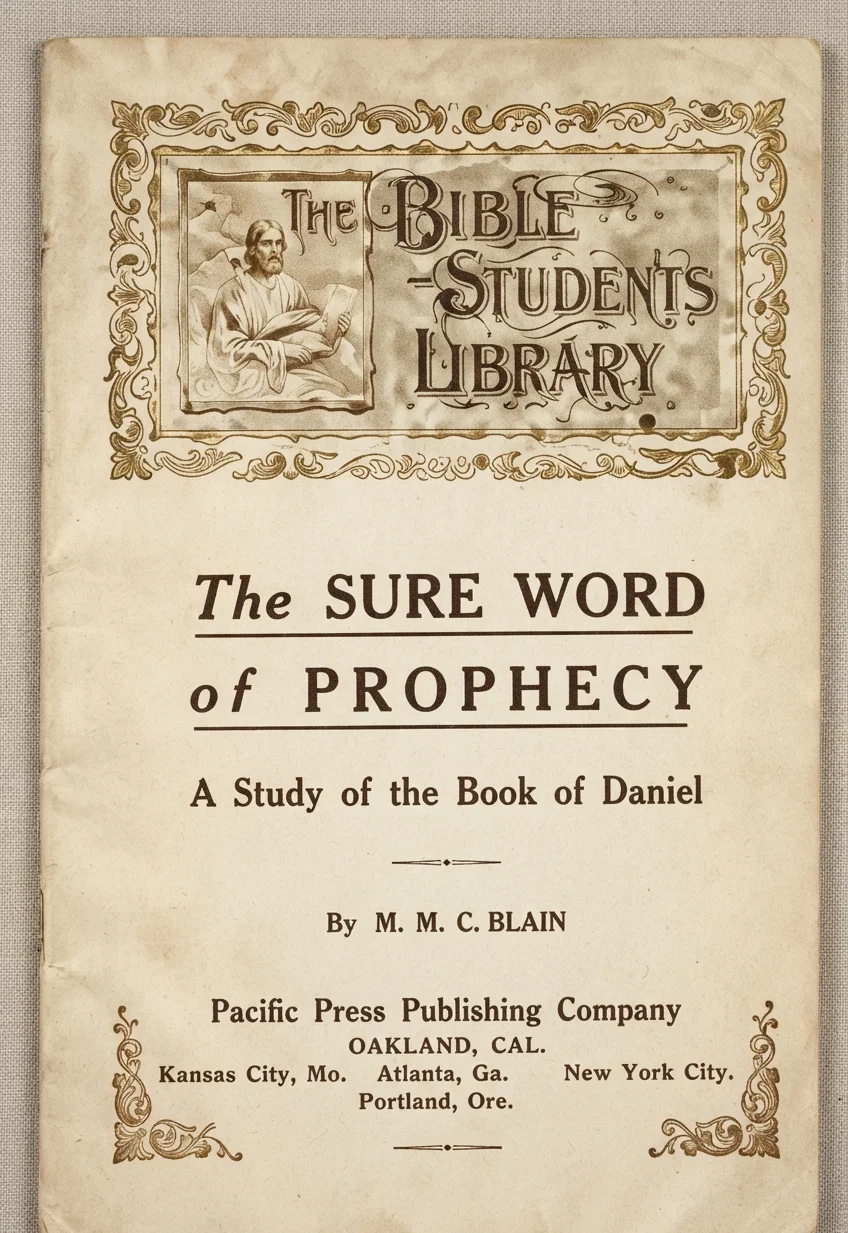
The Sure Word of Prophecy
Outlines chapter by chapter the book of Daniel, and refers especially to conditions at the “time of the end.” 10 cents.
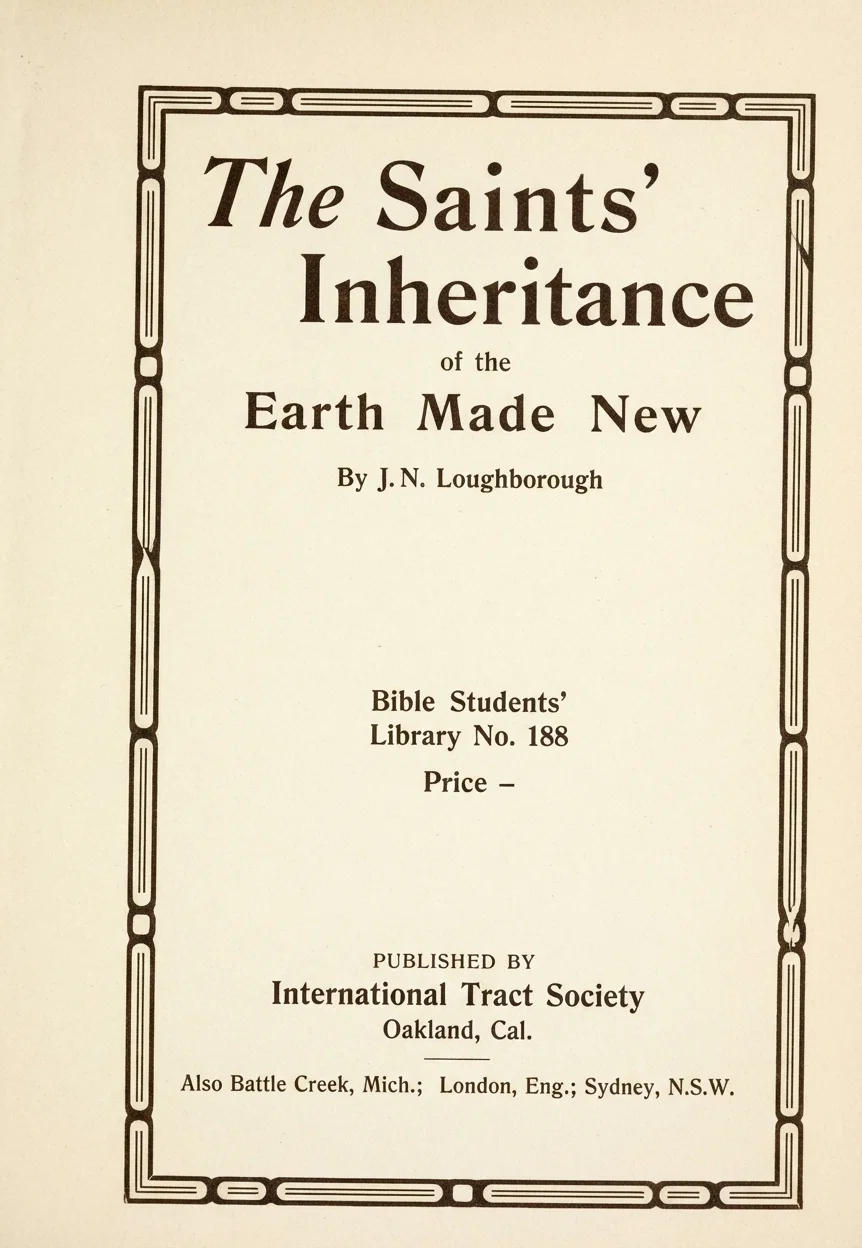
The Saints’ Inheritance
Beautifully describes the home of the saved, and tells how that home may be gained. 10 cents.
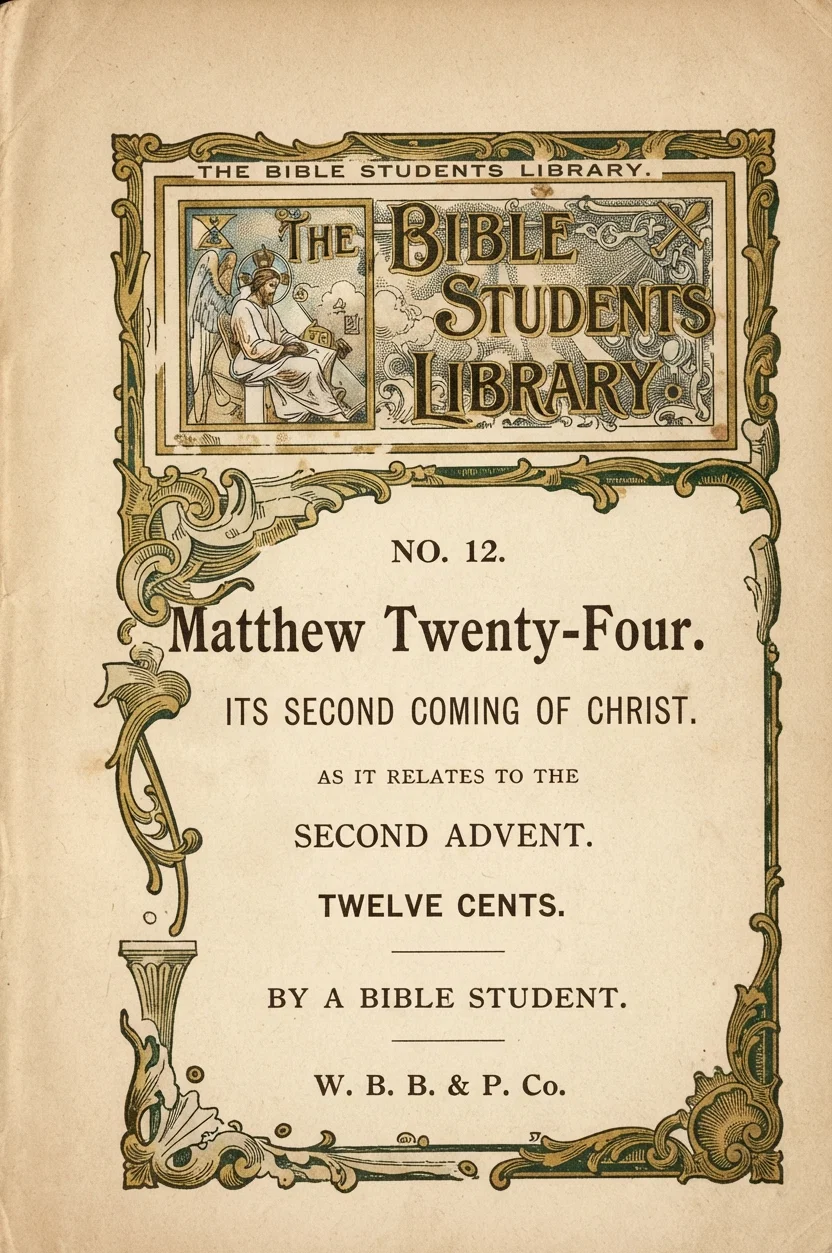
Matthew Twenty-Four
Connects the conditions of to-day with a verse-by-verse study of Christ’s prophecy. 10 cents.