How may we obtain this assistance for the life of to-day?
1. Not by seeking it for its own sake.
“The hill of Zion yields
A thousand sacred sweets,
Before we reach the heavenly fields,
Or walk the golden streets.”
But those who climb the hill for the sake of the “sacred sweets” will be disappointed. If any one desires the Holy Spirit only for the sake of the exaltedness of soul, or the comfort of the “divine afflatus,” he is on the wrong track. He is like a man who wants an armor and a sword for some other purpose than for battle. The name that is above every name is Jesus. Phil. 2:9. All desires and prayers must look toward being like Him, or telling of Him, or making His kingdom come. The Holy Spirit as a mere possession is not the “pearl of great price.” It is as an aid in Christian life and service that it must be sought.
2. By being familiar with the ideas and the ideals of the Christian life. This comes by reading much in the Bible; by association with Christian people; by avoiding unchristian companionships; and by keeping in a Christian atmosphere; but above all by having some definite Christian service to render which calls for help to do it.
3. By praying for the Holy Spirit, and expecting to have His help as an aid to the work we try to do, and the life we try to live.
4. By studying to distinguish the voice of the Spirit from the other voices that are heard in the soul. The one unfailing test is: The voice of the Spirit never urges to conduct or feeling which would be inharmonious with Jesus’ spirit or teaching.
5. By cultivating the habit of listening for the voice of the Spirit. Perhaps it will be better understood if I say cultivating a sensitiveness to the impressions of the Spirit, and a habit of quickly, hopefully, and faithfully acting on His suggestions. This is not easy to explain to the non-Christian man.7But I am writing for those who know something of the language of the Kingdom. Any one who tries this will be greatly delighted to find how soon this habit will develop into a sort of second nature. And how seldom he will have any reason to think he was misled! It is this which Paul calls being “led by the Spirit” (Gal. 5: 18). This will not make all ecstatic in their experience. Some will not be thus ever; it is not their nature to be so. But these suggestions, followed in faith, will make it true of all who do it that they will have the Holy Spirit in their life of to-day in such measure that they will live calmly, actively, patiently, usefully, led and helped by our great and heavenly Partner, the Holy Spirit.—Sunday School Times.
New York City
By Llewellyn A. Morrison
Worship.
By Llewellyn A. Morrison.
I SING the praises of the Lord
Who shelters and protects me;
I magnify the mighty word
Wherein His mind directs me:
Tho ills endure,
I walk secure
’Mid ramparts, that surroundeth,
For I do know
Where’er I go
His perfect care aboundeth.
To praise Him were a little thing
If words were all we brought Him,
A vagrant lisp might lightly sing
As if a soul had sought Him;
But when the heart,
From speech apart,
Thanksgivings fain would pour Him,
Ah! then the tongue
Hath quickly sung
The measures that adore Him.
We should not rush unheeding in,
Forgetting our unmeetness—
For lips like ours, befouled by sin,
Need sanctifying sweetness:
The precious blood
By Jesus shed,
Which doth our altar sprinkle—
This blood, I ween,
Doth wash us clean,
Without a spot or wrinkle.
We worship Him, the Lord of all,
Who reigns in light above us;
Low at His feet before Him fall,
He doth so truly love us;
For all the days
And all the ways,
Whose mercy faileth never,—
For ev’ry grace
And hope and peace,
We laud His name forever.
New York City
“He Will Come Again.”
[From a sermon preached in Portland, Me., by S. D. Ward, Congregational minister, June 22, 1842.]
THE sacred writers have taught us that Christ will come personally and visibly. They frequently allude to this second advent of our Lord as the day—the last day—the day of the Lord. The manner in which this coming of Christ is described, the circumstances which are connected with it, and the exhortations which are grounded upon it, are such as to make the application of it to any events which have yet occurred utterly absurd and preposterous. It is described as the time when all nations shall be gathered before the Son of Man, when the dead both small and great shall stand before God, when we must all appear before the Judgment-seat of Christ, when the wicked shall be severed from the just, and the destinies of each be fixed forever. But it is evident that none of these events occurred at the destruction of Jerusalem. All nations were not assembled, the dead were not raised, the final destinies of men were not decided on that memorable occasion.
The apostles speak of a second coming of Christ, in which all Christians had an equal interest. On the certainty of it they grounded their most urgent exhortations to watchfulness, to a faithful discharge of Christian duties, to constancy in enduring their persecutions, and to perseverance in the way of the Lord even to the end. But what connection had the Romans, the Corinthians, the Thessalonians, or any of the Gentile Christians with the destruction of Jerusalem? What had they either to hope or fear from that event? It is utterly unaccountable that the apostles should have exhorted Christians to steadfastness in their profession, and diligence in the duties of their holy calling, in order that they might be blameless in the day of the Lord, and not be ashamed before Him at His coming, if, by His coming, they meant nothing more than the vengeance which was poured out upon the Jewish people? The truth is, that this latter event was but a faint image of that more awful display of divine justice and power which our Lord and His apostles have described as the coming, — the day, — the appearing, of the Lord Jesus.
Hence, we conclude that the opinion which has prevailed in the Christian church in all ages, that the Son of Man will yet be seen descending from heaven, as visible to all the world, as He was to His disciples when He ascended to heaven, is an opinion founded on most certain warrants of Sacred Scripture, and is as firmly established as the authority of the inspired writers themselves.
Signs of His Coming—War Preparations.
1. When the Saviour foretold His second coming, what did He include among the signs of that event?
“Ye shall hear of wars and rumors of wars. . . . For nation shall rise against nation, and kingdom against kingdom.” Matt. 24: 6, 7.
2. What last-day condition did the prophet Joel describe?
“Proclaim ye this among the nations; prepare war; stir up the mighty men; let all the men of war draw near, let them come up. Beat your plowshares into swords, and your pruning-hooks into spears: let the weak say, I am strong.” Joel 3:10.
3. To how many is this said?
“Haste ye, and come, all ye nations round about, and gather yourselves together.” Joel 3:11.
4. When is this to be?
At the time when Jehovah will “sit to judge all the nations round about,” when “the harvest is ripe,” when “the day of Jehovah is near.” Joel 3:12-14. “The harvest is the end of the age.” Matt. 13: 39.
5. How did Jeremiah describe this time?
“My anguish, my anguish! I am pained at my very heart; my heart is disquieted in me; I can not hold my peace; because thou hast heard, O my soul, the sound of the trumpet, the alarm of war. Destruction upon destruction is cried; for the whole land is laid waste: suddenly are my tents destroyed, and my curtains in a moment. How long shall I see the standard, and hear the sound of the trumpet?” Jer. 4:19-21.
6. With what event is this associated?
This is just before the time when the earth is made “waste and void” at the coming of Christ, “broken down at the presence of Jehovah, and before His fierce anger.” Jer. 4: 23-26.
7. To what great war do all the preparations of war materials, battle-ships, and men lead?
“I saw coming out of the mouth of the dragon, and out of the mouth of the beast, and out of the mouth of the false prophet, three unclean spirits, as it were frogs: for they are spirits of demons, working signs; which go forth unto the kings of the whole world, to gather them together unto the war of the great day of God, the Almighty.” Rev. 16:13, 14.
8. As with the other prophecies noted, what event immediately follows this war?
“Behold I [Christ] come as a thief”—to those engaged in war. “Blessed is he that watcheth.” Rev. 16:15.
NOTE.— From these scriptures it is clearly evident that just before the second coming of Christ, the world is to be engaged in warfare. Considering that so nearly all of the many other signs of His coming have been and are being fulfilled, is it not patent that the unparalleled war agitation and preparation of the present day are tokens of His soon appearing? Never was there such a spirit of rivalry among nations in the matter of organizing and training armies, in developing and manufacturing arms and ammunition, and in building colossal navies, all of which but emphasizes the words of the prophet: “Let all the men of war draw near, let them come up. . . . For the day of Jehovah is near.”
The After-Life.
By William J. Sears
LIVE in the light of the after-life.
Time's ebbing stream
Speeds to the ocean of endless day,
Bearing life's bark beyond bar and bay
Into the depths, where the sun-lit spray
Glints like a dream.
Live in the light of the after-life.
Soon comes the dawn;
Then will be banished each night-born fear,
Then will the land on the lee appear,
Then will the mists from the hillside clear,
Then will be morn!
Live in the light of the after-life.
Dwell not in gloom;
Soon will come rest for the weary feet,
Soon will the saints in the homeland meet,
Soon will the Saviour His loved ones greet!
Why dread the tomb?
— William J. Sears.
Justice in Civil Society
Justice is itself the great standing policy of civil society; and any eminent departure from it, under any circumstances, lies under the suspicion of being no policy at all.—Burke.
Church and State Power
Secular power has proved a satanic gift to the church, and ecclesiastical power has proved an engine of tyranny in the hands of the state. — Dr. Philip Schaff.
Christianity and Liberty
Christianity is the companion of liberty in all its conflicts — the cradle of its infancy and the divine source of its claims.— De Tocqueville.
Freedom to Worship God
By Mrs. Hemans
Ay, call it holy ground,
The soil where first they trod!
They have left unstained what there they
found —
Freedom to worship God.
— Mrs. Hemans.
The Love of Liberty
The love of liberty with life is given,
And life itself the inferior gift of Heaven.
— Dryden.
Virtuous Liberty
A day, an hour, of virtuous liberty Is worth a whole eternity in bondage. — Addison.
Right Must Win
By F. W. Faber
For right is right, since God is God;
And right the day must win;
To doubt would be disloyalty,
To falter would be sin.
— F. W. Faber.
The Keys of God.
By Charles A. Campbell
O LORD, put Thou a lock upon my heart,
My lips, my will, that there may never start
One thought or word or deed untrue to Thee;
Set Thou the lock, and keep secure, I pray, the key.
O Lord, my King, do Thou unlock my will,
My lips, my heart! and by Thy Spirit fill
My will with power, my lips with gentle speech,
And make my heart with love the wide world reach.
— Charles A. Campbell, D.D.
All as God Wills
By Whittier
ALL as God wills, who wisely heeds
To give or to withhold,
And knoweth more of all my needs
Than all my prayers have told!
— Whittier.
The Old Testament readings for the week finish the book of Judges, beginning with chapter four, ending with the last chapter of the book. Very interesting indeed are some of these accounts of this fearfully checkered time in the history of Israel. Wonderful triumphs God wrought for His people during a part of this time, as in the victory of Barak and Deborah over the oppressors of Israel, and also in the victory of Gideon, showing how mightily God can work with few, as against the many. It is also of interest to note how the family of Gideon degenerated because they got to trusting in the things which are seen instead of in the power that is unseen. Of interest, too, is the wonderful victory which Jephthah won over the Ammonites; and it is worthy to note again that the conception which seems to have obtained on the part of so many that Jephthah sacrificed his daughter, is without question untrue; for it was contrary to the law to sacrifice human beings. A redemption was provided, but where one was devoted to God in this way, he was in some way held to His service. Jephthah’s daughter was the only hope of perpetuating his house in Israel, and his sacrifice lay in the devoting of his daughter to perpetual virginity and the utter wiping out of Jephthah’s house in Israel. Note what is said in the last verse, that the daughters of Israel went yearly to lament with the daughter of Jephthah four days in the year.
Another interesting item of history is that of the judgeship of Samson, a man of very weak character. We wonder sometimes how the Lord could have used him, but it is ever true that God uses the very best material He can find, and He did not use Samson because of his selfishness or carnality, or sins, but in spite of them, in order to save His people. There were times when the children of God were departed from Him a long way, and God in His great pity made use of the very best instruments that He could, despite all their failures, in order to save them. The last chapters of Judges are indicative of the low state into which Israel had fallen before the call of Samuel the prophet.
Our New Testament lessons continue the reading in the book of Luke from the 31st verse of the 4th chapter to the close of chapter 7. These lessons ought not to be less precious because we have covered some of them in Matthew and Mark. The miracles of our Lord recorded in the fourth chapter, the teaching of the fifth chapter, a condensation of the Sermon on the Mount in the sixth chapter,—bringing out some additional thoughts to that of Matthew 5,—the healing of the centurion’s son, and the raising from the dead the young man of Nain, the only son of his mother, the lesson drawn from the teaching of John the Baptist, and the anointing of Jesus, are all wonderfully interesting, touching, uplifting, and pathetic, which will give us material for meditation and spiritual growth every day. What a mighty contrast they present to the history of Israel’s low condition in the time of the judges! But how they all speak of the goodness and mercy of God.
Grumbling; Its Cause and Cure.
The meaning of the word is “to say complainingly or growlingly;” “to utter complaints in a surly tone; express discontent; murmur.” Often are the people of God enjoined to grumble not. “Murmur [grumble] not, brethren, one against another, that ye be not judged.” James 5:9. “Do all things without murmurings [grumblings] and questionings.” Phil. 2:14. “Using hospitality one to another without murmuring.” 1 Peter 4:9. Of Israel anciently we are often told that they murmured (grumbled) against Moses, against the way, because of the food, on account of various things.
It is a disagreeable habit. It brings sourness to the stomach and sourness to the disposition of the one who indulges it. It makes of him a terror or a nuisance everywhere he goes. It is indulged so much that it is likely to break out on any occasion, and render miserable all who are present.
There are sometimes disagreeable things to say to others. They are not doing their duty or are doing positive wrong. Somebody must reprove and rightly; but proper, just reproof is not grumbling, tho it may of necessity be often administered. It may be a manifestation of God’s great mercy to the wrong-doer, a token of the sincerest friendship of the reprover.
The murmuring, the complaining, the constant grumbling, the faultfinding is an entirely different matter. The true reprover endeavors to save the soul, stop the sinning. The complainer grumbles because he is not suited, he is hindered, he is hurt. He does not like this one’s manner of speech, that one’s style of dress. He grumbles because dinner is late; he grumbles because it is too early; he even grumbles when it is on time, by a comparison with the past. He does not like this food or that food. He grumbles when it rains and when the sun shines. Somehow the chronic grumbler sees everything at a wrong angle. His mental vision is out of focus, the crystalline lenses of his soul are not true. He needs readjusting, making over.
The first requisite in reform is not a change of environment. It is not the taking away of the things the grumbler grumbles about; that would be impossible. The source of grumbling lies within. Its tap root is selfishness, pure and simple. It may be nurtured in a sour stomach or a deranged liver, in a bad case of catarrh or dyspepsia, or worn nerves; but the prime cause is selfishness. This is not an easy thing for the grumbler to admit; he is more likely to grumble at the one who suggests it. But his secret of overcoming lies in an appreciation of that disagreeable fact. Let him say, “It is selfish to find fault, to murmur, to complain because things do not suit me; I do that very thing: therefore I am selfish.” Let him then say, “I will confess my sins unto the Lord, and I will claim the promise, ‘If we confess our sins, He is faithful and righteous to forgive us our sins, and to cleanse us from all unrighteousness.’” Let him then say, “I will pray for His Spirit which He is more willing to give to them that ask Him than are earthly parents to give good gifts to their children (Luke 11:9-13), and then the love of God will be shed abroad in my heart by the Holy Spirit which He bestows” (Rom. 5:5). Then let that erstwhile grumbling soul move over into Romans 8, and abide there. Let him know that verse 32 is forever true. Let him see in all God’s providences blessings; and then let him rejoice evermore, “in everything give thanks.”
The Law Not Abolished.
By Editor
We are glad to note the good words of our contemporaries and their contributors. Below are excerpts from an article on “The Light and Law of the Cross,” by William W. McLane, Ph.D., D.D., of New Haven, Conn., in the Homiletic Review for October, 1908:
“God who forgives does not thereby abrogate His law, but affirms it. He does not remove all consequences of sin at once, but He places the sinner under such gracious and remedial influences as will restore him and give him both moral sanity and sanctity through loving obedience to law. Christ did not come to destroy the law or the prophets, but to fulfill both in His own person and in the person of all who believe and obey.
“Salvation by the cross sets men in the relation of forgiven sinners before God and in relation of obedient subjects to the divine law of love. Salvation by the cross fulfils all the conditions which are necessary to maintain the authority of the most holy God, to enforce His most righteous law, and to secure the moral perfection of the subjects of His kingdom. . . . God in Christ and in His cross fulfils His own law of love and most graciously compels forgiven man to fulfill the same law.”
And this is just what the New Testament teaches from beginning to end. Jesus Christ died, not that men might go on in sin, but that they might be won to loving obedience to the entire law of God. Read these four texts: “For in Christ Jesus neither circumcision availeth anything, nor uncircumcision, but a new creature.” Gal. 6:15. “Circumcision is nothing, and uncircumcision is nothing, but the keeping of the commandments of God.” 1 Cor. 7:19. “For in Jesus Christ neither circumcision availeth anything, nor uncircumcision; but faith which worketh by love.” Gal. 5:6. “This is the love of God, that we keep His commandments; and His commandments are not grievous.” 1 John 5:3.
Who can not see from these, in harmony with what Dr. McLane has said, that nothing avails save Christ, and in Him God’s law does not change, but men become new creatures, whose delight it is to obey God; that it is the new creation and the faith which works by love which avail; that it is the keeping of the commandments of God which is something; that the highest expression of love is the willing, loving obedience to all His commandments? Truly, “great peace have they that love Thy law; and they have no occasion of stumbling.” Ps. 119:165.
The Meaning of Our Fundamental Law.
Fallacies in Religious Legislation.
The farther we get from the origin of things in human affairs, the more likely are they to become obscure and their meaning lost. This is true respecting the Constitution of the United States. Most of our state codes are blemished with Sunday-observance laws, some of them remnants of old colonial times, brought over from the Dark Ages. They have been in existence contrary to the Constitution of the United States, and contrary, invariably so, to the constitutions of the states where they exist. They have been upheld in the states solely through religious education and prejudice. For the last few years, notably during the last three years, attempts to revive and amend them have been frequent and increasing. Men seek to persuade themselves that they are perfectly proper and not antagonistic to the rights which the Constitution sought to guard. Not so did earlier statesmen look upon the matter. In the winter of 1828-9 petitions poured in to Congress from religious bodies in various parts of the country, asking that post-offices and post roads should be closed on Sunday.
A Senate committee rendered a report on the subject, Jan. 19, 1829, which report was adopted. Among many other striking principles which the Senate indorsed is the following:
“What other nations call religious tolerance, we call religious rights. They are not exercised by virtue of governmental indulgence, but as rights of which government can not deprive any portions of its citizens however small. Despotic power may invade those rights, but justice still confirms them.”
In the next year the same matter was brought before the House of Representatives. Referring to the religious classes, the report which was adopted by that body said:
“Each has hitherto been left to the exercise of his own opinion, and it has been regarded as the proper business of government to protect all and determine for none. But the attempt is now made to bring a greater uniformity, at least in practice, and as argument has failed, the government has been called upon to interpose its authority to settle the controversy.”
“Congress acts under a Constitution of delegated and limited powers. The committee looked in vain, to that instrument for a delegation of power authorizing this body to inquire and determine what part of time, or whether any, has been set apart by the Almighty for religious exercise. On the contrary, among the few prohibitions which it contains, is one that prohibits a religious test, and another which declares that Congress shall pass no law respecting the establishment of religion, or prohibiting the free exercise thereof.” “If Congress shall by the authority of the law sanction the measure recommended, it would constitute a legislative decision of a religious controversy in which even Christians themselves are at issue.”
Referring to the office of the Legislature, the same report declares:
“In our representative character our individual character is lost; the individual acts for himself; the Representative for his constituents. He is chosen to represent their political and not their religious views; to guard the rights of men, not to respect the rights of conscience.”
“A Jewish monarch by grasping the holy censor lost both his scepter and his freedom. A destiny as little to be envied may be the lot of the American people who hold the sovereignty of power; if they, in the person of their Representative, shall attempt to unite, in the remotest degree, church and state.”
“If the measure recommended should be adopted, it would be difficult for human sagacity to foresee how rapid would be the succession, or how numerous the train of measures which follow, involving the dearest rights of all—the rights of conscience.”
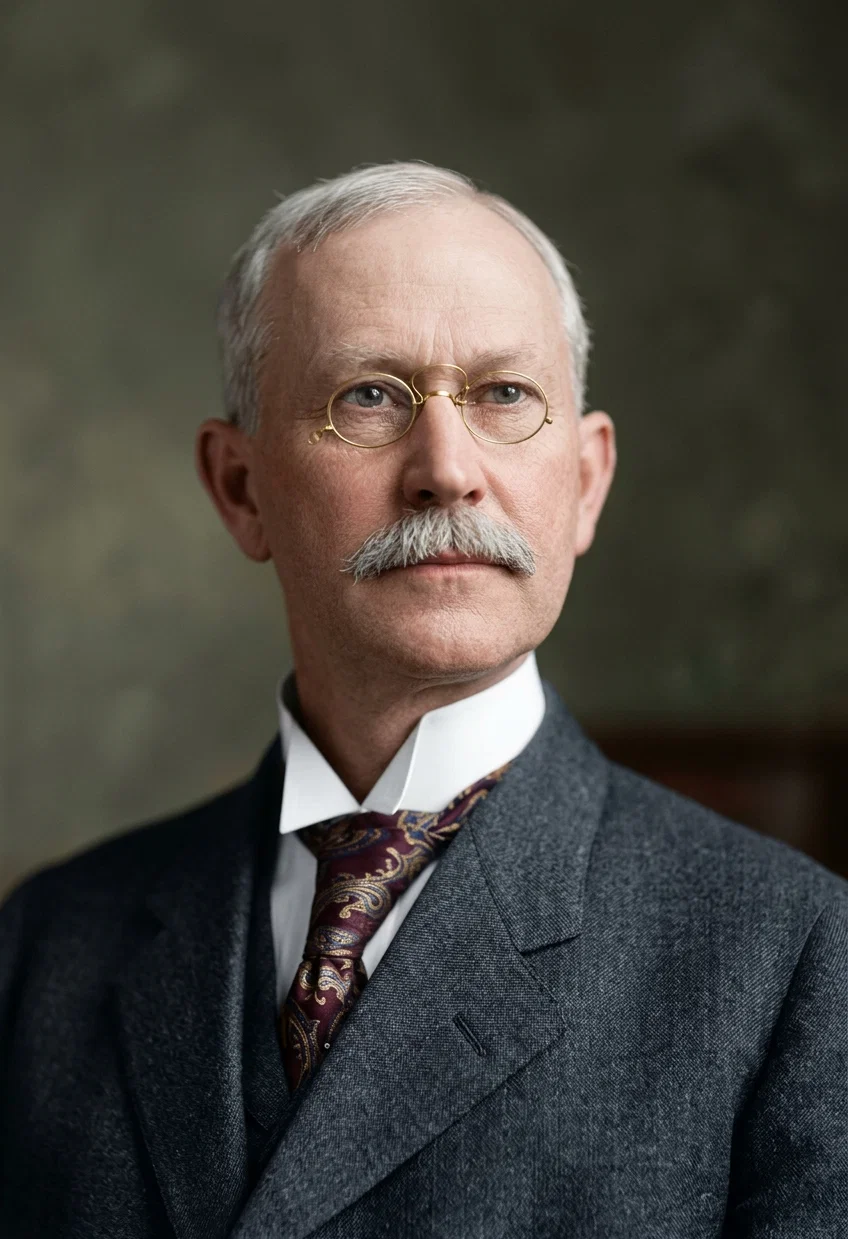
Copyright, 1908, Harris & Ewing. R. A. Ballinger, Secretary of the Interior. (See note of last week.)
There is much more along the same line. We would that our representatives to Congress and legislators would study some of these basic documents of the great Republic. The Sunday law is vicious in that it turns directly from the true basis of civil government. We are told the majority has the right to rule, but the majority has no rights whatever as regards conscience. If the majority has a right to rule in religious matters or in religious controversies in America, they have in India. What rights could the Christian exercise in that idolatrous land? Or what rights could they have in China? If the majority have the right to rule in religious things in America, it would be just as true as regards the world; and the idolators of the world are in the vast majority.
It is not the business of government to legislate for the many. The many can always protect themselves. The true business of civil government is to protect the few, the weak, the individual. If the individual is protected, all are protected. No greater fallacy was ever introduced in political argument than that government should legislate for the greatest good to the greatest number. It is not the business of the government to consider the rights of the greatest number, but the rights of the few, the feeble, the weak, and if those rights are guarded, there will be no difficulty with the mass, because the mass is made up of the individuals.
If Sunday is worth anything religiously and morally, there is that within the nature of the institution which will commend itself to men. If it has not that within itself which is worthy, let it die; and so with the seventh day of the week. If there is not enough of God’s life within any institution, let it die. It needs no support, demands no support, is entitled to no support from the state.
There is more in this matter than that of a day. There is the great principle of authority—authority in religious matters, authority in civil government. Woe be to that government that puts itself in the place of God and legislates upon the religious differences of its subjects. By that very thing it takes itself out from the true basic principles of government. It weakens its own foundations, and is bound, sooner or later, to go to wreck under the clamor of those who would seek to benefit classes, religious or otherwise.
Greater woe still to that church which has so little faith in God, so little conviction of its own duty, so little grasp of the Gospel power, that it is willing to bow at the feet of the civil functionaries and ask for legislation to uphold its dogmas.
Woe be to that Christianity or to that religionist who is not willing to grant to all others the right which he claims for himself. As soon as he assumes to dictate to others, he puts himself in the place of God; that was the very origin of Satan himself, and that principle carried out in human life or character will develop the same things in the human that were developed in Lucifer, the light-bearer of God.
God has given us warning concerning all these things in His word, and in the great facts of history. Will America heed the warning?
Theaters as Teachers.
Right in connection with the constantly growing tendency among ministers and other professed moral teachers in saying that the theater has a place, that Christianity may recognize it as an ally, etc., etc., there are others who dare lift their voice against it and tell us that the tendency in the theater is constantly to the bad. Rabbi Wise, of New York, is recently reported as saying: “It makes for degradation, for absolute moral rottenness. I wish to God our skirts were clean, and that there were fewer Jews to blame. The managers seem to vie with one another in producing the most degrading things, and they insult us by implying that we want such stuff, and10that you and I don’t want to see a clean play. I indict the theaters as they are to-day. I don’t care if every manager is a Jew. They are all heathen. I indict those who are pandering to vice whether Jew or Christian. It is the debasement of the nation.” And yet Rabbi Wise feels that the stage ought to be an uplifting agency. In the very nature of the case it can not be. The very element of stage life and stage success is not reality, but imitation, and the mockery of the whole thing all through and through takes possession of those who make it a success; and the difficulty is that if moral life came into it, it would spoil it as a success. Yet Rabbi Wise tells us there is too much of penal law and too little of moral law, and declares, “I want the moral principle applied.” Two years ago there was a strong enough protest against the wretched Salome to shut it out of New York theaters. Now it is being enacted everywhere, and it is almost impossible to accommodate the crowds that rush to see the wretched, disgusting play. Archbishop Farley, of New York, says: “If the present rage for nudity and the portrayal of lives of immorality continues, we shall soon reach a pass where it will be folly to assert that we have any standards at all.” And all this logically follows the setting aside of the law of God, the great standard of morality.
A False Basis of Reform.
By Editor
—Mr. Lincoln Steffens, who has for years been writing upon the trusts and corruption in cities, has turned moralist; but evidently his experience with grafters has poorly fitted him to be a preacher. He recently appeared before the Boston Ministers’ Association telling them how they ought to treat the problems of civic unrighteousness. He speaks of a number of the men whose corruption has been exposed, and states that three or four became insane and some have died; some of them came out of clergymen’s families; that for thirty or forty years they had “committing felonies and not knowing that they were committing sins at all. They were as innocent as the most innocent man.” That certainly speaks very ill indeed of the moral faculties of the men or the worth of the teaching that they had received. How these immense criminals could go on year after year not knowing that they were not only committing crime but sin, passes all comprehension. He tells further: “In order to understand certain facts, I used to have to go and talk with the bribery leaders, and from the prejudice that most men have, I came gradually to see why they did certain things, why they could not help doing them. It was natural.” But if Mr. Steffens knew anything about morality, he would know that the purpose of the church is to turn men from that which is natural to that which is spiritual. Of course it is natural for the human heart, untouched by God or His teaching, to go on in sin and crime. It is not the business of the church to coddle them in thus doing or to excuse sin because men do not appreciate that it is sin. If the Gospel were rightly preached the men who sit under the preaching would come to realize that sin was sin, that the transgression of the law of God, whether done privately or in connection with some big corporation, is heinous and ends in death. Mr. Steffens is frank; perhaps he believes what he says, but we see no hope of reform in any of the suggestions which he makes.
Blasphemy and Earthquake.
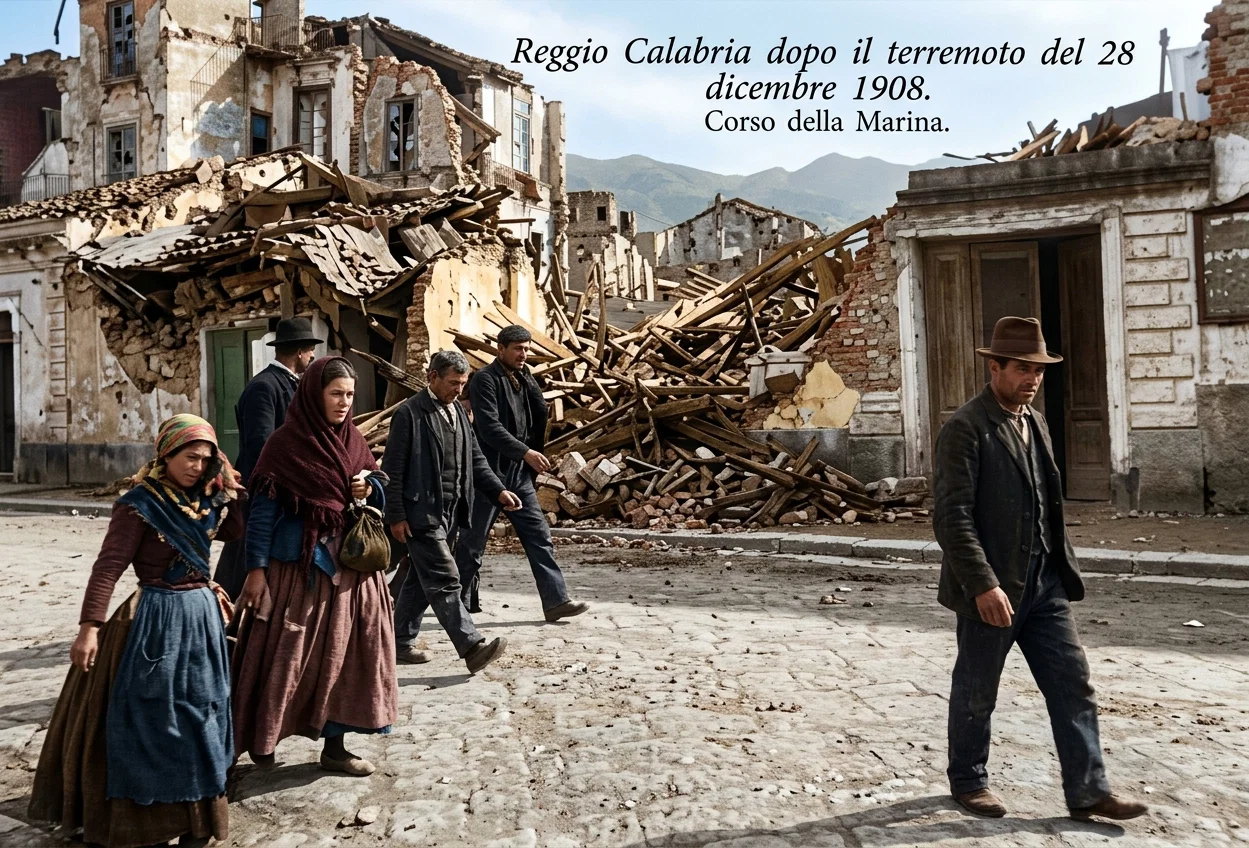
The Western Watchman of January 28 prints a prayer that was offered in a blasphemous paper in Messina. The Watchman remarks that the Italians “have naturally an intense faith, and in their religious life they are either mixed in the chorus of angels or devils. It declares that ‘there are prints in papers, publicly exposed in the book-stalls of Rome that would make the very demons of hell cry out: “Fie, for shame.”’ And this Messina paper, in its issue of December 25, devoted considerable space to the Bambino, an image of the child Jesus, and the devotions of which it is the object on Christmas morning, and translates the prayer in this way:
People fleeing from the scene of terror.
“O, my little Bambino;
True God and true man, I know:
For love of the Cross and thy dolorous
way,
Please answer the prayer we say.
That is, if thou art not a myth. If
more than a myth, then crush us
under an earthquake.”
On the third day after, the city was destroyed and nearly all its inhabitants perished in the ruins. The Watchman declares that Messina was a very bad city, the worst perhaps on the globe. Not that there were no good people, but there were outlaws from every land. “The yellow devils and the white devils held their stated orgies together in Messina. Whole sections of the city were given up to impiety and immorality, and public opinion did not seem to have a vestige of natural modesty left. The best and purest were surprised at nothing that appeared in private and public life of the soiled Queen of the Strait. There was some religion in Messina; but it was of that boisterous, flamboyant sort that finds expression in processions and fiestas. The people brooked no restraint from the clergy, even in their most unbridled extravagances of devotion.” The Watchman concludes with these words: “Was the earthquake a judgment? It would be madness to say it was not. Did God consign to instant death two hundred thousand people for no purpose at all?” And yet the reflection comes to us that for centuries Rome has had these under her instruction.
A Case of Spiritual Blindness.
The editor of the Western Watchman declares in his issue of Feb. 12, 1909, that there is a disease which “attacks the eyes of the soul and makes Catholics blind. It is the disease of impurity.” “It is impurity that makes men blind spiritually. Go all over Austria, France, Italy, Spain—those four great Catholic countries. O, they are great Catholic nations! I love to visit them. The atmosphere is Catholic. All the traditions are Catholic. . . . But O, there is a horrible irreligion there. . . . There is a frightful immorality there, and that tells the whole story. They are impure. The men are impure, and the women are impure; and the life that they lead in those four lands is an impure life, and consequently they are spiritually blind.” And what is true of Catholic countries and Catholic lands and Catholic peoples will find application in many other circles.