A new book by Dr. Austin H. Clark, of the Smithsonian Institution, refutes with convincing evidence a great deal that has long passed as scientific orthodoxy. Though denying creationism, it brings the scientific world back nearer and nearer to the record of Genesis.
The village of Yazki Khas, in Persia, 130 high and 900 feet long, inhabited to-day, as it has been for untold centuries since the site was chosen, because of its inaccessibility to assailants.
There is an old proverb to the effect that it does not matter so much how fast you travel, but rather which way you are headed. In this respect we can say that the case of modern biology is quite hopeful. For ever since its shameful speculative debauch in the seventies and eighties and nineties of the nineteenth century, every single discovery that it has made has helped to bring this and the other related sciences back a little nearer each time to the only trustworthy record that we have of the beginnings of our world, the first chapter of Genesis.
TIME FOR DARWIN’S FUNERAL ORATION
At the turn of the century, or some thirty years ago, the laws of Mendelism were given to the world. From these laws we learn that the various characters of all living things are always transmitted as separable unit characters from parent to offspring. In one presidential address in 1914 and again in another in 1921, Dr. William Bateson, one of the foremost of modern biologists, called a halt to a vast amount of useless speculation by declaring that, although we witness a great deal of contemporary variation among plants and animals, yet we do not see in our modern world anything at all resembling the origin of a new species. And now, in this year 1930, we have the president of the Zoology Section of the British Association, at its recent meeting at Bristol, England, quoting with approval the declaration of the distinguished Continental biologist, Dr. Hans Przibram, to the effect that probably every species of animal above the protozoa may have developed independently of all the others from a distinct species of protozoa. If some three decades ago a prominent German scientist could issue a book entitled “At the Deathbed of Darwinism,” surely it is now high time for some one to speak its funeral oration. Requiescat in pace.
The very latest theory spoken of above, which was placed before the assembled British men of science at their recent meeting last September, that all the modern species have each developed independently from some primitive protozoan form, without being in any way more nearly related than this would imply, is essentially the idea set forth in a very learned work entitled “Nomogenesis,” by Dr. Leo S. Berg, professor of ichthyology in the state university of Leningrad, Russia. This work was translated and published in England in 1926; and in it Dr. Berg defends the idea that our modern organisms “have developed from tens of thousands of primary forms.” It seems a great twisting of language to speak of this theory as a sort of evolution. It may not be quite the old orthodox doctrine of special creation, but it seems much nearer to the idea of direct creation than it is to anything taught by Darwin and the cocksure evolutionists of a half century ago.
A closely related line of thought is taught by Dr. Austin H. Clark, of the Smithsonian Institution, Washington, D. C., in his recent book, “The New Evolution: Zoogenesis” (1930). Clark is one of the prominent officials connected with Science Service at Washington, and is thus one of the foremost men of science in America. His specialty is the deep-sea invertebrates, for he has been associated with several deep-sea expeditions in various parts of the world. But his book is revolutionary in its ideas, and directly refutes with convincing evidence a great deal that has long passed as scientific orthodoxy. All this is as it should be; for as Huxley used to say, science commits suicide whenever it adopts a creed. The progress of discovery must inevitably compel a revision of old scientific beliefs and teachings; and since Darwinism at one jump some two generations ago adopted a line of teaching as antagonistic to the Bible doctrine of creation as could possibly be conceived, all the discoveries since must be expected to bring the scientific world back nearer and nearer to the record of Genesis.
EVOLUTION’S CHANGING VIEWPOINT
And this is what we are actually witnessing. Were it not for the still-popular belief in the geological theory of successive “ages,” represented by the alleged successive types of life, modern biological science would now be approximately back to the record of Genesis, that all the distinct types of life originated at approximately the same time by the creative fiat of Jehovah—which for us, or from the scientific point of view, simply means that they originated by some mysterious method not known to science.
Clark denies creationism, his book never mentions God or Christianity in any way whatever. He seems afraid to stir up the religious issue, just as he resolutely dodges the problem of the origin of life, though he is very emphatic in affirming that the law of life only from life “has no exceptions and it is inconceivable that there should be exceptions.”—Page 164.
It would be easy to quote from Clark’s book very emphatic declarations in direct conflict with many cherished beliefs of the evolutionists. But it is not so easy to state Clark’s teachings in such a way as to make them seem self-consistent. For he labors under the handicap of still believing in the popular geological theories about the successive kinds of life that are said to have peopled the earth one after another. He is extremely critical of much that hitherto has passed for biology; but he has taken over quite uncritically the incredible and unscientific theories taught in the name of geology by Lyell and his followers. Accordingly, we need not expect to find that Clark has himself reached a self-consistent scheme. He claims to be an evolutionist; but his evolution has lost most of its familiar aspects, and seems grotesque in many respects, though its author thinks that he is holding strictly and sternly to the facts as now known by modern discoveries.
PROBLEM OF ORIGINS APPROACHED
Our author approaches the problem of origins from the point of view of the great major groups of the animals, usually called the phyla; and he says that the profound distinctions between them have been overlooked or ignored. In Darwin’s day, scientists recognized less than a dozen of these phyla, or larger groups. With our increasing knowledge since Darwin’s time, we have been compelled to increase this number; and Clark now makes them twenty. These phyla are groups of animals so distinct from one another that not by the highest stretch of the imagination can one be supposed to have been derived from any of the others. There are no intergrades or intermediates between any of them known to science either in the living or in the fossil state. As he expresses it: “If we are willing to accept the facts at their face value, which would seem to be the only thing to do, we must believe that there never were such intermediates, or in other words that these major groups from the very first bore the same relation to each other that they do at the present day.”—Page 168.
And again: “All of the phyla or major groups seem to be of simultaneous development—at least we have no evidence that it was otherwise.”—Page 168.
He has been driven to this conclusion because all but one of these major groups have been found represented by typical specimens that are found as fossils in the Cambrian rocks, which, according to the accepted scheme of evolutionary geology, are the verySeven“oldest” of the fossiliferous rocks. As Clark expresses it, “From the very first beginnings of the fossil record, the broader aspects of the animal life upon the earth have remained unchanged.”—Page 100. In other words, away back at the very dawn of the geological record, a starfish, a crustacean, a jointed worm, or a brachiopod, or any of the others, could be recognized as distinct from any of the other kinds, and could just as unmistakably be recognized as belonging to the modern similar forms. And we must remember that this conclusion has been forced upon our modern geologists in spite of the fact that they have had a free hand, an open field, and the entire world to pick from in arranging their pretty little artificial scheme of a chronological order among the fossils. But even so, they have to acknowledge sadly that all of the great major types of life seem to start together ready-made at the very dawn of “geological time.”
BRANCHING TREE UNFIT ILLUSTRATION
Those who have visited any of our big museums are familiar with the groups of animals there displayed as illustrating what is termed the evolution of such animals as the horse, the elephant, or the camel. These groups, of course, are very artificial arrangements of these animals, though to the uninitiated they present a very convincing array of specimens in an alleged chronological order, thus apparently proving an evolutionary development, if we do not keep in mind that the geologists have nothing but the wish as the father of the thought that the little four-toed animal, called by a figure of speech a “horse,” was any older than the larger one which was indeed a real horse like the ones living to-day. Yet even with these fossils thus artificially arranged in an alleged chronological order, Clark tells us that the pedigree(?) of these animals is “frequently interrupted by gaps of various widths, and these gaps are often very broad.”—Page 180.
The existence of these notable gaps, he says, makes the popular illustration of a branching tree very untrue and misleading. “The twigs of the tree do not actually join the branches, and the branches do not join the main trunk; and besides, the main trunk itself is not continuous.”—Pages 180, 181.
But after repeating over and over again the fact that there are no intergrades or intermediates between the various phyla, he proceeds to say about the same for the classes, which are the next lower divisions of the animal kingdom. These also, he says, as a general rule, “are entirely distinct from each other and do not intergrade.”—Page 221. And the next subdivisions, or the classes, he tells us, exhibit the “same phenomenon” of wide gaps, though in a “less extreme form.”—Page 222. “Abrupt discontinuities, becoming progressively less and less pronounced, may be followed further into the suborders, families, genera, and species.”—Page 222. All this is very candid, but very difficult to reconcile with the theory of organic evolution. Certain it is that, instead of our advancing knowledge reducing the size and number of the gaps between the types of animals and plants, as the older evolutionists always said would be the case, it is becoming very evident that the more we really know about the various kinds of life the wider and the more in number these gaps become.
“Man,” says Dr. Clark, “is not an ape, and in spite of the similarity between them, there is not the slightest evidence that man is descended from an ape.”—Page 224. Also, “In the light of all the evidence available at the present time, there is no justification in assuming that such a thing as a ‘missing link’ ever existed, or indeed could ever have existed.”—Pages 226, 227. And he quotes with full approval a very notable paper by Gerrit S. Miller, Jr., in the latest volume of the Reports of the Smithsonian Institution, which is a most devastating argument against the scientific value of the usual arguments based upon the famous Java skull and the Piltdown skull.
AN ACT OF FAITH
I was about to write, “Exit evolution” at the end of this article. But not so. A belief in evolution will still be held by the thousands and the millions, in spite of the clearest and most irrefutable arguments exposing its unscientific character. Why? Because most people believe in evolution as an act of faith. It is a sort of religion with them. It is an illustration of the “will to believe,” rather than an example of the following of logic or reason. As the late Mr. Bradley expressed it, such a theory is merely the finding of bad reasons for what such people believe upon instinct. Man has been said to be a “logical animal;” but it is difficult to convince one of this idea who has read widely in the history of scientific theories. For the history of science gives abundant examples of false ideas which have seized suddenly upon the educated part of mankind, and which have taken decades or even generations to shake off, even after the scientific evidence was abundant and unmistakable that these ideas were nothing but mistakes or blunders. The theory of organic evolution is running true to form in this respect; but we now have ample evidence that it also is only a sad blunder or mistake, destined, like all the others before it, if time should last long enough, to be outgrown and cast upon the dust heap of discarded and outgrown hypotheses.
Yet one result abides. All this discussion, all this concentration of expert study upon the problem of the origin of plants and animals, is directing the attention of the people of this generation to the great primal truth of a real creation back at the beginning of things. An ever-increasing emphasis upon this great primal truth seems to be a vital part of God’s plan for our day. And the reader of this article would do well to give heed to all the other truths that cluster8around this primal truth of a real creation; for the Sabbath has been given by Jehovah to serve as a badge to distinguish those who believe God’s record of a literal creation from the many millions who think they have found another method of explaining the origin of things that is “just as good.” The evidence of the developing history of biology and geology is that man cannot invent a scheme of origins that can stand the acid test of factual discovery; nor can he construct any scheme as reasonable and consistent as that recorded in the first chapters of the Bible.
Halfway Back to Genesis
(Continued from page 7)
The Enduring
By L. Mitchell Thornton
L. MITCHELL THORNTON
He boasted and he toasted
Modern culture, modern thought,
And diligently roasted
Faiths by early teachers taught;
He vowed the soul’s supremacy
No more than mere diplomacy;
Through mazes of alchemistry
The newer truths he sought.
He jested and divested
Every fact by saints conceived;
He never slept nor rested
Though he had the righteous peeved;
For he thought to prove conclusive
Facts from brain-storm sparks elusive,
And be given fame exclusive
For the mad things he believed.
Then sans warning, one dark morning,
As it might have been behooved,
Came a graybeard, theories scorning
By the theorist unmoved;
And he cried: “You’re self-deceiving;
Seek to prove what you’re believing.
Truth, that you would have us leaving,—
Truth believes what it has proved.”
And the boaster and the toaster
Tried in vain his olden lures;
But his name is on the roster
That each passing day obscures.
For tho’ charm and necromancy,
May catch Tom and Dick and Nancy
By appealing to some fancy
Fundamental faith endures.
A VERY OLD IDEA
From the time that men began to form themselves into nations, it has been their nature and their ambition to get as much power into their hands as possible, and to extend the borders of their domains as far as they possibly could. No great ruler seems to be satisfied with what he has; he is always dreaming of ways and means of extending his power and dominion to the fullest possible extent. To the most ambitious, nothing short of the dominion of the whole world would satisfy. For this reason, from time to time men have dreamed of subduing all the smaller nations and forming for themselves a universal kingdom.
A VERY OLD IDEA
This is not a new thing by any means, for even as far back as the Flood men seem to have been obsessed with this universal kingdom idea. We read in the Old Testament Scriptures of Nimrod, one of the great-grandsons of Noah, who undertook to unite all the people under one government and, with himself at the head, to set up a kingdom that he hoped would eventually occupy the whole world. He aspired to becoming a world-wide monarch. God showed His displeasure in the plans of this man by destroying the great tower that he and his men had built and scattering them to the four corners of the earth.
From that time on down to this, various men have had the same dream that Nimrod had, and at various times in the world's history have undertaken to unite the scattered tribes of the earth under one central control. Nebuchadnezzar, king of Babylon, who flourished about six hundred years before Christ, was the first man really to make much progress in this direction. He seems to have gathered under his control at least one hundred twenty provinces, comprising most of the then-known world. But even during his lifetime God made known to him that his kingdom would not stand forever, and that his dream of establishing a universal and everlasting kingdom would come to naught. Later on, Medo-Persia, Grecia, and Rome in their turn tried the same thing, and each met the same fate. Rome was hopelessly divided up into a number of small states, only the remnants of which are found in Europe to-day.
WORLD-RENOWNED RELIGIOUS LEADERS
At different times great kings and military leaders have undertaken to unite these scattered states and build up another great world-wide kingdom. Charlemagne of France tried it; later on Napoleon tried it, and both of them failed in accomplishing what they set out to do. The last man to give a trial to such a plan was William of Germany. He, too, failed in his purpose, and in the struggle lost his power altogether.
Just as great kings and political leaders have, at different times in the history of the world, arisen and for a time exercised considerable influence in the earth, so also there have at various times and in different places arisen great and influential religious leaders. The influences of some of these men have spread over many countries and for many centuries. Some of these have been bad and some have been good. Greatness and goodness do not always go together. Any man who is able to influence the world to such an extent that he is deified in the minds of the people of his time, could be said, in a way, to be a great man. But it does not necessarily follow that because he was a great and influential man his teachings are good. That noted Frenchman, Rousseau, who lived in the eighteenth century, was a wonderful man, and had an immense influence over education. His ideas along educational lines were adopted by leading educationalists of his time, and in this way he affected the education of the children of most of the world during the nineteenth century. It was also largely due to his efforts that the French Revolution took place. From an intellectual viewpoint he was certainly a great man, but it is said of him that his character was anything but good, that he was a sensualist and full of despicable meanness.
There have even been founders of religions that have held, for centuries, multitudes of men; but if we compare them with Christian standards and morals, they fall very short of what every man should strive to be. Plato and Socrates of Greece, Confucius in China, and Buddha in India are four great teachers who have given systems of thought and morality that have lasted for centuries. These systems, though they are the greatest examples of what mortal man can offer to the world, all have their weaknesses and limitations. They are the children of their age. They sum up and collect together the best aspirations and ideals of their fellow countrymen, but they do not present a perfect plan for man's salvation.
LIMITED SYSTEMS OF RELIGION
After all, what more could be expected of these leaders than what they did, for they were only men, surrounded and influenced by their fellow men. They felt the great need of some system of religion that would help their people. What they gave to their people was of necessity more or less of a national nature. It could have been nothing else. What Buddha taught was more suitable for the people of a country like India than any other, and probably he would not have been accepted by any other people or in any other time than that in which he lived, even in India.
In like manner, the teachings of Plato and Socrates would not have been acceptable to anyone except the Greeks. They were Greeks, and Greeks understood and appreciated their teachings; outside of that country they probably would not have been accepted at all. Mohammedanism and Hinduism appealed to the people of Arabia and India, but it is not likely that these religious systems would have been accepted in other countries as they were in these. They are of necessity local in their nature, and all show the same limitations and weaknesses, in that they leave out the all-important factor of providing for lost and sinful man a satisfactory way of escaping from the penalty of his sins. No mediator, no sacrifice, no Saviour, is provided for men. And this is the very thing that is needed by all men, whether they be Greeks, Indians, Arabs, Europeans, Chinese, or any other nationality. The religion that provides this very important thing is the true religion, the universal religion,—the religion that is needed, not by just some particular section or portion of the earth, but by all the world.Page Nine
Christ is the founder of Christianity. His religion, like Himself, is free from the limitations seen in the other religions of the world. He is the only one in all the history of the human family who challenges these limitations. He stood free from the spirit of His age, from the political strife and commotion that were paramount in His time, and was separated from the customs and usages of His people and His country. The methods of thought popular in His day did not appeal to Him. So different was He from the popular teachers and leaders of His day that He was not understood, and was even rejected by many of His own people. The things that He taught, however, were applicable to His people and to His time, as they are to the world to-day. They were universal in their nature, applicable to every race, and to all time. It has been well said that “Christianity does not compare itself with other religions. It challenges them.”
Our Lord Jesus Christ was born in Palestine, of Jewish parentage. His mother was of the royal house of King David. He was brought up a Jew, and knew the Jewish religion thoroughly. He studied it as a boy; and as a young man, while toiling away at the carpenter’s bench with Joseph, the study of the Jewish religion was His constant theme. At the age of twelve He astonished and baffled the rabbis and teachers of the law at Jerusalem. Though He was so thoroughly grounded in the tenets of His mother’s religion, He was not limited by His country’s ways of thought, or by the circumstances of the age in which He lived.
Of Christ alone can it be said that He could have been born and lived in any other country than Palestine. He could have been born in England, in Africa, or in China. He could have lived in any age of this world’s history, and yet His life would have been just the same as it was, and His teachings would have been just what they were. He would have met the same death that He met, would have been resurrected just the same, and we would have had the same gospel story that we have now. Jesus was not the Saviour because He was a Jew or because He was born in Palestine, but because He was a perfect man, the Son of God. The only reason He was born in Palestine and brought up as a Jew was that God chose that race as the one in which He would have His Son be born. He could have chosen any other race or any other country, and the results would have been just the same.
NOT LIMITED BY NATIONALISM
Every other religious leader that has ever arisen has been hampered and limited by the fact that he was closely tied and influenced by his own national ideas and the spirit of his time. Christ was not so, and for this reason He stands aloof and alone from all other founders of religious systems. This is why His claims to be the world's Saviour are hard to stifle or reject. Though He was a Jew, He had no Jewish outlook. He was above and beyond a national religion. He never spoke to the Jews as Jews, but as men, as members of the human race, just as He would have spoken to anyone else.
The universal nature of Christ, the Founder of Christianity—because He was not restricted or limited by the national ideas and aspirations of the nation in which He happened to be born—is the reason that the religion of Jesus Christ is capable of being accepted and lived by all the nations of the earth. It had its beginning among the Jews of Palestine, because Jesus was a Jew. If He had been a Chinese, Christianity would have had its beginning in China. The apostles would have been Chinese, and we would have had the gospels in the Chinese language, but the principles of the religion would have been just the same.
CHRISTIANITY WIDESPREAD
From the Jews Christianity went to the Greeks and to the Romans. The English people received it from the Roman Empire. It came to them in a Latin dress, and they had to translate it into their own forms of thought, and absorb it. From the English and other European nations it has gone to India, China, Africa, Japan, and the islands of the sea. It has been passed on to the nations of the world in more or less of a European dress because of the fact that the Europeans have taken it to them. This does not mean, however, that because the Europeans have brought Christianity to India, or China, it is a European religion. It is the religion of Jesus Christ; and just as He was a man who stood far above and beyond any
and all national ideals and conceptions, so His religion is for all nations, and is not to be tied down by the national ideals and limitations of any nation.
Those to whom it appeals, no matter what their nationality, are to translate its principles into their mode of thought, and absorb it into their national life, just as did the Greeks and Romans who received it from the Jews, and as did the English who received it from the Romans. Even if a nation receives Christianity from an alien race, yet it can make it its own possession. In doing this, however, each nation must be careful not to let its ambition to make the religion of Jesus Christ its very own and to free it from the peculiarities of the nation that brought it cause it to leave out Jesus. Jesus the Saviour, the great Sacrifice for sin, the resurrected Christ, must remain forever the central factor in Christianity wherever it goes.
CHRIST THE UNIVERSAL KING
The fact that Jesus Christ could be the founder of a religion and a church that can suit all nations, no matter what they are in civilization or how different they may be in racial characteristics, is what makes Him the universal King and makes it possible for Him to become the one and only Saviour of the world. At the present time, in every continent, and among every race in the world, Jesus Christ is accepted and followed. What other religion can make such a claim? He speaks to them all—English, Germans, Chinese, Indians, or Africans—as men, who share the common humanity with Himself.
Yes, Jesus is the universal King, and His religion, Christianity, is the universal religion. It was intended for the whole world, and to the whole world it must go. One of the last things that Jesus said just before His return to heaven was, “This gospel of the kingdom shall be preached in all the world for a witness unto all nations; and then shall the end come.” Matthew 24:14.
John, one of the disciples of Christ, in prophetic vision looked down through the ages and saw a great religious movement on in thePage Ten
An image of the Buddha, or Hindu sage, who lived and taught his ideas of religion about the sixth century before Christ. The influence of Buddhism is limited to areas in India and east and central Asia.
A Universal Religion
(Continued from page 9)
world and, in describing what he saw, said, “I saw another angel fly in the midst of heaven, having the everlasting gospel to preach unto them that dwell on the earth, and to every nation, and kindred, and tongue, and people, saying with a loud voice, Fear God, and give glory to Him; for the hour of His judgment is come: and worship Him that made heaven, and earth, and the sea, and the fountains of waters.” Revelation 14:6, 7.
The gospel of the kingdom of Christ is making rapid strides in the earth to-day. It will not be long until the prophecies of Christ and of John will be completely fulfilled and the name of Christ will be honored and exalted throughout the universe of God.
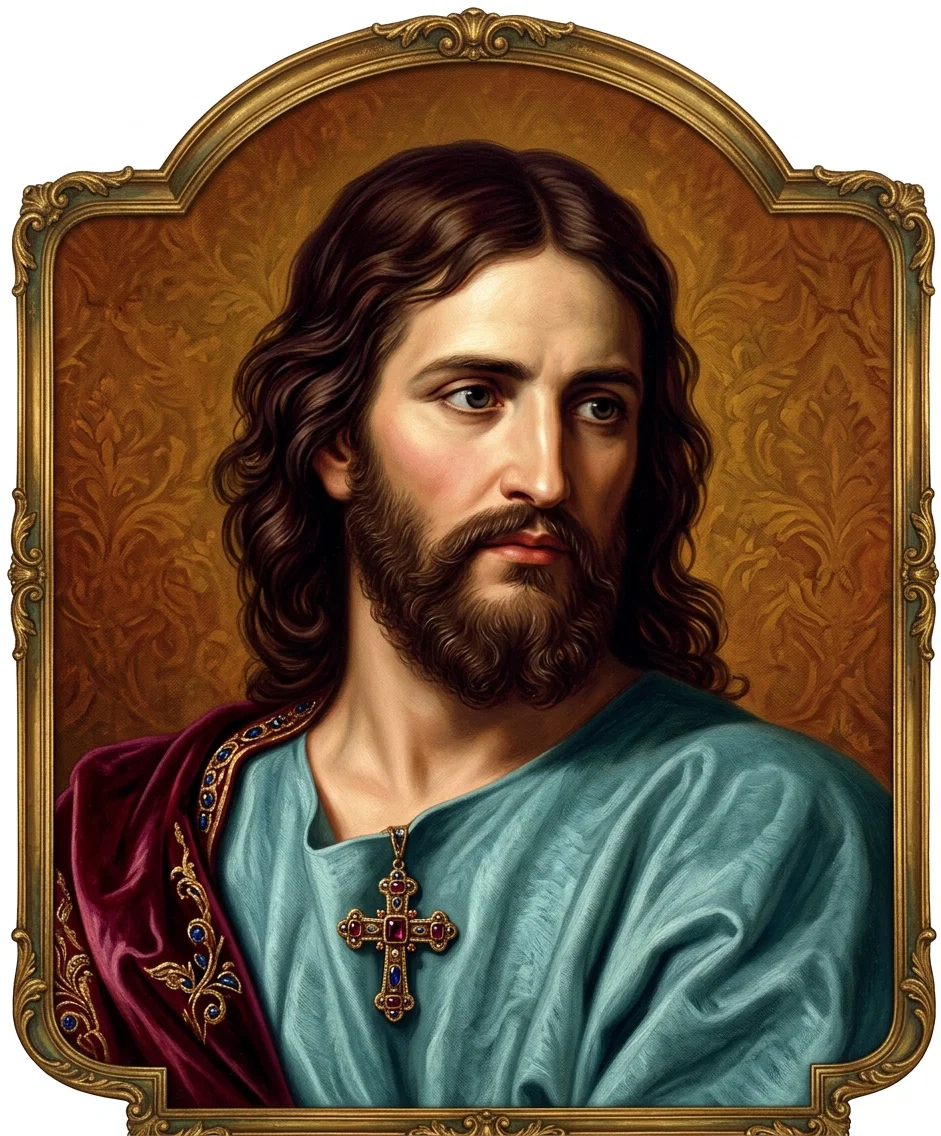
Christ, whose system of religion has entered every country under the sun and whose influence is felt all over the world regardless of racial distinctions and social exclusiveness.