THE term "Religious Liberty" is used in a twofold sense: (1) To mean the only liberty which brings satisfaction—liberty from the bondage of sin; (2) It is applied to liberty vouchsafed by civil governments to the individual to worship or not to worship as he may elect, providing his course of conduct does not transcend the equal rights of his fellow men. Christianity—the religion of the Bible—grants both in its fullest sense.
What Man Owes to God.
1. What is man's duty to God, the Creator?
"Let us hear the conclusion of the whole matter: Fear God, and keep His commandments; for this is the whole duty of man. For God shall bring every work into judgment, with every secret thing, whether it be good, or whether it be evil." Eccl. 12: 13, 14.
"So speak ye, and so do, as they that shall be judged by the law of liberty." See James 2: 8-12.
2. How is man's duty elsewhere expressed?
"Thou shalt love the Lord thy God with all thy heart, and with all thy soul, and with all thy mind. This is the first and great commandment. And the second is like unto it, Thou shalt love thy neighbor as thyself. On these two commandments hang all the law and the prophets." Matt. 22: 37-40. See also Deut. 6: 4-6; Lev. 19: 18.
NOTE.—This is man's duty. God, his Creator, has commanded it; there is no alternative. God's law is the great law of right; His creatures have under Him, in their relations to Him, no right to do otherwise than right. God demands that as the creature's duty to his Creator, as the only method of assuring harmony of the universe, for the creature's highest and eternal good.
"If any MAN HEAR My voice, and OPEN the door." Rev. 3: 20.
4. If we choose according to duty, what good will result?
"I have set before you life and death, blessing and cursing; therefore CHOOSE LIFE, that both THOU and THY SEED MAY LIVE; that THOU mayest LOVE the LORD thy God, and that thou mayest OBEY HIS VOICE, and that thou mayest CLEAVE UNTO HIM; for He is thy life, and the length of thy days." Deut. 30: 19, 20. See John 1: 12; Rev. 22: 17.
5. What will be the consequence of choosing our own way?
"Because I have called, and YE REFUSED; I have stretched out My hand, and no man regarded; but ye have set at naught all My counsel, and would none of My reproof: I will also laugh at your calamity; I will mock when your fear cometh; when your fear cometh as desolation, and your destruction cometh as a whirlwind; when distress and anguish cometh upon you. Then shall they call upon Me, but I will not answer; they shall seek Me early, but they shall not find Me: for that they HATED KNOWLEDGE, and DID NOT CHOOSE the fear of the Lord: they WOULD NONE OF MY COUNSEL: they despised all My reproof. Therefore shall they eat of the FRUIT OF THEIR OWN WAY, and be FILLED with THEIR OWN DEVICES. For the TURNING AWAY of the simple shall SLAY them, and the prosperity of fools shall destroy them." Prov. 1: 24-32.
NOTE.—God has given to every soul the right of choice. He has thrown around every soul a sacred circle of responsibility which Deity itself will not, can not, enter to compel the soul's choice. It is an awful thought. It is said that Daniel Webster declared that the greatest thought which ever came to him was "man's personal responsibility to God." Browning says:
"You forget too much
That every creature, female as the male,
Stands single in responsible act and thought,
As also in birth and death."
Why?—Because God demands love of His creatures, the obedience of faith and love, and love can not be compelled by law. Forced outward service is mockery in our relations to God. When God does not, will not, compel such service, should the human presume even to think to do it? Thus to do is to lift one's self above God.
6. What is our condition by birth?
"For all have sinned, and come short of the glory of God." Rom. 3: 23.
"Whosoever committeth sin is the servant [slave] of sin." John 8: 34; see also Rom. 6: 16.
7. Who alone can make us free?
"If the Son therefore shall make you free, ye shall be free indeed." John 8: 36.
8. How may this liberty from sin be maintained?
"If ye continue in My word, then are ye My disciples indeed, and ye shall know the truth, and the truth shall make you free." John 8: 31, 32.
NOTE.—The liberty which Jesus gives is freedom from sin and sinning. It does not promise in this world freedom from hardship, toil, pain, persecution, death; but it does promise victory in all these thru Christ, and glorious victory at last over all the results of sin, death, and the grave. Yet the liberty which Christ gives here with all its hardships is sweeter than all that the world can give without Christ.
How Only Saved.
9. By what means only can we obtain Christ and His life of freedom?
"For God so loved the world, that He gave His only-begotten Son, that WHOSOEVER BELIEVETH IN HIM should not perish, but have everlasting life." John 3: 16.
10. How alone could His disciples bring souls to Christ?
"For the LOVE OF CHRIST CONSTRAINETH US." 2 Cor. 5: 14.
"Knowing therefore the terror of the Lord, we PERSUADE men." Verse 11.
"Now then we are ambassadors for Christ, as tho God did BESEECH you by us; we PRAY YOU in Christ's stead, be ye reconciled to God." Verse 20.
11. What did Peter say?
"The elders which are among you I EXHORT, who am also an elder: . . . FEED THE FLOCK OF GOD which is among you, taking the oversight thereof, not by constraint, but willingly; not for filthy lucre, but of a ready mind; NEITHER AS BEING ensamples to the flock." 1 Peter 5: 1-3.
"I BESEECH you as strangers and pilgrims." 1 Peter 2: 11.
12. Had the apostles control over the faith of God's children?
"NOT for that WE have DOMINION over your FAITH, but are helpers of your joy; for by FAITH YE STAND." 2 Cor. 1: 24.
13. How did Jesus declare Himself even as regarding man's rejection of Himself?
"And if ANY MAN HEAR MY WORDS, and believe NOT, I JUDGE HIM NOT; for I came NOT to judge the world, but to save the world." John 12: 47.
14. What did He say to those rash disciples who desired to call down fire upon the heads of those who rejected Him?
"He turned, and REBUKED them, and said, Ye know not what manner of spirit ye are of. For the Son of Man is not come to destroy men's lives, but to SAVE THEM. And they went to another village." See Luke 9: 51-56.
15. By what and when will man's choice and conduct be judged?
"He that REJECTETH ME, and receiveth NOT MY WORDS, hath One that judgeth him; the WORD THAT I HAVE SPOKEN, the same shall JUDGE him in the LAST DAY." John 12: 48; see also verse 49.7
Equality of Man.
16. How has the Bible expressed the equality of men?
"God that made the world and all things therein, . . . hath made of one blood all nations of men for to dwell on all the face of the earth." Acts 17: 24-26.
"One is your Master, even Christ; and all ye are brethren." Matt. 23: 8.
17. In what great state documents is this truth repeated?
"We hold these truths to be self-evident, that ALL MEN ARE CREATED EQUAL; that they are endowed by their Creator with certain INALIENABLE RIGHTS; that among these are LIFE, LIBERTY, and the PURSUIT OF HAPPINESS."—Declaration of Independence.
"Congress shall make NO LAW respecting an ESTABLISHMENT OF RELIGION, or PROHIBITING THE FREE EXERCISE thereof, or abridging the freedom of speech, or of the press."—Con. of the U. S., Amendments, Art. I.
18. What does the historian, George Bancroft, say of those who gave birth to these great declarations?
"Vindicating the right of individuality even in religion, and in RELIGION ABOVE ALL, the new nation dared to set the example of accepting in its relations to God THE PRINCIPLE FIRST DIVINELY ORDAINED IN JUDEA."
NOTE.—The Declaration of Independence does not say as ministers and statesmen often quote it: "All men are created FREE AND equal;" for its framers knew that many came into this world as born slaves. Neither did its framers mean that all men were of equal worth or beauty or weight or height, or equal in mentality or intelligence; but EQUAL in the pursuit and choice and use of the God-given rights—"life, liberty, and the pursuit of happiness." Those rights and that equality every human government ought to secure and maintain to all within its jurisdiction.
Difference of Sphere.
19. What principle did Jesus enunciate as to human duties to God and to earthly government?
"Render to Cæsar the things that are Cæsar's, and to God the things that are God's." Mark 12: 17.
20. What is the duty of Christians toward civil rulers?
"Let EVERY SOUL BE SUBJECT UNTO THE HIGHER POWERS. . . . Ye must needs be SUBJECT not only for wrath, but also for CONSCIENCE' SAKE. For this cause PAY YE TRIBUTE also. . . . Render therefore to all their dues, TRIBUTE TO WHOM TRIBUTE IS DUE; CUSTOM TO WHOM CUSTOM; fear to whom fear; honor to whom honor." Rom. 13: 1-7.
"SUBMIT YOURSELVES TO EVERY ORDINANCE OF MAN FOR THE LORD'S SAKE; whether it be to the king, as supreme; or unto governors, as unto them that are sent by him for the punishment of evil-doers, and for the praise of them that do well. For so is the will of God, that with well-doing ye may put to silence the ignorance of foolish men." 1 Peter 2: 13-15.
21. To whom is our worship due?
"Thou shalt WORSHIP THE LORD THY GOD, and HIM ONLY shalt thou SERVE." Matt. 4: 10.
23. Who commanded the Sabbath, and to whom should it be kept holy?
"And God spake: . . . Remember the Sabbath day, to keep it holy. Six days shalt thou labor, and do all thy work; but the SEVENTH DAY IS THE SABBATH OF THE LORD THY GOD: in it thou shalt not do any work." Ex. 20: 2-10.
"Six days may work be done; but the seventh is the Sabbath of rest, HOLY TO THE LORD." Ex. 31: 15.
24. When Nebuchadnezzar, the "servant" of the Lord (Jer. 27: 6, 7), entered God's sphere of government, and sought to regulate conscience by demanding the worship of the image to Babylonian patriotism, what did God's servant, justifiably in God's sight, answer?
"O Nebuchadnezzar, we ARE NOT CAREFUL to answer thee in this matter. If it be so, our God whom we serve is able to deliver us from the burning fiery furnace, and He will deliver us out of thine hand, O king. But IF NOT, be it known unto thee, O king, that we WILL NOT SERVE THY GODS, NOR WORSHIP THE GOLDEN IMAGE which thou hast set up." Dan. 3: 16-18.
25. When under the Persian dynasty, under the guise of patriotism all outward homage was forbidden save that to the king, what did God's servant do?
"Now when Daniel knew that the writing was signed, he went into his house; and, his windows being open in his chamber toward Jerusalem, he kneeled upon his knees three times a day, and PRAYED, and GAVE THANKS BEFORE HIS GOD, AS HE DID AFORETIME." Dan. 6: 10.
26. When the apostles of Jesus Christ were forbidden by those in authority to preach certain disturbing things to current customs and orthodoxy, what replies did they make?
"But Peter and John answered and said unto them, Whether it be right in the sight of God to harken unto you, more than unto God, judge ye." Acts 4: 19.
"Then Peter and the other apostles answered and said, WE OUGHT TO OBEY GOD RATHER THAN MEN." Acts 5: 29.
27. Should the religion of Christ be promulgated, promoted, or defended by carnal weapons?
"For tho we walk in the flesh, we do not war after the flesh (for the weapons of our warfare ARE NOT CARNAL, but mighty thru God to the pulling down of strongholds); casting down imagination, and every high thing that exalteth itself against the knowledge of God, and bringing into captivity EVERY THOUGHT to the OBEDIENCE OF CHRIST." 2 Cor. 10: 3-5.
"Jesus answered, MY KINGDOM IS NOT OF THIS WORLD: if My kingdom were of this world, then would My servants fight, that I should not be delivered to the Jews: but now is My kingdom not from hence." John 18: 36.
28. How was Peter rebuked when he sought to defend his Lord with carnal weapons?
"Then said Jesus unto him, PUT UP AGAIN THY SWORD INTO HIS PLACE: for all they that TAKE THE SWORD SHALL PERISH WITH THE SWORD." Matt. 26: 52.
29. What did Jesus assure His disciples would come?
"These things have I spoken unto you, that ye should not be offended. They shall put you out of the synagogs: yea, the time cometh, that whosoever killeth you will think that he doeth God service." John 16: 1, 2.
30. Why would men do this?
"And these things will they do unto you, because THEY HAVE NOT KNOWN the Father, nor Me." John 16: 3.
What Eminent Men Have Said.
GEORGE WASHINGTON: "Every man who conducts himself as a good citizen, is ACCOUNTABLE ALONE TO GOD for his religious faith, and SHOULD BE PROTECTED in WORSHIPING God according to the DICTATES of HIS OWN CONSCIENCE."
THOMAS JEFFERSON: "Almighty God hath created the mind FREE; all attempts to influence it by temporal punishments or burdens, or by civil incapacitations, tend only to beget habits of HYPOCRISY and MEAN-NESS, and are a departure from the plan of the holy Author of our religion, who, being Lord both of body and mind, yet chose not to propagate it by coercion on either, as was in His almighty power to do."
JAMES MADISON: "RELIGION is NOT in the PURVIEW of HUMAN government. Religion is essentially distinct from government and exempt from its cognizance. A connection between them is injurious to both."
U. S. GRANT: "Leave the matter of religion to the family altar, the church, and the private school supported entirely by private contribution. KEEP THE STATE AND THE CHURCH FOREVER SEPARATE."
MACAULAY: "The whole history of the Christian religion shows that she is in far greater danger of being CORRUPTED by the ALLIANCE of power than of being CRUSHED by its OPPOSITION."
UNITED STATES CONSTITUTION: "CONGRESS shall make NO LAW respecting an ESTABLISHMENT OF RELIGION, or PROHIBITING THE FREE EXERCISE thereof, or abridging the freedom of speech, or of the press."
PRESBYTERY OF HANOVER, VIRGINIA: "The only proper objects of civil government are the happiness and protection of men in the present state of existence; the security of the life, liberty, and property of the citizen; and to restrain and encourage the virtuous by wholesome laws equally extended to every individual; but THE DUTY THAT WE OWE TO OUR CREATOR, AND THE MANNER OF DISCHARGING IT, can only be directed by reason and conviction, and is nowhere cognizable but at the tribunal of the universal Judge. To judge for ourselves, and to engage in the exercise of religion agreeably to THE DICTATES OF OUR OWN CONSCIENCE, is an INALIENABLE RIGHT, which, upon the principles on which the Gospel was first propagated, and the Reformation from popery carried on, can NEVER8BE TRANSFERRED TO ANOTHER."—Declaration of 1776.
UNITED STATES SENATE: "It is NOT in the LEGITIMATE PROVINCE OF THE LEGISLATURE to determine WHAT RELIGION is TRUE or what FALSE. Our government is a civil and not a religious institution. Our Constitution recognizes in every person the right to choose his own religion, and to enjoy it freely without molestation. THE PROPER OBJECT OF GOVERNMENT IS to protect all persons in the enjoyment of their civil as well as their religious rights, and NOT TO DETERMINE FOR ANY WHETHER THEY SHALL ESTEEM ONE DAY ABOVE ANOTHER, or esteem all days alike holy. What other nations call religious TOLERATION, we call religious RIGHTS. They are not exercised in virtue of governmental indulgence, but as RIGHTS of which government can NOT DEPRIVE ANY PORTION OF CITIZENS, however small. Despotic POWER may INVADE those RIGHTS, but JUSTICE still CONFIRMS them."—Report, 1829.
UNITED STATES SENATE: "Among all the religious persecutions with which almost every page of modern history is stained, no victim ever suffered but for the violation of what GOVERNMENT DENOMINATED THE LAW OF GOD."—Report, 1829.
DR. PHILIP SCHAFF: "LIBERTY OF CONSCIENCE requires LIBERTY OF WORSHIP as its manifestation. To grant the former and to deny the latter is to imprison conscience and to promote hypocrisy and infidelity. Religion is in its nature voluntary, and ceases to be religion in proportion as it is forced. God wants free worshipers, and no others."
DR. PHILIP SCHAFF: "SECULAR power has proved a SATANIC gift to the CHURCH, and ECCLESIASTICAL power has proved an ENGINE of TYRANNY in the hands of the STATE."
JOHN CLARK RIDPATH: "Proscription has no part nor lot in the modern government of the world. The stake, the gibbet, and the rack, thumb-screws, swords, and pillory, have no place among the machinery of civilization. Nature is diversified; so are human faculties, beliefs, and practises. ESSENTIAL freedom is the RIGHT TO DIFFER, and that right must be sacredly respected."
SUPREME COURT OF CALIFORNIA: "If we can not trust free agents to regulate their own labor, its times and quantity, it is difficult to trust them to make their own contracts. If the Legislature could prescribe THE DAYS OF REST for them, then it would seem that the SAME POWER could prescribe the HOURS to WORK, REST, and EAT.
"If the Legislature have the authority to appoint A TIME OF COMPULSORY REST, . . . it is without limit, and may extend to the prohibition of all occupations at all times."—Ex parte Newman, 9 Cal., pp. 509, 518, 517, 510.
ABRAHAM LINCOLN: "Those who deny freedom to others, deserve it not for themselves; and, under the rule of a just God, can not long retain it."
True Freedom.
By James Russell Lowell
Is true freedom but to break
Fetters for our own dear sake,
And with leathern hearts, forget
That we owe mankind a debt?
No; true freedom is to share
All the chains our brothers wear,
And, with heart and hand, to be
Earnest to make others free.
They are slaves who fear to speak
For the fallen and the weak;
They are slaves who will not choose
Hatred, scoffing, and abuse,
Rather than in silence shrink
From the truth they needs must think;
They are slaves who dare not be
In the right with two or three.
—James Russell Lowell.
Notes on Religious Liberty.
THE only true religious liberty is the liberty which Christianity bestows in response to faith. That boon is freedom from sin and sinning.
The greatest, most bitter, most prolific slavery which the world knows is the bondage of sin. It is evil and only evil. Yet its character is so deceptive that it often makes its thrall believe that he is enjoying liberty, when he is in reality the worst of slaves.
From this awful bondage, resulting, if not broken, in eternal death, Jesus Christ sets free all who believe in Him. Blessed boon which breaks the chains of the devil, the bonds of habit, the thralldom of vice and iniquity!
Civil liberty to worship God according to the dictates of our own conscience is not vouchsafed by Christianity, but it is clearly taught that religious duties should be rendered to God, and civil duties to our fellow men.
There are certain inalienable rights belonging to all men. Man can not rightly be deprived of these by any human tribunal, by any man or combination of men. These rights are to life, liberty, and the pursuit of happiness. Of course, that "pursuit of happiness" must not interfere with the equal rights of his fellows.
Neither does a man surrender these rights to society or to government, for it is the very object of the institution of government to protect men in these rights.
These rights include the right to choose religion or refuse it so far as man is concerned. As respects duty to God, it is always right to do right, and it is wrong to do otherwise; and God will hold every man responsible for his conduct. Yet notwithstanding this, He gives to every man the privilege of choosing to do wrong. As God grants this to all men, surely man has no right to refuse what the infinite God grants.
He who holds to the true principles of religious liberty, holds them for the other man, be that other man his most bitter opponent. To demand liberty for ourselves alone is unmitigated tyranny.
The only true rule to guide us in the matter of religious liberty is the Golden Rule, "Whatsoever ye would that men should do to you, do ye even so to them." This does not refer merely to men believing as we do, but to all men. Whatsoever ye would that the heathen Chinese should do to you, do ye even so to him. Whatsoever ye would that the Roman Catholic should do to you, do ye even so to him. Surely, we would want any of these to give us the privilege of worshiping or not worshiping according as our conscience dictated; could we in reason deny them?
If we believe that we are right, can we not afford to be more than fair? Does God demand of us, not only what He would not do thru Christ, but what Christ forbade His disciples to do?
LAST week our studies in Romans brought us to consider the first verses of the fifth chapter, which tell of the blessedness and joy that come to those who have accepted the righteousness that may be had as a free gift by every one thru Christ Jesus. The next verses to be considered are full of the most blessedly comforting statements that we find in all the Bible.
"For while we were yet weak, in due season Christ died for the ungodly. For scarcely for a righteous man would one die: for peradventure for the good man some one would even dare to die. But God commendeth His own love toward us, in that, while we were yet sinners, Christ died for us. Much more then, being now justified by His blood, shall we be saved from the wrath of God thru Him. For if, while we were enemies, we were reconciled to God thru the death of His Son, much more, being reconciled, shall we be saved by His life; and not only so, but we also rejoice in God thru our Lord Jesus Christ, thru whom we have now received the reconciliation." Rom. 5:6-11.
"While we were yet weak," "Christ died for the ungodly." Man was weakened by sin; he was ungodly, out of harmony with God. In this state of man's rebellion against God, if we were to follow the rule of human nature, there would be such feelings of antipathy between God and man that God could not and would not reach out the helping hand. "But God commendeth His own love toward us, in that, while we were yet sinners, Christ died for us."
Yes, God commends His love by this wonderful act of giving His Son to die for man, even while man was yet in rebellion against Him. Since God loves us so much that He will give the dearest object of His affections to die for us while we are yet rebels against Him, can there be any doubt about the depth and genuineness of His love? "For if, while we were enemies, we were reconciled to God thru the death of His Son, much more, being reconciled, shall we be saved by His life."
God loves us while we are enemies to Him. He reaches out for us by His love, and we yield to Him and thus become His friends; we are no longer at enmity with Him. Now according to the clear logic of the apostle's words last quoted above, if the Father reconciles us from this enmity, how much more will He save us when we are no longer in this state of rebellion? There is a wonderful power in this great truth.
In the Master's Sermon on the Mount, He expressed the character of the Father in respect to loving our enemies in the following words:
"Love your enemies, and pray for them that persecute you; that ye may be sons of your Father who is in heaven: for He maketh His sun to rise on the evil and the good, and sendeth rain on the just and the unjust. For if ye love them that love you, what reward have ye? do not even the publicans the same? And if ye salute your brethren only, what do ye more than others? do not even the Gentiles the same? Ye therefore shall be perfect, as your heavenly Father is perfect." Matt. 5:44-48.
It is perfectly natural to love them that love you and to hate the ones that hate you. But when it comes to loving a person who is such an enemy that he persecutes us, it takes divine power. The human being is not equal to the task, except as the divine power takes hold of him and thus enables him to love his enemy. This manifestation of God's character, which shows Him in the attitude of loving and helping those who are rebelling against Him, is one of the most marvelous things that the human mind can contemplate. The fact that the heavenly Father loves His enemies, and is doing all that He can to save them, is calculated to inspire the sinner with hope, and to lead him to the feet of his Master.
In asking His children to love their enemies, the Lord does not require of us a thing that He does not do Himself. He is simply inviting us to take our stand with Him on the very thing that is set forth to commend His love to the human family. The Lord loves His enemies. It is one of His divine attributes, and He asks His followers to learn of Him how to love those who persecute us so that we may be His sons and daughters. The prophecies show that we are in the closing days of time, and furthermore that there will be much persecution in many places before the Lord's work in the earth is finished. Then it is an important lesson for all to learn how to love those who are doing the persecuting, so that proper effort can be made to seek and save them.
"And not only so, but we also rejoice in God thru our Lord Jesus Christ, thru whom we have now received the reconciliation." We have now received the reconciliation. He puts it in the present tense. We have the reconciliation now. We are reconciled to God.
And, having received this reconciliation, we rejoice in God. There is an indescribable joy that comes to every one who is reconciled to God. Not that God is reconciled to us; but we are reconciled to Him. God has always been reconciled to us in order that He could love us and save us. But what He is working for is to get us to become reconciled to Him. He is not reconciled to our sins, and we should praise Him all the time that it is so. But He does love us, even tho we are His enemies, and is seeking to fill us with the joy of being reconciled to Him.
The Bible’s Growing Influence
WHILE the works of once famous skeptics are left to rot on bookshelves, every year sees the Bible translated into some new tongue, acquire a greater influence, and receive a wider circulation.—Guthrie.
Studies in the Book of Daniel
God in History.
Medo-Persia.
BABYLON'S career as a world-empire ceased with the joint rule of Nabonidus and Belshazzar. The prophetic symbols of succeeding powers are as follows:
"And behold another beast, a second, like to a bear, and it raised up itself on one side, and it had three ribs in the mouth of it between the teeth of it: and they said thus unto it, Arise, devour much flesh."
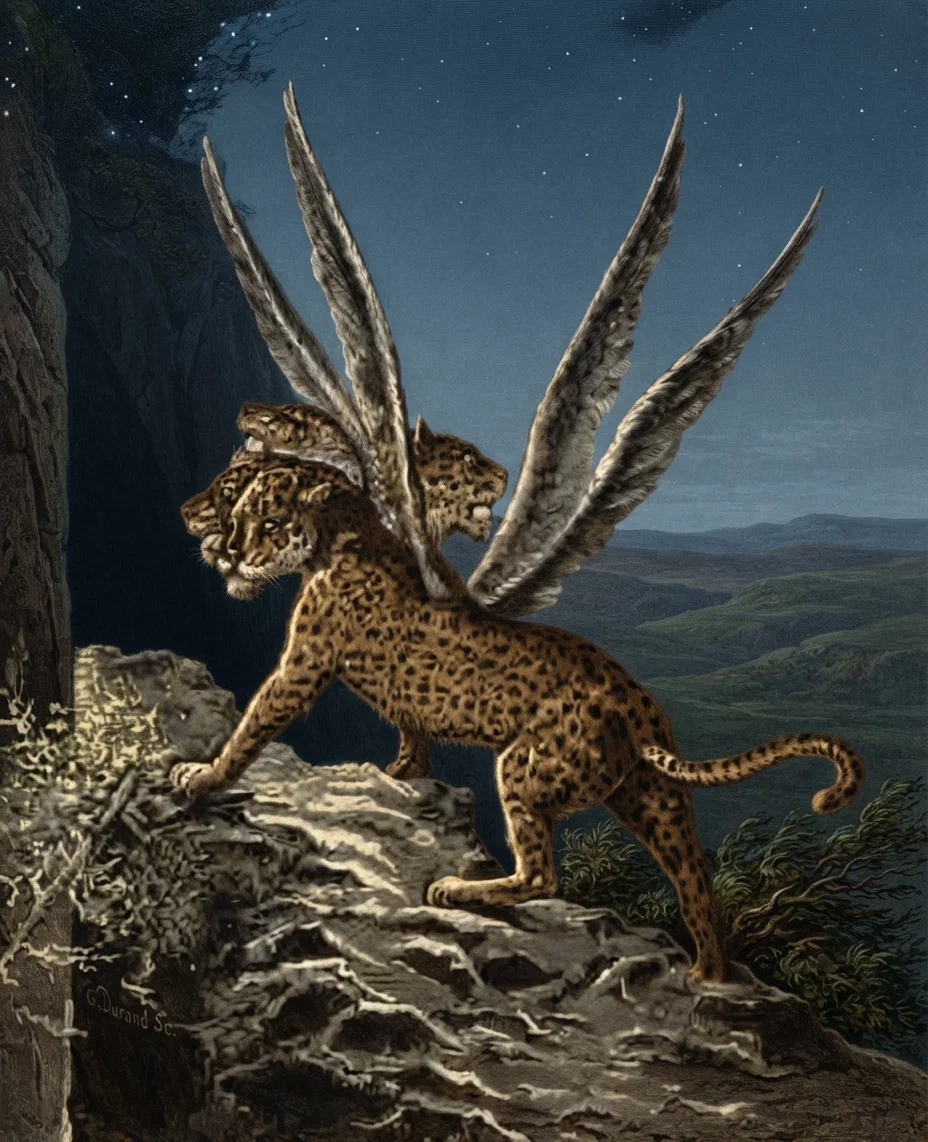
"After this I beheld, and lo another, like a leopard, which had upon the back of it four wings of a fowl; the beast had also four heads; and dominion was given to it."
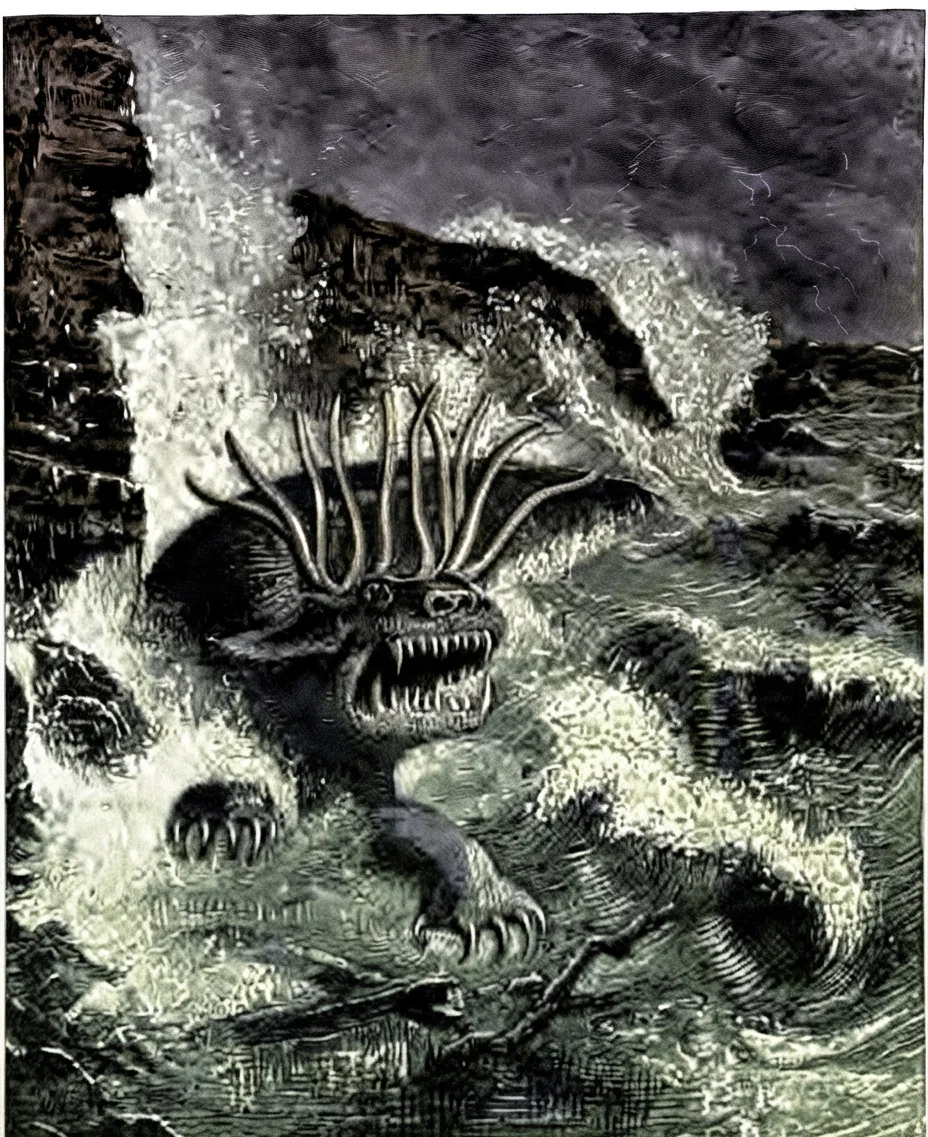
"After this I saw in the night visions, and behold a fourth beast, dreadful and terrible, and strong exceedingly; and it had great iron teeth: it devoured and brake in pieces, and stamped the residue with the feet of it: and it was diverse from all the beasts that were before it; and it had ten horns." Dan. 7: 5-7.
And Behold Another Beast, a Second, like to a Bear.
"Lo Another, like a Leopard."
A Fourth Beast, Dreadful and Terrible.
Darius the Mede succeeded to the throne of Babylon B.C. 538, to be followed by Cyrus, the great Persian. A century and a half before his coming to power, Isaiah, by the inbreathing of God, predicted the fall of Babylon and the deliverance of God's people thru him. In that deliverance he was the type of the greater Deliverer, from a greater captivity, even that of sin. Here is a part of the record:
"Thus saith Jehovah, thy Redeemer, . . . I am Jehovah, that maketh all things; that stretcheth forth the heavens alone; that spreadeth abroad the earth; . . . that saith of Cyrus, He is My shepherd, and shall perform all My pleasure, even saying of Jerusalem, She shall be built; and to the temple, Thy foundation shall be laid. Thus saith Jehovah to His anointed, to Cyrus, whose right hand I have holden, to subdue nations before him, and I will loose the loins of kings; to open the doors before him, and the gates shall not be shut. I will go before thee, and make the rugged places plain; I will break in pieces the doors of brass, and cut in sunder the bars of iron; and I will give thee the treasures of darkness, and hidden riches of secret places, that thou mayest know that I am the Lord, which call thee by thy name, even the God of Israel. For Jacob my servant's sake, and Israel My chosen, I have called thee by thy name; I have surnamed thee, thou hast not known Me." Isa. 44: 24 to 45: 4.
Immediately on his coming to the throne Cyrus issued his decree for the release of the Judean captives, and the rebuilding of Jerusalem. Ezra 1: 1-3. Here expired the seventy years' captivity foretold by Jeremiah. Jer. 25: 11, 12. This was God's object-lesson of the glorious Gospel.
Under Cyrus were united the two kingdoms of the Medes and Persians, extending "from India even unto Ethiopia, over an hundred and seven and twenty provinces." Esther 1: 1. Cyrus was killed in a battle with the Touranians, B.C. 529, and was succeeded by a most unworthy son, Cambyses, known in Ezra 4: 6 as Ahasuerus.
The great Persian empire held sway till the battle of Arbela. In the year 335 B.C., Darius Codomanus, or Darius III, came to the throne. In his second year a new figure appears in Persia. Alexander the Great had crossed the narrow strip of water which separates Europe from Asia, with but 30,000 foot and 5,000 horse for the purpose of conquering a world empire. He met the Persian forces at the river Granicus, and defeated more than five times the number of his army. The next conquest, the year following, came at Issus, where Alexander defeated a Persian army of 600,000. The next year Darius mobilized an army of 1,000,000 men, but was utterly defeated at the battle of Arbela, B.C. 331, the end of the Persian empire. Medo-Persia is well represented by the slow, tenacious, but not less cruel, bear. Raising itself up on one side indicates the manner of its coming up, one part, the Median, coming to power first. The three ribs in the bear's mouth, represented as saying to the bear, "Arise, devour much flesh," are thought to refer to the provinces of Babylonia, Lydia, and Egypt, which Medo-Persia greatly oppressed, the evil acts of which incited it to more cruelty.
Grecia.
Grecia is symbolized by the swift leopard with its soaring wings, indicative of rapidity of conquest and soaring pride. The four heads symbolize the four divisions into which Grecia was divided soon after the death of Alexander. After a few brief years of strife, and plot and counterplot (B.C. 301), the great Grecian empire is found divided as follows: In the north, Thrace, Bithynia, and some smaller provinces of Asia Minor; in the east, Syria, and the country to the Indus; in the south, Egypt, Libya, Arabia, and Palestine; in the west, Macedon and Greece; ruled respectively by Lysimachus, Seleucus, Ptolemy, and Cassander.
Rome.
The fourth beast, "dreadful and terrible," finds no symbol in nature, not even with unnatural additions, adequately to represent the empire it symbolizes. From Revelation 13 it seems to be a combination of the lion, the bear, and the leopard, with the addition of the ten horns. It was more cruel than all the beasts before it. What it did not break in pieces and devour, it trampled underneath its feet. The symbol can apply to but one power; namely, Rome. Every specification fits Rome, and no other. Note the following:
1. It was a power to succeed Grecia. This was true of Rome.
2. It was more oppressive and cruel, especially toward the saints of God, than all that were before it. This is preeminently true of Rome thruout its career, pagan and "Christian."
3. It had ten horns symbolizing ten kingdoms. Verse 24. Rome was divided into ten kingdoms by the incursions of the northern barbarians between, the years A.D. 351 and 476, as follows: Allemanni, Franks, Burgundians, Vandals, Suevi, Visigoths, Saxons, Ostrogoths, Lombards, and Heruli. There were not less than ten; there were no more.
4. This nondescript, terrible beast was to be "the fourth kingdom upon earth," a positive proof that Assyria and Egypt are not counted among its predecessors. It is (1)10
Studies in the Book of Daniel.
(Continued from Page 9.)
Babylon; (2) Medo-Persia; (3) Grecia; (4) Rome.
5. This kingdom lasts in one form or another to the end, when it is destroyed in the fierce wrath of the day of God, to be succeeded by God's everlasting kingdom. Truly it is a part of the Gospel of the kingdom to know that these cruel kingdoms will not stand forever, but are to give place to the righteous kingdom of peace.
[The next article will be a consideration of "The Little Horn."]