Signs of the Times, Vol. 39, No. 11.

Question Corner
Earlier text: False Hopes of Peace

The Advance Guard of Missions

From a Chapter in

The Advance Guard of Missions

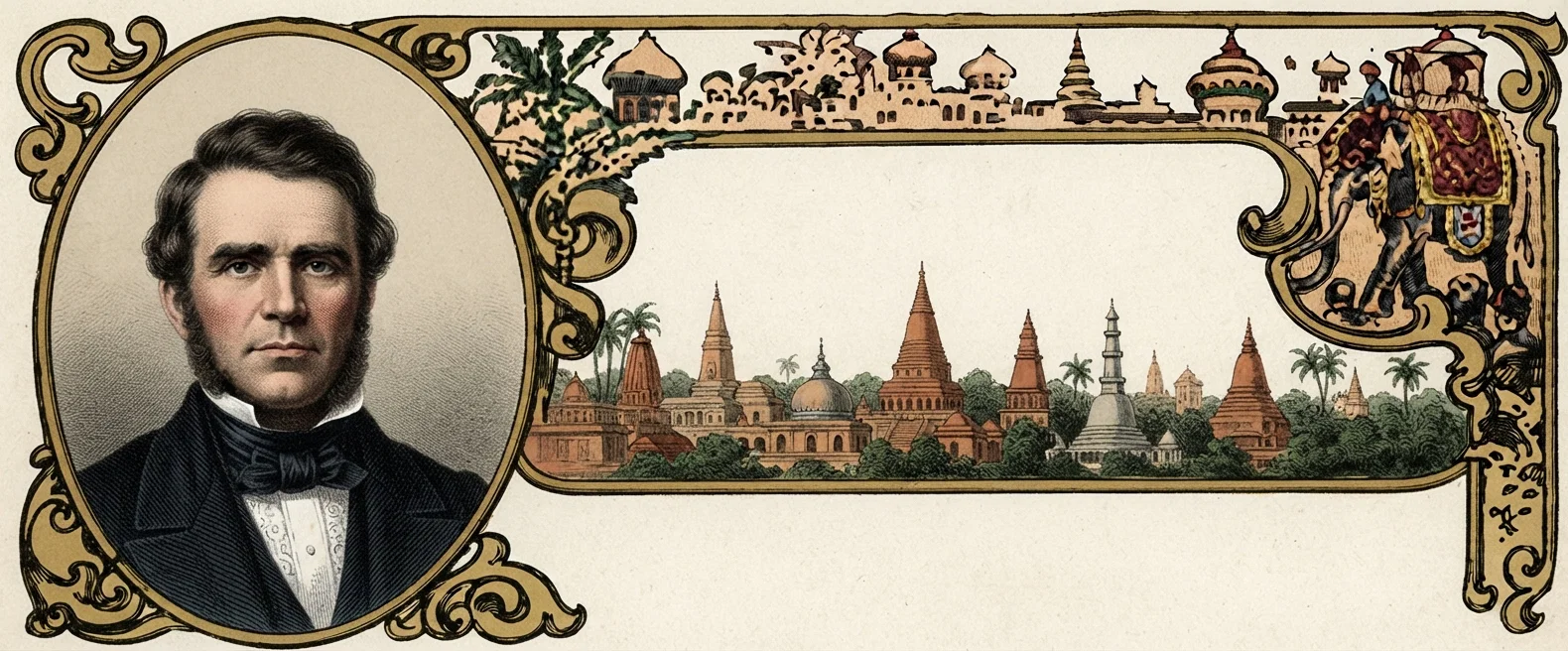
CHAPTER SIXTEEN DR. JOHN SCUDDER First American Medical Missionary to Ceylon and India.
DR. JOHN SCUDDER First American Medical Missionary to Ceylon and India. Born in Freehold, New Jersey, September 3, 1793. Died in Africa, January 13, 1855.
WHEN the cries of the heathen once reached the ears of Dr. Scudder, upon the perusal of a single tract, he went forthwith to help them; and he did it so nobly and well that seven of his sons followed in the footsteps of their father.
On entering Princeton College he had found, among one hundred twenty students, but three who made any profession of Christianity. But he did not therefore hide his light under a bushel. "That fellow is so religious," said a student in the hearing of a newcomer, "one can hardly laugh in his presence."
The new student had just been introduced to Mr. Scudder, who cordially invited him to call at his room. He now questioned, "Shall I associate with one who is viewed as singular, and consent before long to be called a hypocrite, a fanatic, or a social heretic? or shall I consent to be drawn into the ranks of an overwhelming majority?" "At last this conclusion was reached: 'I will call on Scudder at once, and tell him why I came so soon.' . . . I found him at his studies, and told him of my wish to form a religious acquaintanceship, though myself without religion. Quickly he rose and grasped my hand with unlooked-for ardor, saying, 'That's right; stand by that, and you'll never regret it.'" "Those
(177) (Reduced facsimile of one of the pages)
¶ The sketches range from three to thirty pages in length, and are written in a bright, forceful way that holds the interest and imparts strength and inspiration.
¶ Wherever reference is made to a work on missions, the publisher's name is given in foot-note. Thus "Advance Guard" not only gives you the information you would search through volumes to obtain, but directs you to sources where exhaustive study may be carried on if you desire.
¶ Published in two styles— Handsome red cloth, heavy paper......$1.50 Plain cloth ........... 1.00 *Prices 10 per cent higher in Canada*
¶ Every page is just as interesting, and you will feel eager to turn it, because in its 347 pages this new book gives the most important incidents in connection with the lives and work of—
Marcus Whitman, Missionary Physician to the Indians; John Eliot, Puritan Apostle to the American Indians; The Mayhews, Five Generations of Missionaries; David Brainerd, Presbyterian Missionary to the American Indians; Bartholomew Ziegenbalg, the First Protestant Missionary to India; Hans Egede, Pioneer Lutheran Missionary to Greenland; Count Nicolas Ludwig Zinzendorf, Lutheran Evangelist; The Wesleys, Vanguard of a Mighty Movement; Christian Frederick Schwartz, the Most Conspicuous Figure in India during the Eighteenth Century; William Carey, Pioneer Baptist Missionary to India; Henry Martyn, a Church of England Chaplain Missionary to India; Robert Morrison, Pioneer Protestant Apostle to China; The Judsons, Pioneer American Missionaries to Burma; Gordon Hall, Protestant Missionary to Western India; Dr. John Scudder, First American Medical Missionary to Ceylon and India; Alexander Duff, the Greatest Missionary Orator; William Butler, Methodist Missionary of Two Continents; Robert and Mary Moffat, Lights in Darkest Africa; David Livingstone, Missionary Explorer; William Taylor, Pioneer Methodist Self-Supporting Missionary; John Williams, Triumphs in the Cannibal Isles; John Gibson Paton, Presbyterian Missionary to the New Hebrides; Allen Gardiner, Beginning in the Neglected Continent; Guido F. Verbeck, Builders in New Japan; J. Hudson Taylor, Founder of the China Inland Mission; William Miller, Converted Infidel and Baptist Evangelist.
¶ Address your tract society or Pacific Press Publishing Association Mountain View, California 1109 E. 12th St., Kansas City, Mo. Calgary, Alberta, Canada 61 Park St. N., Portland, Oregon

Our Sister Republic

THE republic of China seems to be now assured. Our article on another page will simply tell our readers something of the process through which the actors passed in developing the republic. But the Manchu Dynasty, seeing that the republic was inevitable, attempted to get out of it as gracefully as possible by saying: "It is the will of heaven, and it is certain we could not reject the desire of the people for the sake of the honor and glory of one family. We, the dowager empress and the emperor, hand over the sovereignty to the people. We decide the form of government to be a constitutional republic." Then to guard themselves, eight pledges were to be made to the emperor, (1) permitting him to retain his title and be respected as a foreign monarch; (2) to receive an annual grant of four million taels until the currency is reformed, after which four million Mexican dollars; (3) temporary residence in the Forbidden City, and later in the summer palace ten miles outside of Peking; (4) he may observe the sacrifices at his ancestral tombs and temples, protected by republican soldiers; (5) the great tomb of the late emperor Kwangsu will be completed, and funeral ceremony observed at public expense; (6) palace attendants retained, but the number of eunuchs not increased; emperor's property protected by the republic; imperial guards governed by the army board, the republic paying their salaries. This will presumably die out with the emperor.
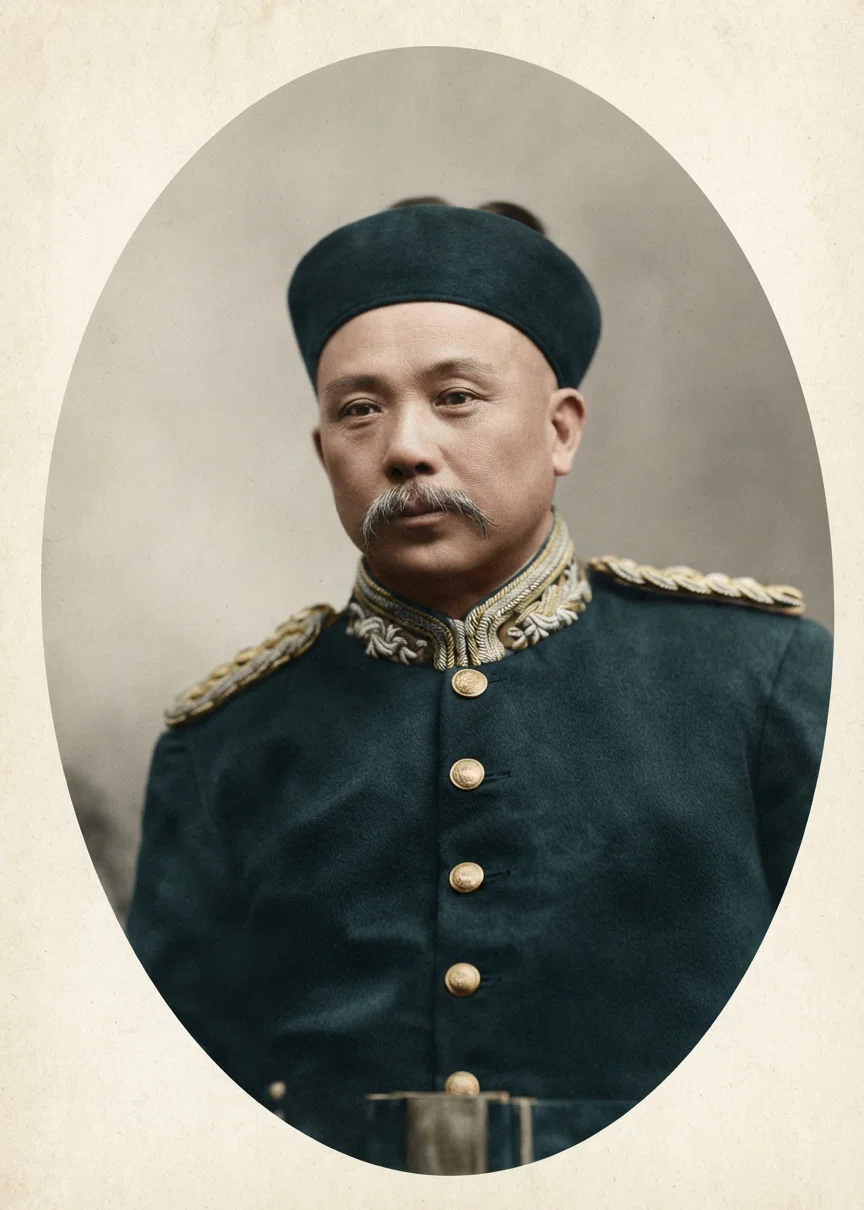
Yuan Shi Kai, President of the Chinese Republic
Yuan Shi Kai is to organize the provisional government as president, and Dr. Sun Yat Sen has shown himself to be one of the princes of patriots by resigning all honors in favor of Yuan Shi Kai. The latter might have assured the republic months ago. The great nation has passed through a very critical period with but little bloodshed. It has been one of the most tremendous revolutions the world has ever seen, and the glory of its success will be due to Sun Yat Sen. Long years of anxious, dangerous effort has been put forth by Dr. Sun, and he should have had the honor of being the first president of the republic. He has been rightly termed the "Washington of China." He is truly the father of the republic; but with a magnanimity that was marvelous in these days of practical politicians, he lays down the honor of the presidency, that he may give place to an older man who is supposed to be wiser and more experienced. He thus throws his whole influence to the welding together of the north and the south. He does this, too, in the most cordial way, telling Yuan that he had been chosen unanimously, the only man in the world's history so chosen except Washington.
We know of nothing which has taught this great element of self-sacrifice and self-effacement in Dr. Sun but Christianity. We hope that out of its tremendous financial difficulties, despite its severe sufferings from famine and disease, China will come forth a strong republican government, giving freedom to the Word of God for the salvation of souls from more than Manchu tyranny — the tyranny of sin.

California’s Sunday Law Agitation

It may not be said that our Sunday law friends in California are laboring to secure to the toiler his weekly day of rest from hard work irrespective of religion; for there is just such a law upon the statute-books of California now, and we have called repeated attention to it. It was passed, we believe, in 1893, and is numbered 3,952. It provides that "every person employed in any occupation of labor shall be entitled to one day's rest therefrom in seven, and it shall be unlawful for any employer of labor to cause his employees, or any of them, to work more than six days in seven." Emergency cases are excepted. The violation of this law is a misdemeanor. Just the other day a Japanese proprietor of a moving picture theater was tried and fined $10.00 for failure to give an employee a day off in the week. But this law is not satisfactory to our religio-political reformers. It is a Sunday law that is wanted. It is the religious law. But religious legislation can have no just place in a free commonwealth.

Contained in This Issue

Question Corner

3687 — The Tabernacle of David, Acts 15: 14-17; 3688 — The Round World Again; 3689 — Why the Mistake? 3690 — The Spirits in Prison; 3691 — The Angels that Sinned . . . . . . 2

Our Bible Band

Our Bible Band . . . . . . 2

General

Temptation — What Is It? . . . . . 4
What Shall We Do with the Fourth Commandment? . . . . . . 5
Studies in Daniel — A Vision of Empires — 4 . . . . . . 6
The Promises to Abraham — The Family Inheritance . . . . . . 8
Robert Morrison's Helper . . . . . . 8

The Outlook

Making China a Republic . . . . . . 9
Methods in the Sunday Law Campaign . . . . . 11
Notes . . . . . . 12, 13, 16

Our Work and Workers

Our Work and Workers . . . . . . 13, 14

Poetry

The Last Warning to Men . . . . . . 3
A Soul Picture . . . . . . 7
Forbearance . . . . . . 8

Sunday Laws and the Initiative

We have no objection to the initiation of laws by the people nor the reference of laws to the people by the legislature. Mistakes will be made, but sooner or later it may be hoped they will be corrected. But there are some propositions which will be run into politics under the plan of the Initiative which do not belong there or to any other civil law-making plan under the sun. One of these propositions is the Sunday law, a religio-ecclesiastical dogma. It is not difficult to secure eight per cent or fifteen per cent of the voters at a previous general election to petition for a submission of the question of a Sunday law to the people. Some would think it eminently proper, because it seems fair; others, because of strong prejudice or a wrong theory of government, would demand it. But the man who is truly instructed in the principles of religious liberty would never think of submitting such a question to human suffrage. It does not belong there. The observance of a Sabbath lies between the individual soul and his God. Legal interference with this is always productive of evil.

Interference or Object-Lesson.

The announcement that this government was going to force the sanitation of Guayaquil, in Ecuador, has led the editor of the Journal of the American Medical Association to remark that if Uncle Sam can insist that Ecuador shall clean up Guayaquil, why should not Italy insist that the United States shall compel Pittsburg to furnish pure drinking water to the Italians working in the steel mills? And, too, "why can not Russia insist that the United States clean up the tuberculosis-breeding tenements of Greater New York, in which thousands of Russians cough their life away?" And the Journal well intimates that Uncle Sam could set some good examples, portray some good object-lessons, at home.

Articles on Socialism

We begin soon, perhaps next week, three articles on Socialism, by Prof. G. W. Rine. We are sure they will be read with interest. They are not a discussion of the political phase of the movement, but its bearing upon men religiously.

Disagreement and Friendship

A man is not necessarily my enemy because he does not agree with me; in fact, his frank utterance of it to me may be the greatest proof of his friendship.

Bible Versions Used in References

Our authority is the Bible, the Holy Scriptures of the Old and New Testaments. When the Common ("King James" or "Authorized") Version or the American Standard Revised Version is used, the version will not generally be designated in reference. Any Bible quotation in this paper, therefore, differing from the Common Version, unless otherwise indicated, will be almost invariably from the American Standard edition of the Revised Bible, copyright 1910, by Thomas Nelson & Sons.
For further particulars, subscription rates, etc., see page 15.

Europe's Most Dangerous Man

Europe's Most Dangerous Man.—A despatch in the San Francisco Chronicle of February 25, dated Vienna, February 24, declares that "Europe's most dangerous man, in the opinion of the peace party here and elsewhere in Europe, is the heir-apparent, Archduke Franz Ferdinand of Austria. He is backed by the clericals and inspired by an ambitious wife," and seems "bent on mischief." The despatch goes on to say that it was at one time thought that Emperor William was the fire-brand of Europe, but to-day it is known that he stands for peace. But Archduke Franz Ferdinand of Austria has been all for war, and there stands with him Austria's greatest soldier, Baron von Hoetzendorf, who has been called the only soldier in Europe. He believes that a soldier's business is to fight. There is no use of having an army unless you fight. If you only fight hard enough, you are certain always to win. Emperor Franz Josef can not live much longer. Ferdinand will come to the throne, and then his ambition will call for a great Eastern empire.

No Compromise

No Compromise.—The Christian can not compromise principle. If intemperance be an evil — and it is so admitted generally — the Christian can in no way foster it or temporize with it. He can not compromise with it by licensing evil. If six saloons are a curse to a town, one is. It does not mitigate the curse to the worse than widowed mother to know that drink was sold to husband or son under a thousand dollar license. From a purely economic standpoint it would be a blessing to a community and to the world to abolish the drink traffic forever. But the Christian as an individual must look upon it from an even higher motive, and he must not compromise with the evil.

Which One?

In an excellent article, the Sunday School Times says, "Any soul that approaches a moral question with one on his lips starts fatally wrong." And this is doubtless true in the sense intended — the self one. But if that one be Christ, is it fatal? Or if that one be the other man, is it fatal? He who seeks his own "rights" seeks selfishly. He who seeks successfully the "rights" of his neighbor secures his own. The government that conserves the rights of the one, conserves in that one the rights of all, but that one is truly generic, not special.

Armenians Hanged in Persia

A despatch from Teheran, Persia, dated January 21, says that Russia had hung a prominent Armenian merchant the day previous, notwithstanding the protest of the British consul. Another prominent Armenian, who protested his innocence, was hung the next day.

Working in God's Plans

Our prayer ought not to be that God will bless our plans, but that we may work in His plans.

You have reached the end of this edition.

Signs of the Times · Mar 12, 1912