THE Methodist General Conference has just closed at Chicago, after a session lasting nearly four weeks. About 700 delegates were present. Among the many actions taken we note the following:—
1. Admission of lay delegates to full participation and vote in the general conference. This provides for equal legal rights for lay members and ministers in this body.
2. Adoption of a new constitution, one article of which permits the election of women as lay delegates to annual and general conferences.
3. Placing the Northern Christian Advocate (Syracuse, N. Y.) in the hands of a commission appointed from its patronizing conferences, who guarantee its conduct without loss. During the past quadrennium this paper has lost over $15,000, and has been enabled to continue only by reason of a subsidy from the profits of the Book Concern. In like manner, other editions of the Advocate have been aided during the same time to the amount of over $90,000.
4. Removal of the Central Christian Advocate from St. Louis to Kansas City, Mo., and combining with it the Omaha edition.
5. Stopping subsidy to the Rocky Mountain Advocate.
6. Placing the California Christian Advocate and the book depository in San Francisco under the control of a local commission, with a subsidy, if needed, of $7,500.
7. Election of two additional bishops to the general episcopal body. These are Dr. J. W. Hamilton, of Boston, and Dr. David H. Moore, of Cincinnati, the latter for many years editor of the Western Christian Advocate. The rules were amended so as to require a two-thirds instead of majority vote for election of bishops.
8. Election of two missionary bishops for Southern Asia.
9. Abolishing of the time limit. For the past twelve years the time of service for ministers in any one place has been five years. Before 1888, lengths of service varied from one to three years at different times. The time-limit plan has not been satisfactory to many, and sufficient reasons were advanced to induce the general body to make the change noted.
10. Fixing of Episcopal residences.
11. Refusal to alter the discipline relating to amusements. This was the adoption of the minority committee report, the majority report favoring the placing of decisions on amusements in the hands of pastors.
12. Reaffirming temperance resolutions of the past, but tabling the majority report of the temperance committee, censuring President McKinley, Attorney-General Griggs, and the administration.
13. The conference, by a unanimous rising vote, passed a resolution protesting against the United States Government reopening the question of granting national support to sectarian Indian education, and sectarian charities in the District of Columbia, alleging that such an arrangement is virtually a union of the Church and the State, which is, of course, true. Similar actions were taken in 1892 and 1896, at which times the general government had not cut off such appropriations.
14. A "demand" was also made that "civil and religious liberty shall be guaranteed to the people wherever the flag of the republic floats over our most distant new insular possessions." It was directed that copies of these actions be forwarded to the President of the United States, to the presiding officers of the Senate and the House of Representatives, and to the Secretary of the Interior.
15. A memorial was also ordered sent to the President and to Congress urging the speedy adoption of the proposed amendment to the Constitution forever prohibiting polygamy within the United States, or any place subject to their jurisdiction.
16. In the election of editors, Dr. J. M. Buckley was re-elected editor of the Christian Advocate (N. Y.), the leading journal of Methodism; Dr. Levi Gilbert, Western Christian Advocate; Dr. C. B. Spencer, Central Christian Advocate.
The Methodist Church will enter upon the new century with many problems to face, chiefly within herself, in view of changed conditions.
INFLUENCE OF MODERN LITERATURE.
By C. M. S.
Something of the influence which a certain class of modern light literature is bound to have upon those who read it, both young and old, may be judged from the following truthful statement of G. Bernard Shaw, of London, in describing the way in which modern novel writers do their work. Mr. Shaw says:—
"They write in town at night. First they poison themselves with alcohol and tobacco, drinking and smoking at their dinner; then they go into their studies, draw the blinds, turn on the light, and work. The consequence is that almost all of modern literature is drunken. The taint of tobacco, of wine, of meat-eating runs right through it."
And the worst of it is that they who read it are sure to be tainted by it. The writer increases the number of his kind by the contact of his poisoned brain with that of the one who reads his work. The general trend of a great deal of modern literature is toward the light, trivial, and trashy. Modern published songs, with but few exceptions, are on a level with the light literature of the day. Silly, sentimental songs, and songs that press close to the border of vulgarity, have enormous sales, and are to be found at almost every music store, or are issued with the magazine sections of newspapers. The story that is not flavored with tobacco or wine is returned to the writer with a gentle hint that it be enlivened with a bottle of champagne, or that he permeate it with the aroma of a fragrant Havana cigar. These suggestions are made in deference to the wishes of the tobacco and liquor companies, whose advertisements appear in the journals or magazines. The thoughtful recognize that there is a letting down all along the line, and, sad to say, the least moral books are the most rapid sellers. The following colloquy, which took place in a Chicago news store, is an illustration of this fact:—
"‘This is one of the literary successes of the year,’ the book-store salesman said, handing out another volume.
‘Is it suitable for young persons to read?’ asked the customer.
‘Well, no, ma’am. Our most popular books, you know, seldom are.’"
There is nothing that will enable one to stem this tide of degenerate reading matter like having the mind filled with the Word of God. Cultivate a taste for the pure food which that Book contains, and the great mass of highly-seasoned, intoxicating substitutes for food will lose their ability to tempt the mental appetite. The child should be taught to love it. If his mind is filled with it, the trash of the present day will be far less likely ever to taint his brain, and crowd out his desire to learn of heavenly things.
C. M. S.
Increase of Drinking
Notwithstanding the increasing publicity of temperance sentiment and extraordinary efforts which have been put forth by many temperance reformers; notwithstanding the picture of its terrible curse which is continually before the world in blasted fortunes, wrecked homes, ruined characters, and loss of life, the manufacture and consumption of drink is constantly increasing. The London Standard (quoted by the New York Times of April 29), in speaking of the latest and completest statistics of London's board of trade respecting beer, says: "It is a striking fact that in every European country here mentioned, except Italy, and in the United States, there has been a steady and, in most cases, a large increase both in the production and in the consumption of beer during the fourteen years covered by the return." The production in Great Britain increased from 993 million gallons in 1885 to 1,302 million gallons in 1898; Germany, from 932 million gallons in 1885 to 1,460 million gallons in 1898; Russia, from 77 million gallons to 115 million gallons in the same period; United States, from 494 million gallons to 968 million gallons; Sweden, from 20 million gallons to 49 million; Switzerland, from 19 million to 46 million. In consumption, in gallons per head, the United Kingdom increased from 27 in 1885 to nearly 32 in 1898. Wurtemberg increased from 32 gallons to 43 gallons; the United States, from 8.8 gallons per head in 1885 to 13 gallons for each man, woman, and child, on an average, in 1898. In Britain, the consumption of spirits is yearly "about one gallon a head, with a tendency to increase." United States is given about the same. Think of this vast bottomless sea, into which is poured so many farms, homes, stocks, bonds, grain, money, reputations, character, lives; and it never did any one any good; its infernal maw is still open to swallow all that is good.
THE government of the United States has informed China that unless the Chinese Government takes active measures to suppress the "Boxers," and guarantee the safety of Americans in China, American troops will be landed. The Chinese Government's half-hearted efforts to suppress the anti-foreign organization have resulted in nothing. Some of the Chinese troops have gone over to the "Boxers," and the others have been defeated. The "Boxers" are now marching on Peking, and foreign troops have been ordered to proceed to that city at once for the protection of the various foreign legations. The consuls of the foreign governments at Peking have united in a demand upon the Chinese foreign office for an explanation of the government's attitude. Rear Admiral Kempff, of the American Navy, is now at Taku with his flag-ship, this being the nearest approach to Peking for large vessels. The "Boxers" are reported to be enlisting hordes of desperadoes, and are intent upon expelling from China everything foreign. The position of the missionaries is said to be one of extreme peril. It is feared that they will meet with the same fate as their native converts, whom the rebels are ruthlessly murdering. The Russian minister at Peking has telegraphed his government, asking that all the available gunboats be sent to Taku. A despatch from Tien-Tsin, dated May 31, states that the Chinese have refused to allow Russian troops to pass the Taku forts on their way to Peking. Americans to the number of 108, with a machine gun and a field gun, have been landed at Tien-Tsin. Men have also been landed from the Russian, French, Italian, and British war ships at Tien-Tsin. A fleet of twelve foreign war ships is now at this place ready for action. The Chinese foreign office has refused permission to these foreign troops to proceed to Peking, and an ultimatum has been delivered to the Chinese Government stating that the foreign troops would start for Peking on June 1, whether they had permission or not. The situation is regarded as very grave.
EACH week adds to the terrible record of the India famine. The rapid spread of cholera and smallpox in the relief camps is carrying off thousands who might otherwise have eked out an existence until the people are again able to help themselves. The dying drop in the fields and ditches and along the roadside. At Godhra there have been 3,000 deaths in four days. Cattle are dying by hundreds. The human death rate in the poorhouses at Ahmedabad is ten per cent. daily. The thermometer stands at 115 degrees in the shade. Deaths at Donad have been 2,500 daily, and the bodies are being devoured by dogs, vultures, and jackals. The native officials are reported to be heartlessly indifferent, and the spirit of the people is broken. The monsoons will soon be due, and the torrential rains, flooding the relief camps, will spread the cholera, plague, and smallpox throughout the country. In the infected places the air is said to be stifling, and the water impregnated with poison from the unburied dead. Dr. Klopsch reports that the present condition of India is worse than at any time during the century. A more terrible picture than India now presents would be hard to imagine.
THE Supreme Court of the State of Massachusetts has decided that tobacco can not be sold on Sunday in that State unless it is sold to be used as a medicine. What a door for subterfuge and hypocrisy is flung open whenever men essay to legislate on matters of religion. Tobacco is not clothing, it is not food, neither is it properly classed as fuel, tho it burns out many a brain, and sears and wrecks the nerves from head to foot. But there are not wanting thousands who will declare it is medicine when the law of the land makes it a misdemeanor to purchase it on one particular day of the week, and not so on another. By making a crime of a civil act, such a law fosters in the man the sin of perjury. And to this end all religious legislation operates. All efforts of religious people toward the enactment of religious laws tend to the increase of cold formalism, hypocrisy, and sin. Would that good people would learn this before embarking on such a disastrous course.
THE Hallock Bill, recently passed by the New York Legislature, has become a law. This new law makes it a misdemeanor to sell, or possess for sale, the plumage of the following wild birds and songsters: Quail, partridge, pheasant, wild duck, pigeon, meadow lark, grouse, woodcock, oriole, robin, bluebird, and woodpecker. Under the law no wild birds other than those for which there is an open season, can be taken or possessed at any time, dead or alive, and no part of their plumage, skin, or body, can be sold or kept for sale. The wanton destruction of these beautiful creatures to pander to human vanity has nearly, if not quite, destroyed many varieties of the feathered creation. It is to be hoped that this sharp rebuke to a wicked fashion will awaken the consciences of men and women in other States, and check the cruel slaughter.
ON May 30 Lord Salisbury announced the capture of Johannesburg, the metropolis of the Transvaal. According to the latest report, Lord Roberts' army was within a few hours' march of Pretoria. President Kruger had fled to the Portuguese seaport of Lourenzo Marquez, and the defenders of the various forts around Pretoria had been dismissed. Trainloads of fugitives are on their way to Portuguese territory, and many of the Boers have returned to their farms. It is believed, however, that there are large companies of Boers still in the field. The Boers at Laing's Nek are still holding General Buller's force in check, and no headway seems to have been gained by the British at this point. Many now regard the war as practically ended.
THE eclipse of the sun which occurred on May 28, and was visible as a total eclipse through Mexico, the Southern States, the Atlantic Ocean, Spain, and North Africa, was successfully viewed by a large number of scientific expeditions. No eclipse has occurred for many years whose path of totality was more convenient for astronomers, or that was attended with better weather throughout its entire course. The sky was remarkably clear at nearly every observing station, and many excellent photographs were taken, from which much is expected in a scientific way.
THE strike of street-car men in St. Louis, Mo., shows little signs of abating. There has been more or less rioting day after day since the beginning of the strike, three weeks ago. Perhaps the worst riot since the beginning of the disturbance occurred on May 29. It is reported that more than two hundred bullets were fired by strikers, policemen, and street-car employees. As a result of the shooting, three men were mortally wounded, and fully a dozen others were more or less seriously hurt by bullets or flying missiles.
SMALL engagements between Americans and Filipinos are of daily occurrence in the island of Luzon, and occasional encounters are reported also from the other islands of the Philippine group. On Masbate Island 230 Filipinos and 100 rifles were surrendered on May 20. On Luzon, 226 prisoners were taken during the week ending May 27. On the night of May 30, a body of insurgents swept through one of the suburbs of Manila, killing 5 Americans and wounding 7, and escaped without loss.
A TEST was recently made by the British Admiralty to ascertain if the woodwork on the old ironclads would burn from the effects of shell fire. In this test the first-class battle-ship Majestic fired upon the old-fashioned ironclad Belle Isle, and sank her in nine minutes. The latter vessel went down so quickly that the question of her taking fire is still unsettled.
THE uprising is still spreading in the Ashanti region of Africa. In an attempt to break through the investing lines of rebels at Coomassie three European officers were killed, and 100 in the rank and file were wounded. The loss among the Ashantis is said to have been great, as the Hausers had three Maxim guns engaged.
A REPORT from Japan states that the Japanese are placing live torpedoes in all their harbors, a measure adopted by nations only when hostilities are imminent. The only explanation offered is that the Japanese expect soon to have a conflict on their hands, presumably with Russia.
THE rush to the Cape Nome mining region has begun in earnest, forty-seven passenger vessels having left Puget Sound ports up to May 26. It is estimated that over 8,000 persons have gone to this district alone since the shipping season began this year.
FOR the first time on record the czar invited the members of the British embassy to dinner on the occasion of the queen's birthday last week. This innovation is regarded as of great political significance.
THE Panama Canal Company at Colon, Colombia, has received orders from Paris to resume work on a large scale, and many mechanics and laborers are being engaged, according to a report from Colombia.
A STEAMER with three convoys was carried over the falls in the Poteria River, British Guiana, on May 26, and the forty persons on board were drowned.
THE Catholic Mirror notes the fact that a Catholic priest opened the Populist National Convention with prayer, at the request of the chairman.
THE CONSTITUTION—ITS VIOLATION.
By Editor
IN these days when the Constitution of the United States is regarded as belonging to a dead past, the following editorial from an Eastern paper will commend itself, as good sense:—
"Why do we have a Constitution?"
"The people can not daily and hourly superintend the doings of their public servants. Yet they must have public servants, and must intrust them with some power. So the people made a Constitution, which tells their public servants precisely what they may do and what they may not do. And this Constitution specifically provides that the public servants may not do anything which the Constitution does not expressly give them leave to do. It also provides that if contingencies arise which are not covered by the Constitution, the people must be asked to ratify an amendment covering the case."
"Why is a violation of the Constitution dangerous?"
"Because it is an act of usurpation—an encroachment upon the fundamental right of a free people. That right is the right to govern themselves, to say what shall or what shall not be done. An encroachment becomes a precedent. The precedent becomes a habit. The habit becomes a vice."
"What does 'outside the Constitution' mean?"
"It means outside of the law, beyond the pale of the law. It means an exercise of power that belongs only to the people, and has never been delegated by them to their public servants."
GOD'S LAW IN THE HOME.
By Ruth Gardner
ALL of God's laws, both in the natural and spiritual realms, are harmonious and perfect, and produce harmony. God is love, and love is harmony.
What, then, is the cause of all the dire disorder and inharmony that have made society a pandemonium of discord and strife, and have caused the sweet music of home, like a harp unstrung, to cease, or give place to clashing discords and misery and heart-break?
Who was the founder, and what was the foundation principle of the home? The record of the first marriage is found in Gen. 2:18-25, and the reason given for it was that "it is not good that the man should be alone; I will make him an help meet for him," saith the Lord. And He who doeth all things well created for Adam, of the man's own flesh and bone, a companion who would have satisfied every need of his soul life except his great supreme need of God. And God joined them in a bond of union that no one but He can sunder. Mark 10:1-12. "Therefore shall a man leave his father and his mother, and shall cleave unto his wife; and they shall be one flesh."
In this beautiful plan of God, He has made perfect happiness possible. God has not constituted us, men or women, self-satisfying and self-sustaining creatures. In great wisdom He has provided that that which He left lacking in man's stronger nature should be supplied by the gentler attributes of the wife, and thus his own life would be rounded out to perfect completeness.
It is natural for us to admire in a friend whatever of excellency we lack in ourselves, and in just the measure that we feel our need and unworthiness, is our friend precious to us. So, much more in this wonderful two-in-one union, God hath purposed that each should be the complement of the other's nature, each filling up the measure of the other's joy and heart's content to a perfect whole.
God has given His creatures to know something of His delight in His chosen One—"the only-begotten Son," who dwelleth in the bosom of the Father—when He gives to man one, "only one," to be his very own, "sealed" (Solomon's Song 8:6, 7) unto himself by a love that is stronger than death, partner of all his pleasures and disappointments, joys and cares, "his other self." He finds in her a sympathetic and responsive chord to every thought, feeling, and purpose of his life.
What a well-spring of joy God has ordained in every truly-wedded household! If it draws its supply from the great Fountain-head, it is indeed an overflowing fountain, as described in Prov. 5:15-19, that spreads out in ever-widening circles of influence, and blesses everything that comes in touch with it.
But it is written, "Let them be only thine own, and not strangers with thee." God has drawn a vail between the inner sanctuary of home and its outward manifestation; and within the boundaries of that sacred privacy that belong to husband and wife alone, let no third party presume, on any pretext, to intrude. Whenever this divine appointment is disregarded, wittingly or otherwise, by any "friend," however good and dear, the result is always to bring distress, clouds, and misunderstanding. Not even father and mother can safely disregard this law of inviolable confidence, and the first offense is only the entering wedge to final disruption, if not quickly repented of.
But who can estimate the terrible condemnation of that guilty soul who, by guileful arts, creeps into the inmost sanctuary of home, and defiles the fountain of another's joy,—the true heart in which he trusted, in whose sworn faith he had found his soul rest and repose?
Of what is he not guilty! A home is in ashes as truly as tho the incendiary's torch had been applied. A sanctuary is profaned, and all its holy ministrations of the past are only a ghostly mockery of the present despair. Confidence is destroyed, virtue lost, and hope dead. Is not the destroyer of a happy home even as a murderer?—Yes; the Word says it.
And what is true of a man that can do this evil is equally true of a woman who would usurp the wife's place in her husband's heart. Woe unto that one, be he man or woman, who builds his or her happiness upon the wreck of a ruined home. I care not how plausible an excuse the tempter may frame, nor how exceptional may seem the conditions, there is absolutely no exception to this law. Mark 10:9, 11, 12. There can be no real happiness without the blessing of God, and His blessing can never be upon a thing that is contrary to His law.
And, dear sister or brother, if you have found that your marriage relation is only a bondage unto Satan, and you are bitterly disappointed in not finding all you hoped for, trust wholly in the Lord. God knows the longing of every hungry heart, and He says He will satisfy it. Ps. 107:9. "Rest in the Lord, and wait patiently for Him." "Delight thyself also in the Lord; and He shall give thee the desires of thine heart. Commit thy way unto the Lord; trust also in Him; and He shall bring it to pass." Ps. 37:7, 4, 5.
And remember that "no good thing will He withhold from them that walk uprightly." "What knowest thou, O wife, whether thou shalt save thy husband? or how knowest thou, O man, whether thou shalt save thy wife?" 1 Cor. 7:16. God is able to create your dear one a new creature in Christ Jesus, if he or she can be won to yield the will to His power.
But if your house is left unto you desolate to-day, open your Bible and read Isaiah 54. It is all yours if you belong to Jesus, for it is written at the end of that healing chapter, "This is the heritage of the servants of the Lord."
Jesus is our sufficiency here, tho our home hearth may be dark to-night. He is able to give us more than all we have lost for His sake; for it is written, "None of them that trust in Him shall be desolate." Lay hold on these precious promises now. They are yours if you will believe them and take them.
God has not told us all that He has in store for those who will walk with Him by faith, trusting their life, with all its miserable complications and disappointments, wholly into His hands. He alone can straighten the tangled skein of our life. If we try to do it ourselves, we shall only become the more hopelessly entangled; for he that is against us (Satan) can foil us every time. "Trust in the Lord forever; for in the Lord Jehovah is everlasting strength."
I know that Satan has thwarted the good purpose of God for us many times because we did not seek counsel of Him in the critical choosing time; but there is no one, in however sad condition in life, where sin or persecution may have brought him, whose case can not be reached by God's power and mercy. Will you not trust your life fully in His hands?
God is going to bring harmony out of this chaos of sin, and sorrow, and misery by and by, when every earthly tie is riven, when sin and Satan (its author) are utterly destroyed, and the purified earth created new, in peace and righteousness and joy forever. Then shall God give His faithful ones their "inheritance." And there is the blessed hope that we may have a part in "the marriage supper of the Lamb" when Christ shall gather the whole family of God on earth and in heaven into one grand reunion, which shall never, never end. "And God shall wipe away all tears from their eyes; and there shall be no more death, neither sorrow, nor crying, neither shall there be any more pain; for the former things are passed away."
RUTH GARDNER.
THE MOTHER'S PRAYER.
By William Cullen Bryant
STARTING forth on life's rough way,
Father, guide them;
O, we know not what of harm
May betide them!
'Neath the shadow of Thy wing,
Father, hide them.
Waking, sleeping, Lord, we pray,
Go beside them.
When in prayer they cry to Thee,
Do Thou hear them;
From the stains of sin and shame
Do Thou clear them;
'Mid the quicksands and the rocks
Do Thou steer them;
In temptation, trial, grief,
Be Thou near them.
Unto Thee we give them up;
Lord, receive them;
In the world we know must be
Much to grieve them,—
Many striving oft and strong
To deceive them.
Trustful, in Thy hands of love
We must leave them.
—William Cullen Bryant.
HOW TO HURRY.
READER, do you know how to hurry?
This is a hurrying age, and you ought to know how to keep up with it—if you think it worth while. Here are a few suggestions that may help you:—
1. Do nothing that you don't have to do. Cut out the non-essentials.
2. Don't hesitate. Begin at once. When you are through, stop, and begin on the next thing.
3. Don't be too particular what part of the job you begin with. Other things being equal, do what's under your hand first and the next nearest thing next.
4. Don't pause between jobs.
5. Don't go from one job to another until the first is done. "Do one thing at a time." It takes time to change your mind.
6. Do your thinking while you're acting. And think about the work in hand.
7. If you have assistants, use them. At first do only what they can't do, and afterward help them out.
8. Do nothing twice. This makes it necessary to do it right the first time.
MOTHER'S APRON STRINGS.
No ONE can help admiring the noble reply and manly spirit shown in the following incident:
"Charley! Charley!" Clear and sweet as a note struck from a silver bell, the voice rippled over the common.
"That's mother," cried one of the boys, and he instantly threw down his bat and picked up his jacket and cap.
"Don't go yet." "Have it out." "Finish this game." "Try it again," cried the players in noisy chorus.
"I must go right off, this minute. I told her I'd come whenever she called."
"Make believe you didn't hear," they exclaimed.
"But I did hear."
"She won't know you did."
"But I know it, and"—
"Let him go," said a bystander; "you can't do anything with him; he is tied to his mother's apron strings."
"That's so," said Charles, "and it's to what every boy ought to be tied—and in a hard knot, too."
"I wouldn't be such a baby as to run the minute she called."
"I don't call it babyish to keep one's promise to his mother," answered the obedient boy, a beautiful light glowing in his blue eyes. "I call that manly; and the boy who don't keep his word to her will never keep it to any one else—you see if he does." And he hurried away to his cottage home.
Thirty years have passed since those boys played on the common. Charley Gray is a prosperous business man in a great city, and his mercantile friends say of him that his word "is bond." We ask him how he acquired such a reputation. "I never broke my word when a boy, no matter how great the temptation, and the habits formed then have clung to me through life."—Anon.
Rules for Efficient Work
9. Don't lay down one tool except to take up another.
10. Beware of looking out of the window. That way distraction lies.
11. Don't put things off. Do them when you think of them.
If you'll follow these rules and a few more that you can make yourself, you will be able to reduce your office hours about one-half; you won't think you're hurrying; you won't be bored and worn out by your work; and when it's over, you can go and romp with the baby with an approving conscience and a mind at rest.—Monthly World.
TO GET RID OF FLIES.
PEOPLE in the country who are annoyed by flies should remember that clusters of the fragrant clover, which grows abundantly by nearly every roadside, if hung in the room and left to dry and shed its faint fragrant perfume through the air, will drive away more flies than sticky saucers of molasses and other fly-traps and fly-papers can ever collect.—N. Y. Tribune.
True and False Friendship
“FALSE friendship like the ivy decays and ruins the wall it embraces; but true friendship gives new life and animation to the object it supports.”
STORY OF REDEMPTION
The object of this book is to save souls. It assures the sinner that the plan of redemption is for him, and encourages the Christian by presenting many of God's promises in a new and beautiful way. It traces the plan of redemption from Eden lost to Eden restored, and makes clear the fact that Christ is "the Lamb slain from the foundation of the world."
Righteousness through Christ
One chapter is entitled "Righteousness through Christ," and so carefully is this wonderful truth explained that it seems impossible for the honest reader to misunderstand it. The whole story is told in an easy, interesting manner that invites the closest attention.
Jesus Is Coming Again
By Editor
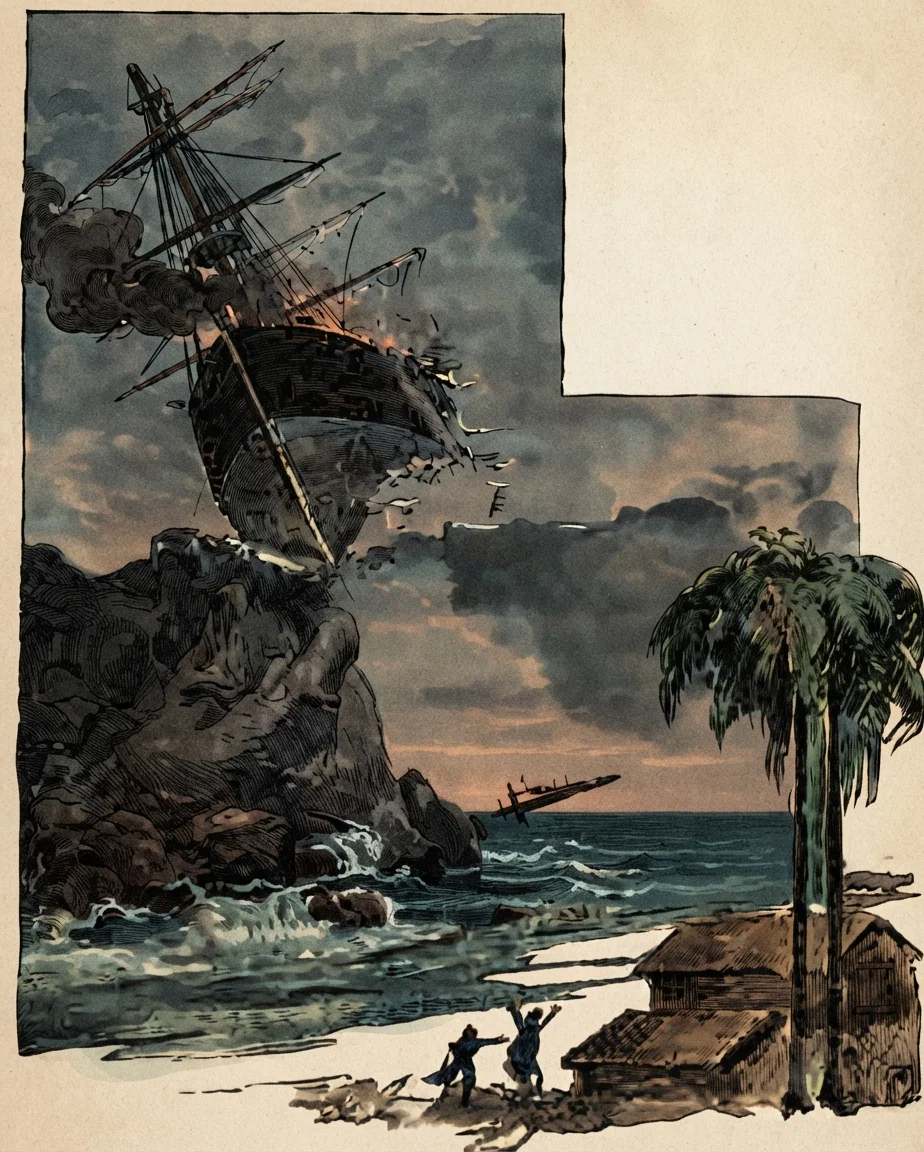
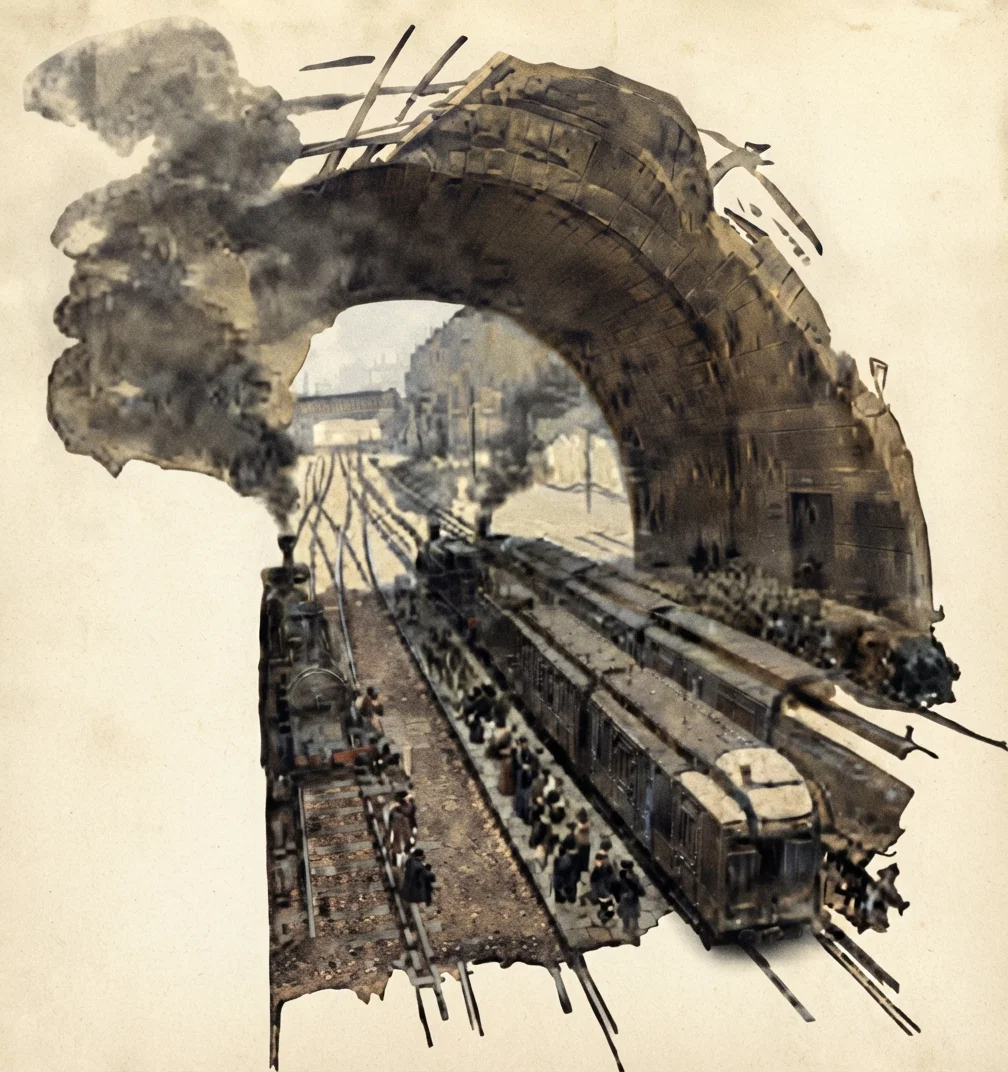
Another chapter, "Jesus Is Coming Again," from which we have taken the accompanying illustrations, treats upon the remarkable evidences all about us that His coming is but a little way in the future.
Illustrations and Binding Options
The book is well illustrated with half-tone engravings, together with four full-page illustrations in colors.
CLOTH, with colored edges - - - - - $1.00
CLOTH, gold title, gilt edges - - - - 1.25
Pacific Press Publishing Co.
OAKLAND, CAL.
39 BOND STREET, NEW YORK CITY
18 W. 5th STREET, KANSAS CITY, MO.
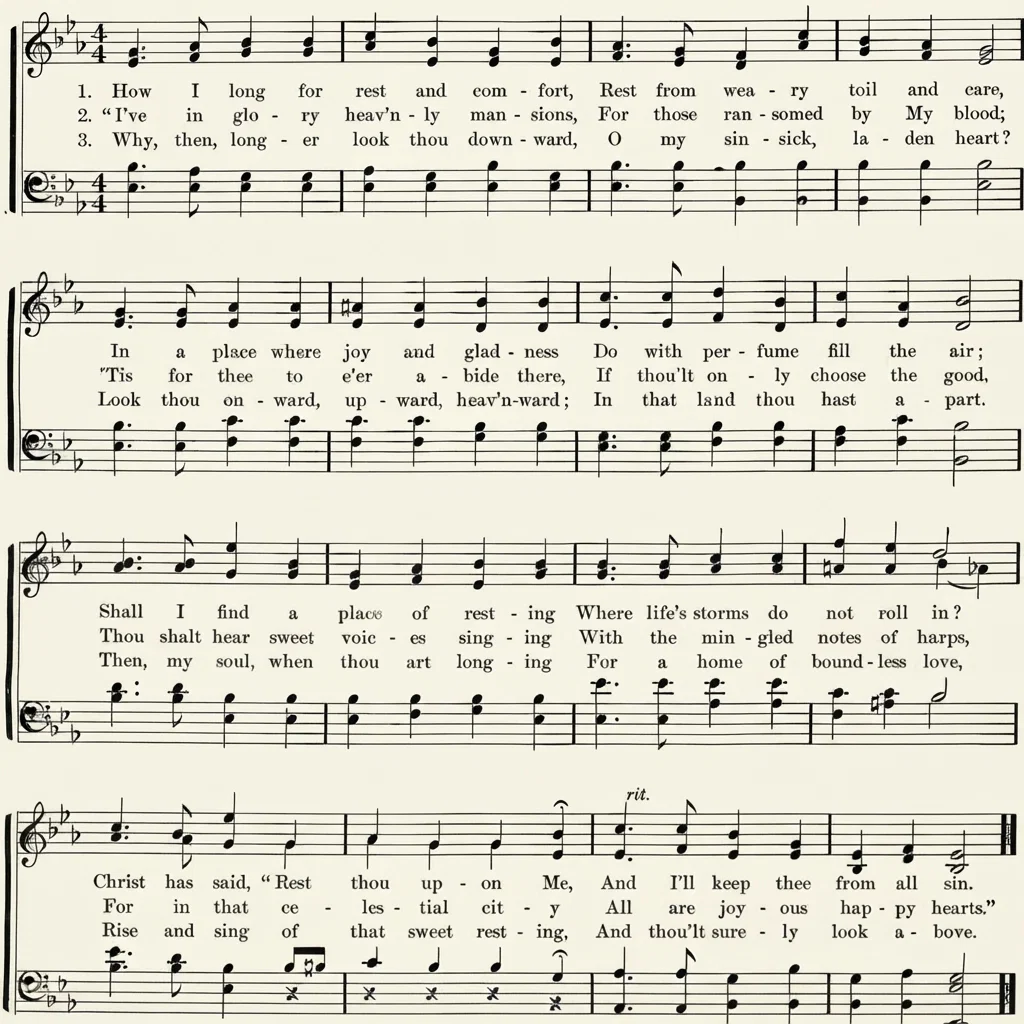
Longings.
Gertrude E. M. Spiking.
J. L. Dunstan.
LIFE'S PROBLEM.
By Annie L. Holberton
[Annie L. Holberton, in Sabbath Recorder.]
LORD, give us strength from day to day
To bear the trials on our way,
Patience to bear the little ills,
The common care that each day fills,
Until we pause and ask,
Where is the grand design of life?
When trammeled with its petty strife,
That jars and crowds the good half wrought,
And higher aim the soul has sought,
Beyond this weary task.
The toil of swift-receding years,
The happiness dissolved in tears,
Seem fruitless, and of less avail
The fondly-cherished hopes that fail,
While wintry days draw near.
What might have been, yet will not be—
The yearning heart some day may see
Why a wise Providence denied
The gifts for which the soul has sighed,
The wishes held so dear.
The prayers we raise in mute appeal,
A clearer light may yet reveal
Their answer from Almighty hand,
In ways we do not understand.
While heaven's record holds
The tracing of our best resolves,
Eternity the problem solves,
The world's injustice to requite,
All that was shadowed bring to light,
When God life's page unfolds.