Your ShelfYour Projects

Review and Herald, Vol. 56, No. 21.

ADDING TO AND TAKING FROM THE SCRIPTURES
Earlier text: Why Every Household Should Read the Review

CONSTITUTION

ARTICLE I.—NAME.

This organization shall be known as the American Health and Temperance Association.

ARTICLE II.—OBJECTS.

  1. To promote the health of those who become members of it.
  2. To advance the cause of temperance in its truest and broadest sense, by the circulation of health and temperance literature, by securing popular lectures upon these subjects in various parts of the country, and by the wide circulation of suitable pledges, and earnest efforts to secure numerous signers.

ARTICLE III.—OFFICERS.

SECTION 1. The officers of this Association shall consist of a President, Vice-president, Secretary, who shall also act as Treasurer, and an Executive Board, consisting of the President, Vice-president, Secretary, and two additional members. These officers shall be elected by vote of a majority of those present at any regular annual meeting.

ARTICLE IV.—MEMBERSHIP.

SECTION 1. Any person of good moral character may become a FULL MEMBER of this Association by paying an initiation fee of twenty-five cents, and signing the Constitution and one of the three pledges.
SEC. 2. Any person may become a PLEDGE MEMBER of this Association by signing one of the three pledges.
SEC. 3. Two grades of membership shall be recognized, as designated in Sections 1 and 2 of this Article.
SEC. 4.—PLEDGES. Teetotal Pledge.—I do hereby solemnly affirm that with the help of God I will wholly abstain from the voluntary use, as a beverage, or in any equivalent manner, of alcohol, tea, and coffee, and from the use of tobacco, opium, and all other narcotics and stimulants.
Anti-Rum and Tobacco Pledge.—I do hereby solemnly affirm that with the help of God I will wholly abstain from the voluntary use of alcohol in any form, as a beverage, or in any equivalent manner, and from smoking, chewing, or snuffing tobacco, or using it in any other form, and from in any way encouraging the use of these poisons.
Anti-Whisky Pledge.—I do hereby solemnly affirm that with the help of God I will totally abstain from the voluntary use, as a beverage, or in any equivalent manner, of all liquids or substances containing alcohol.

ARTICLE V.—ANNUAL DUES.

Each full member of this Association shall annually pay into the treasury the sum of ten cents, to defray the incidental expenses of the Association, and such other sums, not to exceed twenty-five cents annually, as may be assessed by the Executive Board when authorized by a two-thirds vote of the members present at any annual meeting.

ARTICLE VI.

This Constitution may be amended by a two-thirds vote of the full members present at any of the annual meetings of the Association.

BY-LAWS.

ARTICLE I.—DUTIES OF OFFICERS.

SECTION 1. The President shall preside over the meetings of the Association, shall issue certificates of membership, and shall perform such other duties as are usually required of such an officer in similar societies.
SEC. 2. The Vice-president shall perform the duties of the President in his absence.
SEC. 3. The Secretary shall keep a faithful record of all the business transacted by the Association, and shall keep a roll of membership, and attend to such other duties as usually devolve upon such an officer.
SEC. 4. It shall be the duty of the Executive Board to devise ways and means for the carrying out of the purposes of the Association; to appoint special agents and prepare plans for the organization of State and local societies of a similar character in various parts of the country; to direct the appropriation of funds; to settle questions of discipline which may be brought before them; and to attend to other matters pertaining to the general management of the Association.

ARTICLE II.—DUTIES AND PRIVILEGES OF MEMBERS.

SECTION 1. It shall be the duty of each member of this Association to keep most religiously the pledge which he signed upon becoming a member of the Association; to exert himself to the utmost of his ability, as far as consistent with other duties, for the advancement of the interests of this Association, in the promulgation of correct ideas of health and temperance, by the circulation of health and temperance literature, by the circulation of pledges, and by all other proper means.
SEC. 2. Members who have paid the initiation fee will receive a certificate of membership, and will be entitled to all the rights and privileges of members.
SEC. 3. None except those who sign the teetotal pledge will be eligible to office.
SEC. 4. Those who sign the pledge but do not pay the initiation fee will be considered as “pledge members,” and will not be entitled to hold office, nor to take part, as members, in the proceedings of the Association. They can become full members at any time by paying the initiation fee.
SEC. 5. All full members in good standing present at any annual meeting of the Association, shall be entitled to participate in the proceedings of the meeting.

ARTICLE III.—MEETINGS.

An annual meeting of this Association shall be held at such time and place as shall be appointed by the Executive Board.

ARTICLE IV.—USE OF FUNDS.

Whatever moneys shall accrue from the collection of initiation fees, annual dues, and assessments, shall be used in meeting incidental expenses, any surplus being expended for health and temperance literature for gratuitous distribution.

ARTICLE V.—DISCIPLINE.

SEC. 1. The Executive Board, with three additional persons who shall be annually appointed by the President, shall constitute a Committee of Discipline.
SEC. 2. When a person has committed a breach of discipline, by violation of his pledge or otherwise, his case shall be referred to the Committee of Discipline, who shall consider the case, and shall report upon it to the Association. If the decision of the Committee is in favor of dismissal, the member may be dismissed from the Association by a two-thirds vote of the members present at any regular meeting.
SEC. 3. Persons who have been dismissed from this Association for violation of the pledge may be taken back on trial, on recommendation of the Committee of Discipline, and a vote of two-thirds of the members present at any regular meeting.

ARTICLE VI.

These By-laws may be amended by a two-thirds vote of the members present at any regular meeting.

APPENDIX.

As will be seen, this amendment to the Constitution places the annual dues of ten cents in the State Society, excepting in cases where persons are members of the General Association only. The initiation fee of twenty-five cents belongs to the General Association, in return for which members will hereafter receive only a certificate.

KENTUCKY CONFERENCE.

FIFTH ANNUAL SESSION.

THIS Conference convened, according to appointment, on the camp-ground at Rio, Ky. The first meeting was held Oct. 28, 1880, and was called to order by the President, Eld. S. Osborn. Prayer was offered by Eld. J. O. Corliss. The reading of the minutes of the last session was waived.
It was voted that the Seatonville church be admitted into the Conference. On motion, the Chair appointed the following committees: On Nominations, J. B. Forrest, R. G. Garrett, and G. Branstetter; on Resolutions, R. G. Garrett, R. M. J. Pound, and Bettie Coombs; on Credentials and Licenses, J. B. Forrest, P. A. Williams, and D. W. Barr; on Auditing, B. B. Vance, J. B. Forrest, and R. M. J. Pound.
Adjourned to call of Chair.
SECOND MEETING, OCT. 29, 9 A. M.—After the opening exercises, the report of the previous meeting was read and approved.
The Committee on Nominations reported as follows: For President, Eld. S. Osborn; Secretary, Bettie Coombs; Treasurer, J. B. Forrest; Executive Committee, S. Osborn, R. G. Garrett, and D. W. Barr.
The Committee on Credentials and Licenses reported, recommending that credentials be granted to S. Osborn, that R. G. Garrett be ordained and receive credentials, and that R. M. J. Pound receive license.
The Committee on Resolutions reported the following, which were adopted as the sense of the meeting:—
Whereas, It is evident that as a Conference we are at too great a distance from the Lord, partly in consequence of backsliding, and partly as the result of placing the standard of truth too low; and
Whereas, The cause of God is not moving with that power which should characterize it; therefore,
Resolved, 1. That we deeply deplore our low condition spiritually, and humbly confess our backsliding; and that we pledge ourselves to strive to be more faithful, so that the blessing of God may be manifested in the rise and progress of the cause in our midst.
Whereas, We as a people have confidence in the Testimonies, and in the spirit of prophecy as manifested among us; therefore,
Resolved, 2. That we recommend the frequent and careful perusal of these Testimonies.
Whereas, Our Conference was cheered by the action of the General Conference in requesting Bro. and Sr. White to visit the southern field; therefore,
Resolved, 3. That we most cordially invite them to visit us at their earliest convenience.
Whereas, The presence of some of our members who are teachers in the public schools is needed at our annual Conferences; therefore,
Resolved, 4. That they be requested to make their future contracts with a clause granting them leave of absence.
Resolved, 5. That we as a Conference tender our thanks to the General Conference for the efficient aid furnished us at this meeting.
The Treasurer reported the financial standing of the Conference as follows:—
Amount received during the year, $281.60
“ paid out on orders, $271.50
Cash on hand to balance. 10.10
Total, $281.60
The number of Sabbath-keepers in the Conference is 116; churches, 4.
Adjourned sine die.
BETTIE COOMBS, Sec.  S. OSBORN, Pres.

Notes of News.

—The Belgian International Exhibition closed Nov. 6.
—Mr. Moody’s sermons have been translated into Arabic.
—A New York boy only 13 years of age committed suicide recently.
—A dispatch from Berlin, Nov. 9, states that 3,000 Jews have left Roumania for America.
—The Porte is making tremendous efforts to be in a position to close the Dardanelles on very short notice.
—Peter Cooper, whose first vote was cast for President Monroe, is said to be the oldest voter in New York.
—England has requested Turkey to station a guard on the frontier, to prevent incursions of the Kurds into Persia.
—In Louisiana, 50,000 acres of land are devoted to rice-culture. This year the crop is estimated at 250,000 barrels of clean rice.
—Prof. Leone Levi estimates that every sunny day that England enjoyed last summer was worth at least £1,000,000 to the country.
—The American Bible Society has just purchased a new stop-cylinder printing press, upon which, it is said, an entire copy of the Bible can be printed every minute.
—Since the present excitement on mining commenced, 6,000 mines have been opened in and around Leadville, Col., of which probably not more than 100 will be profitable.
—A dispatch from Teheran, Persia, says that American missionaries are sheltering and feeding 500 Mussulman and Christian fugitives in the mission buildings outside of Urumiah.
On the 12th inst., a terrible gas explosion occurred in the Albion mine, near Stellerton, N. S. Several lives were lost, but it is not yet known how many are killed or fatally injured.
—General Grant’s son, U. S. Grant, Jr., was recently married to Senator Chafee’s daughter, and the bride’s present from her father was $400,000 in government 4 per cent bonds.
—On a single day not long ago, 243 British recruits for the Mormons landed in New York, and the total number of converts who have landed in American ports during the year is something over 700.
—The Presbyterian Board of Home Missions is preparing to establish boarding-schools among the Western Shoshones, the Uintah and White River Utes, the Pueblos, the Navajos, and the Moquis Indians.
—On the 9th inst., an earthquake was felt throughout Southern Austria. At Agram, in Croatia, the shock was so violent that every house in the town was injured. Several persons were killed, and 30 wounded.
—There is a rumor that James Gordon Bennett’s Arctic expedition has been lost. The natives say that his vessel, the Jeannette, and several whalers, have been crushed in the ice, and that all on board perished.
—The M. E. Church and its branches will hold an ecumenical council in London, in September, 1881. The denomination numbers over 4,000,000 actual communicants, and a Methodist population of about 15,000,000.
—The last new gun at Woolwich weighs 101 tons, is 34 feet long, 6 feet 6 inches in diameter at the breech, and 2 feet 6 inches at the muzzle. It is charged with 425 pounds of pebble powder, and carries a shot 2,021 pounds in weight.
—In 1879, Great Britain produced $330,000,000 worth of minerals and metals, smelting 6,000,000 tons of pig iron, and mining 134,000,000 tons of coal. There are 3,877 coal mines in the United Kingdom, of which only 47 are in Ireland.
—Dean Stanley is in favor of permitting Non-conformists, under certain restrictions, to use parish churches for their own religious services, at hours which would not interfere with any regular service. The Dean has tried this plan himself in Westminster Abbey.
—The great trial of Nihilists, including persons accused of being the authors of the explosion on the Moscow railway and in the Winter Palace, and others charged with plotting against the life of the Czar, has begun before the military tribunal at St. Petersburg.
—Thomas Hughes has returned to England, after having superintended the formation of an English colony in Tennessee. He seems quite hopeful for the future of this infant colony, which has been named Rugby. Sir Thomas was cordially received in this country, where he was made the recipient of many pleasant attentions.
—Spiritualists may count among the accessions to their ranks Professor Hiram Corson, of Cornell University, who will justly rank among the very first philologists in the country. He believes that since his daughter’s death he has on several times seen her “materialized spirit.” He appeals to the four Gospels in corroboration of his faith.
—Canton, China, annually imports from $1,000,000 to $2,000,000 worth of birds’ nests, most of them coming from Java. The nests are composed of pure gelatine, secreted by a species of swallow, and deposited against a rocky wall. The gathering of these nests is attended with great danger, and they are very expensive, costing from $30 to $40 per pound.
—At the trial of Nihilists before the military tribunal at St. Petersburg, all the prisoners acknowledged belonging to the revolutionary party. One of them confessed that he participated in the preparation of the mines under the railway at Moscow. These prisoners have been found guilty; five have been sentenced to death, and eleven to hard labor in the mines for terms ranging from life to 50 years.
—The steamer Rhode Island went ashore in a dense fog at Bonnet Point, Narragansett Bay, on the morning of Nov. 6. There was no loss of life, but the vessel was a complete wreck. The Rhode Island belongs to the Providence company, which owned the Narragansett and Stonington. The steamer was valued at $500,000, the engine and boilers alone costing $200,000. The only parts saved will be the engine and boilers.
—Among the persons prosecuted by the crown for the disturbances in Ireland are five members of Parliament. One of these is Mr. Parnell, and another is Mr. John Dillon, son of the “48 Dillon.” The indictment is for conspiracy, and the summons is to the High Court of Justice in Ireland, Queen’s Bench Division. The trials will commence the first week in December. The Irish claim that there are now 28,000 British troops on that island,—3,000 more than the entire United States army.
—Although the summer of this year was rather wet, yet the summer hotels have paid better than ever before. The White Mountain hotels closed Oct. 1; and they have made from $5,000 to $15,000 each more than they did last year. The Mt. Washington Railroad took in $28,000. Coney Island gathered up about $11,000,000 from visitors. At Manhattan Beach alone $500,000 was spent for beer. The steamboats and railroads collected $2,500,000 for transportation. There were over 5,000,000 visitors at Coney Island during the season just closed.
—A telegram from Madrid states that the expelled French Monks are flocking in there, and are receiving a cordial and distinguished welcome. Nobles are offering them palaces, and town councils are giving them old convents and vacant buildings. In the meantime, France has no little trouble in her attempt to carry out the religious decrees. The army is in constant requisition, and resignations of magistrates are announced daily. On the 9th inst., the Chambers re-assembled, and their opening session was particularly stormy. The ministers resigned in a body on account of a vote in the Chamber of Deputies refusing to give priority to the education bill. The ministers finally decided to serve temporarily.
—On the 15th of June, 35 Buddhist priests were initiated at the Kushan Monastery. More than 300 priests were in attendance. The “ordination” service was conducted by the Abbot, a solemn-visaged, but by no means unprepossessing, old gentleman. The principal feature of the ceremony consisted in burning several small holes—varying from three to nine in number—on the clean-shaven cranium of each of the candidates. Some of the novices winced, but the most of them submitted without any outward show of repugnance. One of the “newly-ordained” monks, the top of whose skull was a mass of fresh-burned sores, explained that if the heart were only true, Buddha would protect from acute pain, but that bad men could not endure the torture.

Obituary Notices.

“Blessed are the dead which die in the Lord from henceforth.” Rev. 14:13.
—My home is not on this wild, lone shore, Where storm-clouds gather and tempests roar; Where bounding hearts will be breaking soon, And the sun of the soul go down at noon; Where sin’s dark shadow is cast on all— Whether bridal wreath or funeral pall; Where none say wisely, “I here will stay;” For written on all is, “Passing away.”
Mock.—Died in Elk Co., Kan., Oct. 17, 1880, Della Mock, aged 21 years, 7 months, and 6 days. We sorrow, but not without hope. ELIZABETH LOCK.
Sargent.—Emma F. Sargent died in Haverhill, Mass., Aug. 20, 1880, aged 23 years and 9 months. A mother, brothers, and sisters mourn their loss, but not without hope of seeing her again where mourning is past. D. A. ROBINSON.
Fulton.—Died of diphtheria, at Lake City, Minn., Oct. 1, 1880, Johnny M., infant son of S. and A. M. Fulton, aged 3 years, 7 months, and 7 days. He was an affectionate child. Just before his illness, the coming of the Lord being mentioned, the little fellow burst into tears, saying, “I’ve waited and waited for him, and he don’t come at all.” Words of comfort were spoken at the funeral, from Job. 14:10. A. M. F.
Wilson.—Died of typho-malarial fever, at Red Cloud, Webster Co., Neb., Sept. 5, 1880, our dear mother, Mary A. Wilson, aged 47 years. A husband, five children, and a large circle of friends, mourn her loss. She entertained bright hopes of a part in the first resurrection. She was a member of the church at Greenville, Mich., from the time of its organization. Words of comfort were spoken by Eld. Dickenson (Methodist), from Rev. 14:13. G. T. WILSON.
Summerfield.—Charles Summerfield died of consumption, in West Salem, Edwards Co., Ill., Nov. 5, 1880. Bro. S. embraced present truth about fourteen months ago, under the labors of Eld. G. F. Shonk; and at the last annual session of the Illinois Conference, he was licensed to labor among the Germans. His sufferings were all borne with patience, and his last hours, spent in exhorting his relatives and friends to keep the commandments of God and the faith of Jesus, will never be forgotten by those present. A wife and five children mourn their loss, yet not without a bright hope of meeting him again. On the occasion of his funeral, remarks were made by Bro. J. M. Willoughby, from Job 14:14. J. B. SIEWERS.

NEW YORK H. AND T. SOCIETY.

The New York Health and Temperance Society held the first meeting of its second annual session Sept. 9, 1880, immediately after the adjournment of the Pennsylvania Health and Temperance Society. Meeting called to order by the President, M. C. Wilcox. Owing to the limited time allotted to this Society, the reading of the minutes of the last annual session was omitted.
The report for the present year was called for, and given as follows:—
No. of clubs formed during year, 10
“ “ full members, 268
“ “ pledge “ 200
Initiation fees received, $67.00
Annual dues “ 8.24
Total, $75.24
Amount paid out, 8.24
The report was approved.
The Chair, having been empowered to appoint the usual committees, the following persons were named: Committee on Nominations, R. F. Cottrell, A. H. Hall, and L. N. Russel; on Resolutions, T. M. Lane, C. C. Lewis, and E. M. Plumb.
Meeting adjourned to call of Chair.
SECOND MEETING, SEPT. 10.—Minutes of previous meeting read and approved.
The Committee on Nominations reported as follows: For President, M. C. Wilcox; Secretary, Isadore L. Green; Executive Committee, M. H. Brown, J. Q. Foy, and G. D. Ballou. These candidates were elected.
The report of the Committee on Resolutions was deferred, that the New York Society might accept the invitation of the Pennsylvania Society to act in connection with that Society in the matter of passing resolutions.
Meeting adjourned to call of Chair.
THIRD MEETING.—A joint session of the New York and Pennsylvania Health and Temperance Societies was held Sept. 13, at 11:30 A. M. Exercises opened by singing from Temperance and Gospel Songs. Prayer was offered by Eld. R. F. Cottrell.
The following resolutions were unanimously adopted:—
Whereas, It is evident that neither the theory nor practice of Christian temperance is receiving that attention which its importance requires; therefore,
Resolved, That we will seek the help of God to understand and realize the importance of this work, and to walk in the light which he has mercifully given concerning it.
Resolved, That we believe the American Health and Temperance Association to be organized according to the true principles of temperance; and that we will act in harmony with its recommendations and plans, as it may devise means to most speedily and thoroughly disseminate a knowledge of true temperance principles.
T. M. LANE, C. C. LEWIS, E. M. PLUMB, N. Y., Conn.; J. W. RAYMOND, F. PEABODY, OTIS BOWEN, Pa., Com., Com.
Spirited remarks on these resolutions were made by J. G. Saunders, F. Peabody, and others.
The concluding exercises were enlivened by a paper edited by Eld. G. D. Ballou, and presented by the New York Society. The articles were, an ably written essay on “Clubs and Club Meetings,” by Eld. M. H. Brown; “The Prospect,” by the editor, in which a cheering view of the future was presented and unlimited success was predicted; “Stumbling-blocks,” by J. Q. Foy, was a strong appeal to glorify God in all things, and avoid causing our brother to offend. The choir, led by J. E. White, again favored us with some excellent and appropriate temperance melodies. Miss Addie Bowen, in an article entitled, “Tobacco is Good,” showed conclusively that tobacco is good for exterminating vermin, and degrading and destroying men. The last was a very fine essay by C. C. Lewis, which showed much careful thought in its preparation. Subject, “Woman as a Temperance Worker.” It was listened to with marked attention.
Eld. D. A. Robinson and J. E. White made some very interesting remarks on the importance of the work and the necessity of taking hold of it intelligently.
The President spoke of annual dues; and we trust the matter will not be overlooked by the friends of the cause, who, by looking over the financial report, can see that about one-third have paid, and two-thirds are delinquents. The treasury needs replenishing.
The time having fully expired, the exercises were concluded by singing by the choir. Benediction by Eld. D. A. Robinson.
Meeting adjourned sine die.
ISADORE L. GREEN, Sec. MILTON C. WILCOX, Pres.

Trial and Suffering Sanctified Only by Grace

—In speaking of the benefits of trial and suffering, we should never forget that these things by themselves have no power to make us holier or heavenlier. They make some men morose, selfish, and envious. Such is the effect of pain and sorrow when unsanctified by God's saving grace. It is only when grace is in the heart, when power from above dwells in a man, that anything outward or inward turns to his salvation.—Newman.

Greater Sinners Raised to Glory

—Nothing shall be of greater confusion to sinners, than to behold greater sinners than themselves raised to glory; because the latter made use of the time of repentance, which they despised and rejected.—Taylor.

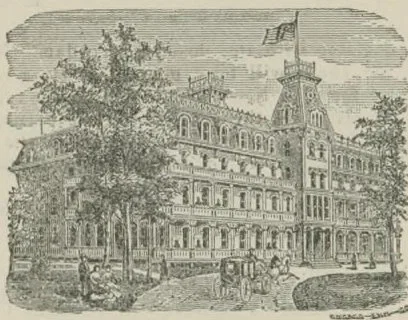
MEDICAL AND SURGICAL SANITARIUM,

Saratoga—Grand Union Hotel
Battle Creek, Michigan.
This institution, beautifully located in one of the most healthful cities of Michigan, is everywhere recognized as the

GREAT SANITARIUM OF THE WEST.

More than 4,000 patients successfully treated. The erection of new buildings and the addition of all the most approved remedial appliances known to the profession, have made it The Most Complete Institution of the Kind in America. All modern hotel conveniences furnished. Terms very reasonable.
J. H. KELLOGG, M. D., Medical Superintendent.
Address, SANITARIUM, Battle Creek, Mich.

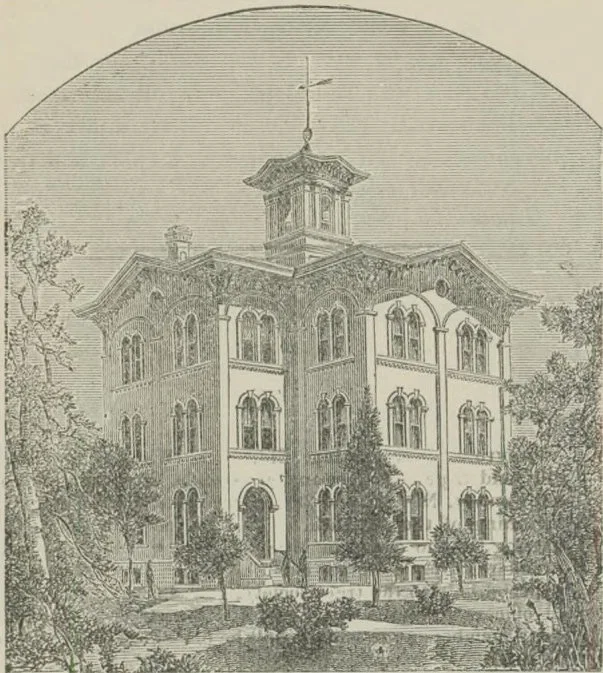
BATTLE CREEK COLLEGE.

This institution, since its establishment in 1874, has gained an enviable reputation, and in many respects its success has been unparalleled in the history of colleges during the first years of their existence.
NEARLY FIVE HUNDRED STUDENTS ENROLLED EACH YEAR.

It is Thoroughly Practical in its Methods of Instruction and Discipline.

In the various departments young men and women are receiving just what they need as a preparation for the positions in life which they intend to occupy.

THE COLLEGE BUILDING IS NEW, SPACIOUS, AND BEAUTIFUL.

Five Departments of Instruction are open to receive students:— 1. Department of the Arts and Sciences. 2. Normal Department, with its Model School, and Course of Four Years. This includes all the COMMON BRANCHES. 3. Biblical Department. 4. Commercial Department. 5. Department of Hygiene, with a Course of One Year.
For full Descriptive Catalogue, address,
BATTLE CREEK COLLEGE, Battle Creek, Mich.
Continue reading: REVIEW AND HERALD PUBLISHING HOUSE