Your ShelfYour Projects

Review and Herald, Vol. 87, No. 5.

Winter Woods
Earlier text: The Accuser

God's Time-Table

GRIEF has come into her life, grief almost too heavy to bear, but long ago she learned to trust Him and to allow him to share her burdens. Her hair is gray and her step slow, but her confidence in him is now brighter than ever. It was only two short years ago that husband and father were carried to the humble home dead, killed by the fall of rock in the coal shaft. Then a second tragedy: her eldest son stricken in the same “workings,” and in a few moments breathed his last. These two great sorrows within a few months of each other, and her faith wavers not.
Again the shadowy form of sorrow creeps into her home, and the two remaining breadwinners, son and daughter, are cut down within a few days of each other—the son to be taken to the hospital to languish with a wasting fever, and the daughter to be confined to the home for many weeks. The resources of the home are almost exhausted, yet her faith is clear, and she cries: “God doeth all things well.”
She is slowly making her way up the long walk that leads to the hospital, there to lay down her remaining few dollars for her son’s care. She had been to God in prayer, asking him for “some things,” as she said. She knew not how these “some things” were to be given, but she trusted. Near the hospital she came face to face with a man she had known years ago, a retired physician. He greeted her kindly, and soon learned of her recent sorrows. “Your son is now in this hospital, you say? Have you paid anything for his care? Well, you shall pay nothing more, and your son may stay as long as he desires, and he shall have the best of care. I will so order.” And thus it is that she believes God answers prayer, and her faith is strengthened in the Lord. Can any one doubt that God made it possible for the burden-laden widow who had reached man’s extremity and the prosperous friend of other days to meet at that particular moment? God’s “time-table” is never in error.—Rev. H. H. Barr, in Pittsburg Christian Advocate.

The Blessings of Honest Work

“REAL, honest, hard work is like one of those ‘kicking’ guns that recoil effectually on the man who fires the charge. Never a bit of work was done with a right good will but made the doer happier or better. The thing accomplished may be well worth while, but the doer is also blessed in his deed, and not to be left out of the accounting.”

In the Hungarian Field

GUY DAIL
Elder H. F. Schuberth and the writer are waiting for the through train for Vienna after the good four-days' session of the Hungarian Conference held here in Kronstadt (or Brasso) November 18-21. This city, so picturesquely situated at the base of the Transylvania Alps, is said to have been founded by the Teutonic knights in the thirteenth century. It now contains thirty-seven thousand people,—Hungarians, Rumanians, and Saxons (who are the descendants of the Germans brought in to repeople and cultivate the desolated territories of King Geisa II, 1141-1161). It is chiefly of interest to us because it was the home of Johannes Honterus (or John Gross), the “apostle of Transylvania,” under whose leadership the Reformation was established in this country. In front of the “Black Church” there is a monument erected to his honor, bearing a German inscription, which, translated, reads: “He beat a new path for the light of heaven. His spear and shield was the printed Word. 1498-1549.”
THE CHURCH AT SUNDUL. ONE OF OUR STRONGEST CHURCHES IN KOREA
At first it almost seemed as if we were not going to receive government permission for our meeting at all, but the Lord overruled in our favor, so that the one hundred fifty of our German, Hungarian, Rumanian, Servian, and Slovakian brethren who had assembled to enjoy a feast of good things were allowed, unmolested, to attend the business sessions, the Bible studies, the health talks, and the evening lectures. The outside interest was good. That all might understand, there was constant translation from German into Hungarian, Rumanian, and Servian. This confusion of tongues causes one to long for the time when we all shall use the language of the heavenly Canaan, for, interesting though it may be to the stranger to hear such a lot of translation for a while, yet it becomes very tiresome to the congregation if continued any length of time.
PREACHER LE PONG SEUNG AND FAMILY, SUNDUL, KOREA
There was a call for earnest instruction with reference to the blessing of faithfulness in rendering to the Lord his own, for some of our brethren have been a little careless in keeping their account with the bank of heaven balanced.
An advance move is contemplated by the purchase of a tent for our work in the large cities. We have not yet tried holding tent-meetings in this empire, but we trust that the experiment will prove successful. As the work thus far has been done chiefly among the rural population, we all hope that the efforts to be made for the large cities will be crowned with success, though the task is not an easy one, and the workers should be remembered before the throne of grace.
This afternoon was a very solemn occasion, as the ordination of Brethren Todor Peter and Hermann Meyer took place. Brother Todor Peter is the first worker we have ordained for the Servians, among whom his labors have been richly blessed. Brother Meyer, formerly of Switzerland, will labor especially for the Germans. Elder J. Seefried will confine himself quite largely to the Rumanians. We are expecting efficient help for the Slovakians from America. Most of the workers give considerable time to the Hungarian nationality.
The circulation of our Hungarian, Rumanian, and Servian literature received attention. The request made in our report of the Balkan Mission should be remembered in this connection—to circulate our literature among these foreign nationalities wherever they may be found. The Hungarian paper has a monthly circulation of about one thousand.
Elder J. F. Huenergardt was unanimously re-elected president of the Hungarian Conference. Elders H. F. Schuberth and J. H. Schilling and Dr. E. Meyer assisted the native workers in carrying the burden of the meeting. The report of the past year shows that ninety-one new members have been received, bringing the membership up from four hundred ninety-one, Oct. 1, 1908, to five hundred seventy, twelve months later. The tithe amounted to $2,865. We bespeak for this conference, with its eighteen million inhabitants, and for its president and his fifteen associates, an interest in the sympathy and prayers of God's people all over the world.
Kronstadt, Hungary.

RILEY RUSSELL, M. D

Korea

RILEY RUSSELL, M. D

LAST week, while I was explaining to a new company of believers what was included in the “all things” which God commanded, a very intelligent man, who is deacon in another church, became intensely interested, and said he believed that what we were teaching was true, and that he was going to study very hard for a little while, and if God’s Word taught as we said, he wanted to be one with us who were preparing to meet Jesus. Our native people are very persistent for Bible authority for everything. Most of the people in this part of the country have been warned against reading any literature from Soonan, which only makes them the more anxious to read, for puny man can not stop God’s work. We have only a small hand-press, but printed about ten thousand tracts the past summer, and reports are coming in showing good results. We all go laden with tracts, and often when I am calling on a patient in some village, from twenty-five to one hundred fifty persons will gather about the door, which gives us a good opportunity to scatter the pages which point out the way of life.
A few days ago a man to whom I had given a leaflet on “The True God and His Sabbath,” asked me to what mission I belonged. When I told him, he said, “Well, what does that mean?” After a careful explanation of our name and why we are different, he said, “If you believe that way, yours must be a very happy and peaceful life.” I felt like praising God that even a heathen could see that the third angel’s message would make a man happy and peaceful. I thank God every day for the clear-cut third angel’s message, which will not compromise. And as I see its power calling out men in this land who are forsaking their devil-worship, with David I would say, Lord, send us help from the sanctuary, and strengthen us out of Zion.
Soonan.

Harvest Ingathering for Missions

“Thy people offer themselves willingly in the day of thy power, in holy array.” Ps. 110:3, A. R. V.

Harvest Ingathering for Foreign Missions

Since Brother A. J. S. Bourdeau left our general office for a two-months’ trip through the West, I have had the privilege of receiving the letters pertaining to the Harvest Ingathering work. These letters have been a daily inspiration. Some of them have already been published in the REVIEW. The following are a few brief paragraphs, which give a wonderful view of the earnest work done by old and young in this interesting campaign for missions:—
“I have been encouraged by the reports from our local churches on the Harvest Ingathering work. On visiting a church last Sabbath, I was indeed surprised when a little boy, not quite seven years of age, brought in two dollars as the result of his work with six copies of the Missions REVIEW. Certainly when our little children can do that much, it should be an incentive to older ones to make an earnest effort in this good plan for raising funds for our foreign missions. “S. W. Nellis, Seattle, Wash.”
“I thought I would not do any work on the Harvest Ingathering campaign, as I am seventy years old, and also an invalid; but when the ten extra copies of the REVIEW came, I said, ‘The Lord knows best,’ and went to work. I sent six copies through the mail, and received five dollars. I am glad I can still be of use in the work. “Mrs. Wm. Ford, Dana, Ind.”
“I have disposed of the ten extra copies of the Missions REVIEW, besides the thirty-five copies obtained from the church, and in all have collected $6.25 for missions. I praise the Lord that I can have a part in his cause. “E. Medairy, Denver, Colo.”
“We have been doing all we can to get the special number of the REVIEW out, and we believe the results from this effort will far exceed those of last year. Yes, we are confident that they will more than double. I believe that all our churches in East Michigan are entering heartily into this work, and we expect to see good results, not only for the mission funds, but a new life in the churches themselves. “A. R. Sandborn, Holly, Mich.”
“Sister Fannie Shutre, of Traverse City, Mich., is an invalid, confined to her home. She desired to have a part in the Harvest Ingathering work, but how to do so was perplexing. She finally decided to mail the papers to her friends. The first letter explained the plan, and contained her solicitor’s card. As soon as the card was returned with the donation, she at once mailed the card, with a letter and paper, to another friend. Twenty letters were sent out in this way, and only one was returned without a donation. In this way she has gathered $25.50 for missions. “M. C. Guild, Traverse City, Mich.”
“We are of good courage in the Lord. He has wonderfully helped us to dispose of thirty-one copies of the Missions number of the REVIEW here in this little place, where we are the only ones to hold up the light. I was only about eight hours in gathering the six dollars which I am sending to the Western Oregon Missionary Society. I wish we could have done more, but as we are both nearly seventy-nine years old, and not very strong, we are thankful that we are able to have a little part in it all, and hope others will do so much better than we that the sum will run high into the thousands, and that another large number of consecrated men and women can be sent to the foreign fields and supported. May the dear REVIEW do a good work among the people, is the prayer of your sister. “Mrs. J. B. Neal.”
“An isolated sister sent us seven dollars last week, the amount she had received for missions from distributing twenty copies of the REVIEW. This is an average of thirty-five cents a paper. Very good, it seems to me. Four students of Beechwood Academy spent three days in this city. Rain very much interfered with their work, but notwithstanding the inclement weather, they disposed of four hundred four copies of the Harvest Ingathering number of the REVIEW, for which they received $51.71. Beechwood Academy had previously collected $64.29 from seven hundred nine papers. The total for the academy thus far is eleven hundred thirteen papers, one hundred sixteen dollars. We here in Indiana think this is a fine record, especially when compared with last year, when three hundred papers were used by the academy, and nine dollars collected. “R. C. Spohr, Indianapolis, Ind.”
Sister C. L. Daniels, of Ohio, sends a check for three dollars, the amount of donations received through the distribution of the ten copies of the Missions number of the REVIEW recently sent her. She writes: “I feel like the man with the one talent, but hope to do better another time.” If every copy of the Missions REVIEW sent out during the campaign yielded as much money as those distributed by this sister, our foreign missions would be benefited to the amount of over two hundred ten thousand dollars.
Mrs. S. Thompson, of Missouri, sends two dollars, the amount she collected from her neighbors and friends through the circulation of the ten copies of the Missions number of the REVIEW recently sent her. She writes: “I am an isolated Sabbath-keeper, and am glad I can do a little.” Some of the brightest lamps of truth are the consecrated lives and missionary efforts which are held and lived by those isolated from others of like precious faith.
“The Missions number of the REVIEW is so good it seems as if people could not help giving something to missions when they have read the paper. We gave away part of our papers. We are new members of the faith, and it seemed as if we had not the courage to go out soliciting. I hope the courage will come in time. We felt that we must help the mission work along in some way, so we decided to give what butter one cow would make and half the money received for eggs during the two months of the campaign. But the cows were not giving much milk, and the hens were not laying many eggs. We had hoped they would do better. God provided a way, however, for us to do more than that. One day a wolf killed one of my pet lambs. It was done so near the house that he dared not stay by daylight to eat it. I felt so bad that I promised the Lord half the bounty if he would help me catch that wolf. So I took great pains to clean and grease the traps, and my husband set them by the little dead sheep, and we caught the culprit. The bounty was $12.50. After deducting the tithe, there was $5.63 to add to our mite for missions. We enclose money-order for what we have gathered, $9.15. I hope we may grow in courage, so that another year we may do better. Our earnest prayers are with all the workers in all parts of the world. “Mrs. Bertha Huddleston, St. Hilaire, Minn.” E. R. Palmer.

FRANK S. BOND

Spain

PATERNA.—The laborers in Spain have been much encouraged by the visit of Elder N. Z. Town. Being unable to secure passage for Buenos Aires as early as he had expected, he was compelled to stop over in Spain about two weeks. And we believe this was providential. Upon learning that he must spend some time here, we determined to call our laborers together in Barcelona, and hold a short canvassers' institute. This we did, spending about one week together. Three hours each day were devoted to the institute. Most of this time was spent in studying the canvass for “Coming King,” and in general instruction by Elder Town.
The outlook for book work in this country is quite encouraging. What we lack now is a general field agent to devote all his time to this line of work. There is plenty of territory for a hundred canvassers.
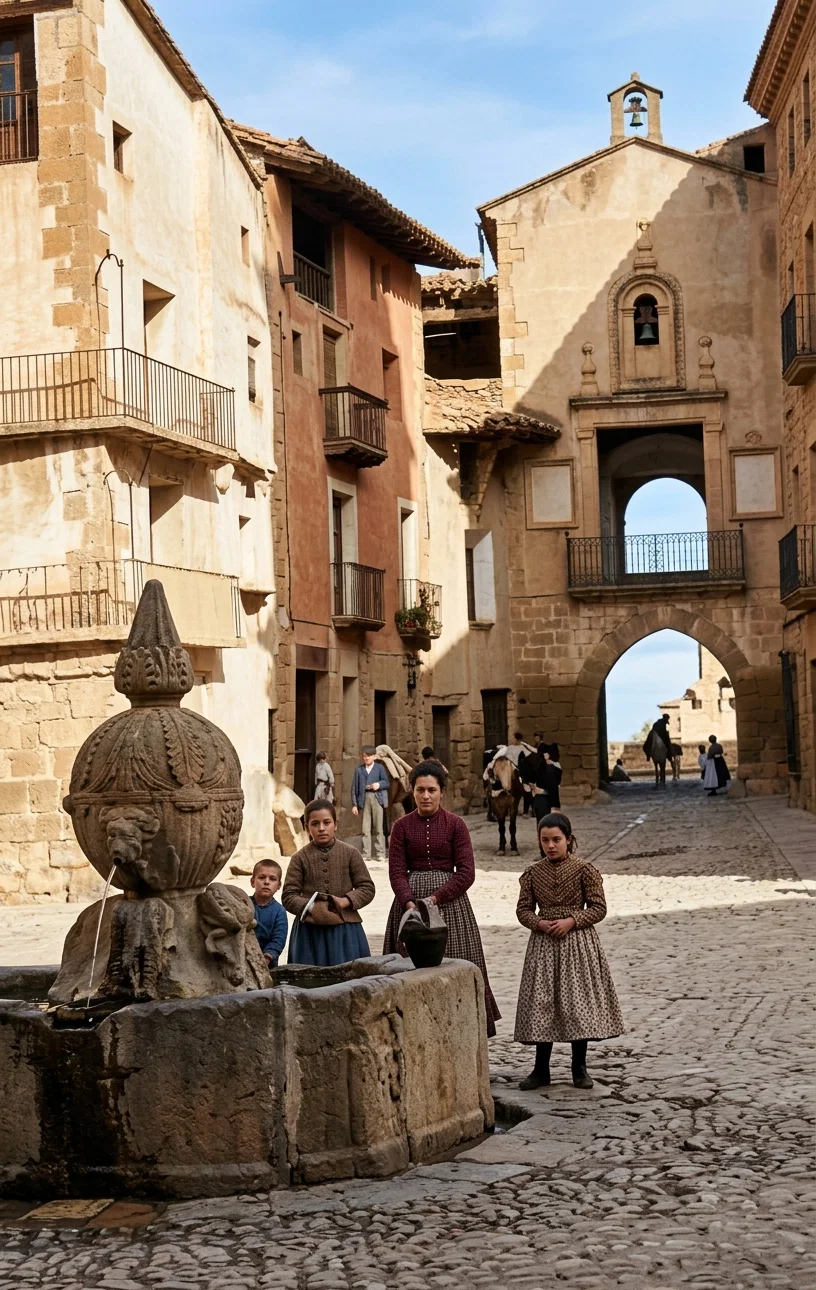
On Wednesday of last week, my brother and I went to Rubielos de Mora, in the ancient kingdom of Aragon. It was in this town, with my wife and little boy, I spent some weeks last winter, conducting a series of meetings. It was there that the enemy endeavored so hard to frighten us, even resorting to stoning the house of the brother with whom we were stopping. But the Lord has a special care over his children. I am glad to tell you that our efforts in that town have not been in vain. Some of the seed sown has fallen upon what seems to be excellent ground. Last May, while visiting there a few days, I had the privilege of baptizing a promising young man, and last Sabbath it was my privilege to bury with our Lord in baptism three men who seem to have taken a firm stand in favor of this message. One is an elderly brother, while the others are young men, who are anxious to have a part in proclaiming the truth to this dark land. Another brother also united with our people. He came to us from the Baptist Church. There are about a half dozen others in Rubielos who are keeping the Sabbath, and I believe these will also soon unite with us. This coming Sabbath a sister of Valencia expects to go forward in baptism.
A WATER FOUNTAIN, RUBIELOS, SPAIN
So you will see that the Lord, by his Spirit, is calling out the honest ones of the land of “her invincible Inquisition,” to be obedient to his truth. We are thankful for a part in heralding this last gospel message to the dark places of earth.

FRANK S. BOND

Organization of a New Church

On the first day of the new year it was my privilege to meet with a company of workers at the Hillcrest school, near Nashville, for the purpose of organizing a church of twenty members.
Two years ago last October Brother O. R. Staines, Prof. P. T. Magan, and myself took an option on a tract of land on White’s Creek Pike, north of Nashville, and on that tract of land this training-school for colored workers was located. It is very evident that the Lord has blessed the efforts of the men and women who are responsible for this work.
Prof. Floyd Bralliar, for some time connected with the Stuart (Iowa) Academy, joined Brother Staines in the work at Hillcrest about eighteen months ago. The school to-day has a company of fifteen students, all bright, active colored people, some of whom expect to be ready soon to start mission schools on farms of their own, where they will be largely self-supporting. The plan of the Hillcrest school is much the same as that of the Nashville Agricultural and Normal Institute.
Brother Bralliar was chosen elder of the new church, and Brother Staines church treasurer. The first business of the new church was to order its quota of the book “Ministry of Healing,” to be sold for the benefit of the Nashville Sanitarium. Each church-member in the Southern Union Conference is expected to sell two of these books, and the entire proceeds goes to the Nashville Sanitarium. We were glad to find that this company of workers, who have had no salary since coming to this field, could feel it a privilege to leave their own work long enough to assist the sanitarium to the amount of sixty dollars.
There are bright prospects ahead of the Hillcrest school and church. The students are enthusiastic over self-supporting mission schools for the colored people. When the work for which this school stands is fully established, our people will be in a position to carry the third angel’s message to millions.
The Hillcrest church is the fourth one organized in the South as a result of the establishment of the Nashville Agricultural and Normal Institute. Two other companies in connection with the highland schools are awaiting organization. In these six churches are to be found over one hundred fifty active missionary workers for the Southern field.
When the Nashville Agricultural and Normal Institute was founded, it was the hope of those who started the work that they might be instrumental in bringing people into the truth. Some have questioned whether this would be the result of the self-supporting rural school. Not long ago a brother in the North asked that question, and was answered in the following language by our conference president:—
“I have visited these schools and watched with interest the work they are doing. The Madison (Tenn.) church, the church at Fountain Head, and the one at Goodlettsville have been built up by workers from the Nashville Agricultural and Normal Institute, without even the one dollar of expense to our conference.
“We received from the Madison church this last conference year nearly five hundred dollars in tithe. These churches are in the best of standing in our conference, and I wish for more help like them. It is a pleasure to see boys and girls who have had little opportunity for an education given the chance these schools offer. They go to school, and are taught without price.
“It does not seem to me that any one but those who have the last message of God to the world could make such a sacrifice as these men and women are making. I for one am glad that they are with us, and will take all such that I can get. This is the way I view the work of these self-supporting workers.”
E. A. SUTHERLAND.

Special Session of the Vermont Conference

At the recent session of the Atlantic Union Conference at South Lancaster, Mass., a resolution was passed by the conference asking the Central New England Conference to release from its territory the State of New Hampshire, and recommending that it unite with Vermont in conference relations.
Later this request was granted by Central New England, and indorsed by the churches in New Hampshire, and the special session of the Vermont Conference already referred to was called to complete and carry into effect the action of the union conference.
This gathering met at White River Junction, Vt., January 15, 16, with about thirty delegates present from Vermont and New Hampshire.
Elder W. H. Holden, president of the Vermont Conference, presided at the conference, and the laborers present from outside of Vermont were Elders H. C. Hartwell of Central New England and O. Montgomery of Maine, and the writer.
After the conference was duly opened, and the delegates were seated, the churches of New Hampshire were admitted by vote to the Vermont Conference, with one hundred fourteen members, making a conference of about five hundred fifty members.
After the churches were united in one conference, it was thought best to change the name of the Vermont Conference to Northern New England Conference, which was done by unanimous vote.
The by-laws of both the conference and the legal corporation were changed to conform with this new arrangement, and new record books will now be opened by the secretary and treasurer, beginning Jan. 1, 1910.
A resolution was passed favoring the $300,000 Fund, and accepting the responsibility of raising its quota. About three hundred fifty dollars was raised in pledges to start this work, and another resolution was passed, favoring the campaign with the “Ministry of Healing,” which will be launched in early spring.
The session was one of harmony and union, and the new conference starts out with bright prospects for the future.
W. B. WHITE, Pres. Atlantic Union Conf.

An Incident

IN the REVIEW of a few months ago we noticed a call for our workers to collect canceled postage-stamps, to be sent to America and sold for the benefit of mission work. Acting upon this, we began to save what we could, and also asked several others to help in the collection, but they grew in numbers slowly, and more slowly in value, as all were recent issues.
Last week after paying for a book ordered, a woman said: “I want to ask you a question! We have a box of used postage-stamps that we have been collecting for years for mission work, and now if you can use them, we will give them to help in your mission work.” As I had never mentioned stamps to her, tears of joy filled my eyes when I realized, and told her, that God by his Spirit had prompted her to offer them for that purpose. I told her my story about collecting them, and we praised God together.
When she brought the stamps, I saw there were from eight to ten thousand of them. Only a few have been classified, but they are of considerable value as a whole, and all to advance the truth. Praise the Lord!
But this was not all. She asked for addresses, so that she might send what money they could spare for mission work. To my knowledge she does not know that I am a Seventh-day Adventist, yet said she wanted to help in the mission work with which I am connected.
After a good talk we arranged a Bible study for the next Sunday. At this study of nearly three hours, her husband—of a similar character to his wife—and their two children were present. They were much interested as “Christ’s second coming” and the “millennium” were studied. They are familiar with Scripture, and grasp truth readily. Every word was accepted, even though some truths were contrary to previous ideas.
Tuesday night they came to us, and we studied Daniel 2, 7, and 8, omitting the subject of the Papacy. We had another blessed time, and were invited to go to their place the following Sunday and give another study.
God’s blessing and Spirit has humbled us, and we are seeking for wisdom and power to witness for him. May the seed sown here bear an hundredfold in the Master’s kingdom.
As to the canvassing work here, God has blessed in the delivery. Considering the hours spent in canvassing, we praise the Lord for results. “Go ye also into the vineyard, and whatsoever is right I will give you,” has been more than verified in our experience here.
H. C. OLMSTEAD.

Columbia Union Conference

THE Columbia Union Conference met for the first time as a union conference in the city of Baltimore, Md., Dec. 2-9, 1909. It had first been arranged to hold the meeting December 2-12; but owing to the week of prayer just coming on, and the desire of the delegates to return as soon as possible to their respective fields, it was voted to close the conference session Thursday noon, December 9, which cut the meeting short by three days and a half.
Nevertheless there was an earnest spirit of work present, and all matters were thoroughly attended to before the conference closed. Fifty-seven delegates were present, representing eight conferences and two institutions. In addition to the delegates, we had present with us at times the members of the Baltimore church, so that, altogether, the conference was well attended.
Two years ago the Columbia Union Conference was first formed. It was cut off from the Atlantic Union Conference, and was made up of the conferences of Ohio, Eastern Pennsylvania, West Pennsylvania, New Jersey, Chesapeake, Virginia, and West Virginia. Since that time the District of Columbia Conference has been organized, and at this recent union meeting was admitted into the union.
The history of the Columbia Union Conference since its formation has in one respect been a little unfortunate. It has had, during the past two years, four different presidents, none of whom has presided over the conference much longer than seven months at a time. Thus it can be seen that many important questions in the union had been postponed by each successive executive, who knew that his stay with the union was only temporary. So that this union meeting found itself face to face with unusually large and important measures which demanded earnest and careful consideration.
No resolutions were introduced which reaffirmed any accepted principles of policy. Only those resolutions were brought before the conference which strictly pertained to the pressing business before it. The $300,000 Fund was indorsed, and the quota allotted to the Columbia Union Conference was heartily accepted. It was unanimously agreed on the part of all the delegates present vigorously to push the raising of the quota, so that the portion of each conference should be in the treasury at the end of the time allotted. A resolution indorsing the plan of campaign with the “Ministry of Healing,” for the relief of our medical work, also was heartily accepted. A special afternoon was set aside for the discussion of work in our large cities. It would be difficult to find in America a union conference territory where there were more large and important cities than in the Columbia Union Conference. Here we have Philadelphia, Baltimore, Washington, Richmond, Pittsburg, Cincinnati, Cleveland, Toledo, Columbus, Wheeling, and the large cities of New Jersey. It was the determination of this union conference to push the work in these large cities more than ever in the past.
The officers elected for the ensuing biennial term were as follows:— President, B. G. Wilkinson; secretary and treasurer, E. R. Brown; field missionary agent, E. R. Numbers; medical secretary, H. N. Sisco, M. D.; educational secretary, Prof. S. M. Butler; religious liberty secretary, W. A. Hennig. There were very few personal changes within the territory of the union conference. Brother I. D. Richardson responded to the call to take up work in India. Brother E. R. Numbers was transferred from Ohio to the union conference to take charge of the book work.
The two institutions located within the territory of the Columbia Union Conference came in for considerable attention and discussion. Though the Philadelphia Sanitarium is not a union conference institution, nevertheless the serious condition of this institution demanded considerable study. Both Mount Vernon College and the Philadelphia Sanitarium are struggling under a heavy load of debt. A plan of relief for the Philadelphia Sanitarium was fully considered, but was referred to the General Conference Committee for further counsel and help. In February, 1909, a plan to help Mount Vernon College had already been devised. The object of this plan was to request every member of the Columbia Union Conference to pay for one year the equivalent of one cent a day. However, little had been done on the plan up to the present time. It was therefore voted at this session to vigorously prosecute the plan until the equivalent of $3.65 for each church-member in the Columbia Union Conference had been raised. There is no doubt but that if this measure is carried out, it will decidedly mean the relief of Mount Vernon College.
Owing to the proximity of Baltimore to Washington, we were greatly favored with General Conference help. Elders G. A. Irwin, A. G. Daniells, and W. W. Prescott were with us practically all the time. The Bible studies by Professor Prescott were especially interesting and helpful. Many people came out from the city at the hour of the study to participate in the good instruction given. We were also favored with sermons from Elders W. A. Spicer, I. H. Evans, G. B. Thompson, and Prof. H. R. Salisbury. At different times members of the different departments of the General Conference came down to Baltimore to participate in the excellent programs which were prepared and executed to forward the work of the different departments.
Altogether, the Columbia Union conference was one of great interest and help. It was felt by all that this meeting will open a new era in the future for the work in the Columbia Union Conference.
B. G. WILKINSON, President, E. R. Brown, Secretary.

South India

I AM very happy and contented. The sick people keep me busy, and how I love to minister to them!
Last week we were all three called to a village twelve miles from here. We had to ride in a bullock “bandy,” sitting native style, and you may be sure our legs were cramped some before we reached our destination. The bullocks were small, and we were heavy, and the road very, very sandy, so they would take a notion to stop once in a while. The driver would pull and twist their tails, and finally succeed in getting them started. Once while crossing a river they stopped right in the middle of it, and the water came to the sides of the bullocks, and almost into the bandy. We could hardly get them started again, but finally did so. When we reached the village, we found a very sick woman. We worked that night, and the next day until 1:30 P. M.
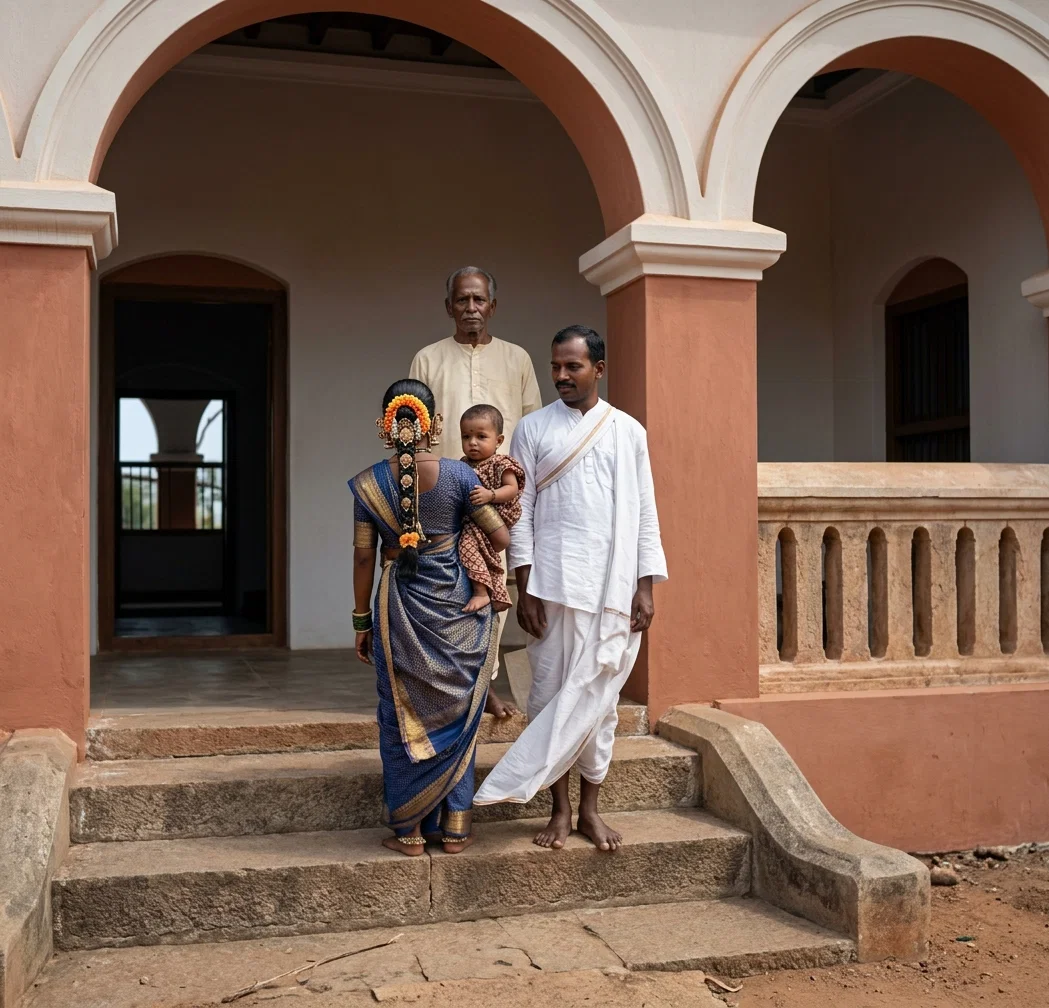
A NATIVE PATIENT ON BACK PORCH OF NEW BUNGALOW
The woman in the picture is a patient of ours. Notice the ears. She has the lobe drawn down, and filled with jewels. Her husband and father and baby are with her. They are standing on our back veranda, which we use as a dining-room. BELLE SHRYOCK.
Continue reading: The Work in New Jersey