Man was not created with an appetite for flesh foods. Eden was harmonious and peaceful. There were no carnivorous beasts in the beginning. God did not purpose that man or beast should prey upon his fellows, taking life to sustain life. In Eden restored, as pictured by Isaiah, “the wolf . . . shall dwell with the lamb, and the leopard shall lie down with the kid; and the calf and the young lion and the fatling together; and a little child shall lead them.” We are also told that “the lion shall eat straw like the ox.” So we must conclude that a flesh diet will not be provided for those who are to inhabit the city of God. There we shall partake of the fruit from the tree of life, and an ample variety of food will be provided.
The heavenly Father created man in his own image, and assigned him work in the care of his garden home. His body was equipped with the necessary organs of digestion and respiration, of secretion and excretion; and a diet of fruits, grains, and nuts was provided for his sustenance. No one knew so well as the God who made man, the powers and resources of the human body, and just what foods were needed that man might attain the highest physical, mental, and spiritual development.
In departing from a vegetarian diet man has rendered himself physically unfit to fulfil God’s purpose for him. Sin filled the human heart with hatred, and man lost his dominion over the beasts of the field. Today he is afraid to go unarmed where animals enjoy freedom in their native state, for, though once herbivorous, they, like man, have become carnivorous.
So far as God’s plan in creation is concerned, we find no recommendation of a flesh diet, and the human race is gradually coming to recognize that the divine plan is the best. Science has come to the aid of reason in this matter, and the majority of people in the world today do not, as a rule, eat meat. They have become convinced that a meat diet is not essential to the highest physical or mental development.
People in the Orient are vegetarians, not from choice, perhaps, as much as from necessity, and their physical endurance is unequaled. The Chinese, on a diet consisting almost wholly of unsalted rice, develop wonderful muscle. Men tow a boat on the river, walking from sunrise till sunset. At night three or four of them will crawl into the bottom of the boat, lay boards across to make it practically air tight, and lie close together until morning, breathing and rebreathing the same air. This would put an ordinary man out of commission, but the Chinese are fresh for another day’s journey, and their muscles are like iron. Remember their diet is a bowl of rice several times a day, as they can obtain it. I have seen coolies push wheelbarrow loads of from three to four hundred pounds twenty or twenty-five miles in a day, and they ate only a few raw pancakes or steamed wheat biscuit.
Now these people have to do the work that we require of animals in this country, and it would be impossible for them to subsist on a flesh diet and do this work. They cannot afford to keep animals and feed them; they would be shocked at the idea of feeding an animal good wheat, and then killing it and eating its flesh, obtaining only one third of the nutrition they would get from the pure grain. What an expensive way to get nutrition! What a waste! China is economical—the most economical country in the world. Flesh foods average only from twenty to thirty per cent nutrition all told, while from good wheat we get eighty-five per cent—almost three times as much. The cereal and vegetable and fruit diet is surely the more economic plan.
Now let us note the mental power and sustaining nerve force resulting from a nonflesh diet. The Orientals are deep thinkers. You have doubtless noticed the high forehead of these races. The head, as a rule, measures more in proportion to the weight of the body than in our race. These Orientals possess the power of concentration to a finished degree. Their schools open at sunrise and continue until sunset. They memorize whole books—the hardest kind of mental effort. Their persistence is marvelous, their energy unfailing. In tests the scholar must write whole chapters, or if he wishes to obtain a high degree, whole books, without an error or the omission of a single character. Would students in our colleges and universities be able to pass such a test?
Hygiene has more or less to do with the question of deciding whether a vegetarian or a flesh diet shall be adopted. Science is today bending every effort to secure the prolongation of human life, and to this end the medical profession is doing its utmost to instruct laymen in the laws of hygiene. We have quarantine laws, segregating those suffering from certain contagious diseases. We have pure food laws more or less rigorously enforced, regulating the sale of foods. Most of us can choose the good from the bad in fruits, vegetables, and cereals. The senses of smell and taste come to our rescue. But a steak may be teeming with tuberculosis germs, cholera germs, typhoid germs, cancer germs, etc., and not one of us can tell it. A microscopic test is required to determine this, but no pure food inspector can test every piece of meat presented for sale. A large per cent of the finest appearing herds of cattle are infected with one or more of these diseases. We would not eat their flesh if we knew they had a certain disease, and the point for emphasis is we do not know. The eating of diseased meat is responsible for many of the ills of man, among the most virulent of which are tuberculosis and cancer.
A wealthy man may say: “I will have a healthy herd of cattle. I will hire a veterinary surgeon; have individual stalls, and see that the mangers are scientifically cleaned; feed pure food—clean corn, wheat, bran, and grass. Then I know I shall have pure meat.”
But this is a mistaken idea. While the animals may be disease-free, their flesh is filled with poisonous wastes from tissue breakdown, and no food containing these impurities can be considered pure.
Another point: Meat decays very rapidly, and even if that of which one partakes is perfectly fresh, after it is eaten decomposition may take place in the intestinal tract, and cause Bright’s disease or other disease of the kidneys. This is why we advise persons thus afflicted to abstain entirely from a flesh diet. Appendicitis is often caused by meat eating. Rheumatism, arthritis, and gout, and other diseases are frequently the result of a flesh diet.
Thus we see that science and experience prove that meat is not a necessity of diet. Why, then, should we risk health, and life itself, by partaking of flesh, when nature has provided us an abundance of wholesome, nourishing foods, easy of digestion, and productive of physical and mental strength?
F. A. DETAMORE
By F. A. Detamore
Malaysia
F. A. DETAMORE
Not long ago Brother B. Judge returned to our field from Australia, and I went with him to visit Battakland. He will remain in Padang for a time; then it may be that he can go on up into Battakland to engage in school work. We hope that a good man will be sent from the homeland who can also be stationed there. This will afford opportunity for counsel.
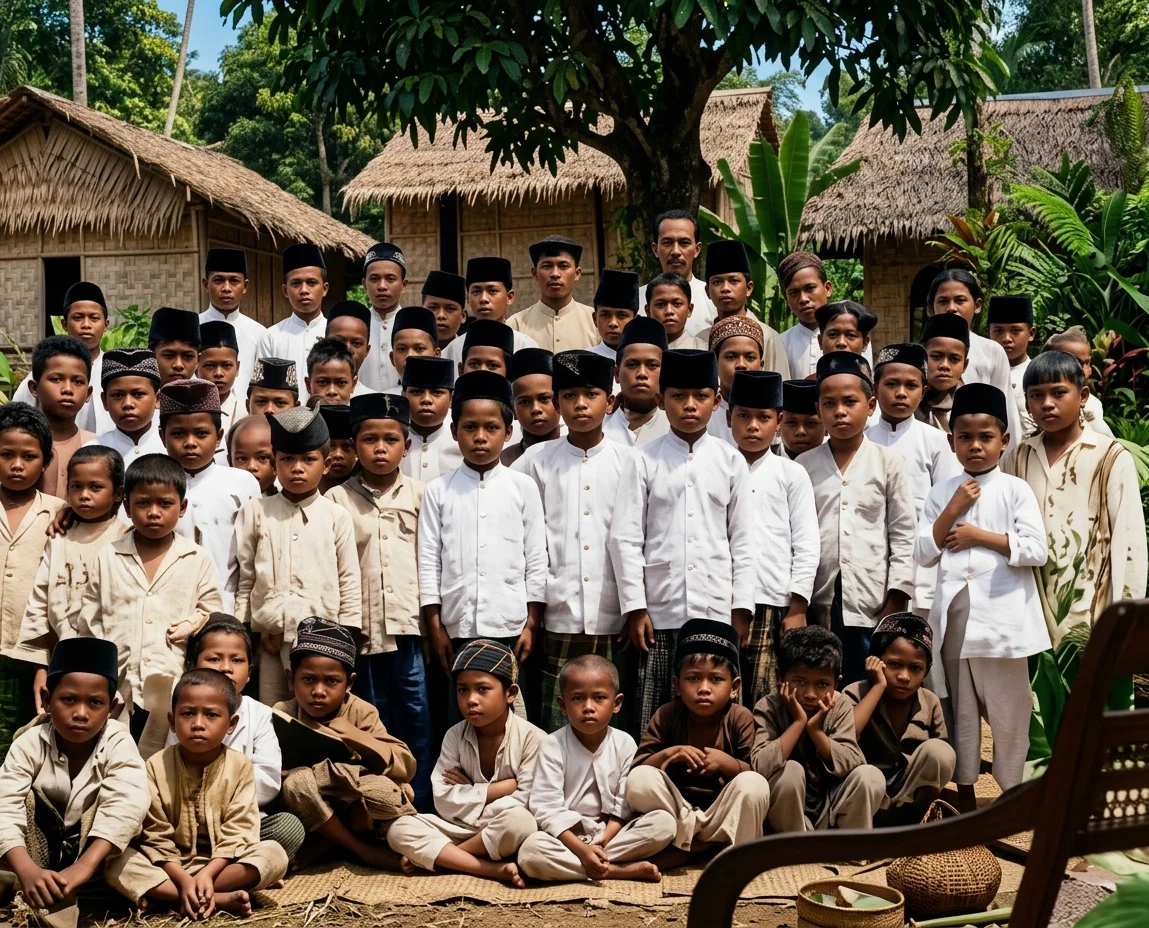
Many in that great field are calling for the truth, and quite a number are trying to obey it, and are asking for baptism. One Sabbath keeper who lives at Taroetoeny is teaching a school of more than sixty pupils. He teaches both Malay and Battak.
Brother Immanuel Siregar has a school of about one hundred students, and employs several teachers. Just now he is under arrest for holding meetings on Sabbath, and he may be fined or deported. The last I heard, nothing had been proved against him, but he had not yet been permitted to return home from Siboga, where he was taken for trial.12
At several other places we had frank talks with the officers, who seemed to welcome us to their sections to open schools, though they said we were not likely to get permission to teach the Bible for some time. But that is sure to follow sometime, if once we get into the country. People came by the score and promised to attend school if it was started, and they will pay regular tuition. So you see this is the most practical way for us to get into that country. The native people will pay the bills, and our mission will not have to meet the expenses of the teachers. One capable man in charge could develop a large work; he could use many young people as teachers, and the school would be self-supporting. I am fully convinced that we should make a wise beginning, and keep our eyes on a high mark, working to it as Providence opens the way.
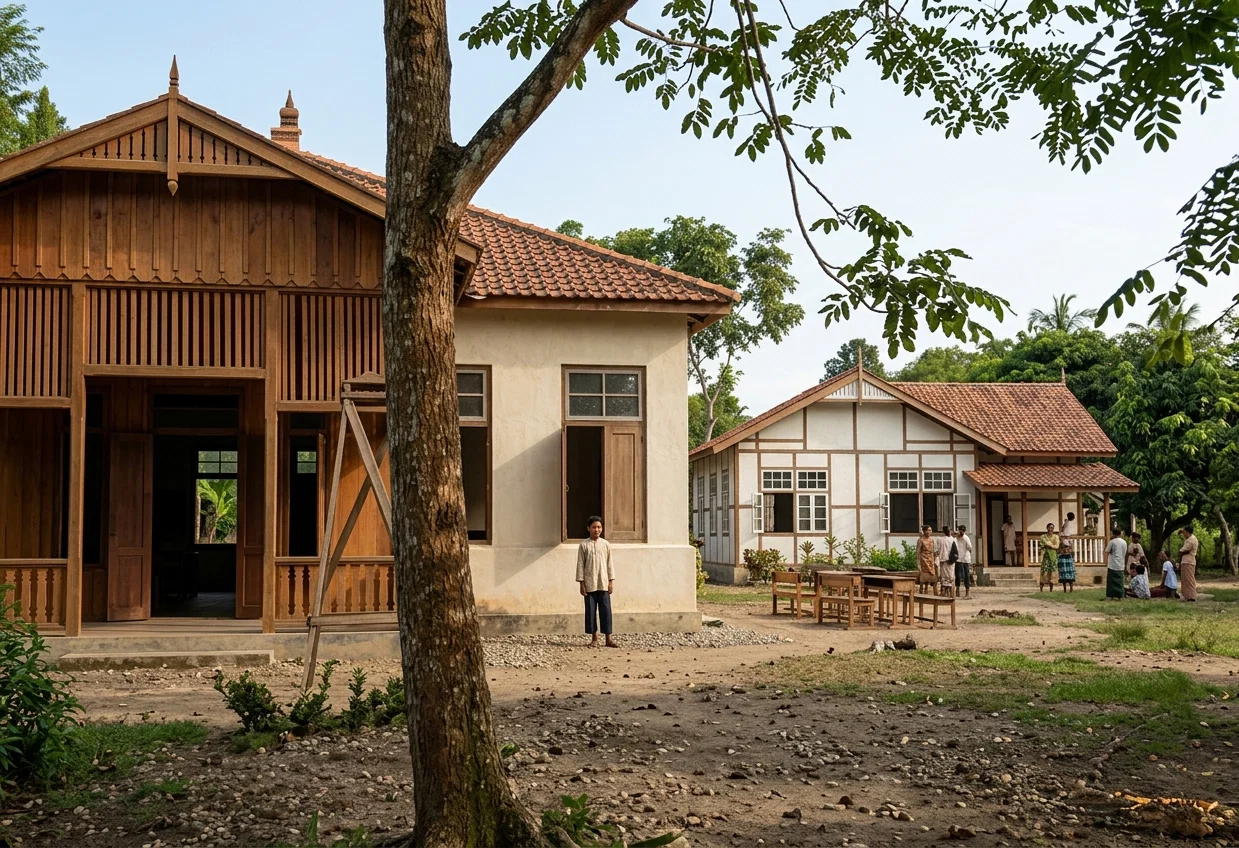
FRONT VIEW OF SCHOOLHOUSE JUST ERECTED AT PADANG, SUMATRA, WITH MISSION HOME COTTAGE IN REAR
We have one cottage and a schoolhouse completed at Padang. They are certainly a credit to our work. Under the same contract another cottage will be built for a teacher. We have bargained for land at Batavia, Java, and shall begin to build soon. The money has come for securing our headquarters at Sandakan, British North Borneo, and Brother G. A. Thompson and I will soon go to help in the selection of a place.
Last Sunday we had baptism here in Singapore. Ten of the students in the training school were baptized. All are preparing for the work. Three are from Celebes, and received the truth from Brother I. C. Schmidt in Batavia. They desire to see the truth carried to their people in Celebes. We are all of good courage in the Lord.
More Calls and Openings
By G. F. Jones
Pioneering Experiences in the Solomon Islands — No. 8
More Calls and Openings
G. F. JONES
WHEN calls to open missions come to us from various tribes, they bring us joy; but they also bring perplexity, for we know not how to supply the workers. Yet we cannot send the petitioners back without giving them some hope. Three young men from the Marovo Lagoon came one day to ask us to start their mission without delay. We had previously visited different places in the lagoon, and among others the place where these young men lived. They were very urgent that we should come soon and wanted us to go back with them. They had already cleared land and chosen sites for our house and for the school, but we could not leave the work at Viru Mission until some one came to relieve us.
The delay was not long, however, for the Australasian Union Conference sent us a man and his wife, who soon learned the language, and we were free to go. After a rough trip on the open sea we came into the calm waters of the Marovo Lagoon. This large lagoon cannot be excelled for grandeur of scenery. It is almost one hundred miles long, and is dotted with many beautiful islands. On one side, stretching to the north, is the large island of New Georgia, with its grand mountains and towering peaks. A number of large rivers, swarming with alligators, flow into the lagoon.
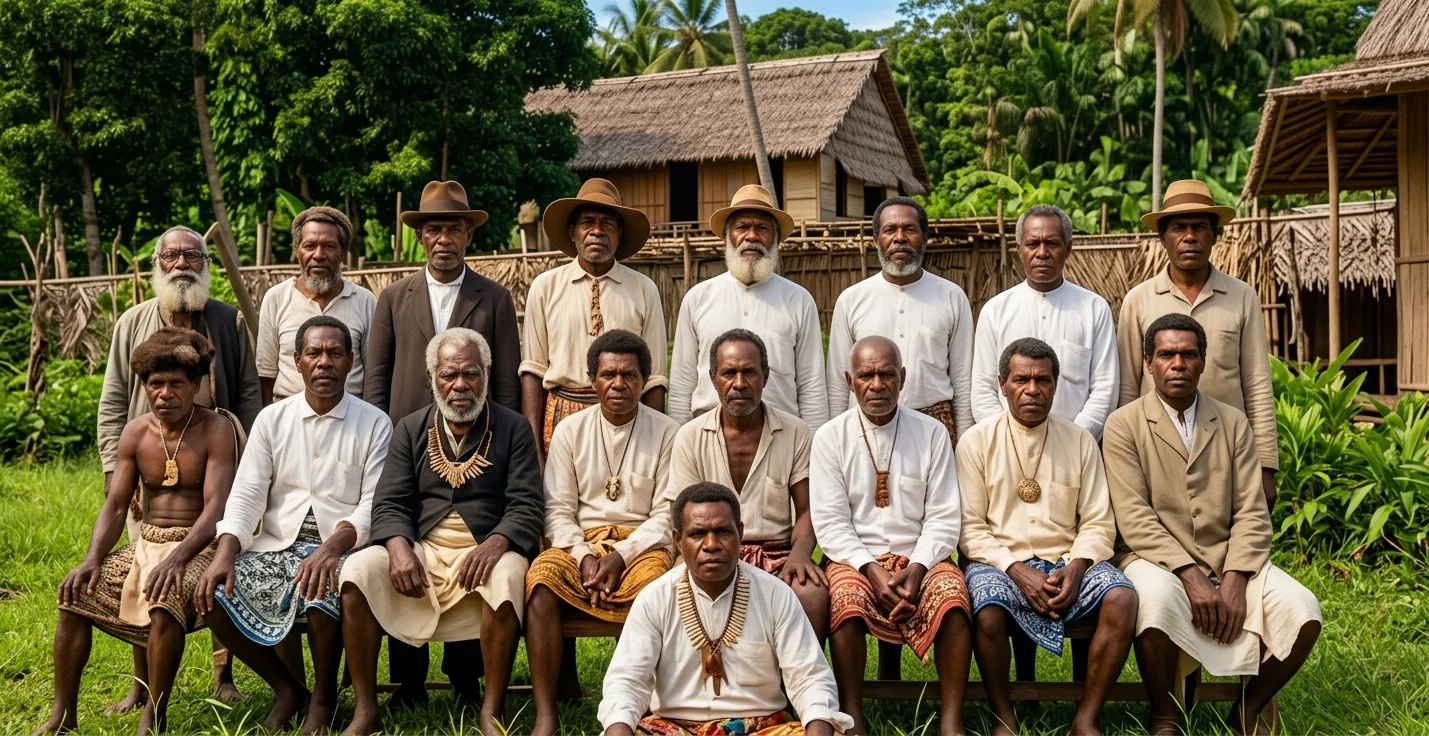
ALL CHIEFS OF SOLOMON ISLANDS, AND CANNIBALS
A trip up this lagoon in a launch is a never-to-be-forgotten pleasure. For almost sixty miles to the north of this lagoon not a single person is living. On the way one passes a pretty islet on which once, only a short time ago, there lived four hundred people, but natives from another place made a raid on them one night and killed them all. This is a sample of the history of the Solomon Islands.
The Marovo people were the most savage raiders in all the group. What are they now? The remnants of these tribes are now humble worshipers in our Seventh-day Adventist missions in the lagoon. They sing our advent hymns, pray, and love the truth. One would find it hard to believe that some of these were once daring head-hunters and cannibals. They said, ‘If you had come here some time ago, we would have had your head and feasted on your limbs.’ There are not many of them left, but they are true and earnest. Some of the young people are nearly ready to be used as teachers in our outstations, although they have known the truth so short a time.
What a blessing our little ‘Advent Herald’ boat has been, carrying us about in search of these neglected but waiting people. We need a few more motor boats and several more white workers before we can accomplish the work intrusted to us in these islands, perhaps the darkest in the world. We cannot say No to these people when they say Come, whether they be many or few. We dare not send them away empty.
The unhealthful climate enervates our workers, and the same amount of work cannot be done here as at home. Yet the harvest is ripe; the laborers few. The Lord sent those three young Marovo men to Viru to say, ‘Come quickly.’ But since then others have come from other places with precisely the same request.
Homeward Bound
By Petra Tunheim
PETRA TUNHEIM
It is with great joy that I board ship to return to my field of labor in Malaysia, the country that is so dear to my heart. My thoughts have been there much of the time during this year's furlough. Not a day have I failed to pray for the dear ones, and for the advancement of the blessed work among the millions of heathen. How happy I am as the boat is speeding along, plowing its way through the angry billows, for soon I shall again be with my children in Christ, who are as dear to me as are her children to a loving mother.
After this year's change in the bracing climate of America, I feel that I am going back to take up my work again with renewed energy and strength, and that I shall be able to render more efficient service in consequence. Best of all, however, has been the spiritual upbuilding I have received during my stay. I feel much nearer to my dear Master than ever before. God and his Word are precious to me. To have the Lord for a companion insures success in the work, for he never fails. My courage in him was never better, nor my faith stronger to continue in the work until it is finished.
I must now bid you in America all farewell. Where I have visited, all have been very kind to me. It has been hard to say good-by. But the parting will not be for long. Only a few more struggles, and the conflict will be over. Let us work with greater energy and faithfulness than ever before, that we may hasten the work to its final consummation. Christ wants to finish the work; finish “the account,” the margin says. Rom. 9:28. He wants to finish the work on earth and the accounts in heaven. How it would stir us could the veil be lifted and we behold all heaven active in this final struggle; how the ministering angels, with greater speed than ever before, are hastening to assist. Jesus is longing to come to take his children home. Let us all be ready!
General Meetings in the Argentine Conference
By Roscoe T. Baer
ROSCOE T. BAER
Since my last report we have held general meetings in all our churches in the province of Entre Rios. This province lies between the Parana and Uruguay Rivers, and is one of the most productive of the Argentine provinces.
SCHOOL TAUGHT BY ONE OF OUR MEMBERS IN BATTAKLAND, SUMATRA
I left Buenos Aires August 8, in company with Brethren O. Montgomery, W. H. Williams, and G. E. Hartman, to attend the regular board meetings of our sanitarium and school at Puiggari. We traveled by boat on the beautiful Parana River, and the trip was made in twenty-seven hours. Elder J. W. Westphal, president of the South American Union Conference, was present, and called the meeting to order August 10. The Lord greatly blessed in the board meetings, and very definite plans were laid for both the sanitarium and the school.
It was planned that Elder Montgomery and I should hold meetings for the students and our people in Puiggari. These meetings were attended with much of God's Spirit, and from the first, hearts were made tender by the touch of God. Special calls were made for the unconverted to accept the Saviour, and for those who had left their first love to renew their consecration to him. Many of the young men who had made no profession came forward and gave themselves to Christ. It was a very impressive scene. Others came forward, filling up all the space around the platform, to seek a loving Saviour who was willing to forgive their sins and to accept them as his own.
This work for the youth touched our brethren and sisters living in the vicinity of these institutions, and at the last meeting, when the invitation was extended to the church members to reconsecrate themselves to the Lord, there was a quick and willing response, and such a precious season I have not seen for some time. The whole community was stirred by this manifestation of God's wonderful power.
At the close of the meetings several signified a desire for baptism. Prof. H. U. Stevens and Elder W. W. Wheeler cooperated with us, and their help was appreciated. The members of the school faculty and of the sanitarium board were invited to meet with the Union Conference Committee, and plans were laid to follow up the work that was begun. I was cheered to see the teachers rally to this work of leading the youth toward a deeper Christian experience.
August 18 Brethren Westphal, C. F. Neumann, G. Block, and I began a general meeting for the church at Crespo. This church has a membership of one hundred and thirty. The church school building is used for church services, but this would not accommodate a general gathering, so we were obliged to pitch a tent. The Lord blessed this meeting, and every member renewed his covenant with the Lord. There are a great many young people in this church, some of whom were in need of spiritual help. The Lord came very near to them, and when a call was made for all who would give themselves to Christ and volunteer for service, many of the previously indifferent ones responded.
At the business meeting good reports were given by the treasurer, the clerk, the missionary secretary, and the Missionary Volunteer Society leader. The Crespo church had paid into the conference more than six thousand pesos in tithes, besides the Sabbath school offerings. All the reports showed progress in the work, and we are sure that even better reports will be rendered next year. Church officers were elected, and plans were laid for a strong work to be carried on by the members of the church.
We devoted one day to the consideration of home missionary work, and this proved to be one of the best meetings we had. Large orders for literature were taken, and a capable church missionary leader was selected in order that the work might be carried on according to the usual departmental plans.
We left Crespo August 22 for a general meeting at Seguí. On the way we held two meetings at the home of Brother Foggle, who lives in a Catholic community. He invited some of his neighbors to the meetings, and one family became interested in the message and asked us to their home. There they told us that they had received light by attending just two meetings. These people were ready to receive the truth.
The next day we held meetings with the company at Seguí. A few years ago there were nearly one hundred members living here, but of late the majority of these have moved to Viale. At Seguí13we have a church school with Brother Schubert as teacher. We were glad to find our brethren at this place faithful, and doing what they could to give the light to those around them.
Two days later we went to Viale, where we found the brethren making preparations for the meetings. Here we have a church of one hundred members. There is a large church school building, and an excellent school is being taught by one of our sisters, who received her training in our school in Puiggari. So many of the brethren had gathered for the meeting that here also we were obliged to pitch a tent in order to accommodate them. The weather was ideal; on Sabbath we had a real revival. Some who were scattered out over the country and who had grown cold and indifferent, gave themselves anew to the Lord.
We followed the same plan here as at other places, and held a business meeting for the church and heard the reports for the year. The tithe of this church seemed small in proportion to the membership, and this gave us an opportunity to speak on the question of the tithe. Some arose and confessed that they had not paid tithe for one, two, and three years. These all promised with tears that they would be faithful in the future in returning to the Lord his own. Officers were chosen for the year, and the work was placed upon a more substantial basis. A missionary convention was held, in which our people were taught how to work for their neighbors. Tracts and small books were ordered, and an earnest work was begun for the winning of souls. On Sunday there were forty wagons on the church lot, and these wagons were loaded with people who were anxious to hear the word of God. The close of the meetings found the brethren and sisters greatly rejoicing in the Lord.
August 28 we started for Galarza, where we have a church of forty members. The Lord was with us here, and the brethren were revived and expressed a strong desire to triumph with this message. Sabbath was marked by a special revival service, and many hearts responded to the call for consecration. In the afternoon a very interesting social meeting was conducted. I think it was one of the best social meetings I have ever attended. Surely the Lord was present in great power.
The next church we visited was at Urdinarrain, where we have a membership of nearly one hundred. We drove all day to reach this place, and the sun was just setting when we arrived at the home of Brother Schimp, who is elder of the church. We held several meetings here, with splendid results. The reports rendered were encouraging, and everything indicated that the Lord was at work. We have a very good church school in operation at this place, with an enrolment of forty pupils. Brother Block is in charge of this school. He has a diploma from the government, and is therefore a recognized teacher. The school closed half of each day during the meetings.
On Tuesday, September 5, I was invited to speak in the small village of San Juan, where our Missionary Volunteer Society had been doing missionary work. I was surprised to find a congregation of three hundred people in attendance, of whom only about thirty were our own people. I spoke to them on the second coming of Christ, and so great was the interest manifested that we made definite arrangements for the meetings to be continued.
It appeared to me, as I gave close study to the various needs, that the time had come for us to move quickly and finish the work in this field. Argentina is ready for the message. There are more than eight million people who must hear it. Many openings for new work present themselves, but the laborers are few. I am greatly encouraged over the prospects for a progressive move for the work in the province of Entre Rios.
A Case for Christian Courtesy
“O Peggy, dear, there’s a big home mail here, and you have a dozen letters besides a bunch of papers and magazines!” To Peggy, just in from a hot afternoon at school in China, this was very good news. She was not slow in claiming her portion of the American mail on the table in the hall.
In her study she read with great delight the messages from her dear ones at home, a cheering one from a beloved secretary of her board, an amusing Round Robin from some classmates, etc., and two lovely notes of thanks from the Junior Endeavor Society in which Peggy had grown up, and to which several months before she had sent a long letter about the “Children in Blue.”
There was one which she left to the very last. It bore an unfamiliar hand-writing and a strange postmark, that of the city of X. Very brief its contents were: “Will you kindly send our society a letter which we may read at our meeting on April 10?”
“April 10,” exclaimed Peggy excitedly; “Why, this is March 9, this very day! Oh, if only those at home who want letters would give us time, at least three months from the request to the day of the expected receiving! Well, that fast Japanese mail via Formosa is my only chance. Yet how can I do it tonight with two home letters which must be written, and my lessons for the girls, all the countless interruptions, and prayer meeting besides!”
Peggy stinted the dear home folks by five pages, she went late to prayer meeting, and unprepared to her classes. But the letter, neatly typed and registered, was dispatched by the ten o’clock steamer next morning.
Three months later, Peggy was looking over her letter record. “Yes, that society in X surely received that article long ago, and by this time I should have had some acknowledgment. Certainly I deserved a gracious ‘Thank you.’ Even if it were on a post card, I’d be so glad to see it.”
But Peggy never heard from her letter. Her associates told her of the many times this had happened to their special contributions, and one who had given many beautiful years of blessed service in that far-away land said, “Peggy, as you grow older, you will realize that Christian courtesy is becoming strangely rare.”
Are you among those who forget to return kindly thanks for the help you receive from the letters of your missionaries, yes, and for the assistance of your board secretaries in the way of literature and advice? or are you happily among those who remember to say “Thank you”?—The Missionary Review of the World.
N. J. AALBORG
By N. J. Aalborg
Jamaica
N. J. AALBORG
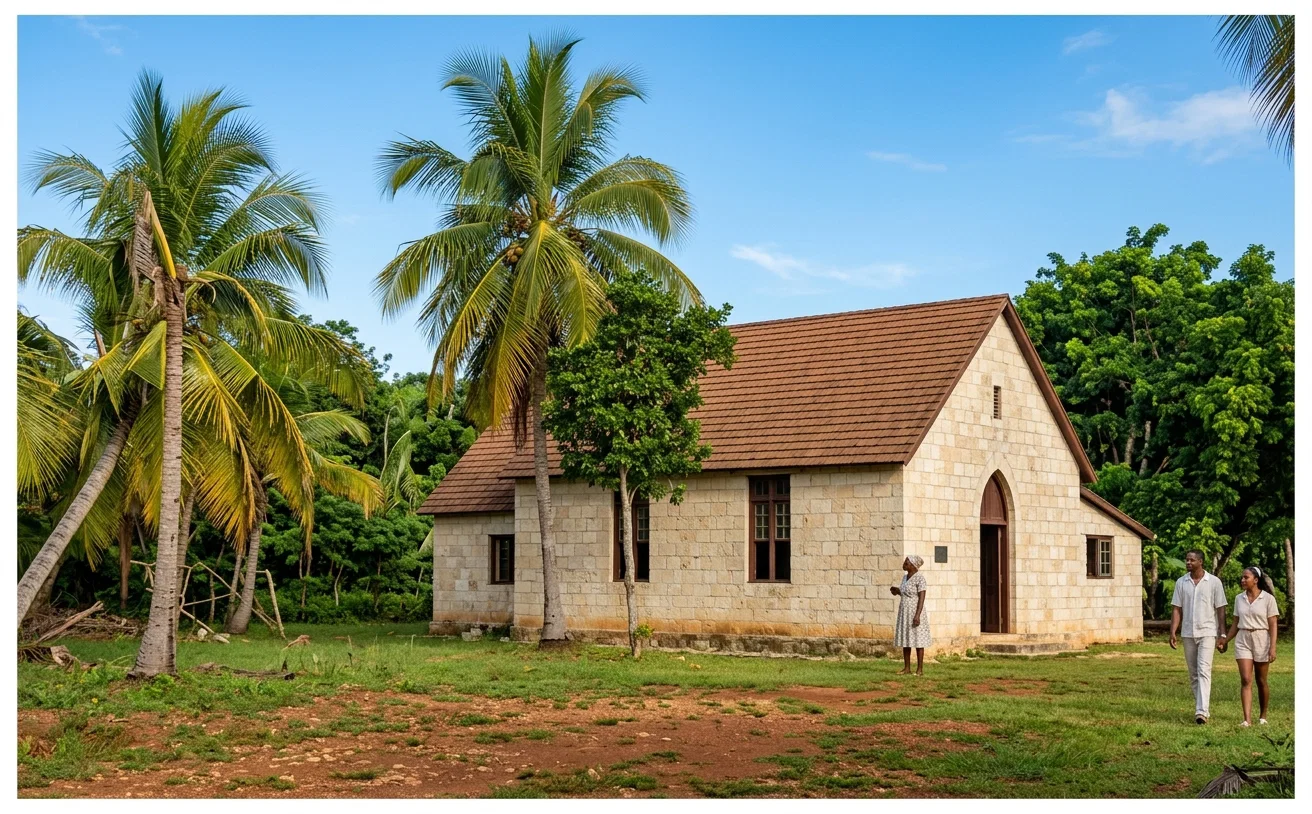
CHURCH RECENTLY BUILT AT MARCH TOWN, WESTERN JAMAICA
We are glad to present to the readers of the REVIEW a picture of our little church at March Town, in the interior of Jamaica. After laboring hard under tropical skies, the believers here are worshiping in a neat little church which is a monument to our message in that part of the country. A debt of only a few pounds sterling remains on the building. Special meetings were held there June 26, when the corner stone was laid. Brother and Sister E. C. Boger were with us on that occasion, and we gave a stereopticon lecture. The people came in, filling the church and yard. We hear that since then there are many interested ones, who are anxious to learn more of the precious truth.
We are now in Montego Bay with Brother Boger, in the fourth week of a series of interesting tent meetings. The attendance has been good, many earnest, thinking people being present. We are of good courage in the work of the Master.
Nothing Is Troublesome That We Do Willingly
But NOTHING is troublesome that we do willingly.—Jefferson.
Mother Problems
By MRS. I. H. E.
Not a day passes over the heads of most mothers that does not bring its perplexities. The little active bodies require such constant service in the matter of food and clothes, it often seems as if there is no time to give sufficient attention to the equally active little minds, and the proper cultivation of the eager little hearts. How shall Henry be taught neatness, the spendthrift Philip be led to realize the virtue of thrift, heedless Anna learn thoughtfulness, clumsy-fingered Ruth gain deftness, and selfish Lucy acquire the grace of sharing? Again, how shall the children’s natural tastes and talents be wisely directed? How shall the unworthy be uprooted, and the good and true be set in its place? How shall the “punishment” be suited in every case to the offense”? These are a few of the many questions that constantly arise, but only a few. In addition to the general problems of diet and health and education that all children need alike, each individual child, as every mother knows, furnishes its own peculiar problems.
“Women in general—but chiefly mothers,” says the Forecast, “are the ‘raisers’ and ‘crop handlers’ of the largest, most valuable, most expensive, and most difficult crop in the country. What happens to this crop between birth and sixteen years of age is, chiefly, what women do to it, or at least do not prevent. For the first five thousand days of the years of the life of each generation, the race is fed, dressed, undressed, washed, combed, cuddled, kissed, praised, blamed, led, driven, coaxed, taught, spanked, bossed, and otherwise ‘brought up’ by women—women mothers at home, women teachers at school.”
We wish Our Homes department could be, even more than it has been, a real help to mothers, especially to isolated mothers, those who do not live near libraries, who are unable to buy the new books on child training and culture, and who perhaps could find little time to read even if they had them. No doubt there are many such mothers who would like to ask questions if they were sure of receiving sympathetic and helpful suggestions in a friendly letter, or through Our Homes department. Believing this to be true, we therefore invite all mothers who would like to avail themselves of such help as this department can offer, to write freely of their questions. These will be answered—not always by the same person, but by some one chosen because of special fitness to deal with the problem under consideration. Such questions and answers as are of general interest will be given from time to time in these columns, others will be sent directly to the mothers.
One or two suggestions as to this correspondence may avoid delay and disappointment. First, be sure to state your question clearly. Second, write your name and address plainly, and inclose a two-cent stamp for return postage. Third, address the letter to the editor of Our Homes department.
A Boy of Mechanical Bent
The following question was recently received by the Mothers’ Normal Department of the Correspondence School:
“My boy is of decided mechanical bent. From the time he could sit alone, a small wheel or bit of machinery was fascinating. Now the greater part of his conversation is concerning gasoline engines, threshing machines, and automobiles. He knows far more about the working parts of these things than I do, and he continues to ask questions I cannot possibly answer. I’ve explained as well as I can the reason why the lower wheel on my sewing machine is larger than the hand wheel. He is always studying how he can make some new device on an automobile when he is older. He studies the catalogues, and asks me to buy him a small steam engine, and wonders if he couldn’t fix it to run his little wagon. When he was three, he asked for a threshing machine for a Christmas present. He is five now.
“How can I train this natural inclination into proper lines? It might at least keep him out of mischief, and make him happy and busy if I knew how to turn it to account.
“His father is dead. We live alone on a small country place near my parents. His grandpa has a small gasoline engine that runs the washing machine and wringer, pumps water, runs the separator, etc., so he has opportunity of seeing something of these things.
“MRS. G. S., South Dakota.”
Those in charge of this department of the Correspondence School sent the following answer to this perplexed mother:
“It is a matter for great thanksgiving that your boy has such a keen, active mind. He stands a much better chance of being so busy his mind will stay clean than do the children who grow up dawdling about, and asking, ‘What can I do now?’”
“There is a metal toy on the market, called the ‘Erector.’ The simplest outfit costs one dollar. Then one may add to it an electric motor and accessories on up to twenty-five dollars. The toy consists of metal wheels, girders, screws, burrs, and everything to make bridges, trains, hand car, trestlework, etc.
“The only trouble is, this question will probably arise, ‘If I encourage my boy’s love for machinery, will it not be likely to lead him into the work of the world?’ Without doubt there is danger, but so there is in whatever he may study or do. It would seem too bad to make your boy unhappy by trying to crush out this natural love for machinery. Better encourage it, but all the time pray for him, and try to impress upon him the thought that we should use all our powers to the glory of God. Occupy his mind and body with happy play, useful work, and proper education. Sometime God may call him into another field of effort. If not, constantly teach him that he should use this God-given endowment in the cause of present truth. We have many institutions where knowledge and skill in regard to machinery are absolutely necessary. Train him to prepare himself for one of these positions, but do not say much about it at present. Just keep before him the general thought of using his powers in the service of God.”
We hope the mothers in “our homes” everywhere will regard this department as belonging to them, and will be free to bring to it not only their questions and problems, but also the results of their own experience in all matters pertaining to the home and its inmates. Send us your own plans for teaching and helping your little ones, and tell us the results of carrying them out. Your methods may be just what some other mother needs to help her over a hard place.