Your ShelfYour Projects

Review and Herald, Vol. 86, No. 10.

A Prayer
Earlier text: Note and Comment

In German East Africa

L. R. CONRADI
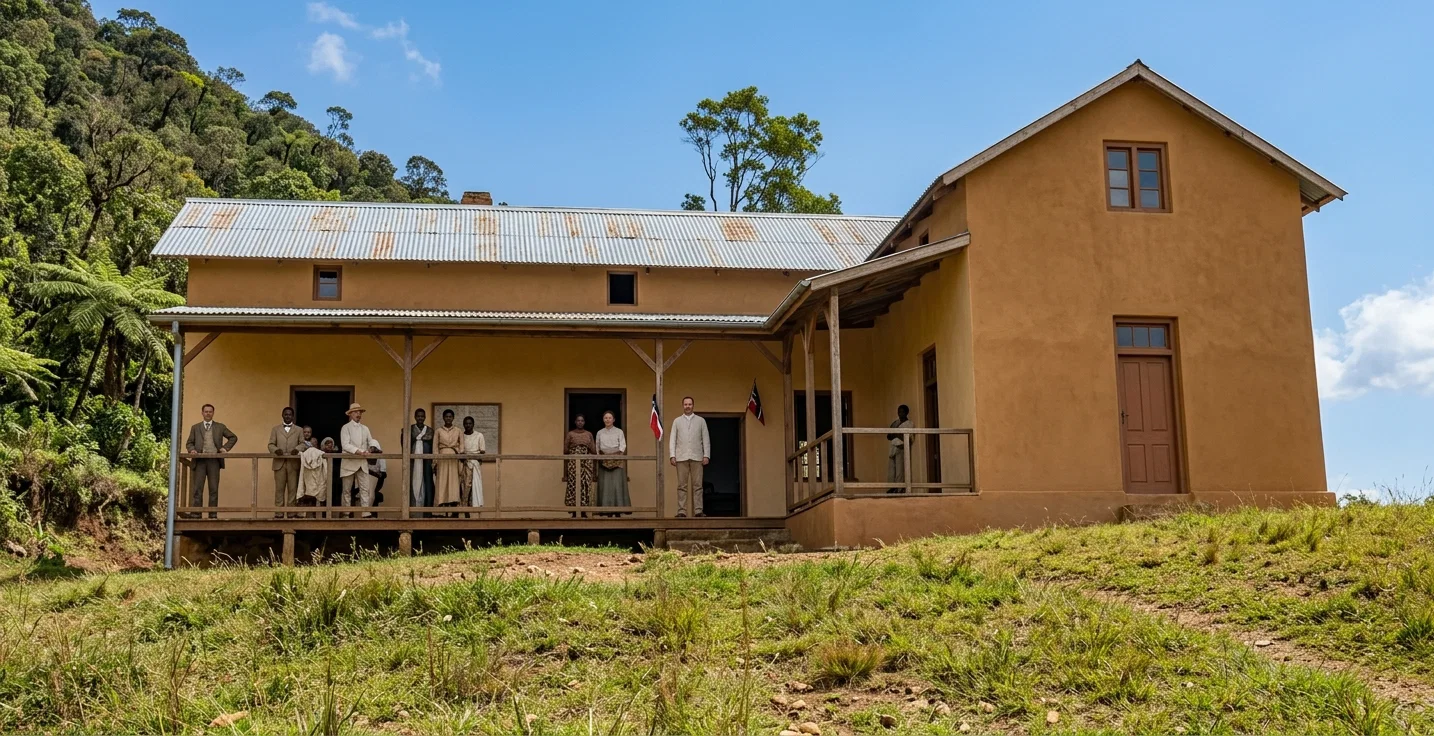
FRONT VIEW OF THE MISSION BUILDING AT VUASU, GERMAN EAST AFRICA
My stay in German East Africa was limited to ten days, and four of these had to be spent in going and coming, so only six days were left me to visit among the stations. At present, we have three main stations in the southern part of the Pare Mountains. Our head station, Kihuiro, lies at an elevation of eighteen hundred feet, at the foot of the mountains. The next station, Friedenstal, lies at an altitude of something like thirty-five hundred feet, and it is three and one-half hours distant from Kihuiro. The third station, Vuasu, requires a ten-hours' march up the mountains, where one has to cross a ridge as high as seven thousand feet, though the station itself lies farther below, at an elevation of about fifty-five hundred feet. In all this territory there are about ten thousand people.
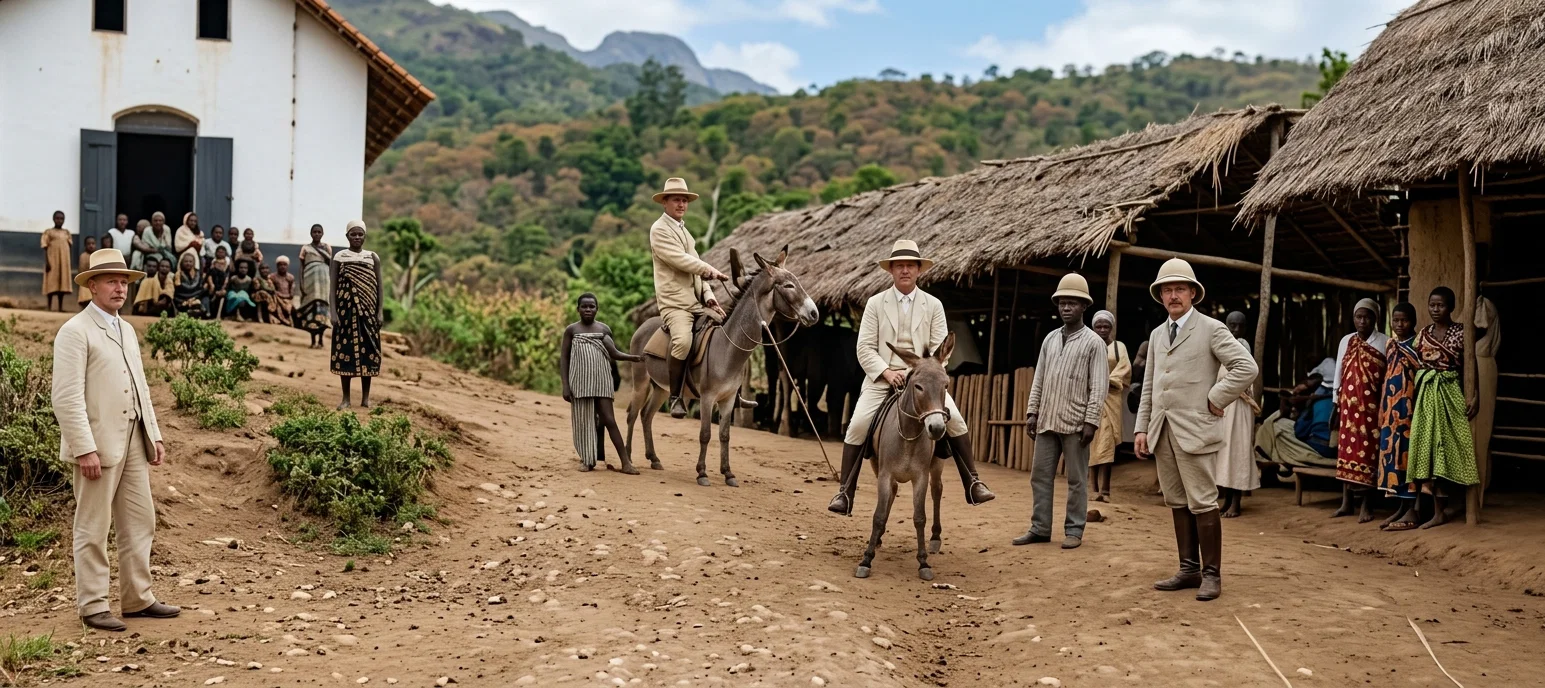
As our brethren had arrived with Brother B. Ohme by Sunday morning, we left that afternoon for Friedenstal. Our missionaries have made a fairly good path up the steep mountainside. The brethren had secured one of their donkeys for me, and going down a steep hill, the saddle girth gave way, and I was landed on some rocks rather hard and unceremoniously. Otherwise, we safely reached the station, where the sister in charge of the mission had prepared a nice reception for us. Brother Ohme, who is a good nurse, did his best in the evening and the following morning to alleviate the pain caused by the bruise on my left side. But still, at first it seemed rather questionable if I could stand the ten-hours' climb up the mountains, most of the way there being only native paths. However, by putting a rope around my body and having the negroes pull me over the steepest places, I was enabled to make the journey. But when we reached Vuasu that evening, I was so completely exhausted that I at once retired. Next morning we looked over the buildings and the school. Our dear Brother G. Sander surely did everything in his power to erect a creditable building. It is composed of stone, and is located on a height overlooking the country for many miles. It is the best building I found at any of our stations. It cost a little more than one thousand dollars. Besides this, we have a smaller school building, and some dwelling-houses houses, carpenter-shops, etc. We found the school building filled with children, some of whom come for miles to attend the school. Brother A. C. Enns, who has charge of the station, instructs them, with the assistance of several bright native teachers. We arranged for a larger and cheap school building. A number of the chiefs from the surrounding country came in, and I talked to them for a while. Pointing them to the grave of Brother Sander, I asked them whether he had not been a noble helper indeed; and they all of one accord expressed their appreciation of the work of our faithful brother, who sleeps here upon this high mountainside.
MISSIONARIES STARTING ON THEIR JOURNEY FROM THE FRIEDENSTAL MISSION STATION, GERMAN EAST AFRICA
In considering the plans for the distribution of laborers, we thought it best to so arrange that a new worker, and an older one having a knowledge of the language, should be associated in their labors at each of the stations. Accordingly, it was decided that Brother M. Poenig should join Brother Enns at this station. He will give his attention to the mastery of the language, and Brother Enns will remain with him until March. Then it is planned that Brother Enns will proceed to Victoria Nyanza, where we hope to open a new station. From our mission station here, one has a wonderful view of the surrounding country. On a clear day one can see the snow-covered peak of Kilimanjaro, the highest mountain of Africa, eighteen thousand feet high. Away below in the plains are a number of villages. We believe that, if we continue to labor hard, we shall soon see fruits of the faithful effort put forth in this station to enlighten the people. Toward noon we started on our return trip. Going down the mountain, we reached Friedenstal about dusk, after an eight-hours' march. Next morning we looked over the buildings and inspected the school. Here we found quite a number of students, many eager to learn. The farm work has not made the progress we would like to see. It was decided that Brother Ohme, with his wife and Brother Koelling, should take charge of this station. We believe that, with the right management, we shall see here also, at this, our oldest station, greater prosperity. Toward noon we proceeded down to Kihuiro. On the way down, my good donkey tried to play me another trick. He had followed the mule ahead of him nicely until we came to a high, overhanging rock, which would leave the donkey room to pass the mule—but not room for the rider to keep his seat. The attempt of the donkey to pass was so sudden, that although the brethren were near by, neither they nor I could prevent him. All I could do for my own safety was to fall off immediately. My escape was so narrow that the overhanging rock tore a hole in the shoulder of my coat. Otherwise we safely reached the main station, thankful to God for his protecting care, and that we had been able to make this tedious and long round-trip in so short a time.
We now spent some time at the school in Kihuiro. At that place the students have made the greatest advancement. Some of them can read and write the Chassu language well, and a few of the best students have in addition quite a knowledge of the German. Some of the native songs are of special interest. In one, the inhabitants of the mountains praise the superiority of their mountain homes, while the inhabitants of the plains try to show the advantages of their homes on the plain. We now have a small settlement of converts near our mission house. They till their own piece of ground. We have, in all, about forty acres of land. Part of this we own, while we rent the rest from the natives, for a very nominal rental. Last year our cotton crop was the best in all that neighborhood. All told, we harvested four thousand pounds from ten acres, but on account of the low prices, it has been withheld from sale.
In our three main schools, and in several out-schools, we have about three hundred fifty children, and a number of young people are developing into native teachers. Thursday evening we celebrated the Lord's supper, of which all our missionaries and the native converts partook. Besides these, there were also nine others in attendance who had desired baptism. In our social meeting all took part. All expressed a desire to give themselves fully to the Lord. All the missionaries being fully united, Brother Ohme, the director of the mission field, was ordained to the ministry. The Lord witnessed to the occasion. All felt grateful to God for the privilege we had of studying the Word of the Lord together, and for the additional help received, and for the brighter prospects before us. Some of the Lutheran missionaries from both the Leipsic and Berlin missions, having heard of my coming, invited me to visit them; I was sorry that my time was too short to enable me to visit their stations also, and to see what progress they had made. Surely our laborers have worked faithfully since my last visit. Aside from erecting three large mission houses and a schoolhouse, they have built a number of substantial smaller buildings, and have made a number of miles of road, and have tilled considerable land. Hundreds of children have been gathered into the schools and faithfully instructed, while a number of souls have been led to Christ.
In considering our appropriations for 1909, we found that by a little careful planning we would be able to save nearly enough money to pay the running expenses of the new mission we hope to open. The country has developed considerably since we opened our work here. At that time the railway was only fifty miles long; at the time of my visit it was eighty-five miles; and nearly twenty miles more have since been about completed. The railway is still to be pushed farther on—probably to the Kilimanjaro Mountains, and soon we will have a railway station within eight miles of our mission. This will save us more than twenty-five miles of travel for our mail and freight. We can then easily go by rail to the seaport in one day. In fact, we would not desire the railway station nearer than that. While civilization brings many blessings, it is also accompanied by many dangers for a mission station. I left our missionaries in good spirits. Brother E. Kotz accompanied me to Tanga. The steamer was more than a day late. Had we known this, we might have spent another Sabbath together. We would have been glad to spend more time with our missionaries; and yet, on the other hand, we were grateful that in spite of the comparative shortness of our stay, we had been able to visit all the stations, look into their needs, counsel together, and enjoy the blessing of God with one another. We have every reason to believe that the work in German East Africa will show greater prosperity in the future, and that as we extend the field of our operations, we shall see the sphere of our influence widening out. More men and means will be called for, and must be provided; but the more experience we gain, the better we are fitted to work successfully, even for the dark portions of Africa. May our people everywhere remember these mission fields in their prayers and in their gifts. Hamburg, Germany.

Cuba

MRS. IDA FISCHER-CARNAHAN
CUBA has at last reached the place she has long desired, that is, her independence, with the Liberals, the working class of the people, as the leading party,—the one who will run the government for this term of office.
One of the most interesting features to me was the announcement which I saw in one of her leading daily papers, stating that the queen of the coming carnival was to be elected from the working girls, and that she would have to be a young lady who earned a livelihood and supported her family by working in some factory, either cigar or some other recognized manufacturing establishment.
When we landed here last July, and thought of the many stories which we had heard and read concerning the Cubans, and the many revolutions from which the island had suffered, we wondered if the next six months would drive us all back to the States. The months have rolled by, the new president has taken his seat, and we are still here, and likely to remain until God calls us elsewhere. We have seen no revolution, suffered no more losses of personal property than we would have done in the States. We feel that Cuba is as safe a place as anywhere on this earth.
Taking everything into consideration, we think it quite a nice place to live. If one places around him the same comforts which he can have in the States, I think it preferable to many places where I have lived in the home land.
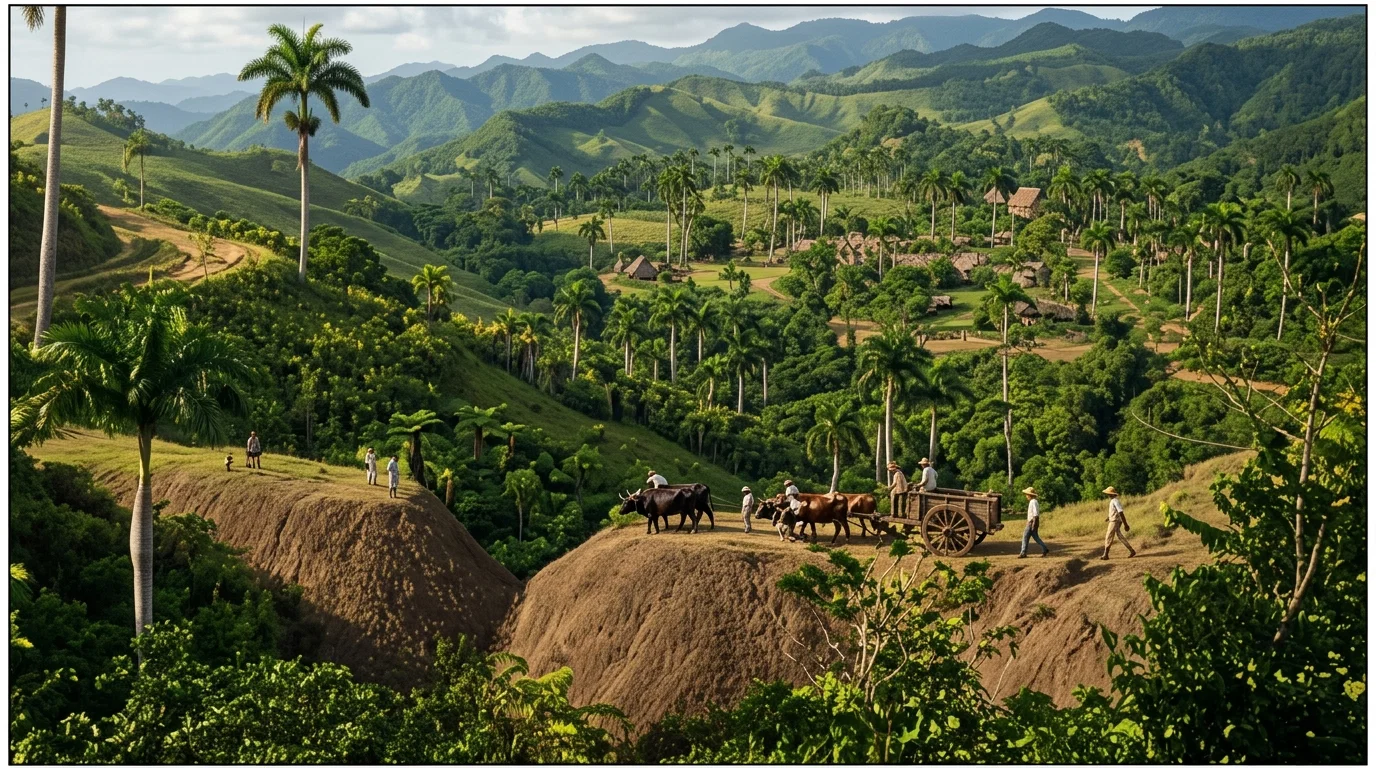
RAILROAD MAKING IN CUBA
We sometimes feel that our “little world” is quite large after all. Cuba is nearly as large as Pennsylvania or the State of New York. It is about seven hundred fifty miles from east to west, and about fifty miles from north to south. It is said that on her soil she is capable of sustaining fifteen million people. At the present time her population is about two million forty-nine thousand. Of this number two hundred thirty-six thousand are located in Havana, the capital of the island, situated in the northwestern part. Santiago, the next largest city, in the southeastern part, has about forty-three thousand, and Matanzas, more toward the north central part, has a population of about twenty-three thousand.
The climate is delightful. We came in the time of the year when it was the most trying, but for all that we did not find it as hot during the day as we found it in some of the Eastern States. As far as frost and snow are concerned, Cuba knows no distinct seasons, but we do have our dry and rainy seasons, the same as in other tropical countries. We are now passing through the dry season; the rainy season will begin about May.
I understand that for the past thirty years the average rainfall has been about fifty-two inches a year, while for the past ten years the mean temperature has been 68.9° Fahrenheit. I have not seen the death-rate of Havana for this year, but understand that one of the late years it averaged only twenty-one in one thousand. Tropical plant life is luxuriant. Some northern plants do well here. We have been experimenting these past months, and have found out that Cuba possesses a variety of soils.
On some soils great quantities of coffee and tobacco are produced, while only a few miles away, citrus fruits do well; in still other places the raising of sugarcane and garden produce is carried on successfully. One would not have much trouble in finding just the soil which he would want.
There is some beautiful scenery in Cuba. Just a few miles to the north of us is a group of mountains, through which a railroad is being built, as shown in the picture.
Birds of beautiful plumage, parrots, parrakeets, mocking-birds, and wild pigeons are numerous. Some of our little bird friends come quite close to the house, drinking out of the tub that stands on the well floor.
The provisional government has been building government macadamized roads from one end of the island to the other. Some of these are nearing completion. These are wide roads, with culverts and drains. The road that runs through the western province, Pinar del Rio, is nearly finished. This is about two hundred miles long. The main highway between Havana and Cabañas on the northwestern coast runs into the sugar-producing section of this province, Pinar del Rio. This is one of the fairest regions in Cuba. Here is found excellent land for garden produce. It is in this part of the island that our school farm is located, not far from the historic Cabañas Bay. It was here that the heaviest engagements in all the naval history of colonial Cuba were fought.
The country around San Claudio is more rolling in some places. Here arrangements have been made with the land company for about fifty-six acres of excellent land for the school, and we are expecting to build as soon as we are able. We feel that the Lord has indeed gone out before us in giving us such a good location,—in the part of the island where most of the population is centered, and so near the coast that before long we shall be in touch with steamers that will carry our produce to the States. During the winter months we can obtain good prices. Soon the Havana Central Electrical Railroad Company will probably extended its line on past Cabañas to Bahía Honda, thus putting us in direct and close touch with Havana, which is a good market in itself.
Our needs for a good school here are just as great as in other fields. The children of our own people ought now to be in one of our schools, lest they turn before long to other schools which offer good advantages.
We all feel that we have not branched out too soon in accepting the good offer that has been made by the land company from which this property was bought. What we need now is financial backing to help us to get the work in good running shape.
Those of our people who are looking for a change of climate, where they can have summer the whole year, and where they can raise good garden produce, would do well to look the ground over, or communicate with those in charge of the work here. It might be that they could find a suitable location.
San Cristobal.

China

W. C. HANKINS
A short time ago Elders B. L. Anderson and N. P. Keh, and the writer spent a few days at To Kang. The day after our arrival we spent in visiting among the surrounding villages. In one village there was quite a little crowd of men and boys who gathered to look at the foreigners, and thus gave Elder Keh an opportunity to speak to them.
He began by asking them if they would be glad to harvest the rice; they answered that they were always glad to harvest when there was any rice to be harvested. Then Elder Keh proceeded to give an adapted version of the parable of the wheat and tares, using rice instead of wheat, however. To illustrate the great truths more forcibly, he represented the rice-stalks and the tares as holding a conversation together, and told how the tares boasted of their superior size and beauty.
When the rice told how the farmer cared for it, the tares immediately claimed that the farmer tilled and watered them just as much as he did the rice.
How strongly this brought to mind the fact that the wicked enjoy the protection of God because of the presence of God's people in their midst.
Then, too, there were other points of this parable that stirred my heart to greater consecration to the Lord's work. He went on to ask if a tare could, of itself, become a good stalk of rice, or if man could turn it into a good stalk. No, of course that was impossible, was the general verdict. Then he showed them that it was just as impossible for a bad man to become a good man through his own power or any power of man, but that God, who created the heavens and the earth, is able to make a tare over into a good stalk of rice, and a wicked man into a righteous one, for it would be only creative power that could do either, and such a change would be a re-creation.
This little talk was as simple but, withal, as powerful a presentation of the gospel of salvation through Christ as I ever heard. How grateful we should be for such a gospel and the wonderful light that has been given to us concerning it.
The next day was the Sabbath. In the morning Elder Keh preached a good sermon on baptism, after which Elder Anderson led two of the brethren forward in the ordinance that signified their desire to be dead to this world. In the afternoon we celebrated the ordinances of the Lord's house, and, as the writer spoke to the little company assembled there, the Holy Spirit was present to give to him a fuller conception of the meaning of these ordinances than he had ever had before, and helped to present it to the brethren. During the ordinance of humility, there was no confusion, but everything was done quietly and according to gospel order.
When the day was over, we felt deeply impressed with the similarity of what had taken place that day in that little, dirty Chinese village, to the celebrating of the same ordinances in a small church at home. Truly this gospel makes of one mind and one heart all those who accept it, in whatever part of the earth they may be found. The two men baptized at that time, make eight who have been baptized since the first of the year, and a total of twenty-eight who have been baptized in this province.
We hope that our brethren in the home land will remember this field in their prayers. Satan is working hard to counteract all the good that is being done here, and we need the prayers of God's people.
Kulangsu, Amoy.

In Good Ground

A SWEDE was recently coming into our country through Ellis Island. As he landed, a worker of the New York Bible Society stepped up to him, offering him a Swedish New Testament. The Swede stopped, apparently startled, and stared at the worker, saying, “Weren’t you here twenty-six years ago? I think you are the same man—yes, you are the same man.” The worker told him he had been engaged for twenty-eight years distributing the Scriptures to the immigrants, giving to each one a book in his mother tongue. “Well,” said the Swede, “twenty-six years ago I landed here a stranger, and you gave me a New Testament in the Swedish language, just as you offered me one now. I read it, and through reading it I became a Christian. After a few years I made up my mind to become a preacher, and for twenty years I have been preaching the gospel in Colorado. It all began with your giving me a New Testament.” “The sower soweth the Word.” Mark 4:14. This seed fell in good ground, and is still bringing forth fruit. This is only one of many interesting results of the work that is being done every day in the city and harbor of New York.—Christian Work and Evangelist.

Living Away from Home

Most of us live away from home. We are hiding as Adam did in the bushes of Eden. There was a time when God's voice thrilled Adam's soul with joy and gladness, and he thrilled God's heart with joy. They lived in sweet fellowship with each other.—Dwight L. Moody.

Church Dedication at Asheville, N. C.
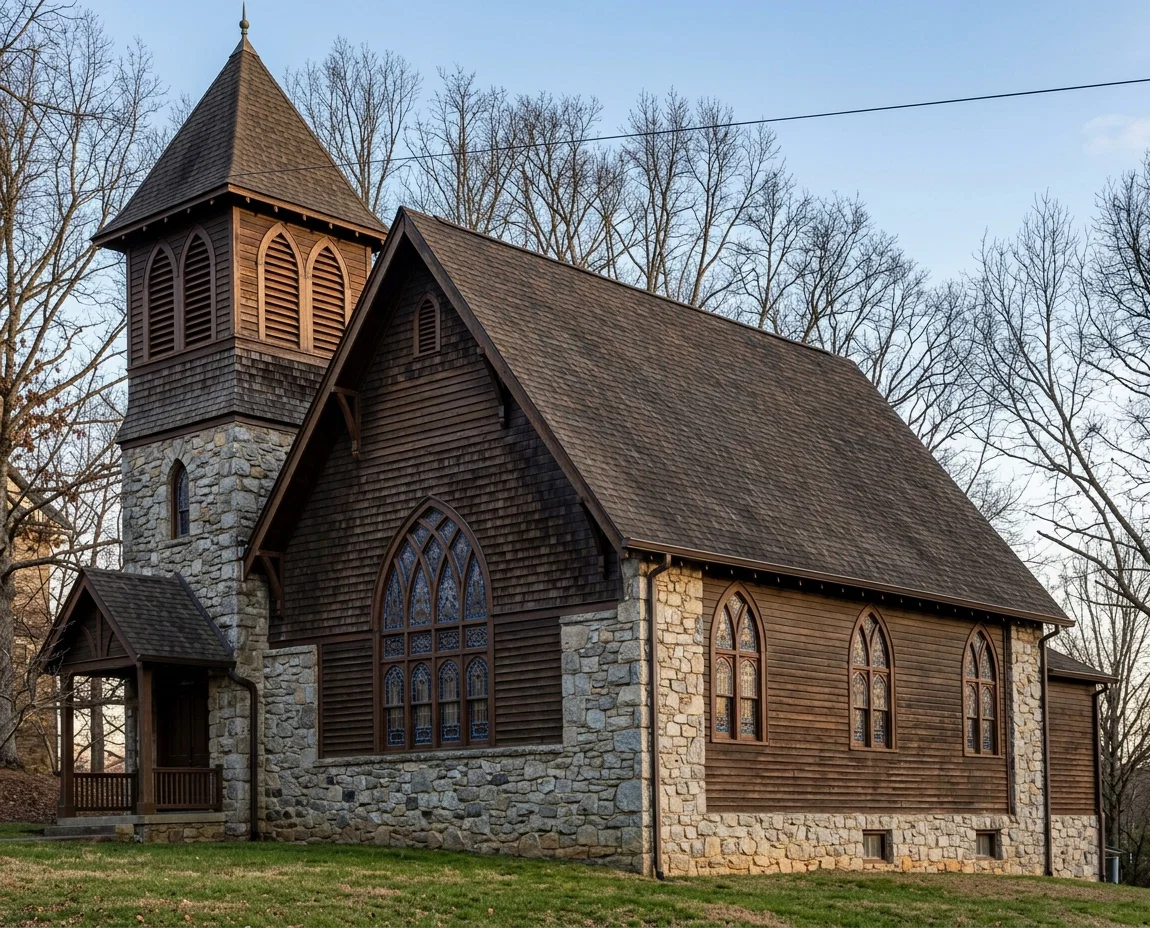
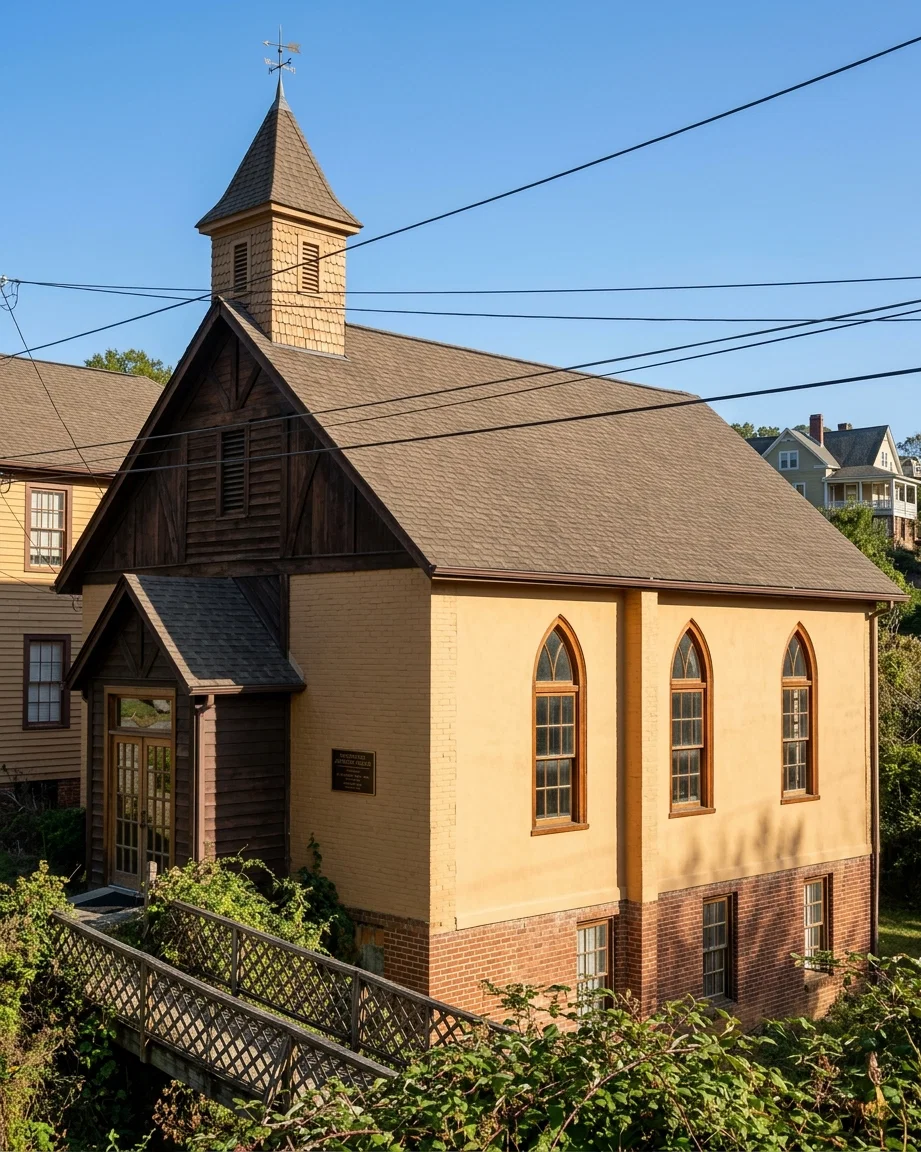
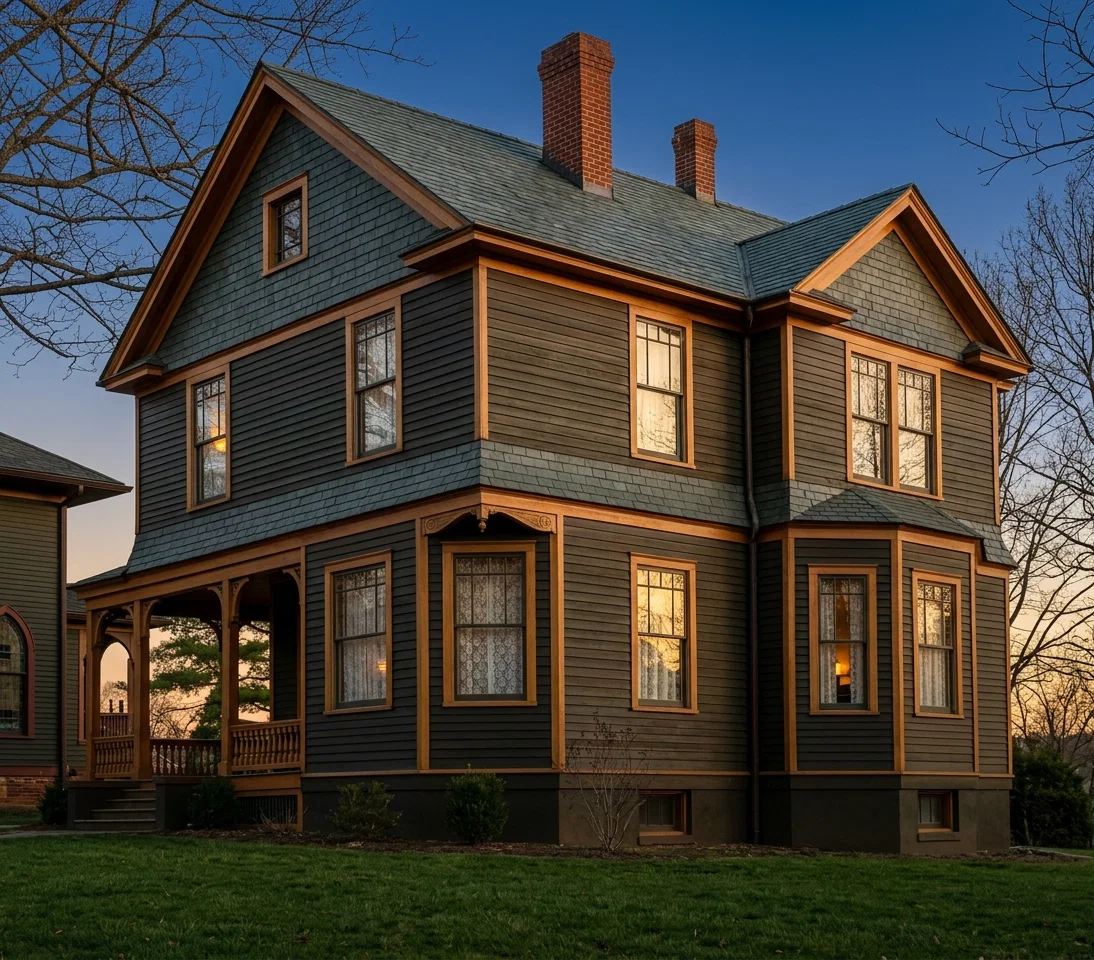
SEVENTH-DAY ADVENTIST CHURCH FOR COLORED PEOPLE AT ASHEVILLE, N. C.
SEVENTH-DAY ADVENTIST CHURCH FOR WHITE PEOPLE, ASHEVILLE, N. C.
THE dedicatory service of our second Seventh-day Adventist church in this city occurred January 17. There was a good attendance of the citizens. The dedicatorial sermon was preached by Elder W. A. Westworth, president of the Southeastern Union Conference. Elder R. T. Dowsett offered prayer, and Elder D. A. Parsons presided as local pastor.
This is the second Seventh-day Adventist church which has been dedicated to the work of this closing message in Asheville during the last two years. The first one was built and set apart to the Lord’s service in 1907, for the use of the colored brethren, of whom there has been a faithful company in Asheville for some time.
A very neat two-story parsonage of seven rooms, with modern conveniences, on the lot adjoining the church, is also shown in the accompanying illustration. These buildings, and the grounds on which they are situated, were the personal donation of Sister J. E. Rombaugh, of this city, to the Southeastern Union Conference. The entire cost of ground and buildings varies but little from twelve thousand five hundred dollars. Of this sum, it should be stated, the colored brethren donated over one hundred fifty dollars toward the erection of their house of worship.
Brother J. S. Killen was first sent by the North Carolina Conference to carry on the work here. He labored faithfully in the distribution of literature, and in the holding of Bible readings. He also took the oversight of the erection of the church for the colored brethren.
In the meantime, while the buildings were progressing for the work in the interest of the white people, an arrangement was agreed upon between the North Carolina Conference and the Southeastern Union Conference, to set off Asheville and its adjoining territory to be worked by the Southeastern Union Conference for a time, until the work becomes quite fully established. In carrying out this plan, the union conference invited Elder D. A. Parsons to take the oversight in the Asheville mission, assisted by his mother, Mrs. L. A. Parsons, as Bible worker. The conference also promised that other workers would come to his aid as soon as possible.
SEVENTH-DAY ADVENTIST PARSONAGE, ASHEVILLE, N. C.
The colored brethren are greatly favored by having had among them, the past few months, Elder M. C. Strachan, of Washington, D. C., who is here, not as a laborer, but to recruit his failing health. Although he has not been actively engaged in public work, still by his counsel he has greatly encouraged and strengthened this little company of believers. We are pleased to see our brother regaining his health, and to feel that it will not be long until he will be able to resume his work.
Immediately following the dedication, Elder Parsons began a series of meetings in the church. These are still in progress, with an encouraging interest, and we trust that some precious souls will see the truth and will joyfully obey it. We are all of excellent courage in the Lord. SIDNEY BROWNSBERGER.

Report of the California Conference

OUR annual conference has just closed, and in many respects it was one of the most remarkable conferences that I ever attended.
There were present one hundred fifty-one delegates, representing fifty-two churches. Over twenty churches were not represented, as many were not able to come to the conference on account of the rainy season; many of the roads being almost impassable in certain portions of the conference not accessible by railroad.
Nine new churches were received into the conference the past year, representing an additional membership of four hundred forty. This number does not include members taken in by letter.
There have been, during the past year, thirty-four series of meetings held in halls, tents, and churches; and as a direct result of these meetings, three hundred seventeen have united with the church. In addition to this number one hundred twenty-three have been received into the churches by the local elders, as the result of the distribution of our literature and other missionary efforts of the lay members.
There has been over twenty thousand dollars' worth of our periodicals sold, including Liberty, Life and Health, Signs of the Times, and Bible Training School. The complete sales of subscription books for 1908 were $15,035.40; the entire amount of the sales of our publications in the conference, as far as reported, is $43,324.64.
The conference has responded liberally to all the calls made. We know of about twenty-five thousand dollars that has been raised in this conference, outside the regular tithe, which has gone to sustain the work in foreign fields and in the South. Some very important resolutions were passed at this conference.
Our receipts of tithe have not been as large this last year as the previous year, which is owing partly, at least, to the financial pressure that we have passed through on account of this being the year of the presidential election, but more especially to the fact of our brethren not being able to dispose of their fruit. Many thousand dollars' worth of fruit is stored away, and our brethren are waiting for an opportunity to sell. Some of the brethren have told me that they are carrying on their farming this winter on borrowed money, holding their fruit for an advance in price, as the price offered was not sufficient to pay them for gathering it.
We feel very grateful to God for the prosperity that has attended the conference during the past year. The leading officers of the conference were re-elected to their positions. We look forward to this coming year, trusting that God will let his blessing rest on the conference, and that we shall see further progress. We do not attribute the success of the last year so much to the special management as to the special blessing of the Lord as we are nearing the end when the rank and file of our people should enter the work, and the printed pages containing the truth fall everywhere like the leaves of autumn.
S. N. HASKELL

Alabama

GADSDEN.—We are thankful to be able to report advancement in the work here. Last month Elder T. B. Buckner visited us, and baptized those who were awaiting baptism. During his stay, a woman who for a long time had been halting between two opinions, finally decided to obey, and following the candidates to the stream, requested baptism. Ten were baptized at this time. Our church-membership is thus increased to twenty-two, while our Sabbath-school has a membership of thirty. Last fall two of our girls left for Oakwood Manual Training-school, to prepare for usefulness. Nearly all our members attend the meetings of our young people's society, and are showing by their deportment that they understand the real object of that organization. Our tract and missionary work is in its infancy; but we expect to do good work soon. I believe there are other individuals here to be brought into the truth before the work closes. G. E. PETERS.

The South African Union Conference

THE fourth session of the South African Union Conference was held at Claremont, Dec. 24, 1908, to Jan. 3, 1909, Elder R. C. Porter presiding. The conference committee and those in charge of missions met for a few days preceding the opening of the conference, to study the situation and needs of the field. One feature of the conference was the work of the large committee, which met daily to prepare recommendations to be brought before the conference.
From the very first, the conference meetings were characterized by the deep movings of the Holy Spirit, union and harmony prevailing throughout the entire session. Elder Porter's studies on apostasy and on the book of Job were very clear and helpful. Also Elder L. R. Conradi's study on the book of Acts.
The missionaries presented reports from the different mission fields, showing the needs for the coming year. Plans were laid for aggressive work. It was voted to send three additional helpers to the Barotseland Mission,—Brother and Sister J. R. Campbell and Brother C. Robinson. Brother and Sister H. C. Olmstead will connect with the work at the Solusi Mission; Elder M. C. Sturdevant will open a new mission in Rhodesia; Sisters Ina and Ettie Austen will join the work at Malamulo Mission, Nyassaland; and Brother G. A. Ellingworth will connect with the Maranatha Mission.
The report shows the following receipts for the year 1908: Tithes, £356 5s. 6d.; annual offerings, £45 6s. 6d.; weekly offerings, £60 17s.; Sabbath-school offerings, £169 9s. 11d.; a total of £631 18s. 11d. The amount furnished the missions for 1908 was £3,122 11s. 1d.
The following officers were elected: President, R. C. Porter; vice-president, W. S. Hyatt; secretary and treasurer, J. V. Willson; corresponding secretary, Mrs. R. C. Porter; general secretary Volunteer Missionary Society, Miss M. E. Robertson; general secretary Sabbath-school association, Mrs. A. P. Tarr; editor South African Missionary, Mrs. R. C. Porter; editor Sentinel, I. J. Hankins. Union conference committee: R. C. Porter, W. S. Hyatt, E. R. Williams, H. J. Edmed, Geo. Thomason, M. D.; C. P. Crager, I. J. Hankins; J. H. DeBeer.
Ministerial credentials were granted to R. C. Porter, W. S. Hyatt, W. H. Anderson, F. B. Armitage, M. C. Sturdevant, J. C. Rogers, and also to W. C. Walston and J. F. Olmstead, who were ordained to the work of the gospel ministry. Ministerial licenses were given to Dr. Geo. Thomason and M. E. Emmerson, and missionary licenses to H. C. Olmstead, J. R. Campbell, Victor Willson, S. M. Konigmacher, R. Moko, M. D. Kalaka, A. Butterfield, Mrs. M. C. Sturdevant, Mrs. A. Butterfield, Mrs. F. B. Armitage, Mrs. J. C. Rogers, Miss E. Edie, Mrs. R. C. Porter, C. Robinson, G. A. Ellingworth, Ina Austen, and Ettie Austen. Teachers' missionary certificates were given to Miss Ina Austen and Miss Helen Hyatt. One company of sixteen, that had been working independently, asked admission into the conference.
As the brethren separated at the close of the conference, they all felt that this was one of the best conferences ever held in South Africa, and all were full of hope and courage to begin the work of another year.
R. C. PORTER, Chairman; J. V. WILLSON, Secretary.
Continue reading: Western Pennsylvania