The Youth’s Instructor, Vol. LI, No. 27

The Shower

The Youth’s Instructor

Jul 9, 1903

Review and Herald Publishing Company · Battle Creek, Michigan · Jul 9, 1903

The Shower

GIVE the thirsty grass a drink, Over-hanging cloud; See! it is beseeching you, And its head is bowed.
Water from the sea you bear, Water from the rill; You can give the fainting grass Water if you will.
All the buds and blossoms, too, Shall they call in vain? Don't you hear their voices rise Sweet from hill and plain?
Now the rain begins to fall Gently as the dew. “Thirsty grass, lift up your head; Here's a drink for you!” Fresh and sweet and pure it falls On each trembling blade. “Lift your hearts in thankfulness; Be no more dismayed.”
Great, kind-hearted, dusky cloud, Full of joy are we; You have come to bring to us Water from the sea.
Over valleys deep and wide, Over mountains high, You have borne your precious load Through the far blue sky; And the lakes and rivers passed Gave you of their store, Helping you to bring to us Life and joy once more.
MARY M. CURRIER.

Japanese Family Customs

In Japan the birth of a boy brings great rejoicing in the family, and among relatives and friends; for boys grow to be men, the lords of creation, according to the Japanese view.
On the fifth day of May occurs a festival in honor of boys. It is celebrated especially in every family that has been blessed by the arrival of a baby boy during the preceding year; also in families where there are boys below the age of seven.
During this festival a curious custom prevails. Tall poles are set up, with round bamboo baskets, all covered with gilding, at the top. Just below these baskets are bright-colored wheels that turn in the wind. Hoisted upon these poles, after the manner of flags, are one or more large, colored carp, made of cloth or paper. Often with the fishes, or on a separate pole, there are long streamers of bright-colored cloth. When a brisk breeze is blowing, filling the scores of fishes, and floating the graceful streamers, a novel sight is presented.
The carp is looked upon as a very resolute and courageous fish, overcoming every obstacle as it ascends the swift mountain streams of the country; so it is chosen to represent the character that it is hoped will be developed by the boys of the family. This festival for boys is said to have been observed as far back as fifteen hundred years ago. But the flying of cloth carp is of very recent origin, banners bearing the pictures of famous men being formerly used.
In a Japanese family the eldest son is honored by the younger members, because of his position; for he is the successor of his father as the head of the family line. And upon the father's death he inherits all the paternal estates. In case there is no son, the eldest daughter becomes the heir; and when she marries, her husband must take her name, and so perpetuate the family line. It is very common for a family that has no son, to adopt one of the younger sons of another household. Such an adopted son assumes the name of his foster-parents, and inherits all the rights and privileges of the eldest born.
STREET IN A JAPANESE VILLAGE ON BOYS’ DAY
At first thought it may seem that the position of the eldest son is greatly to be coveted. But while it brings many privileges, it has also its responsibilities. As the head of the family line, he is under obligations to all the younger members of the family. His sisters are entitled to a home with him until their marriage. He is also expected to open his home to any of his brothers, should they, because of illness or other misfortune, ever need assistance. And should his sisters become widows, they, too, usually return to the family home.
These customs often give rise to much unhappiness. A selfish elder brother has it in his power to hoard his inheritance, leaving the other members of the family to look out for themselves. On the other hand, it is not uncommon for an elder brother to be much imposed upon by relatives who indolently prefer to receive a living from the family estate, rather than to establish homes of their own.
When a young man marries, he takes his bride to his father's home, where she is received as a member of the family. This custom is not without its good features; for the young people have the advantage of the long experience of the parents in all matters of domestic economy. But thoughtful writers in Japan agree that the Western custom is preferable. When a young couple start out in life by themselves, they become the master and mistress of a home of their own. Mothers-in-law are in bad repute in Japan. But here it is the young wife who suffers from the tyranny of her husband's mother.
So there are customs good and bad among all nations. But custom alone, however good, can not bring peace and happiness. The truly happy home is the home where the love of God abides in each heart. The homes of Japan need the gospel of Christ with its uplifting, purifying power.
F. W. FIELD.
Tokyo, Japan, May 5, 1903.

That Day

There is a day so well known that the apostle Paul designates it simply as “that day.” Here is one instance where he mentions it in this way: “I know him whom I have believed, and I am persuaded that he is able to guard that which I have committed unto him against that day.” Again, he says: “I have fought the good fight, I have finished the course, I have kept the faith: henceforth there is laid up for me the crown of righteousness, which the Lord, the righteous judge, shall give to me at that day.”
But this expression is not confined to the writings of the apostle Paul or to the New Testament. Thus we read in the book of the prophet Isaiah: “Enter into the rock, and hide thee in the dust, from before the terror of Jehovah, and from the glory of his majesty. The lofty looks of man shall be brought low, and the haughtiness of men shall be bowed down, and Jehovah alone shall be exalted in that day.” Jesus had the same day in mind when he said, “Many will say to me in that day, Lord, Lord, did we not prophesy by thy name? . . . And then will I profess unto them, I never knew you.”
What day is this?—Plainly it is “the day of wrath and revelation of the righteous judgment of God.” Evidently it is “that great day of God Almighty.” Undoubtedly it is the day of “the revelation of the Lord Jesus from heaven with the angels of his power in flaming fire, rendering vengeance to them that know not God, and to them that obey not the gospel of our Lord Jesus: who shall suffer punishment, even eternal destruction from the face of the Lord and from the glory of his might, when he shall come to be glorified in his saints, and to be marveled at in all them that believed (because our testimony unto you was believed) in that day.” This is “the day of the Lord.”
This is emphatically “that day.” There is no day like it in the world’s calendar. It is “a day of darkness and of gloominess, a day of clouds and of thick darkness.” “That day is a day of wrath, a day of trouble and distress, a day of wasteness and desolation, a day of darkness and gloominess, a day of clouds and thick darkness, a day of the trumpet and alarm, against the fortified cities, and against the high battlements.” “Alas for the day!” “Day of wrath, that day!” But there is hope for us in that day, if we are willing to accept the Lord’s provision. For he has “interposed with an oath; that . . . we may have a strong encouragement, who have fled for refuge to lay hold of the hope set before us: which we have as an anchor of the soul, a hope both sure and steadfast and entering into that which is within the veil.” The Lord grant that we all may “find mercy of the Lord in that day.”
W. W. PRESCOTT.

XI—Our Sub-Cerebral Slaves

IF you speak ungrammatically, do not expect to remedy the defect by merely studying grammar. You will find grammar to be a good square, or plumb-line, or level, with which to test the accuracy of your grammatical structure; but such tests must be applied at one’s leisure; it is impossible to apply them in the heat of a discussion or in animated conversation.
As the “law” of the Scriptures convicts one of defects in one’s character, so a knowledge of grammar convinces him that he is defective in speech. Just what these defects are, he is enabled to determine, and they are made to stand out in such ugliness that he longs to have his method of speaking regenerated.
This has been exactly my experience. My childhood was spent on the frontier, bordering the Rocky Mountain desert. My parents and grandparents and uncles and cousins, with whom I associated, and from whom I learned English, were not authorities on that subject. Nobody could expect them to be; for they themselves for the most part had been educated on the frontier, and their schooling consisted of finding out the best way to make a desert waste furnish, either from the soil or the wandering herds of buffalo, the necessities of life; of transforming a savage landscape into one of civilization; and at the same time, by persuasion or intimidation, of remaining on good terms with the Indians.
In their own provincial fashion, the people of our settlement expressed their thoughts readily enough; and I learned to do likewise. In fact, when an occasional stranger used correct English, it sounded odd. And this leads me to say to the boys and girls, whom I trust I am entertaining: Beware of being guided by the way a word sounds. You can depend upon sound only when all the English you have ever heard or used has been flawless as to grammar.
By and by the time came when, through a study of grammar, I saw how I was sinning against the usage of English, and I deeply resolved to reform. But the mere knowledge of the fact that him and me and her are not subjective forms, that who is nominative, and whom objective, that went and saw must not be used in the perfect tenses,—all this availed me nothing. For the good English I wished to use, I did not use; and the bad English which I wished not to use, that I used. I found that with language, as with Christian living, one can not throw off the old habit and take on the new one by merely willing to do so. True enough, the willing is important, but the resolute, persistent doing of the thing is what counts.
And again I found in my own experience a striking analogy between correcting language faults and character faults.
One by one, I took these grammatical errors in hand. At first the best I could do was to become conscious of my mistake after it was made. Then the time came when I realized the blunder as it was being made, but too late to correct it. Later, the consciousness came in time to correct the error, and finally the right form became automatic, and the mind was left free for other work.
In this connection I can hardly refrain from telling you about the myriad of slaves we all have ranged along the upper part of the spinal cord, which, when they are patiently taught to do our tasks, will finally look after the work entirely, and leave the brain free for higher duties. These are the slaves who are at this very moment interpreting the printed page before you. They are the slaves who take upon themselves the laborious task of manipulating the vocal organs every time you talk. This they do in precisely the same way that you did the work when you were training them. But they will not brook any two ways of doing a thing. They can not distinguish grammatical from ungrammatical expressions, so they fashion the words just as they have oftenest been shown, without regard for company, propriety, or anything else.
Now if you are at this moment using went for gone, or who for whom, you have probably made that same mistake a thousand times or more. And those slaves of yours, in the vicinity of the medulla oblongata, have very naturally come to believe that what they have been doing so many times without protest from you, is right.
Suppose, then, you learn in your grammar lesson that went is the past-tense form of go, that you must not say, “I had went,” that whom must be used only as the direct object of a verb or a preposition, and that you must say, “It is I who told you,” but “It is I whom you told,”—do you not know that your servants will laugh long and loud at your grammar, will say that it sounds outlandish, that it is as unbecoming to you as a silk hat? And unless you watch them, they will continually do those things in the old way, in the face of your threats and bribes and entreaties. There is only one reasonable thing to do under the circumstances, and that is, to drop everything and repeat several hundred times the expressions you have erroneously used. You will be surprised to see how quickly your servants will fall into line with the example you thus set them. They are, in fact, like the whole world: it is the practice, not the preaching; the example, not the precept, which they respect.
I do not know your besetting grammatical sins; you may have only half a dozen; but if you wish to rid yourself of them, do not merely write them out as so many recommendations and pass them down to your sub-cerebral servants, but take the thing in hand, give them five hundred correct examples, and then, instead of a lot of unreliable, slip-shod slaves, you will have a retinue of intelligent, trustworthy, and loyal servants, to whom you can dictate your thoughts with the assurance that every sentence will come out clear-cut and grammatical.
L. T. Curtis.

Correct English

I have been asked to give some rules for spelling. This is a difficult task; for many of the rules commonly given are impracticable because of their exceptions. Among the numerous rules, the few that follow are perhaps the most useful; and if carefully learned, will often save one much embarrassment:—
1. Monosyllables with a single vowel immediately followed by f, l, or s, double the final consonant; as, ball, cuff, dull, hill, lass.
Clef, it, of, sol, as, gas, him, has, is, this, thus, us, was, and yes are exceptions to this rule.
2. Monosyllables and words accented on the last syllable, ending with a single consonant preceded by a single vowel, double the final consonant when an affix is added beginning with a vowel; as, beg, beggar; rob, robbed; equip, equipped; remit, remitting.
If the original accent is thrown back by adding the affix, the consonant is not doubled, as prefer, preference.
3. Final y preceded by a consonant is changed to i before an affix; as, apply, applied; busy, busily; lucky, luckily.
In most words, when final y follows t, it is changed to e before an affix; as, duty, duteous.
Y before an affix beginning with i is retained to avoid doubling the vowel.
Dry (except dried, drier, driest), shy, sly, spry, and wry are exceptions to Rule 3.
4. Most words ending with silent e drop the e before affixes beginning with a vowel; as, have, having; fame, famous; oblige, obliging.
A word ending in silent e preceded by c or g, retains the e before an affix beginning with able or ous.
Words ending with silent e preceded by i drop the ie, and add y before the affix ing; as, die, dying.
5. Most nouns form their plural by adding s to the singular form; as, horse, horses; town, towns; truth, truths.
6. A noun whose last sound does not unite with the sound of s (ch, j, sh, s, x, and z), forms its plural by adding es; as, branch, branches; sash, sashes; loss, losses; adz, adzes.
7. Nouns ending with o preceded by a consonant form their plural by adding es to the singular form; as, tomato, tomatoes; cargo, cargoes.
Some words of foreign derivation do not conform to this rule; as, canto, cantos; proviso, provisos.
8. Nouns ending in y preceded by a consonant change y to i and add es to form their plural; as, lady, ladies; sky, skies; fly, flies.
9. The nouns knife, life, and wife form their plural by changing f to v and adding s.
10. The nouns leaf, loaf, sheaf, thief, self, shelf, half, calf, beef, elf, wolf, and sometimes wharf, change f to v and add es to form their plural.
11. Signs, figures, letters, etc., form their plural by adding the apostrophe and s; as, $'s, lb.'s, &'s, o's, 7's.
12. In compound words, the part of the word that carries the chief thought is pluralized; as brothers-in-law, brick-yards, handsful (if more hands than one are full), handfuls (if one hand is filled more than once).
13. Singular nouns, and nouns whose plural is not formed by adding s or es to the singular, form their possessive by adding the apostrophe and s; as, lady's, Fred's, man's, men's, child's, children's.
Compound and complex possessives take the apostrophe on the last word; as, Brown & Bradley's store; the Duke of York's estate.
14. Plural nouns whose plural is formed by adding s or es, form their possessive by adding the apostrophe to the plural; as, ladies', houses', boys'. D. D. Rees.

Little Self-Denials and Silent Threads of Gold

LITTLE self-denials, little honesties, little passing words of sympathy, little nameless acts of kindness, little silent victories over favorite temptations—these are the silent threads of gold which, when woven together, gleam out brightly in the pattern of life.—Canon Farrar.

The Religion of Burma

I PROMISED to tell my young friends something in regard to the prevailing religion of the Burmese people. They worship Buddha, “The Wise,” or “The Enlightened,” and after him they are called “Buddhists.” Their religion is very old, nearly twenty-five hundred years; and its monuments, temples, shrines, and monasteries are innumerable. Its festivals are carefully observed; and its monastic system is fully established in every part of the kingdom. The members of the monastic fraternity are known as pon-gyees, or “holy men.”
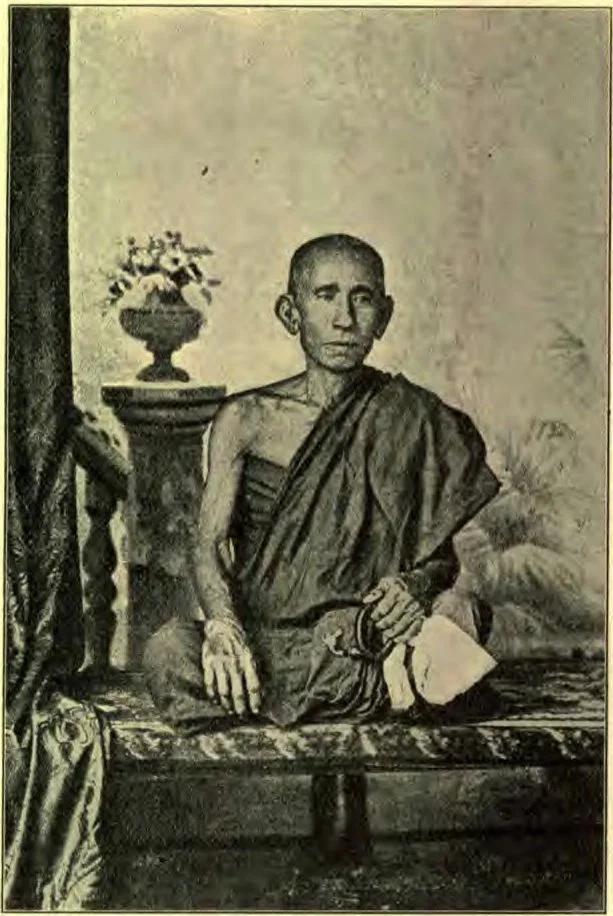
The pon-gyees are not exactly priests, but rather what we would call monks. Their religious ministrations are confined to sermons, and they do not interfere with the worship of the people. They are a very numerous class, and may at once be known by their yellow robes (the color of mourning), shaven heads, and bare feet. They subsist wholly by charity. The vows of the pon-gyees include celibacy, poverty, and the renunciation of the world; however, a pon-gyee may at any time be released and return to a secular life. Hence nearly every Burmese youth assumes the yellow robe for a time. The object of the brotherhood is the more perfect observance of the laws of Buddha.
While visiting the “Golden Pagoda,” a temple in Rangoon, we noticed a young Irishman who had joined the pon-gyees, and learned that he was very influential among the monks. The rosary is in general use among the followers of Buddha. The Burman is free from fanaticism in the exercise of his religion, and his most sacred temples may be freely entered by the stranger without offense.
A BURMESE MONK
A BURMESE MONK
Buddhism teaches man to combat, control, and master the passions of his heart, to make reason predominate over sense, mind over matter, and to practise the virtues required for the attainment of these objects. Buddhism accepts without questioning, and in its most exaggerated form, the doctrine of the transmigration of souls, which lies at the root of so much that is strange in the Eastern character. According to Buddhist belief, when a man dies, he is immediately born again, or appears in a new shape, and that shape may, according to his merit or demerit, be any of the innumerable orders of being composing the Buddhist universe, from a clod to a divinity. It is believed that Buddha himself before his last birth as Sakyamuni (monk) had gone through every conceivable form of existence on the earth, in the air, and in the water, in hell (as they believe in it) and in heaven; and had filled every condition in human life. When he attained the perfect knowledge of the Buddha, he was able to recall all these existences.
This will be sufficient to show you the need of Christian workers among the Burmese. We find them much interested in our health principles, as they themselves are vegetarians. They are anxious to have “Shall We Slay to Eat?” translated into their language.
Sister Meyers and myself visited one of their temples one morning as they were preparing for a feast. When they learned from our Burmese sister, Mah May, that we were vegetarians, they were much pleased, and gave us a friendly invitation to have a meal with them. We enjoyed some luscious fruit in their company. They also gave us some of their tracts.
The largest temple they have is the “Golden Pagoda,” in Rangoon. I must not close without saying a word about this colossal building, which is about three hundred and fifty feet high, and is covered from the top one hundred and fifty feet downward with gold plates, each worth about sixty dollars. Any person furnishing a plate is considered to have done an actual act of merit, and is sure of a future reward. The picture shows the front entrance to the Pagoda. You will notice that it is guarded by two gigantic griffins, which are supposed to be imposing enough to scare away intruding spirits. On a feast-day the broad stairway is alive with throngs of gaily dressed worshipers coming and going; and here also the maimed and the halt congregate to solicit alms.
Among the beggars we saw many a loathsome sufferer from leprosy.
That our young people may be interested in the Burmese field, and that some of them may desire to work among the people, is my sincere prayer.
THEKLA BLACK.
Karmatar, India.

Striking Characteristics of the British People

ONE of the most pleasant features of English family life is their method of spending holidays. On almost every pleasant day, and particularly on Sundays, one may see wagon-loads of picnickers on their way to some quiet spot in the country. Such outings are a family matter: From beginning to end the family remain together, and enjoy the day by themselves. Generally speaking, it is not customary for an Englishman to leave his family, and go off for a day's pleasuring with his friends, nor does his wife go to some fashionable watering-place by herself. The family is one, whether at home or when out in the world.
One of the jolliest sights to be seen in England is a family party bound for a day in the country. There are the husband, the wife, the baby,— quite often two babies,— and from three to a dozen children of all ages, packed in like herrings, and all aglow with excitement and expectation. Away into the country they go at a “slapping” pace. They select the quietest roads, and travel along at a famous rate between trim green hedges skirting fields of barley. By and by a grove is reached, a halt is made, and the merry load tumble out. All the sunny day the husband lounges beneath the trees; the children race and romp; the wife cares for the baby, and keeps a vigilant oversight over her numerous brood. When the shadows lengthen, they return. The tired younger ones sleep with heads pillowed on each other, and faces veiled by wandering curls. The elders discuss the events of the day; and an hour or so after darkness has shrouded the great city, they are at home, and demonstrative in their belief that it has been the pleasantest day they ever spent. One can go scarcely anywhere within forty miles of London without meeting a London family having a picnic all by itself. An English family will get more health and solid enjoyment out of a shilling jaunt into the country than many an American family gets from a two-thousand-dollar trip to the seaside or the White Mountains.
THE GOLDEN PAGODA AT RANGOON

Profanity and Tobacco Chewing

These two disgusting practices usually go together. In England they are both conspicuously absent. The English people are greater smokers and tea-drinkers than the Americans; but one may travel from one end of the country to the other, and even through the largest and most wicked cities, without hearing a profane word or seeing a tobacco-chewer. It is a great relief to be able to travel through busy city streets without having to run the gauntlet of collections of tobacco-chewing citizens on the street-corners, and without hearing the profanity which is so common in America whenever we pass a group of men or boys. One writer has said, speaking of a journey through England, that “nothing convinced him more completely that he was indeed far from home, and cast adrift among a strange and peculiar people, than the total absence of curses and tobacco-chewing.”

Differences in Language

It is said that the English language is spoken the best and the worst in London of any place in the world. I believe this to be true. No one can exceed the well-educated Londoner in a correct and forceful use of the English language, and no one can more completely murder the king’s English than the ignorant costermonger.
On visiting England, one hears many new and strange names given to common articles; and happy is he who is willing and able to observe closely, and adjust himself promptly to the common usage. Nothing could be more foolish than for one to decide that all that he knows and has ever heard is right, and all that is strange and new is wrong. When visiting any foreign land, we should study carefully the peculiarities of the country, and adopt, as far as we are able, that which is good.
Of course these new names for common articles are confusing at first to an American; but there is a consistency in nearly all of them, and an evident meaning, which enables one to adopt them easily. For example: A railway track is a “line;” a store is a “shop;” a hardware man, an “iron-monger;” shoes are called “boots;” baggage is “luggage;” trunks are “boxes;” a freight-car is a “goods van;” a conductor is a “guard;” a street-car is a “tram;” a pitcher, a “jug;” a railway ticket office is a “booking office;” instead of seating himself in a car, one “finds a seat in a compartment;” and instead of “excuse me,” he hears, “I beg your pardon.”
The effort to adjust one’s self to these various minor peculiarities is perhaps the most difficult experience of an American in England.

Politeness

One thing which will in the end favorably impress an American traveling in England is the almost universal politeness of the people. At first he may feel that politeness is overdone and lies all on the surface; but a more intimate acquaintance with the people will convince him that it is genuine.
The shop-keeper says, “Thank you. Thank you very much,” when you make a five-cent purchase, and thanks you very much “for calling,” even if you decide not to buy. The barber who shaves you says “thank you” when you turn your face over so he can shave on the opposite cheek. The newsboy says “thank you” when you pay him a penny for the paper. The cab-man, the ’bus conductor, and even the policeman “thank you” whenever there is a possible opportunity for doing so. Some of these may be thanks from the lips only; but it is surely a mark of good breeding, and puts one quite at his ease in dealing with English people, even in the most trivial affairs.
This is not simply a veneering for society purposes. It is just as noticeable at the home fireside, where the children are strictly taught to answer each other and their parents with a politeness and consideration that are truly refreshing.
E. R. PALMER.

Young People's Reports from Montana

From Montana

Our young people in Montana are widely scattered, and many of them are obliged to work without the helpful association of others who believe the same message, and are glad for every opportunity to give it to the world. The following reports from such young people are gleaned from letters written to the State Sabbath-school secretary, Miss Lulu White, and forwarded by her:—
“You will think that I am a long time sending you my membership card in the Young People’s Society. I thought I could not do anything. You spoke of some of our sisters who have not the Review and Herald. If you will send me their names and addresses, I can send it to one of them after we have read it, if that would do any good.”
“I have not a very large report to make to the Young People’s Society this quarter. I took care of a sick boy one day and two nights, took care of a sick lady one night, and cared for some children two days and one night.”
“Following is my Sunshine report: Gave two little boys Our Little Friend; carried a little boy’s dinner pail to school for him; went to see a sick lady and baked her bread for her; did my work better around the house; bought one lot of tracts and gave them away. I hope to enlarge this report quarterly.”
“The Lord has been very near to me this quarter, and blessed me greatly. I have been trying not to let a day pass without doing something for my Saviour, if it was nothing more than to speak a kind word when some one seemed to be in trouble or unhappy; and since then, as I have watched for opportunities, I have seen more chances to work for Jesus than ever before. There are so many times each day, if we do not neglect them, that we can let our light shine and make others happier. I have committed a Bible verse to memory every day for the last six weeks. When we are so busy going to school, it is easy to neglect studying the Bible; but lately, more than ever, I see a greater need of studying the word of God.
“During the quarter I have written several missionary letters, but perhaps the most interesting thing to me was our Life Boat trip. As my sister had taken subscriptions for it on Tongue River, we went to Rosebud. We started one Thursday morning, crossed over the hills, and went down the river a distance of twenty-five miles. At part of the houses we stopped on our way down, and at the rest on our way back. More than half the people whom I asked subscribed for it. The Lord blessed us wonderfully, and we had some good experiences.”
“Last Sabbath I walked about a mile and a half to take some things to a sick lady. The family that I visited are starving; the mother is sick, and can’t do anything, the husband won’t work, and there are six little children. It did me good to see them eat the things I took. The mother opened the basket, and the children stood around her, eager to see what was in it, and how their eyes lit up when they saw! While they were eating, I made a fire, swept the room, and made the place look as cheerful as I could. The house is very cold, the floor has big cracks, and the walls too. I never realized that we could find opportunities for this kind of work right at our own homes. I expect to take some papers for them to read soon.”

Beside the Well

To the well's broad rim, in the evening dim, Came the dusky mothers with babes at breast; And the woman fair, who was waiting there, Told them the story of love and rest.
She had learned those words, like the songs of birds, In a sweet, far land, where Christ was King, Where the world was bright, in the beautiful light Our Saviour came from his heaven to bring.
But they had no clue to the things she knew, These sad-faced mothers whom care and pain Had marked their own, in that tropic zone, Where the gods of the heathen sternly reign.
And she vainly tried, till at last, supplied By a tender thought sent from above, Over and over, she said and prayed, And she gently said it, “God is love!”
“As you love the son, your precious one, You hold in your arms, in joy and pride, So God loves you with a love that knew The way to seek o'er the world so wide.”
And the gracious tale, that can never fail To win the heart where it enters in, Brought tears to the eyes, made day dawn rise, To the women, lost in that night of sin.
O sisters mine! will ye not resign Some flitting pleasure, that One above, May see you send, by the hand of a friend, This word to the desolate, “God is love!” —Margaret Sangster.

THE WEEKLY STUDY

The Work Organized

(July 12-18)
We now come to an important era, when system and shape were given to the united work of believers, so that in union there might be strength. “Rise and Progress,” chapter XX, is the basis of study as regards the steps taken by believers. See also the paragraphs on further steps toward perfecting order, given on pages 246 and 253. We will leave the question of the tithe for the next study.
The topic before us may be dealt with as follows:—
1. The story of the effort, and the ideas which abounded in that time of confusion; how the spirit of prophecy came in as a guiding light.
2. Bible testimony as to order and system in God’s work, and illustrations of the disposition men have had to count order and system as an arbitrary and restrictive arrangement to be resisted. 1 Cor. 12:28; Eph. 4:11-16; Titus 1:5; 1 Tim. 3:1-5; 1 Peter 5:1-5; Acts 20:28-31; 1 Chron. 12:33, 38; Acts 7:35, 37, 52; Num. 16:1-3; 1 Sam. 10:26, 27; 2 Peter 2:10.
This whole survey may well be given by one member, and need not require a very long time, though there are practical lessons in it for our own time and work, which we should get. “God is not the author of confusion, but of peace, as in all churches of the saints.” 1 Cor. 14:33.
Let us remember the need of order and system in our society work. So much more may be accomplished if every member will bear in mind that he is a part of a whole, to be at his post for every duty, and to be prompt and systematic in carrying out his work. Plan definitely the work to be done, the part each has, and then keep rank and do the work. In order to keep to a united program of service, some one must plan the battle. Make the work of your leader and committee a joy by hearty co-operation. In the conduct of our society work we are to get a training for larger spheres of service, and no experience will be more valuable to us than the discipline of working together with others, keeping step and keeping rank.
The service of the sanctuary has a lesson on order and system. This paragraph from Testimony No. 32, page 30, refers to it:—
“Brethren, never allow any one’s ideas to unsettle your faith in regard to the order and harmony which should exist in the church. Many of you do not see all things clearly. The directions in regard to order in the tabernacle service were recorded that lessons might be drawn from it by all who should live upon the earth. Men were selected to do various parts of the work of setting up and taking down the tabernacle, and if one strayed in carelessly, and put his hands to the work assigned to another, he was to be put to death. We serve the same God to-day. But the death penalty has been abolished; had it not been, there would not now be so much careless, disorderly work in his cause. The God of heaven is a God of order, and he requires all his followers to have rules and regulations, and to preserve order. All should have a perfect understanding of God’s work.”
W. A. S.

Cheerful Temper and Its Quiet Power

CHEERFUL temper, joined with innocence, will make beauty attractive, knowledge delightful, and wit good-natured. It will lighten sickness, poverty, and affliction, convert ignorance into an amiable simplicity, and render deformity itself agreeable.—Joseph Addison.
Continue reading: The Rebellious Tree