The Youth’s Instructor, Vol. LI, No. 9

The Waking of the Year

The Youth’s Instructor

March 12, 1903

Review and Herald Publishing Company · Battle Creek, Michigan · March 12, 1903

The Waking of the Year
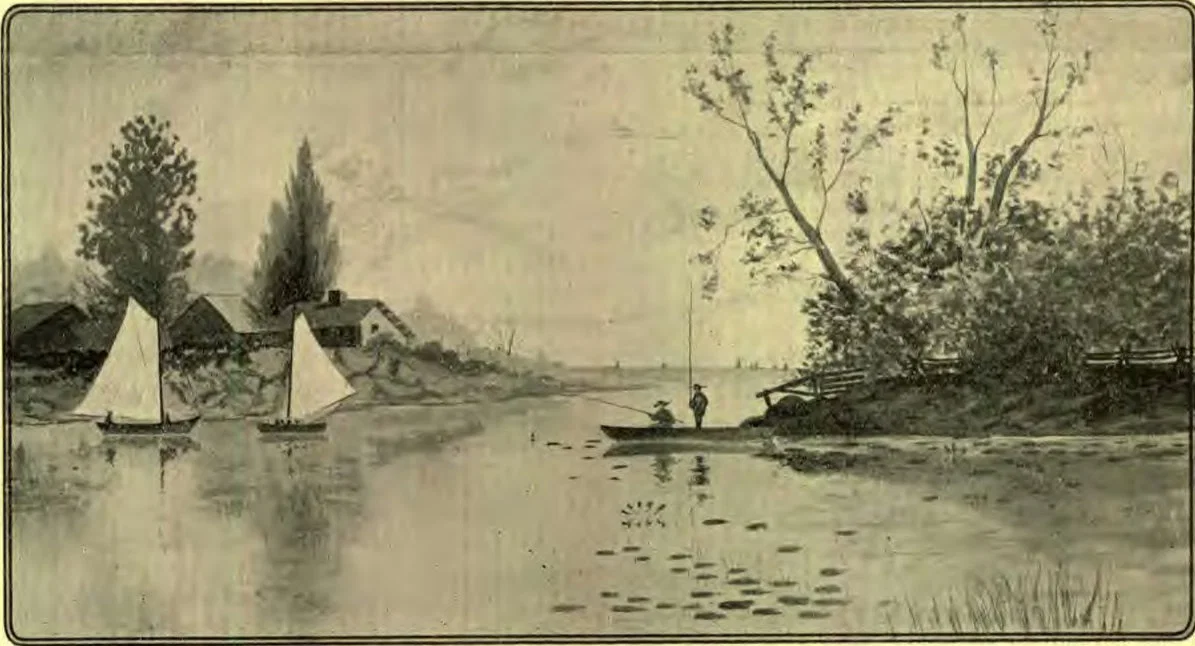
DURING the long winter months, through cold and desolate weather, with biting frost and drifting snow, nature has only been napping. Everywhere, over field and through forest, the world seems dead; but later there is to be a waking, a wondrous resurrection.
If there is any time in the year when one should not remain over nerve-enfeebling books, amid the rush and worry of business contact, or in the poisoned atmosphere of overcrowded offices, it is at the time of waking flowers and budding leaves.
Nature is about to break the monotony of her routine. She puts on strength. She grows young again. Through March, all unseen, there has been a preparation for the coming days of spring—the waking of the year. And now, as our resident of the country places begins to see some indications of the coming change, he looks about him, and exclaims, “Spring is coming; I can feel it in my bones.”
But it is not his feelings alone that have told him. Many omens he has read of the changes just at hand. This morning he was reminded of spring when he combed the shedding coat of the old farm horse. Furthermore he has seen a muskrat or two, that the breaking up of the ice along the shore has released from his winter home; and only yesterday, perhaps, he discovered a raccoon on the bank, fishing for mussels and crayfish.
He has heard the barking of the red squirrels, and has seen them tapping the maple trees to drink the quickening sap. He has seen chipmunks here and there that had wakened from a long winter sleep.
And then the birds. He has noticed that the blackbirds and sparrows are growing more lively and more numerous. The robins are arriving and the wrens and the pewees are about. For the past day or two there has been a bluebird in the orchard; the redwings, for a week or more, have been calling their conkerakee from the swamp in the creek pasture; and the song-sparrow in the hedges has been glorifying the world with the wealth of his warbled melody.
And then this apostle of the seasons, having seen all this, and noted its full import, tells us with ever mysterious air that “spring is coming, he feels it in his bones.”
Yes, spring is coming, and the heralds each day announce it. There are prophets by hill and dale, all telling us of the future. And every evidence of life now is but the advance agent of the season, billing the roadsides and pathways, telling of the grand spectacle that will soon be here.
But this is all a parable. Events always cast their shadows before. Surely the Lord will do nothing, but he revealeth his secret. There is nothing happens unless first he sends sufficient announcement before it. But some do not read the signs, and to them the event comes suddenly, unexpectedly.
SPRING IS COMING; THE HERALDS EACH DAY ANNOUNCE IT
Some see the trees putting forth their leaves, and know that summer is nigh at hand; even so may they know when the signs have been given that other and greater events are about to take place. But some who are adepts in reading nature’s signs, seem unable or unwilling to read others that are just as plain, and far more important. Some who could read the face of the sky were rebuked by the Master for not being able to discern the signs of the times.
The power to observe and understand which the study of nature develops ought to increase one’s power to discern the indications of God’s advancing providences. L. A. REED.

“Hats” in Summer—“Bareheaded” in Winter

WHEN shrubs and trees are bare, many interesting things may be learned from the position of the leaf-scars. Cut a hickory twig, and notice how the buds are situated at the upper margin of each leaf-scar. This is the arrangement of leaf and bud on branches and twigs of many other trees and shrubs with which we are most familiar.
But examine a branch of our smooth sumac and of the stag-horn sumac, which grow on rocky hillsides, and you will find that the scars which mark the places where the bases of the leaf-stalks were attached surround the buds. This fact shows that the bases of the sumac leaf-stalks must have completely covered the buds during their growth.
Search the ground beneath the shrubs for dry leaf-stalks during the winter and early spring, and you will find that each one has a small cavity at its base just the shape of the pointed bud. If you had examined the branches late last summer or in early autumn, you would have seen that there was not a single bud exposed on the new growth of sumac. The bushes appear to have made no provision then for next year's growth. But this was not the case. If you had broken a great leaf-stalk from the branch, and examined it carefully, even with the naked eye, you would have seen a tiny bud even in its enlarged base. The next year's stems develop laterally so as to form branches that remind us, in both species of the sumac, of the antlers of the stag, although only the rough sumac is commonly called “stag-horn.”
It is interesting to note that the hollow base of each leaf-stalk is lined with soft down, like the nap on a fur hat, which protects the bud until it is full grown. This can easily be observed by snapping off some of the dry leaf-stalks which have clung to the branches. After the frosts of autumn, the red stalks fell away and exposed the soft, pointed buds. It is surprising how quickly this was effected. One day the smooth sumacs on the sunny side of an old wall were a mass of color; the next the leaves had vanished, and the branches were covered with buds as if by magic. In bleak, exposed places the leaf-stalks often cling a whole month longer than in protected places.
Here is another case of Mother Nature's protecting the bud very carefully during the summer, until it is fully grown, and then taking off the fur-lined “hat.” By reason of its warm covering of furry scales this bud can withstand the cold and storms of winter as well as other buds that never have had such special protection.
I never see these stems, with their hollow and fur-lined ends, on the ground in cold weather without thinking (and sometimes expressing it audibly), “Little buds, why don't you keep on your hats during this cold weather?”—W. C. Knowles, in St. Nicholas.

Sweet Things Await

SWEET things await thee, slumbering earth, Outlying in the rain; Though skies above thee darkly lower, And chilling winds complain. The gentle winds of spring shall charm Thy torpid trance away; And o’er thy pulsing breast shall break The miracle of May.
Sweet things await thee, lonely wood, Long scourged by tempests strong; Life shall invade thy solitude— A stir of wings, and song. Green leaves shall clothe thy boughs again, A whispering throng alight, And blossoms open at thy feet, Like star-flowers in the night.
Sweet things await thee, pilgrim soul! Thy journey o’er the sands, While beats the fierce, untempered light, Along the desert lands, Shall one day end beneath the palms Where crystal fountains spring, Where bivouac in shining tents, The children of the King!
— Emma Herrick Weed.

The Life Implanted by the Creator

“THE life which the Creator has implanted, he alone can call forth. Every seed grows, every plant develops, by the power of God.”

How Betty Went to School

By the pleasant path along the edge of the lake it is a mile from the old-fashioned house where Betty Jennings lives to the beautiful modern cottage where Hilda Reed spends her summers.
To Betty the year is divided into two parts, the part when Hilda is there, and the part when Hilda is gone.
As soon as she receives her calendar for the new year, June is detached from it and hung beside her mirror, with the Monday nearest the fifteenth emblazoned in red, to mark the time of Hilda’s return; and September is always snubbed in Betty’s calendar, no matter how charmingly adorned; for September is responsible for Hilda’s departure.
But one year things were different, and September flaunted itself on Betty’s wall before August’s turn was over. That was because Mrs. Reed came one day, and in a secret session two hours long persuaded Mr. Jennings that she should be allowed to take Betty home with her for the winter.
“How did she ever do it?” demanded Bob, after he had taken the winner of the debate home in Betty’s boat, the “Hilda.”
Mr. Jennings shook his head, and smiled a puzzled smile.
“She is a woman, my son,” he explained. “She made me feel like a selfish old tyrant in keeping Betty here all winter. She said that Betty should go to school, and have the companionship of other girls; she said that South Oaks was a perfect school, and that she wanted Betty to go there with Hilda; she said that Betty was at the age when a girl needs a mother most, and—”
He had been grimly numbering these sayings on his fingers, but his voice broke on the last words, and he dropped his hands.
“She said a good deal!” Bob remarked, indignantly. “Betty is perfectly happy here with you, and I’ll venture to state that she has gone beyond the course of South Oaks already, under your instruction. I want her to have a year or two at college some time, but I hate to have you spare her quite yet.”
But the father hardly heard him. “I can’t tell,” he was saying, half to himself. “A father can’t always tell what is best for a girl; it takes a mother.”
His troubled eyes had wandered out over the lake to the hills on the other side, where the late afternoon sun was picking out the golden stubble-fields from the shading greens of vineyard and woodland.
“Oh!” Betty cried, when he told her. “O father, how beautiful! May I really go?”
“You really may,” said her father, smiling and thinking that it was worth a winter’s loneliness to make that glad note sound in anybody’s voice.
Hilda came to the gray cottage every day, and all the livelong afternoon the girls’ ecstatic voices could be heard discussing pleasures to come.
Then came the last Sunday, which was also the last before Bob must start off, to find out, as a common workman in some big railroad shops, what his degree of mechanical engineer was good for. That last Sunday seemed somehow to blot the joy out of Betty’s face.
Tuesday evening they were all in Betty’s “camp,” the small room at the foot of the stairs. Bob had been playing on his guitar and singing. She tried to help him, but soon her voice trailed off into silence, and she put her head against her father’s shoulder, and became thoughtful.
“Father,” she said, when the music had degenerated into mere strumming, “do you really want me to go away?”
“Don’t I always want you to be happy?” he parried.
“It’s a Yankee trick to answer one question with another,” said Betty, severely. “Do you want me to go?”
“What’s a man to do, Bob?” groaned Mr. Jennings. “If I say yes, she’ll cry and go; if I say no, she’ll cry and stay. My daughter, from your observations at sunset, what do you think the weather will be to-morrow?”
Betty pulled his ear. “Who is going to make toast for you when I’m gone?” she demanded.
“Why, perhaps Hannah could make toast,” he suggested, doubtfully.
“Not in here,” Betty objected.
“Well—no,” he hesitated.
“And who will darn your stockings?” pursued Betty.
“Hannah,” was the relieved answer.
“Who will keep your desk and bureau in order?”
“Hannah.”
“And who will have your chair and your slippers and your paper ready by the fire?” the catechism went on, relentlessly.
“Hannah might,” doubtfully.
“She might. And I suppose she might read to you when you are tired, and sing to you, and—but you will miss me, father,” persisted Betty.
“Oh, of course!” he mocked. “There will be no one to feed me toast when I don’t want toast; no one to hide my papers and my collars away so that it takes a search-warrant to produce them; no one to go singing all over the house when I am trying to write. Oh, I shall miss you! That’s the worst of nuisances, Bob; they generally get the notion that they are necessities, somehow.”
Betty shook him. “I can get no truth out of you!” she complained. “You’re a dear old fraud; but I know you!”
“Now look here, Betty!” her father exclaimed. “I see it in your eye; you are planning to come down in the morning and coax me not to make you go. You’ll wheedle me into believing that you would rather stay home; I know you!”
“I think—I would,” Betty faltered.
“Who’s a fraud now?” he demanded. “You are fretting about me, that’s all. I’ll be all right; not so gay as usual, perhaps, but perfectly comfortable. I shall be extraordinarily busy this year, for one thing, and I’ll come to see you at Christmas,—and then June will be here before we know it.”
Betty went to bed half-convinced; but in the morning, she awoke with that undefined sense of trouble which is often the legacy of yesterday’s worries. She hunted around in her consciousness for the cause of the weight on her heart, and all her doubts came back at the summons.
Her father was going to be very lonely and sad without her. He needed her.
If she was going for the sake of an education, it would be different; but she was going just for the pleasure of it.
“And you’re a selfish thing; you shall not go one step!” She finished her thoughts aloud as she looped her braids and gave the ribbon an emphatic jerk. “You’ll go straight over and tell Mrs. Reed that you are going to stay at home, and you shall not be maneuvered out of it by that dear, unselfish man.”
But the dear, unselfish man was suspicious, and during breakfast he discoursed upon the value of a year of city life to his little country girl; he was so grateful to Mrs. Reed; he hoped that she would be willing to keep Betty two years, at least. Betty must not get homesick and spoil it all.
So Betty told her conscience that her father really was anxious to have her go, and Thursday found her on the wharf, with Mrs. Reed and Hilda, waiting for the two o’clock boat. It seemed to her as she clung to her father’s arm, that all the people in the neighborhood had come to see her off. She wished that they would not keep saying such kind things to her. She did not feel happy, and she did not want to talk; and she did not want anybody but her father to talk to her, not even Bob or Hilda.
“My stars, Miss Betty!” said old Captain Hackett, when her father had turned to say good-by to Mrs. Reed. “Your pa’ll miss you when you are gone. Looks kind of white and peaked, too; looked like that when your ma died, I rec’lect. Well, if he gets sick I’ll drop you a line, so don’t you worry none.”
Betty clutched Bob’s arm. “O Bobby,” she sobbed, “I’m not going! I can’t! I—”
But the boat was swinging in now, and when it swung out again, Betty stood in the stern with Hilda, bewildered by the confusion which had drowned her protests and swept her aboard. The sight of her father’s face on the wharf, looking old and drawn, shocked her to complete consciousness.
“Look at father, Hilda!” she moaned. “Oh, just look! What have I done?”
“He is all right, dear,” Hilda tried to soothe her. “See! he is waving his hat at us.”
While the “Mary Bell” pounded her way across the lake, Betty stayed in the stern, her eyes fixed on that spot where, behind the trees, she could see in fancy the dear old house of gray stucco, with its high veranda in front and its sentinel birch at the corner.
Her father would be home in a few minutes now, and she tried to picture how it would seem without her. Tears came then, and lake and shore were blended in a blue-green blur.
Hilda’s hands closed tightly over hers on the rail, and she felt herself drawn gently away to walk up and down the long deck.
Hilda Reed was the best-loved girl at South Oaks. She was not quick at her books, the teachers said; but she was quick at understanding just exactly how people felt, and she understood now that Betty did not want to talk or be talked to.
When at last physical weariness had calmed the tumult in Betty’s mind, and she was sure that she saw her duty plainly, she told Hilda all about the doubts and the fears and the weak indecision of the last few days.
“And now I have decided to go back on this boat, Hilda,” she finished. “Don’t try to change me; you would do the same thing in my place.”
Tears of disappointment were in Hilda’s eyes. “I know, dear,” she said, bravely; “but, O Betty, I wanted you so! Come, we must tell mother.”
“Oh, nonsense, my dear!” said that lady, cheerfully, when Betty had explained her purpose. “Your father will be all right. You are homesick, Betty, that’s all; you will feel happier to-morrow,” and she patted Betty’s hand lovingly.
“Dear Mrs. Reed,” said Betty, firmly, “it isn’t homesickness. I don’t think I could be homesick with you and Hilda. My father needs me. I ought never to have thought of leaving him. I am all he has to keep, you know. Bob has to go. Please don’t think I don’t want to go with you. I never wanted anything so much in my life before; but—oh, don’t you see how it is?”
“I see that my little girl is homesick and doesn’t know it,” answered Mrs. Reed, slipping her arm round Betty. “I can’t give you up now that I have you, dear. It takes two girls to keep me happy. I have been only half-happy since Elinor was married last May.”
Betty turned to Hilda in desperation. “Please make her see, Hilda!” she pleaded. “You always understand.”
“Mother, dear,” said Hilda, leaning forward in her chair, “suppose that you were—were gone,” her voice seemed to catch on something, “and suppose father was all alone, and very, very sad. I couldn’t go and leave him, could I? Don’t you see?”
“Hilda,” protested Mrs. Reed, fumbling in her chatelaine for a handkerchief, “you are the worst child! Where did you get your trick of pulling heart-strings? Betty, you dear child, I see now; you shall go back to your father.”
In the big dining-room of the gray cottage two men were at supper, apparently only because it was their custom to be at the table at that hour, for neither was making much of a success of eating. Through the deeply embrasured windows came the fading September light, mingling with the cheerful rays of the red-shaded lamp.
The lamp was the only cheerful thing in the room. The older man seemed absent-minded and sad. At times he rallied, made a brave effort to talk and failed. The younger man talked incessantly and with a forced gaiety, as if talking against the progress of a great anxiety. His father’s face alarmed him. Hannah was frankly tearful.
A boat whistled, and Mr. Jennings started.
“It seems as if one of us ought to be going to meet that boat,” he said, trying to smile. “The child has been on it so often this summer. Six o’clock,” he added, glancing at the clock; “it’s late again.”
Bob’s heart ached with pity, and for the first time in his life he felt resentful toward Betty.
“I’m going to row across the lake after supper, to see that man you want to hire,” he said, abruptly. “Better come along; it will be fine on the water.”
“No, I think—yes, I’ll go,” said his father; and then the two fell into a silence measured by the complaining chirp of a cricket under the window.
Suddenly there was a familiar rush of feet across the veranda, followed by the familiar bang of a screen door, and a second later a familiar face was laughing in the doorway.
“Well, of all the greediness!” cried a familiar voice. “Why didn’t you wait for me?”
She ran behind her father’s chair and gave him so many hugs and kisses that he was quite breathless and blinded. Then she leaned over the back of Bob’s chair and pressed her cheek to his, after which she sat down and demanded supper—much supper.
“You—ah—you seem to be really you,” Bob observed, when he found his voice.
“I’m quite me,” Betty assured him. “O Hannah!” and springing up, she greeted that happy person as if they had been parted for a year at least.
“Might I venture to ask,” said Bob, meekly, “what you have done with Mrs. Reed and Hilda?”
“I kissed them good-by at the train, and promised to spend the Christmas vacation with them,” said Betty.
“Might I ask what you came back for, Bettikin?” inquired her father. The gladness in his voice could not be hidden.
“Why-ee,” said Betty, slowly, as she gingerly broke a hot biscuit, “I thought”—and her eyes danced—“I thought you might worry yourself sick for fear I should be homesick.”
“Were you homesick, Betty?” demanded Bob.
“Are you asking from a thirst for information, Robert, or from low-down curiosity?” she questioned, sweetly.
“But people soon get over being homesick,” teased Bob.
“They do,” agreed Betty. “I’ve quite got over it already. Bobbie, if you don’t want all that honey—yes, thank you.”—Selected.

MRS. L. D. AVERY-STUTTLE

March

RECKLESS, dashing, boisterous March, Whither art thou going? See, along thine onward path Ice-bound brooks are flowing.
True, thy voice is sad and wild, And thy smile is fleeting, Still thou art Spring’s first-born child, And we give thee greeting.
Children watch, with glowing cheek, Winter’s “white bees” sailing, But above the mountain’s peak Softest clouds are trailing.
So when hearts are sad, and when Doubts and fears confound us, Still we see, with faith’s bright eye, Angels bright surround us.

MRS. L. D. AVERY-STUTTLE

III — Saving the Soil’s Wealth

WHILE it is essential to know the value of things with which we are to deal in life, it is of greater importance to know how to save the valuable things in our possession. We learned from our last study the elements constituting the soil’s wealth. Also that sufficient resources were provided by the Creator to last for all time. When a bank cashier puts into his own pocket the funds under his care, we call it robbery; for the money in his care was placed there for carrying on banking as long as the owners should continue in business.
So with the fund of plant food. God placed it in the soil, “that it may give seed to the sower, and bread to the eater” always. If, then, the man now in possession of a farm treats it in such a manner as to waste or take for himself all the supply of plant food, so that the man who comes next into possession of that farm can grow no bread, is not that robbery, too? If you have a foot of God’s land to care for, you do not wish to practise any robbery in managing it. In case you have none, it will be well if you are able to instruct somebody else, and save them from such bad practise. Let us study how to save the wealth of the land.
I must tell you at the start that this question we now have in hand is a big one. It will take more time than we have for one study. So we shall make more than one of it. How would you like to keep these lessons? You will wish to refer to them occasionally during our study, and you might find them of some use afterward. The book from which I have learned some of these things is called “The Soil.” The author, Prof. F. H. King, says: “Notwithstanding the apparently inexhaustible stores of potash, magnesia, lime, phosphoric acid, etc., in the soil, we are confronted on every hand with the fact that soils do run out, and some varieties much more quickly than others; so that when all has been said, the most important fact to bear in mind is that here is a problem lying at the very foundations of agriculture upon which a vast work has yet to be done.”
The problem that Professor King mentions is how to save and make useful the plant food which we know is in the soil. We will first consider nitrogen, and see what we can learn of taking care of it, and making it useful to our plants.
Thirty bushels of wheat grown on an acre require forty-eight pounds of nitrogen. As already found, there are from three thousand five hundred pounds to seven thousand pounds of it in the surface foot of each acre of soil. We find that fifteen thousandths of the total weight in average soils is nitrogen. Soil-weight is counted at eighty pounds for each cubic foot. As there are 43,560 surface feet in an acre, this gives 5,227 pounds of nitrogen. At the rate of forty-eight pounds for a crop of wheat, you can easily find that the nitrogen supply should produce one hundred and nine crops of wheat. This means that if all the nitrogen of the soil could be used for wheat production, and none lost or given back to the soil, it would last for one hundred and nine years with wheat growing on the same ground every year.
I have worked this out with you, so that you might better appreciate the meaning of Professor King’s statement about land getting “run down.” While it is true that the Creator has placed in the soil a great resource of this element, so we can say of it, “The earth is full of thy riches,” he has not given any man permission to use it all at once. Nitrogen in the soil is like steam in an engine. Steam showing a pressure of ten pounds will fill the steam-chest, but it will not run the engine. There must be a reserve force. It will not do to use up all the steam for the first few strokes of the piston. Before starting the engine, the steam-gauge must show a reserve of at least fifty pounds’ pressure. And the reserve must be kept at that point by the constant renewing of the steam.
So the soil nitrogen must be renewed. I shall give five ways of saving and renewing soil nitrogen:—
I. By drainage. In water-logged soil a process called “denitrification” takes place, meaning that no nitrogen is produced. Also, nitrogen already in the soil escapes, when the ground remains water-soaked. The farmer who has in his field of wheat a low place, where the water stands, says the wheat there was “drowned out.” He might also say that it was starved out; for the water did not allow the living principle of the soil to serve up the plant food needed by his wheat. To save the nitrogen of the soil, is one important reason for the necessity of draining our land.
This study must close with a word upon the nature of nitrogen as plant food, leaving for our next the other four ways of saving it. Nitrogen is obtained from the air, from decaying animal or vegetable matter (as manure), and from nitrate of soda, called a “commercial fertilizer.” It gives to growing plants their dark-green, thrifty appearance, its absence being noticeable by a sickly, yellowish look. You have seen corn growing where a house or barn once stood, and noticed its rich-green, vigorous growth. That is because of an abundant supply of nitrogen.
J. C. ROGERS.

THE WEEKLY STUDY

_William Miller's Work_
(March 15-21)
We may profitably consider one very practical lesson in connection with the sounding of the message of the first angel of Rev. 14:6, 7, by William Miller and his associates in America; namely, the Lord's way of choosing obscure and humble instruments, whose confidence is not at all in themselves, but whom God can teach to be bold in him.
Illustrations of this truth you may find in all Scripture. See also “Rise and Progress,” chapter I.
Wm. Miller's Work.—Take his life and teaching down to the passing of the first time set, in the spring of 1844. See “Rise and Progress,” chapter IV; “Great Controversy,” the latter portion of chapter XX, “A Great Religious Awakening;” and “Early Writings,” page 93.
I suggest that the brief sketch of Wm. Miller in “Early Writings” be read in the meeting. Surely all our youth will become familiar with this little book. It presents the whole field of the controversy between Christ and Satan so concisely and simply that it must be to the end one of the choicest gifts God has given us.
In the study note the basis on which Miller fixed upon the spring of 1844 for the ending of the twenty-three hundred days. Especially consider the effect the expectation of the coming of the Lord had upon believers spiritually, as illustrating 1 John 3:2, 3. This is a very practical lesson for us in whose days Jesus is truly coming. This is the hope that is to prepare a people for translation. Is it doing its work in our hearts now?
Many a youth feels as Jeremiah felt when called to service, “Behold, I can not speak: for I am a child.” We must remember that in the finishing of this work God is to use the simple and the weak, made bold by the constraining love of Christ and the fearful solemnity of the message that we bear. In describing the finishing of the loud cry of the message the spirit of prophecy has said: “Servants of God, with their faces lighted up and shining with holy consecration, will hasten from place to place. . . . The message will be carried not so much by argument as by the deep conviction of the Spirit of God. The arguments have been presented. The seed has been sown.” Now let us sow the seed, and seek a preparation of heart and a clear faith in the message that will give us a part with the simple souls whose testimony will stir the world again as in the days of 1844, only to a greater degree. W. A. S.

Thoughts That Help

The overcoming of little evils, little sins, little indulgences of the flesh, constitutes our greatest victories.
To look at our past, always brings discouragement. Look to the future, and believe the promises of God.
In this age, reputation and character, profession and practise, pretension and reality, theory and fact, present continual contradictions.
In the hereafter, we shall find that the smallest deed done for Christ, the feeblest and most broken words spoken in his name, have not been in vain.
Every one who has heard the message may repeat it to others. “Let him that heareth say, Come.” Have you “heard”? Are you saying, “Come”?
Just where I am, there is my work. When I work out in every direction as far as my hands can reach, I shall feel the tips of other fingers in the same blessed ministry; and on and on these outstretched hands will work, in love and unity, until the hands encircle the earth, and the everlasting gospel has been given “to every nation, and kindred, and tongue, and people.”
A lesson that is very apparent, and one by which we may all profit, is taught by an incident in the life of Oliver Cromwell. When he visited for the first time the Yorkminster Cathedral in England, he noticed twelve silver statues placed high above the altar. He looked at them, then asked, “Who are those fellows up there?”
“Silver statues of the twelve apostles,” he was told.
“Take them down, melt them into coin, and send it out to do good,” said he, brusquely.
MRS. L. FLORA PLUMMER.

Roden, Manitoba

A good report has been written by John Ramsey, Jr., of the work at Roden, in the Manitoba Mission Field. He says:—
“We organized a Young People's Society a year ago, and are holding meetings regularly each week, using the outlines in the INSTRUCTOR. Each member takes part, and feels glad to have the opportunity of becoming better acquainted with God's word. While we are studying the word, we feel it our duty to make it known to others, so we are carrying the printed page. Members of the Society canvassed during the summer, and took subscriptions for our papers. We are glad that we have the privilege of working together with God, and pray that the seed sown may take root, and bear fruit to his glory. Our meetings are attended by the people, and some have expressed the wish that we had a church that they might attend. Pray for us, that we may be faithful in letting our light shine. We all feel of good courage in the truth.

Elgin, Illinois

An interesting report of the Young People’s work at Elgin, Illinois, from a personal letter to a brother in Chicago, has been passed on to us, and we are pleased to give the substance of the report, as follows:—
It was thought at first that a Young People’s Society could not be organized, as there were not enough persons of sufficient age to form a Society. However, children’s meetings were being held. It was soon found that there were at least four persons (besides the leader) who were old enough, and for whom something must be done. So these four met, and banded themselves together, holding their meetings for several weeks with just the four present. Later, a mother and her two children became interested in the truth, the latter joining the Society. Two more boys of thirteen and fourteen were found among the Sabbath-school pupils, and induced to join. Inexperienced and young as they were, the leader found it necessary to confine her efforts to personal work. She says:—
“We have Bible studies, and I talk very plain and straight to them. I tell them that Jesus is soon coming, and the object of the Society is to fit us to meet him, and our friends also. The young people seem very much interested in our Bible studies. We intend to learn new songs, and the Sabbath-school will depend upon these youth for at least one song every Sabbath. When they have learned enough of the truth to understand what they are doing, I shall ask them to distribute tracts, papers, etc.
“Last Tuesday evening was dark and rainy, but there were eight here, six members and two visitors. The meeting was the best we have had. The visitors seemed to enjoy the meeting, and said they wanted to come again. I think one of them, and perhaps both, will join us soon.”
This is indeed an encouraging report. It shows us that an earnest, persistent effort is being made to obtain a nucleus for a Society. We believe that God will yet reward this faithful sister’s efforts with a strong and enthusiastic Society. His promise is, “Let us not be weary in well doing: for in due season we shall reap, if we faint not.”
Continue reading: L. F. P