“The retail grogshop is the devil’s slaughterhouse,” says Dr. Louis Albert Banks. “I knew and loved one family of whom the husband and father patronized the saloon of a small country town. He died a drunkard. His son, led into bad company through the father’s drunkenness, went to the penitentiary. The wife and mother went crazy because of the trouble and shame, and the daughter was ruined by a scoundrel the father brought home with him from the saloon. Behold the wholesale slaughter of that family by one saloon! It sent one to the insane asylum, one to the penitentiary, one to a house of prostitution, and the other directly to a drunkard’s grave. And yet people cry ‘Fanatic!’ when we would shut the saloon that works this slaughter.”
A member of the Chicago Board of Trade gives a graphic account of his own experience with the traffic. He says:—
“In 1890, when I was thirteen years old, I entered the firm of Logan & Bryan of Chicago as a messenger boy. I loved the life of a trader. I worked hard, and my rise was rapid. When I was twenty-three I was elected to membership on the board of trade, and became the company’s head wheat buyer. I made money and invested it wisely, but during these lively days I became a victim of the drink habit.
“I had married. I had a loving wife and a baby girl. I had everything to make a man happy. But I kept drinking harder and harder. I did not do this deliberately. All my friends drank, and I liked to be with such good fellows. Any one who stood up at a bar with me was my friend.”
“Finally—that was ten years ago—I felt that I had made enough money. So I retired from active business. One thing I did not retire from—that was my drinking. My money slipped through my fingers like water. One by one my many investments vanished. Then one day my wife took the baby and left me. I had grown to be such a beast that she couldn’t live with me. At last my money was all gone. I reached the lowest stage of degradation. I avoided my old friends, and you may know they avoided me. I lost every shred of self-respect.”
“One day I was standing at the corner of State and Van Buren Streets, shaky and nervous with the booze, but with enough intellect left to make me realize how horrible it all was. Then I saw coming toward me a man I had not seen for five years.
“He was the man of all men I did not want to see. I lowered my head that he might not recognize me. This man was Stuart Logan, the man who had been my boss and my friend. Instead of passing, he came up and grabbed my hand and asked me how things were.”
“‘Come to see me tomorrow, Billy, and we’ll talk things over,’ he said.”
“I went. I had promised him. At the end of that talk9he gave me a job, and I had promised never to drink again.”
“Then things began to happen the other way. My wife came back to me when she saw that I was trying to do right. I established a little home, just as we had done when we were young. I saved my money. And now I am a member of the board of trade again. Whisky stole ten years out of the prime of my life. I am thirty-eight years old now.”
Mrs. Luella Denison Baldwin gives another glimpse into the licensed work of the saloon:—
“A young judge recently died in an Ohio town. He and his family were highly respected. He was a young man of education, exceptional ability, attractive personality, a favorite in social circles, and in demand as a speaker for public occasions. Almost every philanthropic and civic enterprise was fostered by him. Although but a young man, his legal ability was recognized in that he was made judge of the circuit court.”
“But he drank. He would withstand the craving as long as he could, then hang a sign, ‘Absent from the city,’ on his door, and flee to another town, remaining until sober. One day he adjourned court as he frequently did, and was gone. Big headlines in the morning papers read: ‘Judge — Found Dead in His Room at Hotel. Death Due to Alcoholism.’
“Death through drunkenness?—Yes. This young man had a good ancestry, exceptionally helpful environment, trained intellect, rugged physique, in his favor. Nevertheless, drink defeated him. If ever any one tried to control and master the passion for drink by a strong will and good resolution, it was this young man. Some say only those who have inherited a taste for liquor or who have weak wills are overcome by it. Not so. Drink is no respecter of persons.”
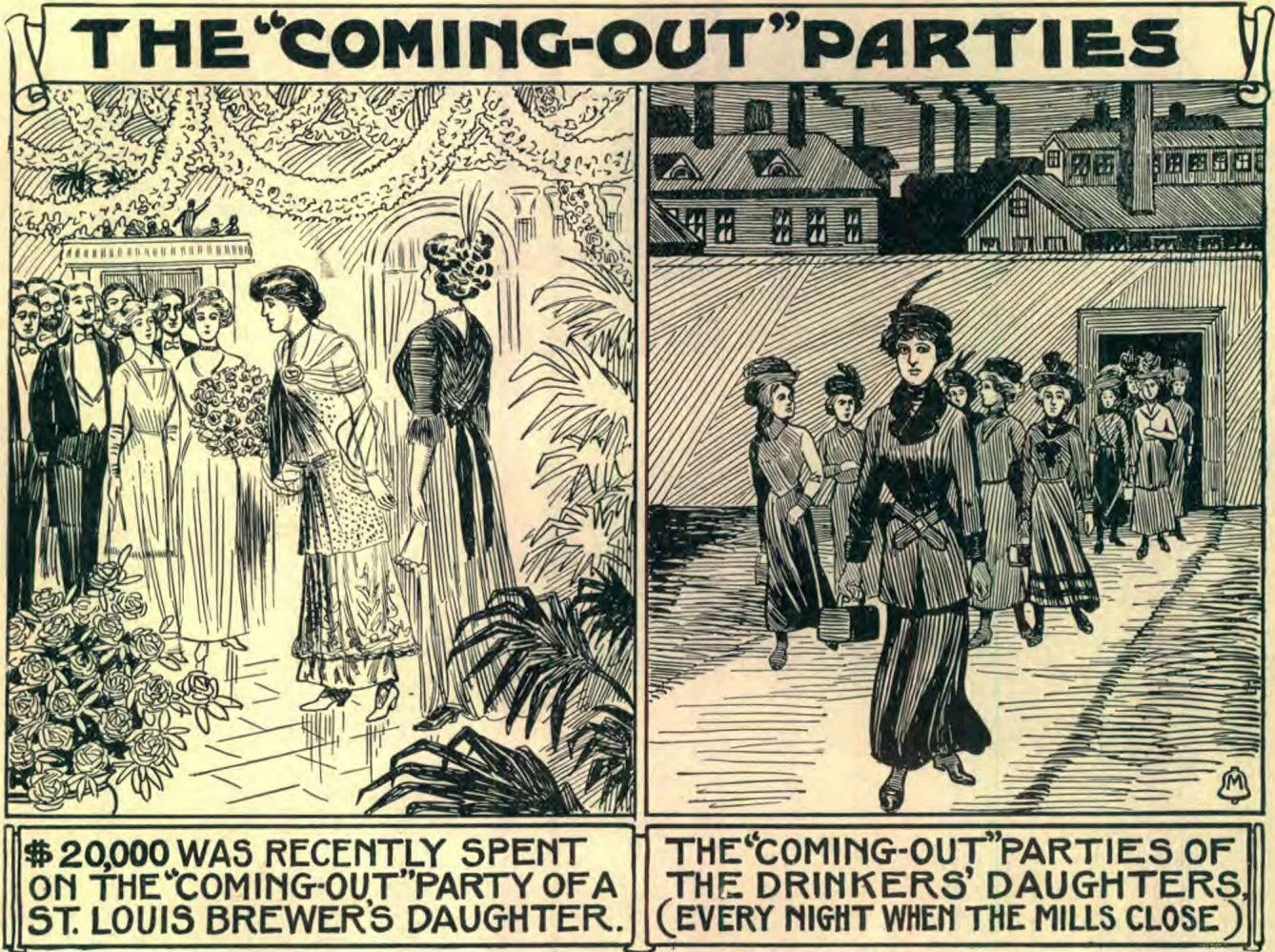
Will any man dare to say that the liquor business has not driven countless women to the factories and to the mills?—John B. Lennon, treasurer of the American Federation of Labor.
“‘Drink does not bring defeat in every case,’ some one may suggest. Remember that defeat due to liquor does not always manifest itself in a man’s staggering home intoxicated, beating his wife, murdering his children, or in his own life’s going out in a drunken brawl. Alcohol destroys and the destruction of good things means defeat sometime, somewhere.”
“A man may drink, be able to walk straight, give his children education, provide his home with comforts, succeed in business, to all appearances be on a par with the man who does not drink; nevertheless that man is being defeated. Typhoid fever, pneumonia, or other disease will one day overtake him, and the doctor will announce, ‘But little hope for recovery. Alcoholic heart.’ Should the drinking man apparently bear no evil effects in his own life, his son may be handicapped through his entire existence because of inheriting an insatiable appetite for rum.”
“Again: many boys look to this man as their ideal of one who can drink without the conspicuous ill effects. Following him as an example, they end in pitiable vice, sin, ruin.”
Your vote will help to conserve or to unmake manhood. Which shall it be—for or against the liquor traffic?