True Temperance Defined and the Demand for Personal Liberty Analyzed
By C. P. Bollman
TRUE temperance has been aptly defined as the exercise of moderation in the use of good things and total abstinence from the use of those things which are evil.
All habit-forming drugs should be avoided. Every such drug in whatever form it may be used creates a demand for more of the same or of a similar drug, and nobody who is under such slavery can be said to be truly temperate in his habits.
True temperance means self-control; and when a drug dominates the will and warps the judgment, self-control is gone.
But it is sometimes said that the prohibition of the sale of habit-forming drugs, and especially of intoxicating liquors, is an unwarranted infringement of personal liberty, since every man has a right to drink if he so elects; that it is nobody's business, since “whisky injures only those who drink it.” Of course by “whisky” is meant any intoxicant. But is it true that intemperance injures only those who are intemperate? The writer recalls at this moment one case in Nebraska, another in Kentucky, and a third in the District of Columbia, in each of which persons who did not themselves drink were the victims of the intemperance of others.
In the first of these cases a lady who was returning from a visit to the home of her parents in another State was killed, just after leaving the railroad train, by a runaway team in charge of a drunken driver. The lady was the innocent victim of the indulgence of an entire stranger. Her husband, a sober man, lost his wife, and her children lost their mother, through no fault of their own. Surely here whisky “hurt” several persons who did not drink it.
In the second case a young man with a wife and two children dependent upon him was fatally wounded by a shot fired from a railway train by a drunken man, who was shooting merely for amusement. The victim of whisky in this case was one who did not drink, or who at least had not been drinking upon this occasion, and certainly his wife and children were in no way to blame, and yet they were “hurt” by whisky, by whisky bought in a licensed saloon.
The third case was that of a trained nurse who in the city of Washington was run down and killed by an auto car driven by an intoxicated man. The nurse was in no wise to blame, but she was fatally “hurt” by whisky that she did not drink, and for the drinking of which she was not in any degree responsible.
The truth is that every drinking man is a menace to the lives and property of those with whom he comes in contact, even indirectly. Thousands of lives have been sacrificed and millions of dollars’ worth of property destroyed5as the result of the drinking of liquor by those who claim that it is nobody’s business what they drink or when they drink it; but facts are constantly demonstrating that it is everybody’s business, for everybody is placed in jeopardy by the indulgence of those who claim the right to render themselves temporarily insane and in a measure irresponsible whenever they will and as often as they will.
Let us lift up our hands and loose our tongues and tell the truth about this foe of manhood, the licensed liquor traffic,—tell it until its wrongs to womanhood and its injustice to childhood shall be exposed until mothers need fear no more for the children they bear.—J. Frank Hanly.
But this plea of personal liberty is most frequently and persistently urged, not by the immediate victims of the insatiable appetite for alcohol, but by those who grow rich by ruining the bodies and souls of their fellow men, by creating, keeping alive, and ministering to an unnatural craving for a poisonous stimulant which brutalizes and finally destroys its devotees. They talk of personal liberty while they are binding in everlasting chains of poverty, degradation, and destruction the poor victims of a nefarious traffic, that they themselves may flourish and fare sumptuously every day. The liberty for which they plead is the liberty the wolf gives the lamb — the liberty of being devoured.
C. P. BOLLMAN.
Arizona’s Testimony for Prohibition
Mr. Douglas Moffat, superintendent of mills for the Ray Consolidated Copper Company, gives the following strong testimony for prohibition as it works in his State:—
“It is a triumphant success. I have voted twice for prohibition when it has come up in Arizona, and shall be glad to do so again if necessary. The benefits are so evident and far-reaching that they can hardly be overstated. They are shown particularly in the case of our laborers at the Ray Consolidated Mills. Pay days in the past were always more or less demoralizing. Many of the men took their money and spent it in the saloons, and for days thereafter did not show up for work. Laborers in our part of the country are scarce, and the results of such uncertainty on the part of our employees were of the worst kind. Many men who had no other fault succumbed to their appetite for whisky, and were worthless as laborers till they sobered up.
“Today pay day is the same as any other day. Our work proceeds without interruption. More than that, merchants tell me that they make their collections without difficulty, where they used to have many hard accounts; and Mr. Blake, manager of the Gila Valley Loan and Trust Company, the savings bank of Hayden, informed me that their savings had grown steadily ever since prohibition went into effect. You will see it reflected in the families of the workingmen.
“There are many Mexican laborers whose children in the old days never knew what shoes and stockings were. Now you see them wearing decent clothing. Every one in Arizona, so far as I know, business men and laborers alike, believes that State-wide prohibition is a success.”
An Apt Fable
IN one of Robert Louis Stevenson's fables we read that “when an innkeeper found the devil ‘kept everybody by the ears,’ he got a rope's end and said, ‘Now I am going to thrash you.’ ‘You have no right to be angry with me,’ said the devil; ‘I am only the devil, and it is my nature to do wrong.’ ‘Is that so?’ asked the innkeeper. ‘Fact, I assure you,’ said the devil. ‘You really cannot help doing ill?’ asked the innkeeper. ‘Not in the smallest,’ said the devil; ‘it would be useless cruelty to thrash a thing like me.’ ‘It would indeed,’ said the innkeeper; and he made a noose and hanged the devil. ‘There!’ said the innkeeper. Here is presented in allegory the position of the drink question.”
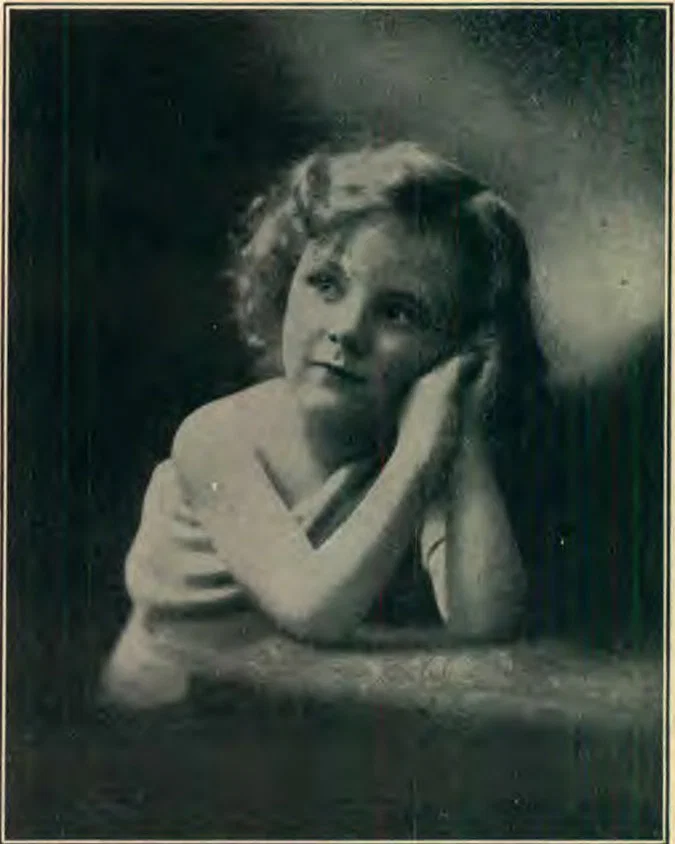
I'd be ashamed of my father if he drank, or if he voted wet.
National Constitutional prohibition will supply the noose that will make an end of the liquor traffic. Let us make haste to use it.
Cure for the Drinker
A VICTIM of the liquor traffic in a Pennsylvania county notified the hotels not to serve him rum, asking that the notice be observed to the letter:—
I hereby notify all landlords in Lehighton, Weissport, and elsewhere in this county, not to sell me any strong drink. God knows I am trying to stop drinking; but I can't. JOHN H. BETZ.
If the hotel keepers sell him again after being served with the notice, the man is prepared to have them prosecuted on the charge of selling to a person of known intemperate habits.
Scholl Printing Company, Chillicothe, Ohio
The Overshadowing Curse
By G. B. Thompson
G. B. Thompson
ONE night while I was walking with some friends along a crowded thoroughfare in one of our metropolitan cities, the doors of a gilded saloon were suddenly pushed open, and a man was thrown out on the sidewalk. He was in the prime of life, not much past his majority, but a rum-soaked, ragged, dirty, homeless pauper. As he lay on the sidewalk endeavoring to stagger to his feet, a companion said, “What is that?” I remarked, “A saloon keeper has just set outside one of the finished samples of his work.” The saloon took him early in life, noble and clean, loved and honored by his parents and the community, and transformed him through drink into a poor, wretched, homeless, friendless vagabond, a dishonor to the mother who gave him birth. It was now through with him.
The unspeakable misery and far-reaching evil effects of the overshadowing curse of intemperance are known only to Him who can read and fully measure the hidden grief and anguish of the human heart, into which the incessant waves of intemperance have been pouring a stream of woe for millenniums. Beyond all question, the foulest blot on civilization, the most dangerous foe of the race, is the liquor traffic. We can never measure the ghastly tragedy of rum drinking. It has been truly said that the saloon is a licensed turnstile into criminal dumps, being the first place where officers of the law look for criminals, dead beats, and vagrants of every description. The unspeakable devastation and spoliation of drink stagger the imagination, and have reached such huge proportions as to shock the civilized world with inexpressible horror. Nevertheless the traffic, with brazen effrontery, continues to carry forward its infamous work of manufacturing paupers, sots, degenerates, and idiots.
A noted temperance lecturer has said: “Science, without bias, cold, accurate, calculating, testifies that alcohol is a poison to the body. Experience comes and sets before our view an inept, sullen, moaning, struggling, unhappy procession of victims, so long that it would almost reach across the continent, so sad that it would move a stone to pity. She shows the dry husks of hope, insanity, and sudden death, disease, want, waste, and bloody crime. Religion comes forward and declares her testimony. She relates how hearts have been hardened to her eternal truths; she exhibits rents in the garments of justice, and bloody smears, mercy fleeing before hate, passion in flame, and love with a broken wing.”
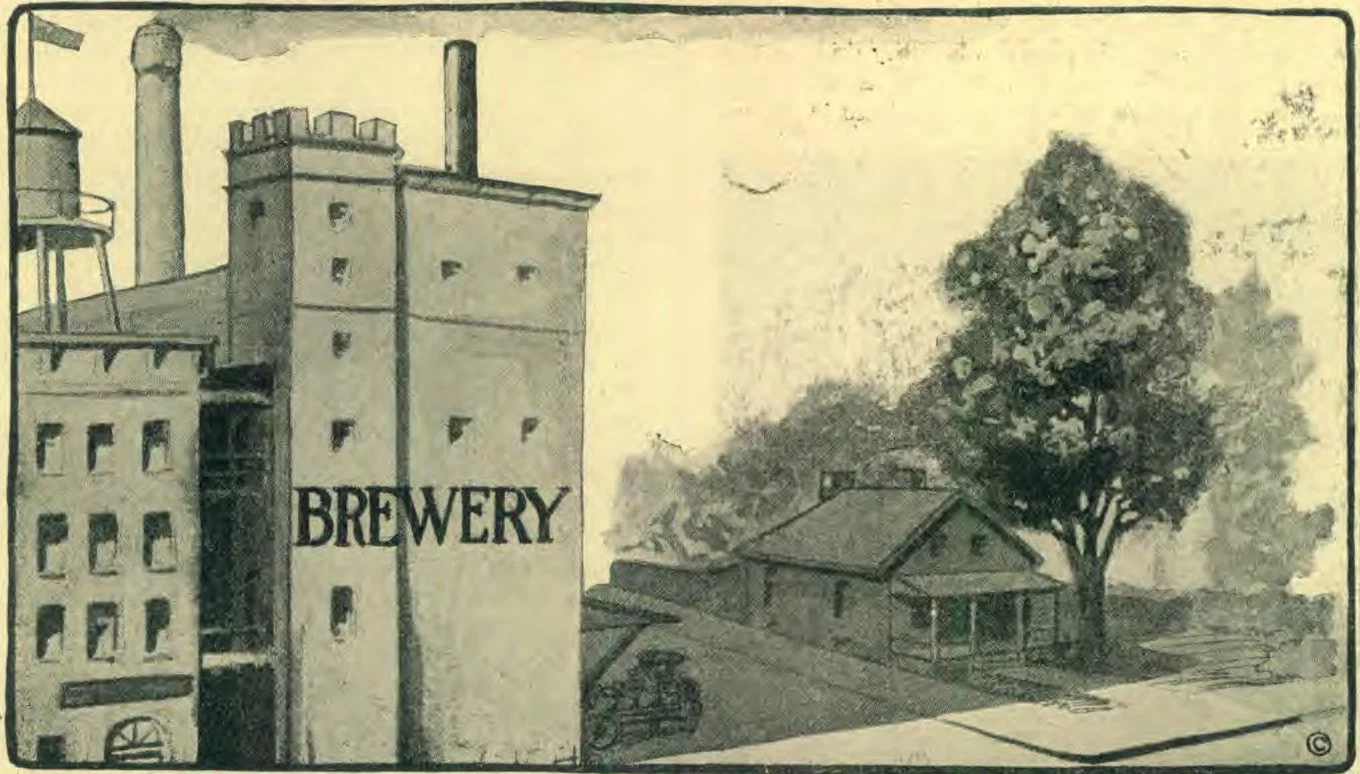
These statements are not overdrawn. Intoxicating drink stands condemned at every just and righteous tribunal, and is shown to be the greatest curse which has overhung the world since man sinned. Its debauchees are clean, pure boys and girls, ruined and damned by the fatal cup. Figures so authentic as to admit no denial, lay before us the shocking and appalling fact that annually a hundred thousand victims of strong drink fall into dishonored graves in the United States. Picture to yourself, if you can, a cemetery in which are annually crowded a hundred thousand newly made graves, around which are gathered thousands of weeping and disconsolate friends and loved ones, through whose tears there streams not a single ray of hope, for God has said that no drunkard shall inherit eternal life. Ruined and cursed in this life, dishonored in death, and eternally damned in the world to come! And to fill the depleted ranks of these debauched and depraved victims of rum more than a hundred thousand beautiful boys and girls must be supplied annually from our homes. Think of this, fathers and mothers! What an awful tragedy! Those who believe and advocate that this infernal traffic should continue ought to be willing to come forward with their boys and girls to fill the depleted ranks of the staggering, besotted, ruined victims. Through millenniums of time the touching cry of suffering womanhood and the famished wail of beggared childhood have been ascending to God for deliverance from this terrible evil which covers the earth with a funeral pall. Why the distillery, brewery, and saloon are allowed to continue their work of corruption and ruin we cannot understand, when we could banish them from among us if we would.
The power and torment of an appetite created by alcoholic beverages, hold the victim of rum with a fixed and terrible7embrace; they haunt him through life, and tend to lead him to hell at last. John G. Woolley, the noted temperance advocate, once a victim of strong drink, tells us a little of his struggle in escaping from the venomous coils of the drink demon. He says:—
I shall never drink again; but one night in a New England train, when very ill, I met a stranger who pitied me, and gave me a quick, powerful drug out of a small vial, and my pain was gone in a minute or two; but alcohol was licking up my very blood with tongues of flame.
I should have got drunk that night if I could. I thought of everything—of my two years of clean life; of the meeting I was going to, vouched for by my friend and brother, D. L. Moody; of the bright little home in New York; of Mary and the boys. I tried to pray, and my lips framed oaths. I reached up for God, and he was gone; and the fiercest fiend of hell had me by the throat, and shouted, “Drink, drink, drink!”
It was not yet daylight, Sunday morning, when I stood on the platform at Pawtucket, Rhode Island, alone. I flew from saloon to saloon; they were shut up; so were the drug stores, and all that day, locked in my room at the hotel, I fought my fight, and won it in the evening by the grace of God. But the people of Pawtucket never knew that the man who spoke to them that night had been in hell all day.
Touching the terrible suffering of his faithful wife during the years he was enslaved by drink, Mr. Woolley draws the curtain delicately aside in the following graphic words:—
Several years ago, at another time, after a long lecture tour in the West, I telegraphed to my wife in Boston, “I shall arrive home to-night at eleven.” The train was late, and long after midnight I came under her window. The light was burning, and I knew that she was waiting for me. I let myself in; there were two flights of stairs, but twenty would have been nothing to me.
She stood in the middle of our room as pale and cold and motionless as a woman of snow, and I knew at a glance that the sweet, brave life was in torture. “What is it?” I cried; “what is the matter?” And in my arms she sobbed out the everlasting tragedy of her wedded life. “Nothing—at any rate, nothing ought to be the matter. I do believe in you; I knew you would come home; but I have listened for you so many years that I seem to be just one great ear when you are away beyond your time; I seem to have lost all sense but that of hearing when you are absent unexplained, and every sound on the street startles me, and every step on the stairs is a threat and a pain, and the stillness chokes me, and the darkness smothers me. And all the unhappy home-comings troop through my mind, without omitting one detail; and to-night I heard the children sighing in their sleep, and I thought I should die when I thought of you having to walk in your weariness and in this midnight through Kneeland Street alone.” And I say, God forbid that we should fail to be concerned when such an influence is working in the city.
In these words we have a faint glimpse behind the curtain, and behold a little of the anguish and sorrow of tens of thousands of other homes, where the wife waits for the halting footsteps and stumbling figure of the man who calls her wife, and who promised to love her. Look at the drunkard, once a noble specimen of intelligent manhood; for liquor can and does lay hold upon minds of the finest texture. See him now, the finished product of the saloon. Voluptuous habits bind the power of mind and body in a loathsome vassalage. His mind revels in low and beastly pleasures to which he is a slave. Besotted by rum, he is continually tantalized and distracted by base and inexorable cravings. From the fountain of a diseased and depraved imagination flow a stream of impure and vile thoughts, the product of a mind which has lost its vigor, and every faculty of which has rapidly deteriorated and decayed. From the memory has been extinguished the light and joy of former days, and the sweetness and purity whispered into his ears as he prattled in innocence around his mother’s knee have been rooted up. The heart has become cold and calloused. The fire of love and sympathy has gone out, leaving but a cinder. His features are marked with premature decay, and tell the sad story that the purity of manhood has been destroyed, burned away, as it were, by the flame of a volcano within. The elements of life, abased and exhausted, leave the vital organs and functions of the body withered and weak. In the wake of all this follow the most painful infirmities and gruesome maladies to which stricken humanity is heir. Witness the hopeless idiots, epileptics, chattering imbeciles, and inmates of asylums screaming in frenzy, with reason dethroned.
Another view of the home side of the liquor traffic.
It is not within the power of the pen to portray the horrors which follow in the train of the traffic in rum. Think of the burning, scalding tears which flow from the eyes of the grief-stricken, white-haired father and mother as they listen to the maniac shrieks of a son or daughter, hopelessly insane as the result of strong drink. Imagine, if you can, the harrowing fear of the wife in loneliness, hunger, and rags, awaiting the return of the man she once loved, the father of her children, but now changed by rum into a monster of hate and cruelty. Think of the wearisome days she has experienced, sitting in poverty and destitution. Think of the long, sorrowful nights she has waited, pale and wan, in terror for his footsteps. Think of the piercing remorse and unconsolable grief of the son and daughter as they see their own father a drunken, ragged, dirty loafer consigned to a felon’s cell, or sentenced to die on the gallows, for some terrible deed committed when his brain was on fire with alcohol, and his reasoning faculties were benumbed by the vile stuff sold by those who stand on the brink of the pit and for money deal out damnation by the dram.
Think of the torment and anguish, like gnawing pain, excited by a sense of his guilt, as the criminal father and husband sits in his cell and meditates with regret upon his sad and terrible condition, and thinks of the heritage which8he has handed down to his children; that their father, once a good man, is now a vagabond criminal, incarcerated in a penal institution to atone for his wrongs.
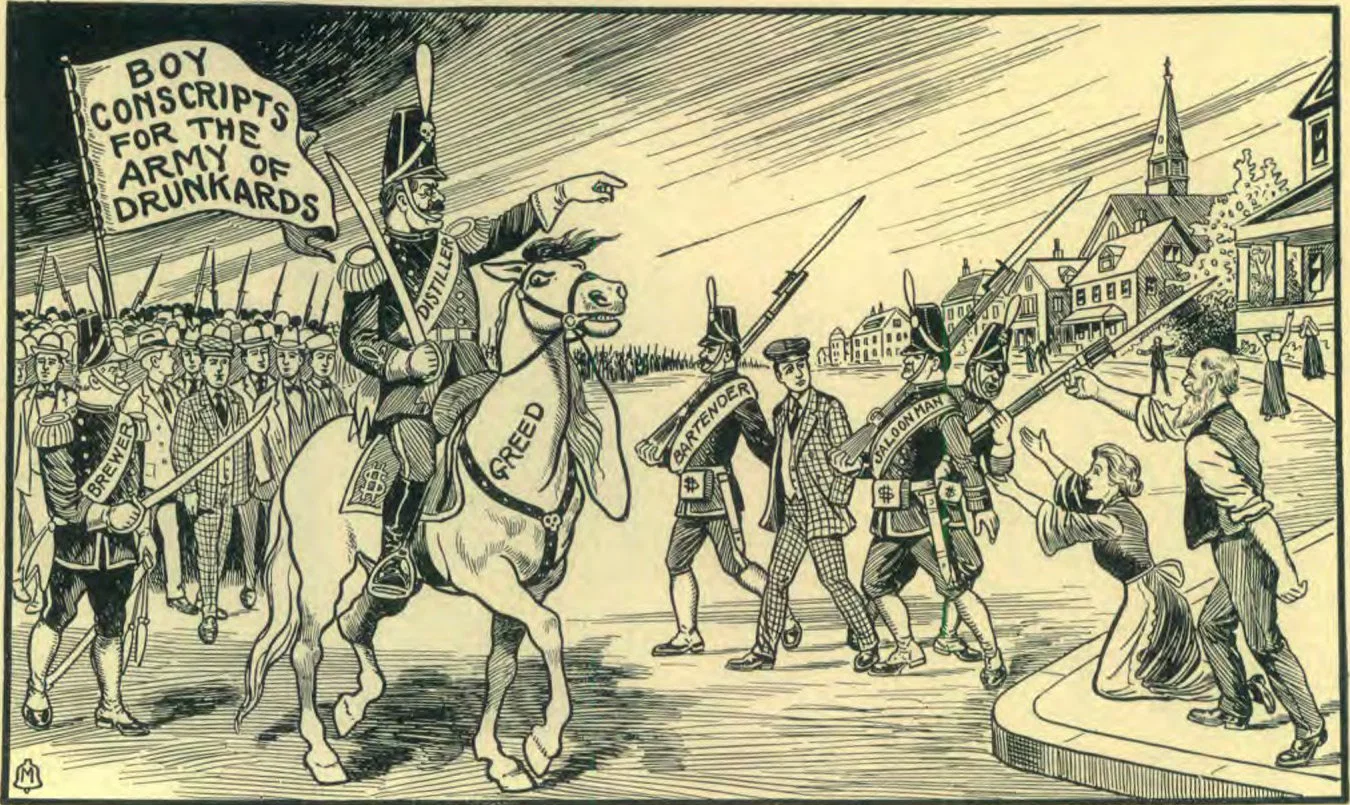
THE GREAT CONSCRIPTION
The liquor traffic of this country requires more than two million boys every generation for the continuance of its business. Every fifth home in the land must supply a boy for a drunkard. If the lot falls on your family and you do not furnish a boy, some other house must provide two.
Think of the blasphemies and debauchery which emanate from these hybernating dens where thieves, burglars, and convicts plan arson, murder, and other terrible crimes which cause the world to shudder. Think of the moral dangers of these cesspools of hell, made such by intoxicating drink. Think of the friendships which have been broken, the sad separations of loved ones, the distrust engendered, the dark forebodings, the harsh self-reproaches, the bitter enmities, the regrets and heartaches, caused by rum. Finally sum up the terrible total, and we can well understand the words of the wise man:—
“Who hath woe? who hath sorrow? who hath contentions? who hath babbling? who hath wounds without cause? who hath redness of eyes? They that tarry long at the wine; they that go to seek mixed wine.” “Wine is a mocker, strong drink is raging; and whosoever is deceived thereby is not wise.” Prov. 23:29, 30; 20:1.
Shall this overshadowing curse be permitted to exist indefinitely? Shall this terrible destroyer be allowed to continue his work of plundering the stricken race, robbing men of the priceless heritages which lift them above the brutes, and no effort be made to stop its ravages? Or shall the people of a free country arise in their manhood and throttle this monster which has so long enslaved and debauched the race? It can be done. The manufacture and sale of this vile stuff can be suppressed by law. Let us do it.
Reflections for the Voter
“The retail grogshop is the devil’s slaughterhouse,” says Dr. Louis Albert Banks. “I knew and loved one family of whom the husband and father patronized the saloon of a small country town. He died a drunkard. His son, led into bad company through the father’s drunkenness, went to the penitentiary. The wife and mother went crazy because of the trouble and shame, and the daughter was ruined by a scoundrel the father brought home with him from the saloon. Behold the wholesale slaughter of that family by one saloon! It sent one to the insane asylum, one to the penitentiary, one to a house of prostitution, and the other directly to a drunkard’s grave. And yet people cry ‘Fanatic!’ when we would shut the saloon that works this slaughter.”
A member of the Chicago Board of Trade gives a graphic account of his own experience with the traffic. He says:—
“In 1890, when I was thirteen years old, I entered the firm of Logan & Bryan of Chicago as a messenger boy. I loved the life of a trader. I worked hard, and my rise was rapid. When I was twenty-three I was elected to membership on the board of trade, and became the company’s head wheat buyer. I made money and invested it wisely, but during these lively days I became a victim of the drink habit.
“I had married. I had a loving wife and a baby girl. I had everything to make a man happy. But I kept drinking harder and harder. I did not do this deliberately. All my friends drank, and I liked to be with such good fellows. Any one who stood up at a bar with me was my friend.”
“Finally—that was ten years ago—I felt that I had made enough money. So I retired from active business. One thing I did not retire from—that was my drinking. My money slipped through my fingers like water. One by one my many investments vanished. Then one day my wife took the baby and left me. I had grown to be such a beast that she couldn’t live with me. At last my money was all gone. I reached the lowest stage of degradation. I avoided my old friends, and you may know they avoided me. I lost every shred of self-respect.”
“One day I was standing at the corner of State and Van Buren Streets, shaky and nervous with the booze, but with enough intellect left to make me realize how horrible it all was. Then I saw coming toward me a man I had not seen for five years.
“He was the man of all men I did not want to see. I lowered my head that he might not recognize me. This man was Stuart Logan, the man who had been my boss and my friend. Instead of passing, he came up and grabbed my hand and asked me how things were.”
“‘Come to see me tomorrow, Billy, and we’ll talk things over,’ he said.”
“I went. I had promised him. At the end of that talk9he gave me a job, and I had promised never to drink again.”
“Then things began to happen the other way. My wife came back to me when she saw that I was trying to do right. I established a little home, just as we had done when we were young. I saved my money. And now I am a member of the board of trade again. Whisky stole ten years out of the prime of my life. I am thirty-eight years old now.”
Mrs. Luella Denison Baldwin gives another glimpse into the licensed work of the saloon:—
“A young judge recently died in an Ohio town. He and his family were highly respected. He was a young man of education, exceptional ability, attractive personality, a favorite in social circles, and in demand as a speaker for public occasions. Almost every philanthropic and civic enterprise was fostered by him. Although but a young man, his legal ability was recognized in that he was made judge of the circuit court.”
“But he drank. He would withstand the craving as long as he could, then hang a sign, ‘Absent from the city,’ on his door, and flee to another town, remaining until sober. One day he adjourned court as he frequently did, and was gone. Big headlines in the morning papers read: ‘Judge — Found Dead in His Room at Hotel. Death Due to Alcoholism.’
“Death through drunkenness?—Yes. This young man had a good ancestry, exceptionally helpful environment, trained intellect, rugged physique, in his favor. Nevertheless, drink defeated him. If ever any one tried to control and master the passion for drink by a strong will and good resolution, it was this young man. Some say only those who have inherited a taste for liquor or who have weak wills are overcome by it. Not so. Drink is no respecter of persons.”
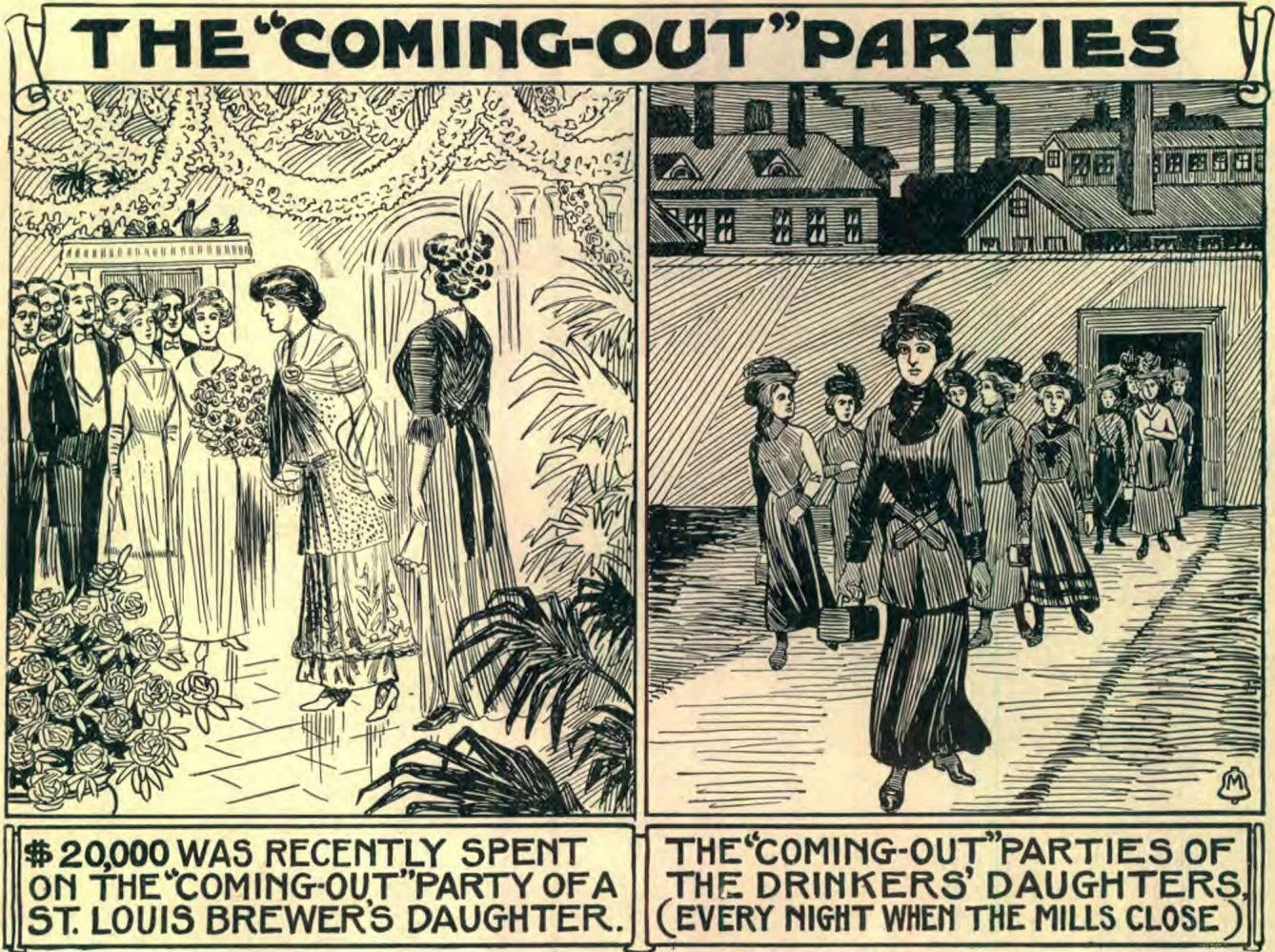
Will any man dare to say that the liquor business has not driven countless women to the factories and to the mills?—John B. Lennon, treasurer of the American Federation of Labor.
“‘Drink does not bring defeat in every case,’ some one may suggest. Remember that defeat due to liquor does not always manifest itself in a man’s staggering home intoxicated, beating his wife, murdering his children, or in his own life’s going out in a drunken brawl. Alcohol destroys and the destruction of good things means defeat sometime, somewhere.”
“A man may drink, be able to walk straight, give his children education, provide his home with comforts, succeed in business, to all appearances be on a par with the man who does not drink; nevertheless that man is being defeated. Typhoid fever, pneumonia, or other disease will one day overtake him, and the doctor will announce, ‘But little hope for recovery. Alcoholic heart.’ Should the drinking man apparently bear no evil effects in his own life, his son may be handicapped through his entire existence because of inheriting an insatiable appetite for rum.”
“Again: many boys look to this man as their ideal of one who can drink without the conspicuous ill effects. Following him as an example, they end in pitiable vice, sin, ruin.”
Your vote will help to conserve or to unmake manhood. Which shall it be—for or against the liquor traffic?
A One-Hundred-Mile Line
In the Grand Army parade that passed up Pennsylvania Avenue, in review before President Wilson, last September, there were some manly boys that marched along with the veterans. Every face brightened at sight of the boys. But there's another procession that does not cheer; it is the long line of boys marching to the saloons of our country to take the place of the drunkards. These boys, if placed five feet apart in one long line, would reach from Philadelphia to New York, a distance of one hundred miles. And, oh, the end to which they are marching! A writer said he saw 5,000 men retreat into the sea at one of the battles of the Dardanelles. But there are 100,000 boys in this fateful liquor line; and they are marching to a worse death than that to which the Allies' soldiers went. Happy that mother who could give her son into the bosom of the great Mediterranean rather than into the great sea of intemperance.