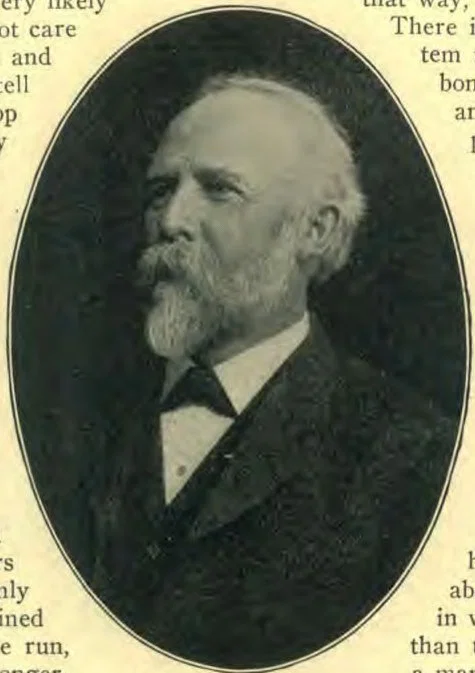
Joseph Henry Crooker, D. D.
WRITER, LECTURER, AND PRESIDENT OF THE UNITARIAN TEMPERANCE SOCIETY
WANT to have a frank conference with my earnest young readers about a very important matter, the subject of temperance, as important to girls as to boys, but obviously in a somewhat different way. Let us assume, by way of illustration, that some one has given your best boy friend a fine auto. And let us suppose that when he fills its gasoline tank, he also pours into it some other substance that will interfere with the action of the gasoline and lower the speed of the machine; that will injure the delicate parts of the engine, making necessary more frequent repair; and that also will greatly increase the danger of accidents. What would you say about such a boy? You would probably call him some pretty hard names. And you would very likely come to the conclusion that you did not care to associate longer with such a foolish and reckless lad. You would certainly tell him very sharply that if he did not stop it, you would not ride with him any more. The foolishness of such a boy would surely be very plain. But it is something even more foolish that the fellow does who drinks any form of liquor,—beer, whisky, or wine. The human body is not made to be fed with alcohol any more than the auto with the alien substance to which I have referred. The auto is built to be run with gasoline alone. Our bodies are created to be sustained by various foods, and scientists now agree that alcohol is no real food. In years past, even good and intelligent people believed that liquors were beneficial and necessary, not only as food but as medicine. They imagined that alcohol made the human machine run, not only smoother, but faster and longer. They taught that if a man used it, his brain would think quicker, his muscles would be stronger, his body would resist disease better, his heart would be merrier, and if sick he would recover more quickly. But all these old notions have been proved absolutely false. Drinking alcoholic liquors, mild or strong, affects a man precisely as the mixture of the gasoline would affect the auto. The momentary result may be an apparent, and in some cases a real quickening of thought and action. But in a given period he will not have accomplished so much as the total abstainer. He can not set so much type, or lay so many brick, or walk so many miles, or read so many pages, or commit so long a lesson, as if he had let the stuff alone. In adding figures, in reciting a lesson, in playing a musical instrument, or in running any kind of machine, he will make more mistakes. His body will not respond so quickly or faithfully to his will, but will hesitate and blunder, just as the auto, treated as described, would wobble along the road and frequently stop.
Again, as such an auto would frequently break down and need expensive repairs, so the man who pours liquor into his system is more often sick than the total abstainer. This repeated disability wastes his wages, burdens his family, and finally throws him out of work. He more easily catches diseases; and when sick, medicines do him less good, so that he is ill longer with less probability of recovery.
As the abused auto would often stop when half-way up a hill, so, too, the drinking man when he faces misfortune is less likely to meet it bravely and successfully. He goes to pieces quicker under the stress and strain of life. Whisky may make men rash, but never brave. It was once thought otherwise; but the facts are as here stated. A few topers who live to old age no more commend alcohol than does the fatness of a pig in a filthy pen commend dirt.
Once more: The auto, so misused, would wear out much sooner than if run as the maker intended that it should be. It would soon go to the scrap-heap. Everybody would be saying, just as they speak about certain young men who take to drink: “How soon that machine has gone to pieces! It was a fine auto, and it ought to have lasted that boy a long time; but it is now a complete wreck.”
Things do go to pieces very soon when used contrary to the law of their being, contrary to the purpose for which they were made. Autos are not made to be run in that way, and men are not made to use alcohol.
There is demand and need in the human system for water, and salt, and lime, and carbon, but none whatever for alcohol. It is an unnatural intrusion, like the substance poured into the gasoline tank of the auto. It can do nothing but harm. In several respects, the abused auto does not fully illustrate the misfortunes of the drinker. That is a mere lifeless machine, which does not keep demanding more and more of the unlawful stuff. But just this is the case with the drinker. The habit grows. The more liquor one uses, the greater the demand for it becomes; and this constant increase means less efficiency, more danger, and greater misfortunes. If the boy, then, is foolish who misuses his auto, how much more so the young man who abuses his body. There is another way in which the drinker is more at a discount than the ill-treated auto. The liquor which a man uses induces a condition in which he thinks he is stronger and brighter because he uses it, but this feeling is only a part of the various deceptions connected with the drink habit. If an auto driver, he may imagine he is going swiftly up a steep hill, when in fact the wheels are merely revolving without making any progress, and soon his auto is seriously injured, while he is not at the end of his journey. Thousands are thus wrecked on life's highway every year, they meanwhile supposing that all was going well with them. They drank to spur the jaded body or give the mind new energy; but ruin follows surely and quickly. Drinkers imagine that the glass of beer or whisky rests and strengthens them, but our scientists have shown that this is a mistake. They are really numbed and weakened.
This important fact also ought to be kept in mind: The boy who misuses his auto, as indicated, will miss many precious opportunities. For instance: A man who is looking for some one to take a message quickly in a time of distress, or carry a doctor to a patient, or compete in a race, will not select him; for any sensible man will say: “He has put dangerous stuff in his gasoline tank, and such an auto is too uncertain. The risk is too great.” So it is in life everywhere to-day. The bar is being constantly put up a little higher and a little higher every year against even the so-called moderate drinker. He is putting into his system something which does not belong there, something that makes him a less desirablep. 11 clerk or laborer. The employer is saying, “I can not afford to take such chances; for these persons make more mistakes; they accomplish less; they are more frequently sick; they are less obliging and less trustworthy,—in short, in every way less efficient.” So when a hundred young men go down the line of open doors seeking positions, what happens?—The known drinker will find few places where he will be accepted.
Let us for a moment consider how these facts apply in a special way to girls and women. If a young man who so abuses his auto should ask a young lady to take a ride with him, would she not be justified in saying: “I can not accept your invitation. By turning that stuff into the gasoline tank of your machine, you have decreased the pleasure and increased the danger of such a trip. The risk is too great. You are liable to have an explosion. You may break down, and I may have to walk home.”
So, too, is not a woman warranted in saying to any drinker who asks her to be his wife: “By pouring liquor into your system, where it is wholly out of place, you increase the probability of sickness, and waste your wages; lessen your efficiency, and loosen your hold on your job; shorten your life, and injure your disposition; and in these and many other ways involve my life in risk and hardship. I can not bind myself to make the journey of life with one who indulges such a harmful and expensive habit, increasing the danger of being left homeless and disgraced.” Such a stand on her part is justified by common experience. In the end, as a rule, the man who abuses his body is likely to neglect his wife.
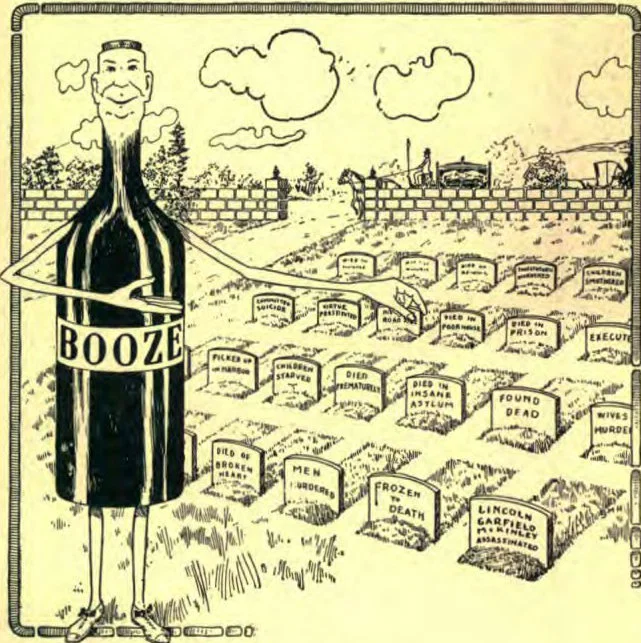
Now, the insurance companies have been finding all this out in a most forcible way during the last fifty years; and this is a matter which I wish to make very clear and emphatic. With them human life is not a matter of poetry or sentiment, but of cold business policy. The crucial question is: What lives make good risks? What kind of men can we afford to insure? What does the world's experience with the death-rate, the problem of the actuary, demonstrate? The answer to this question is clear and decisive. The total abstainer, according to the wide and long experience of insurance companies, lives on the average much longer than the drinker. At the age of twenty, a man, if an habitual drinker, can not expect to live more than some fifteen years; if a moderate drinker, he may last for thirty years; but if a total abstainer, he may expect to live forty-four years. Can any young man afford to cut his life short fifteen or thirty years by the drink habit, which also harms him in many other ways? Moreover, can any woman afford to marry such a man?
In view of these and other startling facts of a similar character, all insurance companies are discriminating more and more against all classes of drinkers. Some companies in Great Britain and America grant total abstainers either lower rates or other important advantages. The vitally important problem which every young man confronts is this: Can I afford to indulge in a custom which discredits me in the eyes of all insurance companies; which makes my insurance more expensive, whether life or accidental; which, according to insurance experience, lessens my expectation of life; and which surely shuts many doors of opportunity, wastes resources, and multiplies the risks of disease, disaster, and disgrace?
In this discussion, I have purposely left untouched the moral and religious aspects of the drink habit, although these are important matters for consideration. May my young readers decide the question promptly and wisely, and join the increasing host of total abstainers.