1 Corinthians 9:25
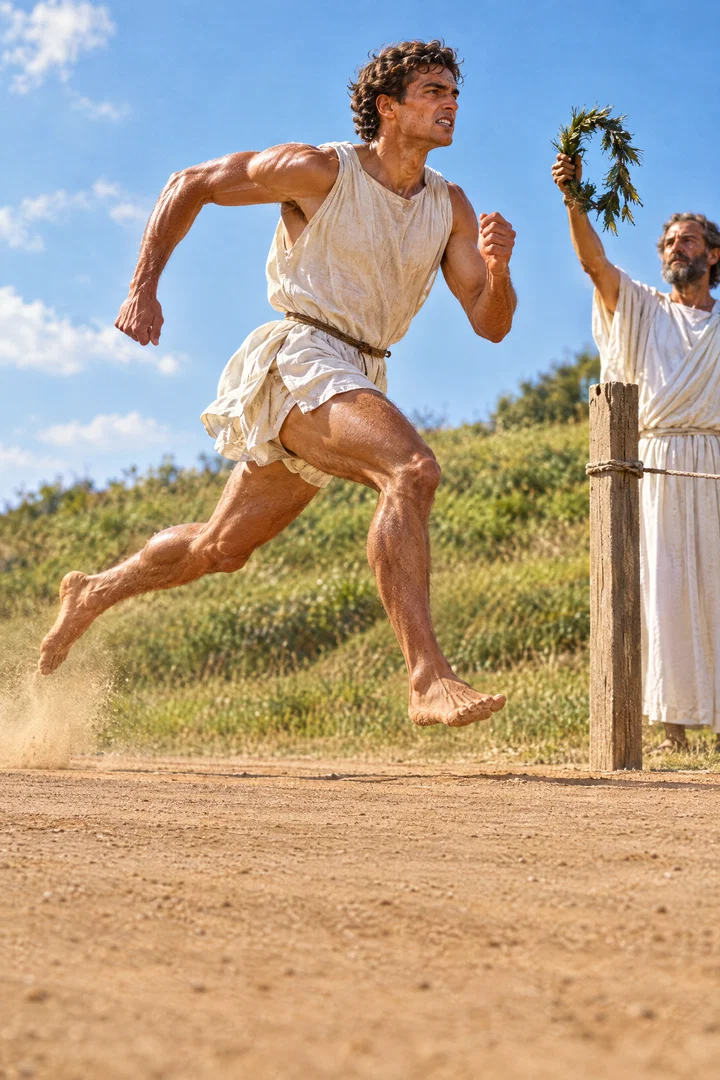
And every man that striveth for the mastery is temperate in all things. Now they do it to obtain a corruptible crown; but we an incorruptible.
Translations
And every man that strives for the mastery is temperate in all things. Now they do it to obtain a corruptible crown; but we an incorruptible.
King James Version, KJV Cambridge Paragraph Bible, Webster Bible
And every man that striveth for the mastery is temperate in all things. Now they do it to obtain a corruptible crown; but we an incorruptible.
And every man that striveth in the games is temperate in all things. Now they do it to receive a corruptible crown; but we an incorruptible.
And every man that striveth in the games exerciseth self-control in all things. Now they do it to receive a corruptible crown; but we an incorruptible.
and every one who is striving, is in all things temperate; these, indeed, then, that a corruptible crown they may receive, but we an incorruptible;
But every one that contends [ for a prize] is temperate in all things: they then indeed that they may receive a corruptible crown, but we an incorruptible.
But, every man who striveth in the games, in all things, useth self-control;—they, indeed, then, that a corruptible crown, they may receive; but, we, an incorruptible!
Berean Standard Bible, Majority Standard Bible
Everyone who competes in the games trains with strict discipline. They do it for a crown that is perishable, but we do it for a crown that is imperishable.
Every man who strives in the games exercises self-control in all things. Now they do it to receive a corruptible crown, but we an incorruptible.
And every man who takes part in the sports has self-control in all things. Now they do it to get a crown which is of this world, but we for an eternal crown.
And euery man that proueth masteries, abstaineth from all things: and they do it to obtaine a corruptible crowne: but we for an vncorruptible.
Douay-Rheims (Challoner revision)
And every one that striveth for the mastery, refraineth himself from all things: and they indeed that they may receive a corruptible crown; but we an incorruptible one.
Pictures
Cross-references 20 of 30
- Hebrews 12:1
Wherefore seeing we also are compassed about with so great a cloud of witnesses, let us lay aside every weight, and the sin which doth so easily beset us, and let us run with patience the race that is set before us,
Both portray the Christian life as a race requiring endurance and determined effort.
- 2 Timothy 4:7-8
I have fought a good fight, I have finished my course, I have kept the faith:
Finishing the race faithfully is joined to receiving an enduring crown.
- James 1:12
Blessed is the man that endureth temptation: for when he is tried, he shall receive the crown of life, which the Lord hath promised to them that love him.
Names the incorruptible crown as the crown of life promised to those who endure.
- 1 Peter 5:4
And when the chief Shepherd shall appear, ye shall receive a crown of glory that fadeth not away.
Both promise an unfading crown as the reward for faithful service.
- 2 Timothy 2:5
And if a man also strive for masteries, yet is he not crowned, except he strive lawfully.
Both teach that striving for mastery must follow the rules to receive the crown.
- Revelation 2:10
Fear none of those things which thou shalt suffer: behold, the devil shall cast some of you into prison, that ye may be tried; and ye shall have tribulation ten days: be thou faithful unto death, and I will give thee a crown of life.
Promises the crown of life to those faithful through suffering.
- Philippians 3:14
I press toward the mark for the prize of the high calling of God in Christ Jesus.
Both describe pressing toward the prize of God’s calling.
- 2 Peter 1:6
And to knowledge temperance; and to temperance patience; and to patience godliness;
Both place temperance among the qualities Christians are to cultivate.
- 1 Peter 1:4
To an inheritance incorruptible, and undefiled, and that fadeth not away, reserved in heaven for you,
Both describe the promised inheritance or prize as incorruptible.
- Galatians 5:23
Meekness, temperance: against such there is no law.
Temperance is named as a fruit of the Spirit.
- 1 Corinthians 15:52
In a moment, in the twinkling of an eye, at the last trump: for the trumpet shall sound, and the dead shall be raised incorruptible, and we shall be changed.
Both describe the incorruptible state associated with resurrection.
- Revelation 3:11
Behold, I come quickly: hold that fast which thou hast, that no man take thy crown.
Hold fast so no one takes the crown.
- Romans 1:23
And changed the glory of the uncorruptible God into an image made like to corruptible man, and to birds, and fourfooted beasts, and creeping things.
Both contrast what is corruptible with what is incorruptible.
- 1 Peter 1:23
Being born again, not of corruptible seed, but of incorruptible, by the word of God, which liveth and abideth for ever.
Both texts use “incorruptible” for what endures beyond perishable things.
- Acts 24:25
And as he reasoned of righteousness, temperance, and judgment to come, Felix trembled, and answered, Go thy way for this time; when I have a convenient season, I will call for thee.
Paul reasoned of temperance as a Christian duty in view of judgment.
- 1 Peter 3:4
But let it be the hidden man of the heart, in that which is not corruptible, even the ornament of a meek and quiet spirit, which is in the sight of God of great price.
Both describe what is incorruptible, using the same Greek word.
- Luke 13:24
Strive to enter in at the strait gate: for many, I say unto you, will seek to enter in, and shall not be able.
Both texts call for striving toward an imperishable reward.
- 2 Timothy 4:7
I have fought a good fight, I have finished my course, I have kept the faith:
Paul describes faithfully completing the race and struggle of faith.
- 1 Corinthians 15:53
For this corruptible must put on incorruption, and this mortal must put on immortality.
Both contrast a corruptible crown with incorruption and immortality.
- 1 Timothy 6:12
Fight the good fight of faith, lay hold on eternal life, where unto thou art also called, and hast professed a good profession before many witnesses.
Fighting the good fight of faith pursues the lasting prize.
Commentary part 1 of 3
Each commentary is drawn from primary sources: the writings of Ellen G. White and Adventist pioneers and periodicals. Each commentary is separate. Its own words are not a quotation; follow the references to read the source passages.
Ellen G. White
113 sources
Paul pictures the Christian life by the foot-races and public games familiar at Corinth, where runners and wrestlers disciplined themselves to strive for mastery.2T 357.1–358.2STMH 129.3 To be temperate in all things is to keep the body under and bring appetite, passion and inclination under reason, conscience and God's will in every part of life.ST6T 374.1–2Lt 96, 1910, par. 8–9 Ancient competitors endured many months of severe training, spare simple food, and denial of wine and indulgence to win a perishable wreath of flowers that faded in a day, while Christians are called to far greater earnestness of mind and heart for an enduring prize.CTBH 25.1–4Ms 101, 1903, par. 1–4STST Jan 27, 1909 That prize is immortality and everlasting life, and unlike the earthly race where only one could win at uncertainty, all who run with purpose, lay aside every weight, obey God and persevere to the end may obtain it with certainty.2T 357.1–358.2Lt 145, 1900, par. 9–10STCH 47.2 This calls for total self-denial in eating and drinking and abstinence from every harmful indulgence, made possible only as Christ's grace transforms the heart and His victory over appetite enables believers to overcome.2T 46.1–3Ms 101, 1903, par. 1–419MR 341.3–343.1MDHRP 10.1–11.1STMW7 39.2–3
Ancient Athletic Illustration Explained
Paul pictures the Christian life by the foot-races, wrestling and other public games familiar at Corinth, holding up runners and fighters as examples of disciplined striving for mastery.2T 357.1–358.2STMH 129.3CTBH 25.1–4CT 256.1 The illustration turns on competitors practicing self-control in every area to prepare for the contest and win the prize, while Christians exercise the same discipline for an imperishable reward.2T 357.1–358.2STMH 129.3CT 256.16T 374.1–2 As runners and fighters deny themselves in everything to win a prize that decays, believers must deny themselves in everything to win a prize that never decays, running with certainty to obtain, fighting with purpose, and keeping the body under and bringing it into subjection.2T 357.1–358.2STCTBH 25.1–46T 374.1–2
Ancient competitors submitted to severe training to be fit for the contest, with many months of preparation, sometimes ten whole months and longer, under different masters in physical exercises to give strength and vigor to the body.CTBH 25.1–4Ms 101, 1903, par. 1–4ST Jan 27, 190919MR 341.3–343.1 They lived under severe discipline and constant restraint, on simple, spare, coarse, carefully chosen food that would keep them healthful and active and give physical vigor and endurance for the greatest strain.CTBH 25.1–4Ms 101, 1903, par. 1–4ST Jan 27, 190919MR 341.3–343.1Ms 13, 1884, par. 14–17 They gave up wine, luxurious food and every indulgence that would weaken physical powers, refusing food and drink that could weaken any organ, and wore clothing that left every organ and muscle untrammeled.CTBH 25.1–4ST Jan 27, 190919MR 341.3–343.1Ms 13, 1884, par. 14–17 By temperance and careful diet with strict, severe discipline they kept muscles, brain and every part in the very best condition with elasticity and full healthful tone to nerves and muscles.ST Jan 27, 190919MR 341.3–343.1Ms 13, 1884, par. 14–17
The earthly prize was a corruptible crown, a chaplet of perishable flowers, a laurel crown or wreath with palm branch, bestowed amid the applause of the multitude and regarded as the highest human honor.STCH 47.2 It was only a token of honor from mortals, soon fading and perishing in a day, yet sought even at risk of lifelong injury or death and bringing public praise to winner, family and city.Lt 48, 1894, par. 30–3313MR 279.2–280.3 To obtain it runners practiced temperance in all things through rigorous training and continual self-denial, putting aside every indulgence that would weaken physical powers.ST
Only one competitor could receive the earthly prize, and all ran at venture and uncertainty, not knowing whether they would win or lose.STSLP 165.3CH 47.1 Ancient racers bravely endured discipline and even risk of life to be in the best condition for a perishable crown they might not win.Lt 48, 1894, par. 30–3313MR 279.2–280.3 In contrast the heavenly race is not limited to one winner, for all who meet the conditions may win immortal honor with certainty and confidence.STSLP 165.3CH 47.1
The contest had strict rules, for as in the athletic race the prize belongs to the true victor, not to one who gains an unlawful advantage.AA 309.2–310.1AA 315.1 Runners must strive lawfully, obey every rule, study the rules laid down in the Word of God and faithfully obey every injunction and comply with every condition.AA 309.2–310.1Lt 92, 1887, par. 8–10AA 315.1Lt 19, 1905, par. 2 Spiritual combatants must not be languid, lifeless, indolent or given to selfish ease, but must strain every nerve and muscle, toiling and sparing no effort to run the Christian race lawfully to the end for the crown of life that fadeth not away.Lt 92, 1887, par. 8–10AA 315.1FE 191.113MR 275.4
Temperate in All Things
To be temperate in all things is to practice self-control, discipline and self-denial in every area and every part of life, as competitors in the ancient Greek games disciplined themselves to win a perishable crown while Christians do so for an imperishable reward and everlasting life.2T 357.1–358.2MH 129.3CTBH 25.1–4CT 256.1CTBH 193.3 It means running with certainty to obtain and fighting with purpose, keeping the body under and bringing it into subjection so as not to be lost after preaching to others.STLt 96, 1910, par. 8–9ST Oct 5, 1882 Principle must rule instead of appetite, fancy or inclination, especially in eating, drinking and dressing, with habits, tastes and inclinations brought into harmony with the laws of life and health to support physical strength and clear judgment between good and evil.STCTBH 25.1–46T 374.1–2RH Jun 11, 1914 Letting appetite rule by indulging harmful habits and eating too much or food of harmful quality clouds the moral sense, largely destroys power to discern sacred things, and leads easily into dissipation and foolish hurtful lusts that drown men in destruction and perdition.ST6T 374.1–2 Those who work together with God must therefore place their standard high and use every bit of influence to spread true temperance principles.ST6T 374.1–2
Keeping the body under means bringing appetites, passions, desires, impulses and inclinations under reason, enlightened conscience, the intelligent will, obedience to the laws of God, and God's will, beating them back by severe discipline and continually curbing fleshly appetites.19MR 341.3–343.1Lt 96, 1910, par. 8–9Ms 93, 1899, par. 1–2 It requires strict guard over appetite and keeping the physical, mental and moral powers in the most perfect condition to obtain the approval of God and to meet Christ in peace with holy character.Ms 93, 1899, par. 1–2ST Oct 5, 1882 This bodily discipline is part of the conditions imposed on every soul enlisted in His service, so as not to run uncertainly or at random without seeing the standard and striving to reach it.Lt 96, 1910, par. 8–9Ms 93, 1899, par. 1–2 It includes taking time wherever one is for physical exercise and doing every day some work that exercises the muscles, which brings great benefit and which ministers especially must practice.Lt 96, 1910, par. 8–9
The intensity of effort must be proportionate to the value of the object sought, for earthly racers deny themselves for a corruptible crown, a perishable wreath of flowers, while Christians do it for an incorruptible crown, an unfading crown of immortality and a life which measures with the life of God, a far more exceeding and eternal weight of glory.Lt 145, 1900, par. 9–10Ms 86, 1901, par. 27–28 Those seeking immortality must therefore practice temperance with far greater earnestness and place their standard high.6T 374.1–2Lt 145, 1900, par. 9–10 Striving for mastery means training of mind and heart, which is even more essential than physical training, and by this training spiritual strength is gained and weak points of character are made strong.Ms 22, 1890, par. 43–4410MR 298.1–2 As competitors seeking earthly honor trained their bodies with thorough discipline and perseverance, workers for God must train both mind and body with still greater earnestness because heavenly things are more valuable than earthly rewards, advancing by patient effort through obstacles and not by a smooth way.5T 551.3Lt 63, 1886, par. 7
Temperance is broad and not narrow or arbitrary, governing eating, drinking, dressing, labor, study, recreation, sleep, work and rest, family and church life, mental and physical powers, words, thoughts and actions, and applying to people in every station including ministers, statesmen, authors, and wealthy and talented people.19MR 341.3–343.1Ms 188, 1903, par. 49–50RH Aug 3, 1905 It is a first duty owed to God, to self and to fellow men, requiring obedience to the laws of God including the laws of health, temperance in labor, study, eating and drinking, and discreet use of God's good gifts to preserve health for service instead of wasting time, money and strength on excess that lessens vitality and brings suffering and decay.ST Jan 27, 1909CH 120.3 Racers submitted to severe discipline, lived on simple carefully chosen food that kept them healthful and active and gave vigor and endurance for the greatest strain, and gave up wine, luxurious food and every indulgence that would weaken physical powers, and Christians must strive in the same disciplined way to obtain fitness for the work they are called to.ST Jan 27, 1909 By exercising temperance in daily life and loving purity and holiness, putting away all that would weaken any organ and improving every capability by clinging to Christ for living, healing, strengthening grace, a person may become sanctified through the truth and build for time and eternity.Ms 188, 1903, par. 49–50CH 120.3
True temperance is inward and is never produced by pledges, outward restriction or mere control of diet, which cannot cure diseased appetite, but happens only when the grace of Christ is an abiding principle transforming the heart.STMW9 54.1Lt 34, 1892, par. 4–5 This victory over self cannot be gained by self-dependence or mere human strength but only as the Holy Spirit renews and sanctifies the welcomed soul, subordinating mind and body to God and making natural habits and appetites subservient to the higher wants of the soul, with no halfway work.STMW7 39.2–318MR 47.3–48.2 It requires strenuous effort through the grace of Christ, with repentance for the past and forgiveness sought through the atoning sacrifice of Christ, strict watchfulness, unwearied prayer that Christ will bring every thought into captivity to Himself, renouncing evil practices and associations, correcting wrong habits, refusing to abuse God-given powers for passion and lust, and letting the mind become intelligent with the will placed on the Lord's side.Lt 34, 1892, par. 4–5 Temperance regulated by knowledge therefore governs food, raiment, work, regular hours and healthful exercise to place life and health in right relation, giving calm nerves and mental acuteness to discern good from evil, while any habit that weakens nerve, brain or physical strength, including beer, wine, strong drinks, tea and coffee, opium, tobacco and any substance deleterious to health, disqualifies for patience.19MR 341.3–343.1Ms 13, 1884, par. 14–17
Corruptible and Incorruptible Crowns
Ancient runners and fighters denied themselves in everything and accepted strict training to win a prize that decays, while Christians must deny themselves in everything to win a prize that never decays.2T 357.1–358.2STMH 129.3CTBH 25.1–4CT 256.1 The earthly prize was a perishable wreath, and the discipline that won it included bringing food and drink, habits, tastes and inclinations into harmony with the laws of life and health to keep physical strength and clear judgment between good and evil.STCTBH 25.1–46T 374.1–2 The heavenly race therefore calls for still greater self-denial for an enduring prize, with a higher standard in which principle rules instead of appetite, fancy or inclination, especially in eating, drinking and dressing, keeping the body under and bringing it into subjection.2T 357.1–358.2STCTBH 25.1–46T 374.1–2 Indulged appetite clouds the moral sense and largely destroys power to discern sacred things, and eating too much or eating food of harmful quality leads easily into dissipation and into foolish hurtful lusts that drown men in destruction and perdition.ST6T 374.1–2 Those who work together with God must use every bit of influence to spread true temperance principles in view of eternal life and immortality, running with confidence because the heavenly race is open to all who follow Christ's example and keep their eyes on the prize.2T 357.1–358.2ST6T 374.1–2
The corruptible crown is also this world's treasure, riches and earthly honor pursued as the whole aim of life, with short-lived attractions that never satisfy and leave seekers unhappy to the end of life in rebellion against God and in darkness.SG4 268.11T 348.1SG4 265.3–4 Striving for it is loving money, clinging to it with a miser's grasp, acting like the world, and being deceived and flattered by it, while successes in common affairs quickly pass away.SG4 265.3–4Lt 27, 1890, par. 24–25 Those who profess to seek the immortal crown while their interest and principal study is to acquire earthly treasures lose their love for heaven and are counted as of the world, and though they think they are right they cannot love Jesus while they love their riches.SG4 265.3–4 Those who mark the life and unhappy end of the strivers for earthly riches become disgusted and alarmed, separate themselves from that unhappy company clamoring for the earthly crown, and turn to seek the true and durable riches, the treasure in heaven, with love for heaven, for Jesus and for the cause of truth, bringing light, cheerfulness and holy joy instead of gloom.SG4 268.11T 348.1SG4 265.3–4CET 162.4 Now is the sowing time with assurance of a valuable harvest, and ambition, determination, perseverance, skill and energy are to be shown in winning the imperishable crown by knowing and doing the will of God, storing the mind with His word, using talents for His glory in being good and doing good rather than neglecting inward adorning for outward ornaments and display, for those who sow to the flesh by gratifying selfish desires, natural inclinations and passions reap corruption, but those who sow to the Spirit reap life everlasting.Lt 27, 1890, par. 24–25
The incorruptible crown is immortality and everlasting life, the crown of life, of righteousness and of immortal glory, an eternal weight of glory and a far more exceeding one, a life that measures with the life of God, treasure in heaven, and salvation never lost.Lt 145, 1900, par. 9–10CH 47.2FE 136.1Ms 35, 1891, par. 56–57 It is membership in the royal family as children of the heavenly King, seeing the King in His beauty and majesty, entering the city of God through gates thrown open, singing the song of Moses and the Lamb, dwelling forever with Jesus in the mansions He prepares, and enjoying an eternity of happiness and bliss, seeing Him as He is and being made like Him.FE 136.1Ms 35, 1891, par. 56–57 The intensity of effort should be proportionate to the value of the object sought, so those seeking immortality should practice temperance with far greater earnestness, keeping muscles, brain and every part in the very best condition with elasticity, putting on the heavenly graces with the eye directed upward to the prize, imitating the self-denying, suffering life of Christ, and keeping the body under in union with Christ, or they will certainly lose everlasting life and the crown of immortality.Lt 145, 1900, par. 9–10 The striving is a vigorous, day-by-day and hour-by-hour process of self-denial and sanctification within, while outward works testify that Jesus abides in the heart by faith, and it is the good fight of faith to wrench free from the grasp of Satan on every side, who would palsy and ruin if not trampled underfoot, done by believing in Jesus as Saviour and in His ready grace when sought in sincerity, and in the strength of the risen Saviour.FE 136.1MYP 428.2 The crown is for the overcomer and must be looked at and run for in the morning, now and today, by overcoming Satan and holding on a little longer through sorrows, troubles and suffering for a few days longer, because Christ is coming in a little while to give rest; if a person does not overcome but is overcome by Satan, he loses that crown and another gets it, so to lose heaven is to lose everything and to gain heaven is to gain everything.Ms 35, 1891, par. 56–57
The crown is received at the end of the race, at Christ's coming, when believers will enjoy that prize throughout eternity.GC88 664.3–665.1ST May 29, 1884 It is the crown of righteousness that the Lord, the righteous Judge, will give on that day at the Judgment, requiring patience and temperance in all things.ST Dec 8, 1887 Those who win the Christian contest receive a crown of immortal glory placed upon the brow by the great Judge when the judgment sits and the books are opened and the verdict of acceptance is pronounced, and the crowning takes place in sight of the assembled universe.MYP 330.1–2 The redeemed have then completed their warfare and won, with palm branches in their hands symbolizing their triumph and spotless righteousness as Christ's gift, and faithful under-shepherds who patiently train and discipline the flock receive an unfading crown of glory when the Chief Shepherd appears, crowned with glory and immortality in the future life.GC88 664.3–665.1RH Aug 8, 1912 The immortal reward is secured through a Christian life, not merely by professing Christianity, for the time to prepare is short and a person's deeds, the fruit of the life, show whether that profession is genuine, since each person is judged by those deeds, and many who receive the crown will point to their mother and confess that through the grace of God her instruction and prayers made them all they are and were blessed to their eternal salvation.MYP 330.1–21T 454.2
The heavenly prize is worth everything and its infinite value calls for willingness to endure conflict and toil and make great sacrifices, unlike the perishable rewards people pursue in this life.3T 255.1 Gaining the victor's crown requires disciplined, persevering effort matching its infinite value, with sustained conflict and lifelong growth rather than brief or intermittent attempts, constant watchfulness and activity to advance in the divine life and attain the crown, made by relying humbly on God and overcoming through Christ rather than through proud self-reliance.GW92 205.1–2 Gaining heaven and Christ's righteousness is worth every sacrifice, so everlasting life must not be traded away cheaply, and living for God and heaven leads to the reward at the end of the race.2T 225.2 There is a crown to be won, and if it is not won everything in this life and in the future life is lost, while gaining it brings the greatest happiness now and forever.FE 136.1Ms 35, 1891, par. 56–57MYP 428.2
Running to Obtain Certainly
Unlike the ancient contest where only one could take a fading garland and all ran at venture and uncertainty, the heavenly race is open to all and may be run and won with certainty and confidence by everyone who meets the conditions, does his very best according to the light shining upon him, and keeps his powers in healthful condition.2T 357.1–358.2ST19MR 341.3–343.1Lt 270, 1903, par. 6–9 None will fail who runs well in this way to the best of his knowledge, for there is room for all to obtain the incorruptible crown of immortality and everlasting life.19MR 341.3–343.1Lt 270, 1903, par. 6–9Ms 13, 1884, par. 14–17 That keeping of the powers in healthful condition means strict, severe self-control in all things, especially appetite and diet, with constant restraint, refusal of food that would weaken any organ, a spare, plain and coarse but carefully chosen diet, denial of luxuries, and giving full healthful tone to nerves and muscles; and any habit that weakens nerve, brain or physical strength, including beer, wine, strong drinks, tea and coffee, opium, tobacco and every substance deleterious to health, disqualifies for patience and for clear discernment of good from evil.19MR 341.3–343.1Ms 13, 1884, par. 14–17 Temperance thus regulated by knowledge governs food, raiment, work, regular hours and healthful exercise, giving calm nerves and mental acuteness and placing life and health in right relation.19MR 341.3–343.1
Running so as to obtain means running not uncertainly or at random but with certainty and purpose, with the prize kept in view, often surveyed, admired, valued and longed for until no effort seems severe.2T 357.1–358.2Lt 92, 1887, par. 8–10Ms 53, 1899, par. 10–11 The eyes are fixed on Jesus and on the immortal inheritance and crown of life that fadeth not away, with thoughts much on heaven, growing love for Jesus, and pressing on in meditation, prayer and wholehearted belief.Lt 92, 1887, par. 8–10MC 53.1–54.1 Every weight is laid aside, with the easily besetting sin, selfish ambitions and self-directed desires given up for Christ's will and way, refusing to look behind or aside at others or to turn to paltry earthly things and ease.Lt 92, 1887, par. 8–10AA 315.1STB 569.2Ms 53, 1899, par. 10–11 Workers do not labor expecting reward in this life but keep their eyes on the prize at the end of the race, believing the promises, trusting in Christ, and letting the triumph of truth depend on such running.MC 53.1–54.1Ms 53, 1899, par. 10–11
It requires earnest, steady and increasing zeal, patience, vigilance and lifelong persevering effort without flagging, advancing step by step.ST Apr 14, 1914SLP 164.2–165.21T 407.1 It is fighting the good fight of faith, wrestling against inbred sin and outward wrong, resisting temptation and evil, overcoming obstacles and discouragement through Christ's merits, and refusing to be turned aside by worldly attractions.Ms 13, 1902, par. 16–17Lt 1, 1904, par. 12–16CE 114.1Ms 53, 1899, par. 10–11 Habits and passions are disciplined and appetite brought under reason and God's will, with personal faithfulness in doing one's part, for Satan seeks to take away spiritual graces and watchfulness is essential.ST Apr 14, 1914SLP 164.2–165.21T 407.1 The struggle is vigorous and continuing against sin and Satan, calling for self-denial, energy and earnestness proportionate to the imperishable crown of everlasting life, immortal glory and life without end.ST Apr 14, 1914SLP 164.2–165.2CE 114.1
Victory in this warfare with no release cannot be gained by self-dependence or human strength alone but only by divine help.Ms 13, 1902, par. 16–17STMW7 39.2–318MR 47.3–48.2 The runner looks unto Jesus and is changed from glory to glory by the Spirit, with the Holy Spirit renewing and sanctifying the welcomed soul, implanting principle, daily quickening purposes, and enabling holy endeavor and bearing all things through Christ who strengthens.STMW7 39.2–318MR 47.3–48.2Ms 53, 1899, par. 10–11 Body, habits and appetites are brought under God's authority and made subject to the soul's higher needs, with no halfway work, for indulging natural impulses while professing to serve God is not wholehearted service.STMW7 39.2–318MR 47.3–48.2 Christ, though sinless with no inward corruption to subdue, fasted forty days on behalf of others and held communion with heaven, giving the pattern of self-denial, humility and nearness to God that makes victory over appetite possible when fasting and trial are required, and the struggle must be carried on in the strength of the risen Saviour toward restoration of what intemperate desire lost in Eden.21MR 11.4–6CE 114.1MH 129.2
Winning requires lawful striving in obedience to the Word of God and the commandments, forming character after the divine model in the school of Christ under the wise disciplinary rules of the great Teacher, meek and lowly of heart.Ms 53, 1899, par. 10–11FE 191.1ST Mar 26, 1902 It is a well-ordered life of piety, faith, purity and moral excellence day by day, with personal labor for others, tender compassion, right words in the right spirit, unfailing hands in God-given work, brave and cheerful endurance of trials, and treatment of all without partiality and without hypocrisy as the purchase of Christ's blood.Ms 53, 1899, par. 10–11FE 191.1 It means believing in Jesus as personal Saviour, wearing His yoke and bearing His burdens, teaching others the joys of overcoming, and putting forth earnest effort to overcome and to obtain the crown of immortal life.Ms 53, 1899, par. 10–11Lt 88, 1911, par. 5ST Mar 26, 1902 No one is carried to heaven idle and the crown is not obtained by merely asking without complying with the conditions God has laid down; the cross comes before the crown, and those who turn instead to earthly gain, ease, Satan's false promises and worldly methods cheat their souls, debase mind and character, become unfit for eternal life, and will be disappointed.Lt 92, 1887, par. 8–10ST Jun 26, 1893GW92 39.1ST Mar 26, 1902
The Christian race is witnessed by God and the heavenly angels, and each runner's reward accords with the persevering energy and faithful earnestness with which he runs.SLP 166.1
Health Reform and Appetite
Temperance in eating and drinking means self-denial from a Bible standpoint, with simple, plain, spare, coarse and healthful food, plainly prepared and carefully chosen even in quantity of wholesome food.2T 46.1–3Ms 101, 1903, par. 1–4ST Jan 27, 190919MR 341.3–343.1Ms 13, 1884, par. 14–17 It avoids overeating, eating too frequently and between meals, eating at all hours regardless of health laws, rich and unhealthful food, improper preparation, many varieties, and foods that produce fermentation or weaken any organ.ST Jan 27, 190919MR 341.3–343.1Ms 13, 1884, par. 14–17RH Jun 20, 1912 Like runners who lived on simple food to keep healthful, active and elastic in muscle, brain and every part, with full healthful tone to nerves and muscles for the greatest strain, Christians keep the body under and restrain appetite and lustful passions for fitness in the race of faith.Ms 101, 1903, par. 1–4ST Jan 27, 190919MR 341.3–343.1Ms 13, 1884, par. 14–17 Constant restraint, strict severe discipline, and denial of luxuries keep muscles in healthful condition and abilities in healthful condition according to the light shining upon each one, so none who runs well will fail of the incorruptible crown.19MR 341.3–343.1Ms 13, 1884, par. 14–17
It requires total abstinence from alcohol and stimulating drinks, not moderate use within bounds, including beer, wine, strong drinks, liquor, tea and coffee, tobacco, opium, flesh meats, spices, grease and every substance deleterious to health.19MR 341.3–343.1Ms 50, 1893, par. 1–220MR 106.2–107.1CTBH 194.1–2STBk 135.3 True temperance abandons unnatural habits and uses what was designed for people in its natural state as far as possible, reforming habits, dispositions and characters in family and church, with parents abstaining from intoxicating beverages, tea, coffee and flesh meat.Ms 50, 1893, par. 1–2CTBH 194.1–2CTBH 194.3–195.1STBk 135.3 Indulged appetite confuses reason, clouds and beclouds the mind, weakens brain, nerves and moral powers, destroys self-control, becomes second nature and physical disease, fosters stronger appetites, and wars against the soul.19MR 341.3–343.120MR 106.2–107.1CTBH 194.1–2 Physical needs do not justify being ruled by appetite or treating animal flesh as a luxury, and mastery of tobacco and appetite comes through self-denial, perseverance, aroused moral powers, looking to Jesus, trusting grace to overcome unnatural craving, and presenting the body a living sacrifice holy and acceptable to God as His purchased property for service with clear active intellect.20MR 106.2–107.1CTBH 194.3–195.1STBk 135.3
Such discipline preserves physical strength and keeps the system in working order for service and divine enlightenment, giving calm nerves, mental acuteness, clear judgment between good and evil, and power to discern sacred things and value the atonement.STCTBH 25.1–42T 46.1–319MR 341.3–343.1RH Jun 20, 1912 Principle ruling instead of appetite or fancy sets a high standard especially in eating, drinking and dressing, bringing habits, tastes and inclinations into harmony with the laws of life and health.STCTBH 25.1–46T 374.1–2 By contrast, letting appetite rule, eating too much or food of harmful or objectionable quality, clouds the moral sense, perverts understanding, beclouds spiritual vision, benumbs intellect, largely destroys power to discern sacred things, and leads easily into dissipation and foolish hurtful lusts that drown men in destruction.ST6T 374.1–22T 46.1–3Ms 6, 1878, par. 38–39 Without all-sided daily self-denial bringing appetites and passions under the intelligent will to keep heart, mind and soul pure, the intemperate become a special object of temptation away from obedience and holiness, intemperance lies at the foundation of all evil and much church trial, and brings disease, feebleness, gloom, premature death, war in the stomach, confusion of mind, ill health and weak inefficient labor even in those entrusted with valuable talents who will miss eternal life.ST6T 374.1–2Ms 50, 1893, par. 1–2RH Jun 20, 1912Ms 6, 1878, par. 38–39
Health reform belongs to present truth and is a solemn sacred work in the last days of this world's history, to be advanced and walked in lest feebleness come upon body, mind, soul and strength and the runner become a castaway.Lt 8, 1867, par. 1–420MR 3.1–4.2Ms 86, 1897, par. 14–17CH 481.1–2 It means presenting the body a living sacrifice holy and acceptable to answer the purpose of creation, keeping the temple fit for the Spirit, glorifying God in body and spirit, refusing to let sin reign in the mortal body by obeying its lusts, and yielding members as instruments of righteousness.20MR 3.1–4.2Ms 86, 1897, par. 14–1720MR 106.2–107.1 It prepares a people to be perfect before God with physical and mental clearness and strength to appreciate elevated truths, discern imperfections of character with sanctified judgment, reform into friendship with God, and be open to sanctifying influence, without which sanctification is impossible.Lt 8, 1867, par. 1–4Ms 1a, 1890, par. 38–39CH 481.1–2 This calls for individual accountability under an educated intellect and aroused moral sensibility, speaking and acting intelligently about food and drink and taking responsibility to understand principles, though particular articles of diet are not made a test of faith and the standard of purity and self-control binds deacons, elders and ministers alike.20MR 3.1–4.2EDFCP 17.2Ms 1a, 1890, par. 38–39
Temperance also governs labor, study, rest, sleep, dress, work, regular hours and exercise, requiring obedience to the laws of God including health laws and discreet use of good gifts to preserve health for service instead of wasting time, money and strength on excess that lessens vitality and brings suffering and decay.ST Jan 27, 190919MR 341.3–343.1 It avoids overwork, overtaxation and abuse of the body, hurried eating, and excess in dress, and requires periods of rest from taxing labor, daily physical exercise and useful labor such as garden work, wise use of mental powers, cheerfulness and calm forbearance, so mind and body work in harmony.ST Jan 27, 1909Lt 96, 1910, par. 8–9RH Jun 20, 1912 Taking time wherever one is for work that exercises the muscles brings great benefit, ministers especially are to practice it, and garden work preserving health is as much God's work as holding meetings, since He does not require servants to abuse bodies He formed and will keep in order unless men work at cross-purposes with Him.Lt 96, 1910, par. 8–9RH Jun 20, 1912 By such temperance in daily life with love of purity and holiness, life as a holy trust gains added days and years for working out salvation, promoting others' well-being by unselfish life, building up the kingdom, and becoming sanctified through the truth.RH Jun 20, 19124T 297.1
Service Character and Victory
Ministers, physicians, teachers, canvassers and every worker for God must live the temperance the verse requires and exemplify it before others, keeping the body under and bringing it into subjection lest after preaching to others they themselves become disqualified and lose the reward.TEPD 37.2Lt 23, 1888, par. 34–36ST Oct 5, 1882BS 23.1 The warning, counsel and reproof of the verse bears directly on ministers, calling each one to read it and put it into practice in eating, drinking, conversation and conduct.Lt 23, 1888, par. 34–363T 490.3 Indulgence of appetite and passion beclouds the mind, lessens physical strength, weakens moral power, and makes thought, labor and speech less clear, strong and effective, while temperate habits enable more effective labor and more powerful speaking.3T 490.3RH Jun 22, 1916 This includes eating temperately even at the tables of unbelievers, avoiding meat-eating and tea-drinking, and giving a clear sharp testimony that arouses the moral sensibility to disciplined running and bodily subjection.Lt 23, 1888, par. 34–36ST Oct 5, 1882 Such bodily self-control belongs to the holy character needed to meet Christ in peace.ST Oct 5, 1882BS 23.1
Parents must teach this temperance to children by example and precept from babyhood, eating themselves only the same healthful food they desire for their children, studying quantity, and giving three moderate meals.STBk 135.3Ms 31, 1901, par. 20–24RH Jun 22, 1916 They are to train children to be cheerful, obedient and helpful, to pray, to resist temptation, to practice self-denial and self-control, to close the soul earthward and open it heavenward, and to put away tobacco, liquor, flesh of animals as luxury, and all intemperance in favor of fruits and grains.Ms 31, 1901, par. 20–24ST Apr 20, 1882RH Jun 22, 1916 Physical needs never justify being ruled by appetite, and habits formed in eating and drinking affect eternal interests, so educating tastes and appetites and setting such an example can help others resist intemperance and be saved.STBk 135.3RH Jun 22, 1916 Temperance that keeps the mind healthy and the vital forces normal condemns tobacco even in professing Christians who condemn liquor, condemns tea and coffee as fostering appetite for stronger stimulants, and reaches to preparation of food and reforms essential to health and happiness.CE 181.1 Youth who know God as Creator and Redeemer and see the true race for immortal life turn away from horse races and betting halls, and the highest education trains them to run for eternal life.Ms 73, 1895, par. 4–5
The race is run by humble prayerful labor for the salvation of others, for active personal effort to do good and save others awakens greater earnestness in securing one's own salvation.8T 245.2ST Jan 12, 1882 Lay members who move into new places as missionaries run this race by standing alone in God, weeping, praying and laboring in humility for fellow men, not loving the praise of men more than the favor of God, exercising faith to present neighbors before the throne of grace and plead with God to touch their hearts.8T 245.2RH Nov 26, 1914 Workers and believers are to labor faithfully through hardships, opposition, difficulty and self-sacrifice, doing the nearest duty amid perils, carrying the warning message to all the world, and uniting to glorify God, without expecting reward in this life but keeping the eyes fixed on the prize at the end of the race.MC 53.1–54.1Lt 260, 1906, par. 6GW92 352.1 Such unselfish work lays up the crown, with the lasting crown of immortality set against human praise and the aim kept on receiving the Saviour's approval.8T 245.2ST Jan 12, 1882
Striving for mastery is striving for mastery over self, sin, foolishness, temper, words and besetting sin, requiring training of mind and heart that is even more essential than physical training.Ms 22, 1890, par. 43–4410MR 298.1–2CH 51.2 By this training of heart and mind spiritual strength is gained and weak points of character are made strong.Ms 22, 1890, par. 43–4410MR 298.1–2 It means keeping the body in subjection and bringing appetites, passions, desires and inclinations under an enlightened conscience, including obedience to the laws of health and life in eating and drinking, which preserves physical and mental vigor and gives moral strength for the struggle against Satan.4T 35.3–44T 214.2–215.1 Victory comes through daily conversion, training the mind on Scripture, bringing every thought into captivity to Christ, gaining a sense of the exceeding sinfulness of sin by beholding Jesus and being changed into His image, hating sin, resisting the devil and drawing nigh to God, staying on guard every moment against temptations that debase mind and character, keeping the barriers of the soul unbroken, saying to Satan Get thee behind me, turning from the path of evildoers without self-righteous exaltation over the fallen, and persevering through defeat into victory with humility, faith and courage as co-workers with God to rescue souls.Lt 23, 1896, par. 31–344T 35.3–44T 214.2–215.1
Through Christ who conquered appetite in His struggle, believers who engage in this struggle may overcome as He overcame rather than fight ineffectively.CH 51.24T 35.3–44T 214.2–215.1 Indulging appetite in ways that weaken physical strength is a lust that wars against the soul, while temperance in every area is necessary to gain spiritual victories and higher attainments in righteousness.4T 214.2–215.1 The fall began when Adam and Eve lost Eden through intemperate desire, and Eden is regained by temperance, with control of bodily desires keeping the body healthy and the spirit pure for faithful service to God and benefit to others.MDHRP 10.1–11.1CH 76.1–2 This includes avoiding unhealthful food, overeating, irregular and careless eating, abandoning unnatural habits, using what God designed in its natural state as far as possible, and gaining knowledge of and obedience to the laws of health in daily habits, since faithfulness to Christ demands it and discipline preserves the powers needed for clear, effective work.CH 610.4GW92 174.2–175.1Ms 59, 1890, par. 11CTBH 194.1–2 The cross comes before the crown, and bearing it after Christ is the pledge of immortality, for the verse contrasts the temporary crown of earthly competitors with the incorruptible crown sought by believers.CH 610.4GW92 174.2–175.1
Sources