Translations
American King James Version, King James Version, Webster Bible
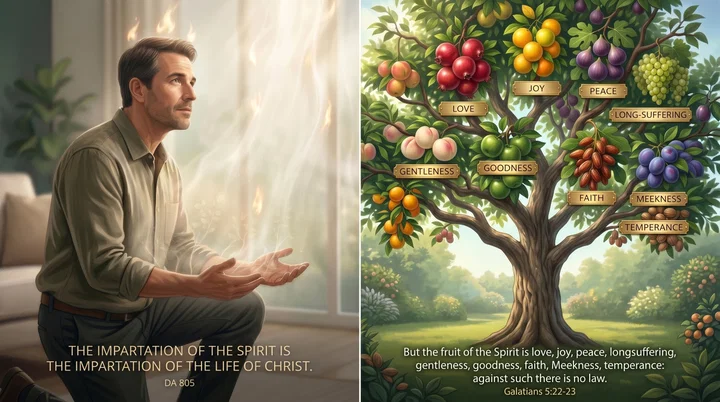
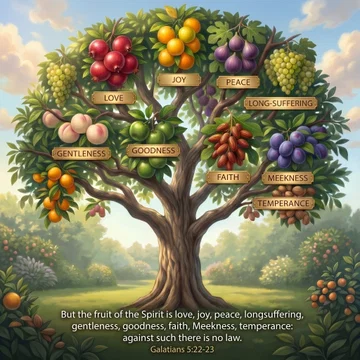
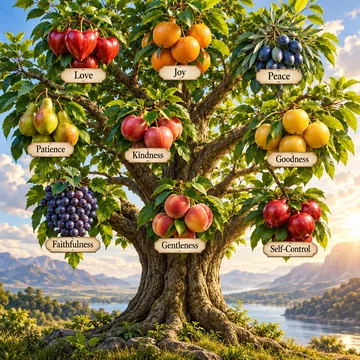
Meekness, temperance: against such there is no law.
KJV Cambridge Paragraph Bible, Revised Version
meekness, temperance: against such there is no law.
meekness, self-control; against such there is no law.
meekness, temperance: against such there is no law;
meekness, self-control: against such things there is no law.
meekness, self-control;—against such things as these, there is no law.
Berean Standard Bible, Majority Standard Bible, World English Bible
gentleness, and self-control. Against such things there is no law.
Gentle behaviour, control over desires: against such there is no law.
Meekenesse, temperancie: against such there is no lawe.
Douay-Rheims (Challoner revision)
Mildness, faith, modesty, continency, chastity. Against such there is no law.
Pictures

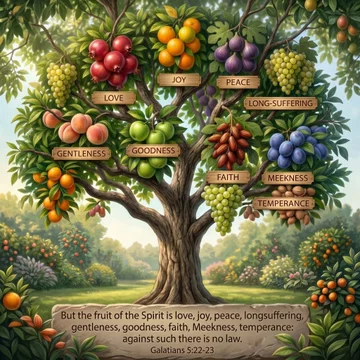
Cross-references 20 of 64
- John 15:4-5
Abide in me, and I in you. As the branch cannot bear fruit of itself, except it abide in the vine; no more can ye, except ye abide in me.
Abiding in Christ produces the fruit of a transformed character.
- Matthew 11:29
Take my yoke upon you, and learn of me; for I am meek and lowly in heart: and ye shall find rest unto your souls.
Jesus is meek and lowly, and calls his followers to learn from him.
- 2 Peter 1:6
And to knowledge temperance; and to temperance patience; and to patience godliness;
Both list temperance among qualities cultivated in Christian life.
- 1 Peter 3:4
But let it be the hidden man of the heart, in that which is not corruptible, even the ornament of a meek and quiet spirit, which is in the sight of God of great price.
Both describe a meek spirit as precious inward adornment.
- Romans 8:4
That the righteousness of the law might be fulfilled in us, who walk not after the flesh, but after the Spirit.
Walking by the Spirit fulfills the law’s righteous requirement.
- Galatians 5:16-17
This I say then, Walk in the Spirit, and ye shall not fulfil the lust of the flesh.
Walking by the Spirit counters the flesh’s desires and rule.
- 1 Corinthians 9:25
And every man that striveth for the mastery is temperate in all things. Now they do it to obtain a corruptible crown; but we an incorruptible.
Those striving for mastery practice temperance in all things.
- Colossians 3:12-13
Put on therefore, as the elect of God, holy and beloved, bowels of mercies, kindness, humbleness of mind, meekness, longsuffering;
Lists meekness and patience, then calls believers to forbear and forgive one another.
- Ephesians 5:9
( For the fruit of the Spirit is in all goodness and righteousness and truth;)
Both name goodness and righteousness among the fruit of the Spirit.
- Galatians 5:18
But if ye be led of the Spirit, ye are not under the law.
Those led by the Spirit are not under the law’s condemnation.
- Matthew 7:20
Wherefore by their fruits ye shall know them.
Fruit reveals a person’s character and marks genuine spiritual life.
- James 3:17
But the wisdom that is from above is first pure, then peaceable, gentle, and easy to be intreated, full of mercy and good fruits, without partiality, and without hypocrisy.
Heavenly wisdom is gentle, peaceable, and full of good fruits.
- Galatians 6:1
Brethren, if a man be overtaken in a fault, ye which are spiritual, restore such an one in the spirit of meekness; considering thyself, lest thou also be tempted.
Spiritual people restore the erring in a spirit of meekness.
- Zephaniah 2:3
Seek ye the LORD, all ye meek of the earth, which have wrought his judgment; seek righteousness, seek meekness: it may be ye shall be hid in the day of the LORD’s anger.
Calls the meek to seek meekness and be hidden on the day of the Lord’s anger.
- 1 Corinthians 13:4
Charity suffereth long, and is kind; charity envieth not; charity vaunteth not itself, is not puffed up,
Love is patient and kind, expressing meekness and gentleness.
- Acts 24:25
And as he reasoned of righteousness, temperance, and judgment to come, Felix trembled, and answered, Go thy way for this time; when I have a convenient season, I will call for thee.
Both present temperance as a matter for urgent conviction.
- 1 Corinthians 9:27
But I keep under my body, and bring it into subjection: lest that by any means, when I have preached to others, I myself should be a castaway.
Paul describes disciplining his body and bringing it under control.
- John 15:4
Abide in me, and I in you. As the branch cannot bear fruit of itself, except it abide in the vine; no more can ye, except ye abide in me.
Abiding in Christ enables believers to bear the fruit named in Galatians.
- Romans 13:10
Love worketh no ill to his neighbour: therefore love is the fulfilling of the law.
Love fulfills the law, which the fruit’s qualities express.
- Matthew 5:5
Blessed are the meek: for they shall inherit the earth.
The meek are promised the earth.
Commentary part 1 of 2
Each commentary is drawn from primary sources: the writings of Ellen G. White and Adventist pioneers and periodicals. Each commentary is separate. Its own words are not a quotation; follow the references to read the source passages.
Ellen G. White
142 sources
Meekness and temperance are part of the fruit of the Spirit with love, joy, peace, patience, gentleness, goodness and faith.Lt 106a, 1896, par. 24BS 68.2RH Aug 24, 1916 Meekness is the Spirit-given control of temper that bears injury with patience, gentleness, lowliness and tender courtesy without striving for mastery, and temperance is the sanctification of the whole being in which appetite, passion, body, words, temper and home life are brought under self-control for God's service.GC 473.2–474.14SP 302.2–304.1Lt 18, 1888, par. 3–5Lt 64, 1901, par. 1–5HSP 17.2 There is no law against such graces to condemn those who bear them, because they are in harmony with God's law and fulfill its requirements.Lt 106a, 1896, par. 24BS 68.2Ms 20, 1888, par. 16–19 This fruit comes only by the Holy Spirit dwelling within and by living union with Christ as the branch abides in the vine, never by talent, knowledge, outward observance or self-effort.Lt 106a, 1896, par. 24RH Aug 24, 1916FE 240.14MR 332.4–6ST Sep 27, 1899 When it appears it proves a transformed character and true conversion, showing itself in obedience to God's law, unity and kindly dealing with others, and peace in the home and daily life.SC 58.3ST Mar 6, 1884Lt 21, 1901, par. 16–17Lt 48, 1893, par. 16–17ST Jul 18, 1911
Words and Immediate Context
Meekness and temperance belong to the fruit of the Spirit together with love, joy, peace, long-suffering or patience, gentleness, goodness and faith.Lt 106a, 1896, par. 24BS 68.2RH Aug 24, 1916GW92 364.2Ms 2, 1875, par. 3–8 Those who abide in Christ have peace and bear them, for they abide in the soul when character is changed and mark a renewed heart rather than the carnal mind, bringing unity of thought and action.Lt 106a, 1896, par. 24GW92 364.2Ms 2, 1875, par. 3–8Lt 22, 1901, par. 9–10 No law condemns these fruits, and abundant provision has been made through the divine Redeemer so that all who desire to live a godly life may have grace and strength to bear them, finding life full of happiness and peace even while the cross is lifted and burdens are borne.RH Aug 24, 1916Ms 2, 1875, par. 3–8Lt 22, 1901, par. 9–10
Meekness is a grace produced by the Holy Spirit in sanctification, enabling control of a rash, impetuous, hasty, fiery or sour temper.HSP 17.24T 365.3BS 14.2–3 It is shown in patience under trials and injuries, gentleness when provoked, kindness, lowliness rather than high regard for self, mildness, and forbearance without needless sternness.4T 365.3BS 11.1BS 14.2–3 It appears in gentle, courteous, refined, tender and sympathetic words and conduct, in living out truth without striving for mastery, egotism or overpositive untimely utterance, and in keeping feelings unstirred when abused or falsely accused.Lt 18, 1888, par. 3–5Lt 64, 1901, par. 1–5BS 11.1 Those who are naturally sour or hasty gain it by earnest daily effort to overcome what is unlovely and unlike Jesus, becoming more like the divine pattern through humble quiet struggle against evil and victory over temptation and wrongdoing, which trials reveal.BS 11.1BS 14.2–3 Failing to develop it brings spiritual blindness, and its call bears directly on refusing suspicion, evil speaking, unjust criticism, harshness, dictatorial behavior, desire to rule, impatience, fault-finding, overbearing disposition and uncontrolled passion, replacing them with calm tender treatment and Christlike humility.Lt 18, 1888, par. 3–5Lt 64, 1901, par. 1–54T 365.3
Temperance means true sanctification embracing the entire being, spirit, soul and body, requiring that all powers be kept in the best condition for service to God.GC 473.2–474.14SP 302.2–304.1 It requires perfect self-control in which higher powers rule the lower, bringing appetite, passion, bodily desires and fleshly lusts under control, crucifying the flesh with its affections and lusts, and cleansing from all filthiness of flesh and spirit to perfect holiness.GC 473.2–474.1RH Sep 8, 1874ST Apr 19, 1910 It preserves the body in healthful condition and the intellect clear and active for Christian character and consecration, refusing to enfeeble or defile body or mind by indulgence, since sinful gratification dulls the faculties and weakens response to the Word and Spirit.GC 473.2–474.1RH Sep 8, 1874ST Apr 19, 1910 It treats the body as purchased property and temple of the Holy Spirit to be presented a living sacrifice, requiring total abstinence from alcohol and stimulating drinks rather than moderate use within bounds, with aroused moral powers, full cooperation, and trust in grace to overcome unnatural craving, together with control of eating, dress and habits.GC 473.2–474.120MR 106.2–107.14T 570.2 It also governs self, words, tone, temper and spirit even under provocation, reproach and old age, and orders home life by eating to live rather than living to eat.4SP 302.2–304.1RH Sep 8, 187420MR 106.2–107.1
Against such there is no law to bring into bondage or condemnation, because these graces are in harmony with God's law, are not violations of it, and are consistent with living by its requirements.Lt 106a, 1896, par. 24BS 68.2Ms 20, 1888, par. 16–19Ms 3, 1889, par. 10 They are principles of God's law put into practice in the Christian life, showing that a person abides in Christ and brings glory to God.BS 68.2Ms 20, 1888, par. 16–19HSP 21.6 Experiencing this fruit means not being under bondage but free in liberty, with the will in harmony with God so all His commandments are loved, the heart renewed to bring forth obedience to the law written within, and the life magnifying the law and advancing grace to save others while walking as Christ walked.Ms 3, 1889, par. 10HSP 21.6RH Nov 16, 1916
The verse stands in the context that those who are Christ's have crucified the flesh with its affections, passions, lusts and desires, live in the Spirit and walk in the Spirit, and are not desirous of vainglory, provoking or envying one another.Lt 106a, 1896, par. 24Ms 2, 1875, par. 3–8Lt 22, 1901, par. 9–10Lt 43, 1888, par. 23–25Lt 48, 1893, par. 16–17 These are commands to be obeyed by manifesting righteousness, with words and actions showing the character of faith and providing the standard of perfection by which the tree is known.Lt 106a, 1896, par. 24Ms 2, 1875, par. 3–8Lt 48, 1893, par. 16–17 Temperance stands opposite lusts of the flesh such as idolatry and drunkenness, and those who have crucified the flesh are marked by studying the Bible, practicing it and teaching it in love, restoring one overtaken in fault in meekness, bearing burdens, refusing self-deception and weariness in well doing, and doing good to all especially the household of faith.RH Aug 24, 1916Lt 43, 1888, par. 23–25Lt 48, 1893, par. 16–17
How the Fruit Is Given
Meekness and temperance with love, joy, peace, long-suffering, gentleness, goodness and faith are produced only by the agency of the Holy Spirit dwelling within as Christ's life in the soul.FE 240.14MR 332.4–6GC88 256.1–3LSEGW 326.2Ms 70a, 1897, par. 15–16 No talent, eloquence, ambitious scriptural knowledge, skill in controversy and mastery of opponents, outward observance, or self-trust can produce love to God or conformity to Christ's image, and without yearning after God, searching of heart, desire for oneness as Christ is one with the Father, divine love, and Christ's gentleness and meekness, knowledge begun in ambition and carried in pride leaves the soul destitute.FE 240.1LSEGW 326.2 Nothing but divine power can regenerate heart and character and imbue the soul with Christ's love, which always shows itself in love for those for whom He died, renewing motives, affections and secret thoughts, warning the impenitent, pointing to Jesus, purifying mind and heart, and giving light, wisdom and effectiveness to those who seek to work with God.FE 240.14MR 332.4–6ST Sep 27, 1899GC88 256.1–3 The Spirit is the heavenly Comforter given in Christ's place to act in His stead, belonging to believers at all times and places, in sorrow, affliction and dark perplexing outlooks when helpless and alone, sent in answer to prayer of faith, never separated by circumstance or distance, always at hand to speak soothing gentle words and to support, sustain, uphold and cheer, so tender and true and touched with human infirmity, and this life cannot be imparted by one person to another.4MR 332.4–6Ms 70a, 1897, par. 15–16
The fruit is borne only by abiding in Christ in living union as the branch abides in the vine, never by trusting self, which causes certain falling.Lt 106a, 1896, par. 24Ms 33, 1892, par. 38Ms 20, 1888, par. 16–1921MR 117.2–4Ms 148, 1897, par. 15–16 Beholding Jesus for ever-greater strength, receiving His Spirit, cooperating with God, looking constantly to Jesus, patterning after Him, keeping the soul in His love and faith, and earnest prayer, complete consecration and daily and hourly communion make acceptable fruit possible, purify the heart and produce faultless character, for without Him nothing can be done.RH Aug 24, 191621MR 117.2–4Lt 154, 1903, par. 11–12Ms 1, 1880, par. 84–86Lt 106, 1908, par. 17 Those who abide have peace, live in the Spirit and walk in the Spirit, have crucified the flesh with its affections and lusts, strive through imputed righteousness to keep the commandments, and refuse vainglory, provoking one another and envying one another, so that no condemnation of the law rests upon them and God is glorified.Lt 106a, 1896, par. 24RH Aug 24, 1916Ms 20, 1888, par. 16–19Ms 148, 1897, par. 15–16 Abundant provision has been made through the divine Redeemer so all who desire godly life may have grace and strength to bear this fruit, drawing peace and strength from the Source of strength unto a life full of happiness and peace even while the cross is lifted and burdens are borne.RH Aug 24, 191621MR 117.2–4 Giving way to impatience and fretful selfish speech and thought under suffering and neglect drives the Spirit out and gives place to Satan, while abiding keeps self-control and peace, proved by pure words, unselfish planning in Christ's meekness and lowliness, and softened hearts full of sympathy, love and compassion.21MR 117.2–4Ms 148, 1897, par. 15–16
The fruit grows by keeping the mind stayed upon Christ and constantly looking to and patterning after Him as personal Saviour, and then He comes as former and latter rain and as the Sun of righteousness with healing, causing growth as the lily and reviving as the corn and growth as the vine, unto growing up into Him in all things with growing faith and sanctified conscience.Ms 1, 1880, par. 84–86Lt 106, 1908, par. 17RH Jul 8, 1909 It comes by seeking the Lord with personal application, humbling self before God, hiding in Jesus with complete consecration and willingness to do and suffer cheerfully, looking not at brethren's faults, and asking in earnest humble steady constant faith that God will answer with rich blessing, trusting His promises, receiving and practicing Christ's words, feeding on His Word, yielding to its control, and drinking deeper from the Fountainhead in hourly contact and earnest communion.Lt 154, 1903, par. 11–12Ms 1, 1880, par. 84–86Lt 75, 1886, par. 9–11 These graces must be cultivated in heart and in families at home and in the church, refining, purifying and ennobling thought, desire and action and purifying the defiled soul temple, with principles of truth, righteousness and mercy abiding in the heart in love to God with all heart, soul and mind and to neighbor as self.Ms 1, 1880, par. 84–86Lt 75, 1886, par. 9–11 Tastes, appetites, habits and passions are thus brought under control of God's Spirit and into captivity to Christ, with susceptibility to divine impressions cherished so truth impresses heart and practice, displaying what is honest, lovely and of good report and giving depth of piety, discernment and enlightenment to decide righteously in humanity, morals and religion rather than judging character by habits, opinions or authority.Lt 19, 1887, par. 11Lt 75, 1886, par. 9–11 Earnest united prayer bringing the outpouring of the Spirit sheds Christ's love abroad in the heart unto radical transformation to a new creature, purifying what is objectionable, expelling selfishness and envy, rooting out evil speaking and fault-finding, giving power over personal infirmities, and fitting for saving others, which is the great need in every church.Lt 19, 1887, par. 116MR 55.3–56.1
Bearing the fruit requires being converted daily and remaining connected to the Vine, with ongoing communion as branches drawing all life directly from the parent vine and not borrowing sustenance from one another, expressing Christ's character in good words and actions.Ms 8b, 1891, par. 27–28TBC1882 20.5–22.2RH Sep 18, 19005T 47.3 Growth may be unseen like a plant developing, but increasing faith, hope and love, together with joy and thankfulness in contemplation of God's love, show the Spirit illuminating the believer and heavenly agencies bringing character to Christian maturity, as evidence of spiritual life and of passing from death to life.ST Aug 22, 1911ST Mar 27, 1893 The believer submits to God and trusts Him rather than trying to make himself grow, while receiving and holding fast God's word, persevering in struggle, self-discipline, and pruning by God, amid conflict and trial in storm, cloud and darkness as well as sunshine.Ms 8b, 1891, par. 27–28ST Aug 22, 1911ST Mar 27, 1893 This union with Christ naturally leads to union of believers with one another, a bond most enduring upon earth making them one in Christ as Christ is one with the Father.5T 47.3 Meekness itself is acquired not in a moment but through years of experience, holy effort and firm adherence to right.Ms 8b, 1891, par. 27–28TBC1882 20.5–22.2
The fruit comes only when self is fully emptied and every false god is cast out, so the vacuum is supplied by the inflowing of Christ's Spirit, with faith working by love and purifying the soul from every moral and spiritual defilement.Ms 3, 1890, par. 2–4Lt 1c, 1890, par. 21–24 It comes only when the spiritual character of the law is discerned, self-esteem is gone, guilt is confessed with genuine repentance toward God and faith toward Christ, and the soul is washed and cleansed and created anew in righteousness and true holiness after Christ into His likeness, the Spirit directing the person rather than the person directing the Spirit.Ms 3, 1890, par. 2–4Ms 142, 1903, par. 67–68Lt 1c, 1890, par. 21–24 Envy, pride, malice, jealousy, selfishness and evil-speaking are swept away and rooted out in radical change of heart by Christ's love purifying the character, and truth is constantly unfolded by the Holy Spirit and received with meekness, with Christ dwelling within as a well of water springing into everlasting life.Ms 3, 1890, par. 2–4Lt 116, 1903, par. 196MR 55.3–56.1Lt 1c, 1890, par. 21–24Lt 78, 1910, par. 6–8 Working out salvation with fear and trembling while God works within to will and do, without pompous overbearing spirit, means having crucified the flesh with affections and lusts and then walking and working in the Spirit without vainglory, provoking and envying, ever improving, ever drawing near to God, ever uplifting the soul to Jesus, and by beholding changed into His image with new spiritual life and new motive power.Ms 3, 1890, par. 2–4Ms 142, 1903, par. 67–68 The result is humility ascribing all glory to God, no longer thinking more highly of self than ought, no longer ambitious for greatness, alliance, station or honor, no longer avenging self or sensitive to reproach, neglect or contempt, and no longer pulling others down, but gentle, condescending, meek and lowly in Christ's school, talking of Jesus and His matchless love, growing into His image with life hid with Christ in God, loving Jesus with ardor, loving souls, bending all energy to win them, and increasing in love even under trial, as earnest laborers with God with heavenly intelligences cooperating, ennobled and refined through sanctification of the Spirit and belief of the truth.Ms 3, 1890, par. 2–4Lt 1c, 1890, par. 21–24
Transformed Character and Evidence
The fruit is the sign of a new creature and a transformed character, in which divine power renews the heart, gives new desires, motives and moral taste, and leads a person to love what God loves.SC 58.3ST Mar 6, 1884ST Jul 18, 1911 The proud become meek and lowly, the drunken become sober and the profligate pure, as former desires are left to follow Christ and reflect His character.SC 58.3Ms 3, 1890, par. 2–42MR 43.2–3 Self is no longer supreme but Jesus has first place in the affections, with love extended to Christians and to all people in doing them good, selfishness purged and a refined and godly character revealed in life.ST Mar 6, 1884ST Jul 18, 19112MR 43.2–3 This is the character grown in those who are one with Christ, having the mind of Christ and working the works of Christ, ever improving, ever drawing near to God, ever uplifting the soul to Jesus, and by beholding the Redeemer changed into His image with new spiritual life and new motive power.Ms 3, 1890, par. 2–4 When self is fully emptied and every false god cast out, the vacuum is supplied by the inflowing of the Spirit of Christ, faith works by love and purifies the soul from every moral and spiritual defilement, the Comforter influences and directs the heart to enjoy spiritual things, truth constantly unfolded is received with meekness, Christ dwells within as a well of water springing up into everlasting life, and as a branch of the True Vine the believer bears rich clusters to the glory of God.Ms 3, 1890, par. 2–4 Its character is positive and opposite to evil — love, not hatred; joy, not discontent and mourning; peace, not irritation, anxiety and manufactured trials — and those who have this spirit are earnest laborers with God, with heavenly intelligences cooperating with them, ennobled and refined through sanctification of the Spirit and belief of the truth.Ms 3, 1890, par. 2–4 This fruit does not perish but produces a harvest leading to eternal life, and when Christ's character is fully reproduced in His people He will come to claim them.COL 68.1–69.1HSP 16.8
Revealing this fruit in life is the decided evidence of true conversion, genuine faith, faithfulness to baptismal vows, and passing from death to life and from Satan's power to God.Lt 21, 1901, par. 16–17Lt 11, 1887, par. 3Ms 1, 1878, par. 6–9 It is the Bible standard of perfection of character by which the tree is known by its fruit and every idea of perfection must be tested, the proof whether profession is genuine, and the test by which character is known and people will be judged.Lt 21, 1901, par. 16–17Lt 48, 1893, par. 16–17Lt 11, 1887, par. 3 Profession without such fruit is like a leafy but fruitless tree and faces God's curse, while its absence shows the person has no living connection with Christ even if outwardly receiving His gifts and care.Lt 21, 1901, par. 16–17ST Jan 6, 1909COL 216.4–217.1 They that are Christ's have crucified the flesh with its affections and lusts, and if they live in the Spirit they must also walk in the Spirit, not being desirous of vainglory, provoking and envying one another.Lt 48, 1893, par. 16–17Lt 11, 1887, par. 3 That standard is failed by faultfinding and criticizing, striving for supremacy and seeking to be first, selfish unholy ambition, speaking to the disparagement of associates, vainglory, provoking one another and envying one another, which are attributes of Satan that close the gate of heaven and leave that class without the city.Lt 48, 1893, par. 16–17Lt 11, 1887, par. 3 By contrast the spiritual restore one overtaken in a fault in the spirit of meekness, considering themselves lest they also be tempted, bear one another's burdens and so fulfill the law of Christ, refuse self-deception about being something when nothing, refuse weariness in well doing, and use every opportunity to do good to all, especially to the household of faith.Lt 48, 1893, par. 16–17 Those who bear this fruit need not be in darkness about the spirit they possess, humble themselves under God to be lifted up, strive for spirituality and are willing to suffer for Christ, and if they live in the Spirit also walk in the Spirit, so the Lord honors their ambition to excel while the selfishly ambitious are made last and humbled, marking those who will stand approved of God in the near judgment when every work and motive is revealed and rewarded, and who will enter the holy city.Lt 11, 1887, par. 3
Want of these graces shows the carnal mind still remains despite profession of truth and sanctification through the truth is lacking.Lt 10, 1886, par. 29–30Lt 51a, 1895, par. 29 It shows no living connection with Christ even if outwardly a church member regarded as faithful, a sickly experience chilled by formality, worldly ambition, pride and love of self, and one who is not a Christian at heart.Lt 10, 1886, par. 29–30COL 216.4–217.1Lt 51a, 1895, par. 29 The proof appears under test and affliction, such as sickness, in impatience, fretfulness, demanding great attention, speaking against physicians, tearing down instead of building up, and selfish, covetous claiming of the best advantages without giving to support the work.Lt 10, 1886, par. 29–30 As continual contradiction, strife, envy and jealousy it marks unholy fruit, and as in the Jewish nation in Christ's day with its outward show of piety and in Judas who failed to receive and practice Christ's words and was left unchanged, it leaves the vineyard failing to produce the fruit its Owner seeks and disappointing Him, a hindrance rather than a blessing that can keep others from privileges they might otherwise receive.COL 216.4–217.1Ms 141, 1899, par. 10–11COL 215.1–2Lt 51a, 1895, par. 29 Believers are therefore to examine their lives and not harden their hearts, while working out their salvation because God works in them.Ms 141, 1899, par. 10–11
The fruit is not gloom or mourning but humble joy, kindness, cheerfulness, patience and love as a steady principle rather than an outward display that changes with circumstances.Lt 43, 1899, par. 53ST Apr 6, 1882MYP 404.1 It is love instead of hatred, joy instead of discontent and mourning, peace instead of irritation, anxiety and manufactured trials, with calm holy trust from eyes fixed on a compassionate Redeemer, light from His face, and peace and joy abiding wherever His Spirit rules.Ms 3, 1890, par. 2–4ST Dec 26, 1892MYP 404.1 It is not boisterous, noisy, boasting self-confidence, but a humble joy that leads to abasement of self, with tenderness of soul and a mildness which savors of Christ, contentment not dependent on circumstances, and freedom from restless loneliness, weak fixed notions, timidity, fear and narrow attachments.ST Apr 6, 1882Ms 1, 1878, par. 6–9 Where the Spirit of God is there are meekness, patience, gentleness and long-suffering ruling the heart and controlling the life, with meekness and truth governing the life so that love and purity shine out and reflect Christ's peace and joy.Lt 43, 1899, par. 53ST Dec 26, 1892Ms 1, 1878, par. 6–9 True believers walk after the Spirit with the Spirit dwelling in them, making them meek and gentle, easy to be entreated, full of mercy, love and good fruits, swift to hear and slow to speak, with differing gifts and forms fitted together in unity, each made whole and polished to shine.Lt 43, 1899, par. 53Ms 1, 1878, par. 6–9 Its absence is shown in an exacting, tyrannical, overbearing, impatient, fiery temper that is slow to hear and swift to speak, unwilling to learn, to receive reproof or counsel, and quick to judge others, while meekness, kindness, forbearance, cheerfulness and love make Christ's service attractive and impatience, fretfulness and repining contradict profession of faith.ST Jun 24, 1886Ms 1, 1878, par. 6–9
The beauty of character produced in the soul by the Holy Spirit surpasses outward beauty, wealth, status, human achievement, art and worldly display.STB 175.2–4MH 36.4 God's kingdom is shown most powerfully in human nature brought to the perfection of Christ's character, not in outward display.STB 175.2–4 Christian graces are inward qualities that appear when the carnal mind is subdued and the heart is changed, with meekness as part of the inward adornment of a converted life replacing pride and concern with outward appearance.1T 162.2–4 The inward adornment of a meek and quiet spirit in a changed heart is of greater worth than neatness, dress or trimmings, for godliness comes first while cleanliness and order are secondary.1T 162.2–4ST Aug 5, 1875MYP 314.1 Value in the Lord's sight does not come from dress but from inward adorning with the graces of the Spirit, namely the kind word and thoughtful consideration for others, calling for doing without unnecessary trimmings and laying aside the means thus saved for the advancement of the cause of God.MYP 314.1 Such a heart renewed by God's grace earnestly seeks Christian graces rather than worldly vanity and frivolity.ST May 1, 1884
Harmony With God's Law
Meekness, temperance and their companion graces are the principles of God's law put into practice in the life, so that against such there is no condemnation of the law.Lt 106a, 1896, par. 24BS 68.2Ms 20, 1888, par. 16–19 To bear them is to abide in Christ and live according to the requirements of the law, crucifying the flesh with its affections and lusts, living in the Spirit and walking in the Spirit, without vainglory, provoking one another or envying one another.Lt 106a, 1896, par. 24Ms 20, 1888, par. 16–19 Experiencing this fruit means not being under the bondage of the law but being free in Christ Jesus, walking in liberty because the will is in harmony with the will of God and all His commandments are loved.Ms 3, 1889, par. 10 As people are guided by the Holy Spirit the fruit is evident in heart, life and character, magnifying God's law and advancing the kingdom of grace to reach and save others.HSP 21.6RH Nov 16, 1916
A heart renewed by the Holy Spirit under the new covenant brings forth obedience to God's law written within it, accepting Christ's righteousness for pardon with His blood atoning for sin.RH Nov 16, 1916HSP 17.3–4 That obedience cherishes the law's two great principles of love to God and to neighbor, with elevated moral taste and with passions controlled and sanctified.Ms 107, 1901, par. 20–22 It magnifies God's law, walks as Christ walked, and advances the kingdom of grace so souls are brought to salvation.HSP 21.6RH Nov 16, 1916RH Mar 11, 1909 The regenerating work in harmony with the law is seen where painstaking effort manifests kindness, patience and love, especially in families where parents sanctify themselves so their children also may be sanctified.Lt 272, 1903, par. 21 Peace, purity and kindred qualities are to mark dealings with others, with actions measured by the law as the reliable rule of conduct.5T 416.3
True Bible religion through the Holy Spirit produces meekness and self-control that leads people to govern themselves rather than to control one another or exalt themselves over the flock.STB 513.2 Christ's kingdom works through gentleness and inward transformation, not through outward display or worldly power, bringing human character toward the perfection of Christ's character.ST Jul 18, 1916 The working of the Spirit produces a beauty of character that God values above what is seen and transitory, holding outward perfection, wealth, position, imposing display, expensive architecture, furnishings and applauded achievements subordinate to higher interests and of worth only as they express the inward work.7T 143.3–4 Every child of the heavenly King is constantly to represent the principles of the kingdom — riches, goodness, mercy, tenderness and courtesy — loyal and true in spirit, word and works to all the precepts and commandments of the Lord, so that missionary work uplifts both laborer and helped and gives the worldly-wise a true representation of the citizens of the kingdom.ST Jul 18, 19167T 143.3–46T 189.3
True teaching on the law must sanctify its holders and produce fruit after Christ's order, for right ideas are not enough if those who hold them are not sanctified through them.9MR 327.4–328.2 When the result is a harsh, closed spirit resisting investigation, not true, open and frank, with fruits bitter as gall rather than Christian, it fails the test of the verse, which makes Christian spirit and character more vital than differences over points that are not vital.9MR 327.4–328.2 Claiming to keep God's law only in spirit while living in impurity and breaking the Ten Commandments is not the Spirit's fruit but evasion of truth.Ms 62, 1886, par. 54–56 The graces of the Spirit in true followers mean religious fervor, steadfastness to the faith, piety, self-denial and cross-bearing, brought into exercise by the perils of the last days to make an army firm for duty including the Sabbath of the fourth commandment.Ms 62, 1886, par. 54–56
Envy and jealousy must be speedily emptied out of the soul as rubbish and replaced with meekness, gentleness, patience, kindness and love.Lt 37, 1879, par. 5–6 Leaning upon God and drawing strength and nourishment from Him makes a person strong so that gossip and talebearing do not change the course.Lt 37, 1879, par. 5–6 Harboring envy and jealousy and letting gossip affect deportment makes a person weak and worthless, and until the soul is cleared and filled with these good qualities only trouble will follow.Lt 37, 1879, par. 5–6 Meekness and temperance with no law against them stand as the reason not to cherish envy, evil speaking or other attributes that come from the enemy.11MR 84.1–2
Unity and Dealings With Others
Meekness and temperance belong to the fruit of the Spirit with love, joy, peace, longsuffering, gentleness, goodness and faith, and against such there is no law, and when the Holy Spirit changes character these qualities abide in the soul and bring unity of thought and action.GW92 364.2Lt 187, 1901, par. 6–7Lt 98, 1896, par. 51–54Ms 82, 1898, par. 18–25Lt 64, 1901, par. 1–5 Those who live in the Spirit see all things in an unselfish clear light, cease looking at discouraging things, watch and pray trustfully, take God at His word, let God plan His own work and appoint differing gifts and opportunities, praise Him for opened ways and evidences of love and care, and stand together against the enemy seeking to discourage everyone who works together with God.Lt 187, 1901, par. 6–7 The secret of unity is union with Christ the great Center, so believers approach one another just in proportion as they approach Him, and membership in the church does not make a Christian but Christlikeness does, representing the character of Christ who came in the likeness of sinful flesh to condemn sin in the flesh and represent the character of God.15MR 300.3–301.3 This calls for putting away prejudice, contention, division, harshness, dictatorial behavior, desire to rule or for supremacy, evil speaking, tearing character in pieces, bitterness, wrath, anger, clamor, malice, vainglory, provoking and envying, worry, despondency, self-pity, and weakness that hurts influence, and for cherishing love, deference, respect, humility, sympathy, compassion, forbearance, forgiveness, and encouraging words as a father, receiving help from fellow workers and helping them.Lt 187, 1901, par. 6–715MR 300.3–301.3Lt 98, 1896, par. 51–54Ms 82, 1898, par. 18–25Lt 64, 1901, par. 1–5 Those truly connected bear harmony, peace, benevolence, kindness, mercy and Christlike meekness and are not at variance, for they that are Christ's have crucified the flesh with its affections and lusts, and if they live in the Spirit they also walk in the Spirit, while forcing conscience and persecuting those who conscientiously differ shows Christ is not abiding within.15MR 300.3–301.3Lt 98, 1896, par. 51–54Ms 82, 1898, par. 18–25
The fruit appears in kindly, pure, pleasant, good words and deeds, true courtesy, unselfish planning in the meekness and lowliness of Christ, softened hearts full of sympathy, love and compassion, and patient humble service that blesses others rather than criticizing, harshly controlling, fault-finding, oppressing or tearing down.Ms 8a, 1888, par. 1–3Ms 148, 1897, par. 15–16Ms 16, 1901, par. 38–3912MR 53.3Lt 34, 1889, par. 25–28 The tree must be made good before the fruit can be good, so this comes only from a heart under the control of the Holy Spirit through living faith that clasps the hand of Christ and takes hold of His strength and efficiency in every place and emergency, through the imputed righteousness of Christ to keep God's commandments, as those who abide in Christ as the branch abides in the vine, who are not their own but bought with Christ's blood to glorify God in body and spirit.Ms 148, 1897, par. 15–16Ms 16, 1901, par. 38–39 It testifies to a change wrought by God's grace and fellowship with Christ, makes character fragrant, frees life from all signs of overbearing and oppression, and proves bearers are not fractious when things do not please them.Ms 8a, 1888, par. 1–3Ms 148, 1897, par. 15–16Ms 16, 1901, par. 38–39 It is evidence of true conversion and transformation of character, showing self crucified with passions and desires and a life lived and walked in the Spirit without vainglory, provoking or envying, and against such there is no law to bring into bondage.Ms 8a, 1888, par. 1–3Ms 148, 1897, par. 15–16Ms 16, 1901, par. 38–3912MR 53.3Lt 34, 1889, par. 25–28 It opposes anger, strife, uncontrolled temper, impatience, overbearing disposition, suspicion, evil speaking and unjust criticism, calls for calm tender treatment, conceding ideas at home, and a well-balanced character testifying to Christlike power, for failing to heed the Spirit in this brings spiritual blindness.Lt 18, 1888, par. 3–54T 365.3
True Bible religion through the Holy Spirit produces meekness and self-control that leads people to govern themselves rather than control one another or exalt themselves over Christ's flock.HSP 17.24T 365.3STB 513.2 Meekness is a grace produced by the Holy Spirit as the believer is sanctified, enabling control of a rash and impetuous temper, and with temperance it opposes impatience, fault-finding, overbearing disposition and uncontrolled passion, whereas allowing the lower nature to control the spiritual reverses God's order.HSP 17.24T 365.3 Harsh treatment, ungentle words, scolding, angry words, harshness, coarse speech, arbitrary authority, overbearing positiveness and misuse of authority show Satan's presence and dishonor Christ, and must be replaced with love, consideration, mercy, justice and Christ's meekness and humility in words and conduct made visible as evidence of inward sanctification.Lt 18, 1888, par. 3–5Lt 64, 1901, par. 1–5STB 513.219MR 209.2–210.1 Christ's followers are to put away harshness, dictatorial behavior and desire to rule, showing Christ's meekness and humility in words and conduct, with no law condemning such qualities.Lt 64, 1901, par. 1–519MR 209.2–210.1
Kindness, forbearance, humility and respectful courtesy are Spirit-given fruits that help ministers gain people's confidence, reach hearts and win souls to Christ more powerfully than preaching alone.3T 232.3–233.1Lt 29a, 1872, par. 20–25 Patience, longsuffering, kindness, compassion, tenderness and love are precious fruits to be witnessed before those under charge, and a guide and example must reach a higher standard by sanctifying grace and a close living connection with God, grasping God's promises, pressing close to Jesus, improving every means of grace, growing ever with strong faith, complete consecration, perfect love, ardent zeal, steady advancement in knowledge and love of Christ, spiritual discernment, eye single to God's glory, love abounding more and more, and wisdom from above, since present and future usefulness depends on that living connection.9MR 153.3–4Lt 22a, 1889, par. 13–14 The Spirit's fruits should be seen in those under a leader's care, with patience, longsuffering, kindness and compassion exemplified by the leader as evidence of spiritual growth and connection with God.9MR 153.3–4Lt 22a, 1889, par. 13–14
Self-control as fruit of the Spirit makes those led by God slow to anger and unwilling to let offense, criticism or slander govern conduct.Ms 24, 1887, par. 37–38 They show this by overlooking trifling offenses, leaving reputation in God's care, and answering false reports through upright living rather than angry words.Ms 24, 1887, par. 37–38 Meekness appears as kindliness and humility, while temperance appears as self-control in mastering self and restraining cutting words and exaggerated criticism, helping people support one another and correct wrongs without creating further harm, and opposing no law.Ms 24, 1887, par. 45–46
Home Work and Daily Practice
When these graces rule the home they bring contentment, peace, love, kindness, gentleness, forbearance and longsuffering, checking impatience and selfishness and quelling passionate impulses.GW92 364.2Lt 187, 1901, par. 6–715MR 300.3–301.3Lt 98, 1896, par. 51–54Ms 82, 1898, par. 18–25 They shape family life and the character of children and exert powerful influence by putting Christ first, and they are cultivated in the home and carried by children into school and church.GW92 364.2Lt 187, 1901, par. 6–7Lt 64, 1901, par. 1–5 Exercising pleasant cheerful words when fretful itself strengthens self-control.15MR 300.3–301.3Lt 98, 1896, par. 51–54
Parents are to govern their actions by the Holy Spirit and not act from impulse or anger, subduing self and controlling words, tone, voice and facial expressions.1T 385.2–386.1RH Dec 10, 19081T 399.1–2 Correction of children is to be without impatience or passion, in patient gentle forgiving love, and a child's evil temper is to be subdued while young by correction in love followed by prayer.1T 385.2–386.11T 399.1–220MR 299.3–301.1 A mother especially needs patience, self-command, kindness, calmness, meekness and temperance to mold minds and fashion character, and the more calm she keeps under provoking conduct the better she maintains influence and dignity and the more easily children are controlled without arousing combativeness, stubbornness and defiance.ST Apr 20, 188220MR 299.3–301.1Ms 2, 1877, par. 17 Harsh words, passionate blows, threats, scolding and brute force only raise resistance and are reflected back in unsubmissive insubordinate deportment and make burdens heavier, while kind patient calm discipline gives power of example for good seen in the deportment of children and gains souls.1T 399.1–220MR 299.3–301.1 Diet materially affects mind and disposition, so eating what is nourishing but not stimulating keeps nerves calm and temper even, which makes patience easier in dealing with varying tendencies of children and enables firm yet affectionate government, with temperance modeled and taught from babyhood so children learn to eat to live rather than live to eat and to keep appetite subject to will governed by calm intelligent reason.ST Apr 20, 1882Ms 2, 1877, par. 17
Those who teach, minister and lead must first share in and show meekness and self-control, bridling disposition and seeking a meek and lowly character that makes room for peace and contentment.6MR 84.5–85.2Lt 19, 1887, par. 12–13Lt 119, 1900, par. 18 Under the Spirit's discipline teachers control temper and exercise patience and forbearance, and church school teachers bring Christ's patience, kindness, mercy, love, righteousness, peace and grace into daily experience without vain conceit.9T 141.27T 38.5GW 355.1 Those placed over minds are to exercise meekness, gentleness, goodness, love, longsuffering, forbearance, courtesy and pity instead of arbitrary authority.6MR 84.5–85.2Lt 119, 1900, par. 18
The fruit Christ claims from His church after His patient care includes faith, patience, love, forbearance, heavenly-mindedness, meekness, self-control and lowliness, and to be wanting in patience, forbearance, self-control, lowliness and meekness is written as wanting and will surely close the gates of heaven.5T 116.3FE 342.2–343.1Ms 40, 1899, par. 8–9 Hasty uncontrolled temper must be overcome, and fretting, complaining, murmuring, stubbornness and petting of self must cease, for giving way to that spirit brings spiritual disease of soul, while Christ has made ample provision for help in difficult places and this fruit matures amid storm, cloud and darkness as well as in sunshine.5T 116.3 Moses lacked gentleness, goodness and long-suffering when he trusted his training in Egyptian wisdom to deliver Israel and killed an Egyptian to redress his people's wrongs, and that violent act manifested a murderous spirit and proved him unfit to represent the God of mercy, love and tenderness, so God permitted his failure, loss of confidence and flight to teach him those very qualities in order to fit him for delivering His people from bondage.FE 342.2–343.1
In schools made more like the schools of the prophets, with the Bible made the great lesson book, students are to become thorough students of the Bible and doers of the Word, digging deep and laying a sure foundation through obedience to all requirements of God.Lt 252, 1908, par. 6–7 Young men and young women in the school of Christ must learn patience, longsuffering, gentleness and love and be doers of them so they can take the same position they require their pupils to take.Lt 252, 1908, par. 6–7Ms 101, 1894, par. 5 Teachers who are fitful, changeable, moved only by feeling, overbearing through unbelief and resistance to God, and acting on suspicion and jealousy fail to manifest this patience, longsuffering, gentleness and love, and thereby show themselves to be bundles of inconsistencies, narrow-minded and belittling, and unfit to deal with human minds.Ms 101, 1894, par. 5
The fruit is to be revealed in every act and in all actions and in every business transaction and daily duty, mingled with the incense of Christ's merits, preaching sermons every day by faithful actions and doing the very best.RH Jun 24, 1902ST Nov 18, 1886Ms 39, 1900, par. 11–12 Labor is to be done in unselfishness and faithfulness and with intelligence and purity, leaving no dark corners for dishonest deeds, giving self rather than money to buy salvation, and practicing temperance in all things with elevated taste and subdued passions.RH Jun 24, 1902MYP 211.1Lt 30, 1907, par. 11–12Lt 23, 1892, par. 2 Growth comes by seeking heavenly wisdom and by study of the Word changing the whole character with constant growth in grace and holiness, rather than letting the mind be occupied for weeks with earthly projects.Ms 39, 1900, par. 11–12Lt 30, 1907, par. 11–12
Drawing close to Jesus and adorning profession by well-ordered life and godly conversation keeps feet from forbidden paths, and watching continually unto prayer and doing everything as in the immediate presence of God saves from yielding to temptation and keeps pure, spotless and undefiled unto the end.21MR 117.2–4Ms 19, 1892, par. 50–53Ms 9, 1880, par. 55–57 Holding the beginning of confidence firm unto the end establishes the way in God, and what grace has begun glory will crown, with prayer for the fruits to dwell within.Ms 118, 1904, par. 75MR 9.2Ms 9, 1880, par. 55–57 Giving way to impatience and fretful selfish speech and thought under bodily suffering and neglect drives the Spirit of God out of the heart and gives place to the attributes of Satan, while abiding as the branch abides in the vine keeps self-control and peace.21MR 117.2–4Ms 19, 1892, par. 50–53ST Mar 10, 1887
Workers in God's institutions must practice truth through sanctification by cutting off selfishness, including grasping for higher wages, authority or power, acting with equity rather than manipulating arrangements for advantage.RH Jun 2, 1904Ms 216, 1902, par. 6–7Ms 104, 1904, par. 7–8 They are to keep spirit sweet, pure and holy, and to build their own character instead of neglecting character-building to make plans for someone else.RH Jun 2, 1904Ms 104, 1904, par. 7–8 Temperance means self-control in the full acceptance of the term and is required for acceptance as fellow workers, including at Washington, D.C. and Mountain View, California, and men who have not learned this self-control must not be brought into these institutions.RH Jun 2, 1904Ms 216, 1902, par. 6–7
Temperance for Body and Mind
Temperance in the verse is part of the fruit of the Spirit together with love, joy, and peace, and it means resisting bodily appetites and refusing to defile the body because the body is the temple of the Holy Spirit.4T 570.2MYP 241.3 Strict compliance with the Bible's requirements in this matter brings blessing to both body and soul, because physical habits affect the mind.4T 570.2MYP 241.3 Daniel and his associates illustrate this by religious principle and abstemious habits that resisted fleshly desire, preserved mental vigor, and remained true to God even at great cost.4T 570.2MYP 241.3 One compromise could lead to further wrongdoing and separation from God.4T 570.2
Temperance requires using God-given powers with restraint so that the intellect remains unimpaired and those powers can serve God rather than self.Lt 15, 1899, par. 19–20 People belong to God and must give account for influence, words, money, and other abilities entrusted to them, and temperance helps use these gifts faithfully against the enemy's work.Lt 15, 1899, par. 19–20 It keeps the body in healthful condition for the successful perfection of Christian character by restraining appetite and bodily desires.ST Aug 13, 1874LC1 166.1 This means bringing the body into subjection and crucifying the flesh with its affections and lusts, and presenting the body a living sacrifice, holy and acceptable to God.ST Aug 13, 1874
Continual indulgence in hurtful lust and appetite produces a diseased body and disordered intellect that make consecration to God and sanctification of body and spirit impossible.ST Aug 13, 1874LC1 166.1 It is not possible to glorify God while living in violation of the laws of life.ST Aug 13, 1874 God requires continual advancement in control of appetite by power in Christ, and the one seeking purity of spirit can have that power.9T 156.1 Indulged appetite is the greatest hindrance to mental improvement and soul sanctification, and even with profession of health reform many eat improperly.9T 156.1 Indulgence of appetite is the greatest cause of physical and mental debility and lies largely at the foundation of feebleness and premature death.9T 156.1
The graces named in the verse are precious heavenly graces of the Holy Spirit, true, pure, holy affections that must be cultivated for safety of the soul.Lt 24, 1893, par. 8–9 Granting any indulgence to the passions and yielding to Satan's delusive snares loses these graces one by one, imperiling the soul with entire, eternal loss.Lt 24, 1893, par. 8–9 As Satan steals them away he substitutes his own attributes in their place.Lt 24, 1893, par. 8–9 Keeping them requires fleeing sin as from a poisonous serpent and ever remembering that life is lived in full view of the universe of heaven.Lt 24, 1893, par. 8–9 Every secret thought, purpose, desire, character, and action stands clear as light before God's omniscient, searching eye.Lt 24, 1893, par. 8–9
Sources
Pioneers and periodicals
292 sources
Meekness and temperance close the ninefold fruit of love, joy, peace, long-suffering, gentleness, goodness, faith and patience as one blended life from the Spirit.ST Feb 27, 1893RH Mar 18, 1858ST Jul 11, 1911RH Nov 10, 1863 Meekness is humble, gentle submission to God that restrains anger, answers insult quietly, forgives wrongdoers and refuses pride and retaliation.RH Dec 4, 1856RH Apr 21, 1868ST Sep 25, 1901ST Aug 6, 1894 Temperance is God-given self-mastery over appetite, passion, temper, words and habits, using good things moderately and abstaining wholly from evil drink, excess and indulgence.ST Jul 11, 1911ST Dec 28, 1888RH Apr 10, 1866ST Jan 24, 1911ST Sep 18, 1893 This fruit is not produced by human resolve but only by new birth and abiding in Christ, as the Spirit sheds abroad Christ's life and writes the law in the heart in love.ST Jul 18, 1911ST Jan 6, 1909RH May 22, 1913RH Nov 1, 1870RH Dec 20, 1906 Against such a life there is no law, for it fulfills and harmonizes with God's law so that those who bear it stand free from condemnation in the judgment.RH Sep 1, 1868ST Mar 3, 1914RH Feb 1851RH Jun 9, 1853RH Jul 25, 1854
Closing Words of List
Meekness and temperance close the ninefold list of the Spirit's fruit in Galatians 5:22-23, together with love, joy, peace, long-suffering, gentleness, goodness and faith, and also named as patience, kindness and faithfulness.ST Feb 27, 1893RH Mar 18, 1858ST Jul 29, 1880ST Apr 26, 1910 They are qualities produced by the Spirit and cherished by His work in the true Christian, belonging to believers who abide in Christ rather than to themselves, and no law condemns or is against such fruit.ST Feb 27, 1893RH Mar 18, 1858ST Apr 26, 1910 The closing portion names meekness and temperance as part of the character the Spirit produces, in contrast to the works of the flesh in verses 19-21, without further definition of the two terms alone.RH Mar 18, 1858ST Jul 29, 1880
The list gives one composite fruit, not separate fruits, whose qualities are blended together in one life, with peace belonging with love and joy and long-suffering, gentleness and goodness belonging with love.RH Nov 10, 1863ST Feb 25, 1889ST Apr 9, 1896 Meekness and temperance are manifestations and characteristics of that singular love, and faith in the list is more precisely faithfulness.ST Feb 25, 1889ST Apr 9, 1896ST Apr 1, 1913 The virtues named are examples rather than limits, including every good thing, and the gospel knows only two kinds of fruit, the fruit of the Spirit and the works of the flesh, not divided among sects so that each church supplies a different trait to make up total Christian fruitfulness.ST Jul 11, 1911RH Jul 6, 1868
Love, joy and peace belong to that one fruit as evidence of possessing the Spirit, and their presence and increase distinguish the Spirit's work from Satan's counterfeit light and power and give power for service.RH Nov 10, 1863RH May 1, 1913RH Dec 28, 1911 Joy is a very essential grace to be cultivated habitually and extensively, even in affliction; becoming a Christian does not mean putting on a long face, gloom, or giving up enjoyment, and gloomy faces and words are cause for repentance.RH Sep 12, 1871RH May 17, 1864 Trials may diminish or interrupt joy but do not extinguish it.RH Nov 10, 1863 Life in the Spirit produces deeds of love and excludes hatred, conflict, jealousy, discord and strife as Satan's work and fruit of sin, while love from God brings joy and peace, gives knowledge of God's thoughts and coming joys, and replaces dread and tormenting fear with vision of God's character and comforts of salvation.ST Feb 1, 1883ST Apr 9, 1896 Enjoying peace and love as a people requires putting away sins and coming into harmony with God and one another, asking whether one possesses love and has learned to suffer long and be kind, for talents, learning and eloquence without it are as sounding brass or tinkling cymbal, yet lightly valued and little sought by many professors.ST Feb 1, 1883
Patience, long-suffering, gentleness, goodness and faith belong to the same fruit and clothe the soul with humility and protection amid trials and opposition.RH Dec 14, 1916ST Sep 2, 1875RH Feb 19, 1867 Gentleness, also rendered kindness, is softness or sweetness of disposition maintained in unfavorable as well as favorable conditions, tested in connection with long-suffering, an element of power from subdued strength that makes one great, not weakness.ST Jan 21, 1897ST Mar 24, 1881 A suitable degree of force, firmness, decision, sternness and even severity is not incompatible with it, but railing with clamor in rude boisterous language and loud angry tones venting stirred temper from lack of self-control violates it; sweetness of spirit grows from self-control and serenity of soul most frequently from self-discipline and prayerful struggles, and a soft answer often costs the answerer dearly.ST Mar 24, 1881 Patience means willing endurance and complete self-mastery, enduring affliction, loss and suffering with resignation without complaint, a habit of mind and ornament of kingly souls requiring a contented heart resigned to its lot and cheerfully undertaking its tasks, standing for self-control rather than indolence, indifference or irregularity, not produced by resolutions alone but requiring inward grace, without which the soul does not grow steadily.RH Dec 14, 1916ST Sep 2, 1875 Goodness is God forming His goodness within, and faith is confidence in God gained by constant communion and fellowship as Moses in forty days on Sinai before asking to see glory and being put in the cleft of the rock, and as Elijah conversing with God and angels as friends for years before being taken in a fiery chariot, a path others must walk to mount on wings of confidence and scale heaven's walls.RH Feb 19, 1867RH Jan 13, 1859
The fruit is pictured as trees of righteousness by the river of life, which is the Spirit, borne by the tree of life which is the church of Christ rooted in that water, borne constantly and ripening continually unhindered by drought. The nine qualities together with patience, courage and hope make twelve manner of fruits, looked for, expected and by right to be received by Christ as Lord of the vineyard from spiritual Israel today, planted through the permanent Comforter and Guide to truth; grieving that Spirit who actuated the prophets and neglecting their lessons causes failure and partaking with old Israel in the prophets' blood, crucifying the Son afresh.ST Feb 5, 1902 He who sows this fruit as seed will see other Christians grow as other life-trees rooted in the same water and united to the same trunk Christ, whose leaves exhale living water in showers of blessing healing sin-sick nations and making earth's moral desert blossom as the rose, the unity Jesus longed and prayed for in a church one and without spot or wrinkle. It is also foundation stones for the home built on the rock of God's word as opposed to sand of unbelief, with meekness and temperance together with love, joy, peace, long-suffering, gentleness, goodness and faith withstanding every storm and never cracking, crumbling or decaying with age, lasting as eternity, found only in the quarry of truth yet without money and without price in ample supply for poor as well as rich.ST Nov 3, 1914
Meekness and temperance are the same graces Peter lists when telling believers to add virtue, knowledge, temperance, patience, godliness, brotherly kindness and charity to faith, with Paul beginning with love and Peter ending with charity.RH May 22, 1913 Peter dwells more on the process of growth by which this fruit is brought to perfection, for the Christian life is growth in grace and knowledge of the Lord and Saviour Jesus Christ, moving through blossom, berry, fruit, ripeness and vintage to be complete in Christ.RH May 22, 1913
The verse finishes the list showing the good works of righteousness God prepared for those created anew in Christ Jesus to walk in, produced by Christ's creative power for human welfare and God's honor.ST Feb 3, 1914 It sets forth Christianity as the ideal standard of holy living and elevated Christian perfection every disciple must make it his devoted purpose to attain, within reach yet requiring gradual cultivation through the lingering painful process of crucifying the old man, with daily progress as privilege and duty on which ultimate success depends, for none overcomes without today's victories nor enters the glorious city without present steps, and procrastination is Satan's snare, thief of time and to many thief of eternity.ST Feb 3, 1914RH Aug 29, 1912RH Aug 22, 1871 That standard means being what Christ was among men, knowing how to be kind and loving, pleasant and cheerful, glad and joyous, helpful and courageous without levity and foolishness, and thoughtful and serious, earnest and faithful, devoted and conscientious without moroseness, criticism and pessimism, manifesting everywhere Christ's helpful ministry, loving fellowship, purity, uprightness, sobriety free from cant and helpfulness apart from sentimentality.RH Aug 29, 1912 Faith when cultivated produces these peaceful fruits, which come before the gifts of the Spirit and belong to the power of God in the church given to God's children, supremely exemplified by Jesus composed and tranquil in every emergency, patient under trial, free from passion and prejudice, fitting conduct to time and circumstances.RH Dec 24, 1914ST Apr 4, 1900RH Nov 17, 1859
Sources